Just around a corner

DSCF5237July 31st: For some reason, I’ve never been to Beaucaire before. I can’t imagine I’ll be going back; especially in a car that sports an orange light I’ve only just noticed indicating that I’m running on good will. I’ll worry about that later

From Tarascon, I cross the wide expanse of the Rhone and one of its siblings and swerve off to the right in the direction of who knows what. Ah: the-all-things-nautical base, outside which I abandon the car and set off to explore the town.
DSCF5244


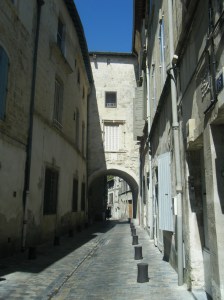
There’s something strange about this place. Where is everyone? I check my watch to see how early it is. It isn’t. It’s 11 o clock but there aren’t any church bells going about their business to remind me. Occasionally, the odd person stumbles around. And I mean ‘stumbles’: each wears a slightly glazed look, most struggle to walk in a straight line and no-one says ‘bonjour’. It’s a bit like Shaun of the Dead.
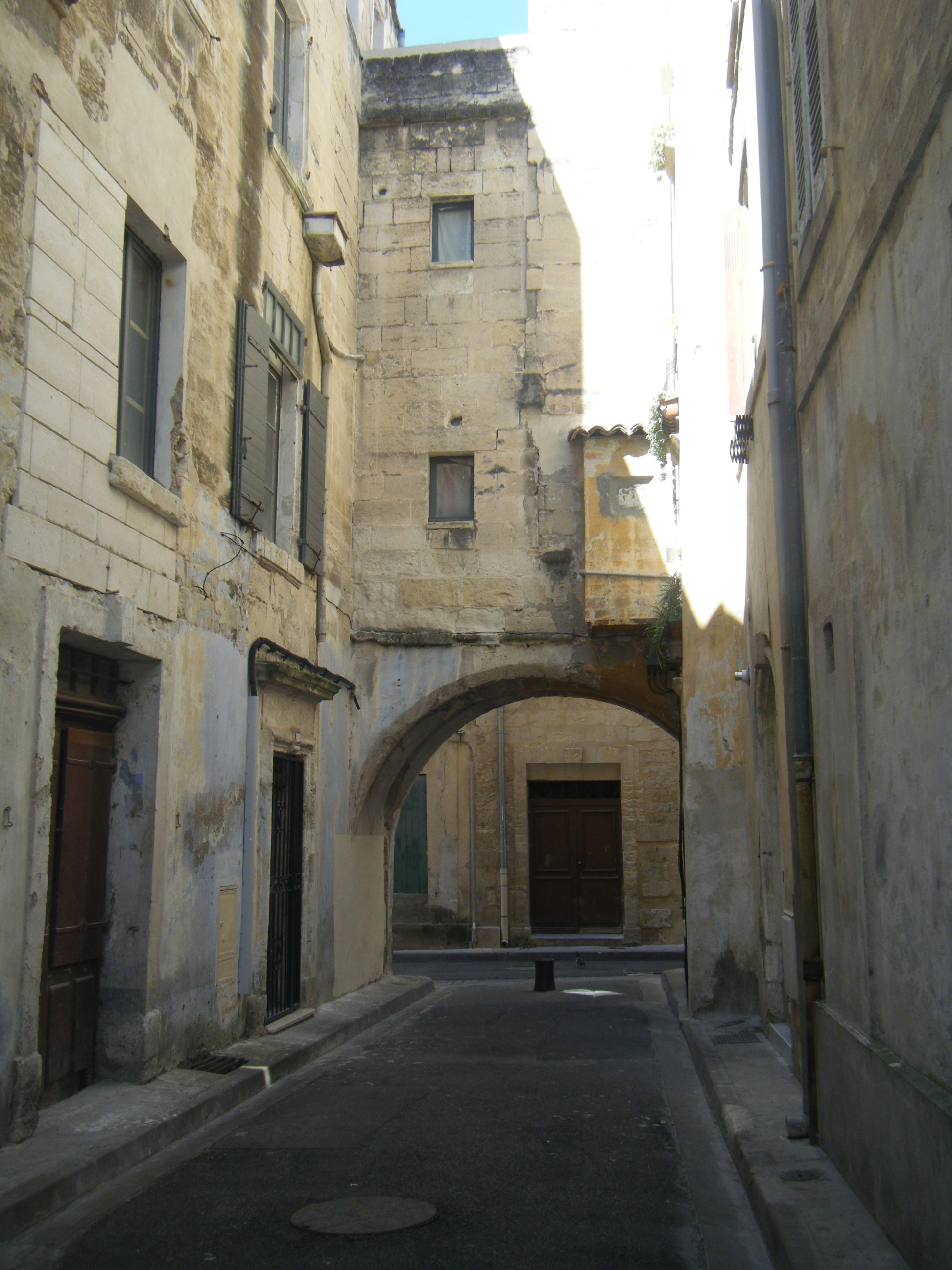


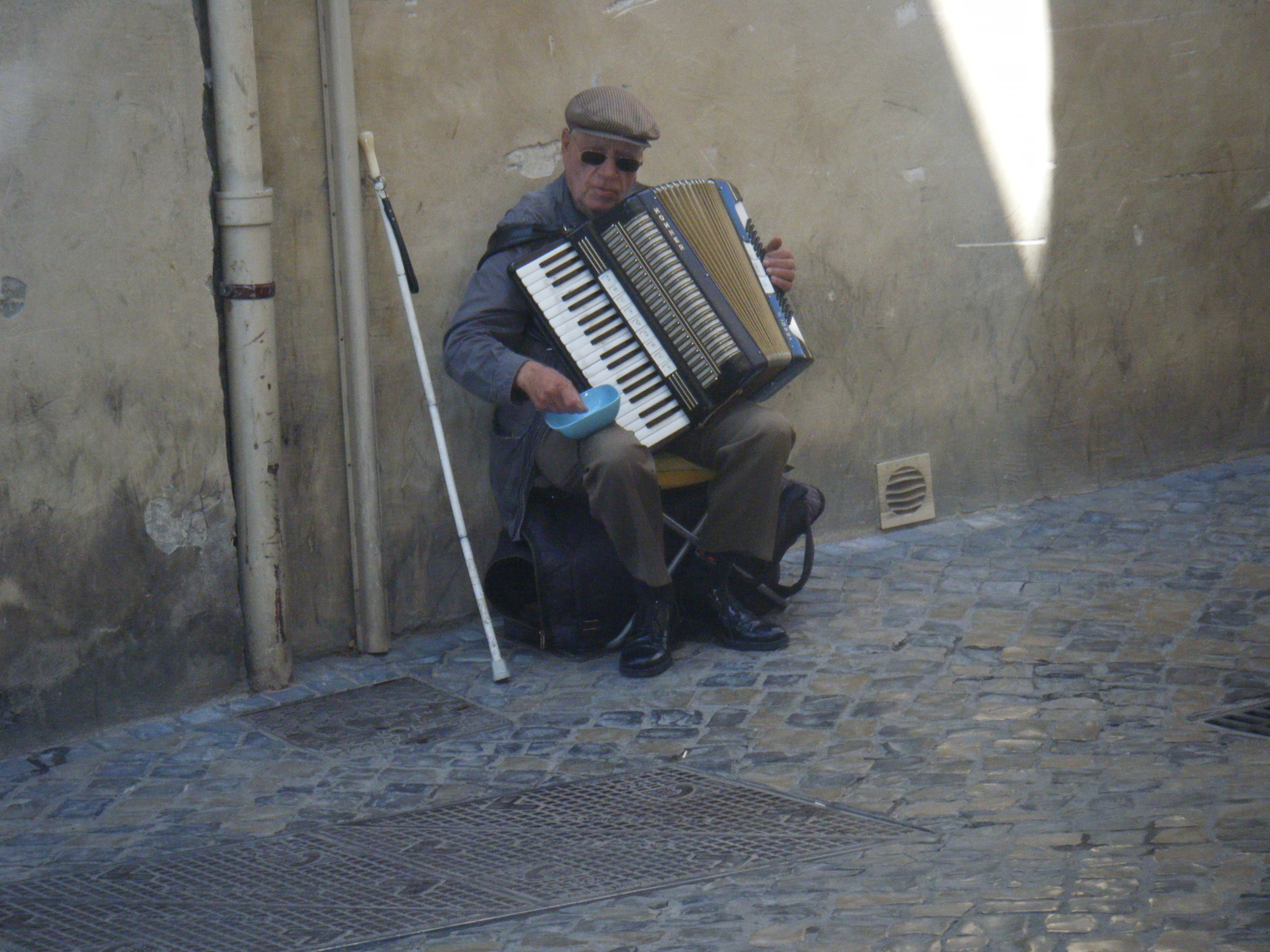
DSCF5253I have no idea where I’m going as the place is a veritable labyrinth of old, twisted streets and alleys. In one sense, Beaucaire, it seems, is very beautiful and exceptionally ancient – at least these back ways are. But it’s difficult to get a grip on things – no bars, no shops, no ateliers – just bend after empty bend until, around a corner, I come across an old blind man, sitting on the ground, playing his accordion. I take his picture but with cash in hand. He might not really be blind. That’s what Beaucaire does: it turns a disorientated tourist into a sceptical and untrusting being. As I walk over to place my money in the accordion player’s pot, I notice a pharmacy up a small incline into which I venture in search of more waterproof dressings for the wound which is now, like the old man of Aran, knitting nicely. It’s almost impossible to get into the pharmacy as it’s full to the brim with missing people. Perhaps they have Black Death here? The place is certainly old enough.

DSCF5239I wander back down past the possibly blind accordion player, round another corner and find, quite extraordinarily, that it’s market day. In every other French town and village that I’ve ever been to on market day it’s been impossible to park, let alone fight a path through the throngs. Market day is an EVENT, though not here. I’m sorry Beaucaire, but yours was the most awful market I’ve ever seen. I’m guessing this is a town with no money. Around yet another corner, I found this little port on a canal. Who owns all these boats? Certainly nobody at the market. I decide to explore a few more of those back streets which are far more interesting.
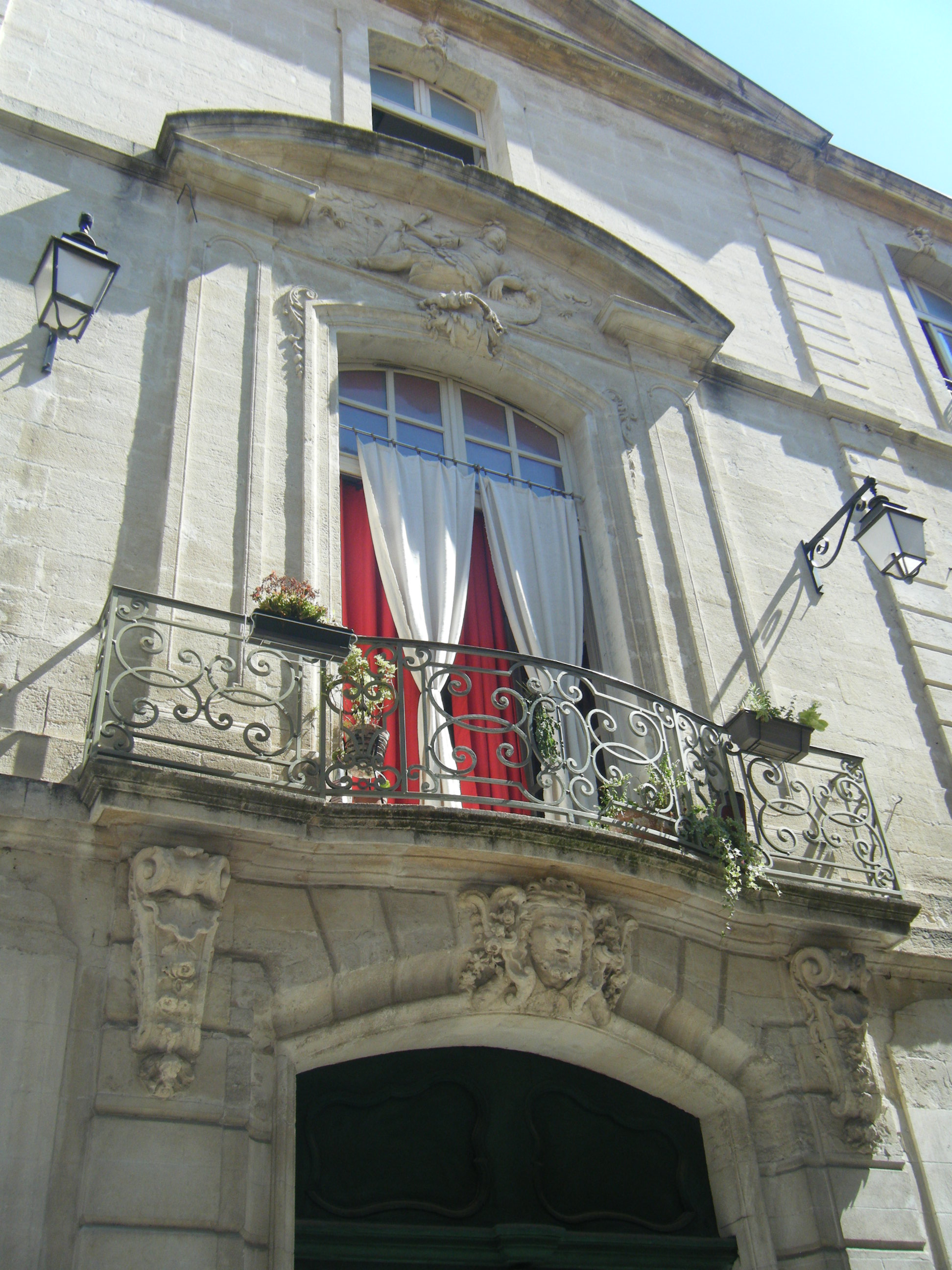
DSCF5249In Sandy Lane, which is not in Beaucaire, there is a man of indeterminable years with learning difficulties. On dry days, his aged parents put an old bath mat on the front wall. They place their son on the old bath mat and he sits there for hours watching the passing traffic. There’s one of these men in Beaucaire but the difference is that he doesn’t sit still in one place. I know this because he followed me round the corners for a while. Every time I turned to look at him, he immediately sat down on a handy wall. However, he must have a limited radius because, by the time I’d arrived at the old hotel in this picture, I’d lost him.

DSCF5248I did, however, pick up another. The new man was wandering down the road armed with a small boy and a baguette. When he saw me looking at the old hotel, he asked whether I’d like to come in and proceeded to unlock the door. My friend, Barbara, says I’m not afraid of anything. That’s not strictly true but I don’t like to turn away an opportunity. But still…

The new man could see I was wavering. He told me I would like what I saw and showed me how to let myself out of the building so I went in. He was right. Here’s the courtyard.
 

DSCF5254


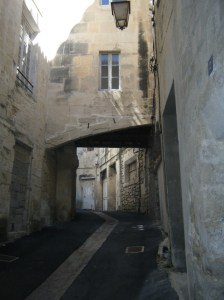
A few streets and corners later, I found this little alley. It looked slightly different to all the others and I’d walked so far, I thought I might as well have a look. It was a very steep climb and, as with the rest of the place, wholly unpopulated.
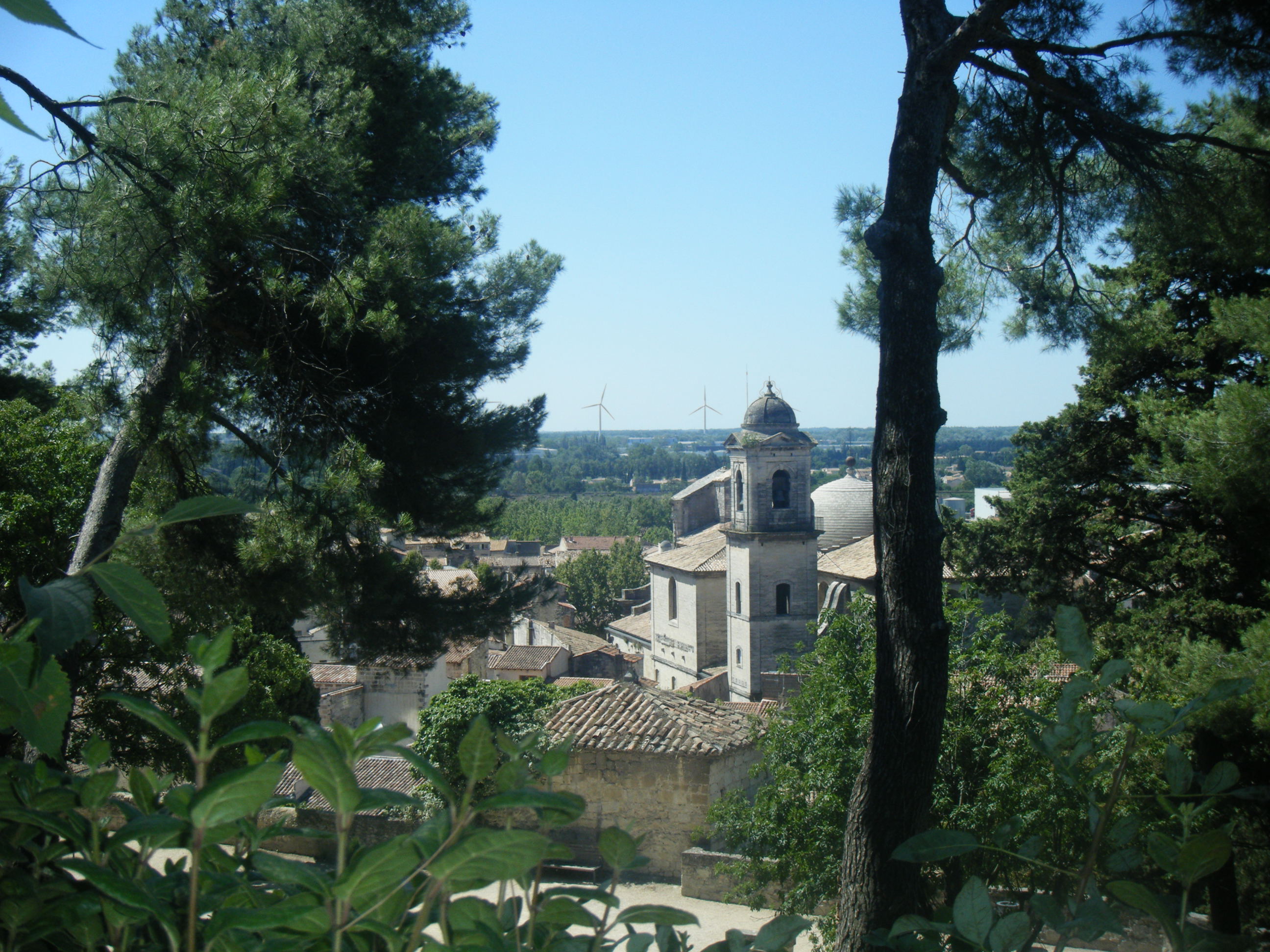


DSCF5260It was worth it though because I could see across the rooftops of Beaucaire and for miles in the distance. I forgot to mention that the temperature at ground level today was 33C so, by this time, I was very tired and about to give up. One more corner, I thought. And guess what I found?
DSCF5262

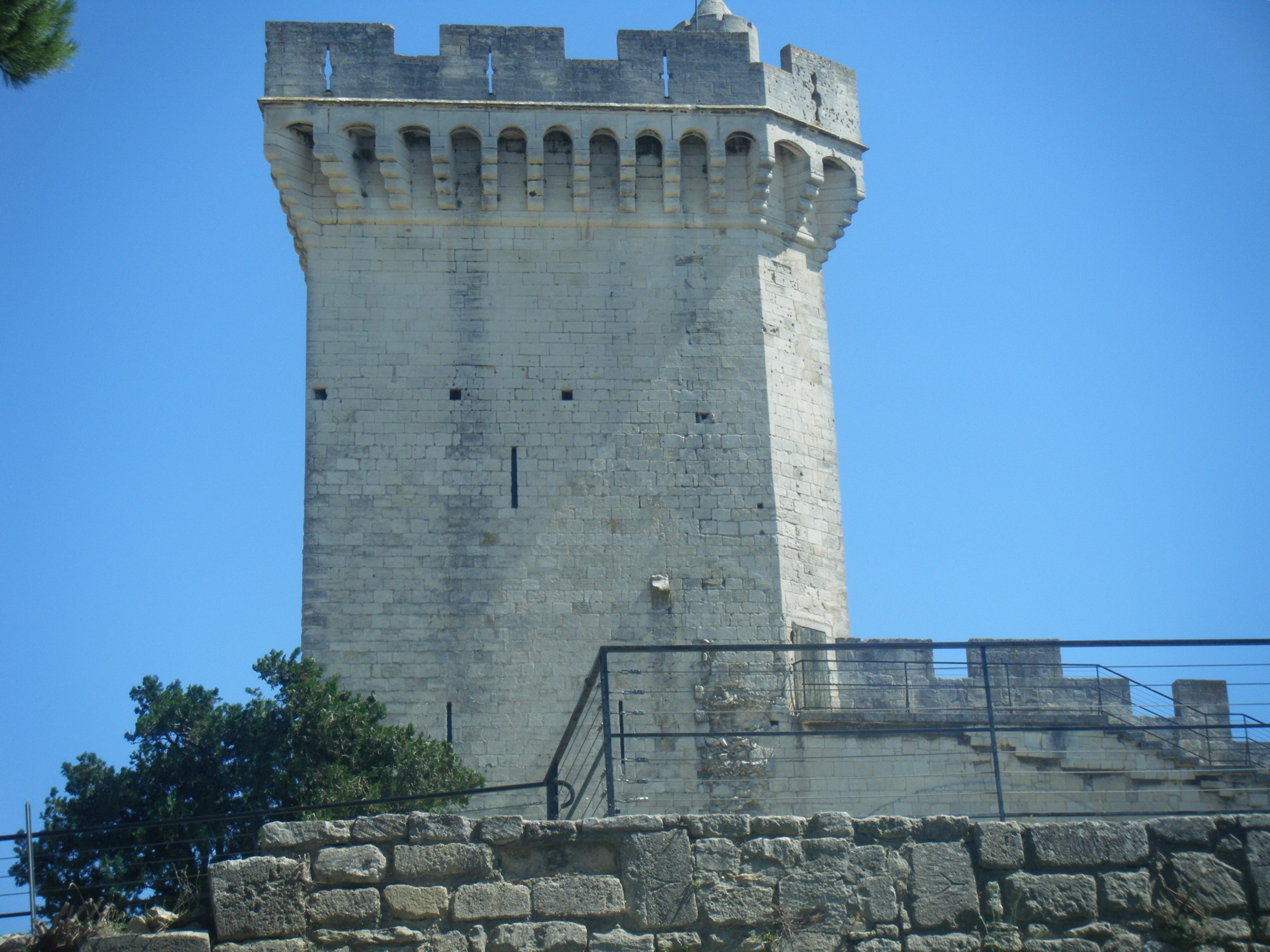
A Castle. And you won’t be surprised to learn that it was closed to the public and that I took this photo through yet another fence. Time to find some petrol.
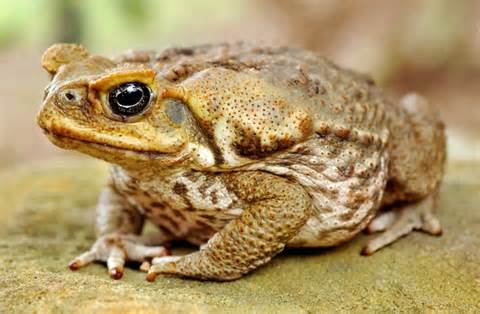
 

Good weather for toads

toad29 July: The weather is all over the place. It teases and it taunts and it pays no attention to professional forecasters. The air is so heavy that the weight of it might flatten a person.

On my patio chairs, rest two brand new plump, full-length cushions which I am requested to bring indoors in the event of precipitation. In the middle of a long and largely open-eyed night, I awake from one of those deepest and shortest moments of dreamless sleep and hear the unanticipated rain beating down. I am like an automaton: rising from my bed and rushing out into the darkness to retrieve the now dripping seat covers.

But what’s this? They are being guarded by a yellow toad the size of Wales. I look at the toad. The toad looks at me. I take a step back. The toad moves forward. I peer at my open window above the patio table and wonder whether this French giant has the wherewithal to jump on the table and in through the window. Onto my currently vacant bed. Laugh if you will. I doubt you currently wake at daylight in the company of grasshoppers of such a size that, accompanied by a few chips, could feed a starving nation for a week.

The day is sadly wasted: spent mostly in catching up on lost sleep. Even the wonderful Goldfinch cannot deter my top and bottom eyelids from a continuous meeting. In the late afternoon, I speak severely to myself. I shower, dress and drive to St Remy to retrieve my blue, salamander-ridden sarong from the garden in which I abandoned it on Sunday. Most of the O’Connor brigade have disbanded and departed for home. They have left behind one O’Connor and one yoga teacher. That formerly industrious couple have also succumbed to this uninviting day and are hiding indoors in the dark. They are watching television. They are watching English television. There’s no getting away from the fact. They are watching Jeremy Kyle. These are, indeed, desperate days.

In St Remy, there is an outdoor evening craft market. I sit outside the infamous bar-tabac and consider ordering a thirst quenching Coca-Cola. A young man is watching me. He is smoking a joint. I look at him. He looks at me and smiles knowingly. I smile back and fumble in my handbag for my notebook and pen. I start writing. The young man stops smiling and, unlike the toad, scuttles away. It’s amazing what a pen and notebook might mean to different people. He has gone but, at last, the waiter is at my side. He thinks I’m writing a review. Neither of the two will ever guess that I’m writing about toads. It’s been so long that I forget about the refreshing Coca-Cola. Unusually, for me, I order a glass of rose. The lightness of colour and taste makes it the only appropriate choice to fight the oppression. I write a few more lines and the wine appears instantly.

After the ball is over

Avignon5In my current life, I go to bed early. It’s the joy of being on holiday on one’s own. Next Saturday, I move in with friends. It will be nice, I hope, but you have to fit in with other folk’s arrangements and lifestyles. Where I’m going, life largely revolves around the wants and needs of a number of felines of the Norwegian Blue variety. Currently, life revolves around me. I have a drink, write a few lines, eat my dinner and watch an episode of Breaking Bad. Then I read my book – The Goldfinch – then I go to sleep feeling more than a trifle content.

In the morning, I get up very early, drink some coffee, write a few more lines and wonder what to do with the rest of the day. You can see why I go to bed happy. This morning, when I was drinking my coffee and writing my lines, before anyone else was out and about, a woodpecker, with a violently red beak, arrived. As I said, you can see why I’m happy. I even went to the village to purchase croissants – what a luxury. But the weather was indecisive so I reflected a little on ways in which the day might not be wasted. I decided to go to Avignon.

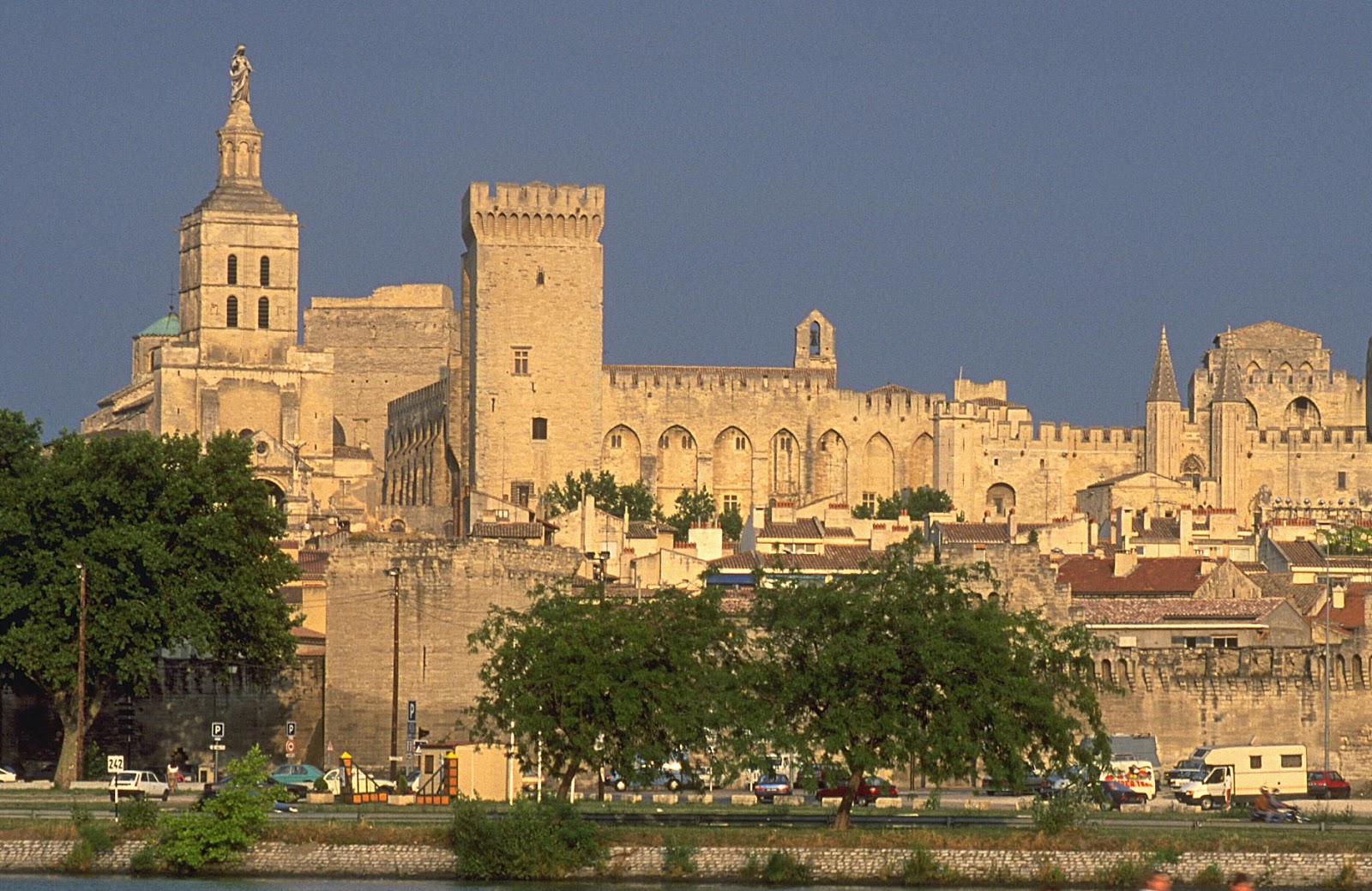
Back in the day – a popular phrase which indicates many lifetimes since, but for me means 2008, – I would drive into the city. In the past, you could randomly park almost anywhere against the city walls. Things have moved on: the parking areas have been replaced with grass and flowers and very nice it looks too. Makes it difficult with a car though. Back in the day, I would bravely drive up La Rue de la Republique and not bat an eyelid at all the other vehicles fighting their way through town in order to reappear outside the city walls and make for another battle in the car park under the Palais du Papes. And back in the day, I would drive my loyal Fiesta down back streets that, frankly, had a cheek to call themselves a street; waging war against the lycra brigade and those who had the audacity to live in the city. In my sabbatical year, I became French. I’m not French now and I have a hire car without premium insurance. I took the bus.

Avignon Festival finished yesterday. Today, Avignon looked liked somewhere after the ball was over. If you’re lucky enough to happen upon Arles on a Saturday, you can enjoy one of the biggest and best markets Provence has on offer. And if you stay for lunch, you can watch the good folk of Arles clean up their town and hose the roads down. And within half an hour, you would never know that fish stalls, vegetable stalls, fruit stalls, flower stalls and all things Provencal had ever been near the place. Avignon, meanwhile, was clinging to memories of its festival. Old posters littered the joint. I dismissed the main routes, favouring the far more interesting back streets but they were infested by debris.

Finally, I sought the hidden path behind the Palais du Papes and sat quietly in the undisturbed quarter of le manutention with a welcome glass of Coca Cola. A woman arrived and asked me if I would save her a table. I don’t know who she thought I was but I agreed. She later returned with her friends who offered their thanks and asked whether I’d had to engage in battle to save the table. It was peaceful.

Later, I caught a bus home – notice that word ‘home’ – and the driver forgot to stop at my point of disembarkation. No worries – he just drew up outside the lane back to the gites. It’s better in the country.

Sunday

DSCF5210

27 July: ‘Are you going to put us on your blog’, they demand to know?

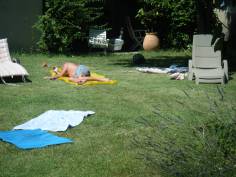
Well, some of them want to know: Martin, exhausted from a week of doing nothing, remains comatose on the lawn.

DSCF5206

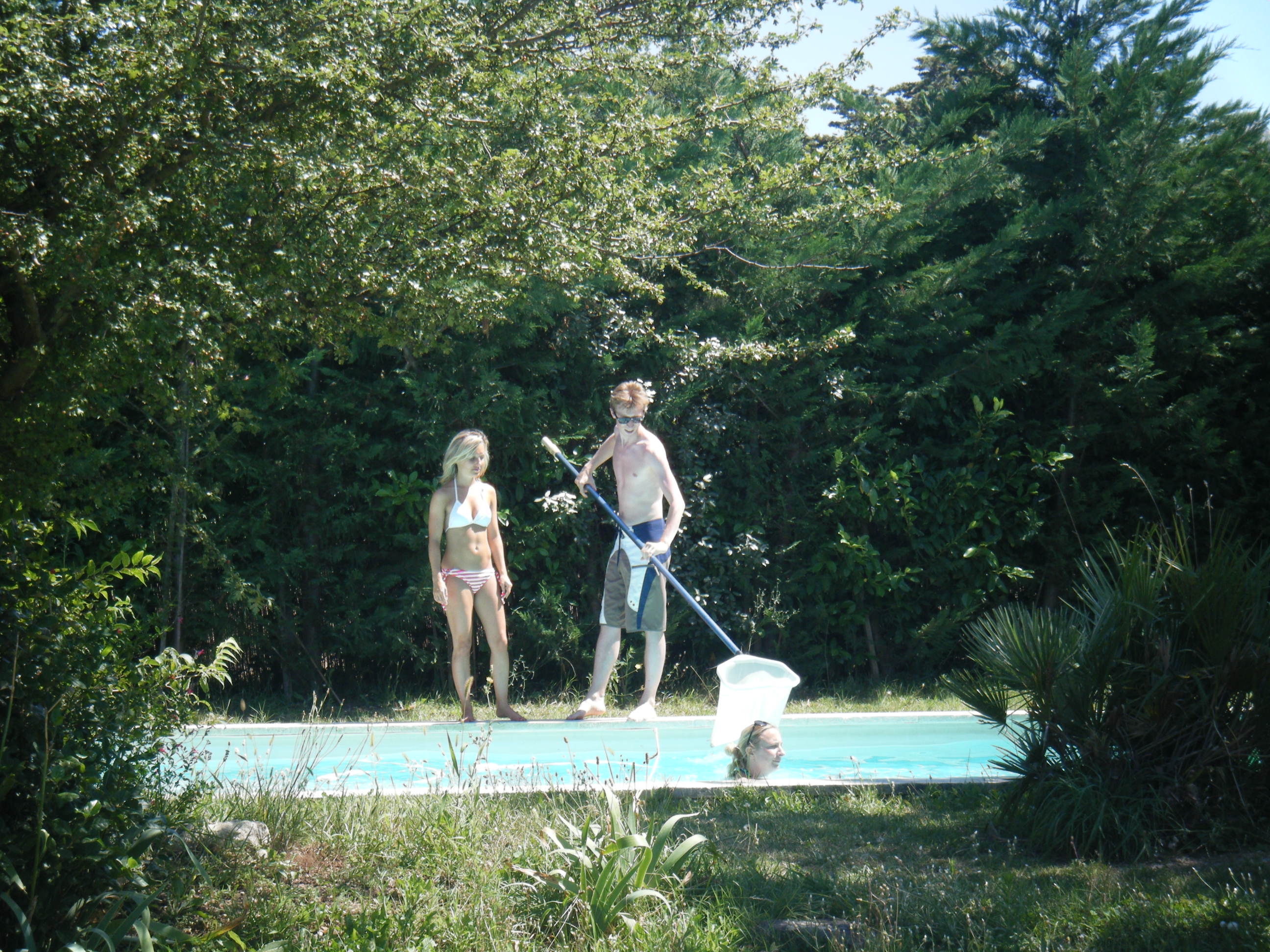
Others, fortuitously, are a little more industrious: Alex and Maria, for example, are busy removing the rare swimming spider from its place at the bottom of the pool where it was pretending to be dead. Maria, who has, thankfully, taken over from me as the bossy one in the entourage, is supervising. Generally, we see her standing on her head or- for a change -on one leg ( she’s a yoga teacher, they explain ).

DSCF5214And here I am again with the famous author who’s been giving me lots of useful writing advice. How much have you written this week, Bev?

A splendid lunch and a lovely afternoon. Thank-you O’Connors for your unceasing hospitality.


A gift, a lake and another old friend

DSCF5190[1]Some very nice people left this morning: the important folk from Ikea who I sent away to consider those of us who find shopping with a map too claustrophobic. Ever thought of a window? The man from Sweden asked me if I was aware of the escape routes in their stores. Escape routes? Doesn’t that tell you something?

John, Carol and the lads also, sadly, left. John says he’s bought me a parting gift. I am touched. John emerges from his gite with a plant – a pot of basil. With the plant come instructions. John has, apparently, invented the chain plant. It’s an ecological, biological version of the old chain letter. I must keep it going and pass it to the next inhabitant of my cabanon when I leave. My heart sinks. John has not known me long enough to understand my disastrous reputation with potted plants. John is unaware that I only have to look at a potted plant for it to recoil and wither. I wave goodbye to the family I first met here last year with a heavy heart: partly, because I will miss them, but largely due to the burden of responsibility which they’ve left me.

I go in search of a lake. In all the years I’ve been coming here, I have somehow missed THE lake. To begin with, it seems like another treasure hunt; another hidden gem. Then, in the middle of the woods, I see a car and assume I must have arrived. Unfortunately, I’ve already parked next to said vehicle before I realise the owner has left the door open and the engine running whilst he has a pee against a handy tree trunk. It’s an exceptionally long pee. He looks over his shoulder at me with a degree of suspicion. I politely look in the other direction and wait for him to finish. I feel I must justify my presence so ask him if this is the car park for the lake – which it clearly isn’t. He silently points in another direction.

DSCF5189[1]I am, frankly, amazed at the beautiful lake. Obviously, there are no other foreigners here because, unsurprisingly, there aren’t any signs. I consider a jaunt around the periphery but the fire wardens, who are currently present everywhere, inform me that my brand new Slazenger walking sandals do not constitute appropriate footwear for the terrain. No problem: I’d rather just sit on a pile of rocks, write a few lines and enjoy the unexpected treat. Anyway, it’s past midi and there’s another gem to seek out before I pause for lunch.

DSCF5196[1]Here’s another little piece of unexpected French cultural history that I happened on by chance. It’s a Jewish cemetery which, as we may anticipate by now, is also down an unmarked road in the back of beyond.  It’s on a site which apparently dates from the 15th century. To the left of the plaque, you might be able to see a more recent edifice which commemorates French Jews who travelled to fight in the Spanish civil war and others who, of course, perished in another war. What a treat to find a piece of history that has been recognised by the French. I expect you can guess what’s coming.

DSCF5199[1]I took this picture of the cemetery standing on tip-toes and angling the camera through the bars on top of a locked gate. Later, I go to the tourist office and ask when I might gain entry to the cemetery. ‘Never’, comes the reply. ‘Why not’, I demand? ‘I don’t know’, says the child behind the counter sporting a badge which declares he is ‘in training’. ‘Where did you say you were from’, he has the audacity to enquire? I tell him and he electronically ticks me off on his computer. Job done.

DSCF5202[1]Finally, I meet an old friend. Those familiar with this blog will instantly recognise him. Newcomers had better scroll to the top banner to see a photo taken two years ago. Today, he was wandering in the olive groves on the other side of the path where I first met him. He hee-hawed loudly in greeting. Then went back to his lunch. French through and through.
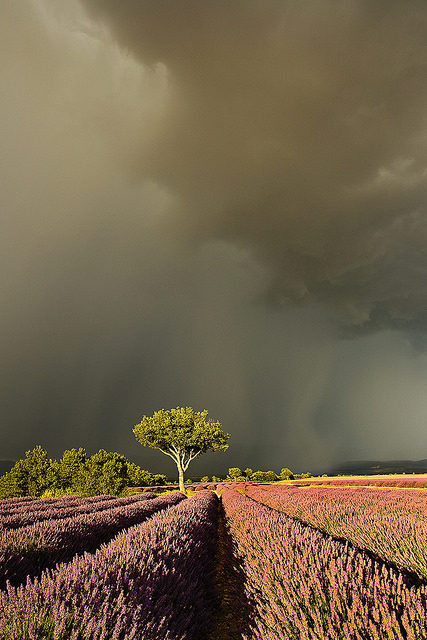

All over Europe…

stormWe knew it was coming. We heard the rumours. We viewed the forecast. We looked into the skies. We dashed to the washing line to bring in anybody’s washing that had no owners present to claim it. We compared notes. We went inside our various domains, shut the doors and waited. Not for long. The sky turned coal-black and the rain poured down. Lightening struck nearer and nearer. The thunder came closer and closer until the storm was directly overhead and the power was lost. We opened the doors again in order to breathe. It was the most dreadful storm that nature could deliver until…

…trapped indoors, with nothing but another bubbling artichoke for company, I turned to Facebook, only to discover that the storm was also wreaking havoc in Bournemouth. And Amsterdam. And, of course, their storms were far worse than my storm. I’m not a huge fan of FB but it was fun to spend five minutes comparing meteorological notes across Europe. By the way, I didn’t take this photo – too wet to step outside.

Yesterday witnessed a gathering of old friends in that secret place where the small spotted ponies live. Yesterday saw a confusion of arrangements where no-one arrived at the right time. Yesterday, two of us momentarily forgot we were in the south of France where no-one ever arrives at the right time. Apart from Peter who never goes out. Yesterday there was yet another distressing story of a lost cat, there was a guided tour around a new garden, there was sun and intense heat and there was confusion over lunch, resolved by this writer taking charge of yet another kitchen. Yesterday, Bev had a headache and the only known way home was barred by road works. Yesterday, we laughed a lot which is, sometimes, the only thing to do.

Tonight, there was news of a cat that had been found, an invitation to Sunday lunch and a storm that finally passed.


Par contre

french doctor23 July: Forget the aqueducts, the chapels, the abbey and the unknown territory: today, I’m back in civilisation. I shower and put on make-up and a dress! What’s all this? I’m off to meet the famous author, Beverley Elphick O’Connor at the bar/tabac in St Remy for a wander round the market. Bev has an entourage now: a veritable flash mob of O’Connors and their various partners. One of the newer entrants to this crowd tries to distribute a list of shopping duties to all and sundry. I demand to know her star sign – Cancer. That would explain it, I inform her. My son’s Cancer and he’s keen on lists.


Bev and I have no duties save to catch up on news and purchase a few essentials: waterproof dressings, prunes and prawns and sit in a shady bar. After, we go back to the house where they’re all staying and where there’s a suggestion that the large lizard in the overhanging vines must surely be plastic. Until, bored with being studied at such close quarters, it scuttles away.

In the late afternoon, further civilisation. Back in the homeland, I’ve been told the stitches must be removed on Friday. After this, I may not swim for a further ten days. Today, I went to the medical centre in the village with a view to making an appointment for removal of offending stitches. You can knock me for knocking the NHS but this is how it happens in France:

I enter the surgery. There is no receptionist because doctors’ receptionists do not exist in France. I sit in the waiting room where there is one other patient. I ask the one other patient how to make an appointment. The one other patient looks surprised and says ‘there are no appointments, just sit down.’ The doctor appears at the door and the one other patient is more than happy for me to make my enquiries before he goes in. (Can you imagine that?) The doctor looks at my wound and says ‘sit down’. He sees the one other patient, then comes back for me.

In his office, he asks me about my holiday, asks me why I have five stitches in my shoulder and pulls the bed from the wall. He asks me to choose the position that will be the most comfortable – on my front – and removes the stitches. He asks whether I would like an antiseptic dressing. He applies an antiseptic dressing. He asks if I’m well. I ask when might it be possible to swim again. I’ve always had a problem with the verb that means ‘bathing’ as in having a wash and ‘bathing’ as in having a swim. I choose the wrong verb and the doctor is, for the first time, confused. Face down on the bed, I begin to do the breast stroke. The doctor asks whether I’m here to participate in the Avignon festival in which there are a lot of unusual acts and in which indoor swimming would not be deemed strange. The doctor is no longer confused. ‘Tomorrow’, he says. I fall in love with the doctor and tell him I’m a writer. ‘Peter Mayle’, he enquires? ‘Better’, I reply. The doctor says, ‘that will be 23 euro please’. I go to the supermarket and purchase a bottle of Crozes Hermitage and a packet of chocolate biscuits to celebrate.

Read Bev’s novel here : http://beverleyelphick.webeden.co.uk/


More history and heritage

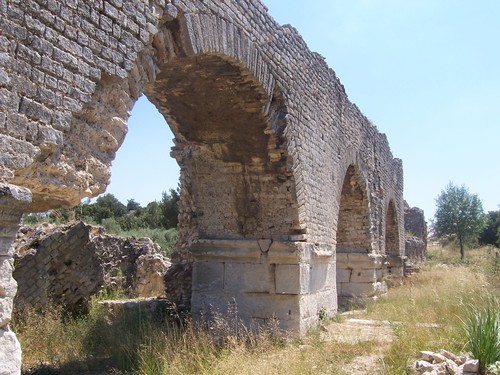
acqueduct22 July: A few years ago, someone told me a story about a Roman aqueduct that transported water from the Alpilles across the plain to Arles. Having located one end of the remains, many, many years passed before the other end of the aqueduct was allegedly found by an Englishman in his garden near Fontvielle.


In the absolute middle of nowhere – well, nowhere I’ve ever been – I meet three old boys walking down a windy lane deep in conversation. Where had they come from and where were they going? Maybe they’re the French version of Last of the Summer Wine. I wind down the window and enquire as to the whereabouts of the Roman aqueduct. Naturally, this causes a huge amount of discussion and repetition of the words ‘Roman aqueduct’. One of them decides I need to be driving in the direction of Fontvielle, a notion with which the other two agree. As it happens, I’m currently on a road from Fontvielle. However, further arm waving and heated debate infers there might be a better road to Fontvielle; prettier perhaps; less overgrown; possibly not as lonely. There’s no apparent consensus. ‘I know’, I suggest, ‘I’ll turn round’. I make a helpful circling motion with my index finger. ‘Mais oui’, they all agree, ‘turn round’.

I jam my car, a la mode francais, into a small space on the side of the road along with three others. Looking up, I notice that I have, previously this morning, driven through the remains of an arch. I also spot a curly arrow painted in blue on a tree trunk. That would be the directions then.

People spent centuries looking for this aqueduct. When I tried to find it earlier, I could understand why it had taken them so long. Now I’ve finally located it, I can’t understand how they’d missed it. Surely it’s not another Glanum whereby folk spent eons wandering past a Roman triumphal arch outside St Remy without considering it might mark the entrance to somewhere – like a Roman city on the other side of the road that they didn’t notice until well into the twentieth century.

Ok, the aqueduct is in a state of disrepair but there’s still a lot of it: columns and arches marching past somebody’s garden and off into the olive groves for nearly a mile. You can imagine people in that house moaning about constant piles of rubble on the other side of their fence. Of course, this being France, they don’t give you any clues. Like a sign. Or a car park. If the concept of a visitor centre was ever introduced in this country, someone could make a fortune. Mind you, I like the idea of unspoilt heritage; it’s the unknown, uncared-for history that worries me.

Some way along, I see a sign and feel I might have been too judgemental: at last, there will be a placard to offer me historical information. The sign turns out to be an advert that the olive farmer has placed there in the interests of opportunistic marketing. Don’t get me wrong. This was a most fantastic experience amongst the groves that were fairly rattling with the sounds of cicadas. It truly can’t have been that different when the aqueduct was functioning – same (or similar) olive trees, same cicadas, same gigantic butterflies all under the same pristine blue skies.

At what seems to be the far end of the aqueduct, it’s possible to walk for a short way along the course the water would have taken. I tried it. Not one of my better ideas. The whole thing ends suddenly – obviously without any warning – at a point where there is a sheer drop onto the plain below. I don’t even make it to the end because I can see what’s coming. Instead, I clamber, with some difficulty, up a stony bank that is cleaved by ancient man-made grooves not designed for the footwear of the elderly. At least I can see the view without feeling the fear.

I think the story about the Englishman finding the end of an aqueduct in his garden was wrong. Of course they must have known this bit was here – it’s the other end that’s missing.

Wikipedia has a couple of interesting things to say about the Barbegal Aqueduct and Mill:

1) It has been acknowledged as the greatest known concentration of mechanical power in the ancient world.

2) It is not known if the authorities intend to restore the remains at some time in the future, or provide more information and assistance to visitors.

Abbey St Michel Frigolet

frigolet21 July: Taking the back route to Frigolet along the twists and turns of Barbentane, passing the old windmill and ascending the very steep climb into the wilderness, I was surprised to see a woman in a wheelchair speeding down the hill in the opposite direction. On the road I mean. Not on the side of the road but ON the actual road. Looks like fun, I thought. Not. Further up the hill, a maniacal, lycra-clad bullet on a bike sped downwards faster than the speed of sound or light. I wondered what the last thing he expects to find round the next bend might be.

Up at Frigolet, they’ve moved the gift shop. The gift shop has always been full of religious artefacts and bottles of the dangerously green liqueur the monks produce, neither of which hold much fascination for me. What has been of interest, however, for many years, is the fantastic crèche that used to be situated in the foyer of the old gift shop. I have written of this many times in other places but now, it’s nowhere to be seen. I ask Madame in the shiny new gift shop where the crèche is. ‘Gone’, she helpfully replies; ‘beautiful, wasn’t it?’ This is so bloody typical of the French: they’re forever harping on about patrimony and heritage and the centre culturel but they never look after anything really special.

I venture up the montangnette to examine the incoming weather. Despite the forecast, there seems to be little of any significance to report. I can see for miles in all directions and it’s true that it looks a bit black over towards the Luberon, but that’s miles away. Afterwards, I take a small coffee in the buvette. Apart from me, the only other people enjoying this oasis of calm are Monsieur, le patron, his underage assistant and an electrician seated under a shady sycamore engaged in something undemanding with a length of cable. I wonder, not for the first time, how these places survive year after gloriously uninterrupted year.

There are hundreds of acres of unspoilt countryside around Frigolet.If you have three and a half hours to spare, according to a random signpost, you can walk to Tarascon. I consider this as a possibility for the week that B & J will be here; they like a nice walk, those two.But what happens on arrival at Tarascon? I recall that Daudet wrote of a carriage that traversed the countryside between said town and Nimes around the turn of the twentieth century. Perhaps a bus service has since evolved in the opposite direction? But even if we could walk to Tarascon and unexpectedly locate a bus willing to return us safely to Rognonas, what would happen to the car we had left behind on top of the montagnette? It’s all very well trying to plan delightful days out for equally delightful friends but the logistics make my head hurt.

As I stood at the summit earlier, I saw a couple of people down below. They were pushing a bicycle across the vast expanse of rough, open and boulder-strewn land that comprises the flatter stages of the route across the little mountain tops. Not another soul was to be seen in any direction. If those two wanted only the companionship of each other, they could not have chosen a better place. I imagined them reaching the edge of the montagnette, happily locating a path and romantically freewheeling down and into Tarascon.

Next, I thought about yesterday’s torrential rain and the thunder and lightening that had pitched us into darkness. I looked upwards and noticed that what had earlier been a few rogue clouds, had now linked arms to form larger masses that were intermittently blocking out the sun. I looked back down at the tiny four-legged, two-wheeled entity that was, pioneer-like, crossing the plain totally wrapped up in itself and I thought – sod that for a game of cowboys.