Barbara, Bryan, Deborah, Tony, Ian and Anne Boleyn

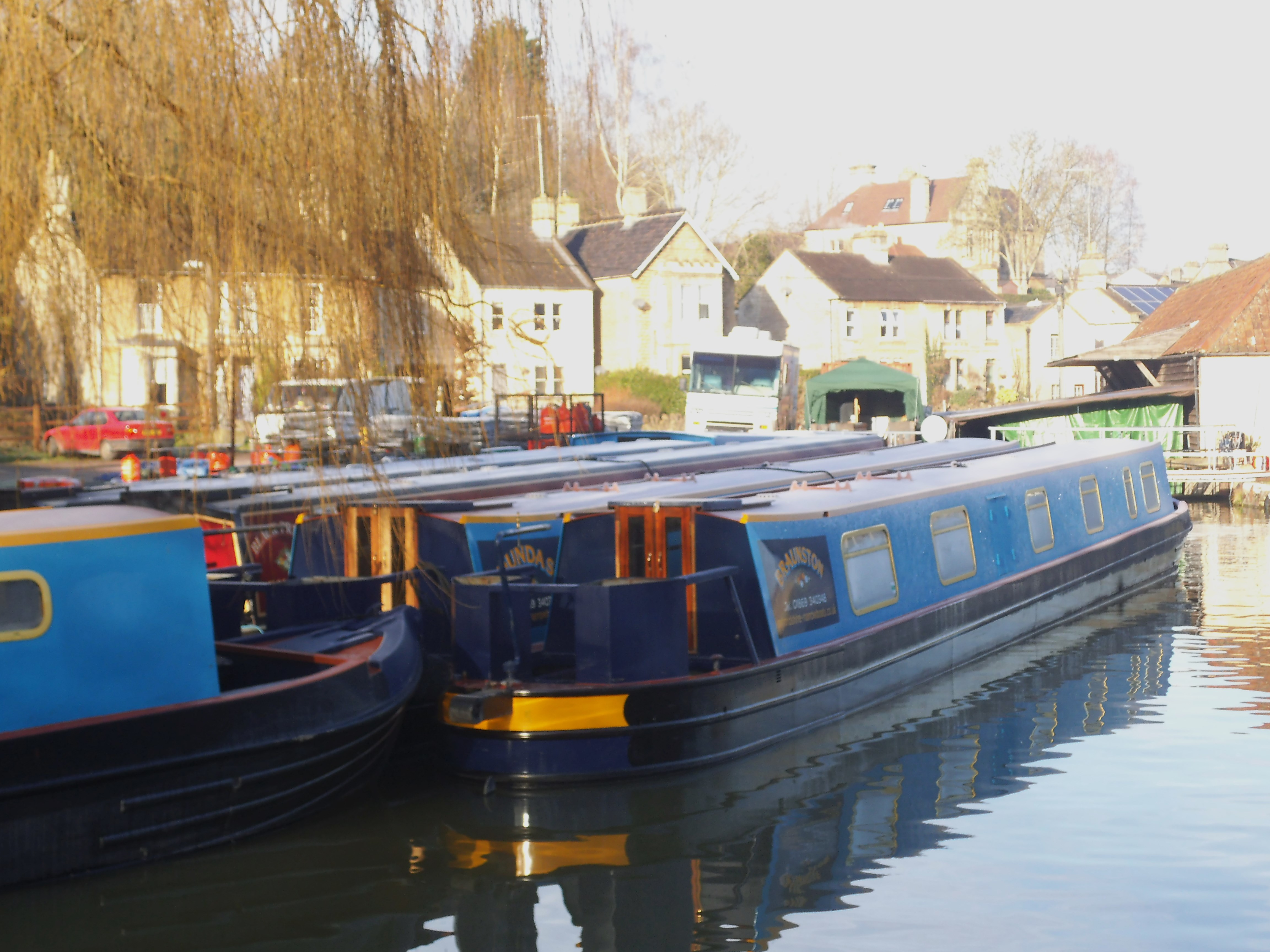
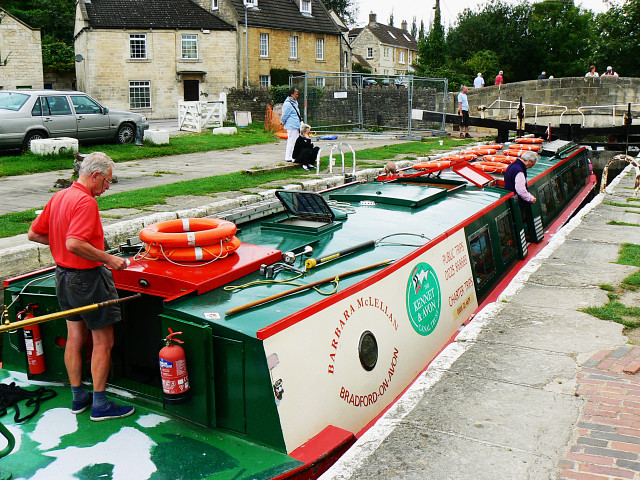
barbmclellThis is the Barbara McLellan. She’s a 65 feet widebeam boat currently owned by the Kennet and Avon Canal Trust (KACT) and housed at Bradford on Avon wharf. During the season, you can charter the Barbara McLellan for parties and suchlike; or you can simply take a trip aboard along with fifty other contented passengers.
DSCN0012

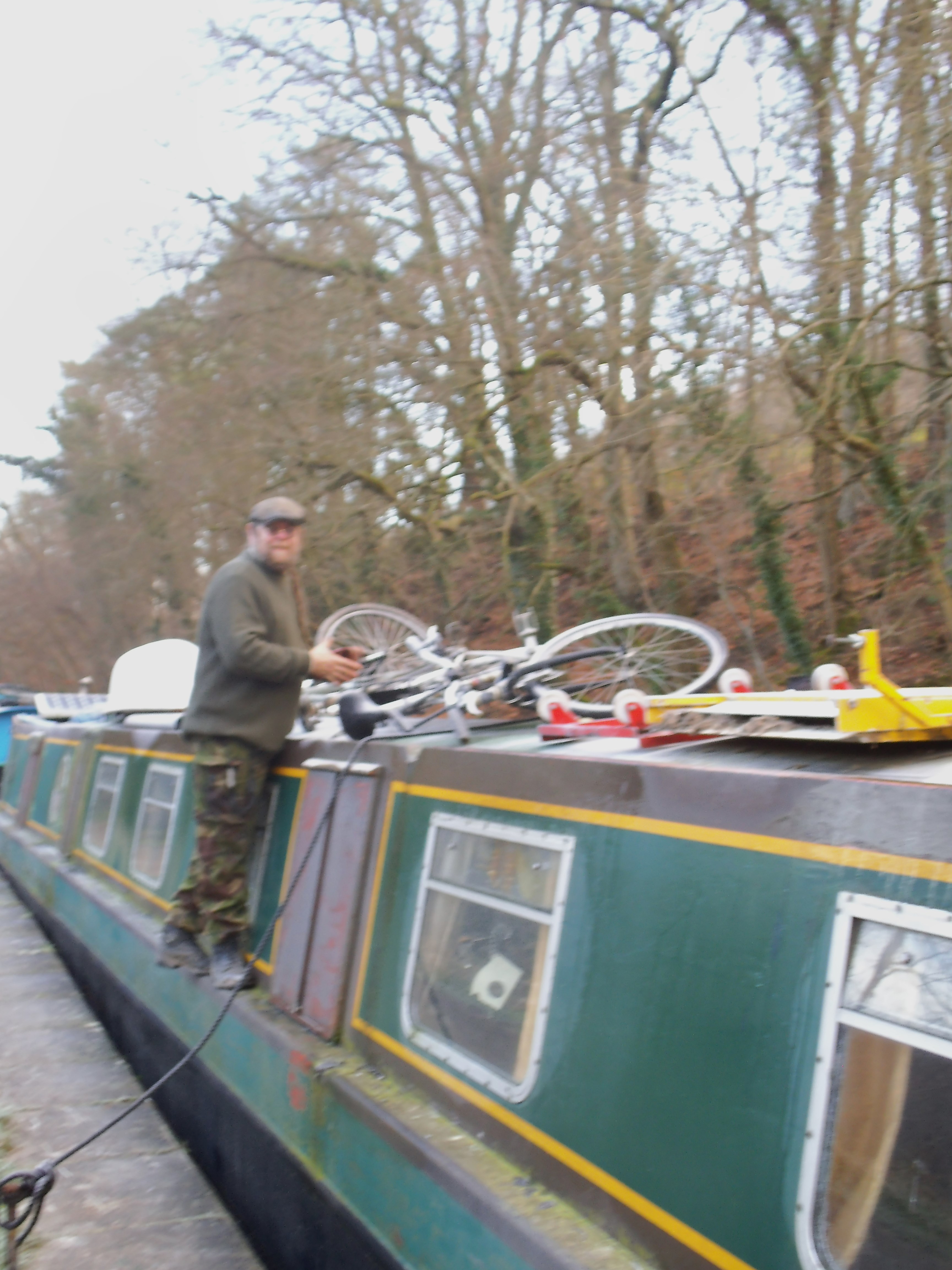
According to Bryan, who’s the KACT branch chairman, there’s a possibility that the Barbara McLellan was once a restaurant boat in Poole before being purchased and bequeathed to the Trust on condition they offered some free trips for certain groups, which they do. At the moment, the boat is in the process of undergoing its annual deep clean so I have the opportunity of being aboard with Bryan who’s telling me all sorts of interesting things. Actually, I have something that I think is quite interesting to tell Bryan: despite being a huge fan of canals, this is the very first time I’ve been invited aboard any type of canal boat. It’s hugely exciting but somehow, before we’ve even started the interview, I seem to have been recruited as a potential crew member for the new season.

DSCN0013

Also aboard, are Deborah and Tony who are in the process of training to be Boatmasters. Every now and then, Bryan sets them another task and, along the way, asks a few challenging questions. Barbara and Tony have years of experience on narrowboats and have traversed many of England’s canals. However, being a Boatmaster involves far more. For a start, they have to take fire safety and water safety courses and be registered first aiders. Further, the amount of legal knowledge required seems daunting. Actually, as to the untrained eye, nothing on the Barbara McLellan is currently where it should be, finding the relevant information appears a bit problematic this morning. I have faith in these two but what do I know? They’ve got to sit an external examination set by the Marine Coastguard Agency.

Bryan, Deborah and Tony are all volunteers. Regular Donald readers will know that I like to be a little light-hearted with most of my weasels but it’s hard not to take these folk seriously. They give hours of their time and energy to making the canal the wonderful place that it is and are gracious in passing on their knowledge to one who knows nothing – me. And today, I also have my first chat with one of that rare species, the full-time paid employee.
DSCN0028

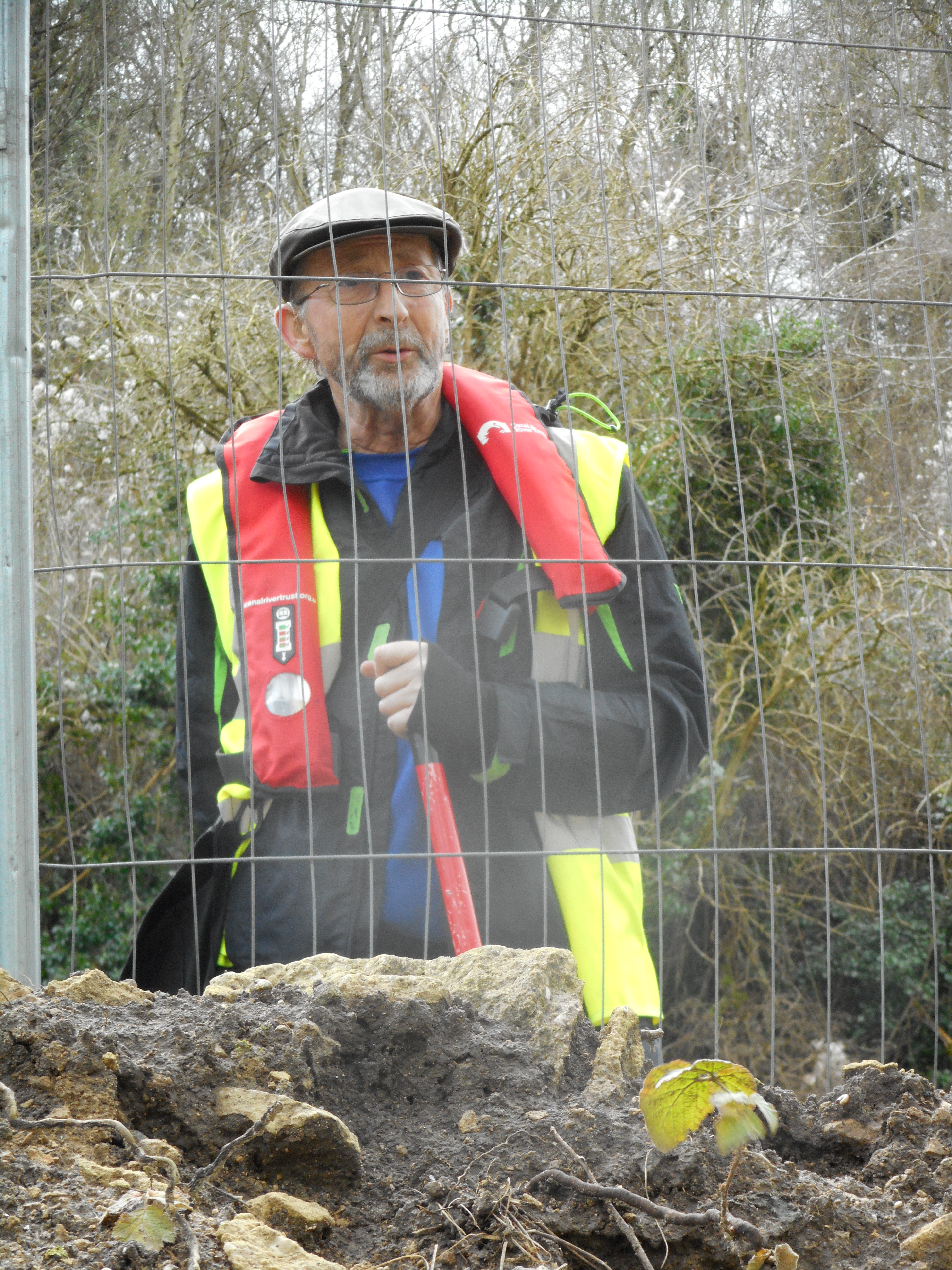
Ian is not in a cage. I am in the cage looking out but more of that another day. Ian’s on the towpath with his measuring stick. He can measure widths and lengths.

‘What do you measure’, I ask?

‘Oh, anything really. Bridges, banks – whatever needs to be measured’. Behind all that wire and hair, there’s a bit of a twinkle in his eye. I discover that Ian is a canal inspector. He works for the Canal and River Trust, walking the towpaths with his beady, twinkling eyes alert for trouble. He tried retiring a few years ago but hated it. After that, he tried coming back on a part-time basis but that didn’t really suit either so now he’s fully employed once more. Ian lives on a barge on the Bridgewater and Taunton Canal where he’s normally based. Currently however, he’s seconded to the Kennet and Avon. He tells me a story about his own canal.
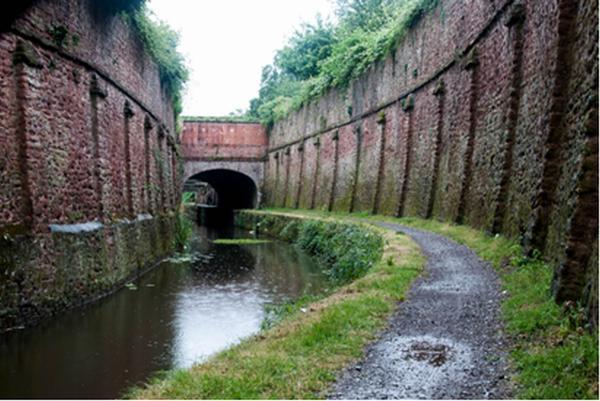
bridgwatercanal bm wk30_jpg-pwrt3

The Bridgewater and Taunton, a mere 14 miles in length, is one of the shortest canals. Despite linking two towns, it’s apparently very rural and olde worlde. So much so, that it played an important part in the television production of Wolf Hall. The stretch shown in the photograph (courtesy of the Bridgewater Mercury), was used to represent the channel leading from the Thames to the Tower of London along which Anne Boleyn travelled to Traitors Gate. Ian was in the support boat as filming took place during a murky dusk. An atmospheric mist was rising from the waters of the canal which made the producers very happy. Suddenly, something else rose without warning from the depths – the historic remains of the inside of a washing machine.

Ian roars, then looks at me more carefully. ‘Do I know you from somewhere’, he asks unexpectedly?

‘I walk along the canal quite a lot’, I suggest.

‘Oh that’ll be it then’, he says. But he doesn’t look very certain. I adjust my crown.
 

The lock keeper’s story

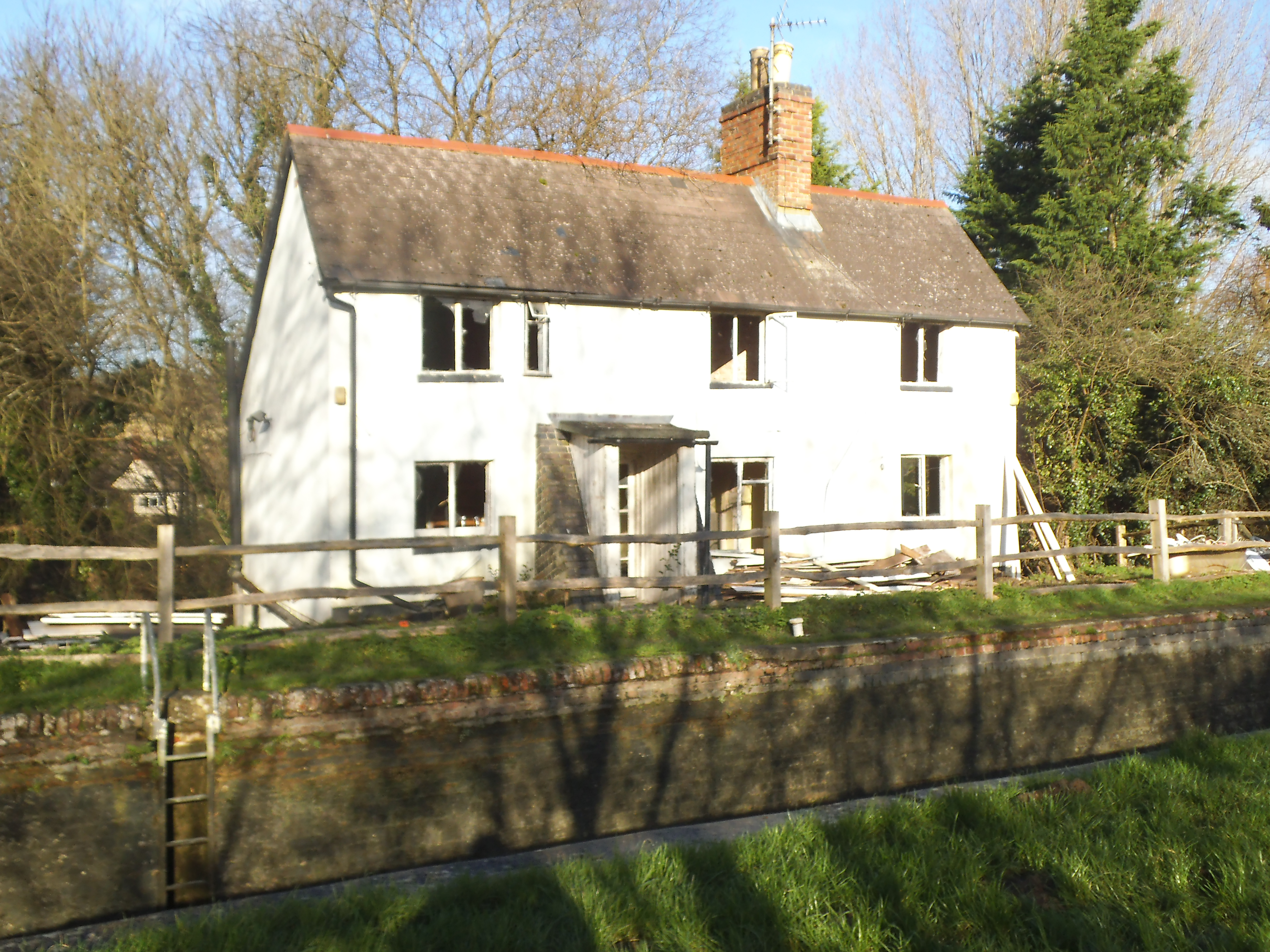
DSCF1112In an earlier posting, I mentioned the lock keeper’s cottage on the edge of Freeman’s Marsh outside Hungerford. Now in a sorry state of disrepair, this once picturesque abode would have typified the accommodation of keepers of the lock, both canal and river-based, up and down the country in times past.

To me, these cottages conjure idealistic visions: places of romance, rural intrigue, comings and goings, exchange of news. Some or all of this might be true enough but, despite the desirable residency of the post, and an almost autonomous responsibility, the life of the lock keeper was not wholly idyllic. He was expected to operate and maintain the lock twenty four hours a day, seven days a week; (women were prohibited by law from becoming keepers of the lock in 1831). Despite everything, many craved the position of lock keeper, concomitant life being far preferable to that in the urban tenements of industrialisation.

DSCF1173Maintaining the lock and surrounding water-edged countryside also included offering whatever aid was needed to water-borne travellers, including the rescue of those who had fallen into the canal or river. Sometimes, the keeper was allowed to retain the tolls paid by those whose boats passed through the lock. Where the authorities took these payments, they occasionally offered the keeper a small stipend. Either way, it was a poor living so lock keepers and their families made the most of the generally large plots of land that surrounded their cottage. All sorts of enterprises have been recorded which mostly centred on the provision of goods that could be sold to those who traversed the canal. Kitchen gardens were substantial as was animal husbandry. Some of the more enterprising built bread ovens, brewed cider or beer, made cheese and a surprising number were bee keepers.

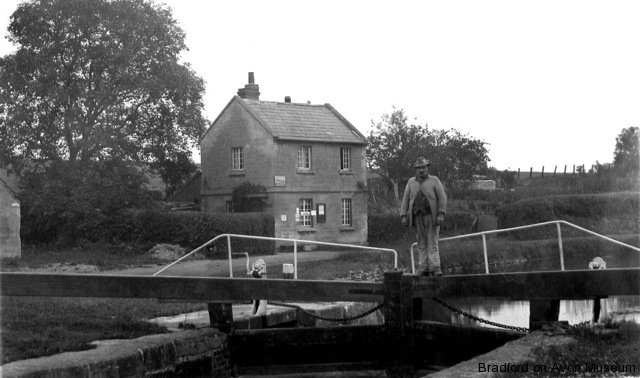
lockeeper002Of course, as the commercial nature of the canals declined, so too did the need for a professional lock keeper. Here, in a photograph held by Bradford on Avon Museum, is George Andrews who was the keeper of the lock in that town in 1925. Behind him, you can see his cottage. Today, George’s house comprises the tea rooms on the wharf. In a somewhat torturous, but eventually successful, arrangement, the freehold of his erstwhile home is owned by the Canals and Rivers Trust (CRT). The Kennet and Avon Trust secure the leasehold from the CRT and they sub-let to the far less bureaucratic and thankfully more down-to-earth Victoria to serve tea and cakes. I love Victoria. On this informative but wind- penetrating expedition, she provided me with a delicious cup of FREE steaming coffee just for standing next to a bloke in a high viz jacket!

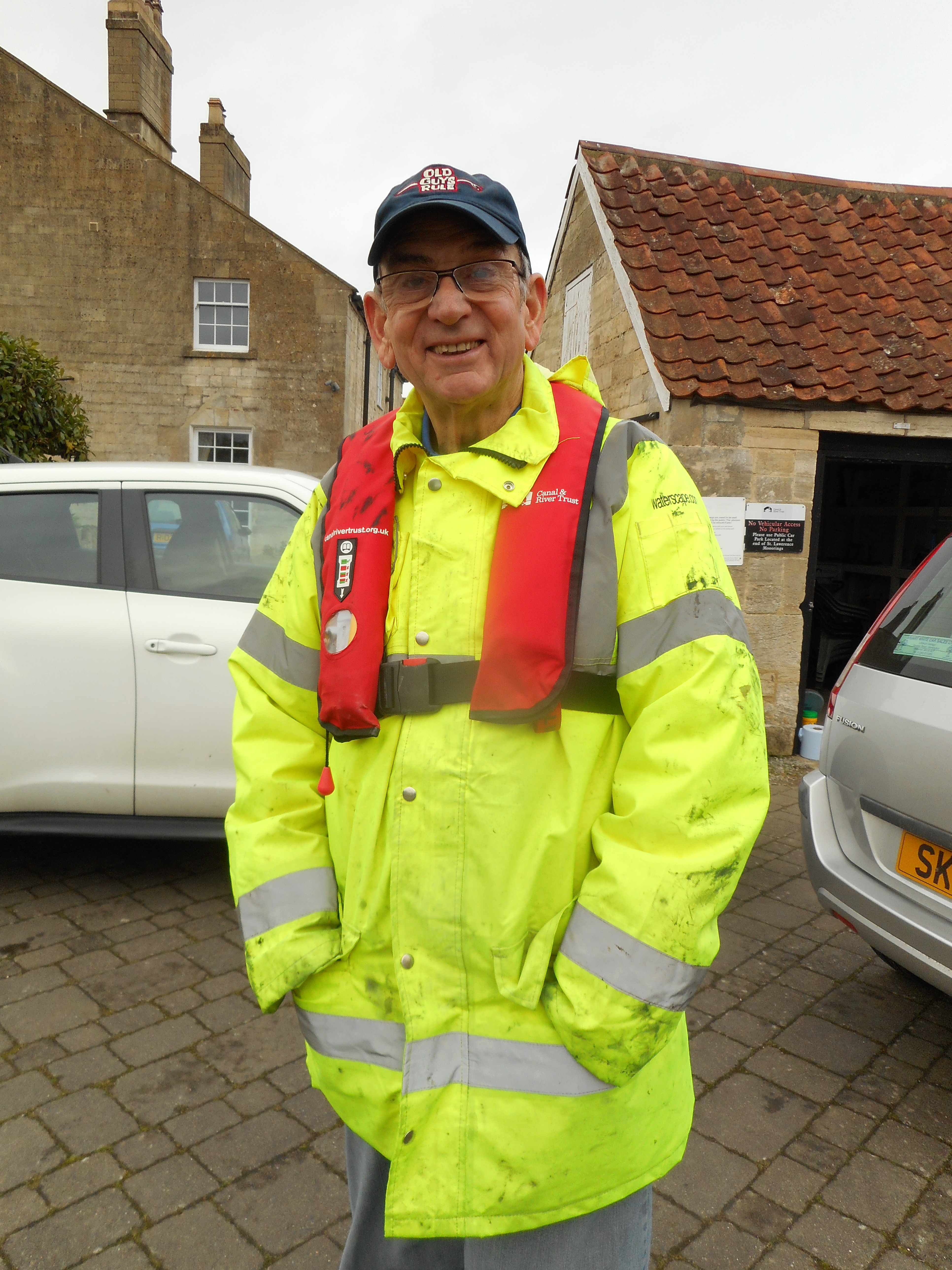
ADSCN0014nd the lock keeper? Well, handing one’s CV into the local dole office with ‘lock keeper’ as your main desirable employment is not likely to get you far these days. However, a brief look at the website of the CRT will quickly alert you to several relevant vacancies. This is the delightful and unassuming Richard, one of today’s volunteer lock keepers at Bradford on Avon wharf. Richard’s one of those people you unexpectedly bump into when waiting for someone else; one of those folk who, once he’s started talking, you wish you had another two hours to spare to listen to.

Richard, a merchant navy engineer in another incarnation, has been a volunteer lock keeper for six years and told me all the things I should have known: his lock, at 11 feet 6inches in old money, is the second deepest on the Kennet and Avon. The deepest, somewhat unimaginatively named Bath Deep Lock, is the deepest IN THE COUNTRY. All very well me putting that in capitals – some of today’s local commentators were a little dismissive of the Bath construction claiming it comprised two locks conjoined so ‘it would be wouldn’t it’. Richard’s lock is also one of the busiest in the country. Normally. Interestingly, it’s not busy today:

‘The Avon’s too full’, says Richard in passing.

‘Too full of what’, the cub reporter enquires? Boats, I think but don’t posit.

‘Too full of water. Dangerously fast water’, the expert informs me. ‘And there’s a bridge down at Seend’, he continues. So, nowhere much for the boats to go, but plenty of opportunity for repairs. I am sucked into this world and its inhabitants. I am a walking anorak. Dare I ask whether there are many mishaps at Bradford on Avon wharf? Am I looking for glamour where it’s not required?

‘Well’, replies the poker- faced Richard, ‘we had two sunken boats in the lock last year. Would that be the sort of thing you’re interested in?’ Yes, oh yes. I try not to appear too excited.

In order to understand how the narrow boats sunk, I am obliged to stand on a very muddy piece of grass close to the water’s edge whereupon tricky engineering issues are pointed out. There’s no way I can utilise either my notebook or my camera. I must now rely on my unreliable memory. Basically, a cill is a large piece of stone which juts out from the lock gate. The narrow boats enter the lock. The captains observe all the warning signs, of which there are many clearly displayed, and they stop their boat short of the cill. Unless, according to today’s lock keeper, they are ‘out of their skull on drink’ or are busy on their mobile telephones. Moving forward of the cill results in a flooded boat. ‘And’, he continues. ‘if you get sucked under into the dark, you won’t be coming out again’. More importantly, for everyone else, they cause the canal to be closed for a week. Use of a heavy crane is a non-starter because it will damage the lock so a proper salvage operation must be undertaken which costs the narrow boat owner £100,000.

I think about all those lock keepers surviving in times when there were no cranes or salvage operations of the type that Richard refers to. All of those men and their families intent on the safekeeping of the locks. And all of those whose living depended on the well-being of the canal.

I am indebted to a writing blog I discovered: https://regencyredingote.wordpress.com/2014/03/14/a-lock-keepers-cottage/ Sadly, the author gives no source for her piece on canals but she writes as one who has undertaken substantive research


A change of plans

DSCF1181The previous time I left the Western end of the Kennet and Avon was at the Midland Road Bridge in Bath. During the last week which, let’s be fair, I have stumbled through in some yet-to-be-rationalised distress, Saturday’s outing was to be nowhere near this canal. I’d intended to travel in the direction of some inner city location where flowers might be laid. Then it transpired that, having left without warning, he also departed without ceremony, not wanting anyone’s grief. As he latterly said, ‘if I never see the English evergreens I’m running to,it’s nothing to me’.

DSCF1154I thought to walk from Bath to somewhere or other but the English weather dictated otherwise. Snow is coming and if it never arrives, the roads from Poole will still be icy and dangerous. So, for the third time, I readjusted and decide to take a short walk – maybe a mere four miles – from Bradford on Avon to Avoncliff, along the canal and back by means of the river path. It’s an old and pleasing favourite.

DSCF1155By the time I reached Bradford, the temperature had resigned itself to not rising above freezing point but the morning was brightly optimistic after the incessant rainfall. I have a new ‘job’ as a volunteer writer for the Kennet and Avon Canal Trust and was hoping to speak with a few volunteers. It’s a non-starter as no-one is around so, with the air full of that wondrous wood smoke I now associate with winter barges, I pressed on alone. Save, no-one who likes to talk whilst walking the canal is ever alone.

DSCF1173DSCF1180I met Christine and cursed the dying/dead camera. In the last posting, I mentioned that the camera was fading. Now, my photographs disappear without reason. Christine was chopping wood at the side of the canal but you’ll have to take my word for that. She was gracious enough to let me capture her on film but, of this, there’s no evidence.

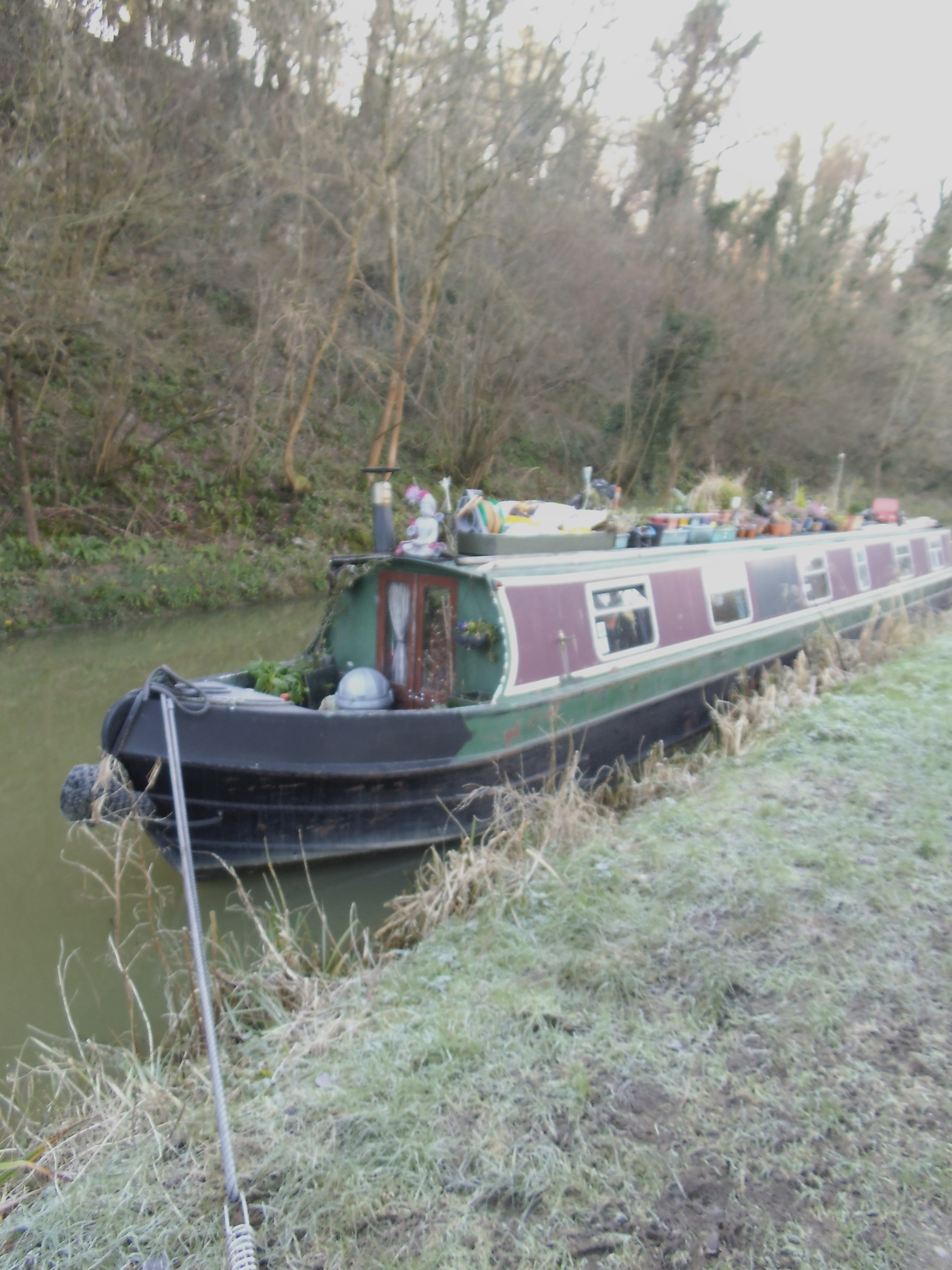
DSCF1164Christine and Alistair have been moored up near Avoncliff since September when they’d retired from jobs in Oxfordshire to live on the canal. I am rather envious, but not of her transposition to the life of a lumberjack. Alistair might have taken on this task but he’s inside and unseen. He’s poorly.  When they lived in Henley, Alistair was Head Gardener on a number of projects in stately homes. It sounds idyllic. Whilst she’s creating the fuel for all this wonderful wood smoke, he’s safe inside. Christine was something high up in the county’s educational sector but she’d seen the writing on the wall: ‘fourteen curriculum changes in 30 years’; she was teaching the writing: ‘And now this lot’, she nods in the direction of Downing Street; or the Bullingdon Club. For Christine, the concept  of shopping has changed somewhat since the Henley days of high-powered position: now she’s looking for replacement axe-heads and four-piece saws.

DSCF1165Down below, on the track that runs alongside the Avon, and too far for the dying camera to cope with, Roger’s trying to cope with his ill-behaved group of ramblers:

‘People at the front,’ he shouts, ‘stop!’


People at the front are deep in conversation and oblivious to Roger.

‘You at the front, stop’, as if they’re  in Ypres and about to go over without precision. Nothing.

‘Stop!’

People at the front think they might have heard something and turn round. Roger’s caught up with them. He’s very animated – arms are windmill-waving as he points to the end of his group and leads his team  up the muddy bank towards the canal. Some braver members of the brigade point out this strategic error and they all turn, as one, back to the river.

DSCF1178As I leave the shade and shadows, the canal is dressed in sheets of ice and I meet Mickey. He’s been ill for two weeks: ‘like everyone else’, he informs me. Mickey and his unseen wife have been on the canal for a year now. ‘We were on the Medway for eight years before we got flooded’, he explains. ‘Water came up 15 feet and we were nearly on the football pitch, so we came over here’.

I’m struggling to understand any of this and have an image of this modern-day Noah guiding his barge away from the lost canal, from the flooded football pitch, and mysteriously landing round the corner from the Avoncliff Viaduct,

DSCF1182I arrive at the inhospitable Cross Guns where, despite the appalling temperature, they still make you take another walk outside to use the facilities. I partake of a seemingly ancient cup of coffee and write my notes. This must be the only place in the universe where no-one gives a stuff whether you’re writing about them.  And I return to Bradford via the icy track along the river.


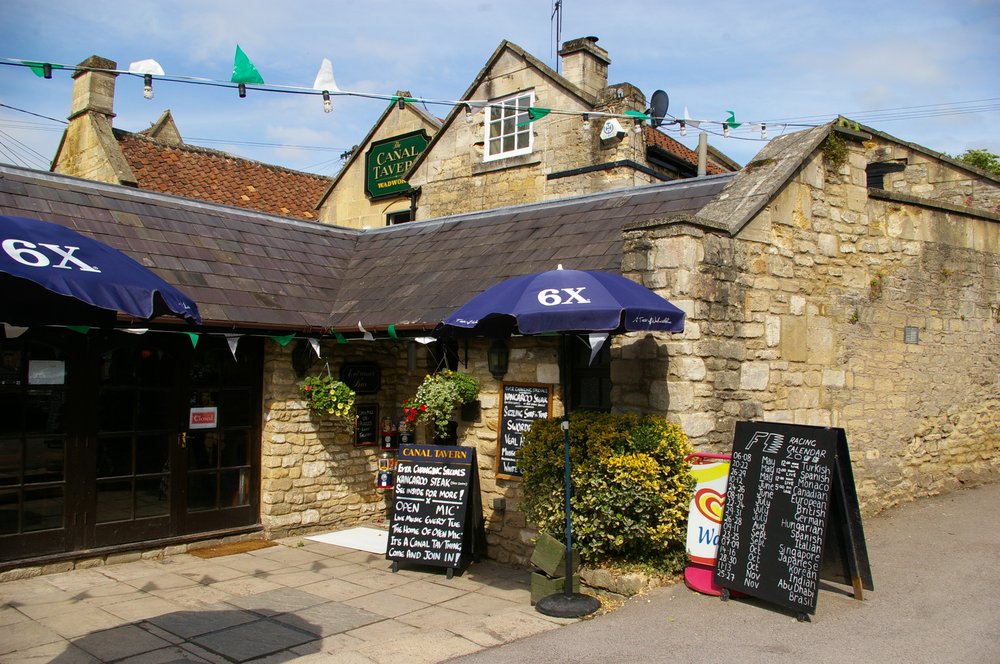
canal tavernI would say there’s little to recommend The Canal Tavern. Their Wiltshire Ham and Cheese Wrap was disappointing, although the salad was surprisingly avante-garde. But tonight, when I am long-gone, they will host a Bowie party.  For the time being, they have, on their very large screen, something called Vintage TV on which I watch the man, because there is no escape.


The stars look very different today

bowieI don’t know when the end begins. For many years of our lives, most of us are, apparently, immortal. My generation knows only too well that there will be early demises – Jimi Hendrix, Jim Morrison, Brian Jones, Keith Moon, Ian Drury, John Lennon: characters, stars; call them what you will. I remember being particularly saddened a couple of years ago, just when I thought I’d got used to it all, by the death of James Gandalfini – a particularly nasty trick when I’d been such a late convert to The Sopranos.

And, talking about my generation, we’ve experienced first-hand those other shocking wake-up calls: Jack and Robert Kennedy, when one was not yet old enough to read American politics; Diana, when we were of an age to hate the financial unfairness of royalty, but not yet mature enough to deal with innate sadness that made the whole country be nicer to each other for a week.

Unexpectedly, when we hit sixtyish, our personal friends start dying. These are not folk who’ve passed a lifetime of indulgent excess. There’s no lesson to be learned and this is a terrible shock. How very inconsiderate of them to notify us that, despite being children of the sixties, and thus not only up there with the game changers, that the game is, after all ,not infinite. What a nerve these people have with their strokes and their heart attacks and their cancers. Get a life!

Bowie never warned anybody about anything – he just did it. No surprise then that we didn’t know he was ill. What would we have done with that information anyway? We wouldn’t have rushed out and purchased his new album – we were doing that anyway. His death was as his life’s work: unexpected and shocking.

A couple of years ago, we went to the Bowie retrospective at the V & A. How wonderful to write that sentence. How amazingly different from all the other modern deaths that the V & A chose to commemorate this icon. How brilliant that the Archbishop of Canterbury was the first to offer his plaudit on Radio 4 this morning.

When we speak of Bowie, we speak not of small or temporal things. The world mourns.


The second walk

Great Bedwyn to Hungerford: 6 miles, 29 December 2015

DSCF1106

Frank is due tomorrow but on this most glorious of mornings there are a lot of people out and about on the canal. Due to early morning showers, the towpath is treacherous: in some places, the attempt to remain upright is painful as neither foot seems to want to remain in close proximity to the other. The water in the canal is especially high and the path has disappeared to leave a slippery incline just inches from the edge.

DSCF1073

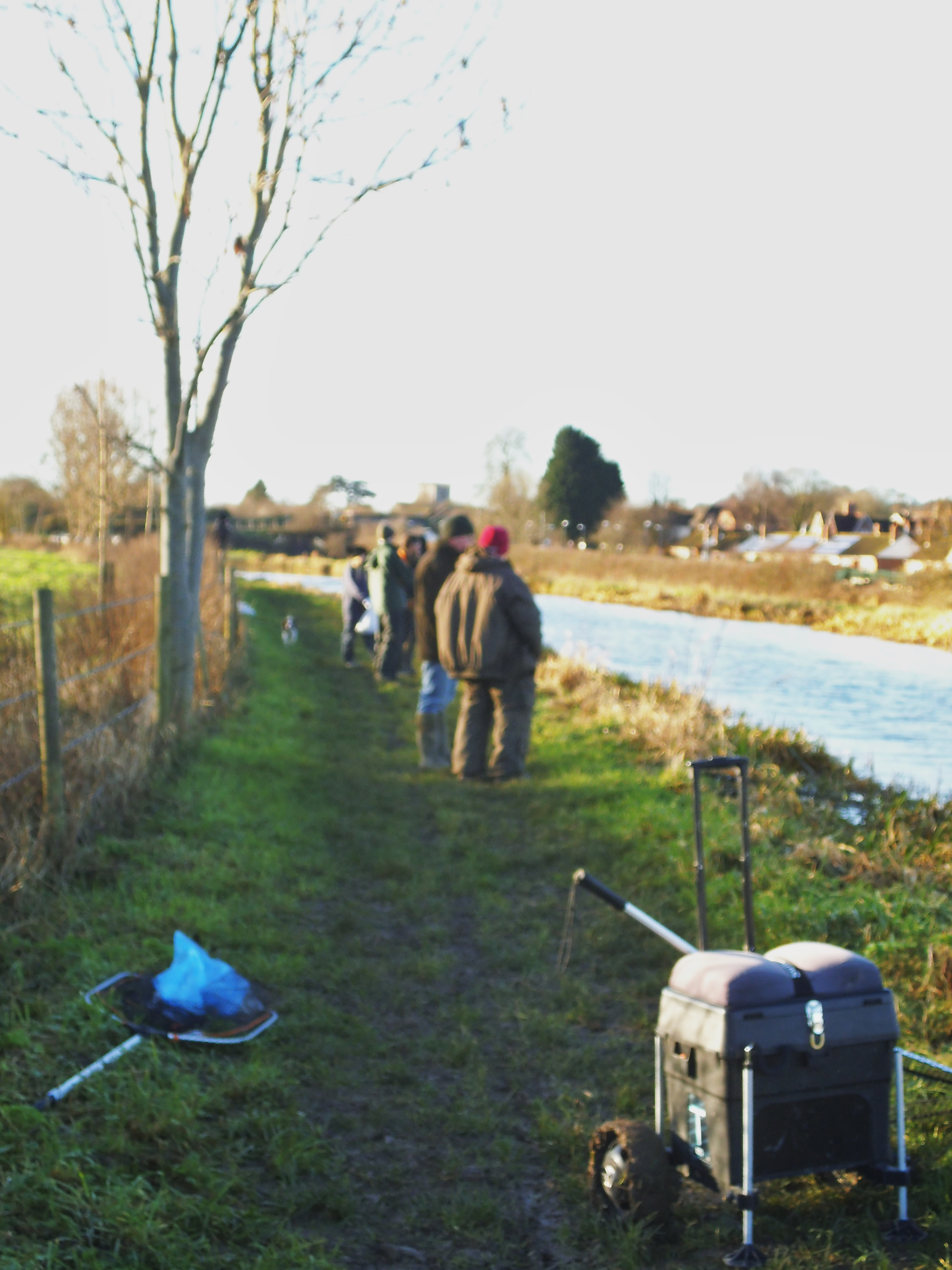
Most of the folk on the first stretch are fishermen who kindly offer warnings regarding the dangers of walking the walk. Some are actually fishing; others stand around in groups.

‘Is it an event,’ I enquire?

‘No, it’s just a good spot for fishing’.

‘Can you eat the fish?’

‘Not unless you’re desperate’. You’d have to be. That water looks really murky. I stumble on wondering whether it’s time I owned some sort of walking aid.

DSCF1080

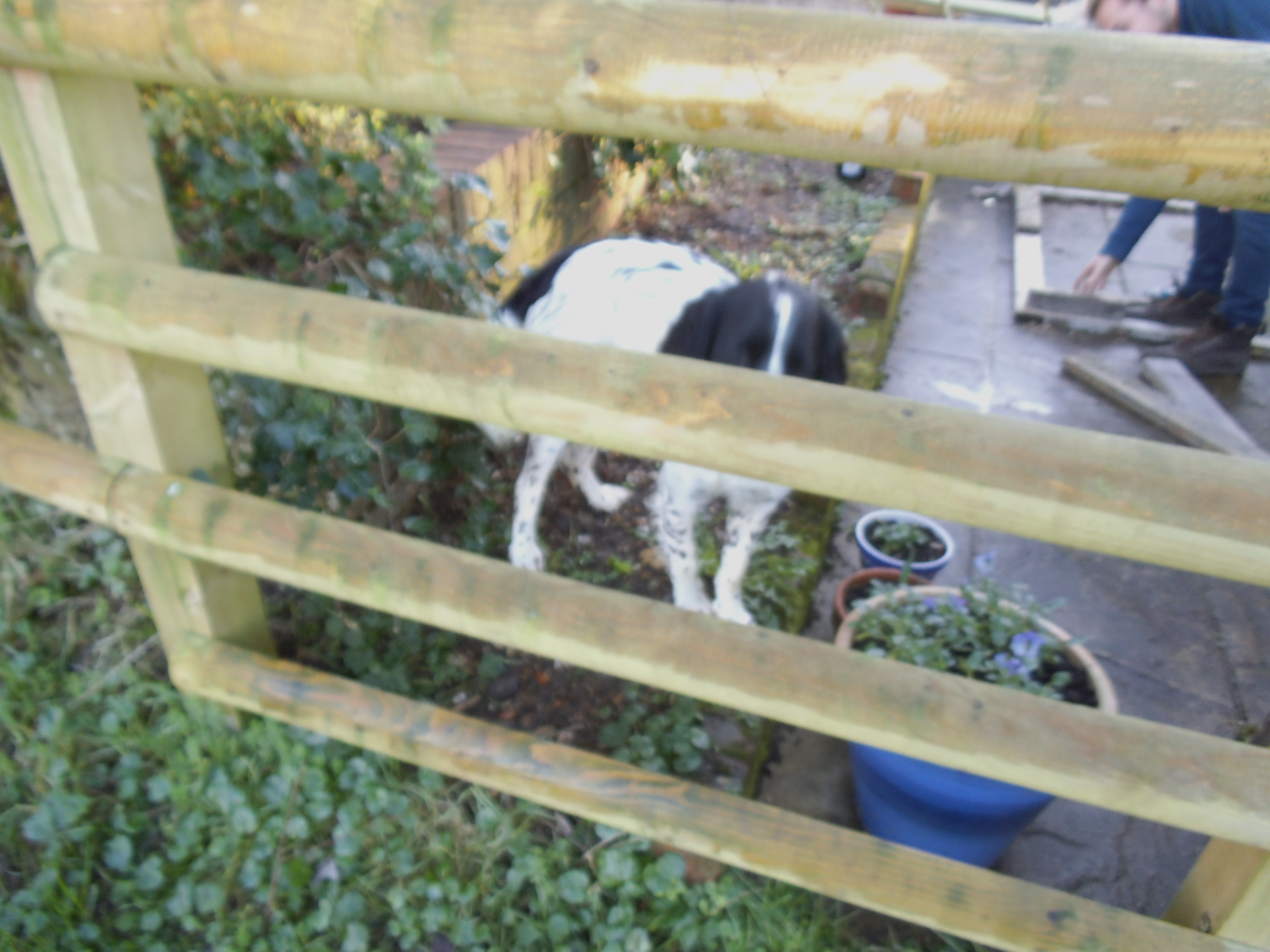
If there’s one thing you can depend upon along the canal, it’s dogs. The ones that introduce themselves today are variously named Sprouts, Roxy, Truffle, Rosie and Bullseye but there are others who don’t stop to speak. Although there are quite a few Labradors around this morning, many of the canal canines appear to be related to Sooty. Heading towards Little Bedwyn, I spy a black and white head looking out from the slats of a wooden gate. Whilst trying to organise my dying camera, Sprouts – for it is he – gives a warning bark before an invisible hand grabs the head from the gate.

DSCF1087A young man, busy doing something or other with a hammer, some nails and a wooden frame, advises me that Sprouts is an excellent guard dog. Sprouts ignores him and squeezes out between the gate slats. He sniffs me in a not unfriendly manner and accepts a few strokes of the head.

‘He’s not like that with most people’ comments the owner. Most people don’t smell of all the dogs on the canal I think but don’t say.

DSCF1092

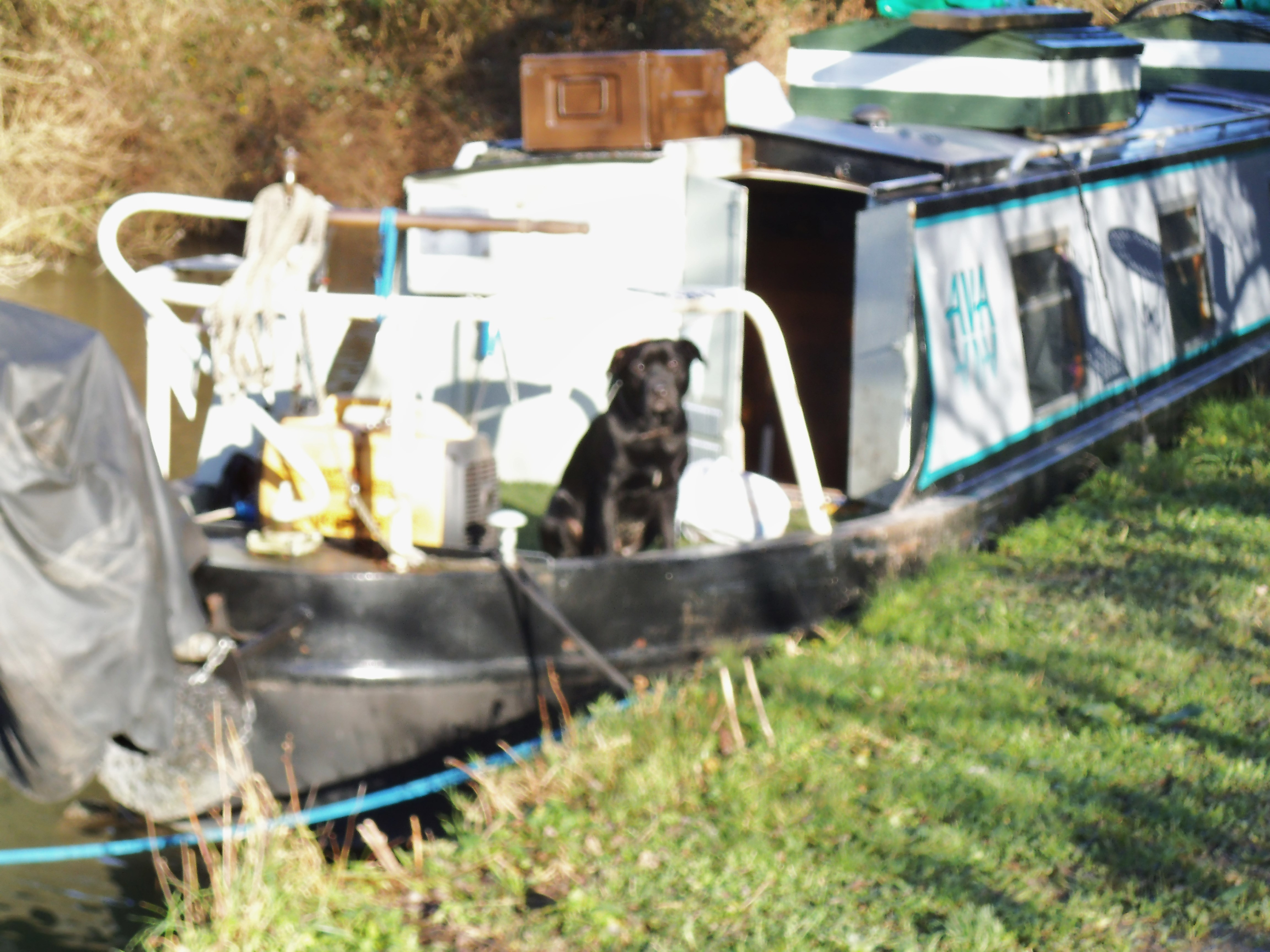
A couple of miles further along, Bullseye is sitting down guarding the prow of his barge. He appears to be tied up and I wonder whether he’ll be friendly. However, as I arrive, Bullseye, who has clearly been involved in some sort of Indian rope trick, rushes down the plank to greet me. Fortunately, he offers felicitations sufficient for me to attempt a photo. Just as I take the snap, I notice Bill Sykes smoking a roll up out of a window further down the barge. He’s looking at me in a way that demands an explanation. For breathing, possibly.

‘I’m taking photos of canal dogs this morning’, I say, showing him my camera by way of evidence.

‘Did he smile’, Bill demands gruffly? Through a grimy window, I notice Nancy and a selection of Fagin’s lads quivering within. Much later, when Jeff asks whether I’ve seen many water gypsies, an image of Bullseye’s family will flash into my head and I will feel guilty and a tiny bit afraid.

Here are some other canal dogs

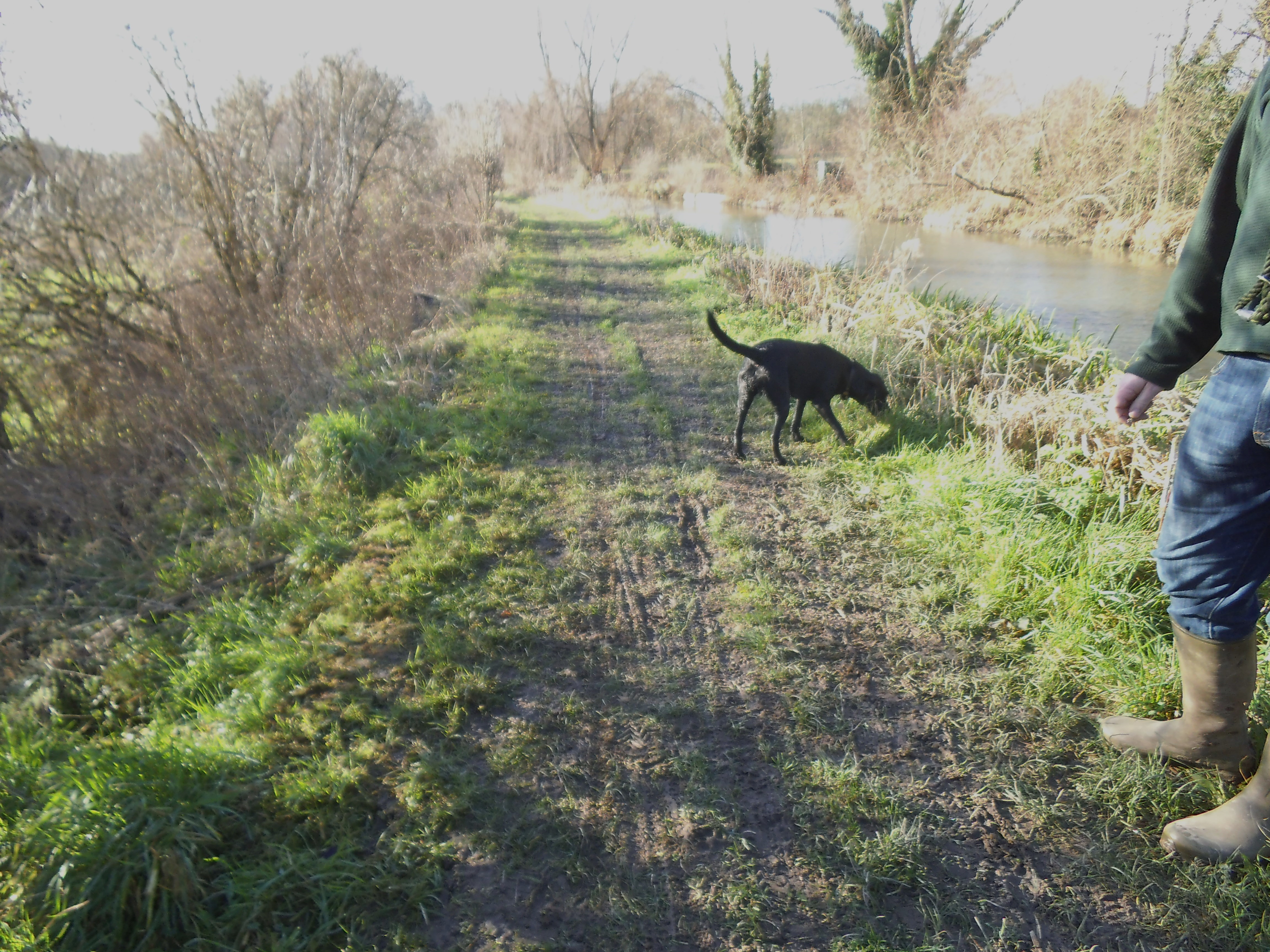
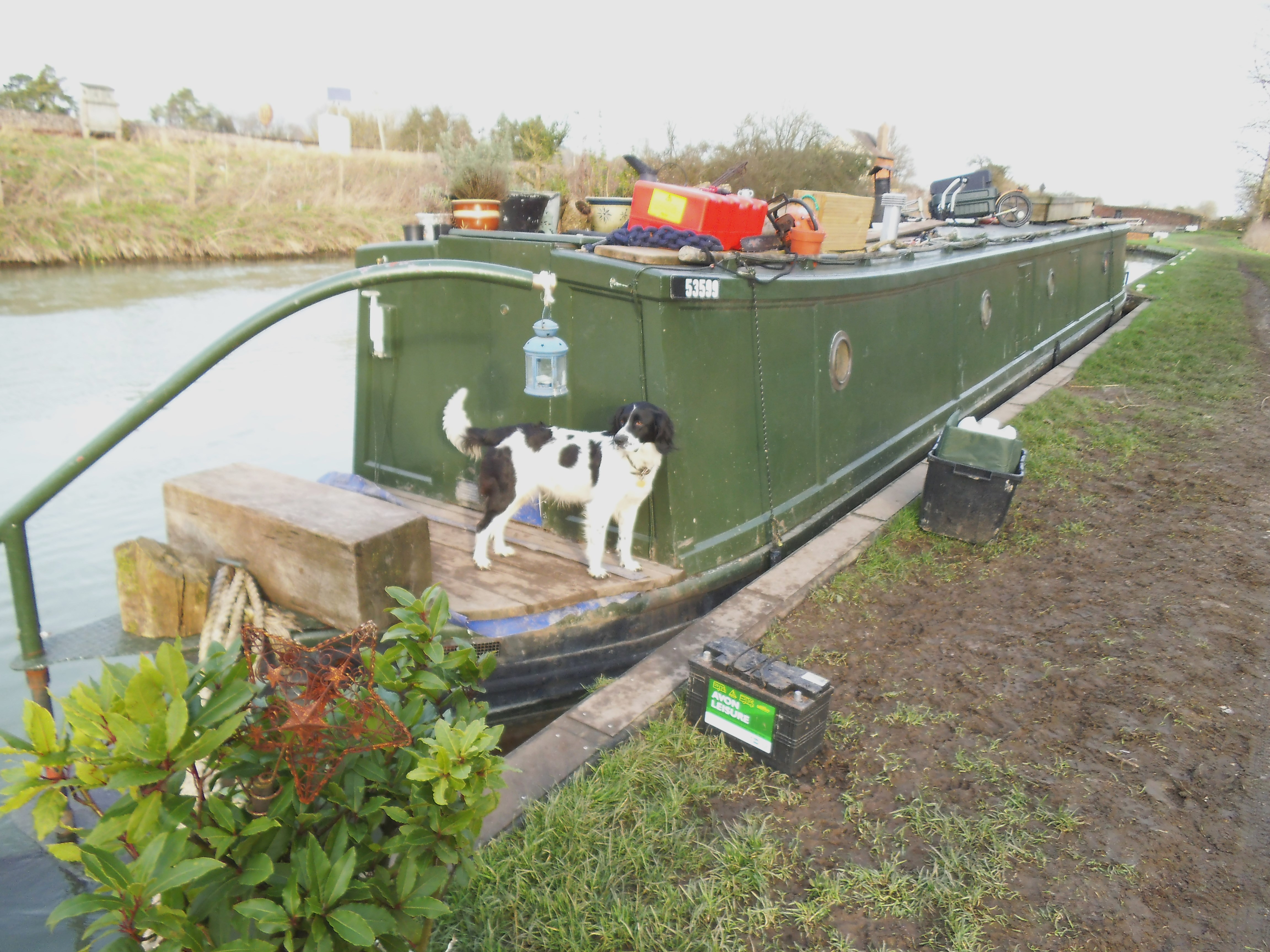
DSCF1067DSCF1107

DSCF1077DSCF1041DSCF1042DSCF1119

DSCF1112

Approaching Hungerford Marsh at a steady pace, I reach Cobblers Lock and, from a distance, see what must have once been the lock keeper’s cottage. It looks idyllic but, once opposite, I find it to be in a dreadful state of disrepair. It’s been stripped out and I wonder whether somebody is rebuilding it as another loved and lovely home.

Not too far away, on the same side of the canal, is a brand new house: huge, white and totally lacking in charm. I didn’t take a photo seeing no need to but I wish I had. I’d already heard rumours of a new marina and hotel in the area and shortly after leaving Cobblers Lock, a passing dog walker told me that the owners of the cottage had sold the land to a developer and built the ugly new house with the proceeds. I don’t really have a view either way, and I guess a marina for twenty boats will bring money to the area if it ever happens.

DSCF1133

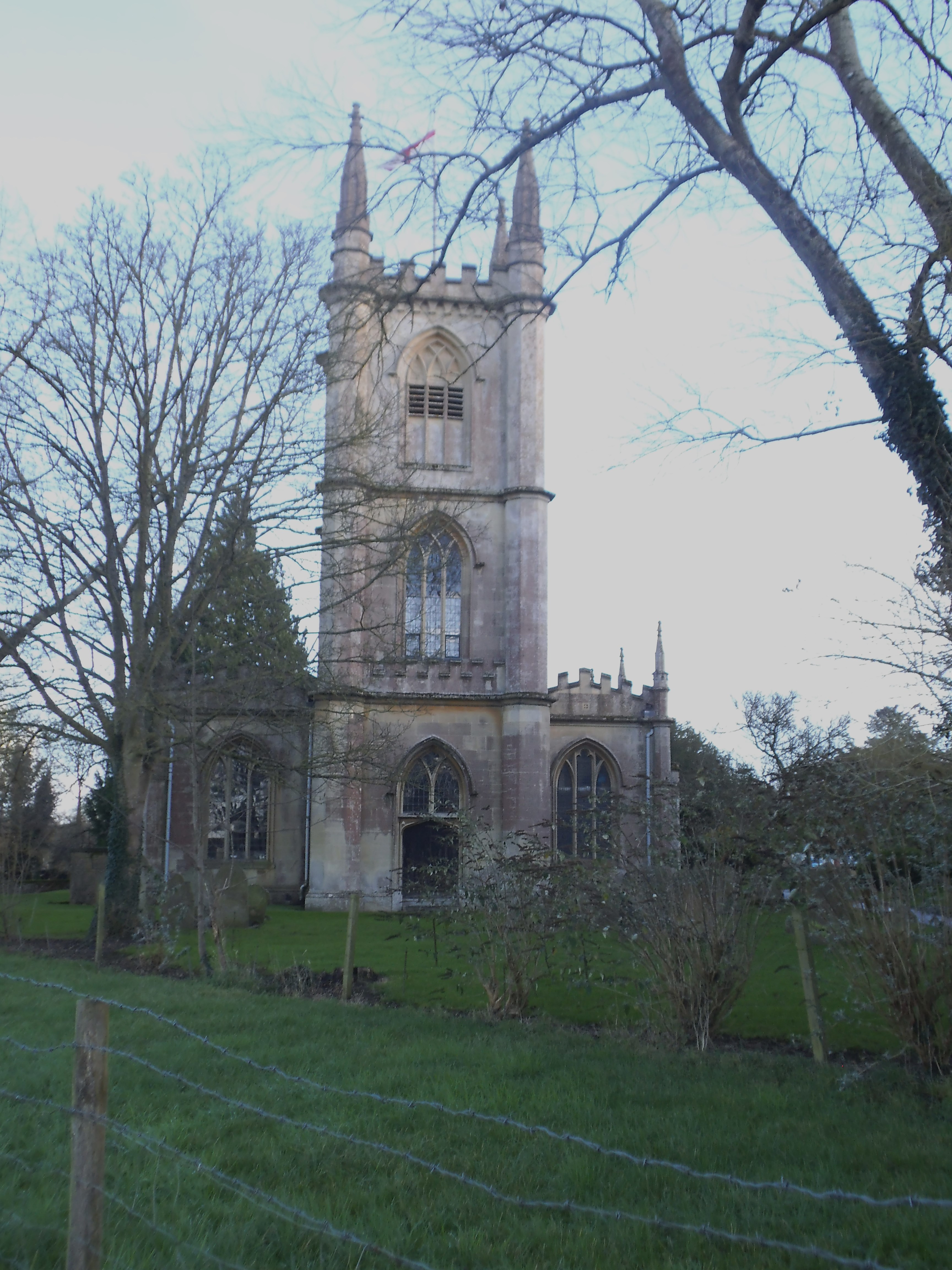
The rest of the walk into Hungerford is delightful. The canal is virtually straight as it passes through Freeman’s Marsh which is protected meadowland of special scientific interest. In the near distance, I see the church tower and the beginnings of Hungerford but before that Jeff is waiting.


DSCF1131

Jeff says the best people on the canal are the fishermen who are, he claims, the only people that don’t talk to strangers. Well, plenty of fisherfolk have been kind enough to speak to me, especially to warn me of the lethal state of the towpath this morning. In any case, Jeff never stops talking or catching fish – tiny roach. Jeff’s been married twice but he thinks he’s allergic to it. He wants to know what I’m up to and I make the mistake of mentioning the canal trust. Jeff’s been in correspondence with the trust for many years, man and boy. I feel obliged to ask why. It seems that the main problem is boats that overstay their welcome. On further investigation, I determine that this means any boat that’s moored anywhere on the canal where people need to fish. Jeff can quote all the relevant regulations and does just this when he finds out I know nothing about anything. Jeff tells me where he lives – Thatcham – and asks whether I’ll be travelling that way at any time in his remaining lifetime. Jeff asks if I know where I’ll be going for coffee in Hungerford but just as he’s about to make a plan of sorts, a stranger stops to ask an important question about roach. Jeff seems cross at this interruption but I take the opportunity to run away.

DSCF1141

In Hungerford, in a muddy state of disorder, I peer into a tempting vintage shop and see Lottie in her cage. ‘Oh, why is Lottie in a cage’, I demand passionately? But I already know the answer – so that she’s not kidnapped and forced to live a life on the canal as the sex slave of Bullseye. Lottie’s owner, probably in an attempt to rid her shop of a filthy old woman pronto, releases Lottie from the cage in order that a photo can be taken. Lottie is naturally ecstatic and jumps all over me gratefully taking in all the smells of all the dogs she will never meet.

Once I’ve partaken of an organic hot dog at the John of Gaunt, discovered that the Kennet and Avon Canal Trust joint will not open this side of Easter and ascertained that there are no trains due to return me to my car at Great Bedwyn, I’ve exhausted all that Hungerford has to offer. I enter a handy florist’s and ask whether such a thing as a taxi rank exists. Unexpectedly, the florist informs me that the rank is right outside the shop. Joy is short-lived:

‘Don’t expect a taxi along any time soon’, says the florist pleasantly. ‘In fact, don’t expect a taxi at all’. I am pointed in the direction of the telephone number of a taxi company on a map of Hungerford which is almost as big as Hungerford itself. I call the number but am directed to a voice mail service. I suppose they’re still on Christmas holidays. Just then, a people carrier arrives driven by Mike who has nothing to do with the missing taxi service. I happily pay him a suitable fee to take me to my car in the flooded, pot-holed area next to the canal bridge at Great Bedwyn.

‘Don’t go in’, I say, ‘it’s full of pot-holes’. Mike ignores me and turns in.

bed27


‘Bloody hell’, he exclaims in surprise, ‘it’s full of flooded pot-holes. Do you want a card’, he asks? Too true my good man. You’re exactly the sort of person an independent traveller needs at the end of the year.


And now for something different: the view from the bridge at Hungerford looking west where the next part of my walk along the Kennet and Avon will begin. Watch this space.

DSCF1139