
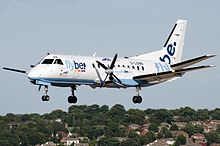
What is regarded as an irritation in Lyons is nothing short of a curse by the time it arrives in Avignon. Thus, in our increasingly noisy prop plane, we are blown into town by the force of the mistral. Having descended dramatically, many miles north of our destination, we fly alongside the mighty Rhône as if we might be a lonely WW2 bomber, returning from a bridge bombing sortie, in an attempt to reach HQ before the enemy. In this instance, the windy enemy, hot on our tail, was also by our side. The pilot did his very best but, nonetheless, we arrived buffeted and shaky; feeling the need to make post-hysterical comments with folk we’ve never seen before and will never meet again in order to disguise the fact that we’d just shared a near-death experience.
The planes of yesteryear carried no such leisure-seeking passengers as, directed by lone pilots, they flew up the Rhône looking for trouble. On 19 August, 1944, an allied bomber left the river and flew along the railway track until he arrived at the station in Pierrelatte, where he deployed bombs and grapeshot to destroy what he had mistaken for a German military train.
This was the infamous Ghost Train which had begun its journey to Dachau, from the south-west, some weeks previously. To begin with, there were 900 doomed souls aboard. Naturally, these mostly comprised those unfortunate enough to have been born into Jewish homes. However, other passengers included Italian anti-fascists and French communists with the entire cohort emanating from 23 countries. Since the inception of the journey, the train had been stopped and its route reorganised many times. On the way, its sorry cargo, having had their space-taking dead friends and relatives disposed of at various points, had been fed by both the Red Cross and the Quakers and stopped by a squadron of allies at Remoulins; all of which begs obvious questions regarding the continuation of its relentless course northwards.
By the time the Ghost Train arrived at Pierrelatte most of those aboard had been entombed in the carriages for 10 days. Their number now totalled 700. When the bombing and grapeshot began, the German soldiers ran away. Those aboard, still in possession of clothes of a recognisable colour, contrived a makeshift tricolour to wave at the pilot but to no avail – they were not seen.
If you choose to research Pierrelatte today, you’ll find numerous references to the Gustave Jaume School and nothing to explain the origin of its eponymous title. On 19 August, 1944, Doctor Gustave Jaume became a hero. Alerted to the carnage at the train station, he arrived to treat and safely transport the wounded. With his help, and that of friends in La Resistance, those deportees who were able, were accompanied to the safety of the Spanish border, via Nimes.
As with so much in France, few are aware of events at Pierrelatte. If you go to the train station and look carefully, you’ll find a small plaque on the exterior wall offering a limited account of history. We also know that on that infamous date, the sun was oppressively hot. No-one knows whether the mistral was blowing along the Rhône.
 Donald and the Weasels