
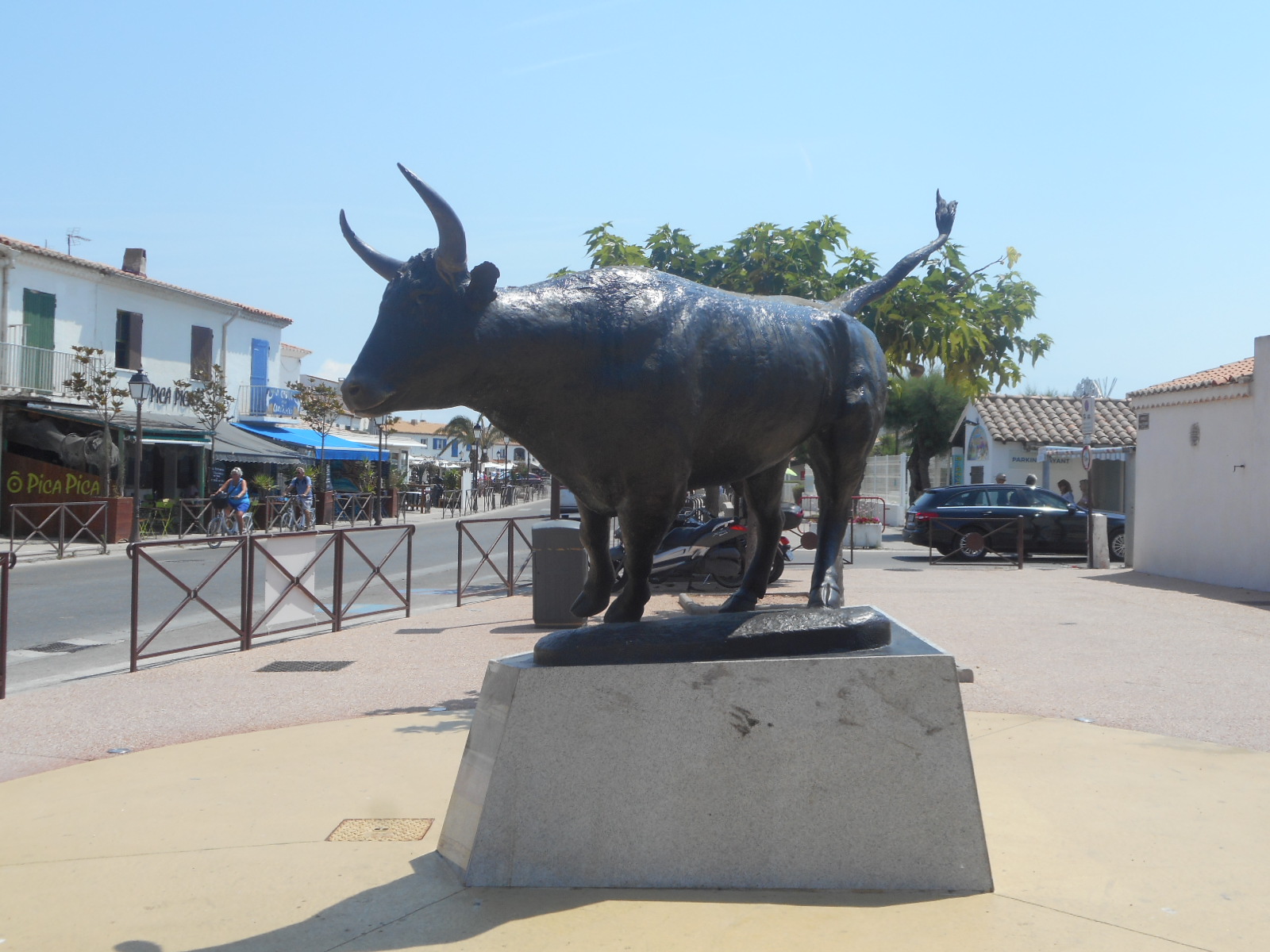
 The man across the lunch table in St Maries de la Mer, one who knows quite a lot about a variety of things, informs me that the Camargue is an invention. I don’t necessarily disbelieve him but it’s hard to see how a wilderness can’t be natural. Re-wind.

The Camargue is the largest Mediterranean delta after the Nile. It’s famous for rice fields, flamingos, white horses, black bulls and cowboys known as the Camarguaise Gardiens. It’s also a mosquito-infested swamp which one must traverse in order to reach the seaside resort of St Maries de la Mer. It’s like a humid version of Cornwall: one drives across the tedium of Bodmin Moor to arrive at some non-descript joint on the coast where nothing happens until the population has been swelled by 50,000 holiday-makers looking for a beach and some sea-food.
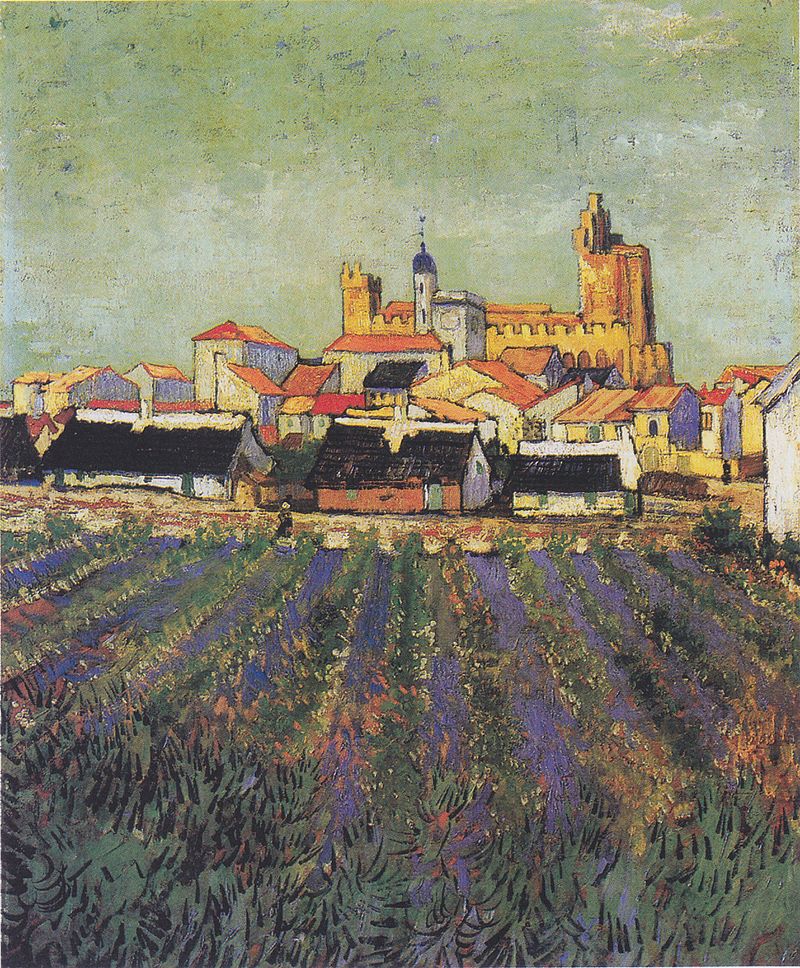
And like Cornwall, it’s off the map. It’s a veritable wasteland that’s on the road to nowhere. Except that artists in their hordes went to Kernow and invented a whole genre of painting. Likewise, St Maries de la Mer has been a magnet for the artistic elite. Hemingway was here as was Picasso. Van Gogh manged to make the place look attractive and Dylan wrote ‘One More cup of Coffee’ in the town. Et pourquoi? Search me: it’s crammed full of tourist traps selling tat and nothing worth visiting.
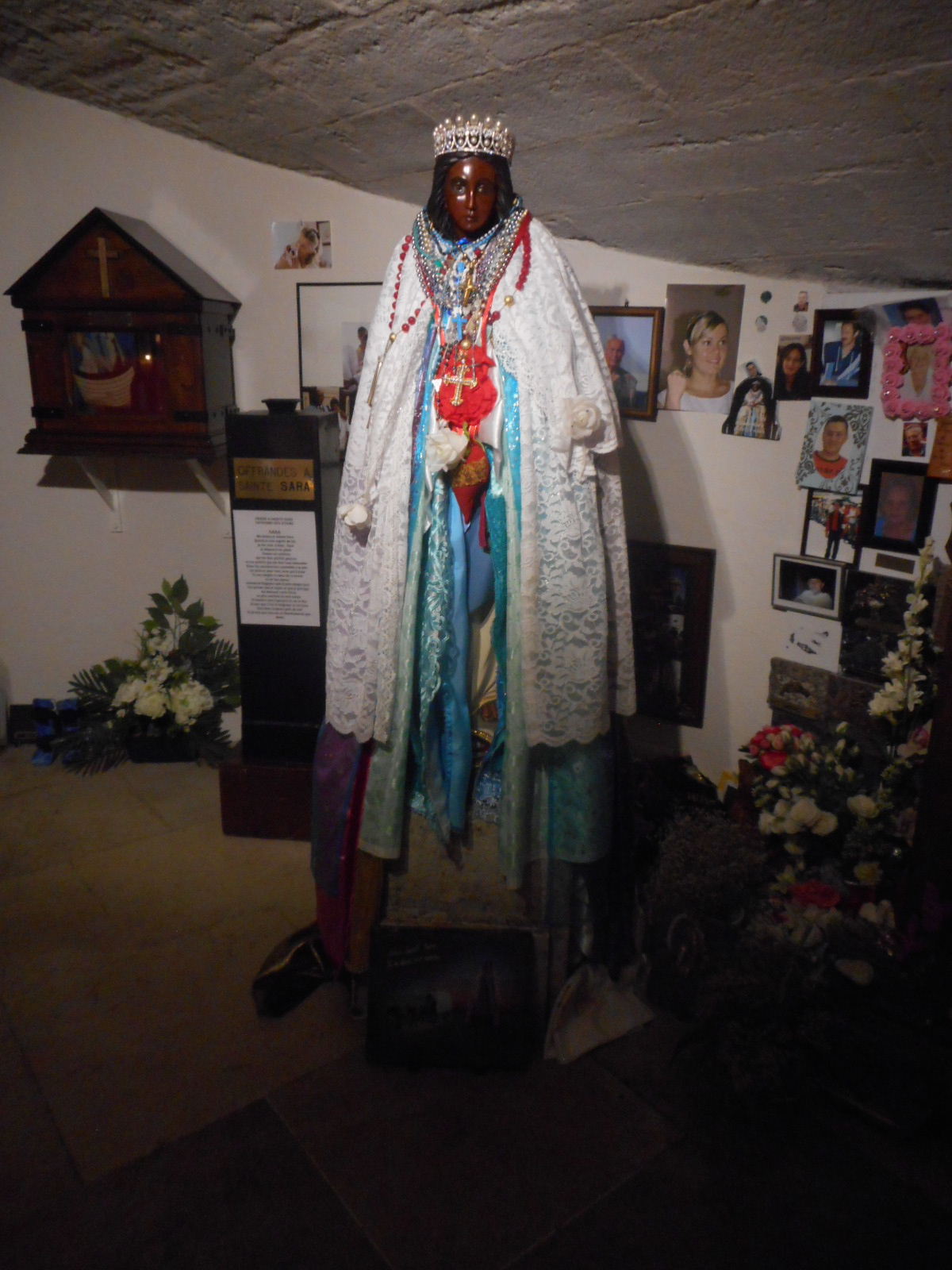
Well, there’s the church. And that’s worth seeing because of the Maries. Weasel readers know all of those stories and although I don’t want to repeat them, it’s hard to write about the place without reference to assorted persons, commonly referred to as ‘the first family of Christianity’. This town used to be called ‘Notre Dame de Ratis’ – our lady of the boat and the place is still famous for the annual pilgrimage of world-wide travellers of gypsy origin who come to worship St Sarah. And then there’s Folco de Baroncelli – Marquis of said parish.
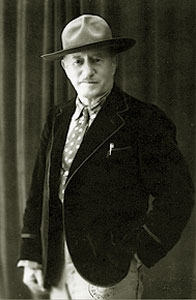
Baroncelli was born into an elite Florentine family in 1869. Unusually, his family spoke Provençal which was considered rather down-market: the language spoken by the poor people. He spent his childhood in Nimes where he developed a love of bulls. Nimes, like Arles, is one of the few places in the area to still follow the Spanish tradition of bull-fighting. And when I say ‘tradition’, I mean killing. But Baroncelli was a fan of the bulls. In 1895, he moved to the Camargue, home of fishermen and ranchers. Re-wind again.
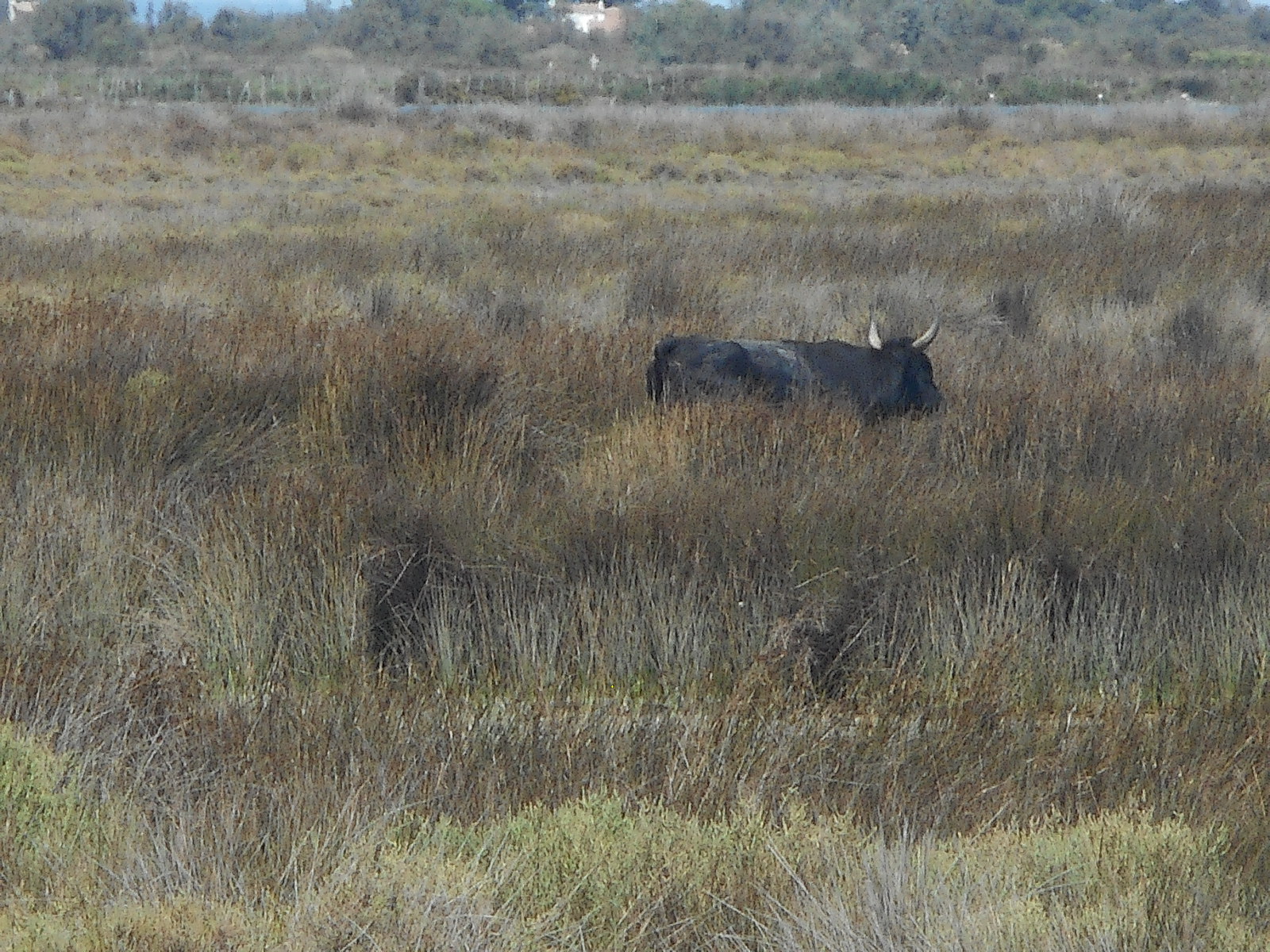
Those famous black bulls were not, originally, an indigenous species. The first attempt to cross-breed Spanish bulls with wild French ones was made as far back as 1869. However, it wasn’t until 1909 that the bull prouvenço was officially recognised, by which time bulls had been moved away from Nimes onto the lower pastures of the Camargue and Baroncelli had also moved south to create the Mandano Santeco, which means ‘holy herd’.
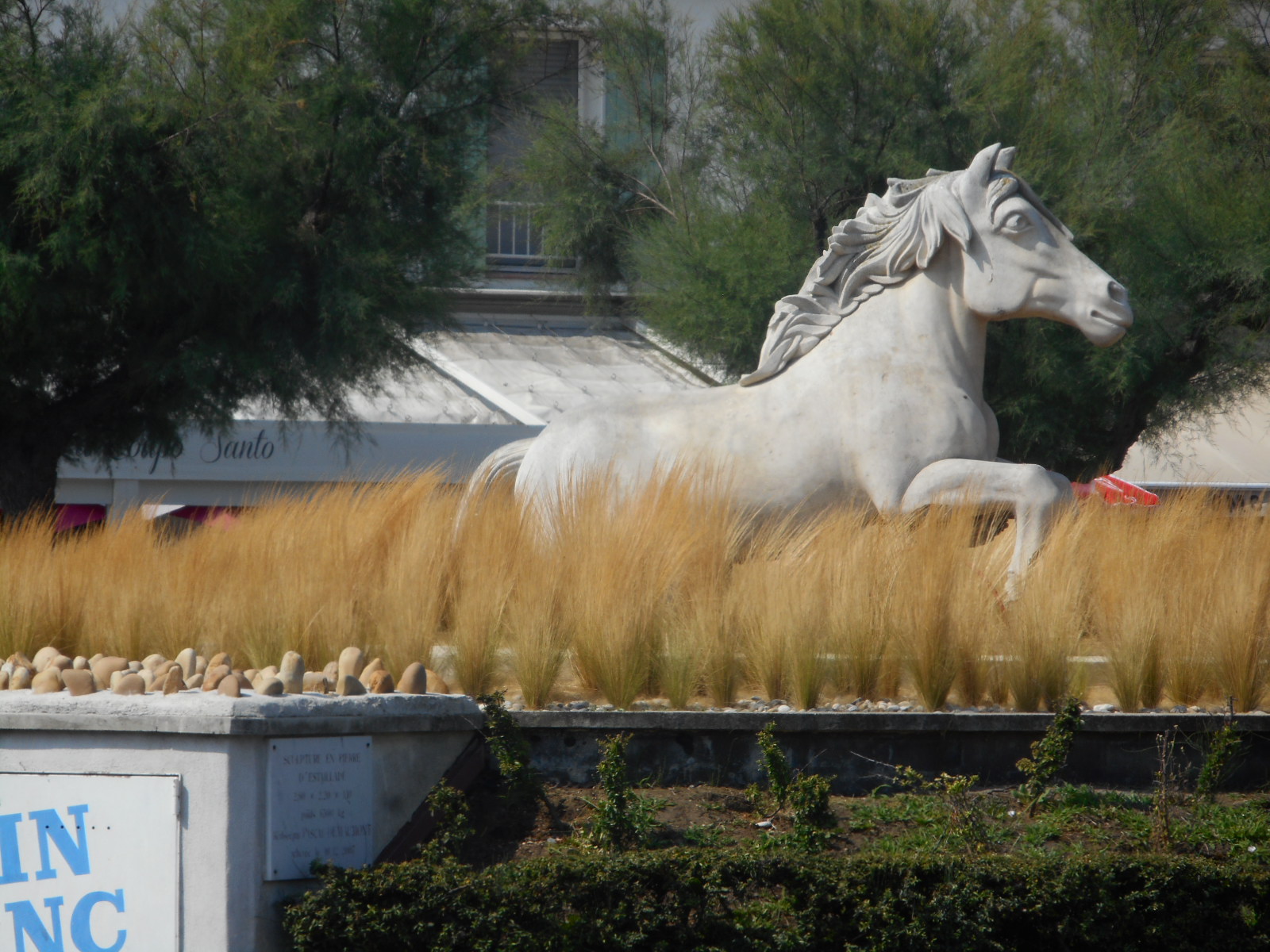
Baroncelli, regarded as something of an unknown hero, lived to promote the region. He was a pal of Frederick Mistral who ‘rediscovered’ the provençal language, for which he was rewarded with the Nobel Prize for Literature. Mistral and Baroncelli started a newspaper called The Aioli with the express intention of promoting all things provençal, especially life in the Camargue. One of Baroncelli’s aims was to gain formal recognition of the Camarguaise cowherds who are latterly known as Gardiens. These days, you can visit any town or village in the South and see the Gardiens riding the white horses which belong to one of the oldest breeds in the world and are the last of the working horses still bred and ridden in France.
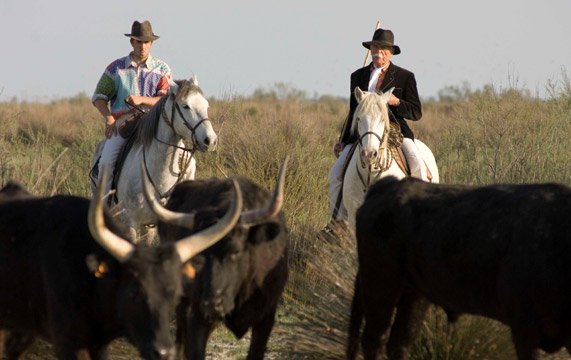
You’d be forgiven for thinking their riders had been admired for ever but it was only in 1909 that the Nacioun Gardiano was established to defend the traditions of the Camargue. And who was the inspiration for all of this? Bring on the Americans. Inspired by the history of the Wild West, Baroncelli met Buffalo Bill who had brought his travelling circus to Nimes. Bill journeyed down to the Camargue along with his ponies, his native Indians and a film crew which gave the place an international credo.
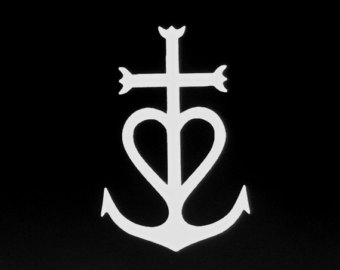
Baroncelli codified the activities of the Gardians thereby conferring an hierarchy onto the former cowherds. He introduced the Camargue horse races and, ever a promoter of minority rights, won the gypsies, who’d been travelling to the area since 1448 from all over Europe, the right to worship St Sarah publicly. Finally, he commissioned Hermann Paul to design what we now recognise as the Camarguaise Cross, inaugurated in 1926, which embodies faith hope and charity and completes the stories of the Camargue by combining the Gardiens, the fishermen and the Mairies.
Thus, my friend who tells me the Camargue is an invention is not wrong, for Baroncelli created the social identity of a swampland. Sadly, the end was not a happy one. In 1942, his farmhouse was requisitioned by the German army. In 1944, they destroyed it when they left the country. The ashes of the inventor of the Camargue were eventually laid to rest on the remains of the place he loved.
 Donald and the Weasels