
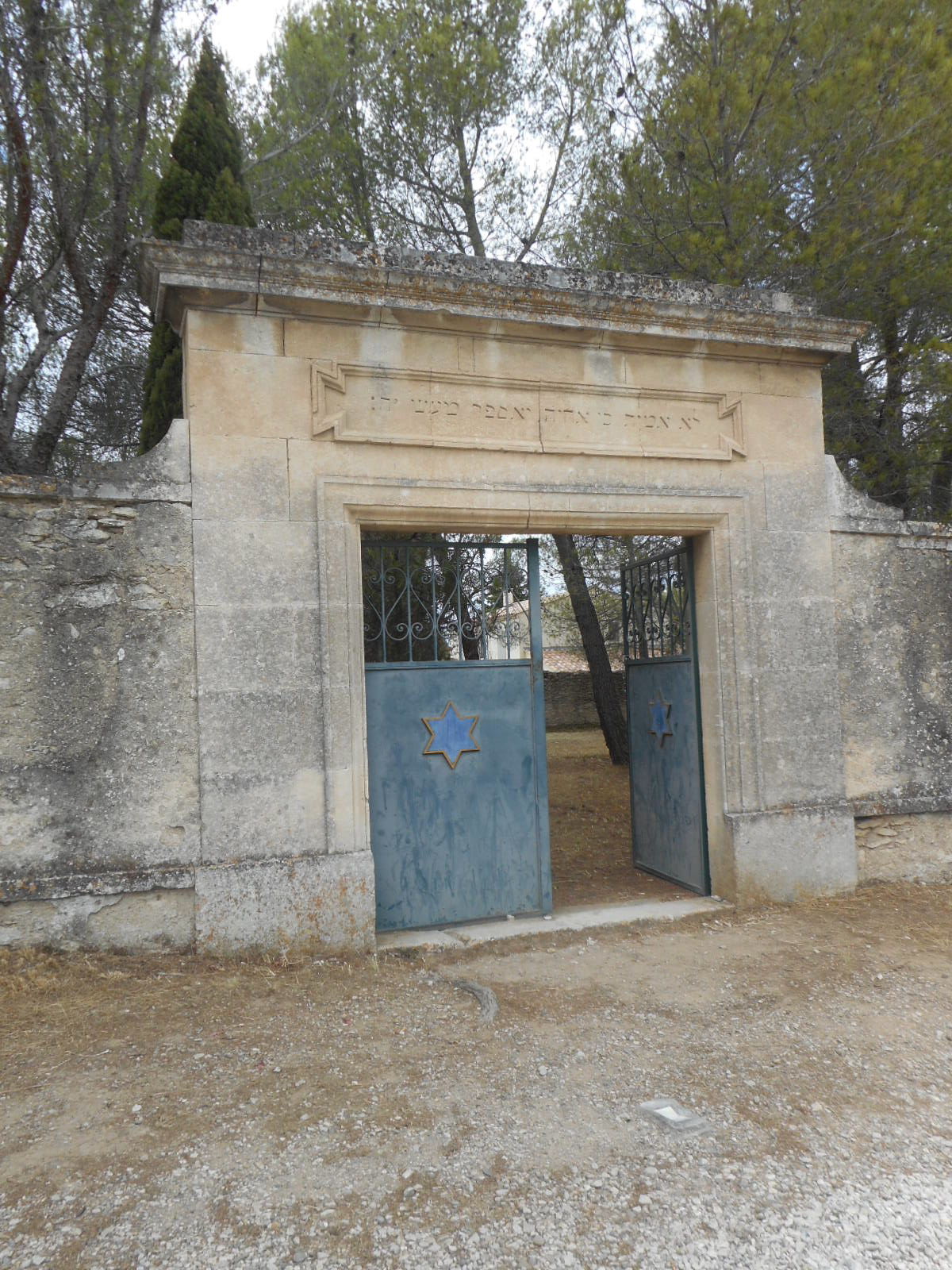
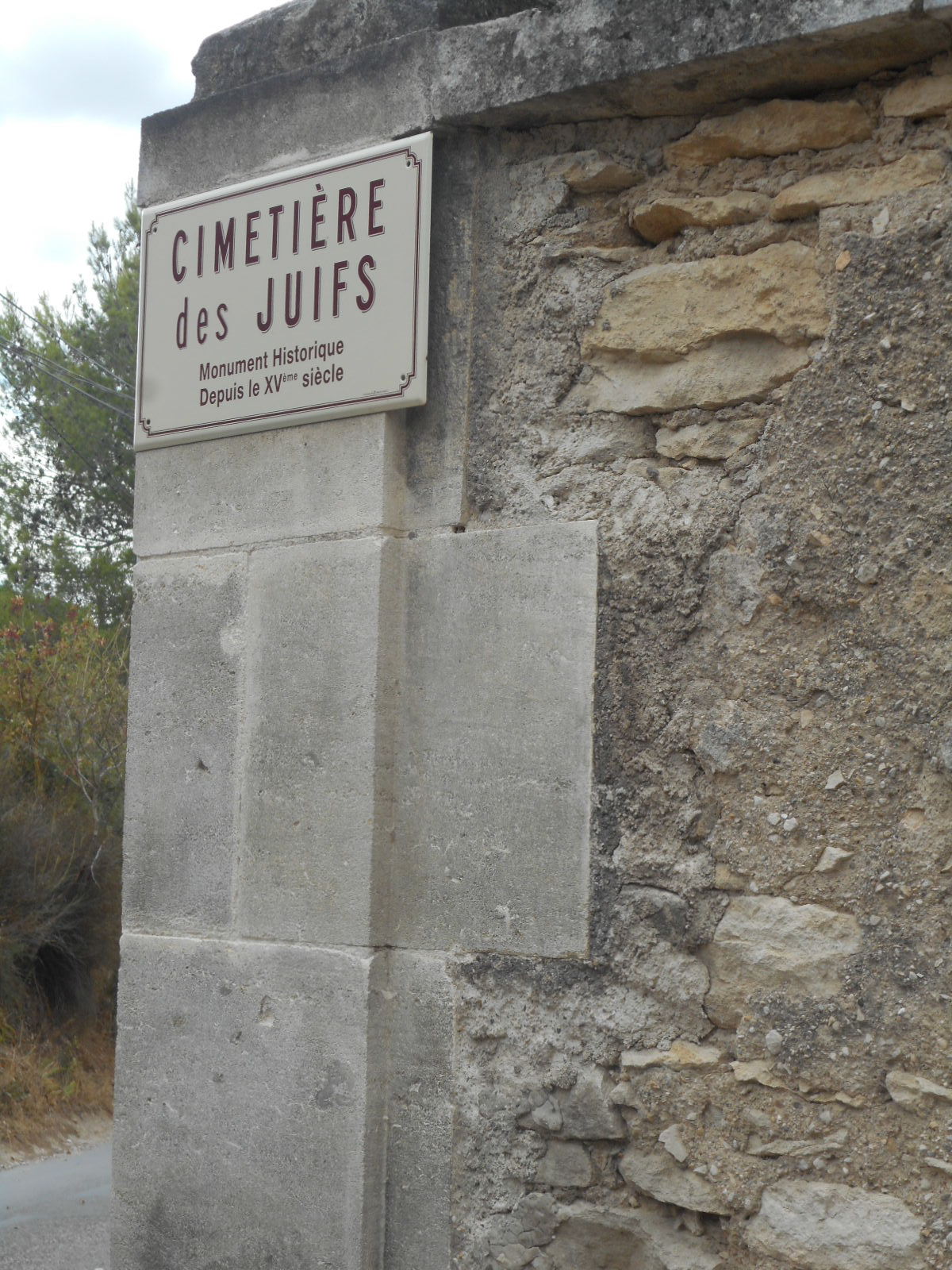
 On the second of the Journées de Patrimone, I visit the Jewish cemetery in St Rémy de Provence and, before I proceed with this account, I’d like to say that, whilst I learned a lot today, I must apologise in advance to those of the Jewish faith who are familiar with what follows.
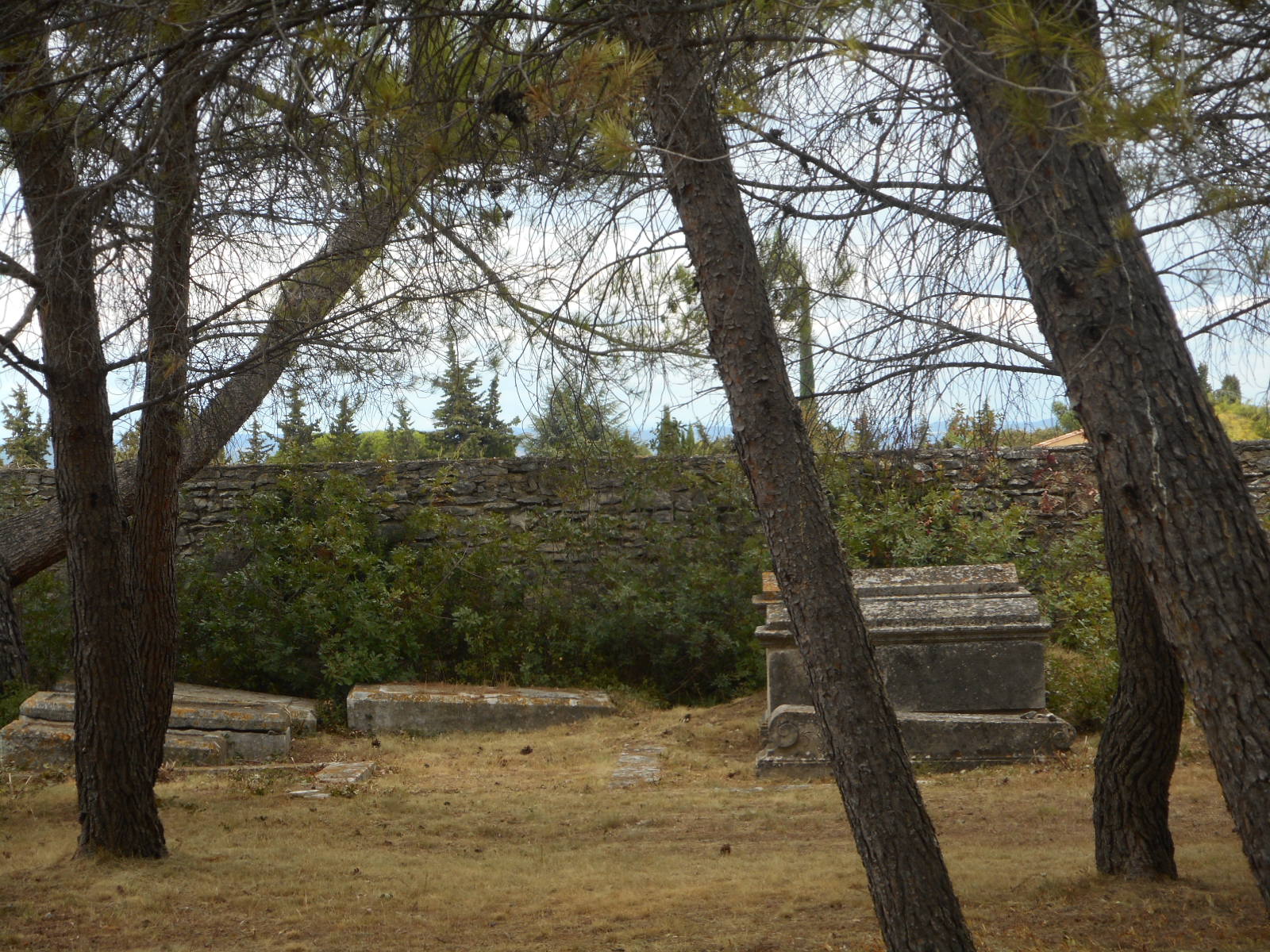 This serene and tranquil cemetery finally closed its doors in 1977 and it’s only thanks to European Heritage Days and the ‘friends’ that we can get in once a year, rather than never. Today, the oldest visible tomb was erected in 1821 and the most recent dates from 1915. However, the cemetery was first mentioned in 1400 and was founded much earlier; indeed, it was built on the site of another medieval burial ground.
 There is evidence of a large Jewish community in St Rémy forever, probably since Roman times. Records show that in 1339 all meat sold in the town was ritually slaughtered (Kosher) and the locals made a formal complaint of it being tasteless. St Rémy’s famous son, Nostradamus, was born of Jewish ancestry although his family later converted to Catholicism. The Jews were expelled from Provence in 1500 by Louis X11 and they had to wait until the French Revolution of 1789 for official recognition of their right to return and confirmation of their equality with everyone else.
 Back in the cemetery, I see a couple placing a stone on a tomb. Actually, I’d noticed that several of the tombs have stones randomly placed upon them. I gave this half a thought: in Provence, you can see rooftops adorned with stones but this is a practical solution against the whims of the Mistral. Surely this can’t be true for long-ago graves.
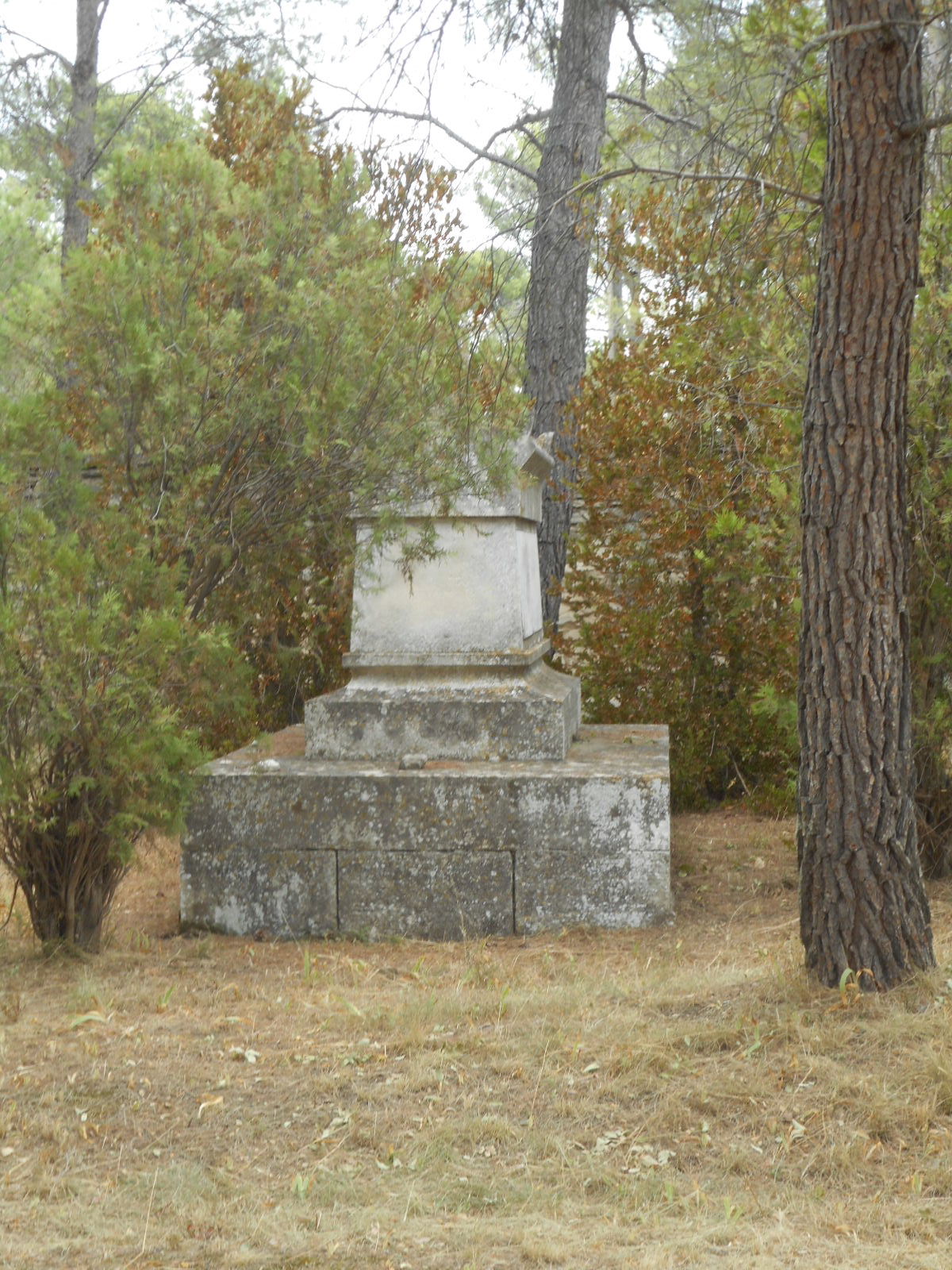 I pluck up courage and ask Madame from ‘the friends’. I don’t mean I need courage to ask, but I do need some extended vocabulary to understand the answer. Actually, it’s not too tricky: she gives me some alternative explanations which I later research and find her perspective the best. In no particular order that I know of, they are as follows:
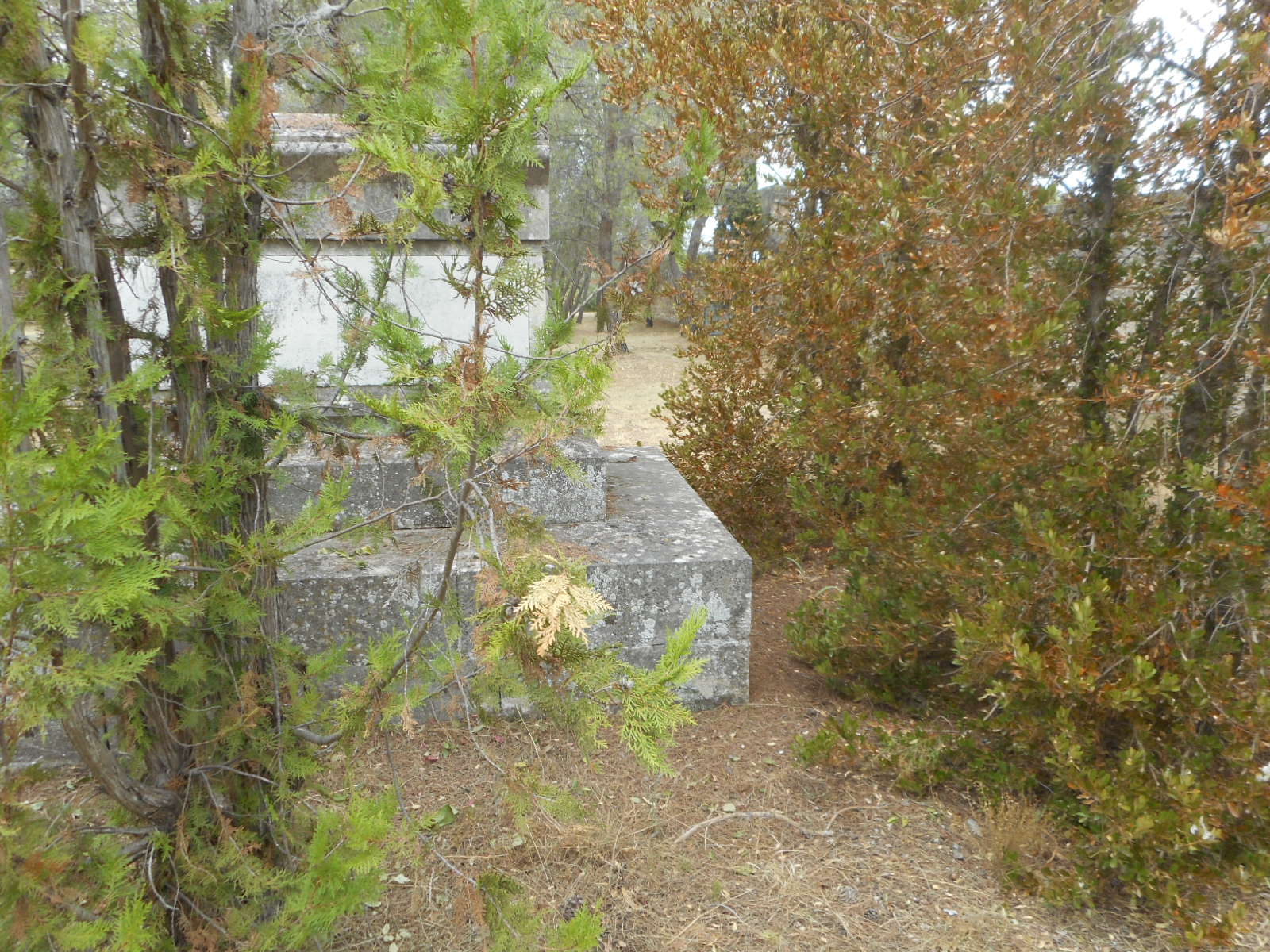 Before the time of caskets and coffins, the deceased was buried in a shroud in the ground so the stones acted as protection against the ravages of wild beasts. Par contre, the stones, which are placed with the left hand, keep the souls in place, thus preventing a haunting. And yet another alternative is the view that placing a stone is a symbol of sending the dead on a safe journey (because the stone represents strength) and a reminder of the resurrection.
 I was a bit confused by the latter. Pragmatically, it makes sense: if the stone is removed, then the soul can escape – hence the rolling back the stone from the place of Jesus’ burial. But I didn’t think that this religion believed in the resurrection; what do I know?
Anyway, Madame is on a roll with her audience of one and begins to tell me about the Germans. It’s true that the German army requisitioned St Paul de Mausole in WW2 but trying to confirm her story is a non-starter. Nonetheless, I’ve no reason to disbelieve her. Weasel readers will be familiar with St Paul de Mausole which is where Van Gogh placed himself after the episode in Arles. And where he produced 150 works of art including Starry Nights. So, the Germans threw out all the patients and closed down the cemetery. Just as contextualisation, this little part of the world was, in 1940, ordained as part of the Free Zone under the protectorate of the dubious Vichy government. By 1942, the Germans had moved in and begun a systematic round-up of French Jews.
 Everything she passionately recounts begs another question but now more French people have arrived and the discourse is too speedy for yours truly. Still, it’s another piece of local history and culture for me from yet another true representative of Heritage Days.
 Donald and the Weasels