
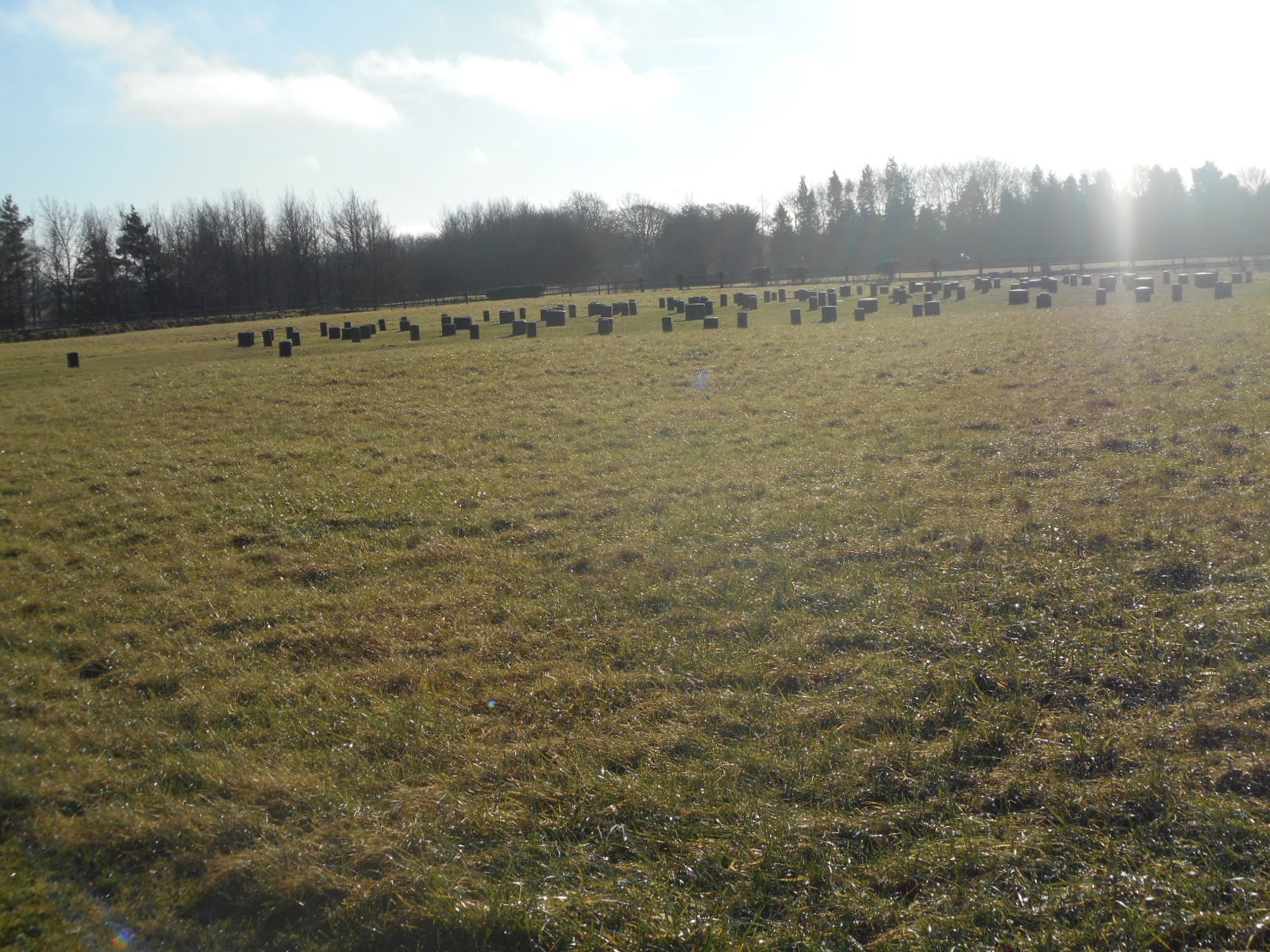
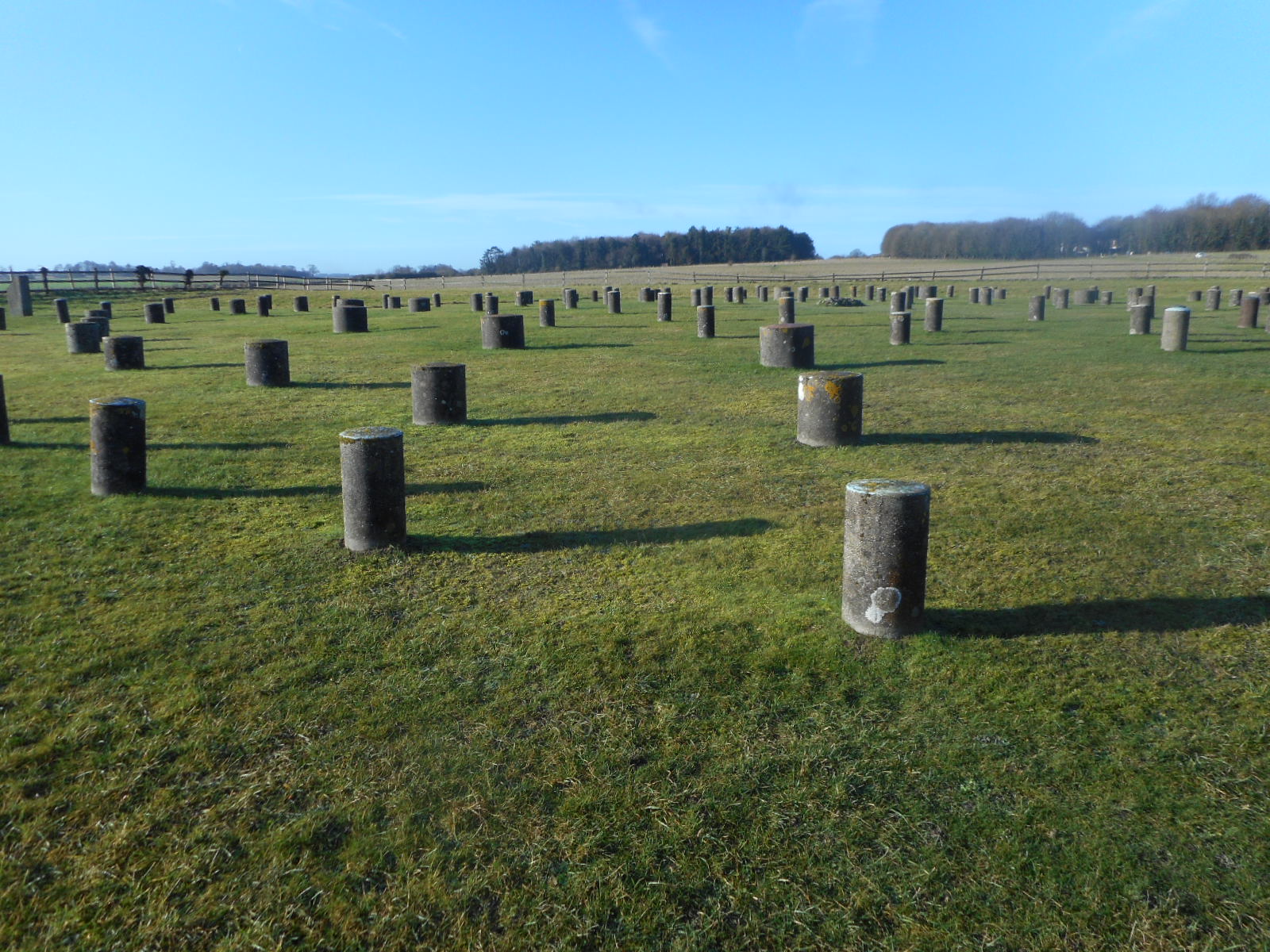
 And so it begins, somewhere around 4,500 years ago at Woodhenge. The weather is nothing short of glorious which is fortuitous as I’ve been looking forward to this walk in the Stonehenge landscape which, according to the instructions, is a mere 5 miles. There are, of course, numerous explanations for the existence of everything around here. Suffice to know that Woodhenge was only ‘discovered’ in 1926 with the advent of aerial photography and that at the centre the burial of a child with a split skull was found – allegedly, a dedicatory sacrifice.
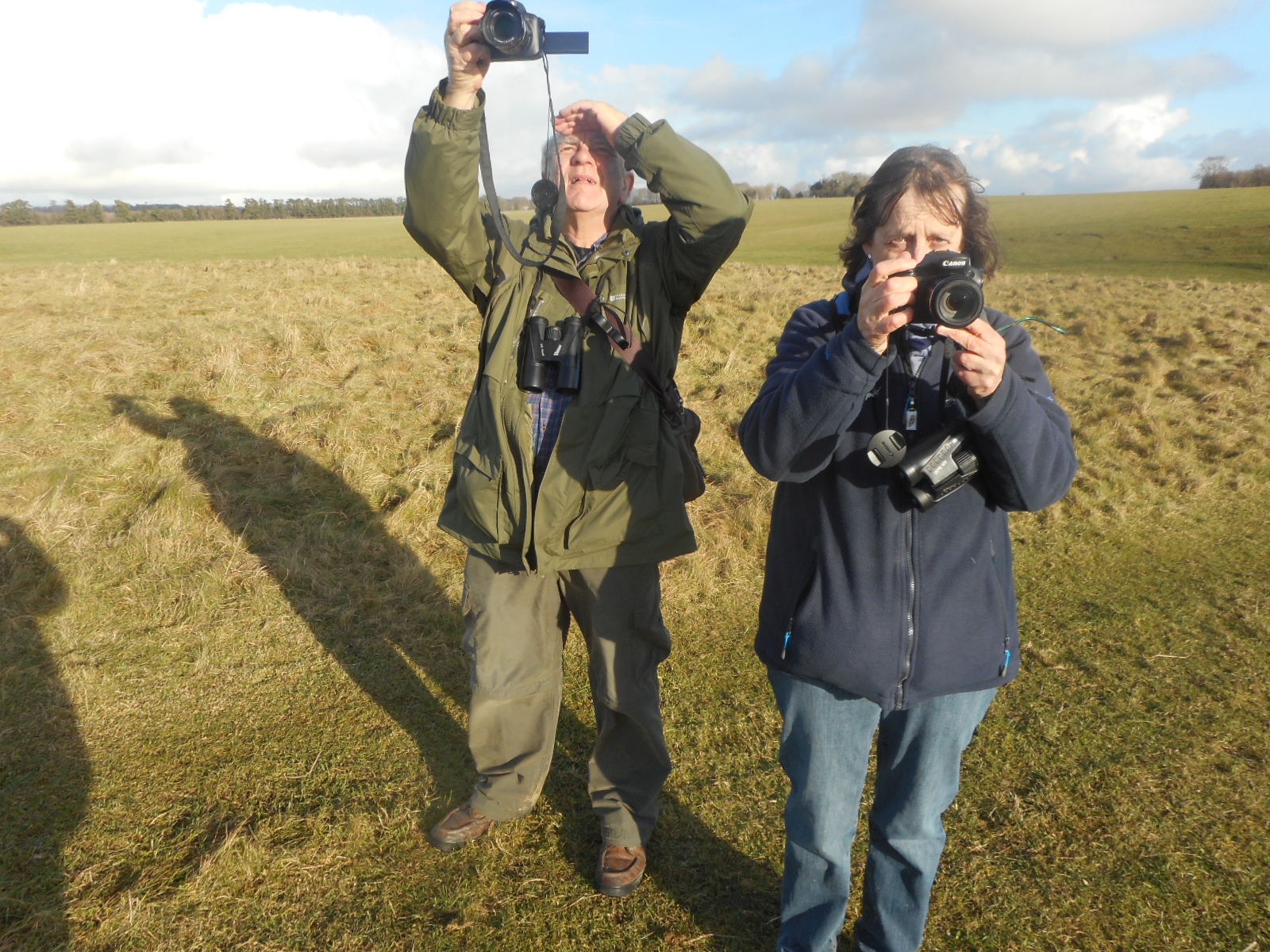 For once, I’m walking in company. Tony and Sally are keen photographers and bird watchers. This is good news as they take even longer than I do to walk a few yards. Nothing like people who stride out to ruin a good walk. We amble along, stopping every five minutes to take in something or other.
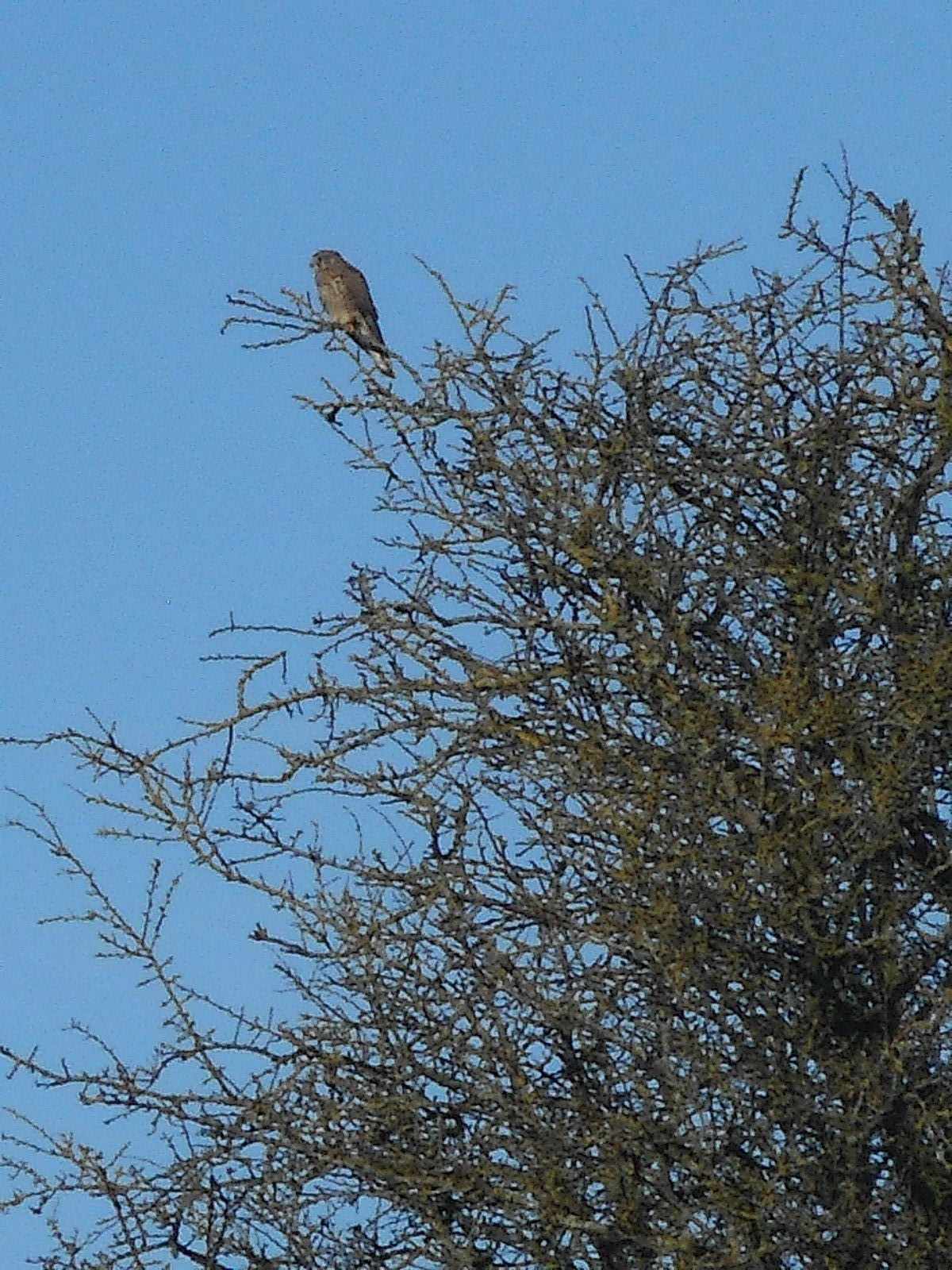
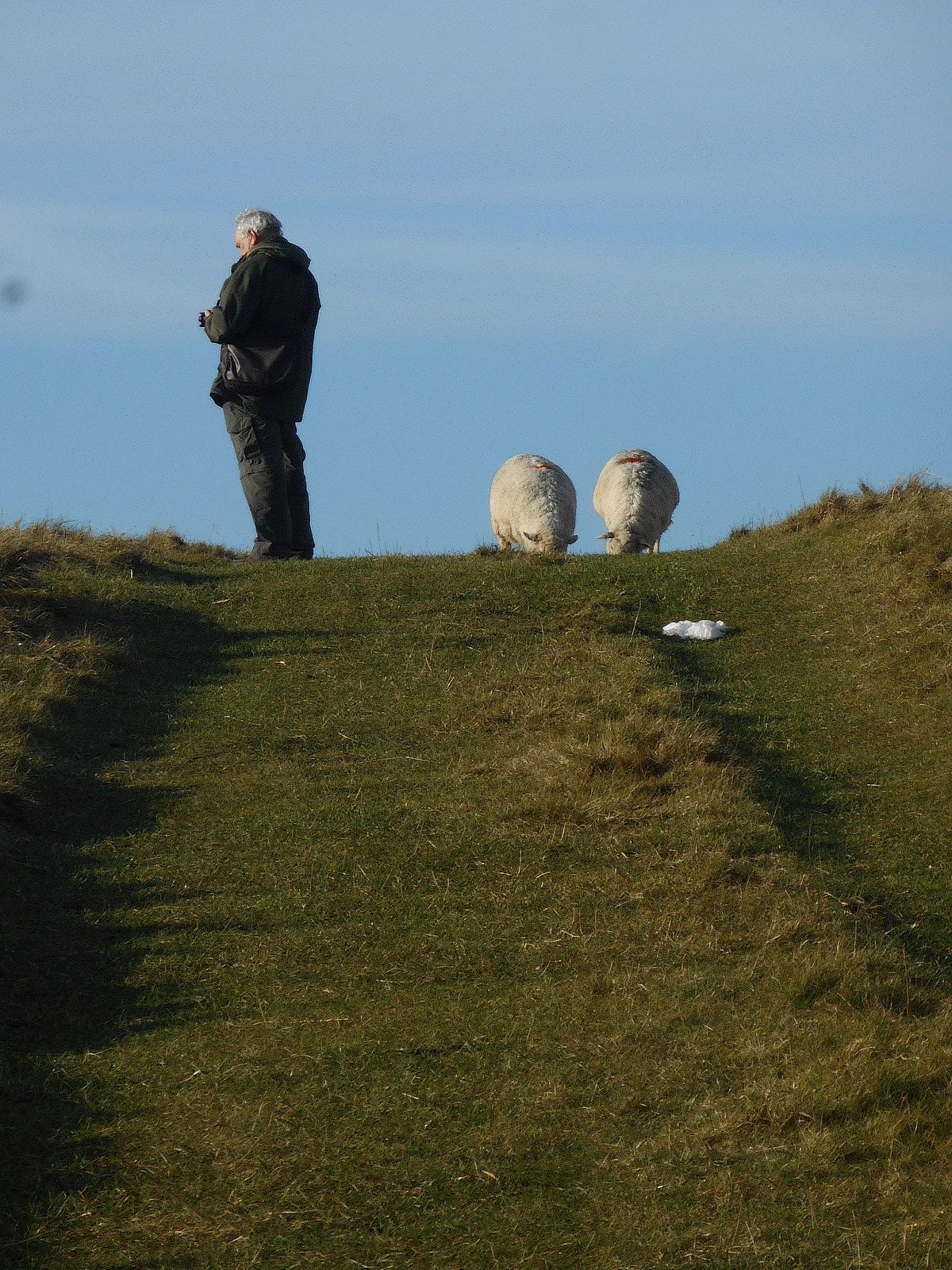
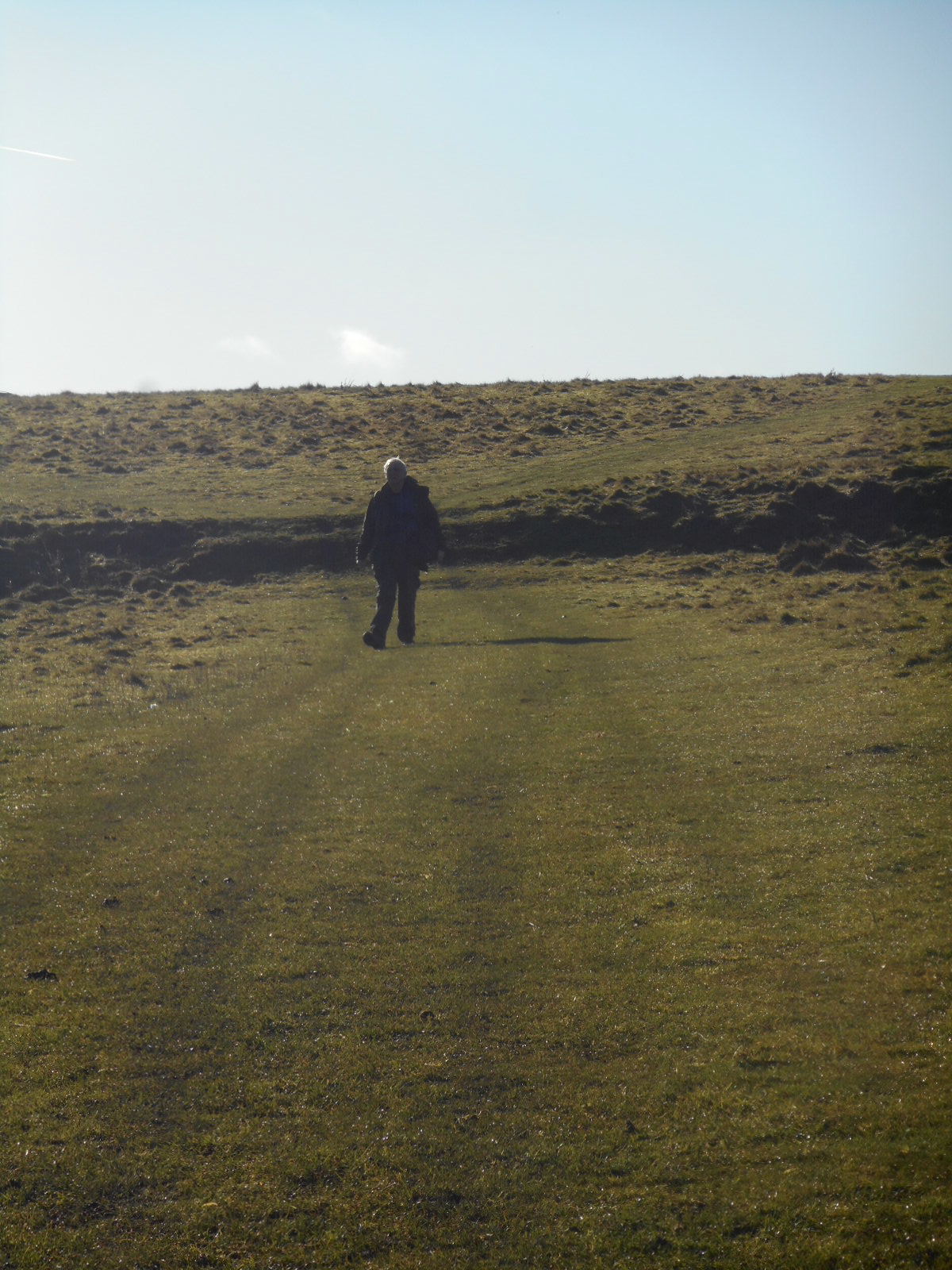 For example, here’s Tony dawdling though Durrington Walls looking for birds. And here’s a Sparrowhawk looking at Tony. Durrington Walls is the largest complete henge in Britain – an earthwork of the Neolithic. It’s thought to be the same age as Stonehenge and, as it used to contain shrines and houses, there’s a suggestion that the folk who built Stonehenge might have stayed here – a sort of stopover for construction workers. I’m not totally convinced – in reality, the stones will turn out to be quite a commute from this place which has proven a bit of a deviation.
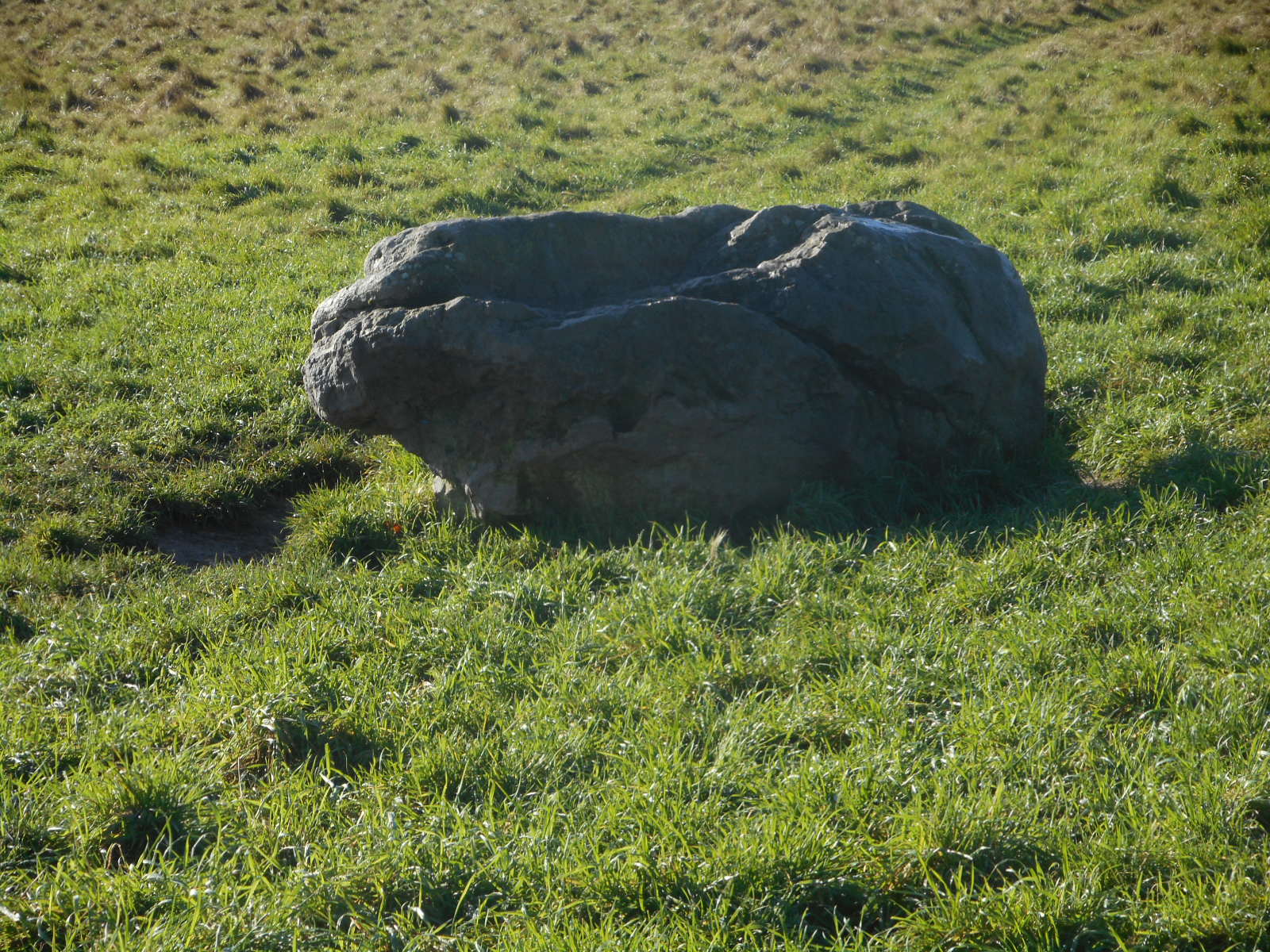 Back on the right track, we trudge across a field to the Cuckoo Stone which, according to our NT notes, is a ‘mysterious megalith’, once standing, but now fallen. We stop to discuss the nomenclature which, we decide, has something to do with the lonely cuckoo living away from company.
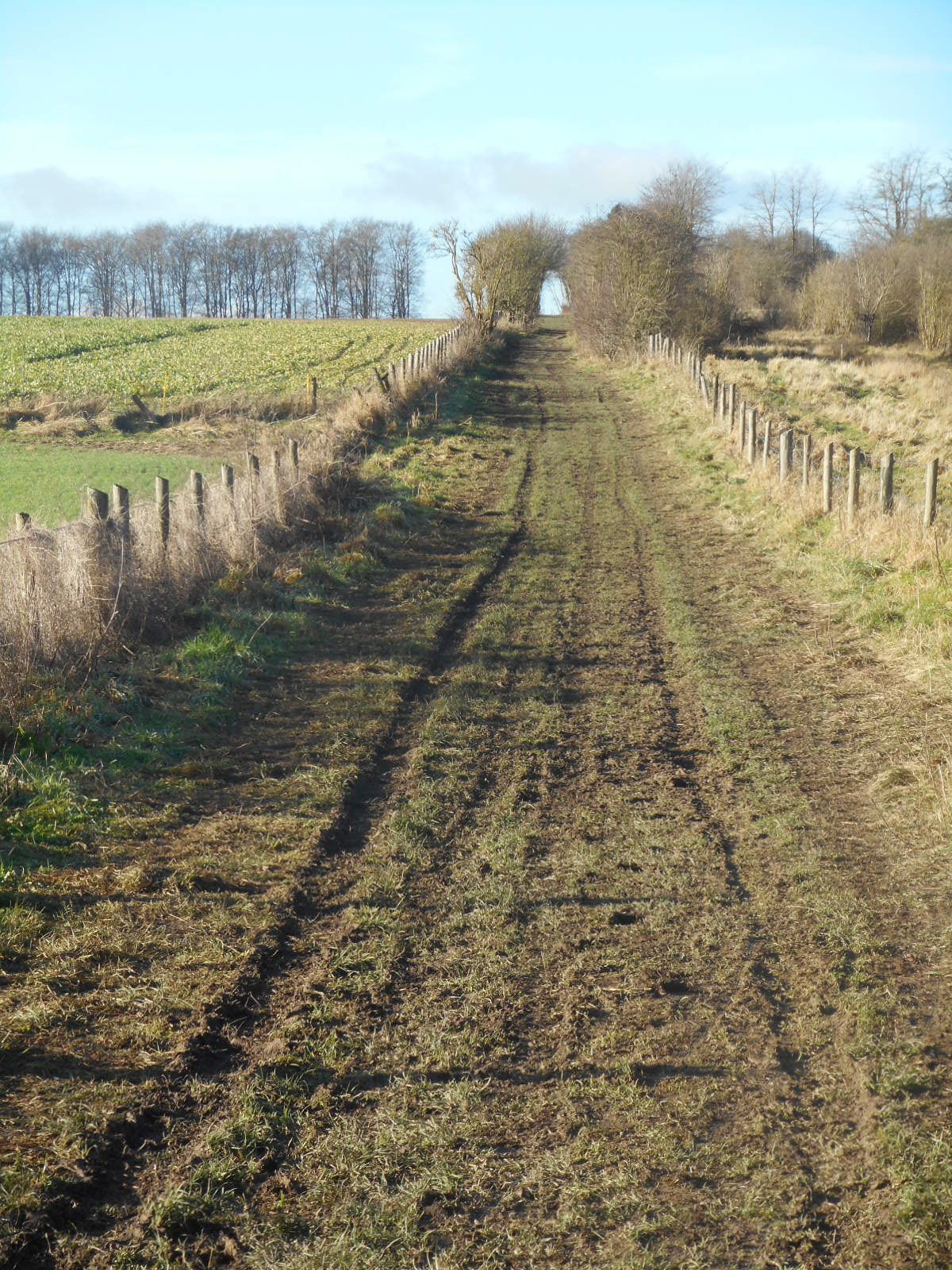
Here’s the track which we followed in search of the King Barrow Ridge. Being ‘types’, both Tony and I have printed copies of the walk about which neither of us can agree. To be fair, they aren’t brilliant instructions.
 Eventually, we emerge onto the King Barrow ridge which is littered with ancient burial sites. At this particular barrow, having walked for a couple of hours, we pause for our picnic. How unusually excellent it is to sit on a grave in early January munching on our goodies. And as I reflect on the Neolithic, I can’t help but think what a good idea it was to make some bread pudding last night, sufficient to share. After our feast, I warn them that I’m off for a wee behind a handy beech tree; after which, Sally, also in need, asks which tree I visited. The one with the sign!
 There are a lot of barrows on the ridge, of which this is the most accessible. They seem intermittently placed but this is because many have disappeared over time.
 When we finally reach our destination, we can look back and see that they actually form a line.
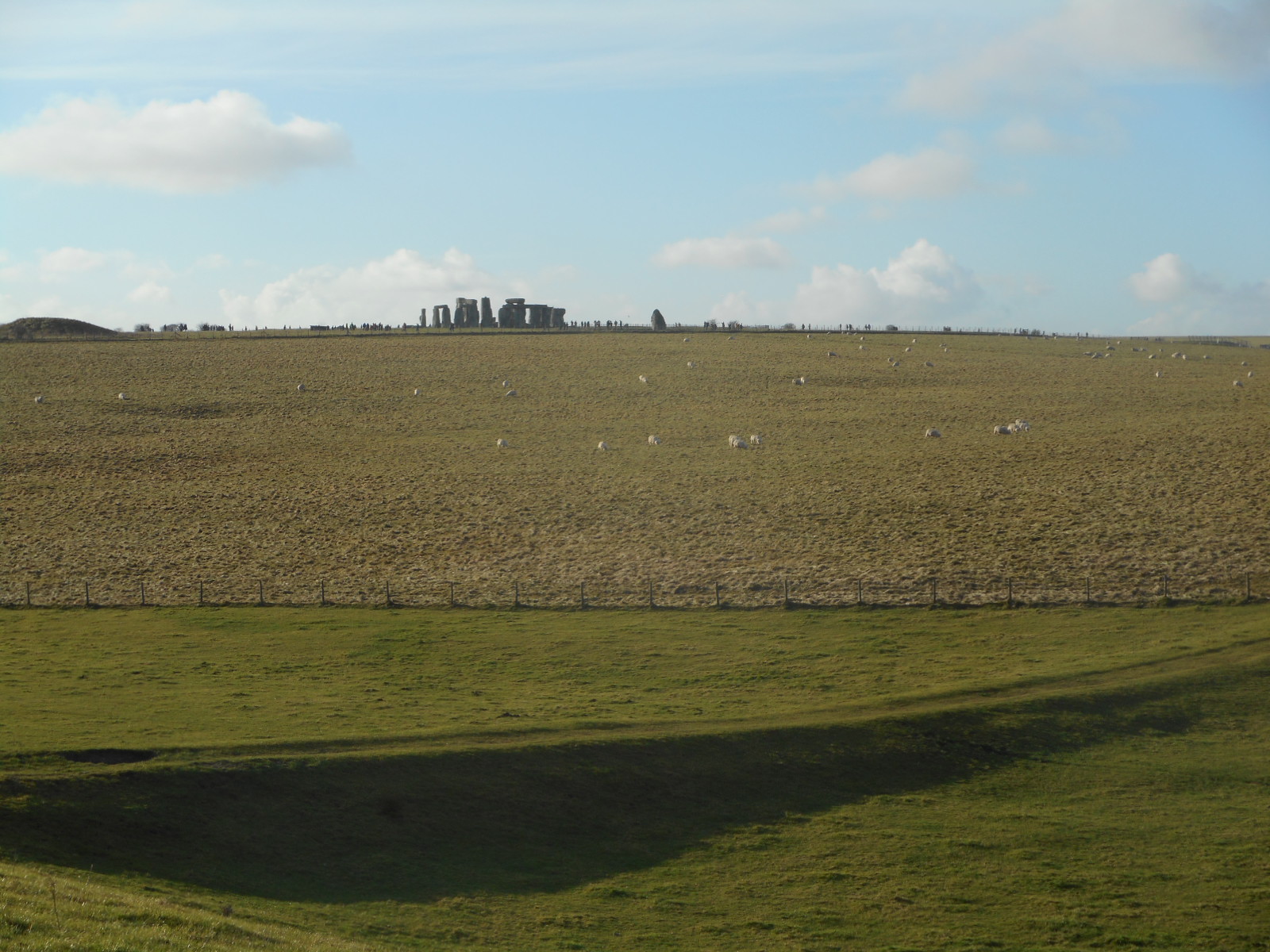
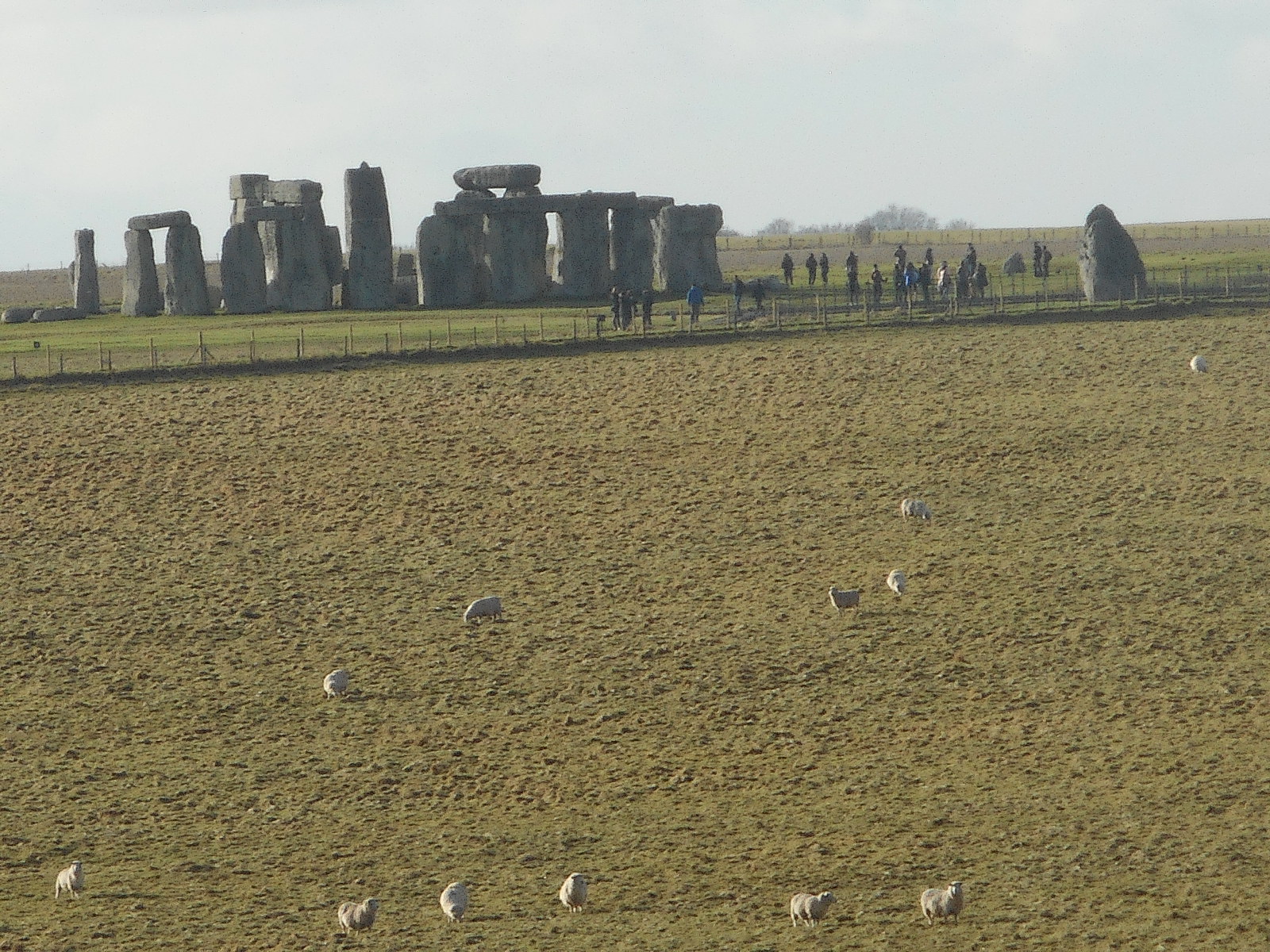 And finally, we get our first view of Stonehenge and are able to walk down the avenue to our destination.
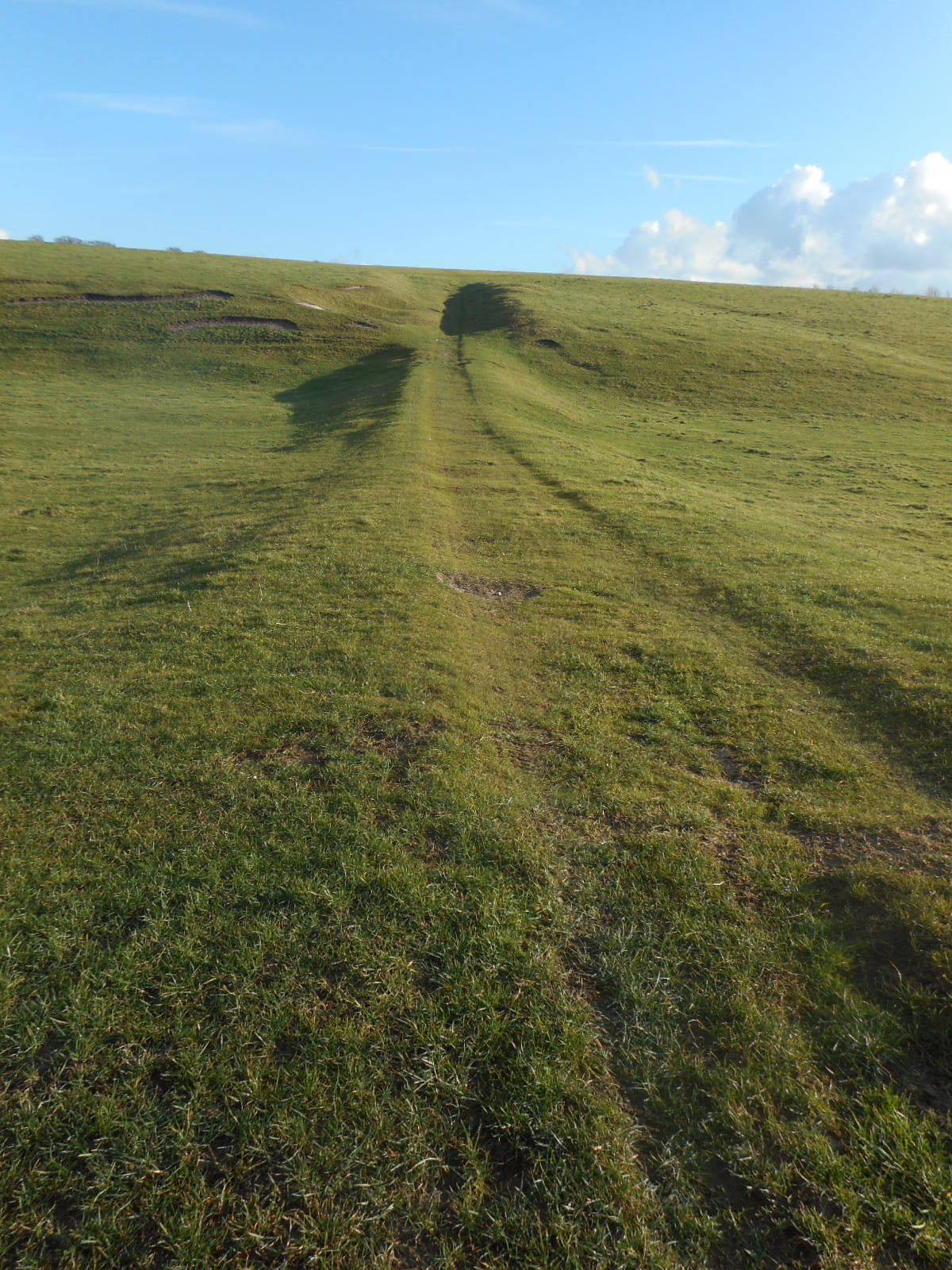
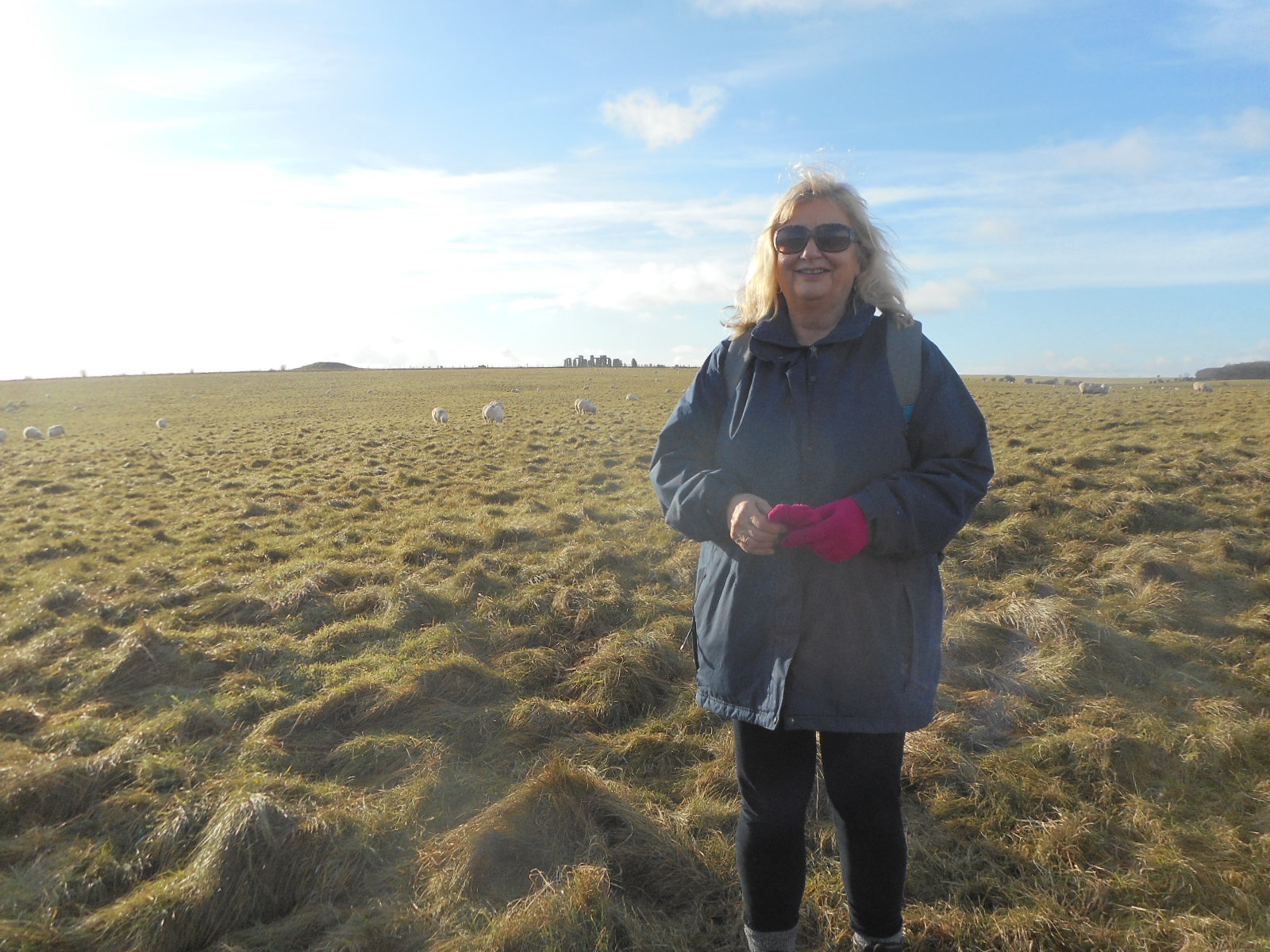
We’re in a vast expanse of countryside. Miniscule figures walking in the footsteps of the ancients. It’s too good to be true. Tony is miles ahead, lost in his own wilderness of thought. Sally is busy snapping but I call her over to look at something I’ve seen but am unable to catch on my little camera: Shimmering over these timeless tufts is a myriad of spider webs which form a field of glistening haze.
 The sheep are grazing as they will have done through the ages and I am given a lesson on tupping. For the uninitiated, this ram wears a sack of chalk which will alert farmers to which ewe has undergone lovemaking; or lambmaking.
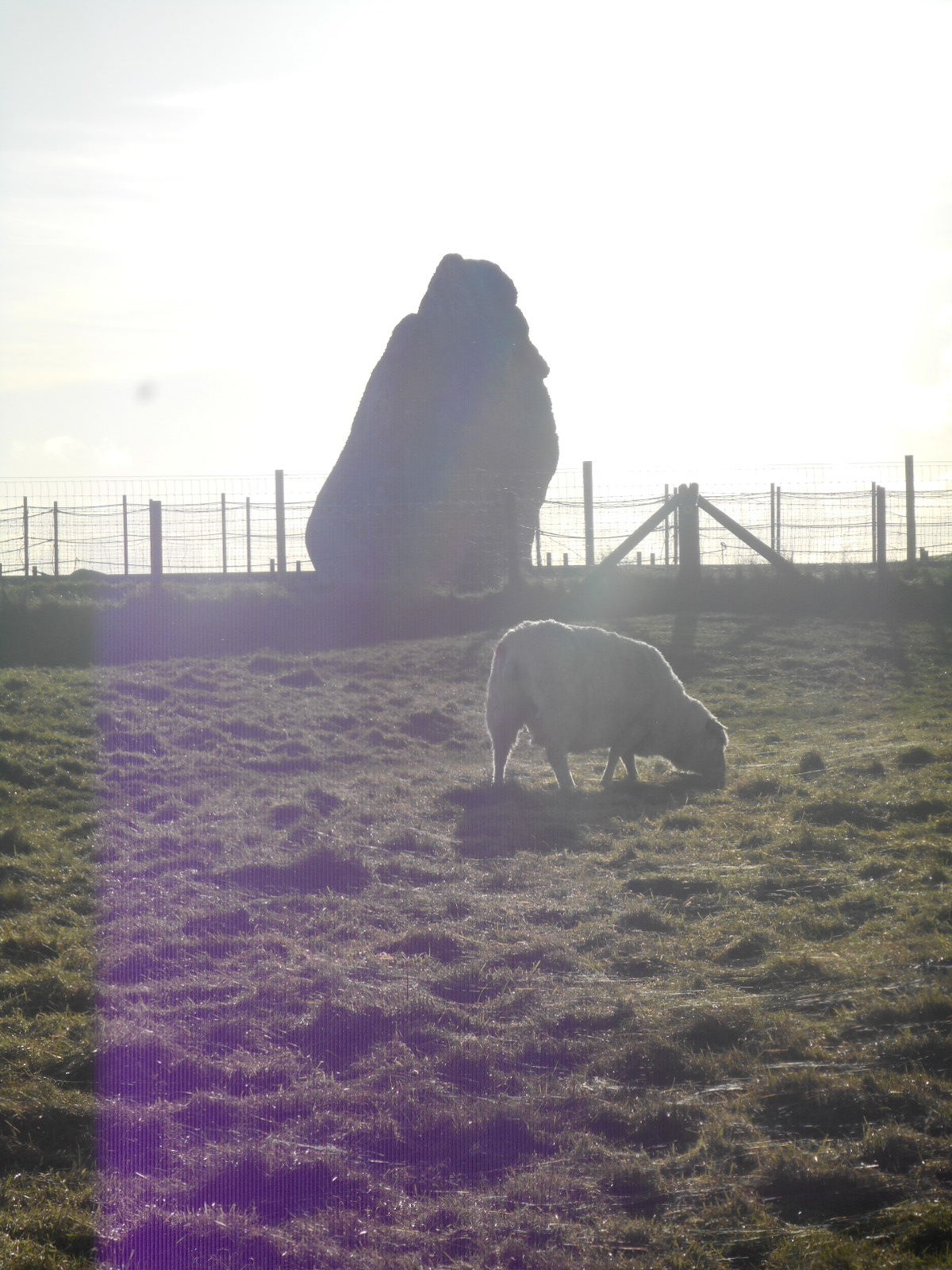
There’s the Heel Stone to which we are drawn.
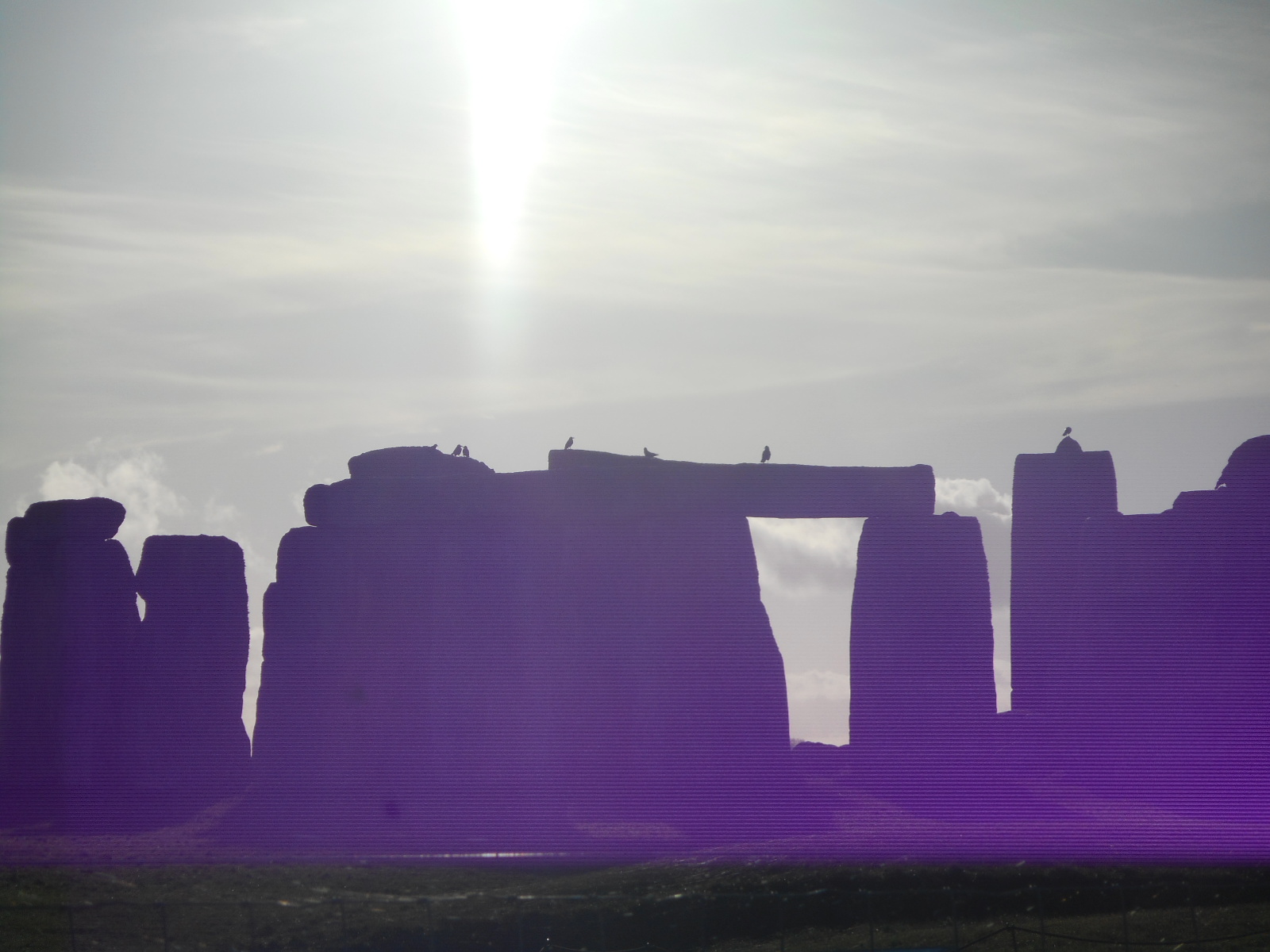 And here’s our final destination. As you can see, the day is at its end and we are weary-worn. As usual, the map has lied, yet we have no inclination to leave, drawn as we are, like the ancients before us. Oh, to be in England and seeped within history. There are veritable miles, mostly uphill, back to the car. Who cares. There surely can’t be a walk with a better finale.
 Donald and the Weasels