
Stonehenge
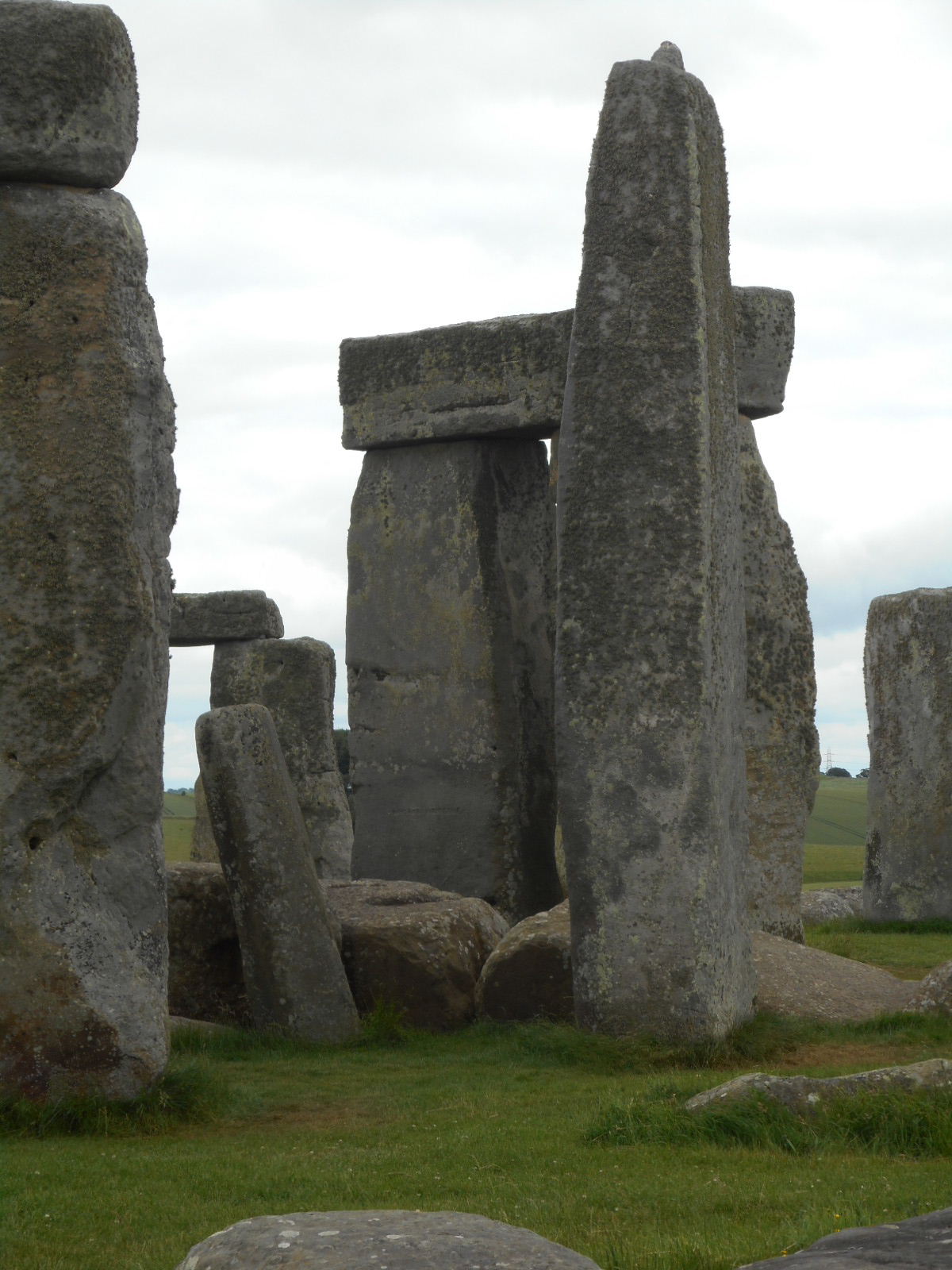 It’s the summer solstice in two days’ time. From the relative comfort of my Dorset home, back in the mists of time, I had harboured thoughts of attending the celebrations at Avebury. I’d even gone as far as investigating the cost of a pre-dawn taxi from our holiday cottage in Potterne – thirty five pounds. B and Pathfinder Powell didn’t seem too keen. ‘That’s ok’, I’d said recklessly, ‘happy to go alone’. In the real world, intention has almost entirely dissipated: the thought of rising at 3.30 in the morning no longer fills me with glee.
The impending solstice also affects the chronological order of our route: we’re due at Stonehenge on Thursday along with a conservative estimate of 10,000 others. B and the pathfinder would like to actually see the stones and there won’t be much chance of that with a mob of druids thronging the joint. Moreover, Hutton and I would like to see the new visitor centre and as English Heritage are partaking of half-day closing on Wednesday, which will last until Friday, we’re bringing this stage of our journey forward to today.
I have a cunning plan: we take one car to Woodhenge and will walk the processional route to the stones in the footsteps of the ancients, thereby taking in all the landscape has to offer. There are already a few old vans parked on various verges with even older hippy types spilling out onto grassy knolls but we find a place easily enough. Hutton has written reams and reams on Stonehenge but nothing concerning its wooden neighbour. To be fair, it’s pretty much a reproduction of where the original timbers were placed and its whereabouts probably wasn’t even known when Hutton first passed by.
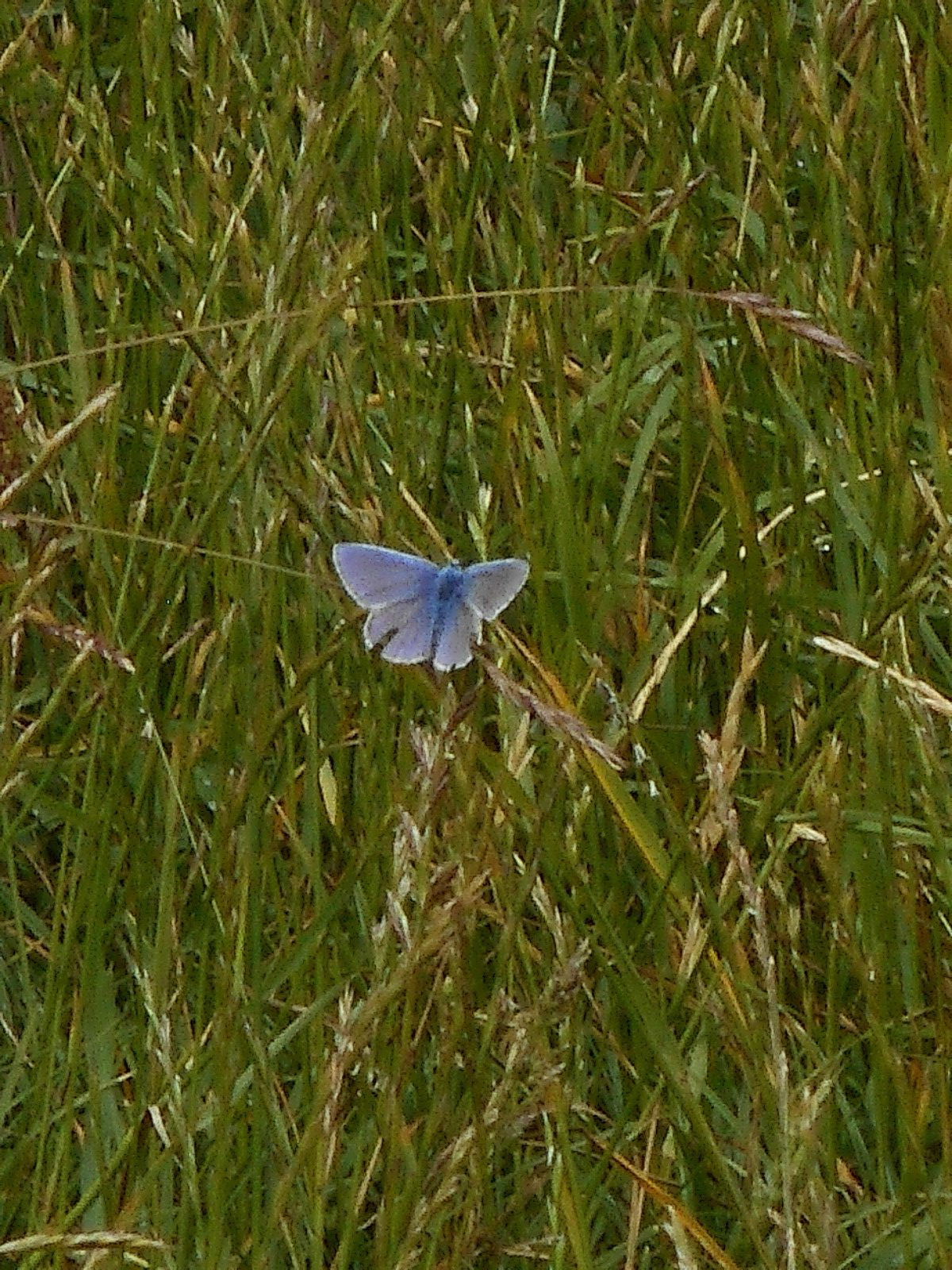 Durrington Walls, however, where we begin our walk, was in visible existence. Hutton begins promisingly with the statement that ‘Durrington is a place of great antiquity where there was a village before the beginning of history’. Correct. Sadly, having got that news out of the way, he then drones on and on about chapels and churches, topics with which he’s far more comfortable. Durrington Walls enclose what was once a large Neolithic settlement which may well have been where those who built Stonehenge resided with their families. On this sunny morning, one of the final bearable few before the heatwave begins, the long grass is still wet with dew. We stride through wondering whether shorts were such a good choice as we towel our legs down. The grasses are also full of moths and butterflies which rise and flutter away on our approach although I manage to trap a ‘common blue’ in my camera lens. You may call it common; I don’t.
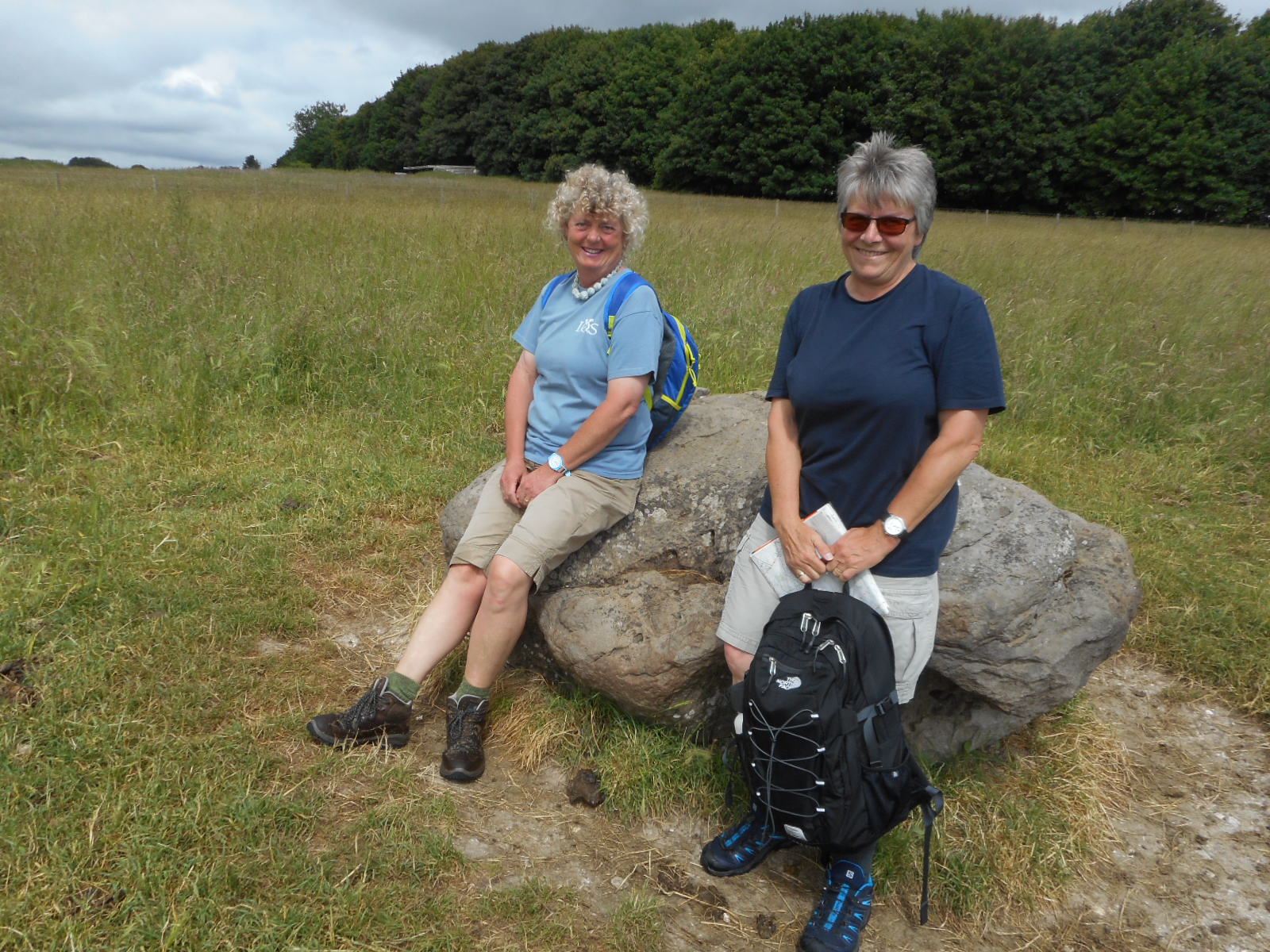 Leaving Durrington behind us, we take a short walk south to the Cuckoo Stone; a huge and lonely sarsen surrounded this morning by grazing ewes and their fast growing lambs. No-one knows why it’s here. Hutton surmises that it was possibly dropped on its way to Stonehenge. The problem with this theory is that there’s evidence to show that the Cuckoo was once upright, suggesting an intention. Perhaps it was a way marker. In 1995, the National Trust archaeology team purchased the stone in order to preserve the archaeology beneath it. Good work NT but who did you purchase it from? Good morning, I’d like to buy the biggest free standing stone you have please. No, I don’t mind if it’s fallen over. Hutton tuts.
Skirting the leafy way of the disused railway which is garnished on the right by the officers’ quarters at Larkhill, we arrive at a gate of some importance. Here we attain our first view of Stonehenge in the distance, as would those not taking the route from the river in the dark past. Hutton waxes lyrical: ‘Stonehenge is beyond such memories and sentiments … it stands wholly within the shadow, over the horizon not only of history, but of legend’. ‘The horizon of history’ – I like this and we think him quite poetic this morning until he spoils it all by quoting vast tracts of Lear. We tell him to shut up.
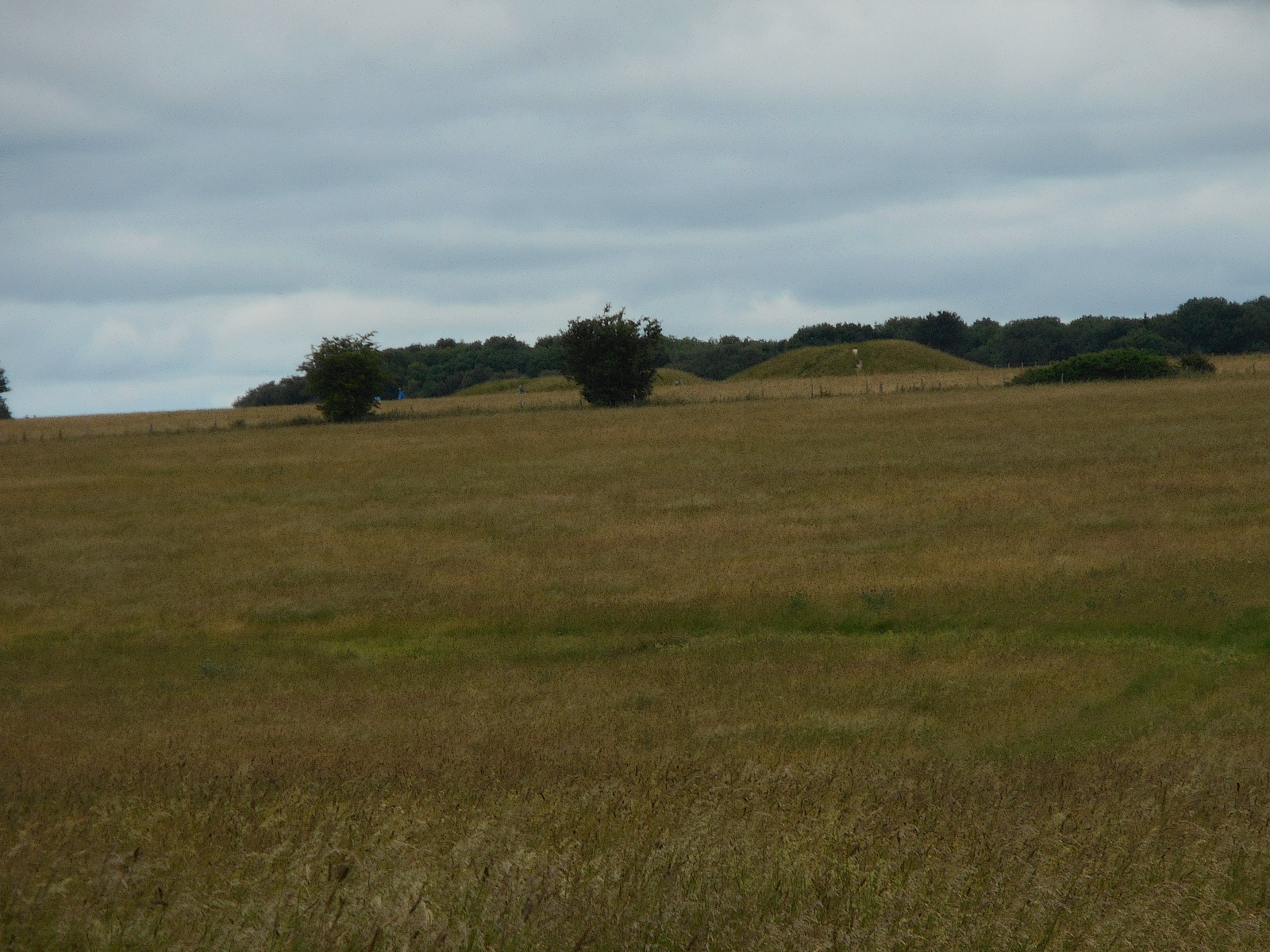
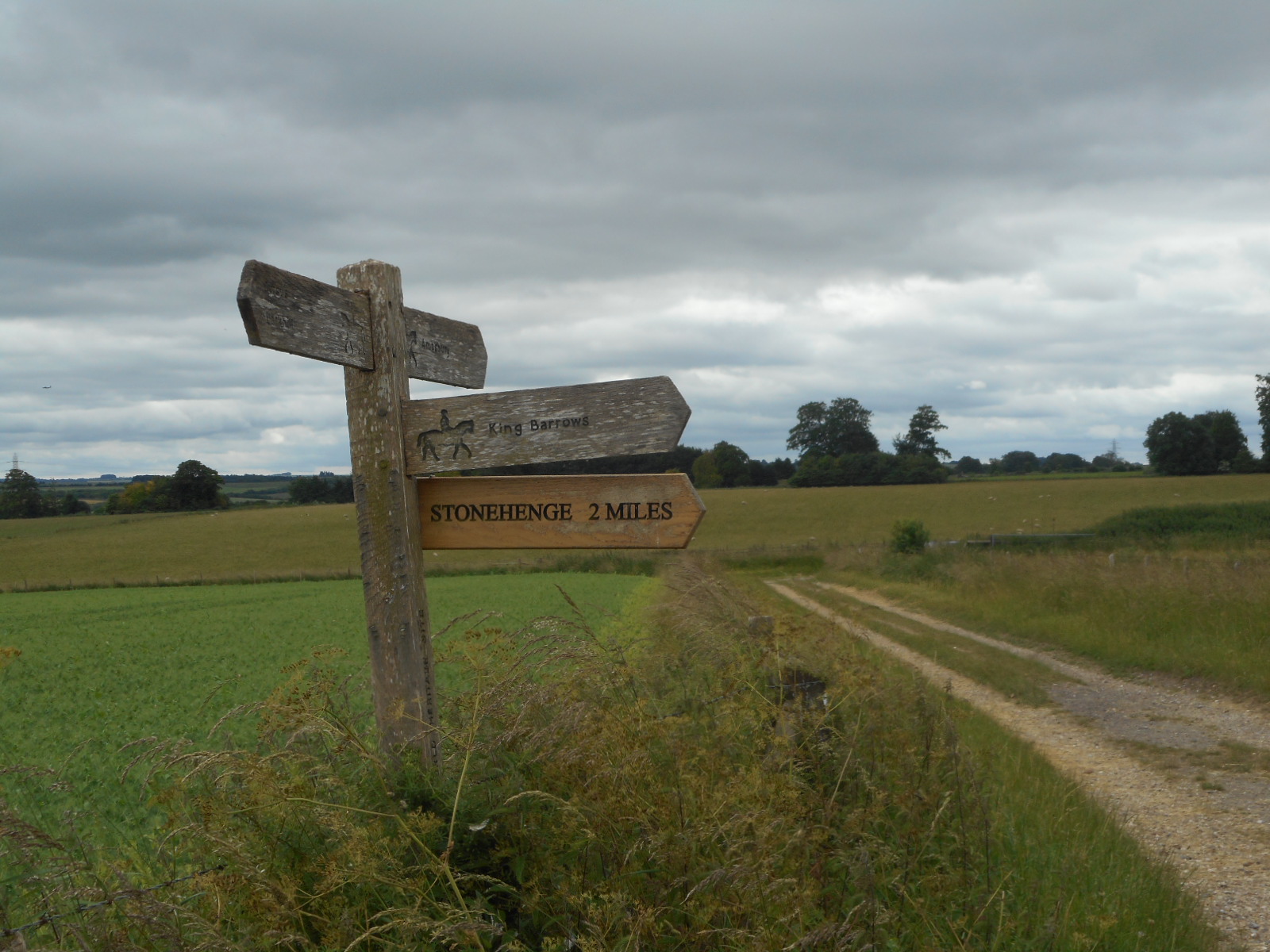
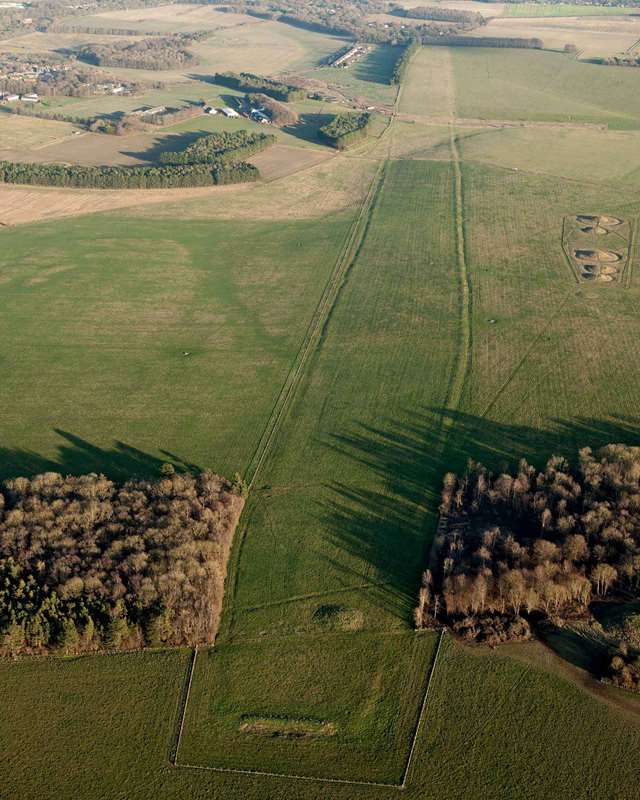 From this viewpoint, we are looking straight along the Cursus. Well, we would be if you could see it but, of course, its visibility has been lost to the modern day traveller. The Cursus is approximately 1.9 miles long and between 330 feet and 490 feet wide and was constructed several hundred years before Stonehenge. The second photo is a highlighted image courtesy of English Heritage. Looking at it on the map and in this image, it appears as a racecourse, for which the Latin word is – cursus. I consult Hutton as to his thoughts but he’s sulking and isn’t speaking. Neither does he have anything to say about the King Barrows alongside which we amble on our way to The Avenue.
 These days, the barrows are mostly clothed in trees so it’s not until we pass the first group that we emerge back into the open to begin our processional walk. And thus not until this point do we discover that the vast tract of land we’re about to cross is full of cows. An involuntary ‘oh’ escapes me and the other two think I’m still exclaiming the beauty of it all until the pathfinder sees what I’ve seen. It’s a tricky moment in time. The pathfinder has turned very pale and quiet. The alternative route would be to continue on this path and walk down along the road but that would be hideous. We trundle off to inspect one of the barrows while a decision is made.
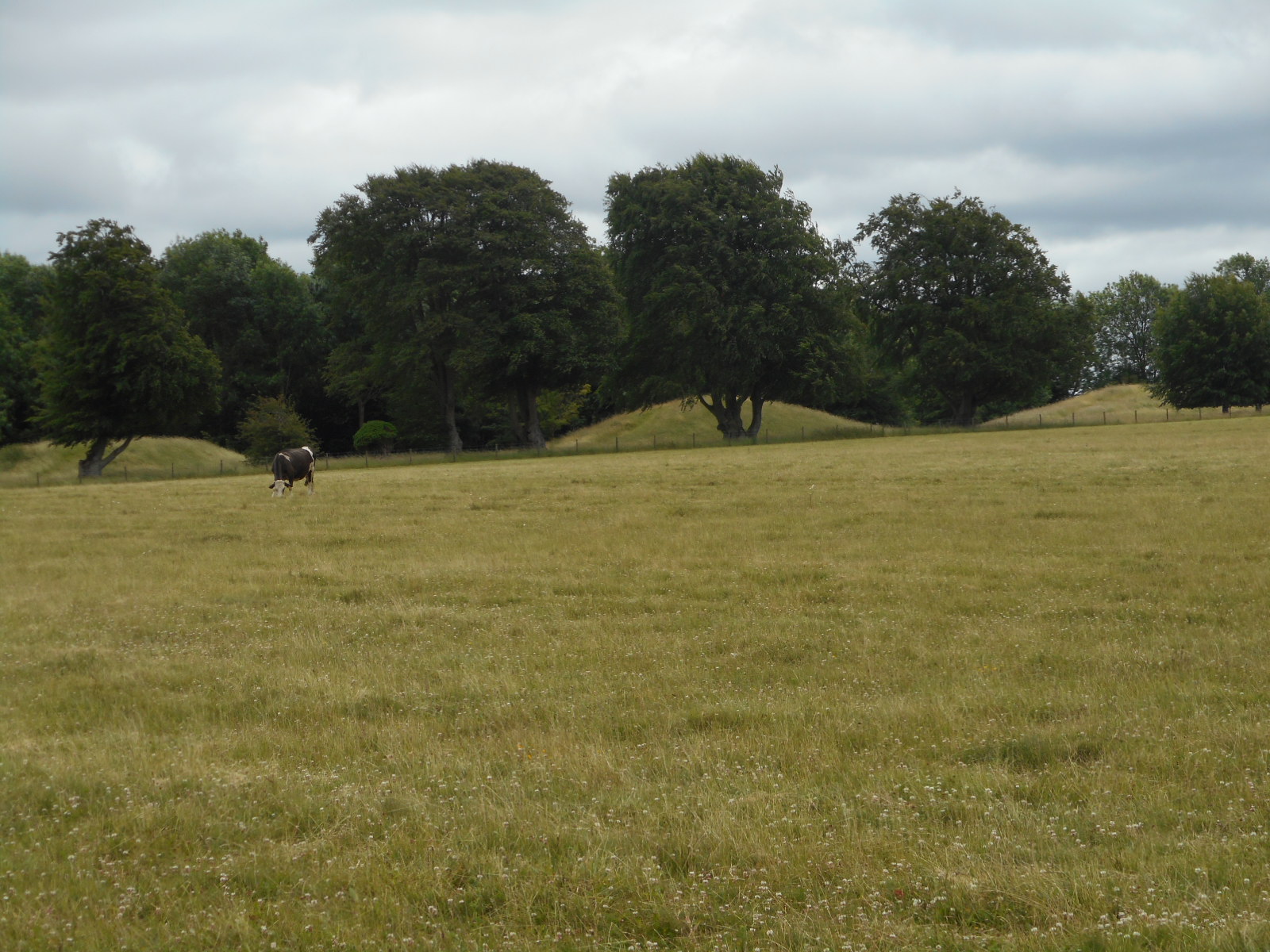
 Good news! We are to take the processional route down The Avenue in the footsteps of our forebears. Some of us process. B and the pathfinder fairly gallop the best part of a mile as if plotting the route of a new cursus. Half way across, I shout to B to stop. I want her to look back at the barrows, the beauty and symmetry of which, like everything else, can only be appreciated from a distance. It’s a lost cause: they’re rushing for the gate and trying to ignore the cows that are, of course, ignoring us. It was brave of the pathfinder and it means they at least get the pleasure of walking slowly along the rest of The Avenue, the other side of the fence, which is absolutely the best way to reach Stonehenge.
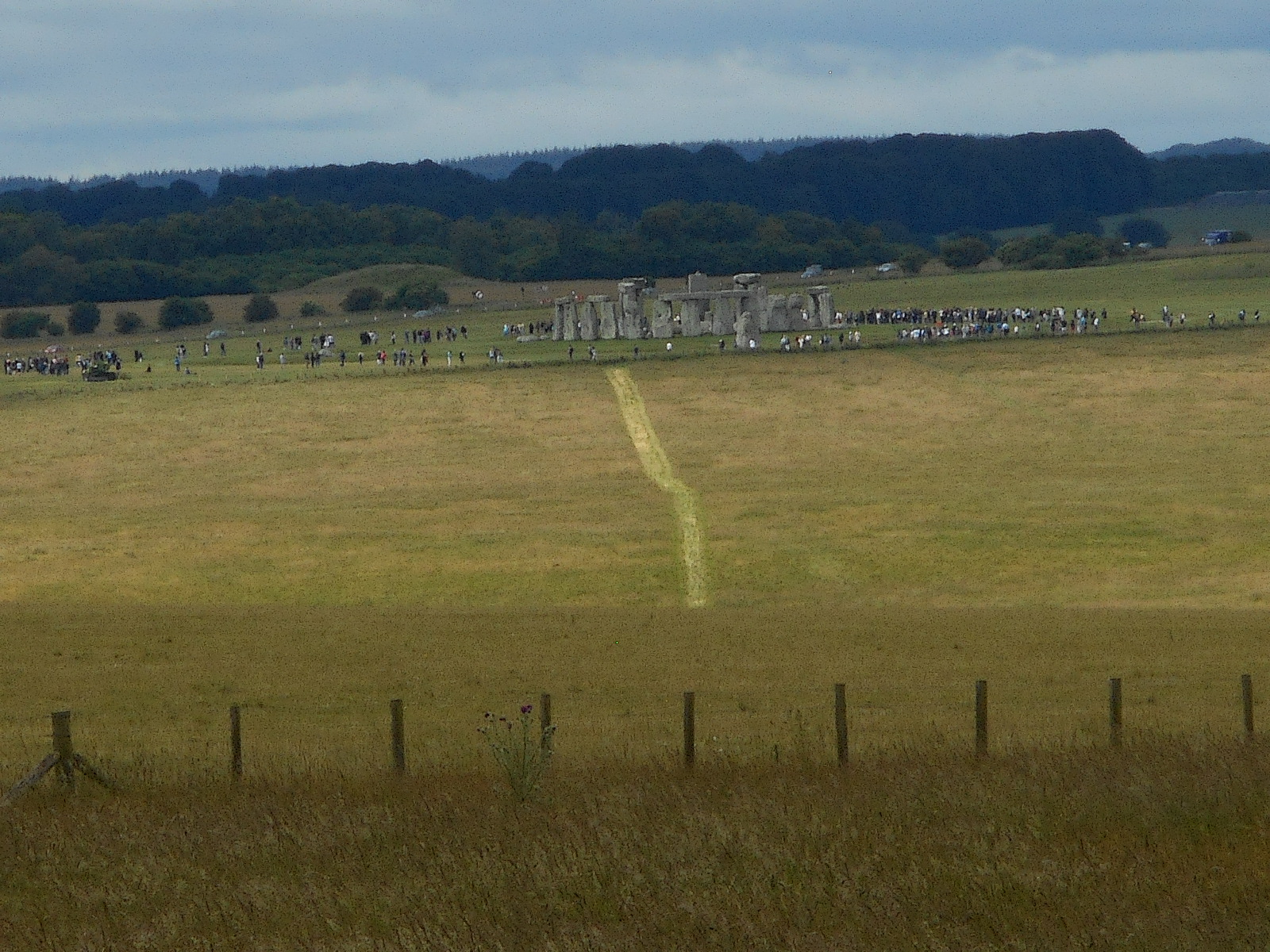 Having arrived, we would like to actually go into the stones but English Heritage, in their dubious wisdom, don’t let travellers in without a ticket purchased from the visitor centre. Ostensibly, that’s fair enough but a couple of years ago they moved the visitor centre and it’s now a mile and a half away. This is also ok we’re informed, because you can go there on the shuttle bus. Providing you’ve got a ticket. That would be a ticket you’ve bought from the visitor centre. English Heritage doesn’t do irony. They ‘manage’ a place that folk came to from all corners of the kingdom on foot but don’t have a ticket booth at the site for today’s walkers. They only cater for people who arrive in cars or on coaches so, having walked at least four miles, we have to trudge the extra mile and a half in order to get a bus back. Further, it’s lunchtime. And just before I finish this rant, let me tell you that another couple arrive on foot with PRE-PAID timed entry confirmation and are denied access until they go to the bloody visitor centre and retrieve paper tickets.
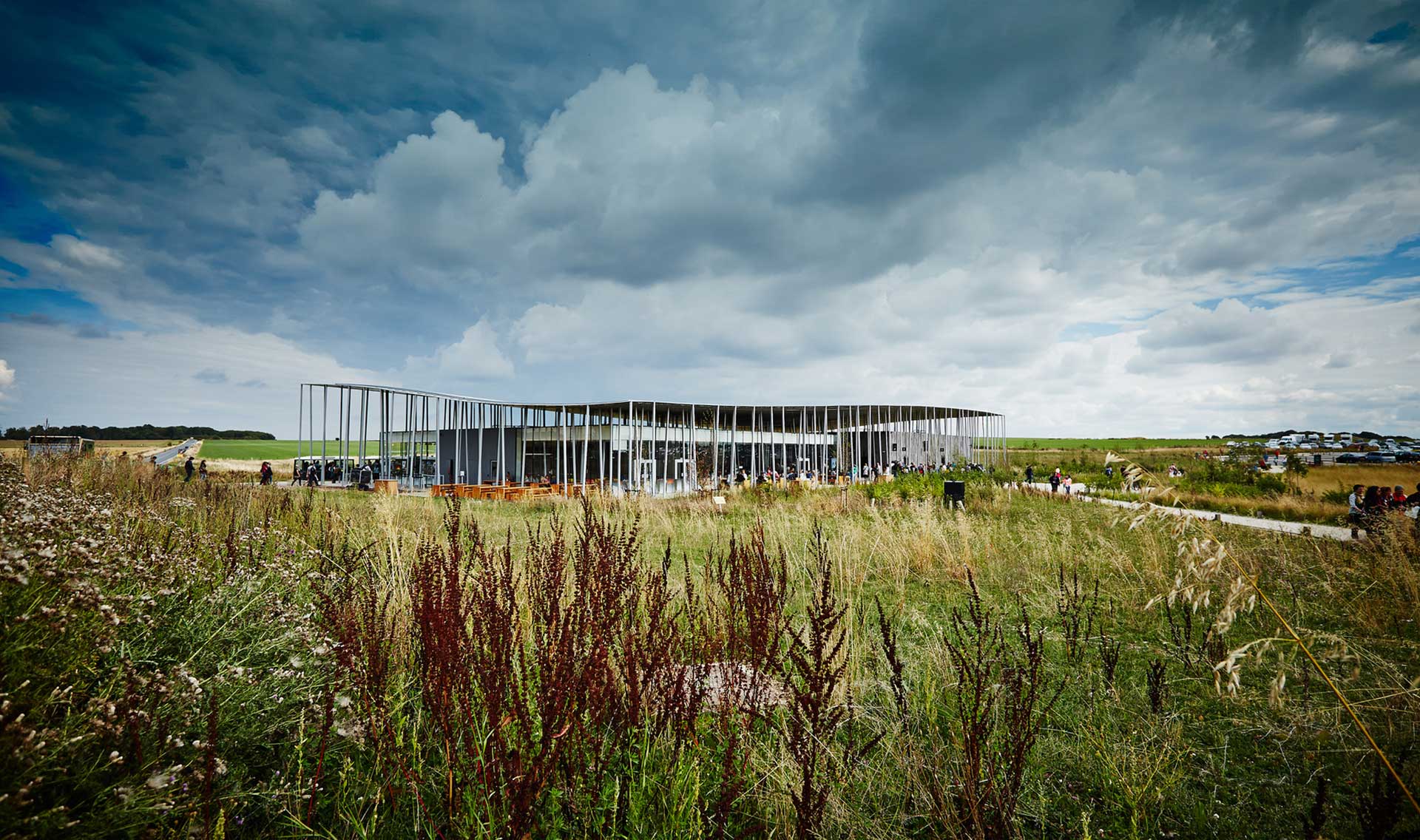 On the positive side, the new visitor centre, once we crawl in, is excellent. It’s difficult to describe the façade: it looks like one of those weird buildings they have on Grand Designs but it somehow seems to fit cleverly into the landscape. (Photo courtesy of the architects, Denton, Corker and Marshall).Today, of course, the place is full of spotlights, portaloos by the hundred and temporary parking areas in preparation for the solstice arrivals but none of this paraphernalia would normally be here. And the award winning exhibition is truly impressive. My favourite part is the digital wall which gradually changes from the original bare landscape to show the evolution of the Cursus, the barrows and the phases of construction of Stonehenge over time. Much to Hutton’s disgust, it’s fairly rammed with schoolchildren. And why not Edward? They’re not about to read Highways and Byways in Wiltshire.
After this, and following our picnic, we take the shuttle bus along the new service road to become proper tourists visiting the stones. It’s lovely and Hutton, who’s now back on speaking terms, has loads to say on it all. He begins with the ideas of my hero, Stukeley, back in 1740 and follows on with other antiquarians before asking, ‘how much further than that have we got? Very little…its purpose is inscrutable.’ Exactly 100 years since he wrote that, and despite all the archaeological advances, we might justifiably repeat those sentiments.
 Donald and the Weasels