
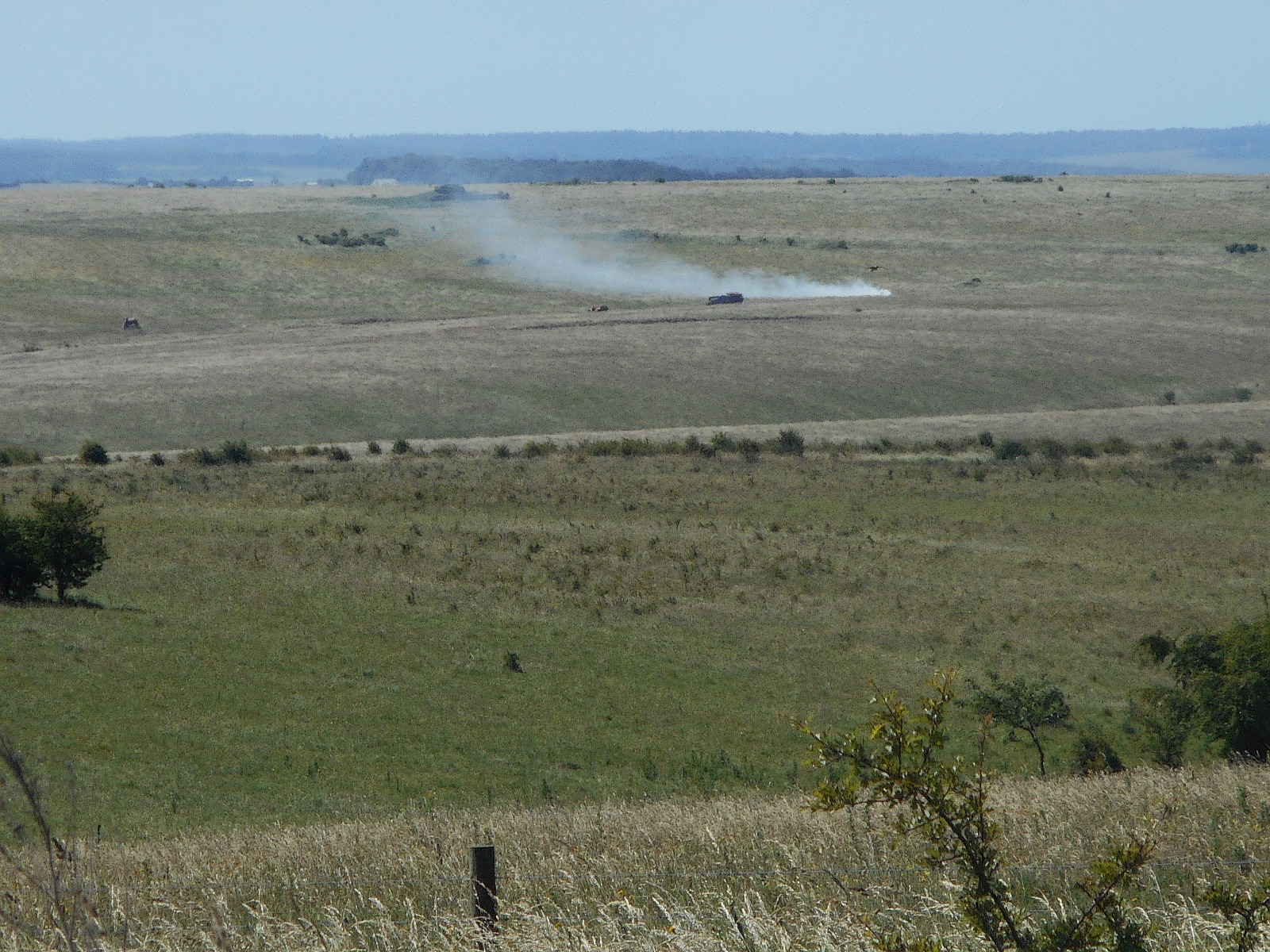
 Back on track – so to speak, as largely we’re on tank tracks- we begin again at Casterley Camp, a Neolithic hill fort on the perimeter of Salisbury Plain. I was looking forward to this bit: I like a decent hill fort for grounding oneself in the past. That was before I engaged with a spot of early morning reading courtesy of the Guardian to accompany my Weetabix. The unnamed author took this walk a couple of years back to mark the inauguration of the Great Stones Way. Strangely, Friends of the Ridgeway decided that this stretch was to be the first official part of the Way: strangely, because there’s not a stone in sight. Not many folk in sight either. The Guardian writer remarked that he only saw one other person and she had found her car surrounded by police who said she couldn’t possibly be a walker because of the absence of an accompanying dog. To be fair, both the map and the instruction book make quite the thing of close to hand areas marked DANGER in bright red, but, hey – I spend every Tuesday evening listening to the army blowing up Bindon Abbey. It’s just war games.
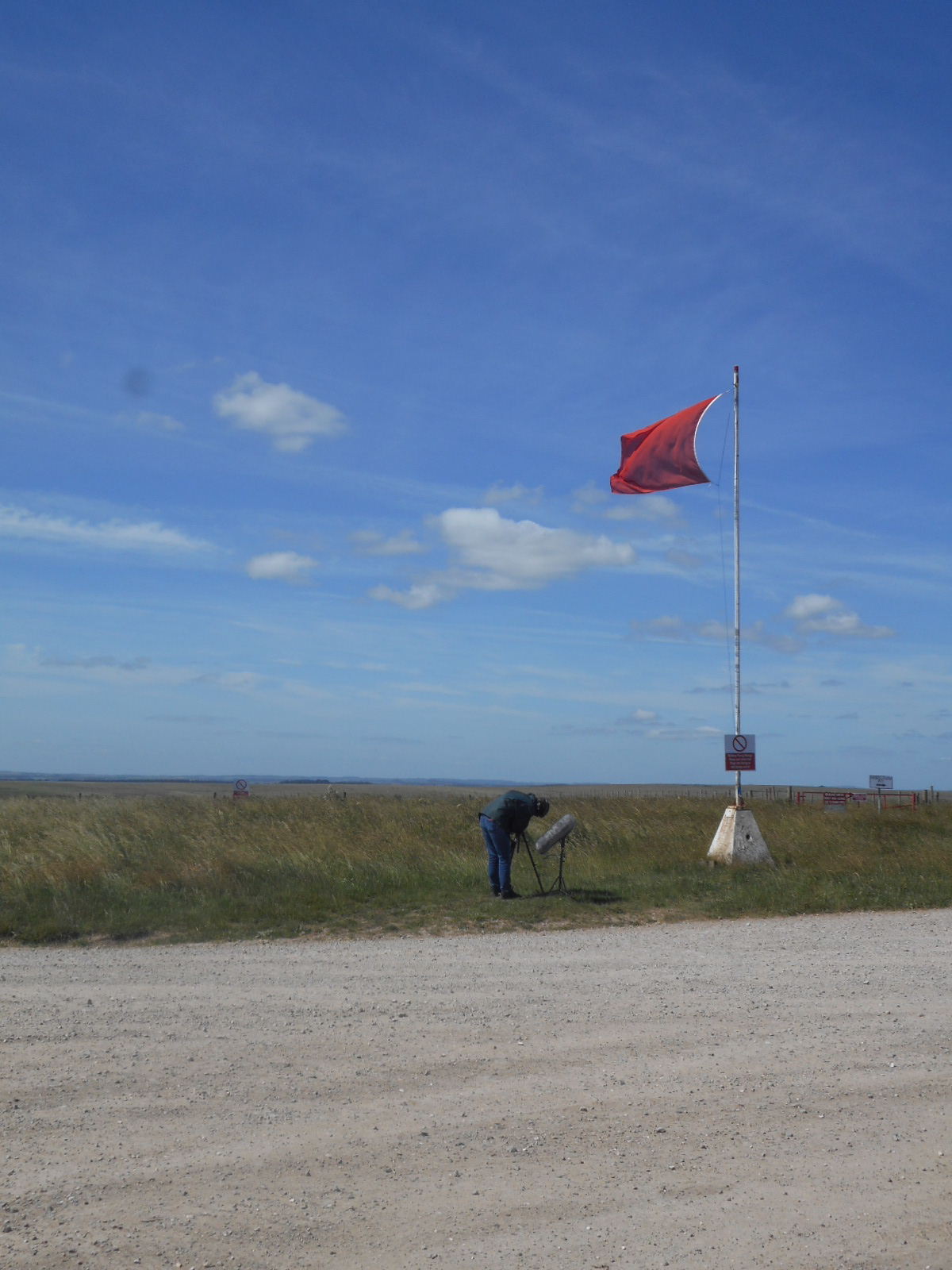 Hutton is about as handy as a chocolate tea-pot, making no mention whatsoever of Casterley. Given his one paltry sentence regarding Barbary, I’m of the view he didn’t do hills. I am anxious. Arriving at Casterley, which is on top of the world in the middle of nowhere, smoke is already in evidence and the nearest red flag is about two feet from our car. A solitary woman with some sound recording equipment claims to be present in order to hear the vibrations of the flag in the gale that’s currently blowing. It seems a lonely sort of spot to record the noises of a flag but B is in a vaguely similar line of work and believes it to be perfectly normal. There’s a random portaloo to hand and, having had three cups of coffee whilst waiting for those two to secrete extra rations about their bodies earlier, I feel the necessity to take advantage. I open the door, take a half-second inspection and, concluding that at least three regiments of tank types have been this way previously, decide a couple of polythene wrapped hay bales offer a cleaner option. ‘You have to pay to go in there’, shouts the woman who is pretending to be a sound recordist. We smile pleasantly. Well, they do: I mouth some whispered obscenity that I hope will spoil her allegedly recorded day out.
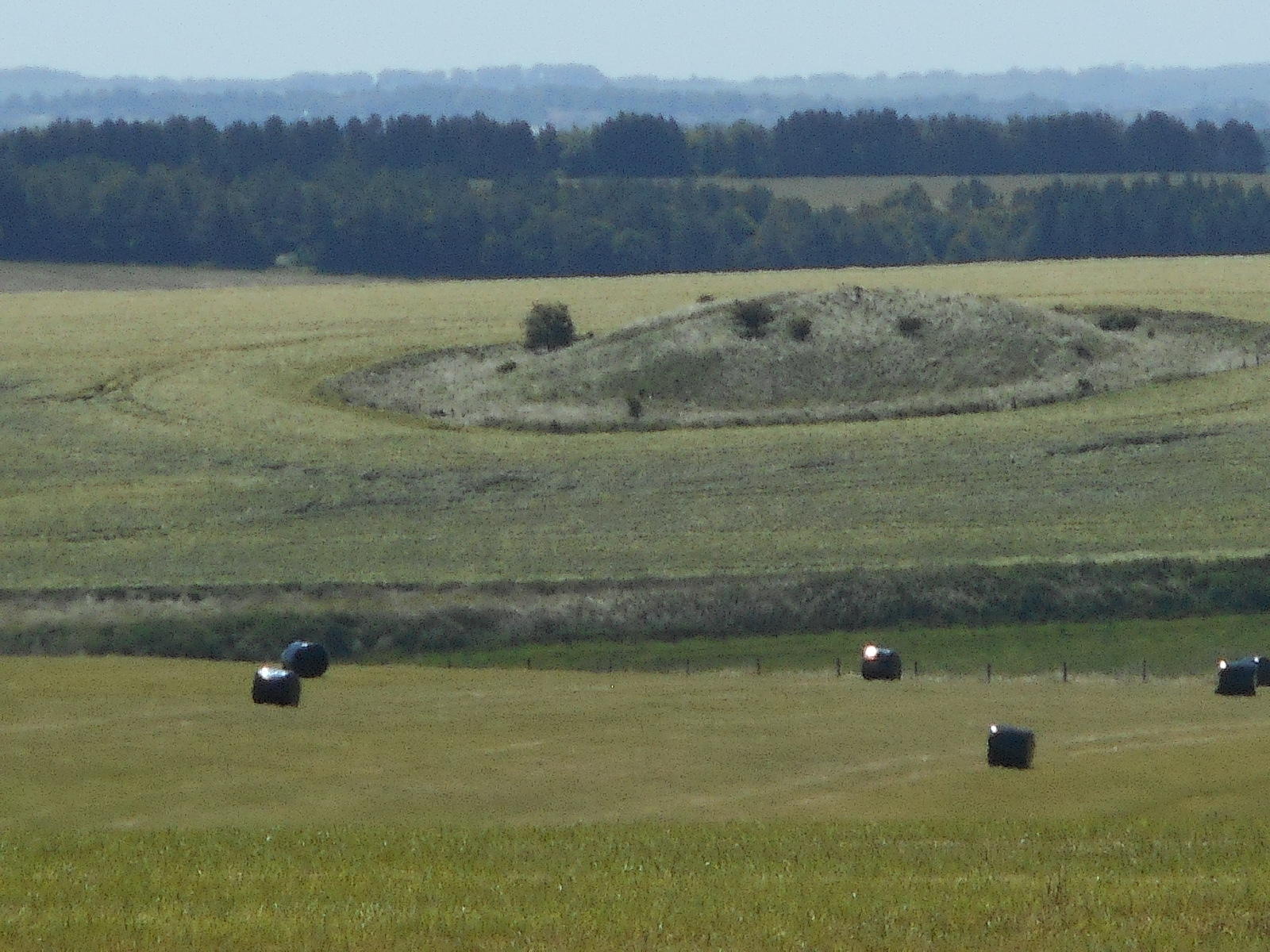 There doesn’t appear to be much of the hill fort left and all the stones have probably been blown into kingdom come as opposed to kingdom past. Within fifteen minutes we lose our way. That would be the way that we MUST follow; no deviations allowed on this route. I hide my tears and knock back the Rescue Remedy when the others aren’t looking. Bang, Bang. The smoke is getting nearer and thicker. Those two think it’s all terribly jolly and point out an interesting tumulus which has just been destroyed after 5000 years of existence. Bits of cow parts float by on the wind. The army has us surrounded in three directions, whilst from the left comes the reports of the local civilian shooting school. Udders to the right, udders to the left. Bang, bloody bang.
 Those two may be trying to appear calm but we get down into the valley in record time. Naturally, we end up in the wrong place and are temporarily lost. I have another quick ‘Paula’ whilst they peruse various maps and Pathfinder Powell discovers a way over the A345 and down into a dingley dell where one of the River Avons is waiting delightfully for us. This is the Salisbury Avon.
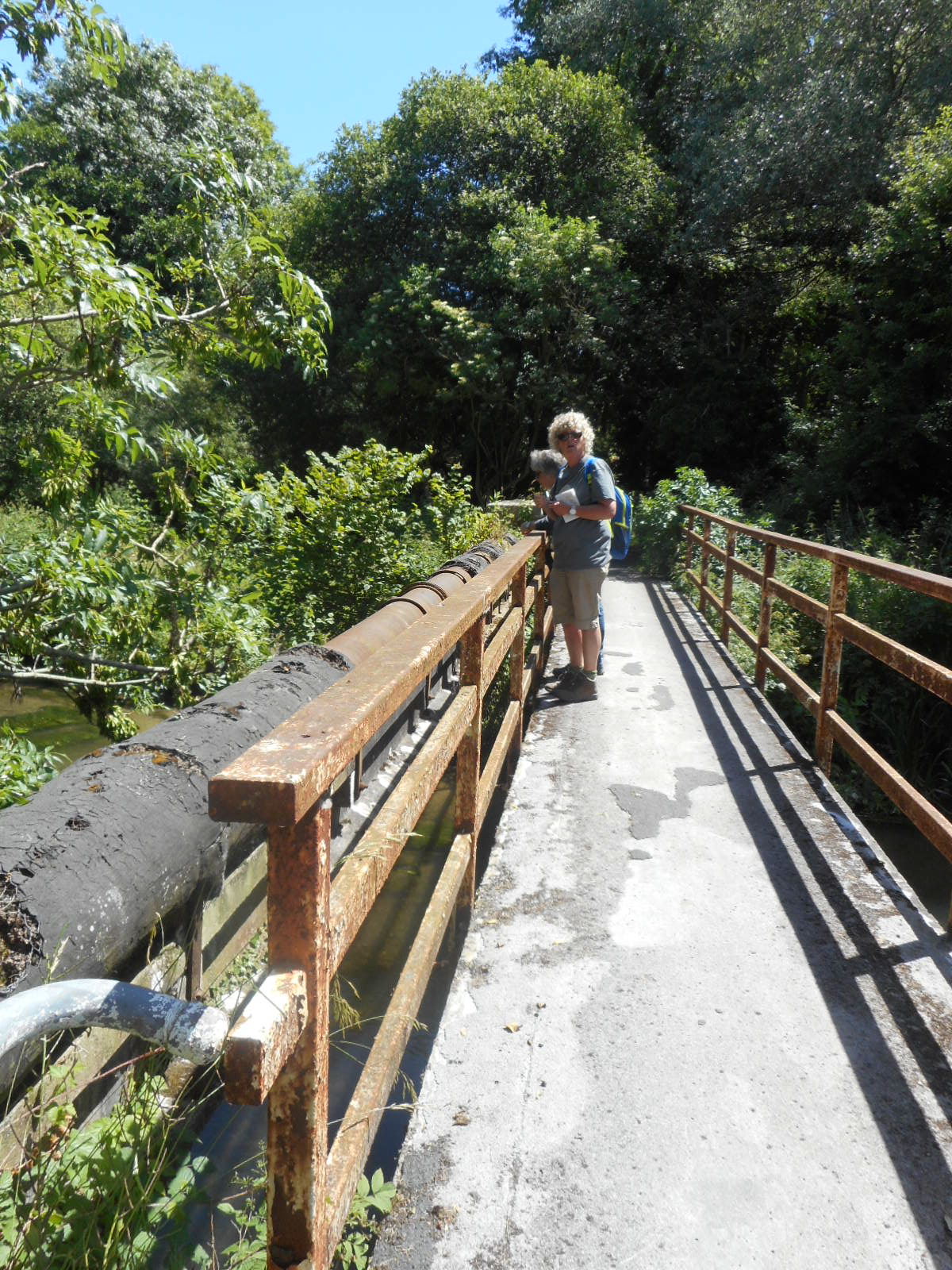 Stopping only for a quick game of Pooh Sticks, we arrive in Miss Marple country: East Chisenbury. Hutton wasn’t here either: he goes so far to say of the place, ‘I marked it not’. Poor show, Edward. You missed a trick. The map informs of a priory which we duly find by means of asking a servant painting one of the many rose-encrusted thatched cottages. He points us in the direction he claims to take frequently on his way to see my lady. Wandering through a wrought iron garden gate, past the massive edifice, we discover that the South Glamorgan Hardy Perennial Society have dropped in on the first call of their weekend away from the slag heaps. Wait, weren’t those pigeons up on Barbary Castle last Sunday from South Glamorgan? Wales must be shut.
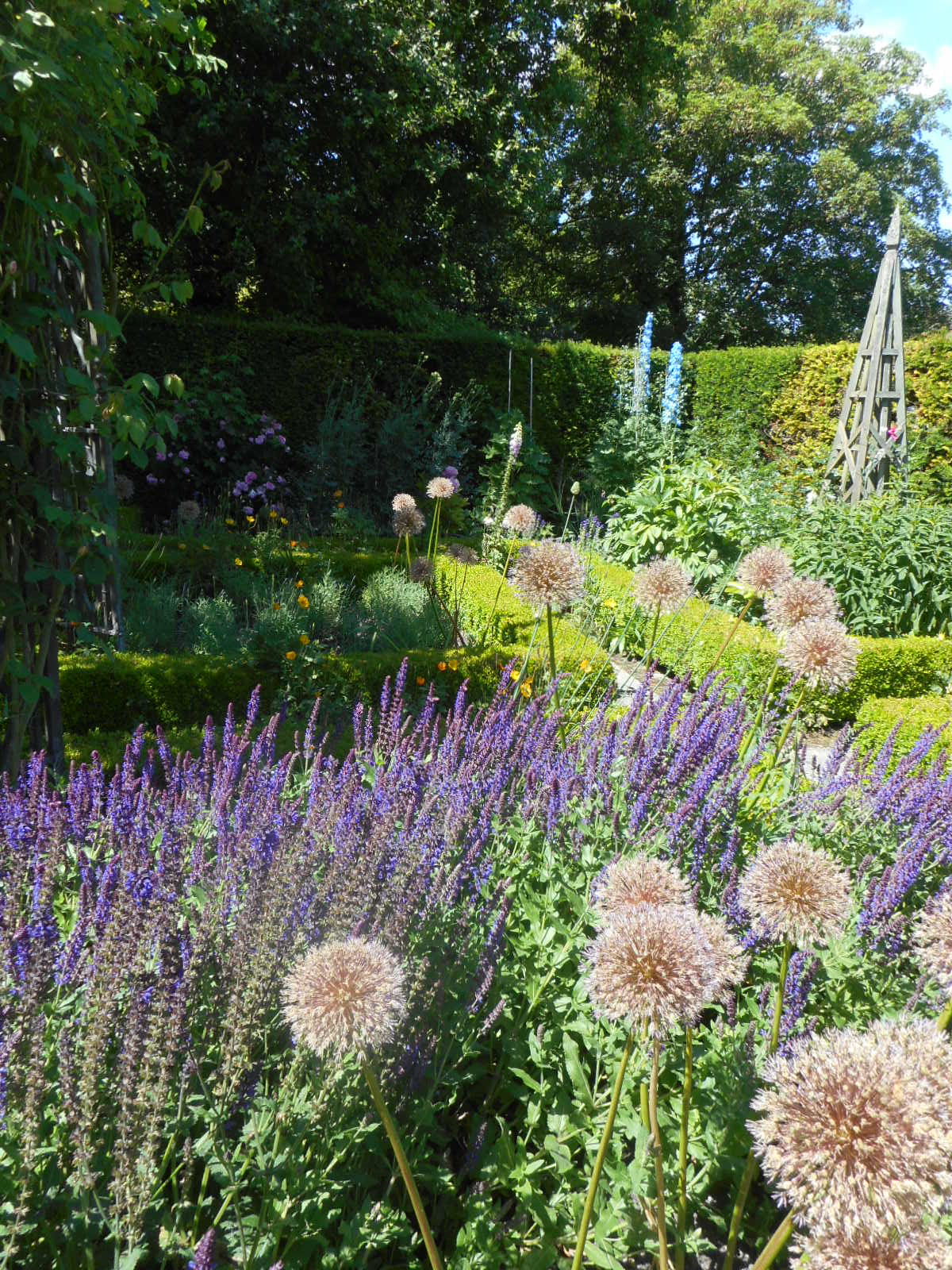 B locates the owner who graciously says three more [plebs] won’t be a problem so we gate-crash their tour of the outstanding gardens. It’s charming and there have only been three murders this morning. All the Miss Marples are out and about pretending to look at the flowers whilst eyeing up potential suspects and listening to other folk’s conversations.
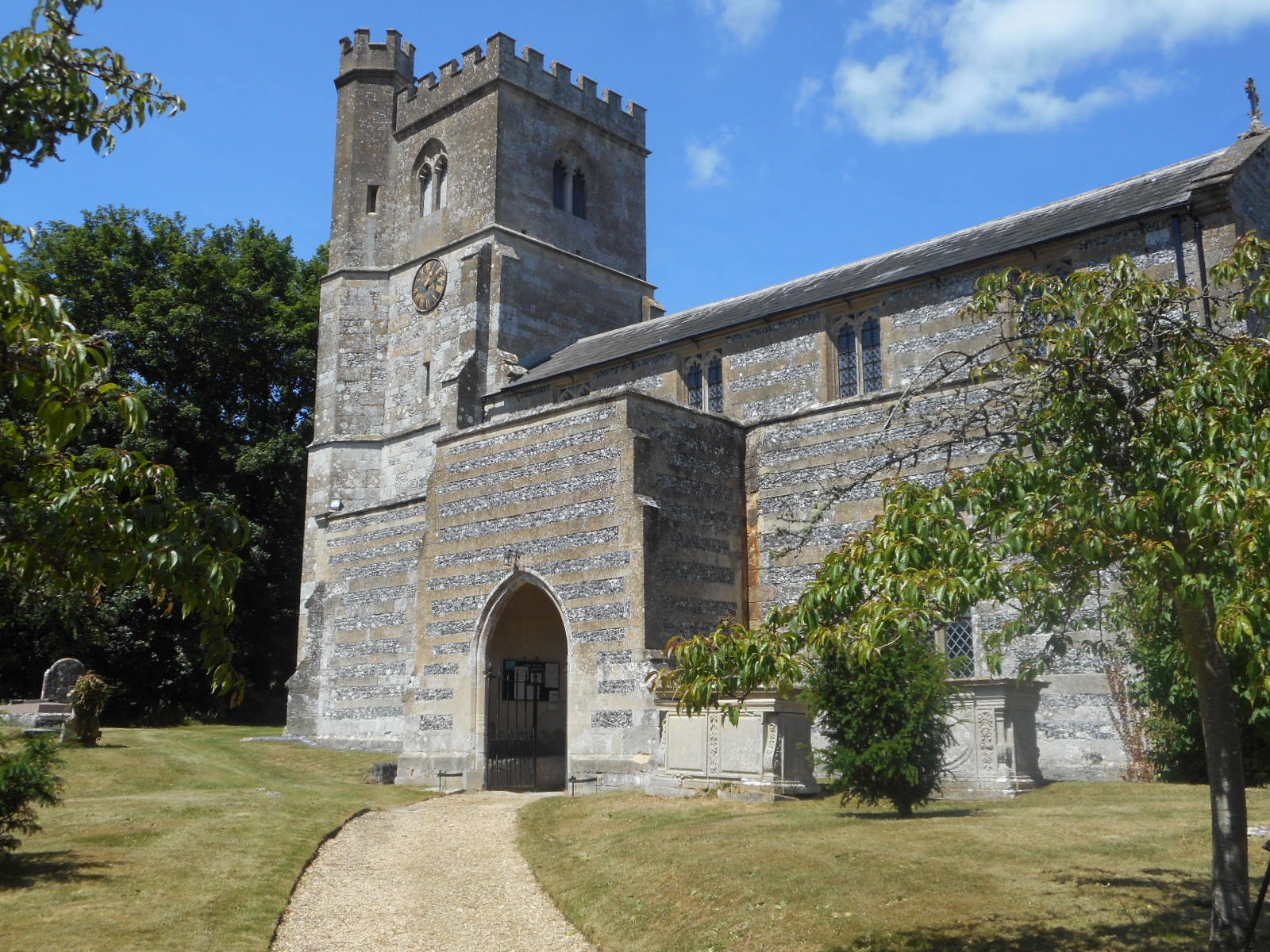
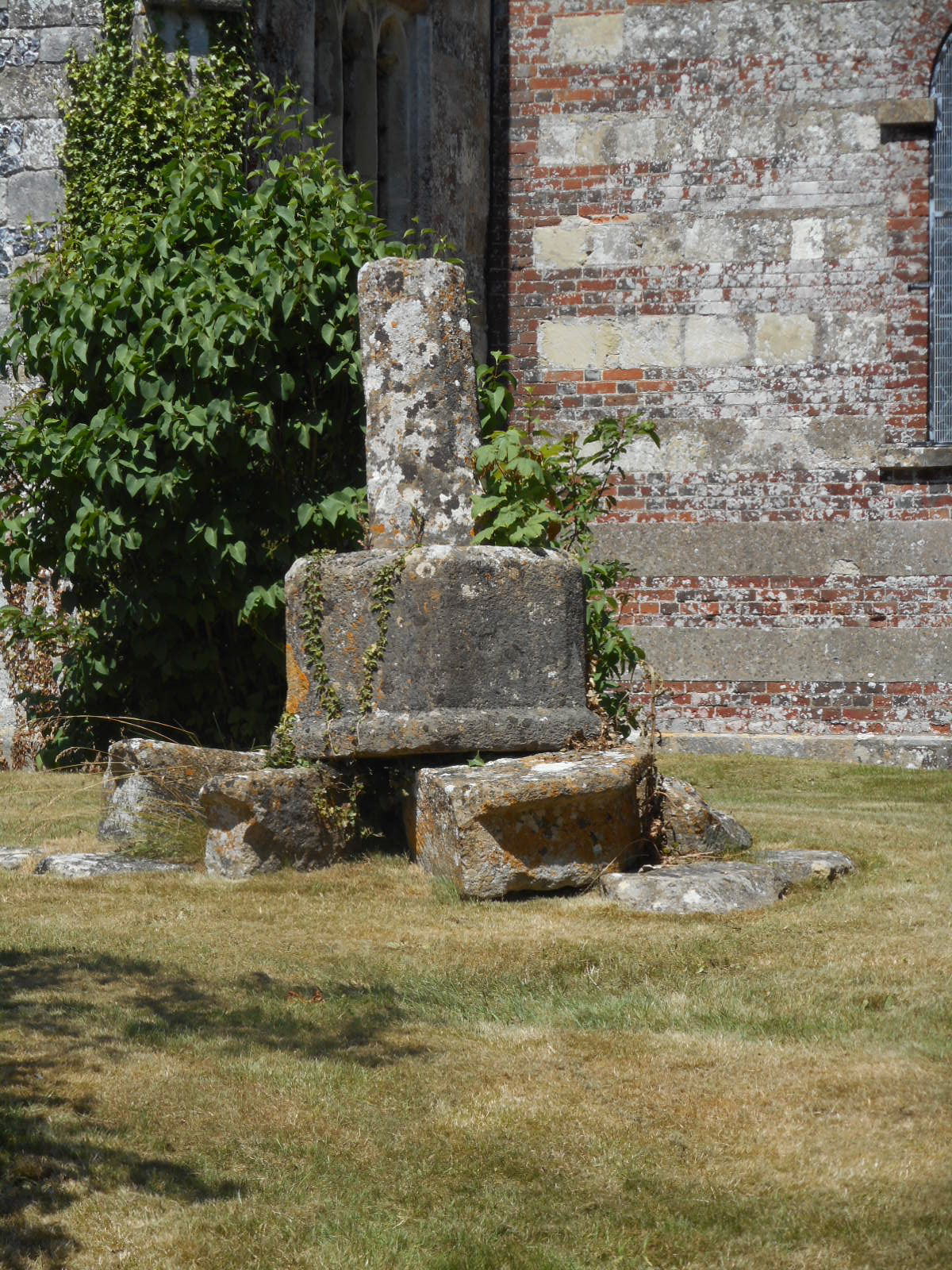 After, we walk along a few more lanes and arrive at Enford. Hutton thinks Enford, which used to be called Avonford, to be a remarkable place. Largely, he informs us, this is because the Norman church was virtually destroyed in 1817 by lightning and, following its reconstruction, some other unnamed catastrophe took place necessitating further restoration in 1892. Doesn’t seem a very lucky place but they’ve mown the grass for us so we sit down for our picnic near a pile of stones. Despite all the historical changes, these particular stones have been in their current position since 1007. How do they know that? Following lunch, whilst B and I are laying on our backs, soaking up the sun, two men arrive and ask if we’re quite well or should they go back for their spades? Time to look a bit more active. We set off for our final destination – Netheravon.
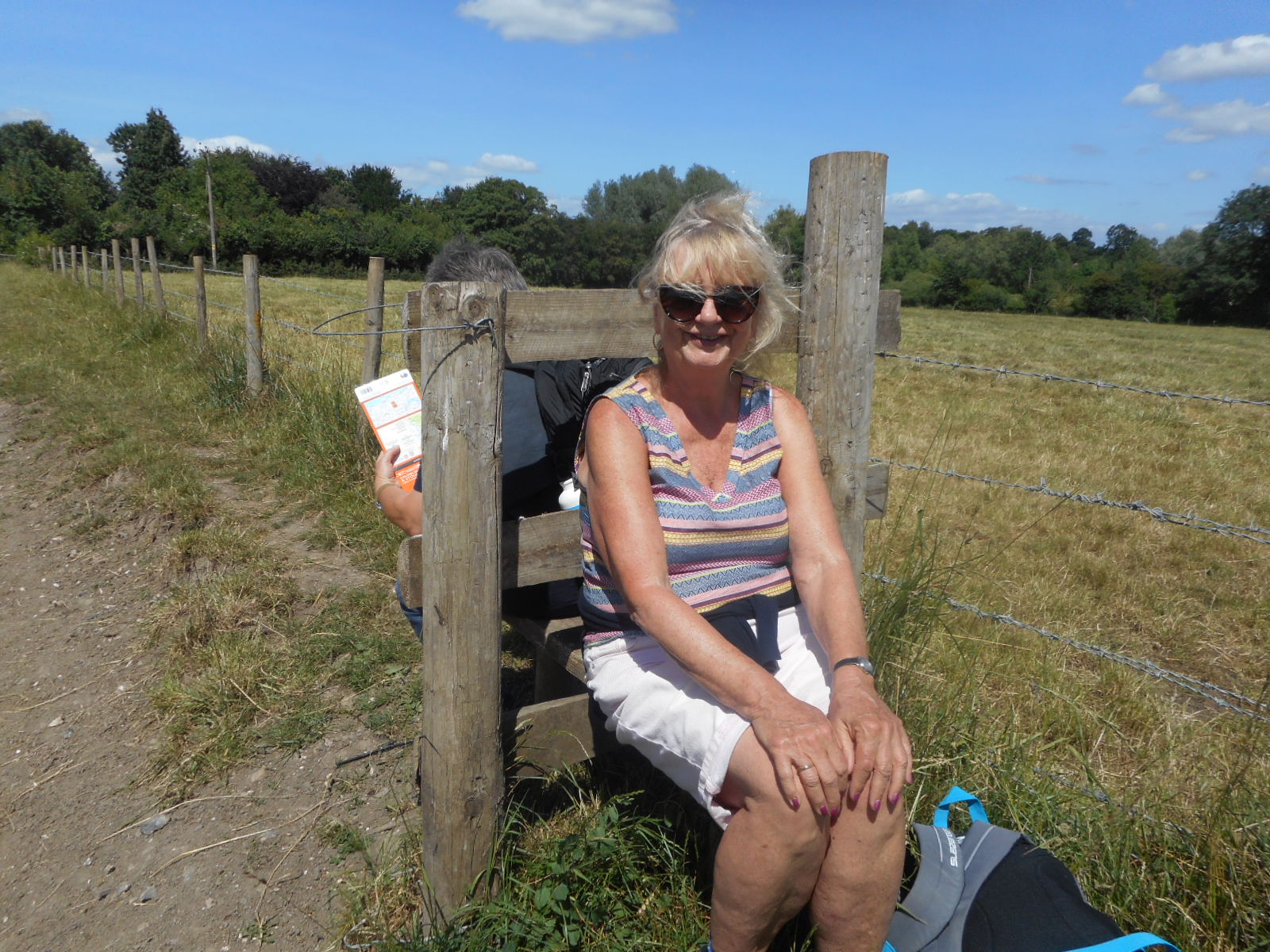 We wander once more through ye olde England which is full of yet more thatched roofs distinguishable from each other by various birds and animals moulded from the leftover straw and numerous signs proclaiming no MOD vehicles. There’s not a soul in sight apart from Inspector Barnaby desperately seeking suspects. Troy – tell him they’re all in East Chisenbury. We’re unable to help as we have to cross the River Avon for the fourteenth time today. Arriving in a field where I find myself temporarily exhausted, and where B takes a very nice photo (note Pathfinder Powell sitting behind me still looking at the bloody map). We note that the path which we’re to follow next, according to both the map and the guide book, doesn’t exist in reality.
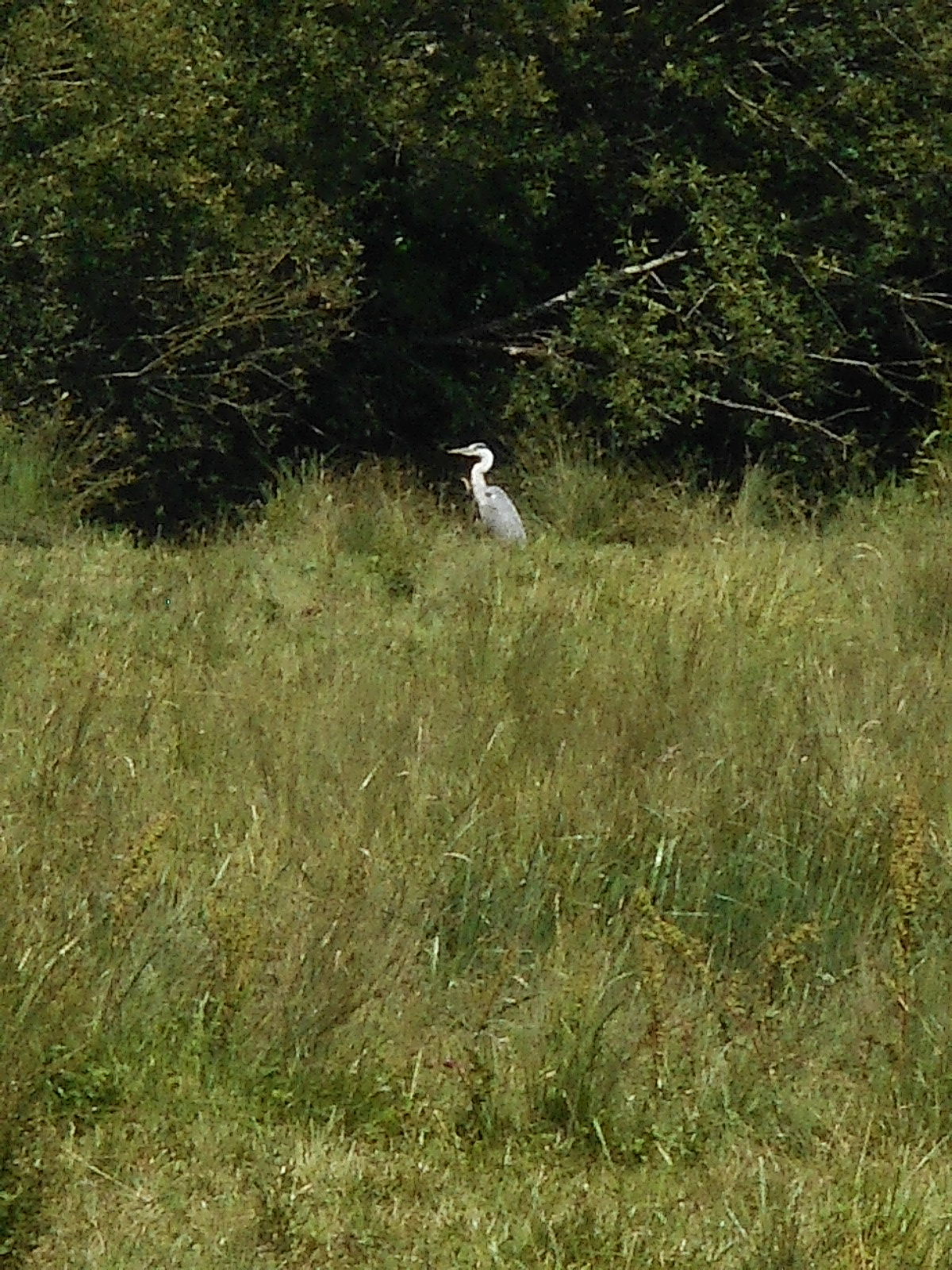
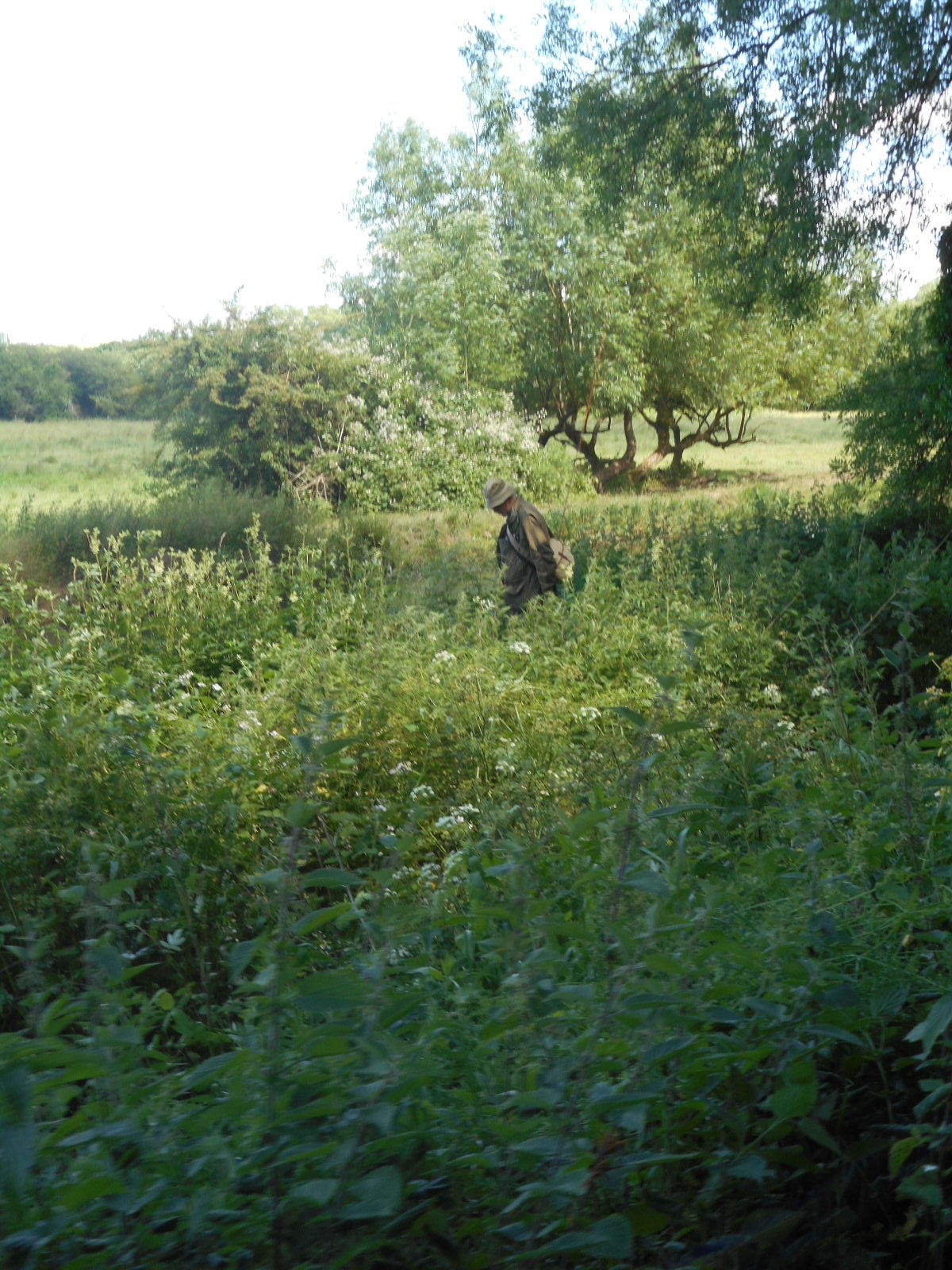 Fake news. B and the pathfinder press on, wading through thigh high grass. I meander after them looking at butterflies and suchlike until I’m awoken from my rural solitude and soliloquy by notification of a disaster: no! Don’t say Enford Church has fallen down again. It’s worse – there are two signs proclaiming ‘out of bounds’. Pathfinder Powell is a stickler for rules and has found us an alternative route which will only take us an extra three miles back across the river. She’s out-voted and we proceed with caution, wary of lurking fisher folk and mutant herons.
 In Netheravon there is a poster reminding us that hare-coursing is illegal. It’s not the first we’ve seen on the Great Stones Way but Netheravon has form (see what I did there?). In 1829, when researching his book Rural Rides, William Cobbett enjoyed disposing of ‘an acre of hares’ in Netheravon. Call it social history if you will. Hutton calls it a place of considerable beauty. I call it not very quiet. Outside McColl’s, where the particular ice-creams that B and the pathfinder require on their non-Slimming World diet are unavailable, a woman shouts across the road to another: ‘OI! OI! YOU HAVING TWINS THEN?’ ‘NO‘, shouts fat woman, ‘I’M JUST BIG’. ‘YOU SEEN BARNABY?’ shouts the first one. ‘NO’, answers the other, ‘I’M JUST BIG’. My theory is that because there are so many bangs emanating from the nearby plain, everyone shouts as a matter of course. Hare course.
And back at Casterley Camp to collect car number one we are stopped by a pleasant soldier with an Iraqi tan who enquires as to whether we’re ‘just dropping off?’ The place is afire; I’m not hanging around and B and Pathfinder Powell have an assignation in the Devizes branch of Morrison’s. I’ve got a bit of empathy with Hutton. In the 1899 Hansard, it’s possible to find a brief, unanswered question relating to the ‘purchase’ of Salisbury Plain by her majesty’s government in the name of the War Office. How they bought an area of Wiltshire covering 300 square miles is one of life’s mysteries. Folk like Hutton probably didn’t query such things, let alone venture on government property. Little changes.
 Donald and the Weasels