
 Last Sunday, daughter number one took me to the beach for the day. Given that I live four minutes walk from the water, that might not sound like anything out of the ordinary. However, we were travelling along the edge of the county for many miles to Charmouth, almost on the Devon border, to look for fossils in the most Jurassic part of the UNESCO World Heritage coastline. I hadn’t been there for years, the last time being in the company of llamas. But that’s another story.
 The dual carriageway that runs between Bere Regis and Dorchester is a dangerous affair: not because it’s a fast road but because the skies above are often full of large birds that demand acknowledgement. ‘Buzzard’, I shout. ‘Another buzzard’; ‘look, buzzard being chased by a crow’. ‘A pair of buzzards!’ Daughter politely explains that she can’t look at the birds and simultaneously drive in a reasonably straight line: ‘mum, every time I take you out you’re always shouting about buzzards’. I resolve to sit quietly. And of course, the photo is not of a buzzard but of a crow who, having chased away the predators, is guarding the clifftop above Charmouth Beach. ‘Crow!’
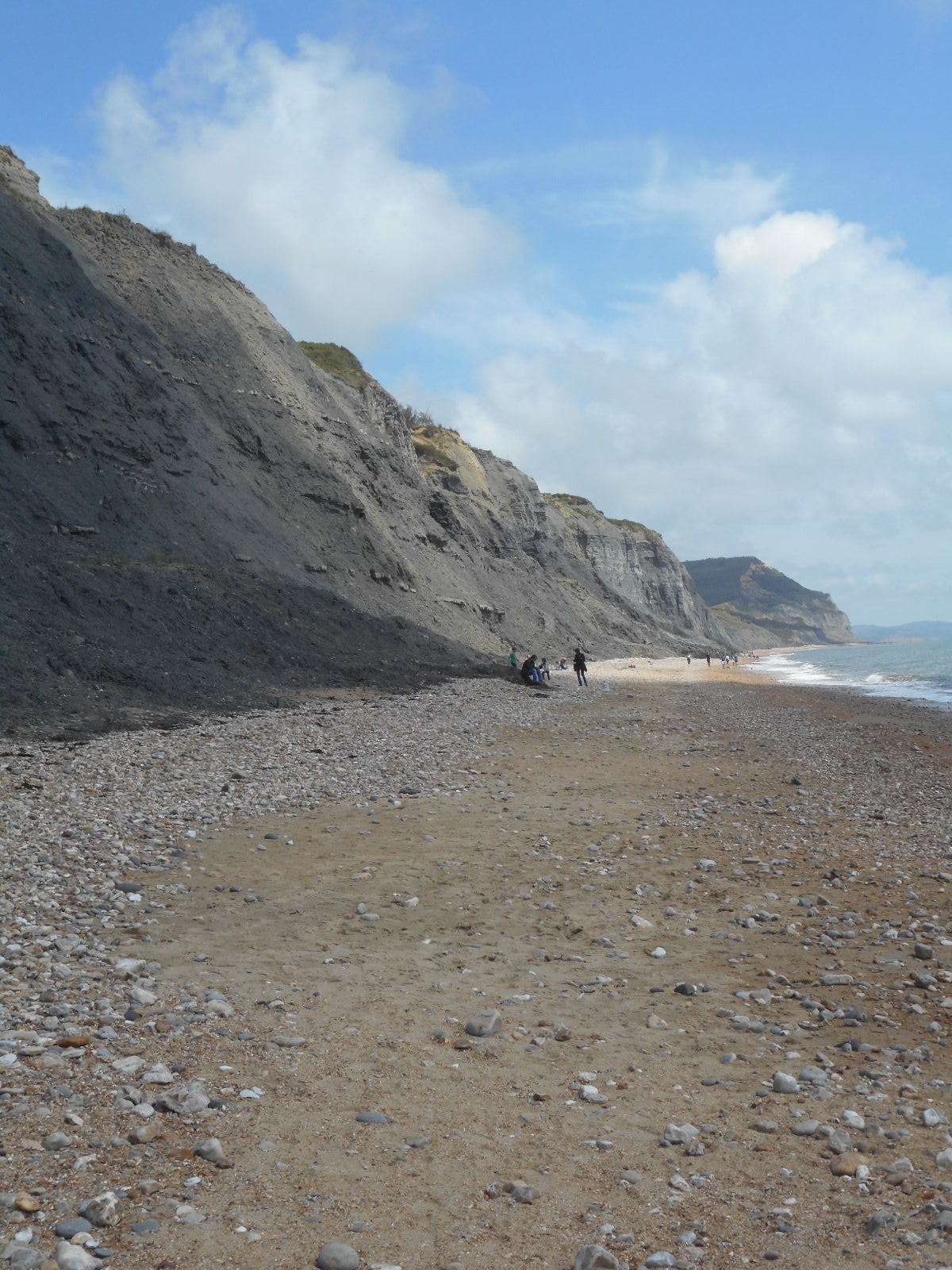 Jurassic limestone is comprised of hundreds of thousands of ancient creatures, crushed and built up over the eons. The reason why Charmouth is world famous for its fossils is due to the geology: the eternal crumbling of the cliffs means that new, or old, stuff is always being washed out to sea and returned on incoming tides. There are plenty of signs suggesting that the best fossils are found on the beach and warning folk to stay away from the collapsing crags; and definitely not to attack the cliffs.
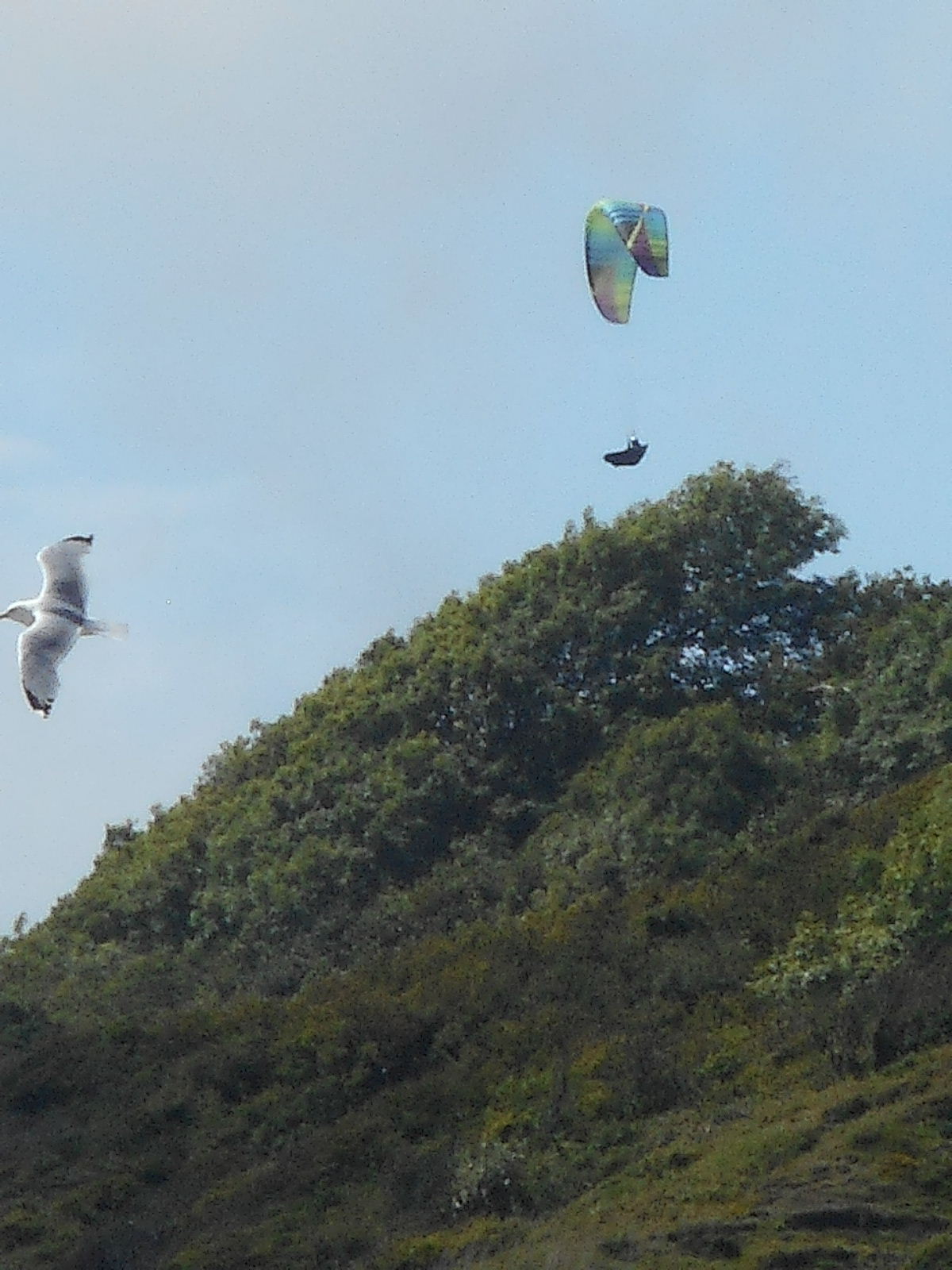 It seems that most people ignore the warnings. After our picnic, we set off for ‘fossil beach’ where quite a few folk have strayed onto the unstable limestone with their hammers. And there isn’t that much to see or find. A bit disappointing really. We decide to go to the visitor centre instead. Some ramshackle affair on an unattractive beach turns out to be super interesting.
 This is seven years old Helena who, irritatingly, picked up an ‘interesting stone’ on her way back from a beach picnic earlier this year. Her family took it to the shop and asked whether it was anything important. Well, just a 190 million year old fish fossil replete with scales.
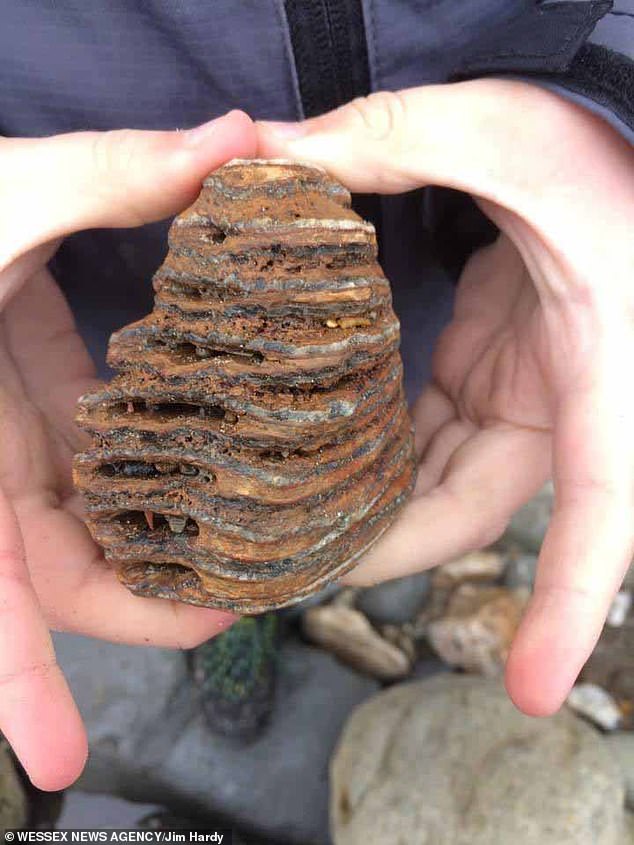 And if that wasn’t sufficiently sickening, an eight years old boy on a fossil walk, also this year, found a 200 years old mammoth tooth. Haven’t these kids got a PlayStation to occupy them? What’s wrong with today’s parents? By the way, I took neither of these photos but they’re freely available to one and all.
 We were going home at this point but, inspired by the horrid children and the receding tide, we ventured onto the beach on the Lyme Regis side where the ancient fish was discovered. Sitting on boulders and shuffling around, wondering how one might ever again stand up, is both backbreaking and rewarding: every stone within sight bears a fossilised imprint of times past. Daughter number one collects a bag full. The bag breaks and I transfer the loot to my rucksack. It’s backbreaking. My tiny leaf imprinted fossil fits snugly in my back pocket. Isn’t this where you offer to carry the bag, I ask. She laughs.
Doesn’t matter: we had such the time back in the ages
 Donald and the Weasels