
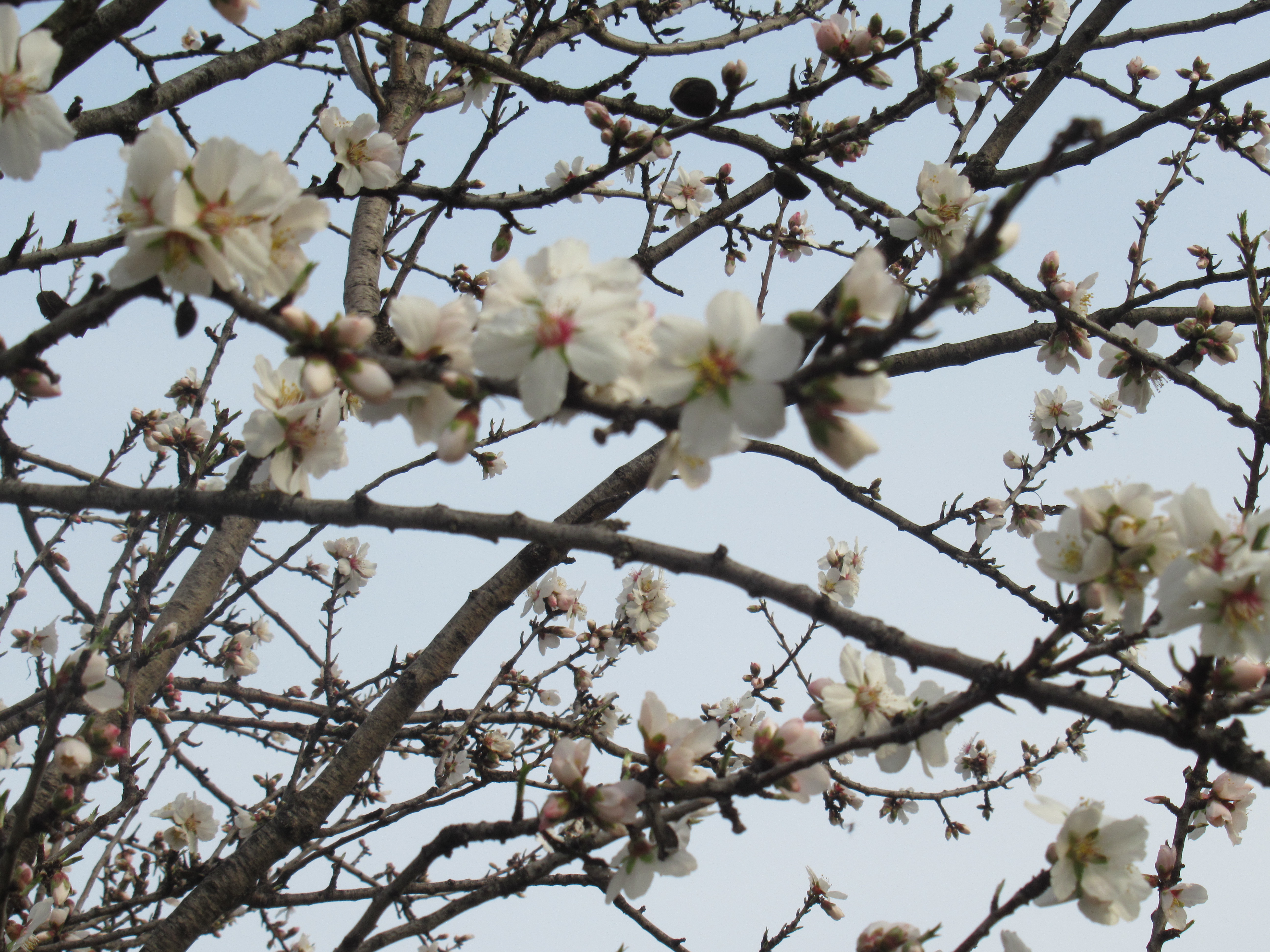
Spring is in the air. Well, it was yesterday – cold and rainy today. I had an arduous morning over in Villeneuve-les-Avignon where the weekly brocante was taking place. In high summer, the place is heaving with tourists mistakenly looking for bargains. I say mistaken as, unlike a vide-grenier (boot sale), a brocante is peopled by experienced dealers who are giving little away. Nonetheless, it’s fun if you like that sort of thing which I do. I made a single purchase, had a quick look around a couple of second-hand shops and girded my loins in anticipation of another al fresco lunch. After that, it was time for what used to be a siesta and is now referred to by my host as a nanny nap.
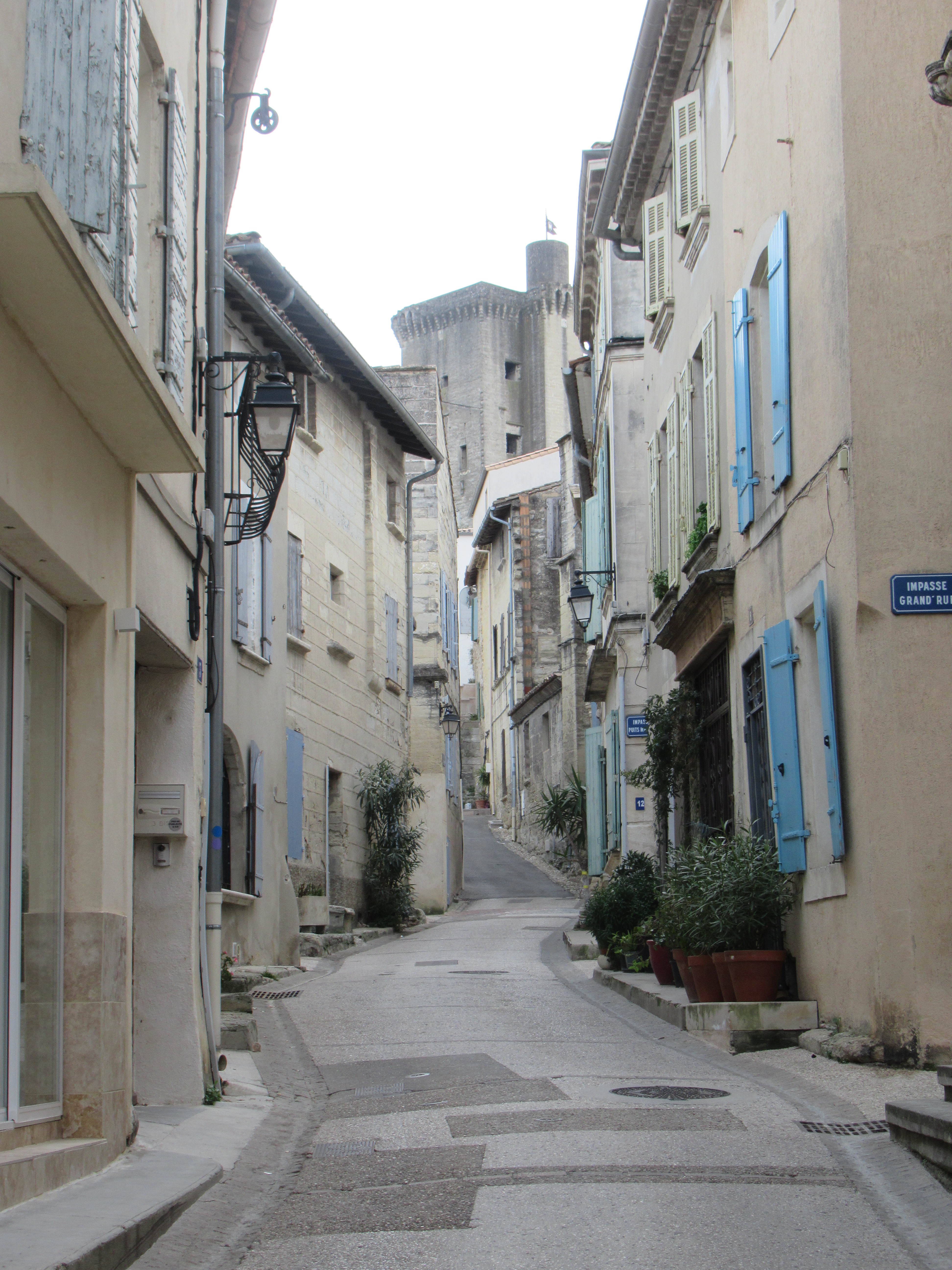
Clearly, it’s difficult to get going again after so much activity, but it seemed a shame to waste the daylight even though the sun had disappeared. I set off for the nearby village of Barbentane which is another of those places that doesn’t look especially interesting when passing through. Everyone who’s anyone in history has been to Barbentane: there was a prehistoric tribe, followed by the Romans who had a settlement in the hills above the village. After that, the place was successively invaded by the Vandals, Visigoths, Normans and Saracens to name a few. No wonder the village is so quiet; everyone’s hiding indoors wondering who’s coming next.
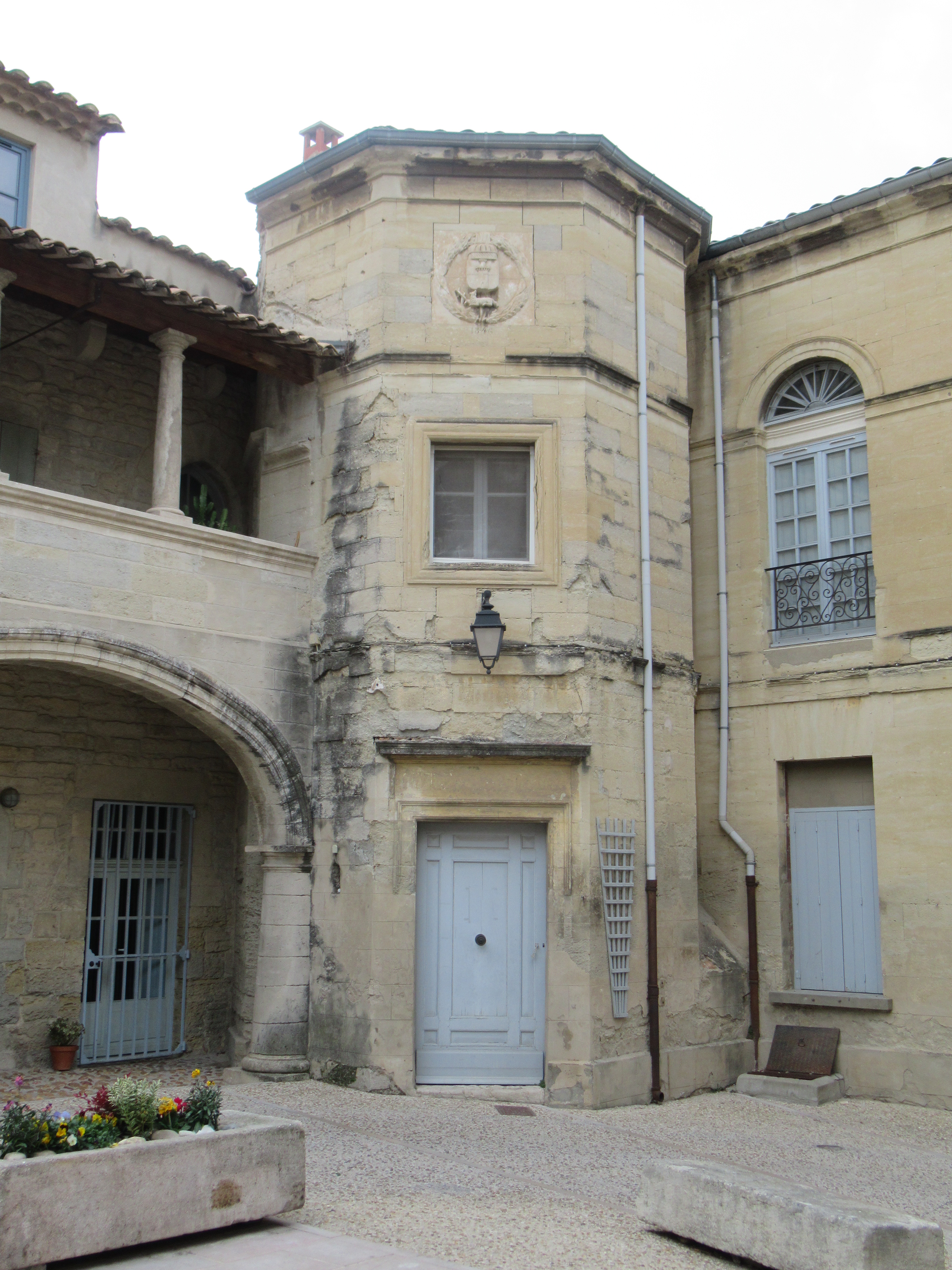
This is the Knights’ House, completed in 1178, where the important folk lived whilst waiting to see how history might develop. They had to hang around for the fourteenth century to arrive as that was when the popes moved to their new palace over in Avignon. Barbentane, being positioned at the confluence of the rivers Rhone and Durance, was important in being located at a crossing of the waterways and because of the fertile land on the plain. It became a sort of topographical area of dispute between the Kingdom of France and the Holy Roman Empire until Pope Urban sorted things out by giving the village shed loads of money and exempting people who lived there from tax. That’ll do it then.
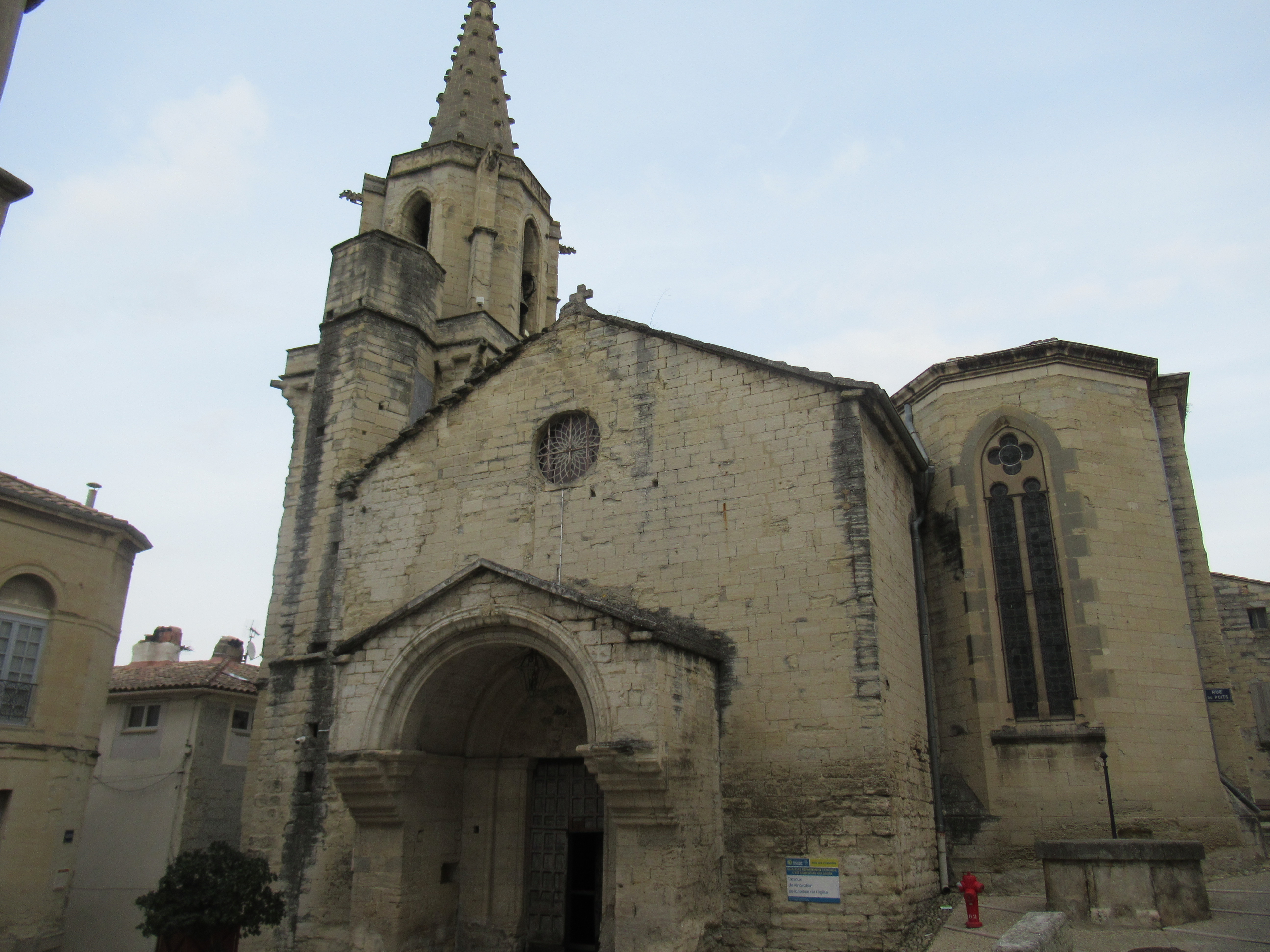
This is the twelfth century Church of Notre dame des Graces. The plaque suggests it was constructed on the site of an earlier chapel. Well, they would say that.
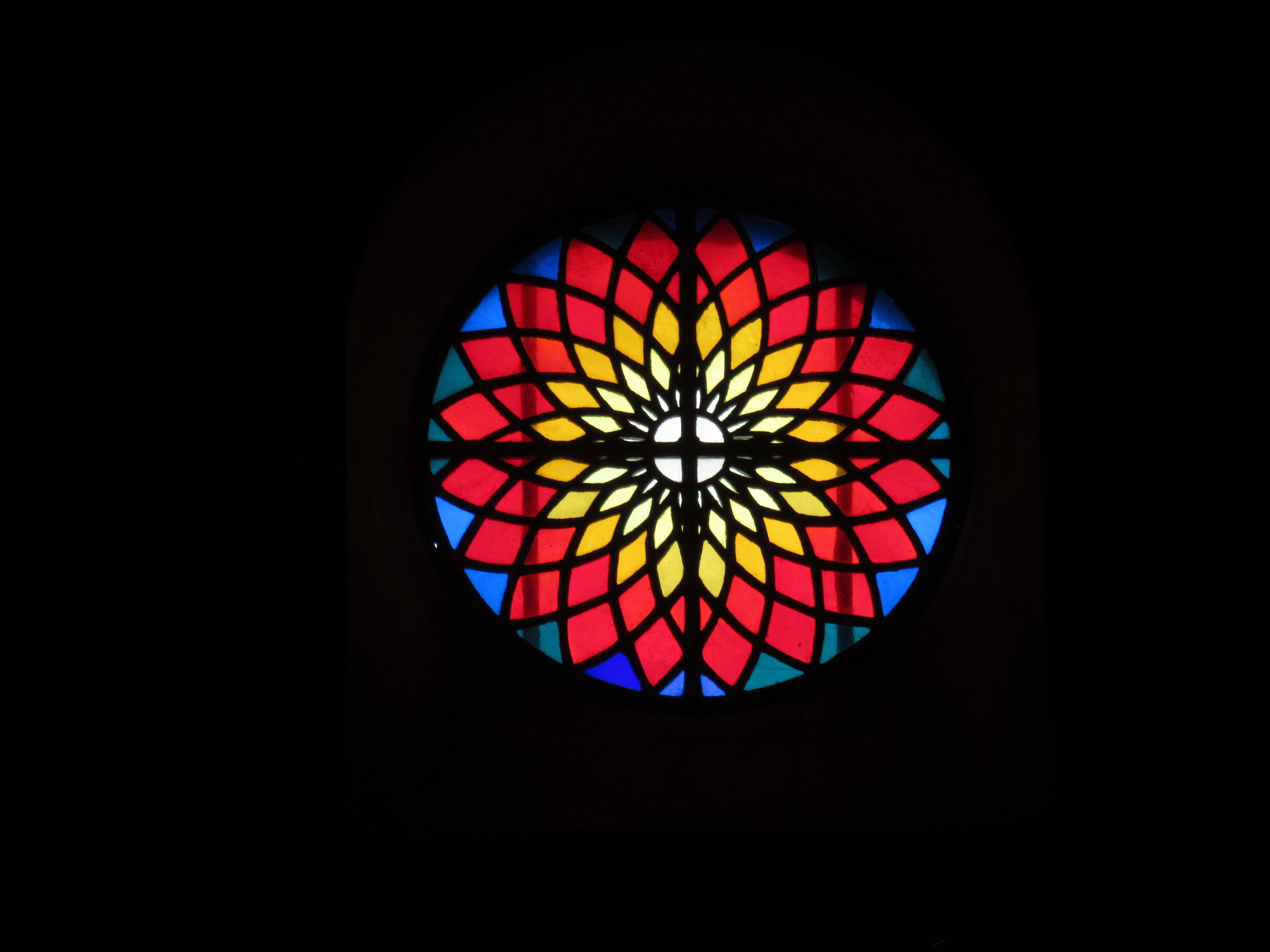

Here’s a couple of snaps taken inside the church. Actually, it had some nice features but there were people praying so it wasn’t really appropriate to go clicking around.
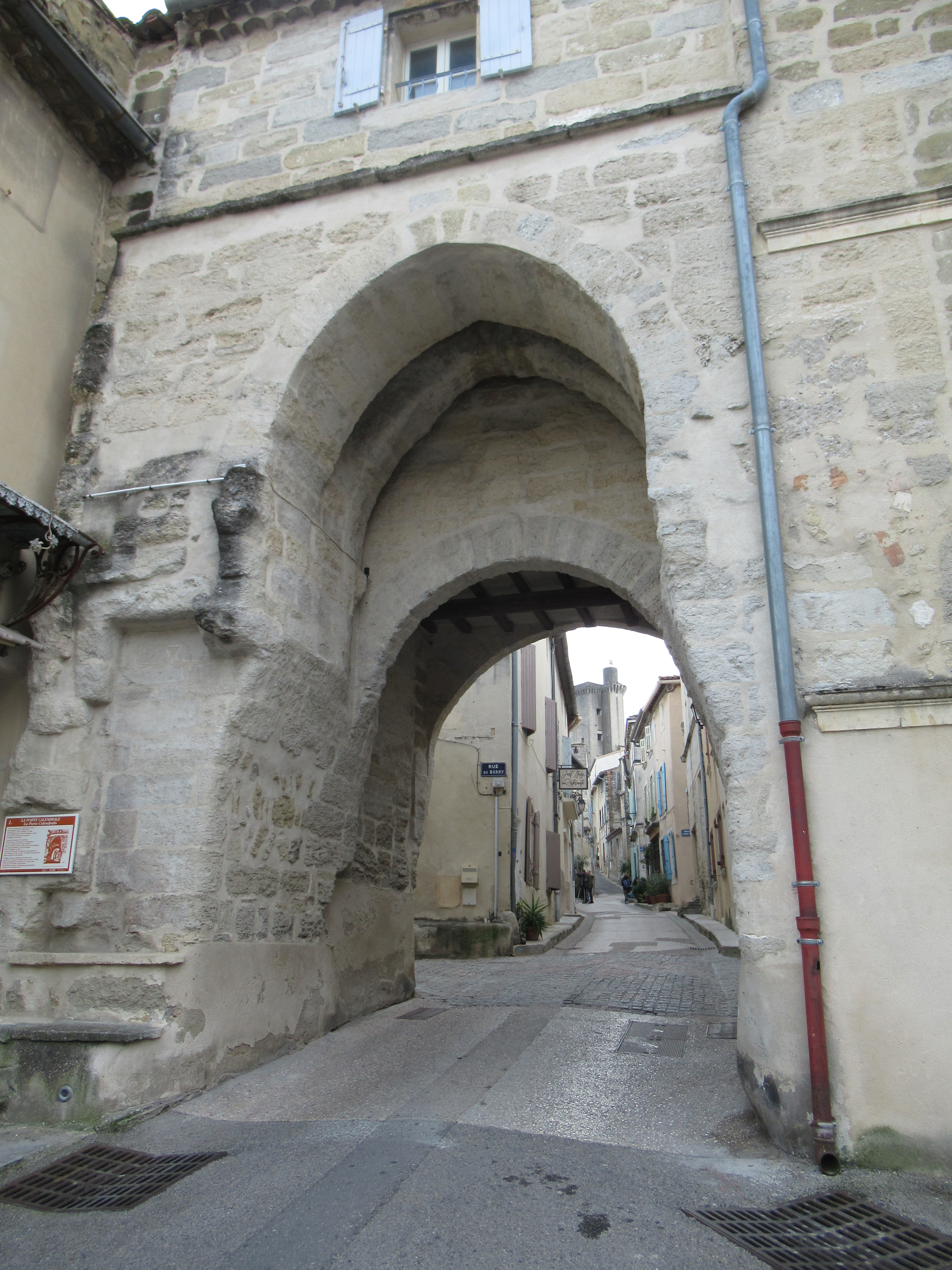

These are two of the gates to the old ‘city’ built in the ninth century and renovated with the help of the Pope’s purse in the fourteenth. They’ve stood the test of time well.
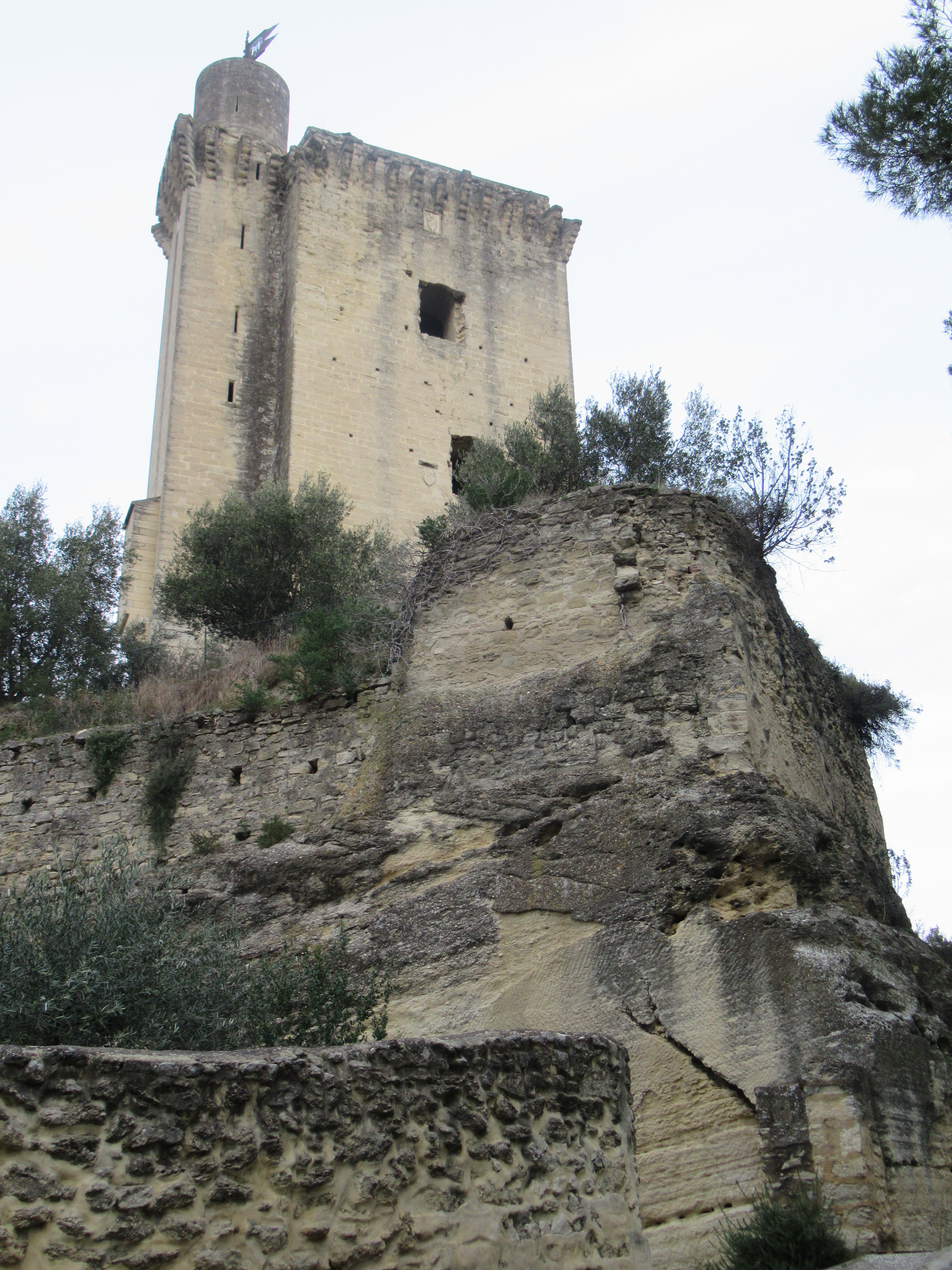
And this is the Angelica Tower, built in the fourteenth century by Grimoard who was the brother of you know who (Pope Urban). It was built as a forward defence for the Popes’ Palace in Avignon and is surrounded by interesting rumours. For example, legend has it that there’s an underground tunnel running from it, down the plain, under the rivers, and into Avignon. Further, and maybe with the tunnel in mind, it’s a truth that the Germans excavated it between 1943 – 44 in the expectation of finding Vatican treasures. And if you think that’s interesting, take a look at the next photo.
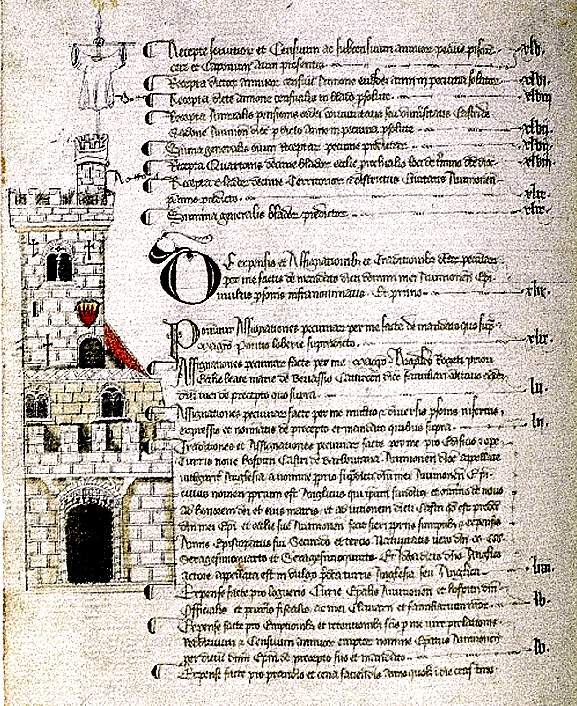
I found this picture of a drawing and description of the tower online which, in turn, was discovered in the departmental archives. Notice anything odd? Yes, someone has used the cross at the top of the tower as a washing line. (Don’t think that was mentioned in the archive).
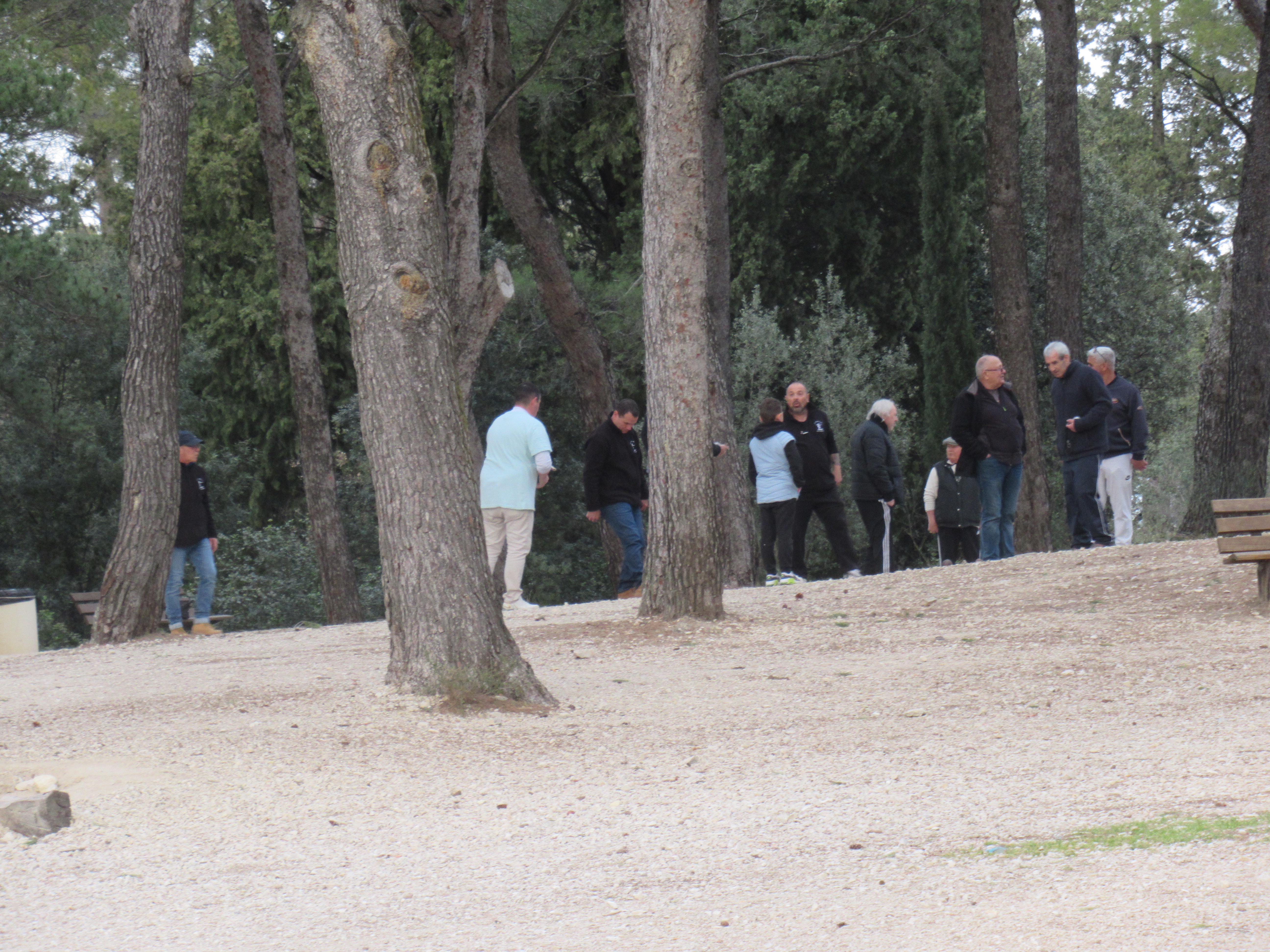
Anyway, enough history. I’d reached the top of town, had a little stroll around the environs and came across all these men in the trees. Suspicious? No, it was a boules match and it seemed that the majority of the villagers were up here.

After that, I began my descent, taking in the lovely views of the village and the countryside over to Avignon. The path was a bit tricky which involved looking down most of the time in order to preclude a broken ankle. When I did look up – OMG not again!
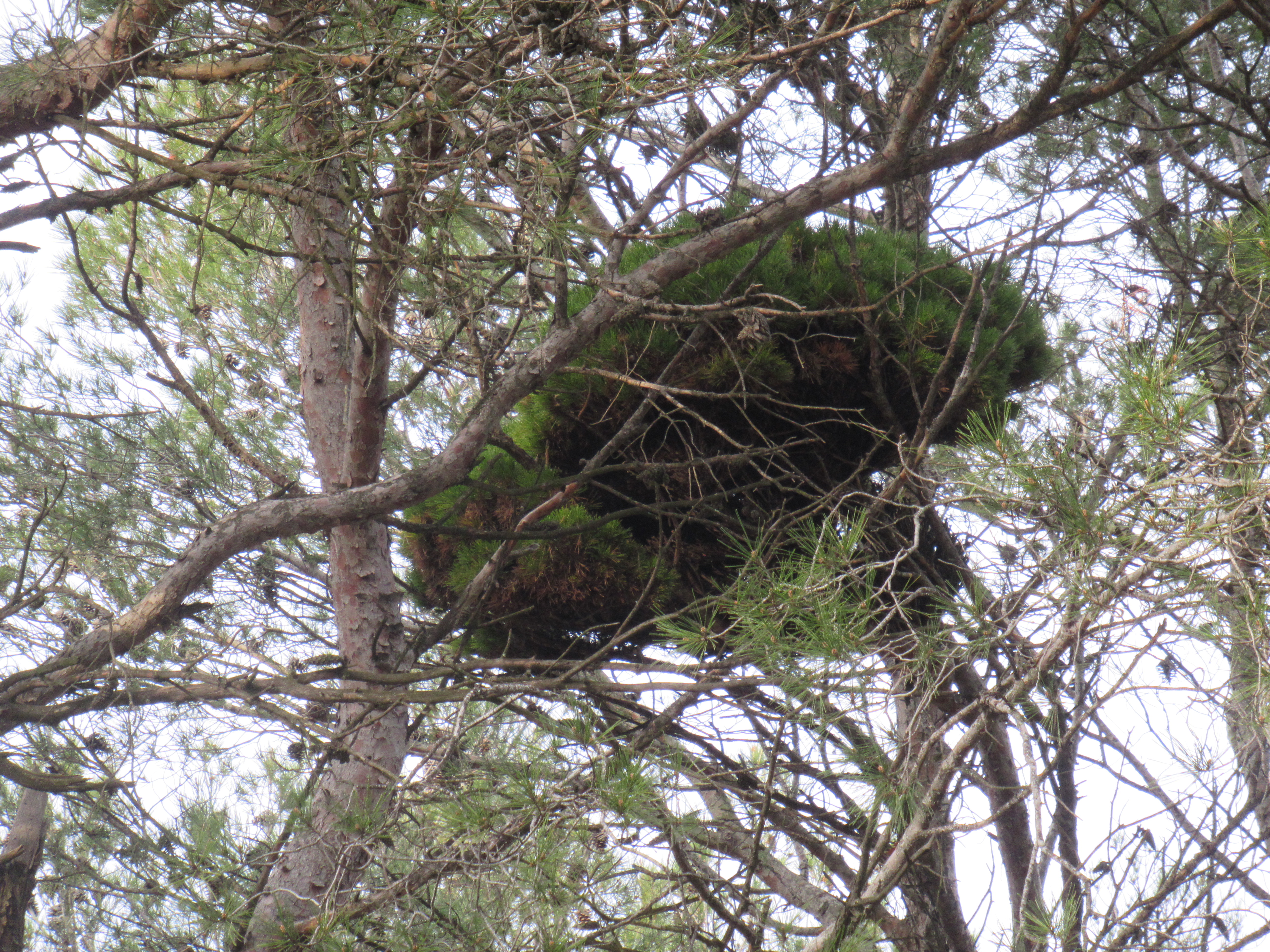
I immediately thought I’d found another monstrous hornets’ nest but, on closer inspection, I think it’s just some weird outgrowth of an Aleppo Pine.
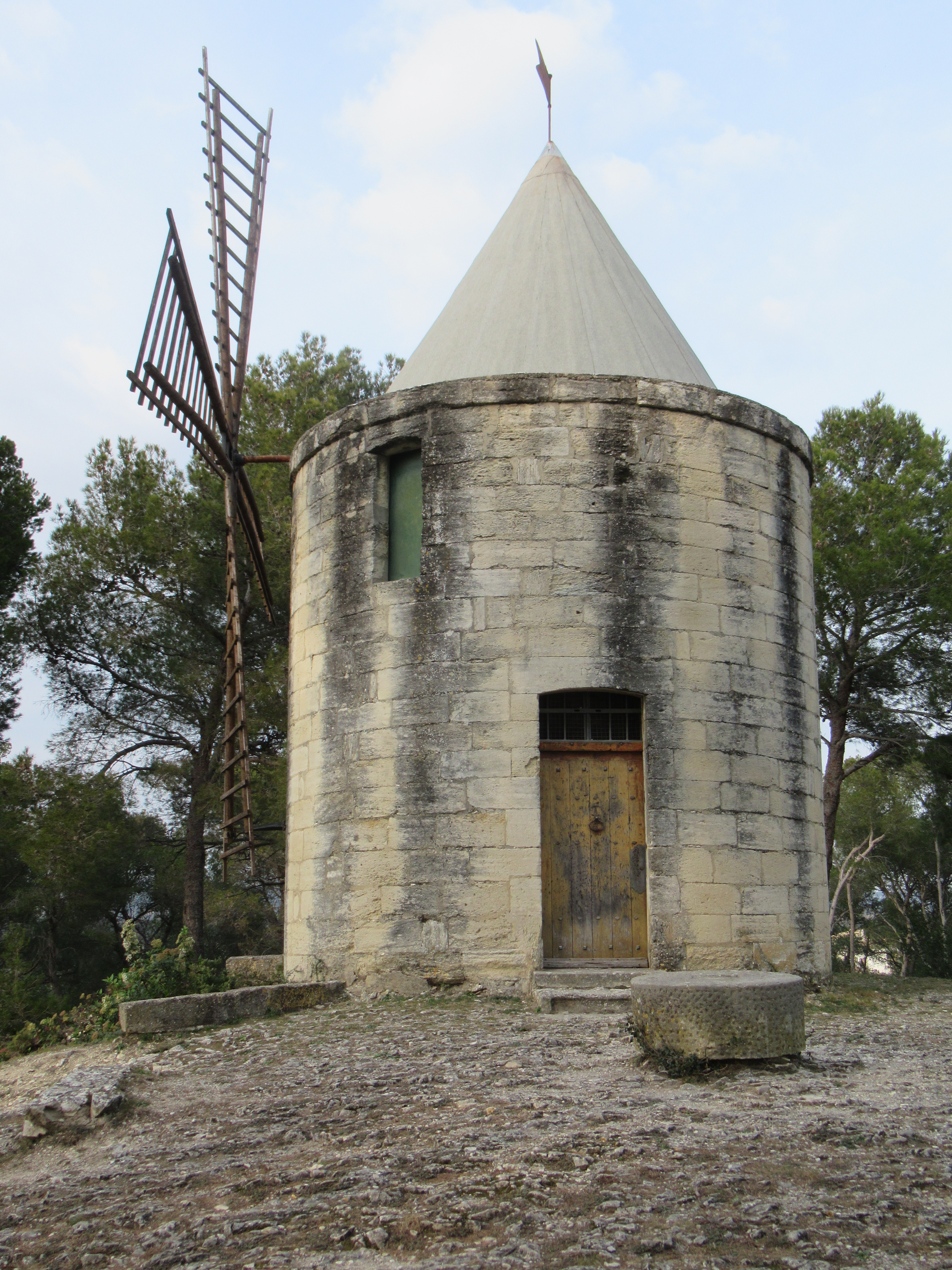
And here’s the last remaining windmill of Barbentane. There used to be three but only this one remains for posterity.
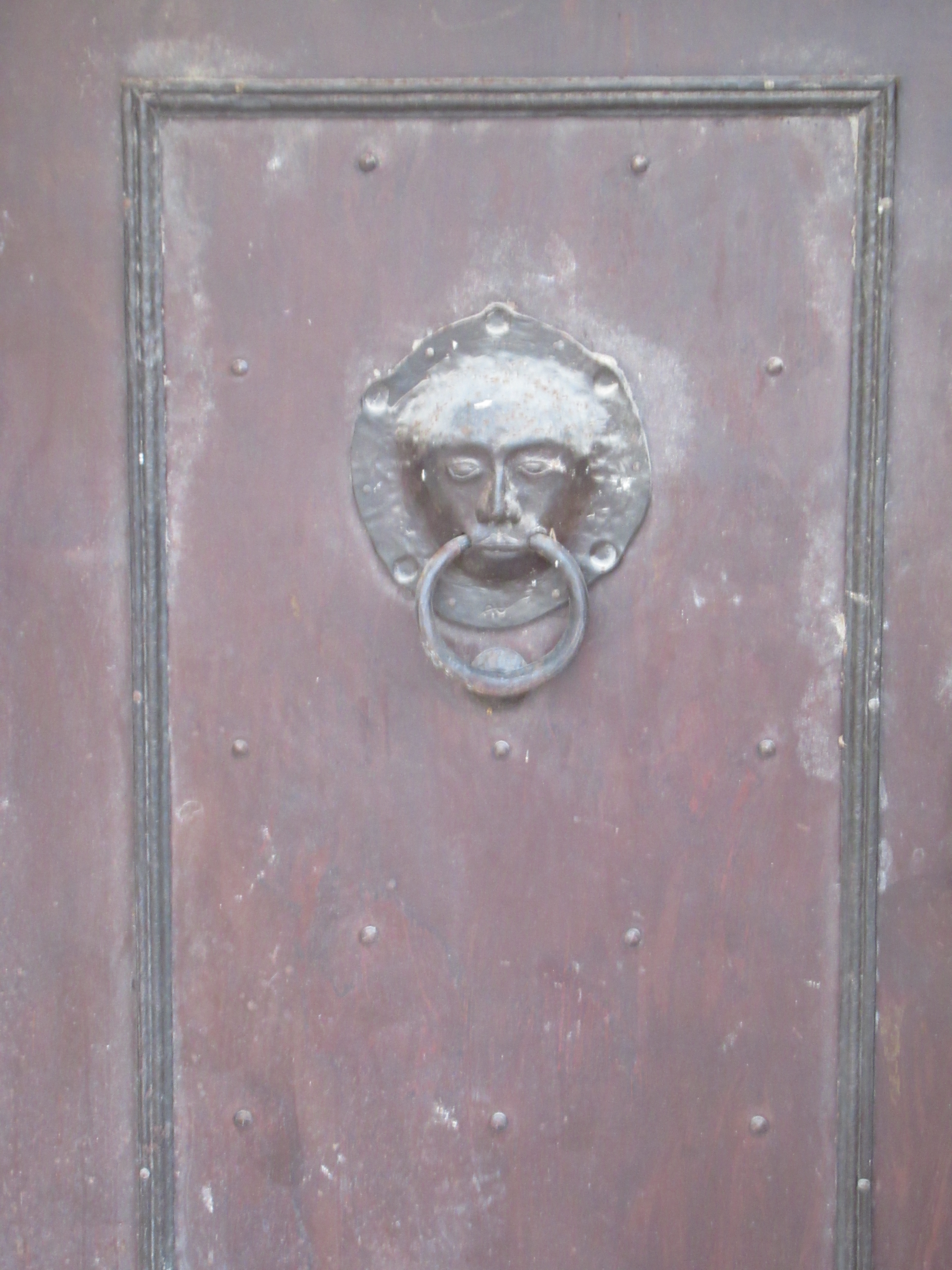
Finally, back down in the still quiet village, I spotted this very old door. Barbentane is really good at erecting plaques to show a person what they’re looking at but there was nothing informative here. When I saw it, I immediately thought of the door knocker in Dickens’ Christmas Carol that turns into the ghost of Jacob Marley.
There’s only one tiny grocery store in the village and I entered, rather pessimistically, in search of wine. Not a huge choice but they did offer some biological Valreas. I’ve never knowingly purchased an organic bottle of wine in my life but, let me tell you, I shall certainly be going that way again. Delicious.
 Donald and the Weasels
I thought you’d found another best until you explained further on that it wasn’t!
Sent from my iPhone
>