A Titanic type (NOT in Postman’s Park)

All previously laid plans are down the pan as we trudge along a dismally wet path from Brentford to Richmond, just for the fun of it. But’s what this? Down the suitably named Duck’s Lane, an unexpected information point that begs a stop and further research.

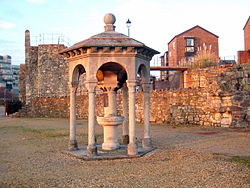
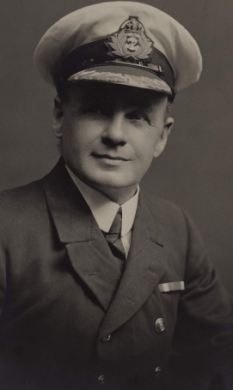
At first glance, the memorial plaque to Charles Herbert Lightoller suggests a hero of the twentieth century: highest ranking officer to survive the Titanic; commander of a ship that sank a German U-boat and owner of a ‘little ship’ that ventured to Dunkirk. Well, who am I to rain on the much decorated Lightoller’s parade? A few more details are, nonetheless, in order.

Lightoller’s mother died shortly after giving birth in 1874 and his dad abandoned him for a more interesting life overseas. Not much of a start for a young chap who subsequently went to sea at the ripe old age of thirteen. He had so many adventures on his way to working up the greasy naval career trajectory that a whole book could be written about him even before he found himself aboard the ill-fated Titanic.
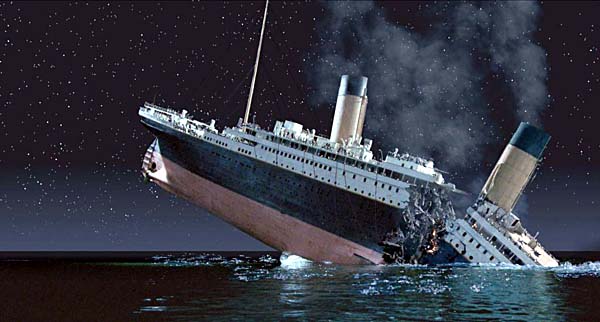
On the night of 14th April, 1912, second officer Lightoller commanded the last complete bridge watch prior to an incident involving an iceberg. Returning to his cabin and preparing for bed, he was suddenly disturbed by a loud noise. That would be the meeting of the Titanic and the ice. Lightoller rushed to his post in charge of evacuation. Finding Lifeboat Two occupied by 25 male passengers and crew, he drew his revolver and threatened the men with death, calling them ‘damned cowards’ and forcing them to leave the boat.

Lightoller was a strong adherent of the ‘women and children first’ policy except that, in his interpretation, this meant ONLY women and children. What sort of regimented perversity precipitated his action of lowering empty lifeboats rather than allowing men to escape? The only male passenger he allowed aboard was a single man with sailing experience. Once he decided he could do no more, he dived into the water and swam towards the crow’s next. Unable to reach it, he climbed aboard the Collapsible B boat and took charge. By teaching the other occupants how to shift their weight according to the swell, they managed to keep the boat upright and all were saved. Charles Lightoller, the highest ranking survivor of the Titanic, was the last person to board the rescue ship, RMS Carpathia. Thus, we might say he was a hero, but what of the men he refused to save?
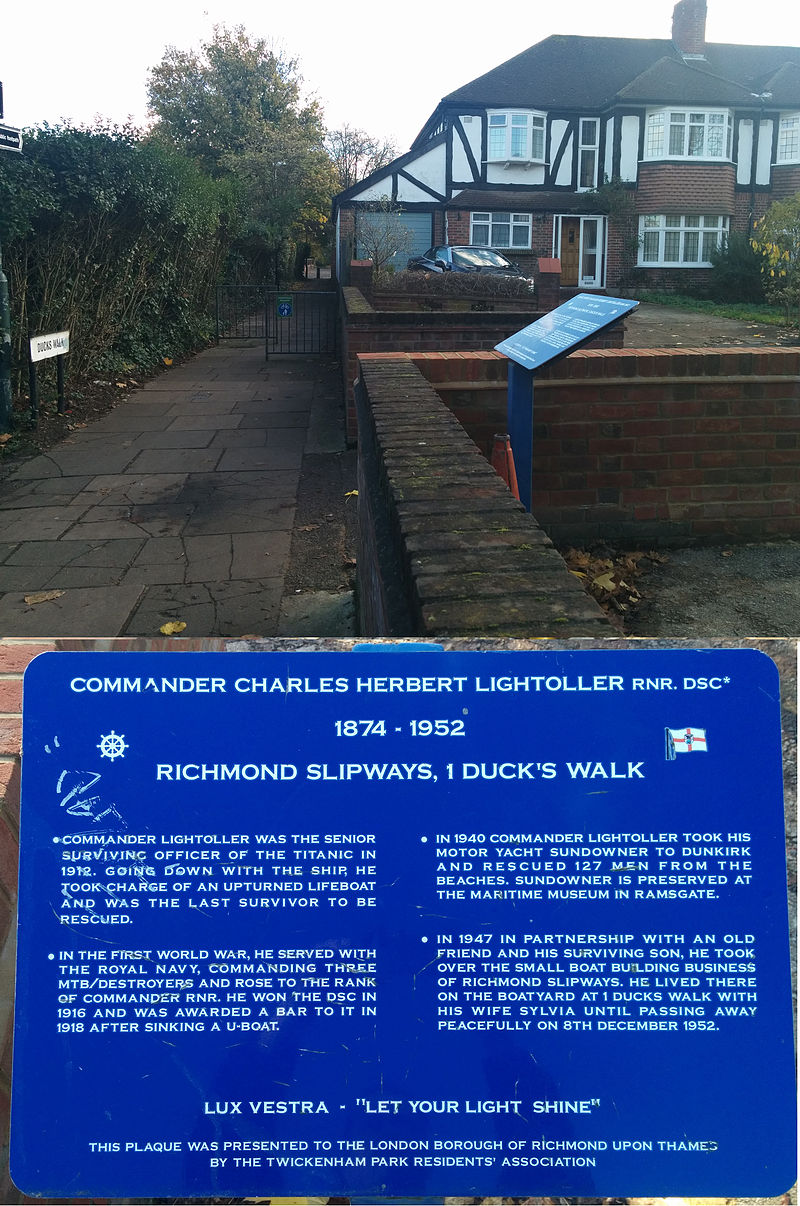
In WW1, Lightoller commanded HMS Garry which rammed and sank a German U-boat off the Yorkshire coast. For this, he was decorated for gallantry. However, according to the Germans, there was some controversy over his actions. It was alleged that he gave orders to shoot and stone all the water-borne survivors who were trying to surrender. On one side, this was deemed an atrocity but Lightoller claimed ‘men with their hands in the air’ were inconsequential and in those days, ‘collateral’ went unchallenged.
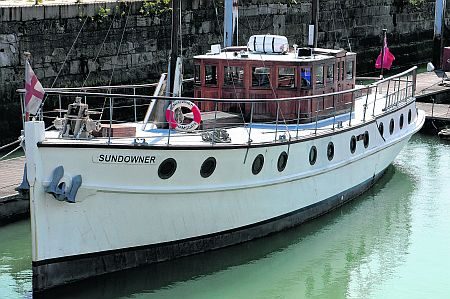
In retirement, Lightoller lived in Duck’s Lane at Richmond where he ran a small boatbuilding business. In WW2 he was once again in action with his boat, Sundowner. Yet again the maverick, he refused the navy requisition of his boat and with his son sailed it to Dunkirk and back, rescuing 120 British soldiers from the beach. A man who lived on and for the water, Lightoller died in 1952, a victim of the Great Smog of London. Inspired by a solitary blue plaque, I have only undertaken cursory research into this very interesting man – and possibly done him some injustice along the way.


The Stella disaster

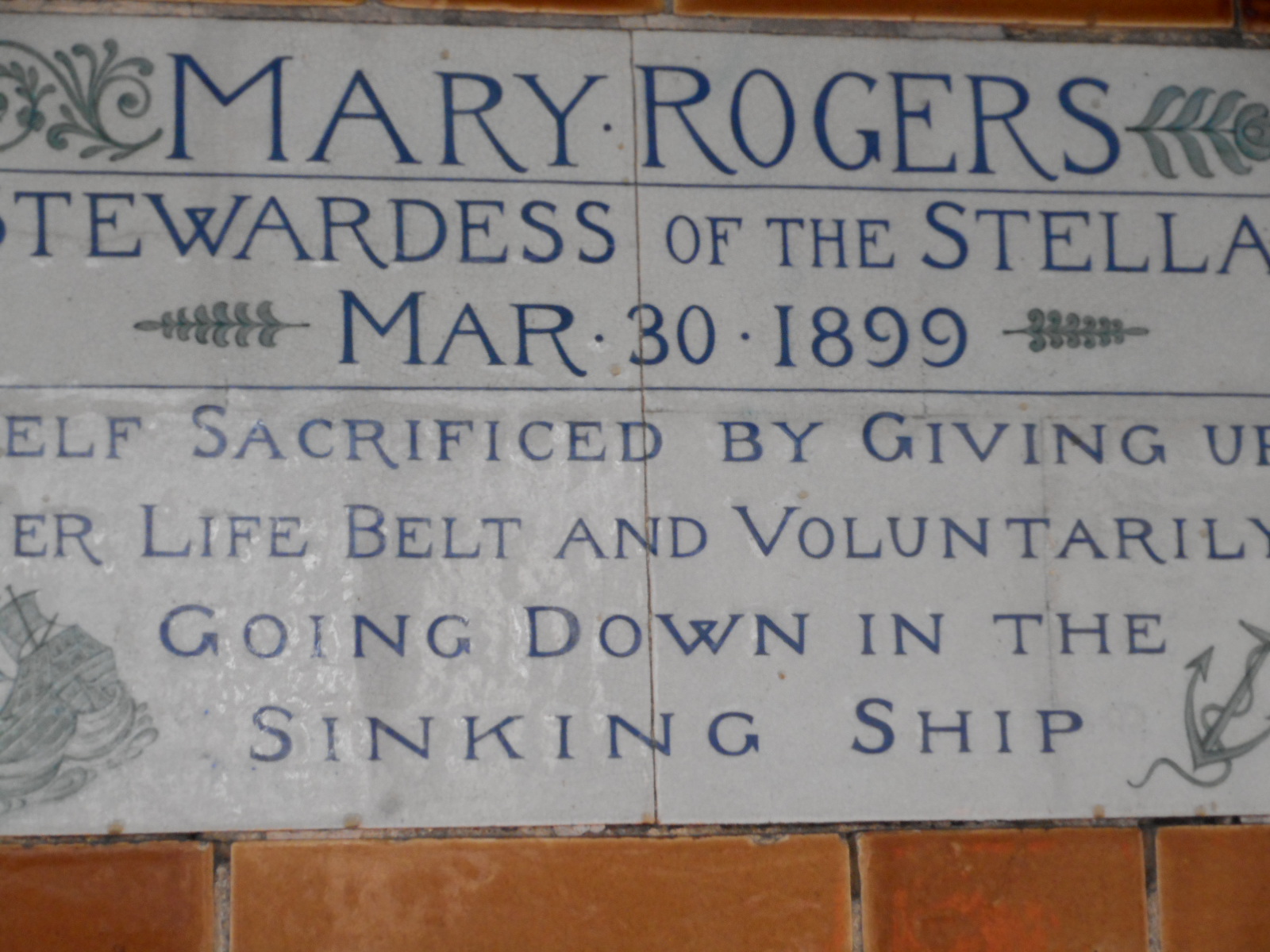
Here in Postman’s Park is the memorial to Mary Rogers, aged 44 years, who died on Maundy Thursday, 30th March 1899, having given up her life belt and voluntarily going down on a sinking steamer.


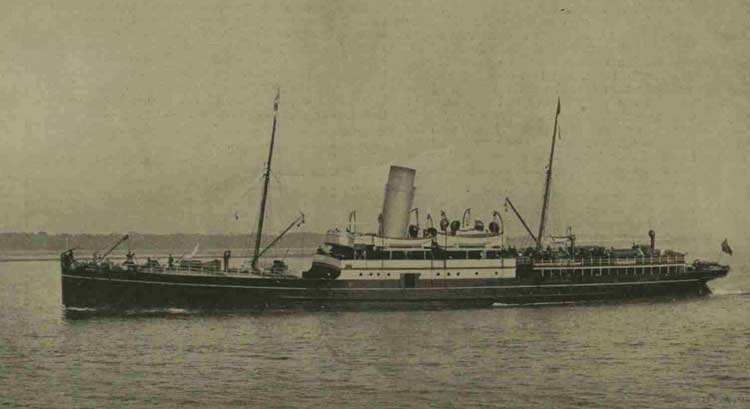
The Stella, a steamer belonging to the South Western Railway Company, had left Southampton and was heading for the Channel Islands. Mary was a stewardess on board who had been employed as such for sixteen years. As the steamer approached Guernsey, it was caught on the Casquet rocks and its steel bottom was ripped open.

Six lifeboats were launched with women and children taking priority as passengers. From her muster post, Mary calmly guided all the ladies to the side of the ship, placed lifebelts on all those who had none, and helped the women into the small boats. Finding one lady left without a lifebelt, Mary removed her own and gave it to her, ensuring she had a seat in a lifeboat. Despite encouragement from passengers and crew, Mary refused her own place in the boat for fear of it becoming overloaded. She lifted up her hands and was heard to say, ‘Lord, have me’.

Sadly, one of the lifeboats capsized and the ship sunk within twenty minutes. 75 people, including 19 crew members drowned but 106 people were saved, although fifteen hours passed before they were rescued. There was an enormous amount of publicity given to the disaster and to the bravery of Mary Rogers. A fund was established to support the elderly father and two children she left behind which reached £570. Of this, £500 was given to the family members and the rest financed this second memorial which can be found near the waterfront in Southampton.

N.B. The black and white photographs are the copyright of the British Library.

The runaway horse

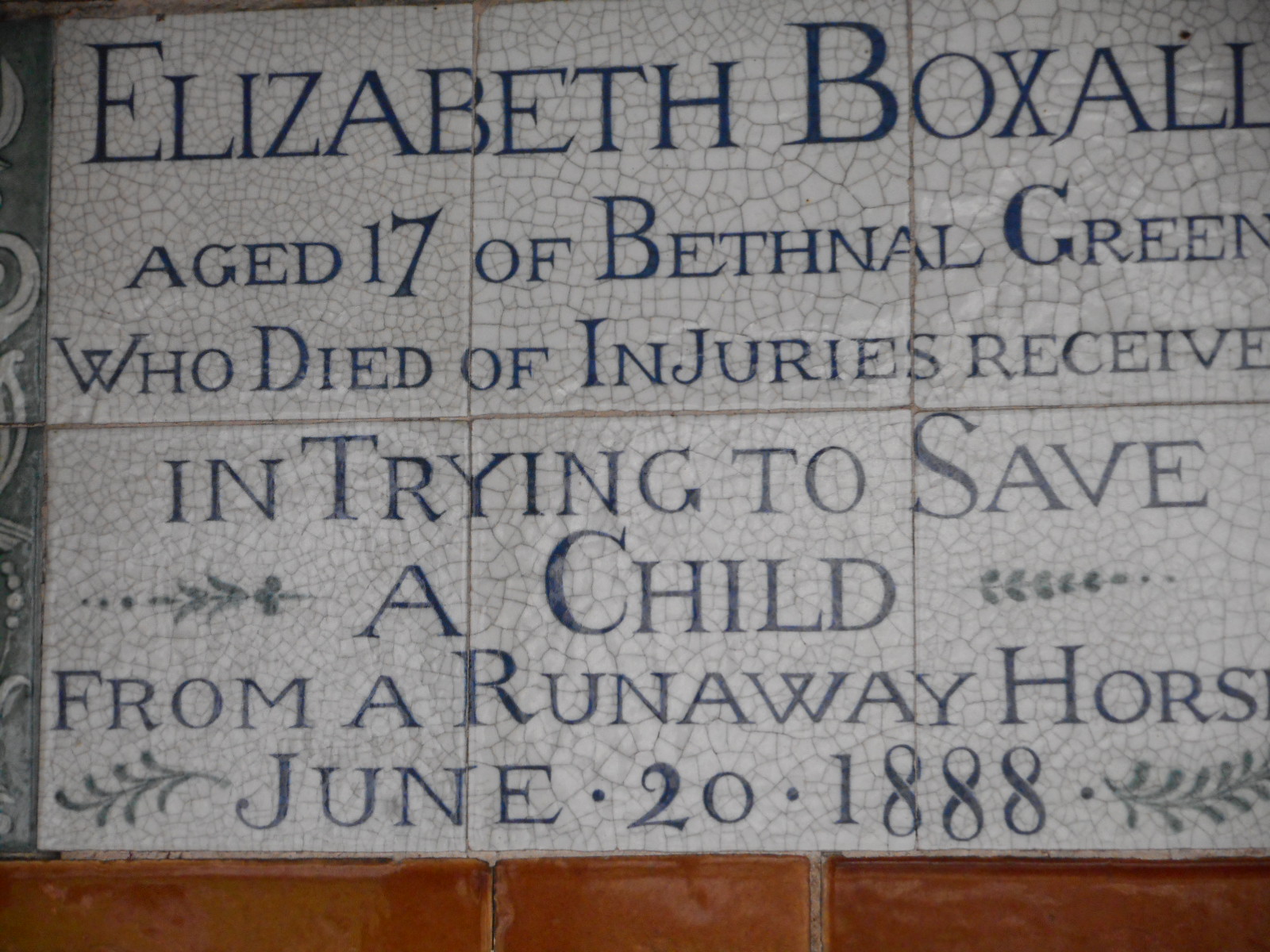
In Postman’s Park, the memorial celebrates Elizabeth Boxall, aged 17, who, amongst the other heroes celebrated here, holds the sad record for the longest period between the incident in which she saved a child from a runaway horse and her subsequent death. History has more to say about Elizabeth’s treatment at the London Hospital than her act of bravery.

Elizabeth was one of eight children who lived in the family home in Bethnal Green. In July, 1887, a commotion was heard in her street caused by a child in the path of a runaway horse. Elizabeth rushed out of her home and threw herself onto the child, thus saving it from any harm. Unfortunately, the horse kicked our heroine causing an injury which failed to heal. In a matter of weeks, she was barely able to walk and a fall sustained on 9th October necessitated hospital treatment.

At the London Hospital a partial amputation was made to her leg without either her permission or that of her parents. The hospital staff claimed to have discovered a cancer in Elizabeth’s thigh and in December a second amputation was made. After this, Elizabeth was taken to a convalescent home in Folkestone. For months,Elizabeth suffered agonising pain and eventually died on 20th June, 1888. The cause of death was given as shock precipitated by the second amputation.

At the inquest, Elizabeth’s father stood up and claimed the hospital had practised unnecessary butchery on his daughter. For a working class man from London’s east end to openly criticise the establishment was unheard of and although he was shuffled away from the court, the newspapers picked up the story. A great furore followed and the indignant director of the hospital made a statement that was both defensive and aggressive saying Elizabeth would have died from the cancer in any case. It was as if the initial bravery had been almost forgotten.

EC1A

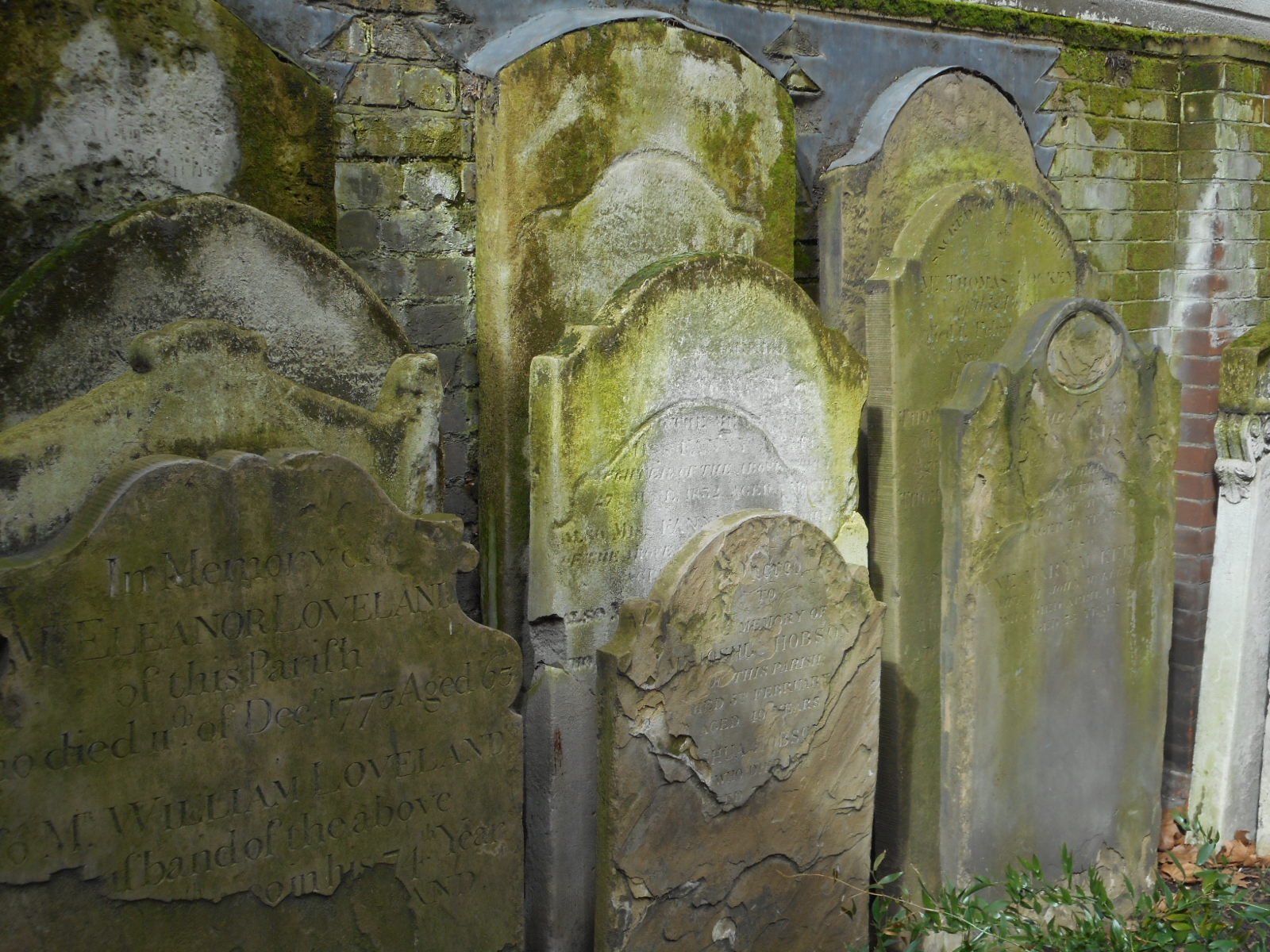
This area of the City of London is rather dispiriting: modern architecture has swamped the very soul of the place, each relentless monstrosity bearing a lowly plaque declaring the former site of this or that which would’ve been far more interesting. One of the missing buildings in what was the old walled city was the site of the former headquarters of the General Post Office; hence we visit Postman’s Park a sparse patch of greenery that was once the graveyard of St Botolph’s without Aldergate in which, today, small people have been brought for a breath of ‘fresh’ air. It seems dull and inconsequential but herein lies a secret.


Here is a sad but glorious monument by the artist, George Watts, conceived to honour those who died whilst saving others and who might otherwise have been forgotten.


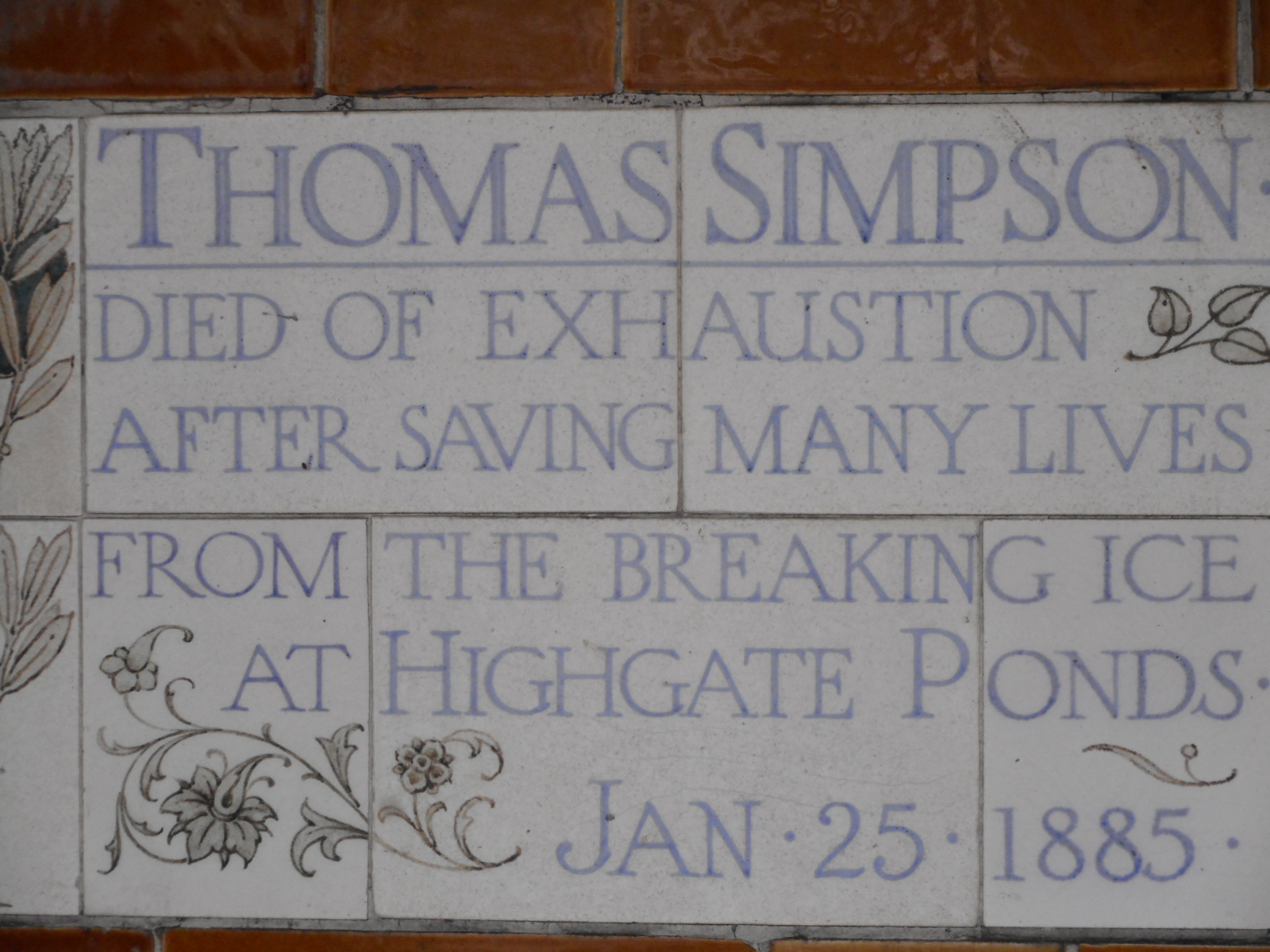
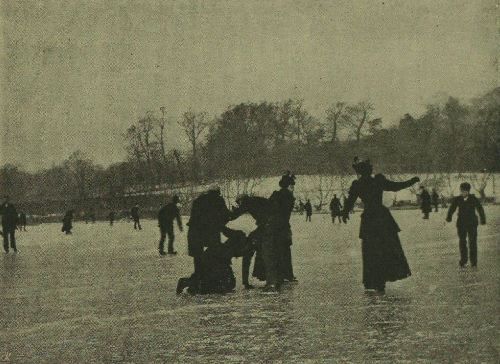
I’m beginning what I hope will be a mini series with Thomas Simpson who died of exhaustion after saving many lives from the breaking ice at Highgate Ponds on January 25th, 1885. Recent severe frosts had succeed in hardening the ice on many ponds and lakes in London but they were still deemed insufficiently safe for skating. No-one took any notice even though the police had been deployed to try and stop activity. It was a lost cause: 300-400 skaters were recorded in Regent’s Park.

There were seven ponds in Highgate Park outside Lord Mansfield’s estate and around 4pm, when many had gone indoors for tea, there were still around 200 folk skating on the second pond. Suddenly, there was a huge noise as the ice cracked and gave way. Loud shouts and screams prevailed as nine people were immersed. Three were initially pulled out by a special constable.
Thomas Simpson was an itinerant labourer; a well-known character from a local farm, aged in his late forties. Arriving on the scene, he dived in and successfully rescued a youngster. Not content with this act of bravery, he returned to the icy waters but, suffering from the cold and from exhaustion, he was unable to save himself. Another volunteer jumped in and brought Thomas to the shore but, too late. No-one, including a passing doctor, could revive him and when the ambulance truck arrived from Highgate, it was to take Thomas to St Pancras Mortuary.

It was a miracle that only three people drowned that day. The coroner gave a verdict of death by misadventure and The Royal Humane Society made a well-received call for the installation of efficient life-saving equipment which was, indeed, heeded by the aristocracy and the corporation.


More from the Willows


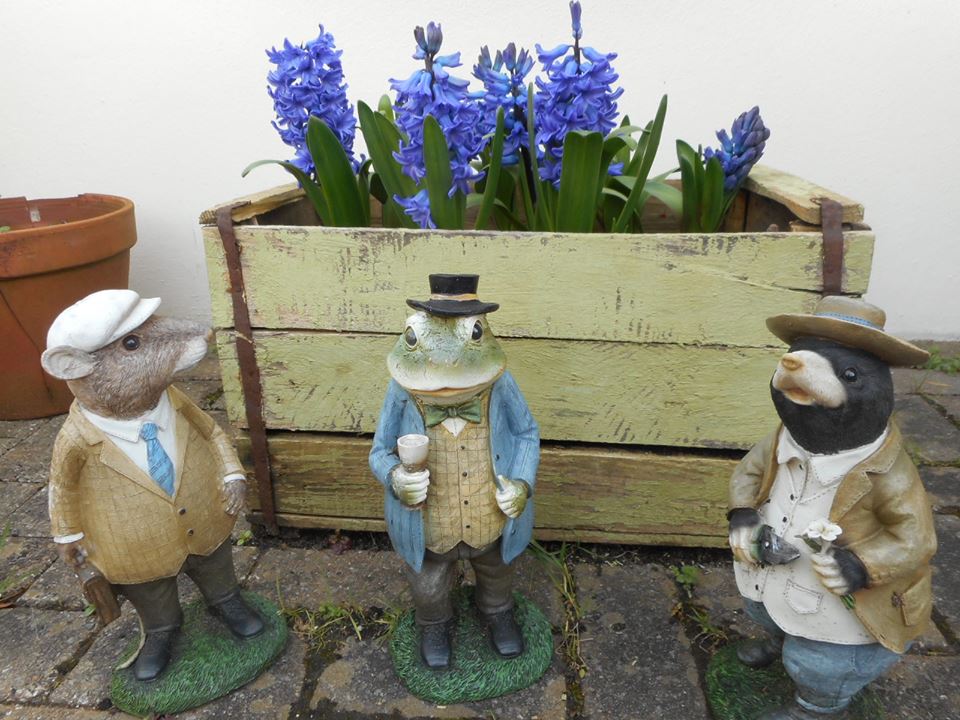
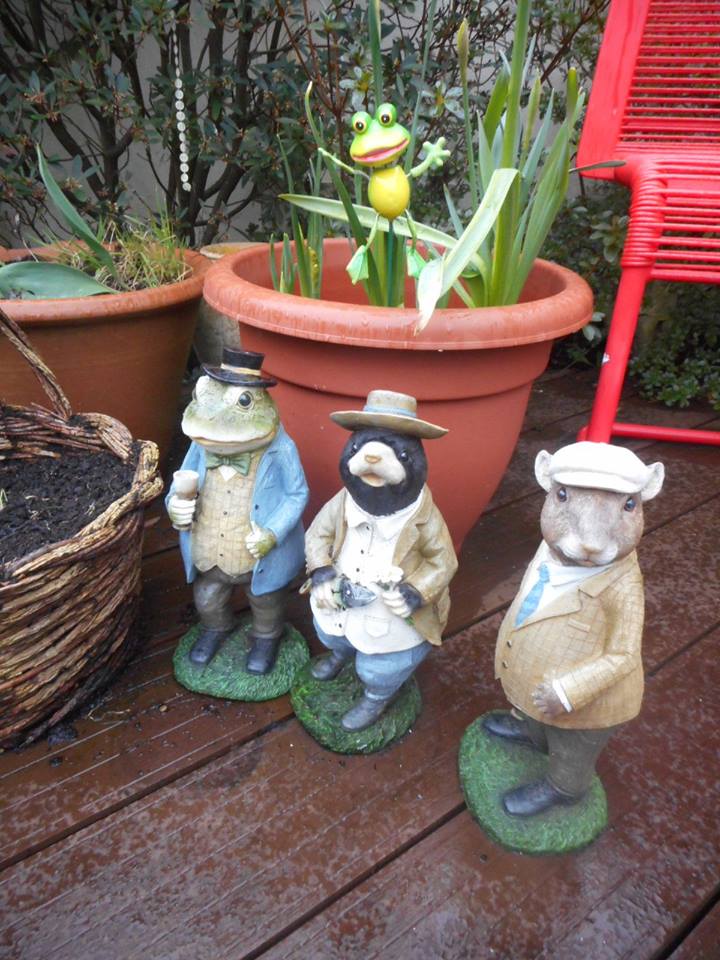
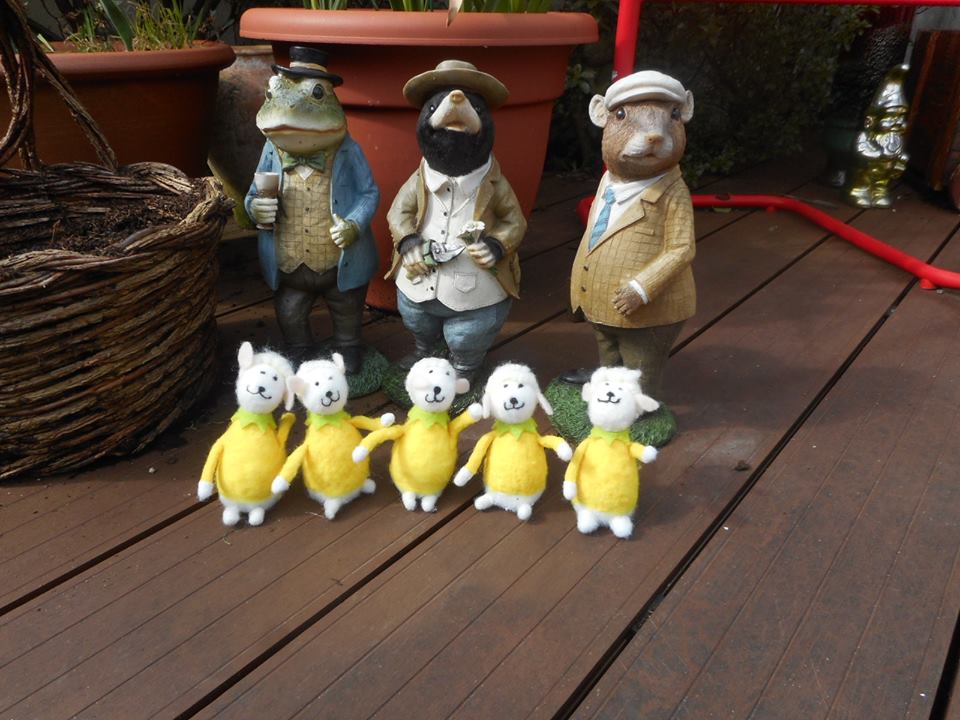
‘But Ratty’, cried the mole, ‘you said that was my egg’.


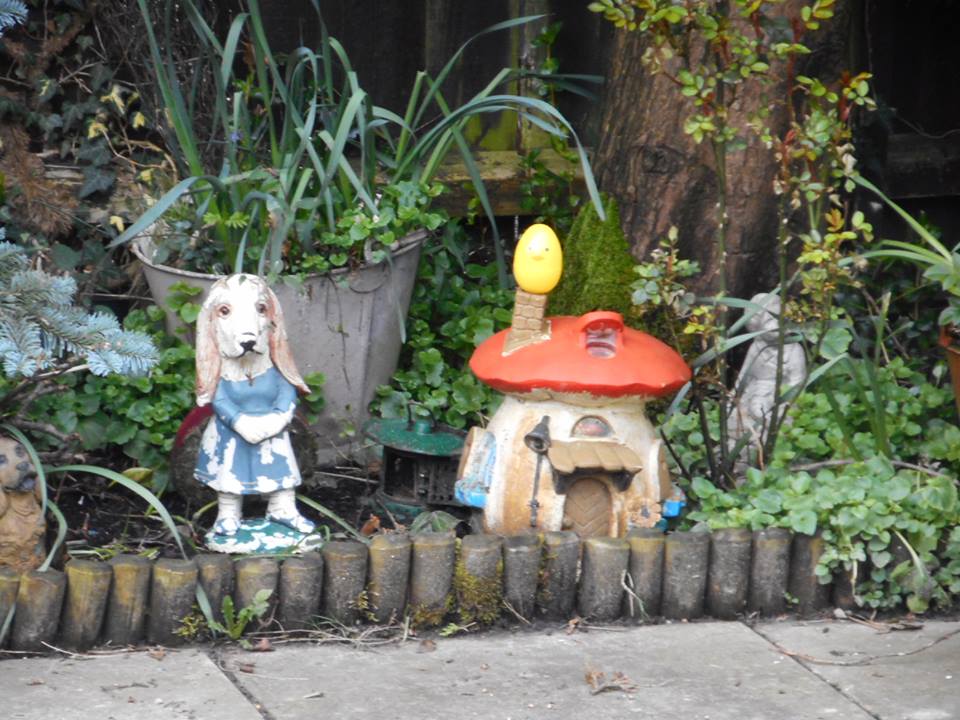
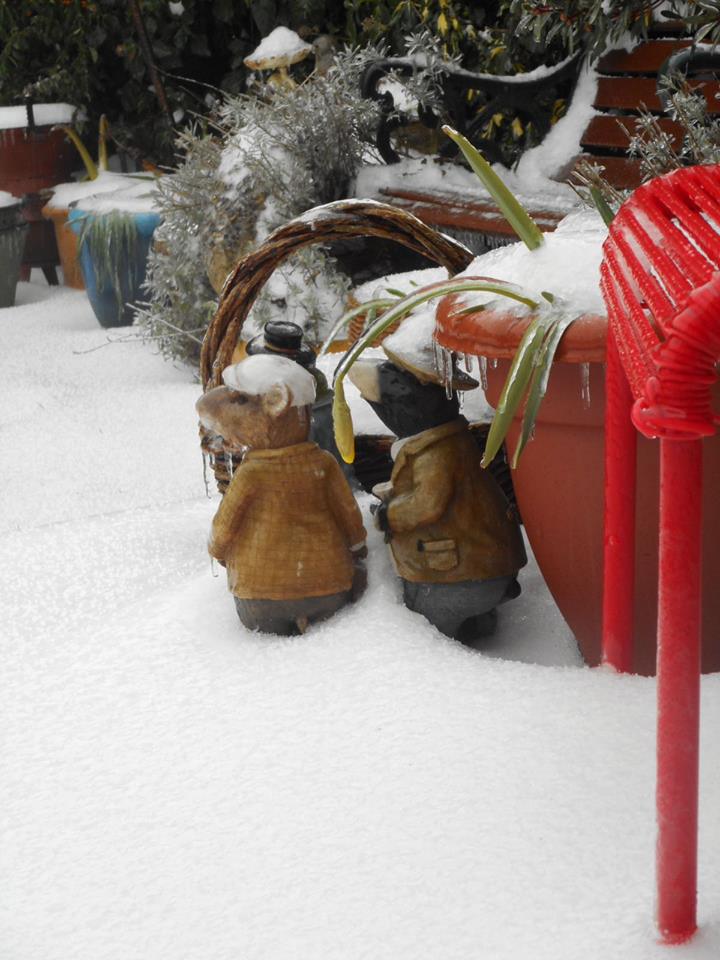
‘I see Alice has moved house’, noted Ratty.

‘And stolen an egg’, replied the mole despondently


‘Lovely to see the hyacinths back again’, said Ratty appreciatively.

Toad was confused: ‘very pretty old boy, but where are the wheels? Toot toot’.


The story so far

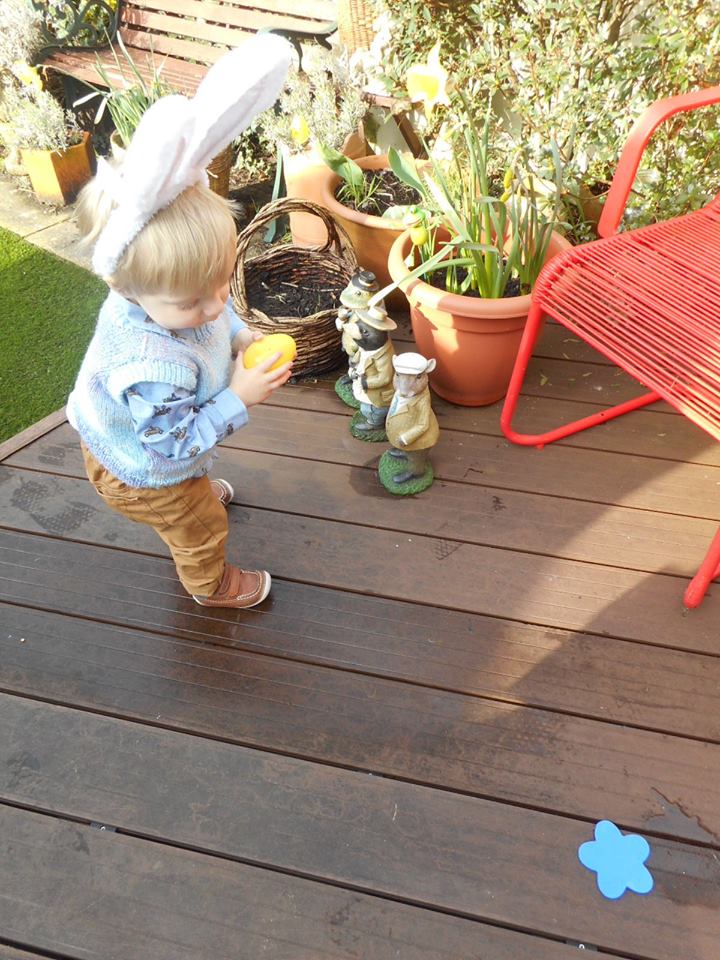
At the beginning of March, when the weather was such that I was forced to pass too much time indoors, I posted a little conversation on Facebook undertaken by some characters who live on my decking. It proved rather popular, as have the subsequent posts. Some folk think there should be a new blog devoted just to these ‘stories’. While I ponder that, I’ve decided to record them here for those weasel followers not on FB. Here they are, starting logically with the first:


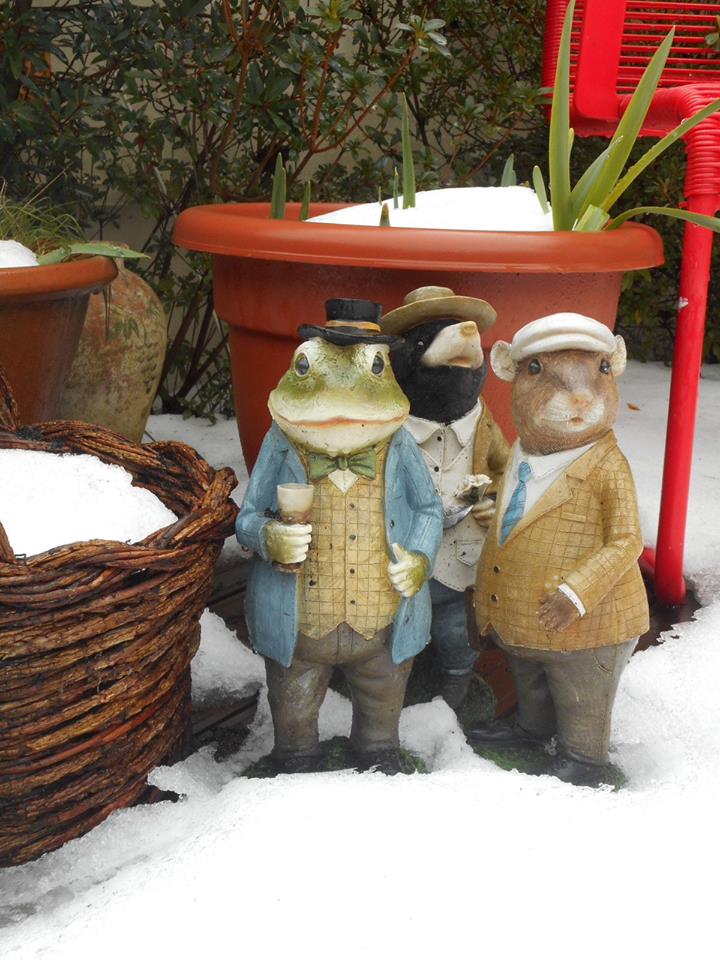
‘Not looking good’, said Ratty.

‘No’, replied Mole. ‘I suppose that’s another day of eggs on toast’.


‘Is it Christmas?’ asked Mole.

‘No’, replied Ratty. ‘Why?’

‘Well’, said Mole sadly, ‘there were so many people in Tesco, I was nearly trampled on’.

‘That’s what happens when folk are sick of eggs’, Ratty explained.

‘Toot, toot, there wasn’t even any petrol’, shouted Toad angrily.

‘Good job we’ve got a boat then’, said the rat.

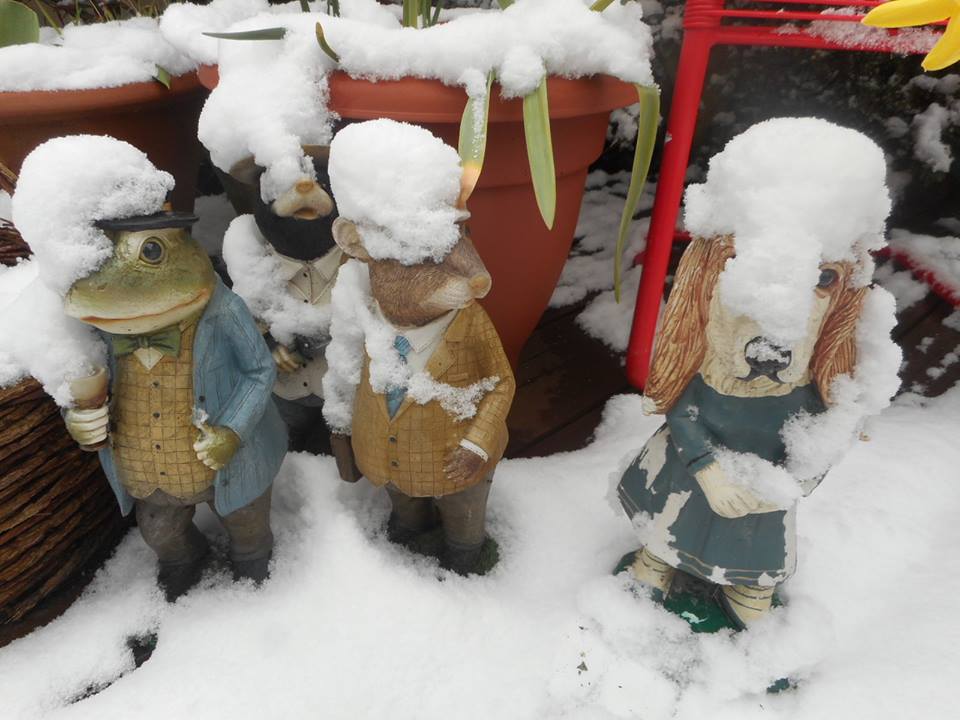
‘Do you think the daffodils will be alright after the snow?’ asked Mole.

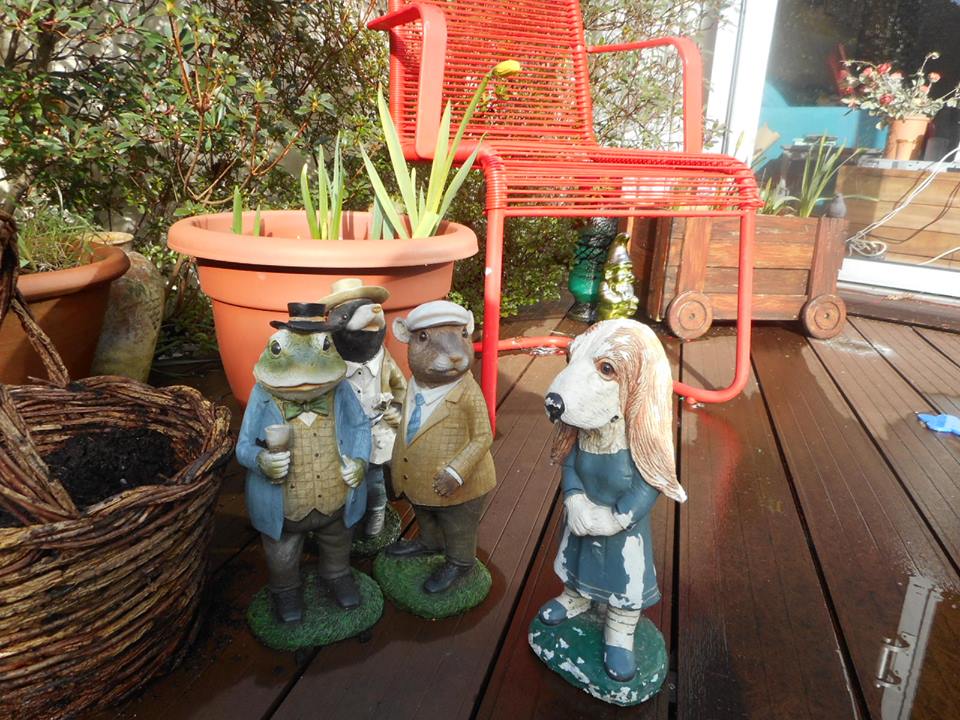
‘Can’t be any worse than my hair’, responded Alice, who was certainly looking unkempt.

‘Never mind’, said Toad. ‘Have a drink with me’.

‘No thanks’, said Alice. ‘I know what happens when I start drinking. I used to be five feet tall’.

‘What’s happening Ratty? asked Mole. ‘I’m scared’.

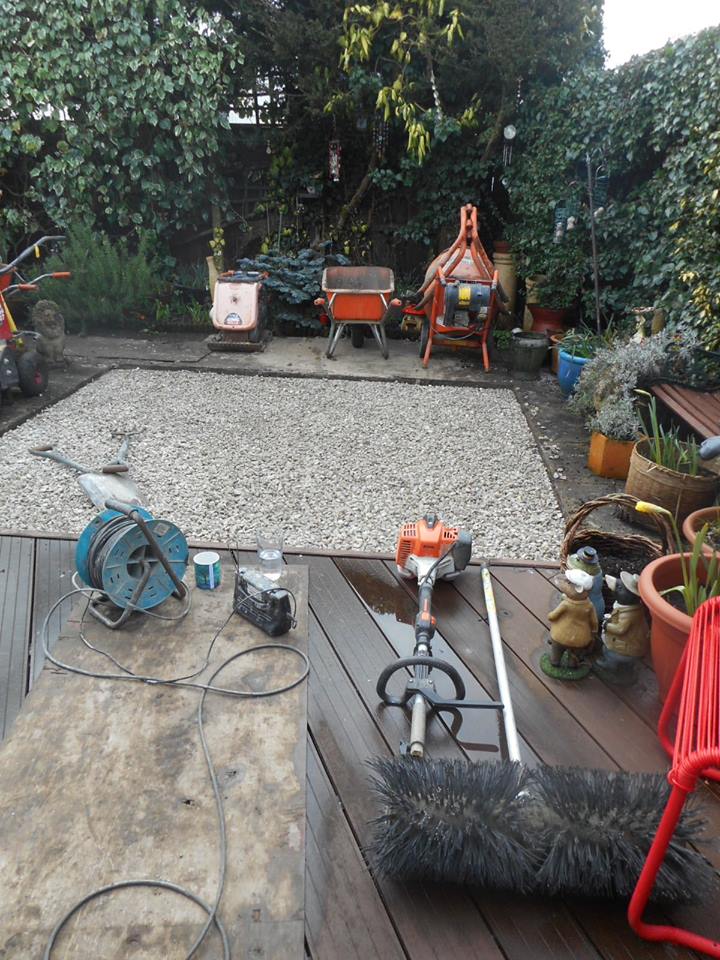
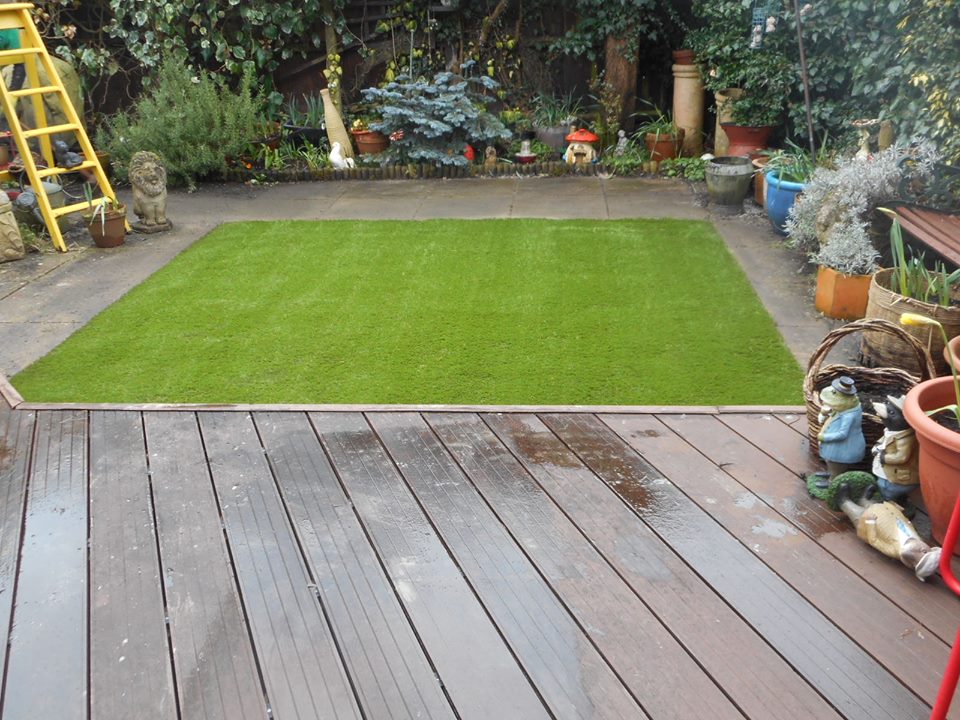
‘Don’t worry’, Ratty replied calmly. ‘We’re having a brand new lawn’.

‘Will it be nicer than the old one?’

‘The old one was like Alice’s dress’, said Ratty. ‘Needed throwing away’.

‘Is that a real lawn?’ asked the mole cautiously.

‘It’s as real as we are’, replied Ratty.

‘What do you mean?’

‘Good grief!’ exclaimed Toad. ‘Do you mean you haven’t told him yet?’

‘Told me what? And why has Ratty fainted?’ asked Mole.

‘Ratty, there’s something on my nose’, said Mole sadly.

‘That’s nothing’, replied the rat. ‘Have you seen the state of Alice’s hair this morning?’

‘**** off’, said Alice.

‘Ratty?’

‘Don’t say a word’, whispered the rat.

‘But who is it?’

‘Friend of Toad I imagine’, answered Ratty.

‘Will it be here long?’ asked Mole.

‘I certainly hope not’, replied the rat looking the other way.

‘Ratty?’

The rat increasingly felt that he’d been mistaken for the Oracle of Delphi. ‘Ask Toad’, he said a tiny bit grumpily.

‘Easter charabanc party old boy’, explained Toad. ‘Toot , toot’.

More to follow, as and when, if you like it.


Portland ahoy!

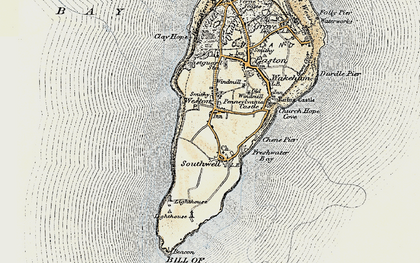
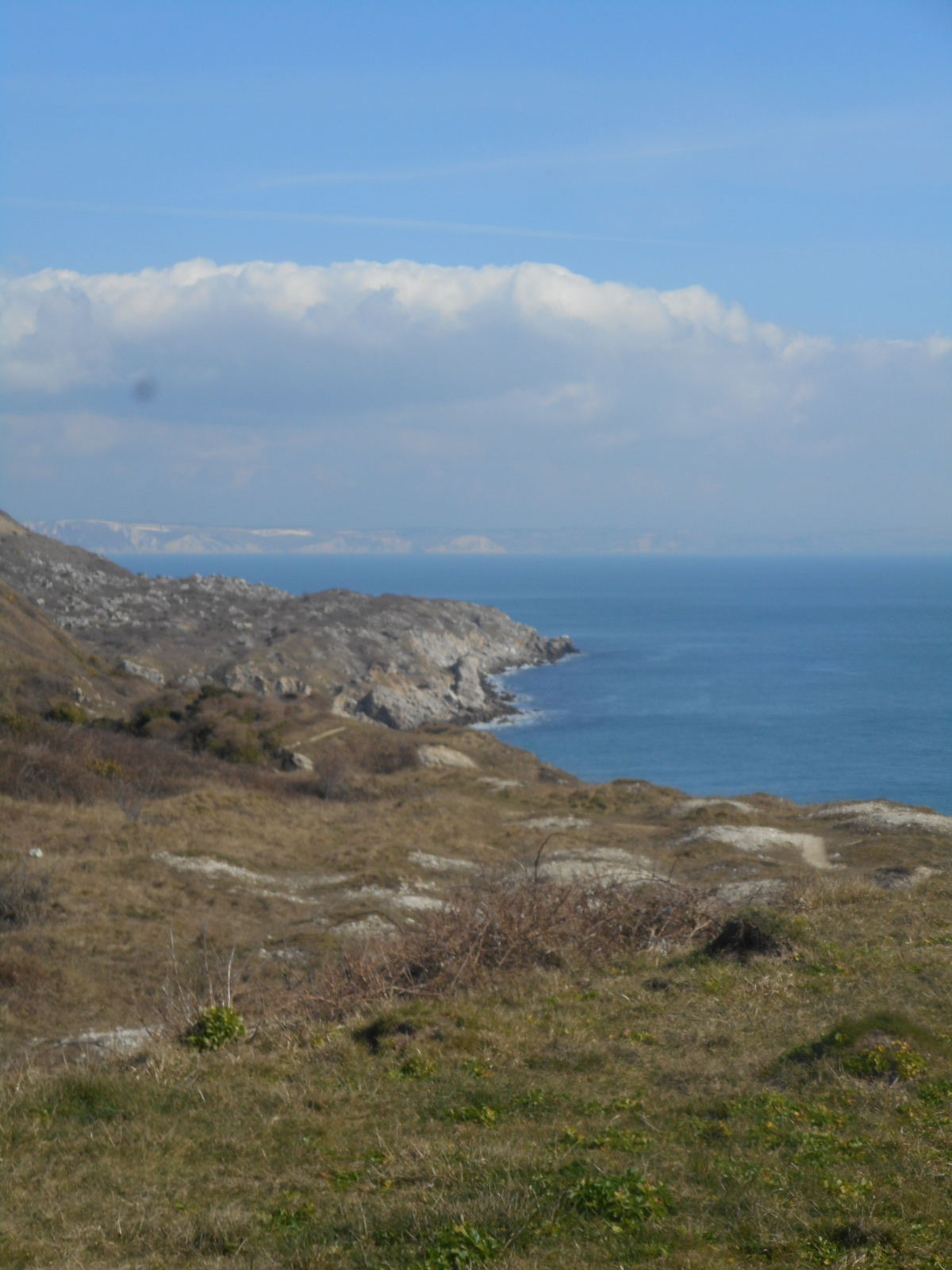
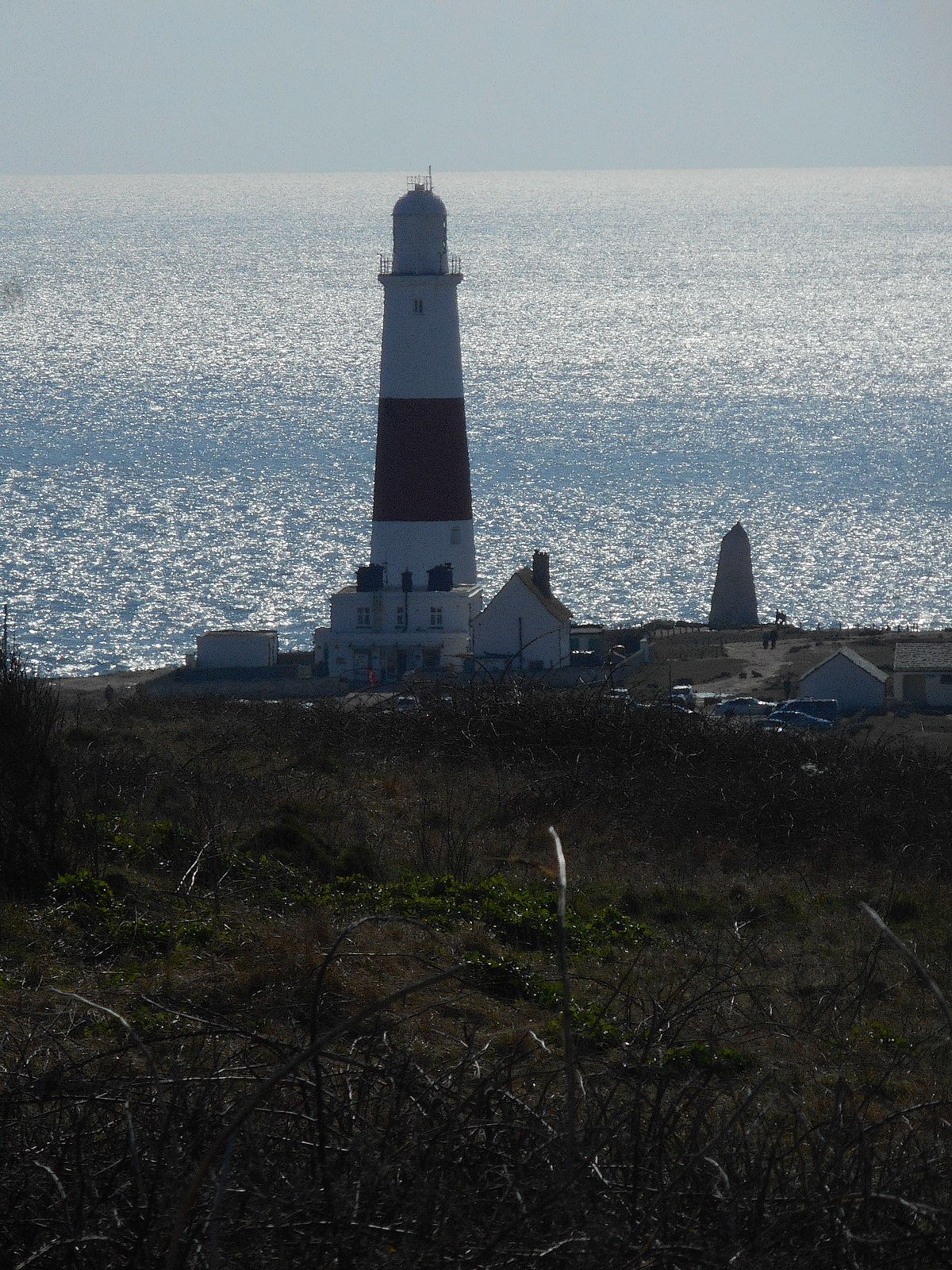
 It’s Wednesday. It’s Tony and Sally’s day off so, yet again, I’ve hitched a ride for another brief five mile walk during the course of which, a few birds might be spotted. This time, we’re off to Portland where the stone comes from. The map shows Portland in 1899 and let me tell you, little has changed. At one point, I see a car bearing a sticker in the back window: ‘keep Portland weird’. I think they’ve succeeded. The photograph is the view from the car park: not one of my best but it shows a) the glorious weather after the recent ice age and b) the fabulous view of the Dorset Jurassic Coast.

Here’s Portland’s idea of a cliff-top holiday home. Yes, that is smoke; probably from a fire over which a few locals are roasting a clay-covered hedgehog. In fact, this is what’s left of the allegedly bomb-proof Cheyne Pumping Station, built by The Admiralty in 1861 to supply water for the new Royal Navy base. The station, along with its 10,680 feet cast iron pipe, was purposely covered in grass to give the impression of a grassy knoll. Those damned grassy knolls – they pop up in the least unexpected places in history.

We take a bit of a detour to look along the cliffs for a raven’s nest. I’d already told them I didn’t want to be too near the edge so I stood back and looked the other way. ‘Is that a raven?’ I ask as they’re staring blankly into the distance.
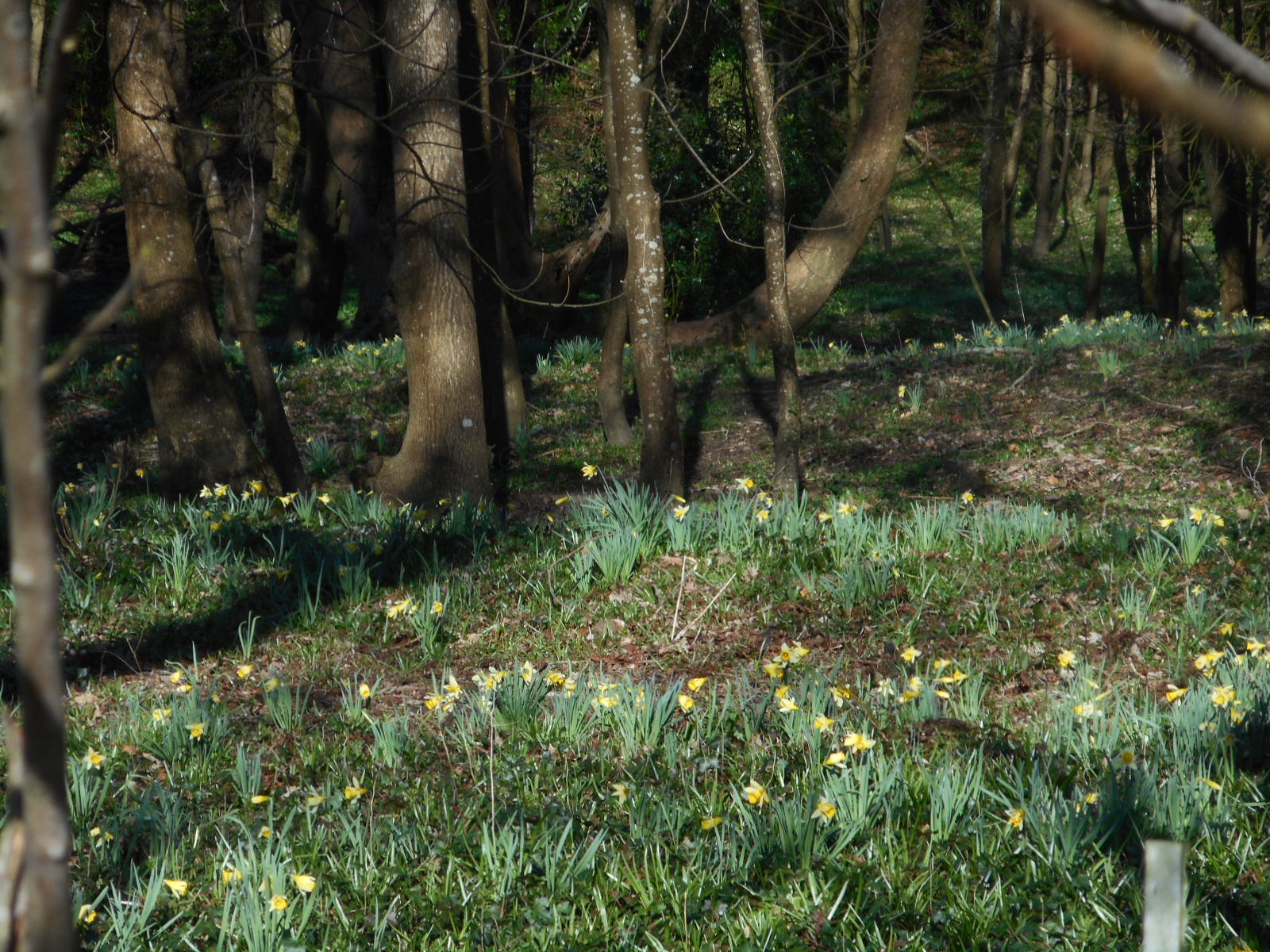
 

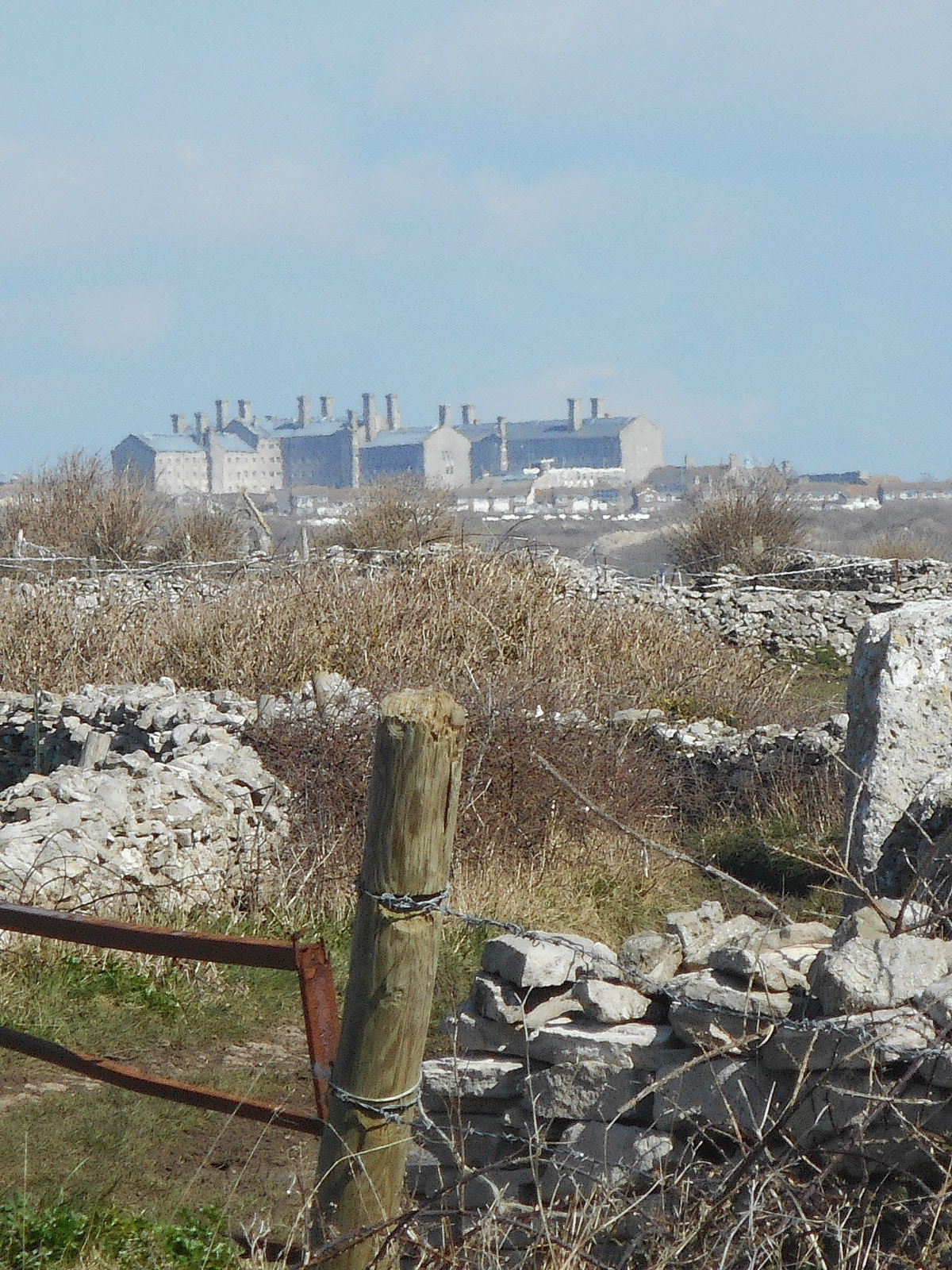
After this, we head off back to the road, cross into no-man’s land and head off across country. In the distance, we see the welcoming sight of the prison. There are two prisons on this tiny island and there used to be a prison boat moored off the edge. This is the main one – The Verne. I was once unlucky enough to go there to witness a teaching practice. ‘They’ll be a murderer in the room’, said the candidate happily. ‘Guess which one it is’. Terrific. I didn’t much care for that place.

We jog along past the mediaeval strip lynchetts. In this exclusive part of the world, they call them lawn sheds. It’s a derivation. Or maybe they’re just hard of hearing. Either way, the path is ridiculously muddy and the going is hard. Tony sent me a map beforehand on which he’d written ‘terrain variable’. Well that’s one interpretation. However, we’re high enough that the working lighthouse at Portland Bill is always in view. Not many birds though – just the odd kestrel. What I do notice is the air. I’m lucky enough to live in a part of the country where the freshness of the air is apparent the minute one steps off the train from London Town. Up here, however, breathing is a joy. The clarity of the atmosphere is noticeable enough to warrant comment. We should be struggling this far into and up the incline but it’s joyous.

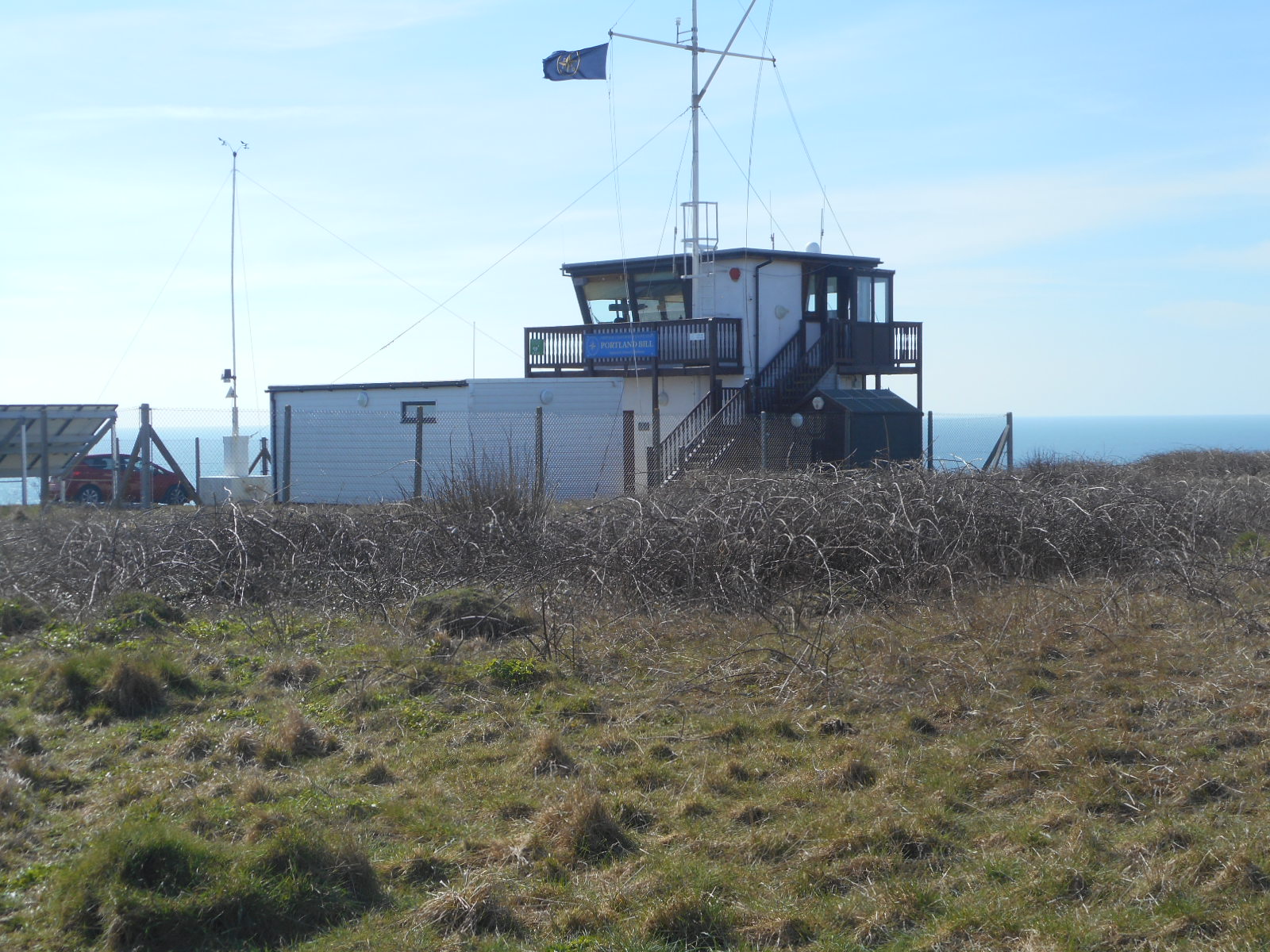
Eventually, we begin our descent towards the lookout station which is the last thing I’m allowed to photograph before we hit MOD territory. You’ve got to be pretty committed to drive up here and voluntarily pass the day watching out for abnormalities. The place that I can’t take photos of is, apparently, where they make bombs of some sort or another.

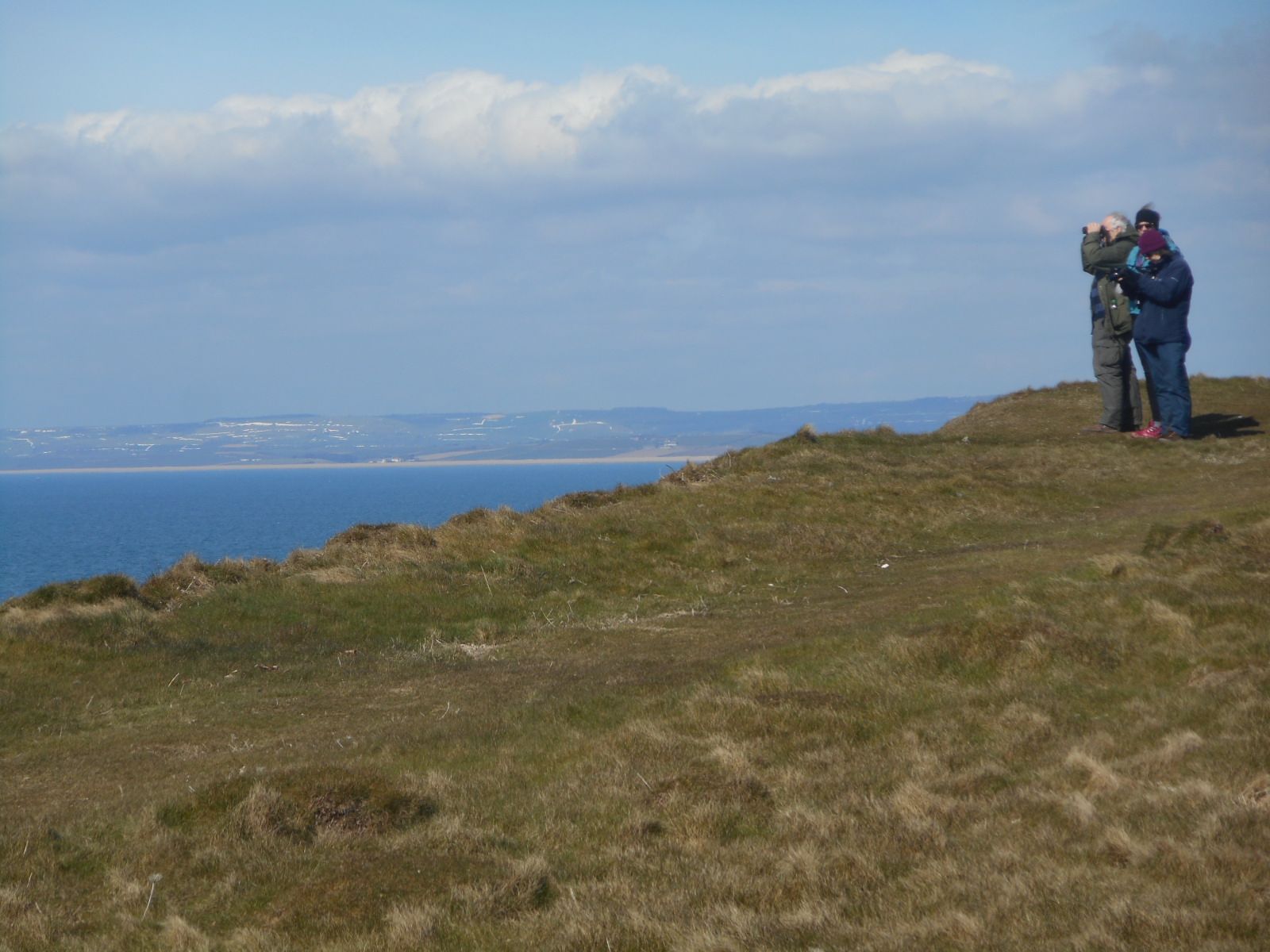
We’re getting perilously near the edge again. I lean against the MOD fence and take a picture of that lot who are taking pictures of guillemots. Good luck with that then. In the background, being as we’re now on the other side of the island, you can see the Dorset-into-Devon stretch of the wonderful Jurassic Coast.


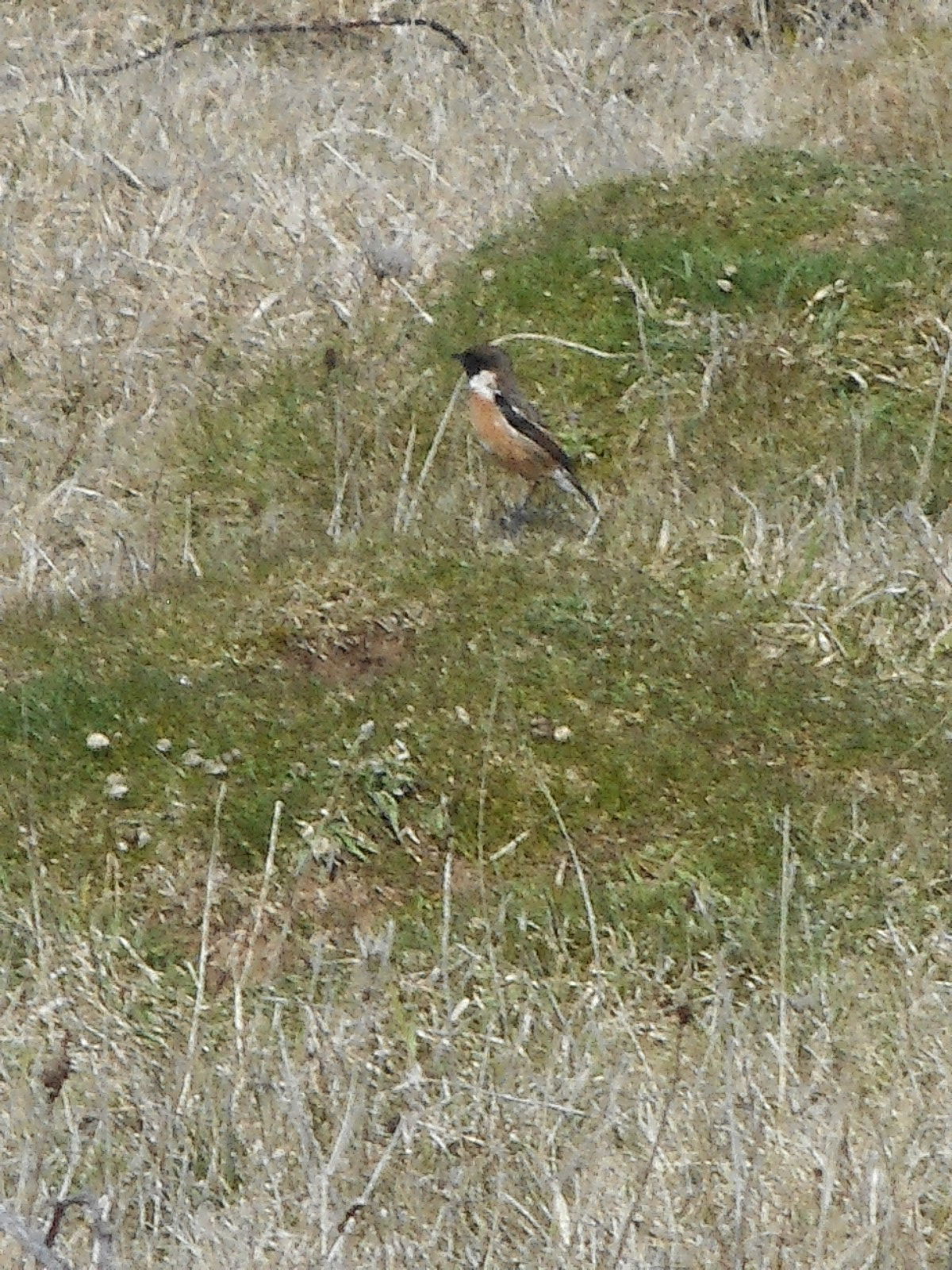
Anyway, whilst they’re busy with the seagulls, I’ve spotted a stonechat. What a good job they brought me along.


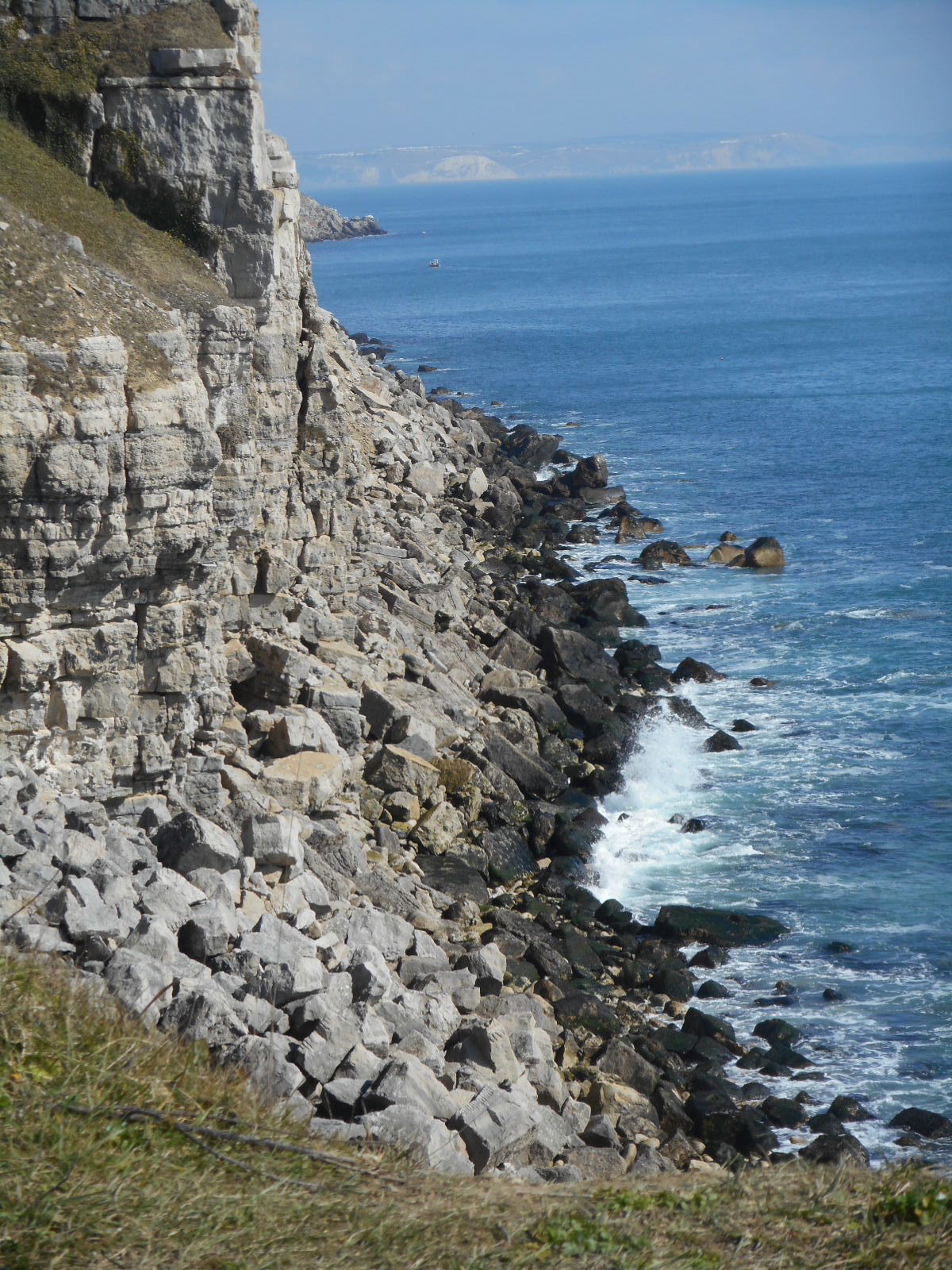
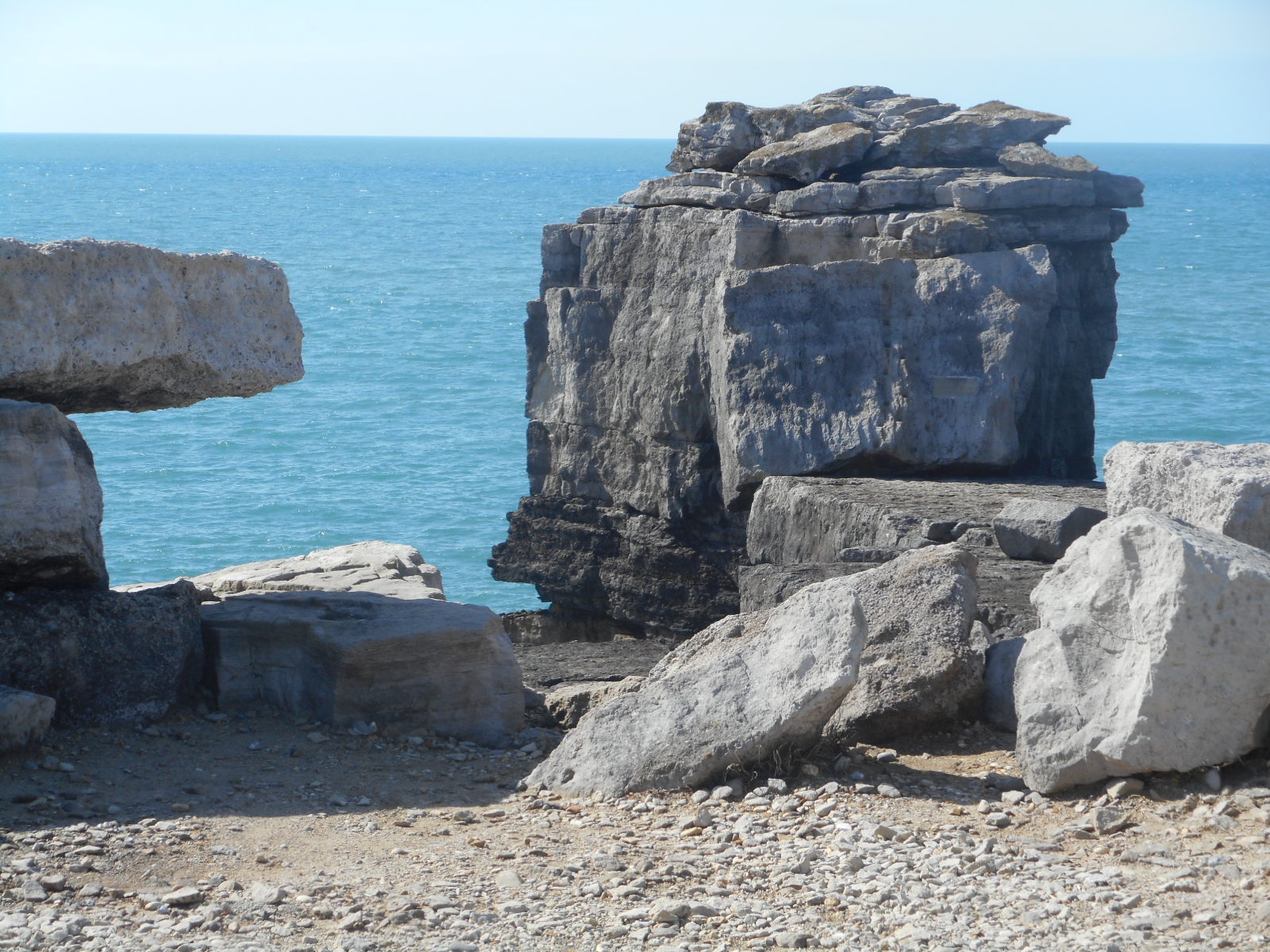
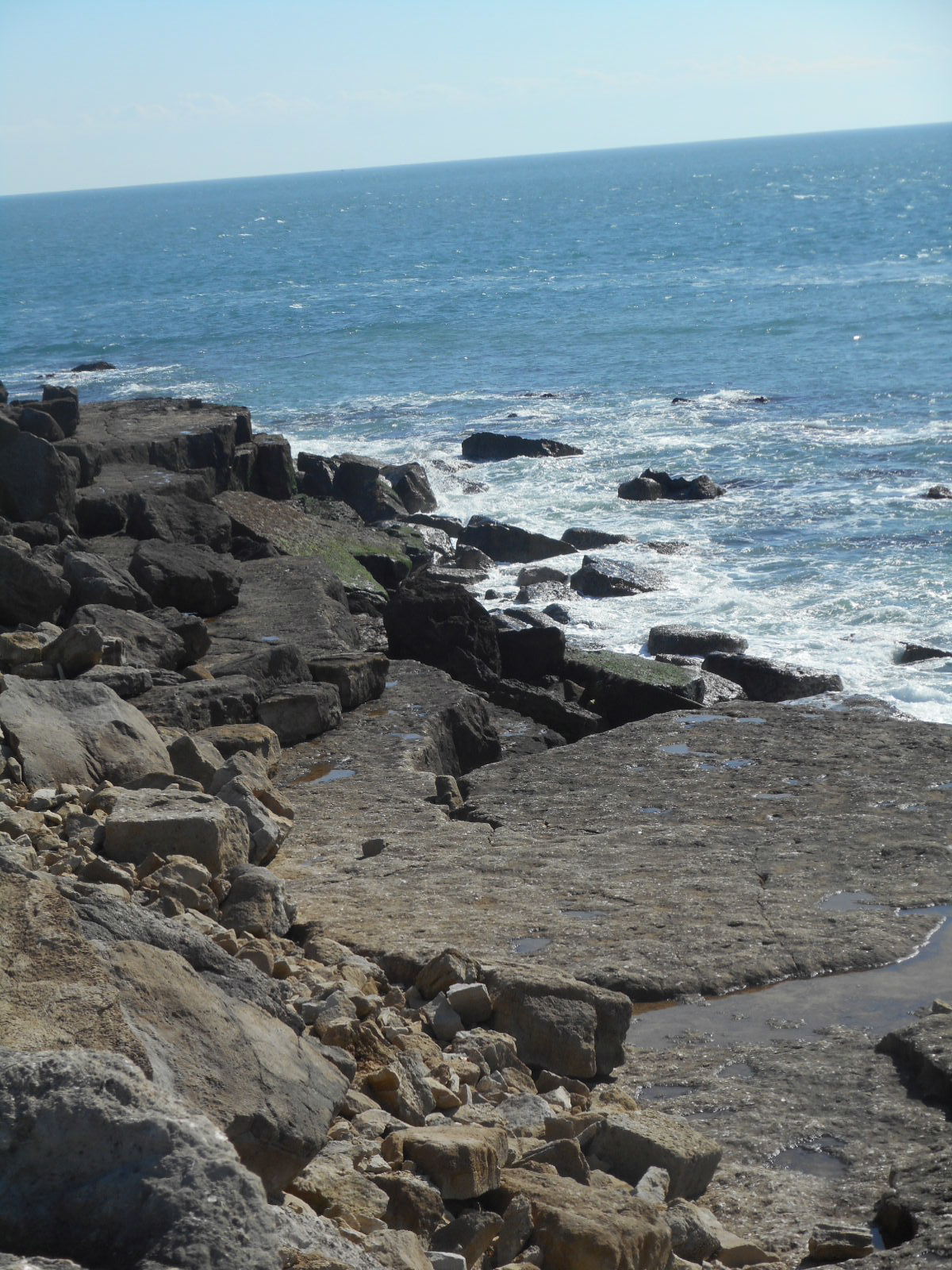
Finally, we’re allowed to stop for lunch near Pulpit Rock which is the first photo. The other picture is the view from our picnic place which was freezing. Yesterday, I made chicken tikka for my mum’s birthday; today, I ate the leftovers with hood up and gloves on.

Then, after having a look around, we trundle up to the bird observatory. I think it to be a place of little consequence but, actually, it’s quite nice sitting on the heat-retaining wooden bench. Along comes a large brown rat and all the twitchers start with their cameras. Next, a quite beautiful cock pheasant appears which is marginally better. I notice something tiny and colourful fall below me. It’s a goldfinch which no-one else has noticed. Too speedy for the camera.

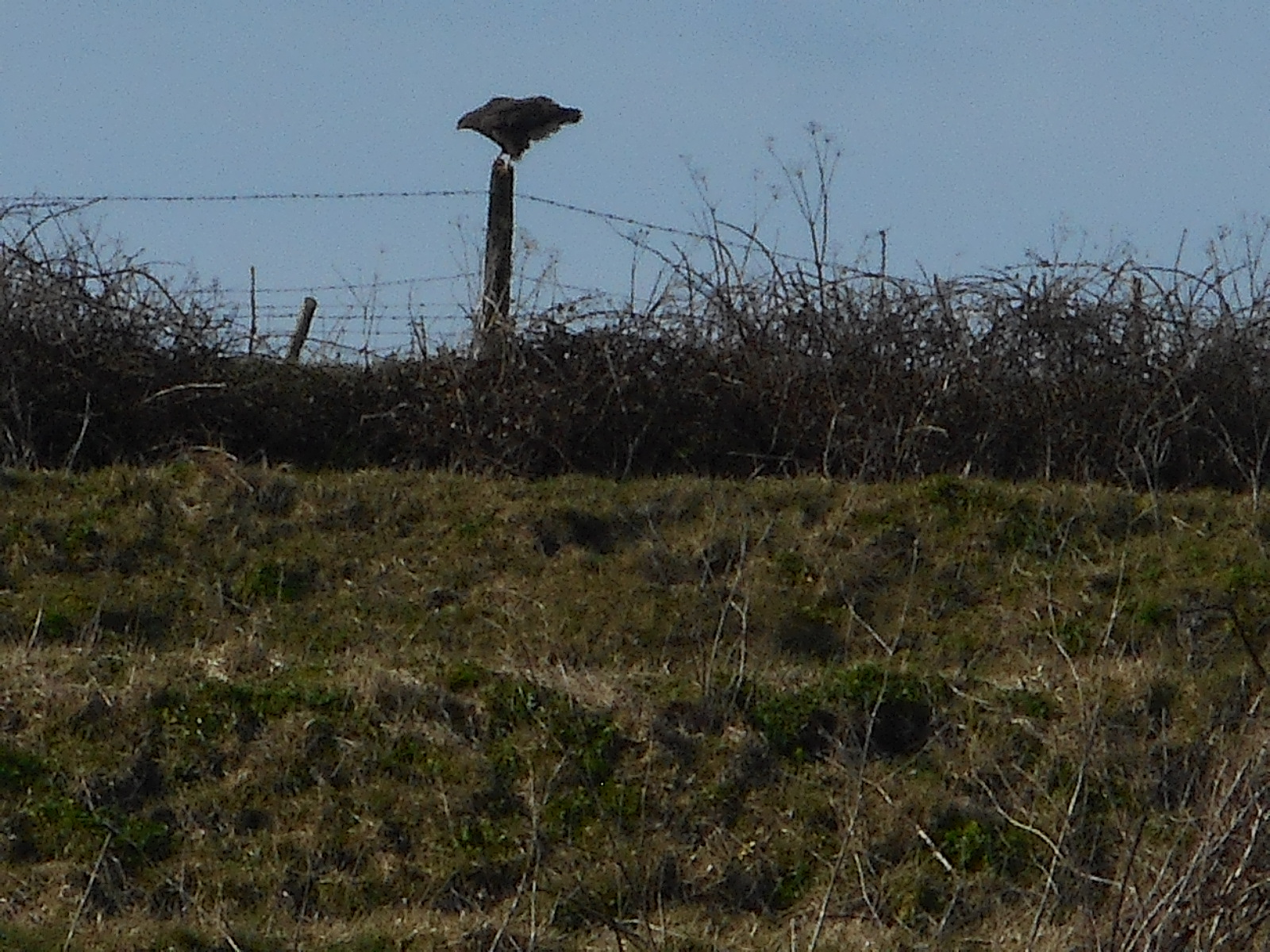
Eventually, we begin our trudge up the hill and I point out a buzzard resting on a post. Two ravens do their best to worry it away but its having none of it. The buzzard flies from one post to another. It’s seen the rabbits. And the rabbits in these parts are of a mutant variety. On Portland, it’s unlucky to say ‘rabbits’. They were thought to undermine the workings of the quarries and mines and, having seen the size of them, I can understand this. For a while, we walk along referring to ‘bunnies’ but the temptation is too great: RABBITS I scream. This is what Portland does to you.

I wouldn’t want to be here on a day when the sun wasn’t shining. It’s a bleak old place dependent on the whims of nature. I’ve omitted much of the weirdness of the place because I had such a fabulous walk. But I was pleased to see the car once more and drive away from the scariness that is Chesil Beach. I don’t know why folk try to romanticise the place: the McEwan’s book was a drag along the stones. We sat awhile with a hot chocolate. Then we ran for the hills.

The paths of glory …

…lead but to the grave

Apart for the opening lines – ‘the curfew tolls the knell of parting day’ – I feel I am guilty of unfamiliarity with Gray’s Elegy Written in a Country Churchyard. On visiting St Mary’s, Lytchett Matravers, I can only reflect on this omission in my personal literary canon as unforgivable unless it previously meant nothing to me; a feeble excuse. The word ‘elegy’ requires less thought than ‘country’.


A busy morning, occupied with little of significance, demands an afternoon foray into the near-at-hand countryside, just to make sure the sunshine isn’t wasted. On my way down the proverbial long and winding country lane, an animal bounds along the tarmac in front of the car. What is that? Too big for a cat; too small for a deer; wrong shape for a fox. It’s a hare! My second in a week.

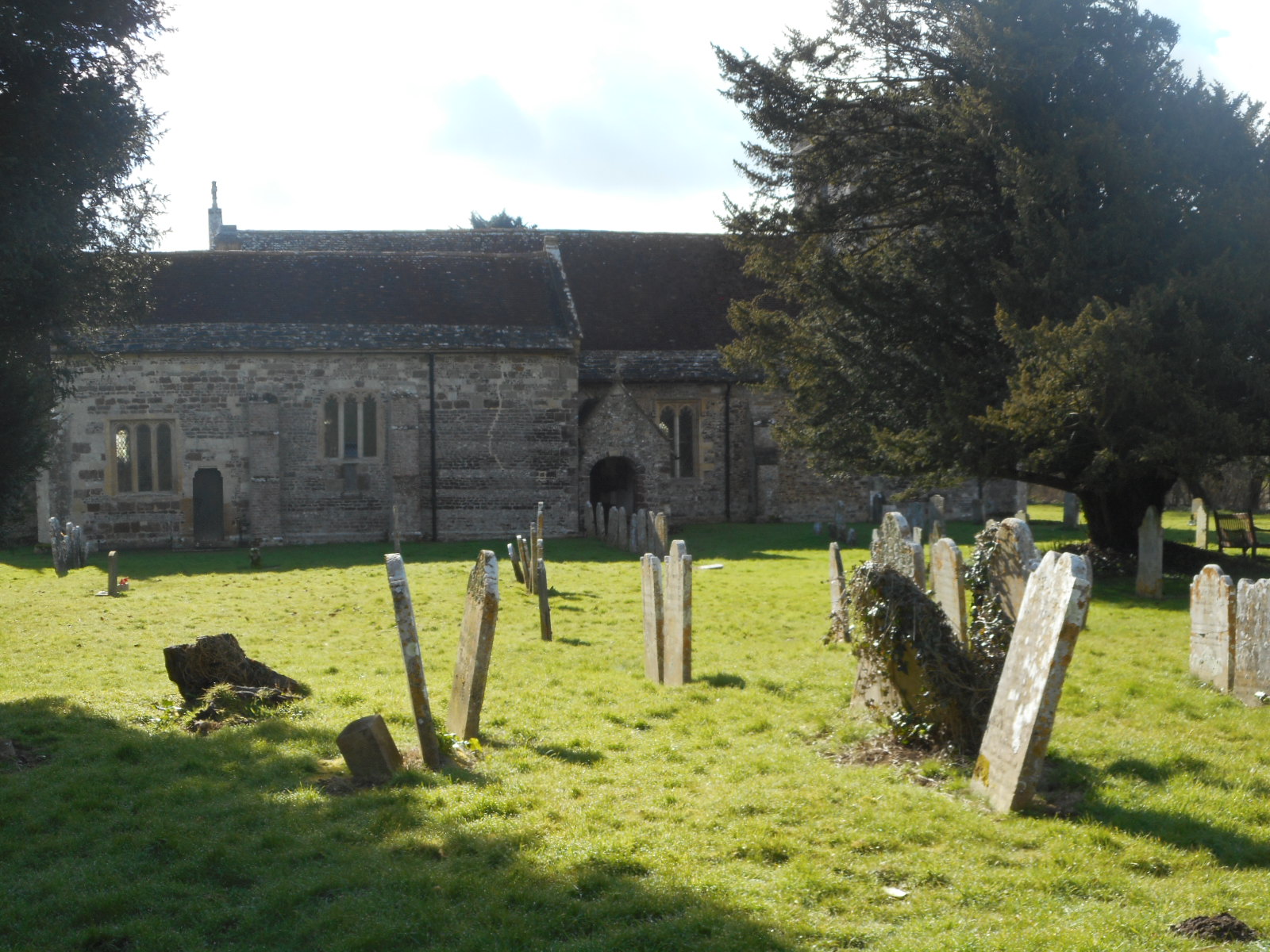
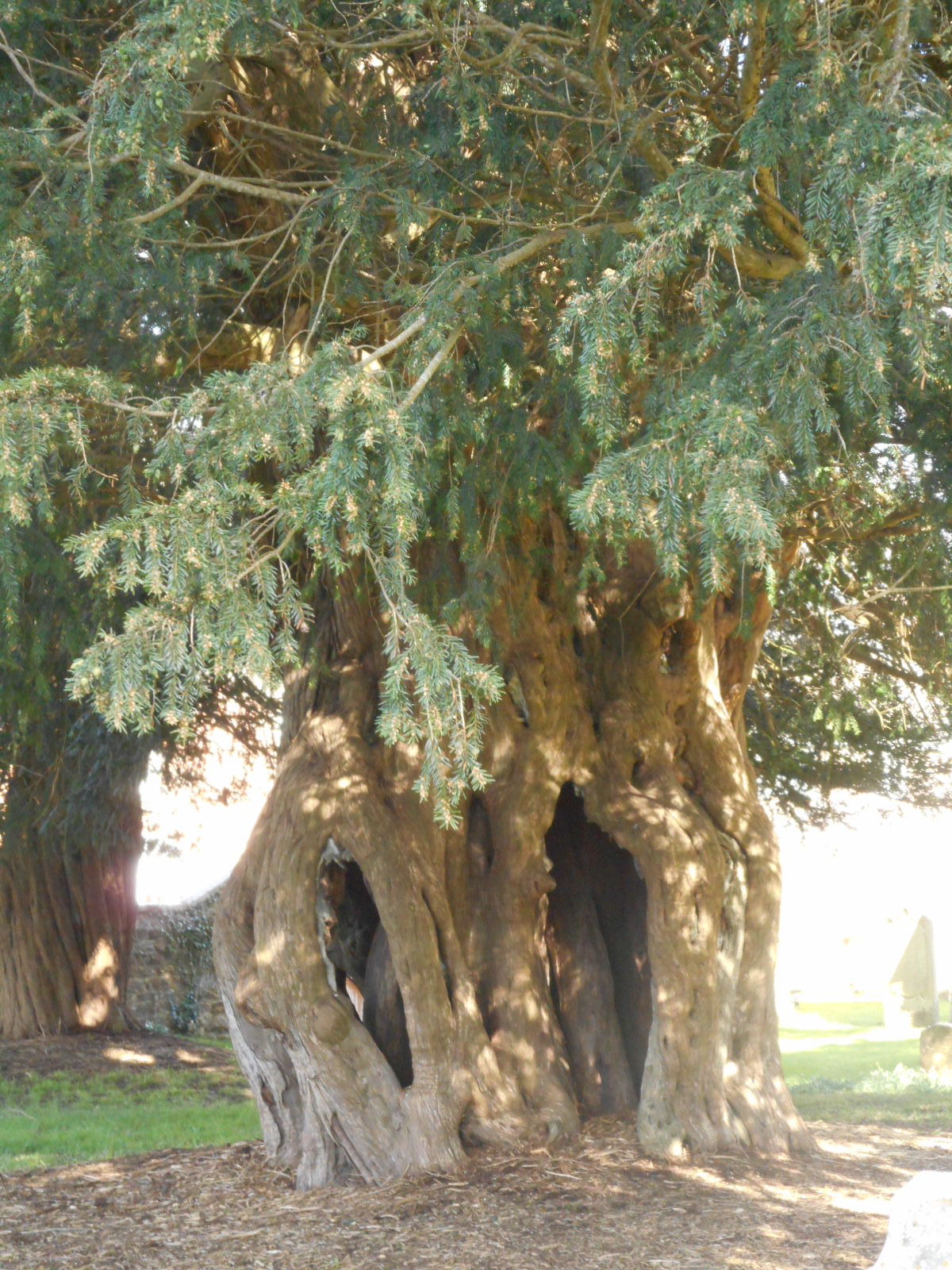
‘…that yew tree’s shade, where heaves the turf in many a mouldering heap’. Truth be told, I’m here with my trusty little camera because someone said the place is pretty, and is home to several birds. I don’t see them so I wander around for a bit. Obviously, the church is shut. Then I take look around the graveyard and find myself in the extension. Which is when the notion of ‘country’ hits home.


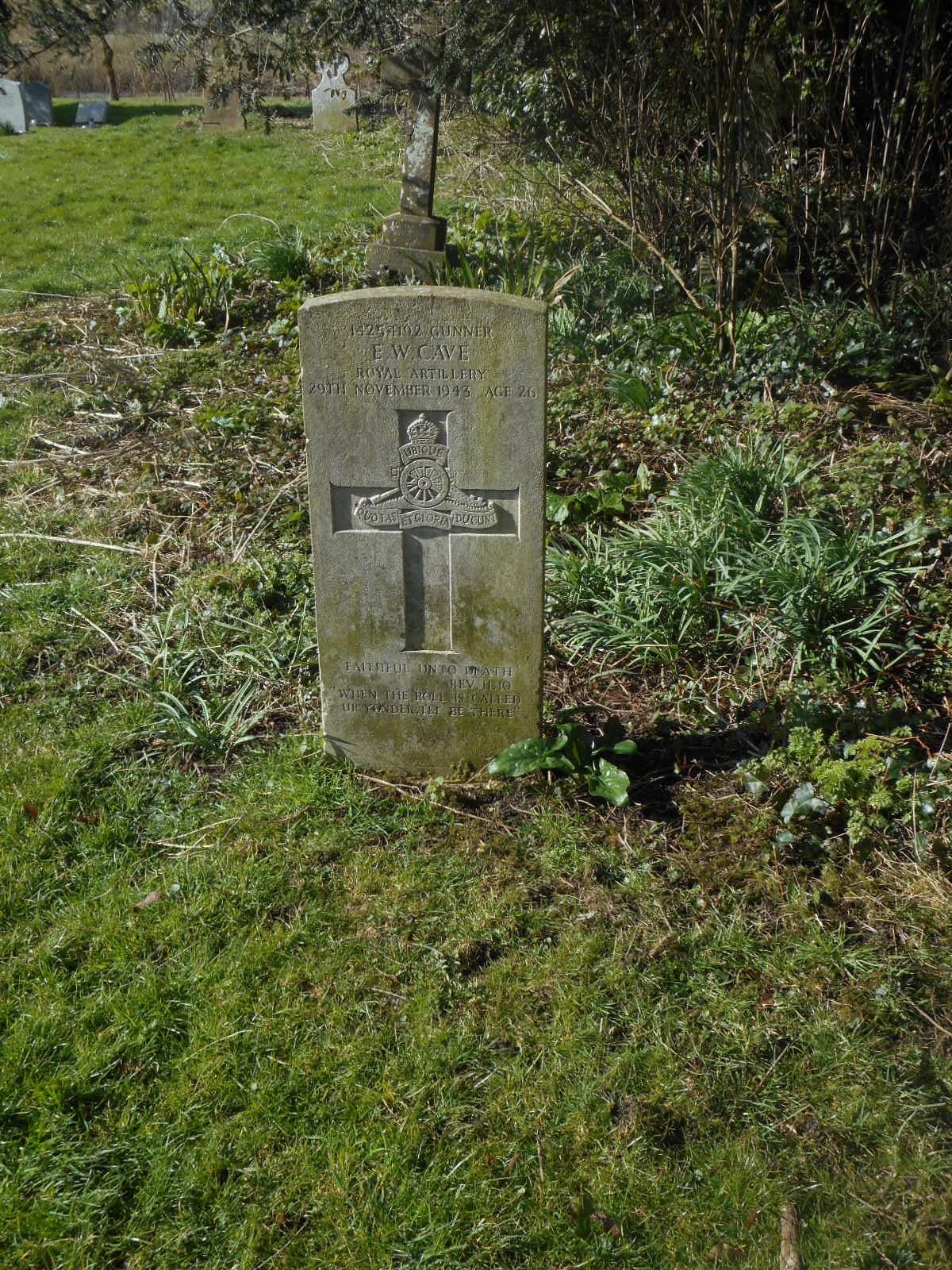
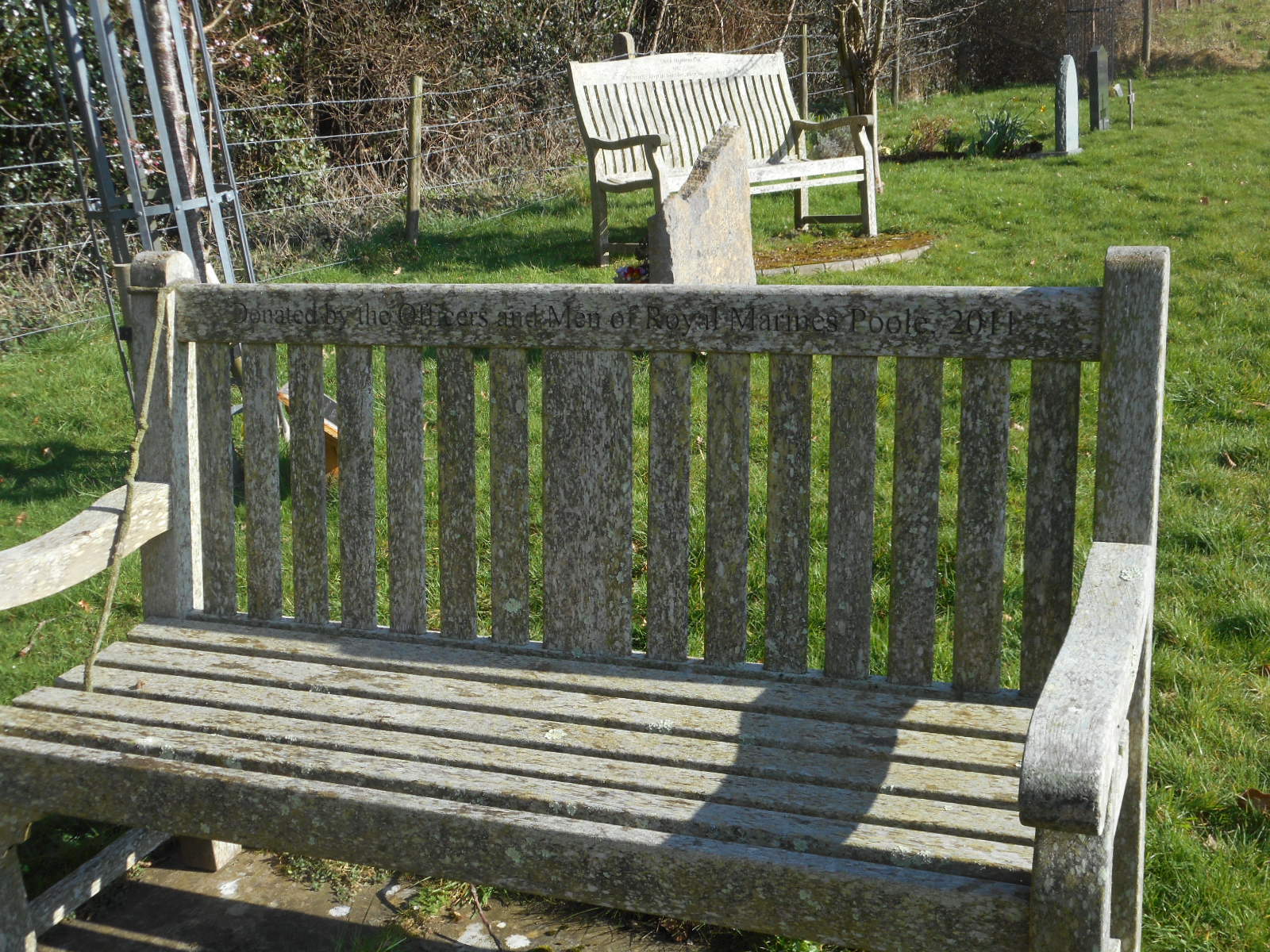
For we are not just talking countryside, we’re talking ‘my’ country. Whether or not I’m a patriot is disputable: I don’t stand up for the national anthem, for example. And I don’t much care for what I perceive as us interfering in other folk’s problems. On the other hand …click the picture to read the inscription.


Far from the madding crowd’s ignoble strife … I know their base is to hand, but there are other churches closer. For reasons that are presently unclear, St Mary’s is the resting place of many Royal Marines – SBS, SAS, killed In Iraq, Afghanistan and so-forth. They are decorated with poppy wreaths from their squadrons and crosses signed by their compatriots, but their stones bear the inscription ‘daddy’; which gives meaning to the young age at which they were killed. For their country. These are the men who left England’s green and beautiful for some other foreign field. They are the collateral of war games.

It’s unclear why Gray wrote his elegy. 270 years since, it resonates so succinctly that it might’ve been constructed yesterday. And that says a lot about how far we’ve come. Which is nowhere apart from making me wake up to what is given for country. And what is forgotten, unless you happen to be in an English country churchyard.
 

We’re on the road to who knows where

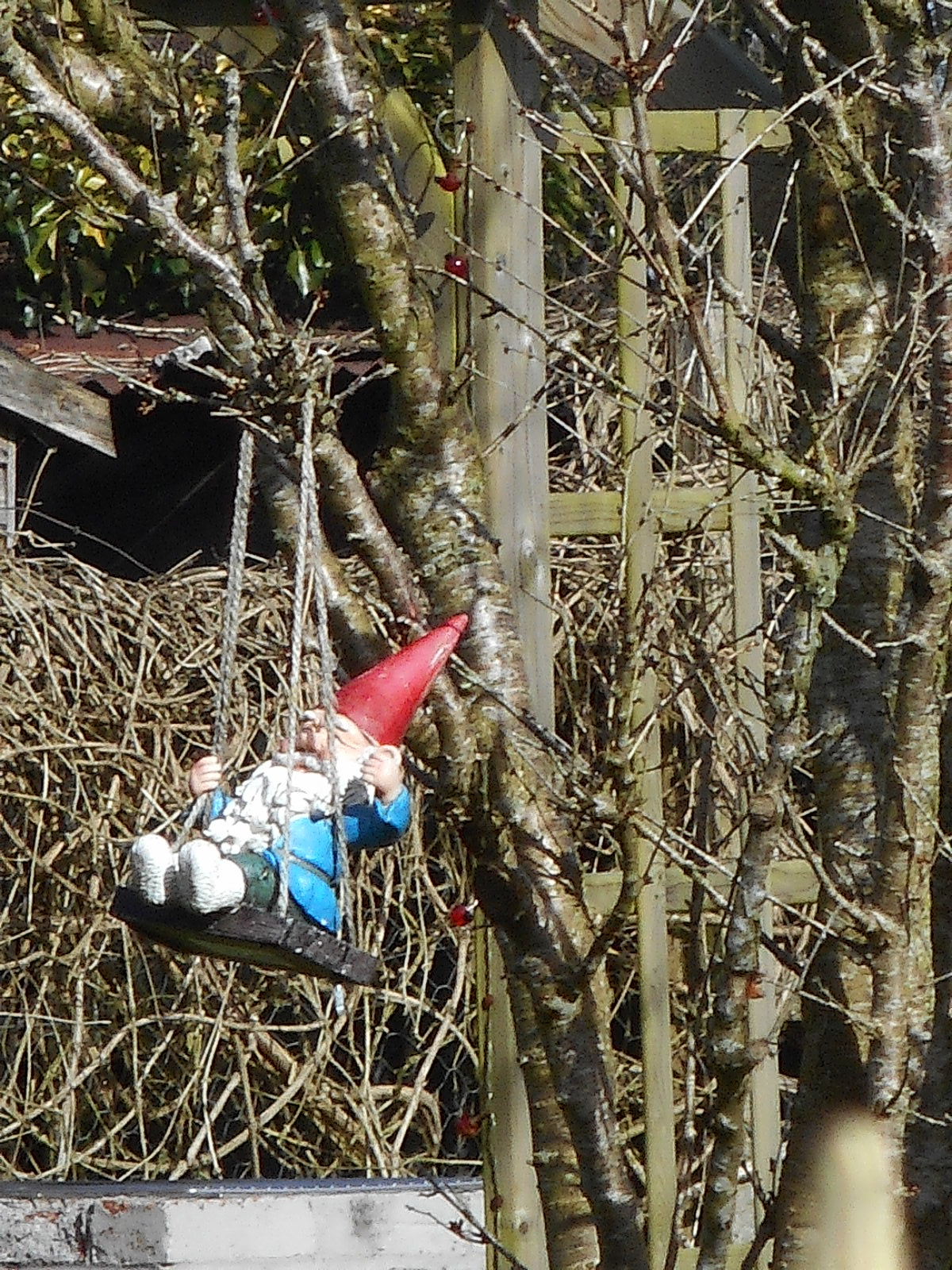
There was always going to be some confusion surrounding this walk. That chap on the swing might look settled enough but, given we’d intended to go to Pentridge and are now parked outside the C12 church of St Bartholomew in Shapwick, derived from the words meaning Sheep Village, things have clearly gone amiss. Blame it on the weather forecast: all points in the direction of Salisbury were giving rain. In any case, the air around that city doesn’t seem to be too fresh at present.


 Wikipedia excels on the merits of the interior of St Bart’s.The church is shut so we have a wander around its gardens. I’m in the company of those birders once more and they always claim there’s all sorts of birdlife to be spotted in a churchyard. Well, nothing to see here apart from a solitary war grave. Move along please.

The River Stour is close at hand. So close, in fact, that there are flood barricades outside the church. ‘Where are we off to then?’ I ask Sherpa Tony. I’d brought along printed copies of a possible route and emailed an alternative which seemed to be the same walk backwards. Tony has a third option: a map of a not apparently dissimilar path on a nicely coloured printed card. The first two routes suggested a 4 mile meander so Sally and I assumed the one that was chosen would be more or less the same.

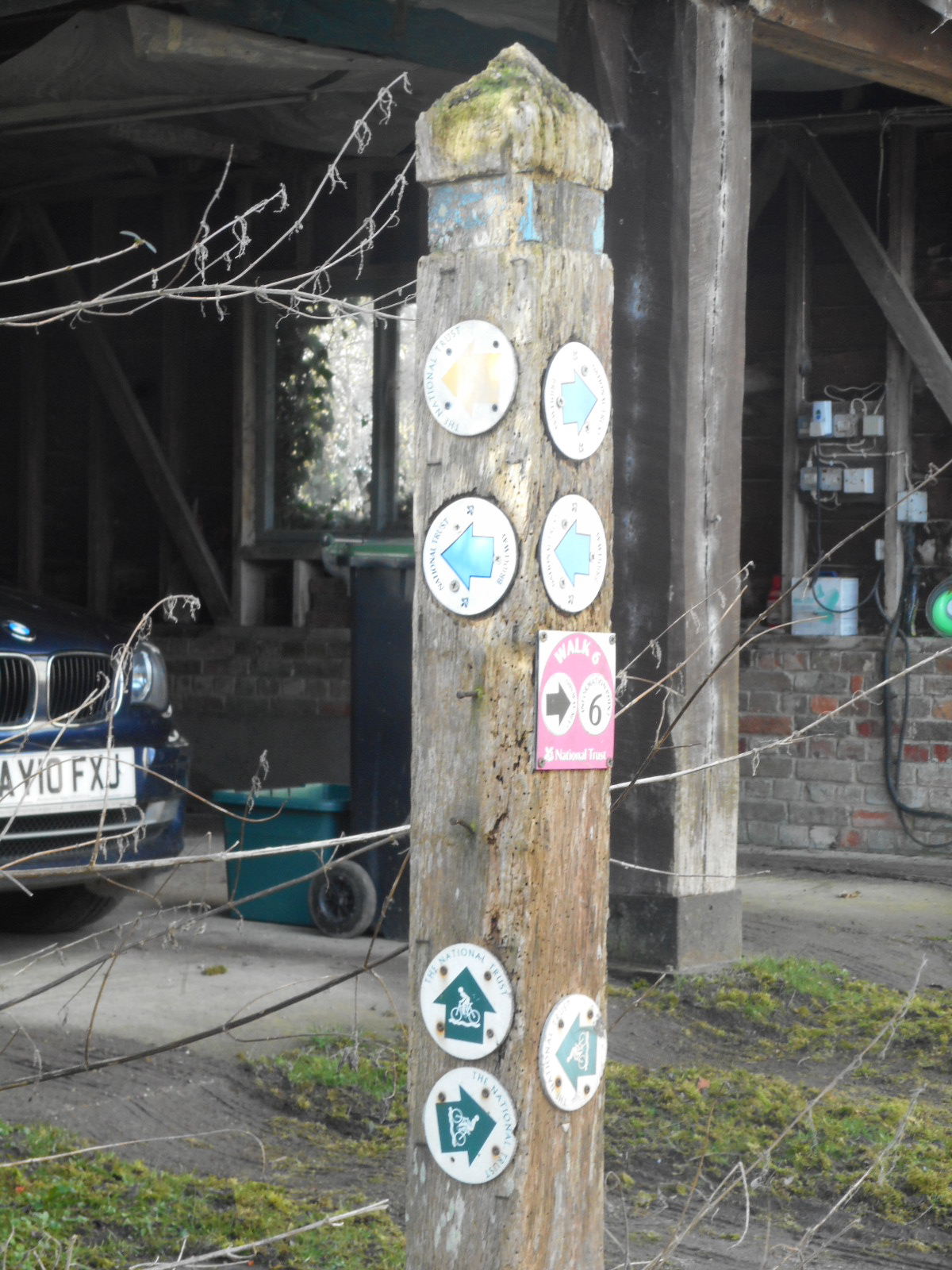
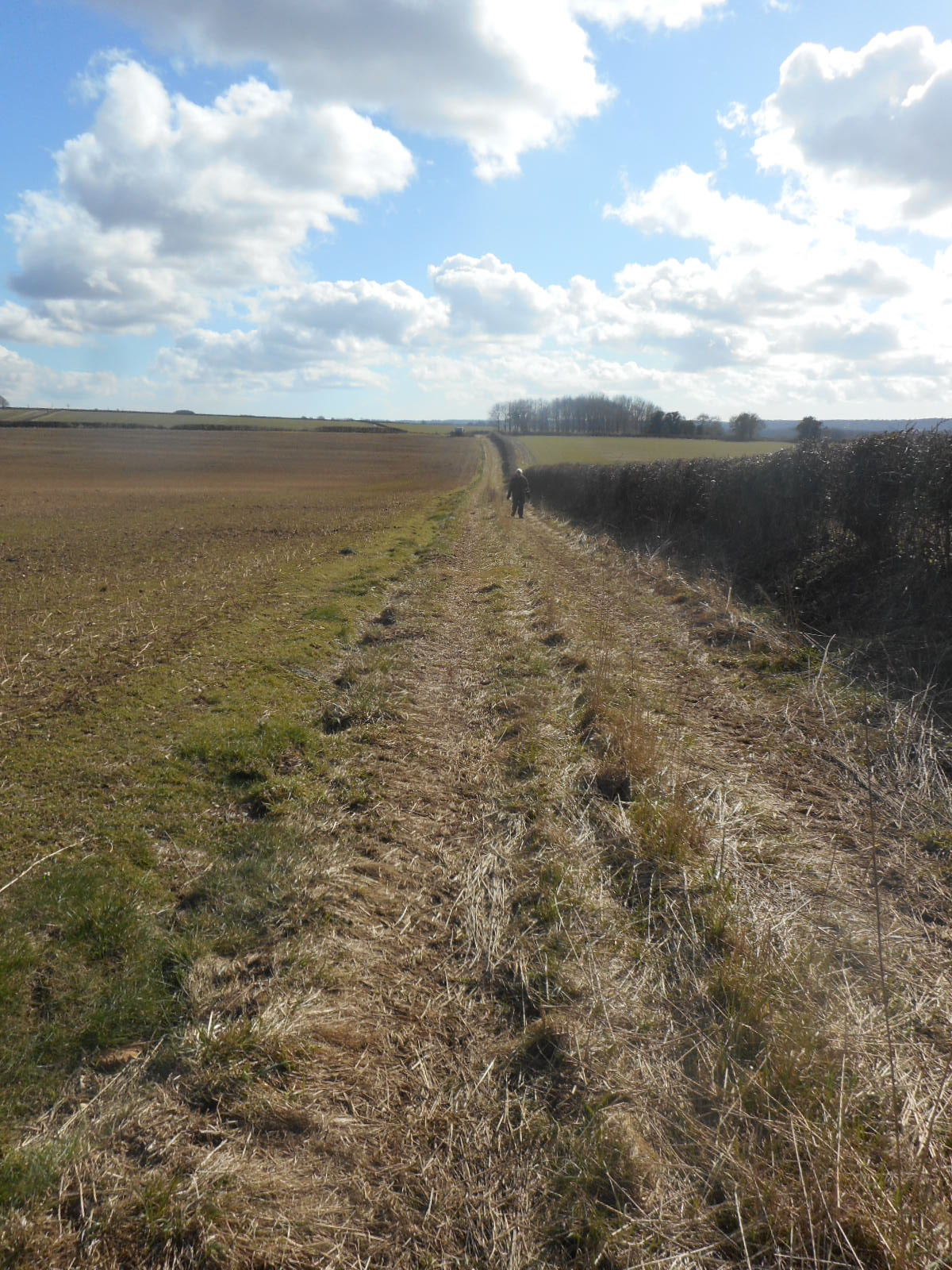
Having left the village far behind, trudged the long and winding road and made a left up a muddy track in the direction of Elm Tree Cottage, we arrive at this signpost which is about as useful as a chocolate teapot. No matter, our leader has switched to his iPad and we gaily follow him up a hill and into the open countryside. And when I say ‘open’, I mean ‘open’..


Some hours later, we hit such dizzy heights that the snow that left Dorset four days ago still lingers in these parts. Sally and I are both currently committed to Slimming World so have been content to discuss food for the last couple of miles. Suddenly, she remembers her husband is also on this walk so falls back to keep him company for a while. Actually, she’s really keeping the peace as the Sherpa has two of us questioning his directions.


It hasn’t worked: there’s Tony in another world whilst we two discuss the merits of BBQ chicken without fat; and oil; and anything else that’s ‘bad’. In the far distance, we can see Badbury Rings and remark on how the countryside that falls away from them is so remarkably – well, open. Not a lot to see in these parts.


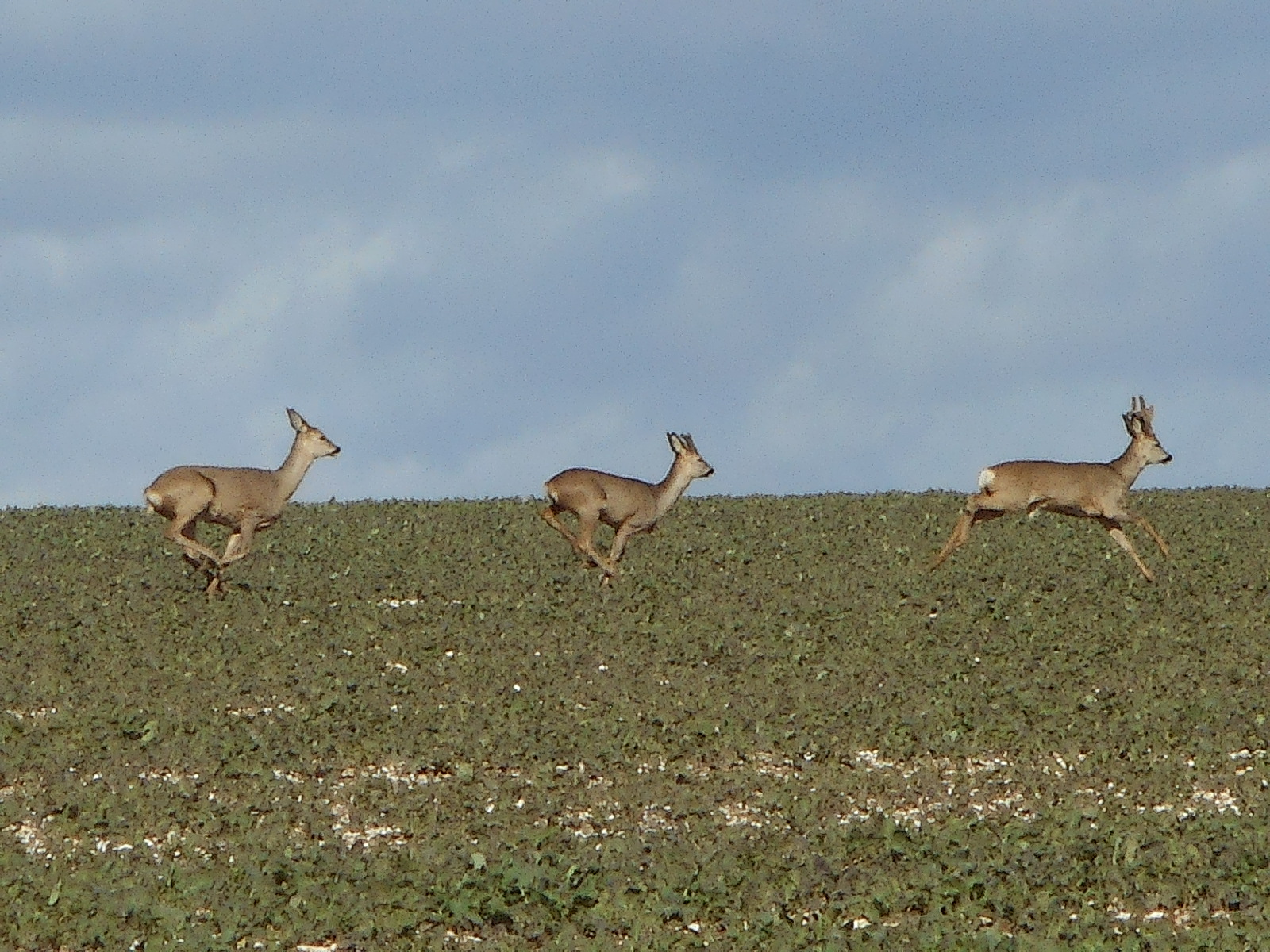
Suddenly, Sally sees the hare: an apparently enormous specimen bounding away with such speed that none of us manage to capture it on our cameras. It’s a treat, nonetheless. Just as we’re discussing our luck, a small herd of deer magically appears in front of us. There they go.

After we’ve finally escaped the pastureland, which involved a number of detours and the crossing of a barbed wire fence, we head off downhill. Generally, I’m a fan of ‘downhill’ but the way is comprised of slippery mud from last night’s rain. Sherpa Tony informs us that, according to the iPad, we’ve come nearly a mile. The peasants revolt: how can that be so? We’ve been walking for over two hours and lunch beckons. The leader informs us that, to our left, we can see the church of Tarrant Crawford. Well, sorry old bean but the only visible church is to the right and it belongs to the parish of Tarrant Keyneston. Apparently, the iPad stopped recording some eons ago and has about as much of a clue where we are as we do. I’m hungry.

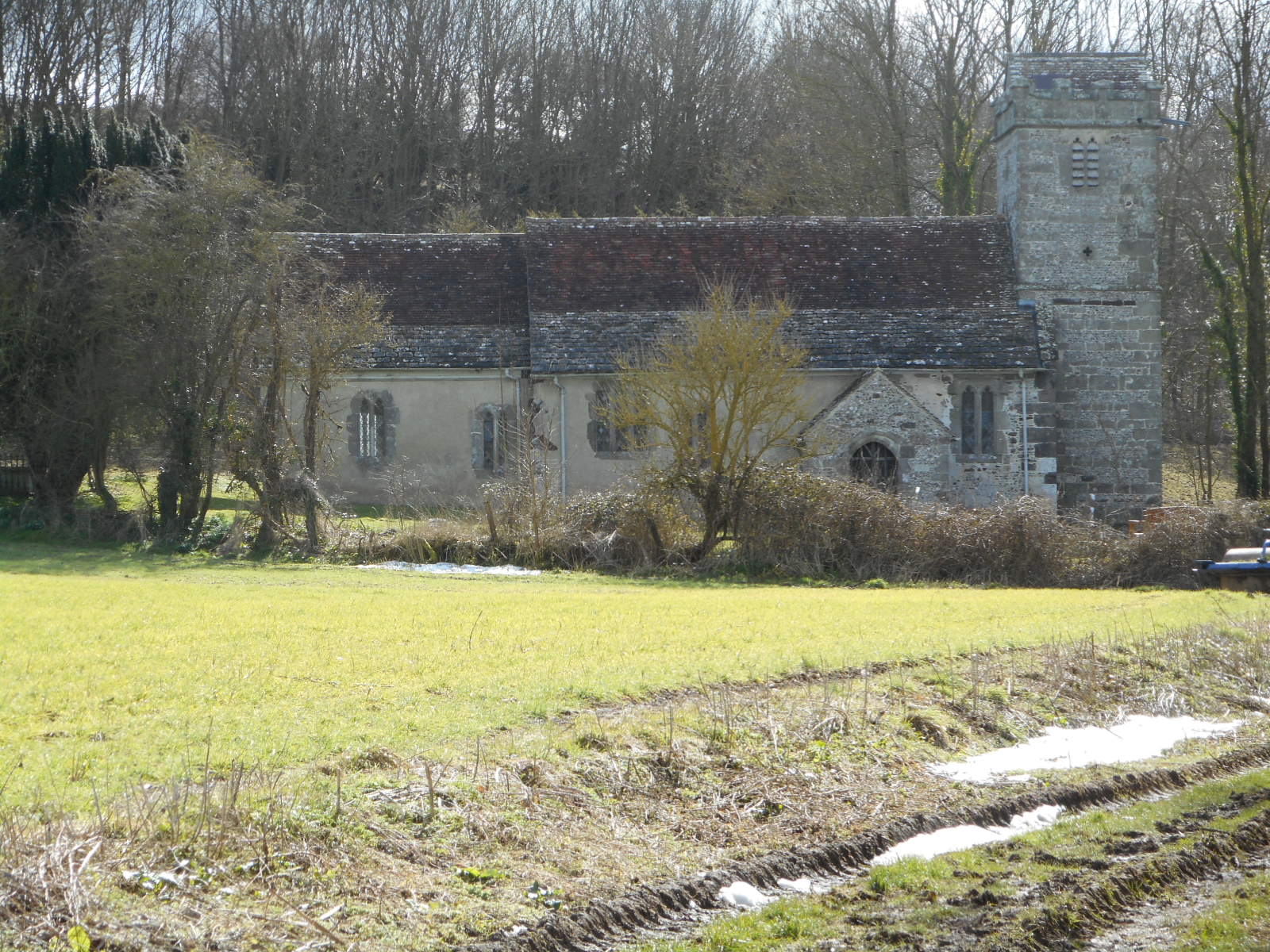
The sun appears in all its full glory as we’re wandering along a stream – the Tarrant. Rounding a corner, we spot the welcoming site of the Church of St Mary, Tarrant Crawford. Listen reader, if you think this weasel is dragging on a bit, what do you think it was like for us? I spotted a handy luncheon bench and we partook of our frugal, Slimming World inspired grub. For some reason, best known to herself, Sally starts harping on about how culinary life changes mean no more pasties. I hadn’t even thought about those Cornish delicacies – too busy grieving over the loss of cheese – but now you come to mention it.

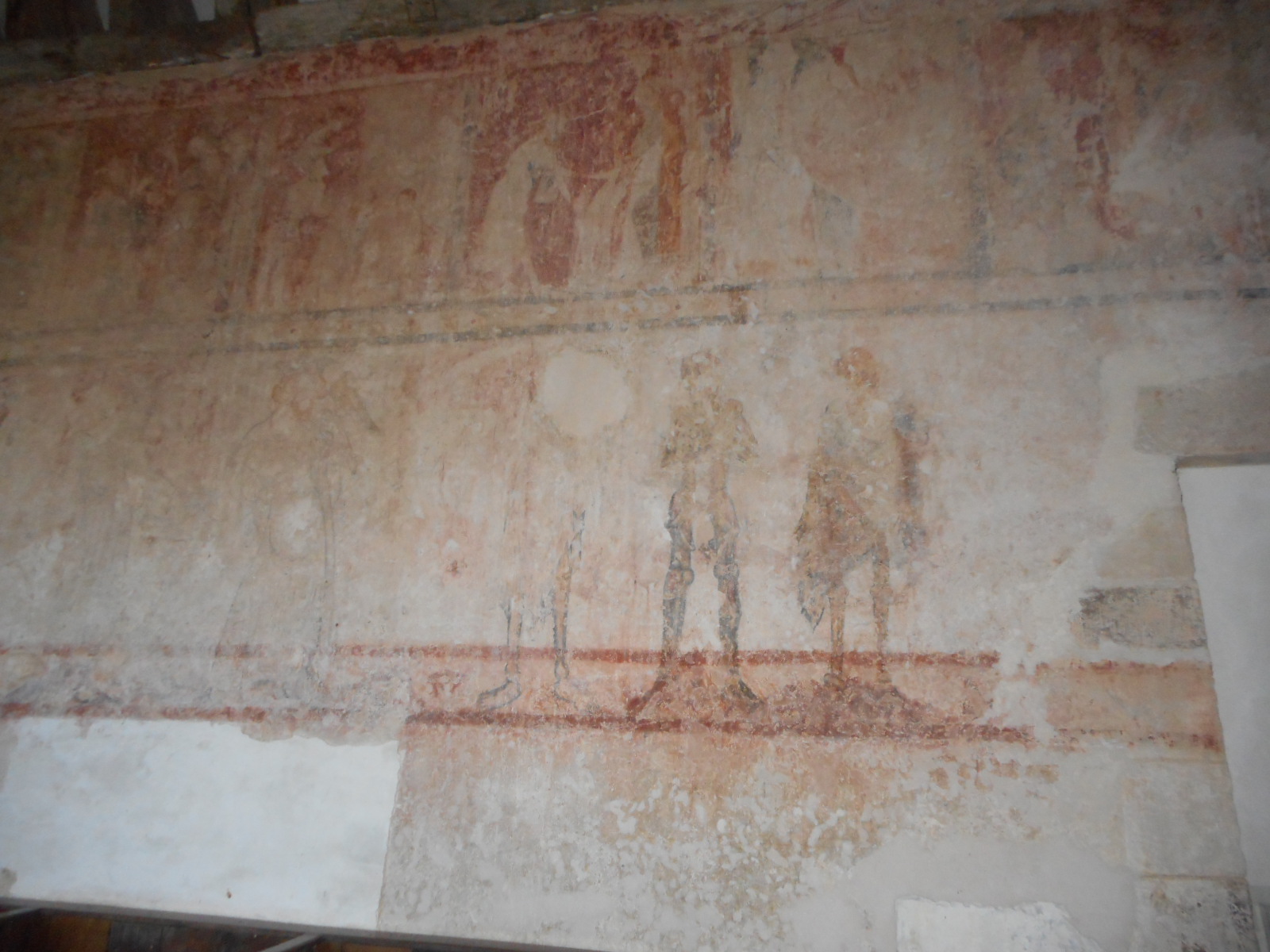
The door to the church is, amazingly, open. And look – they have frescoes. They date from the C13 but look much older to my untrained eye. What a treat. The church interior is, otherwise, a sullen affair but I can’t help but think they could’ve promoted these beauties a bit further afield.


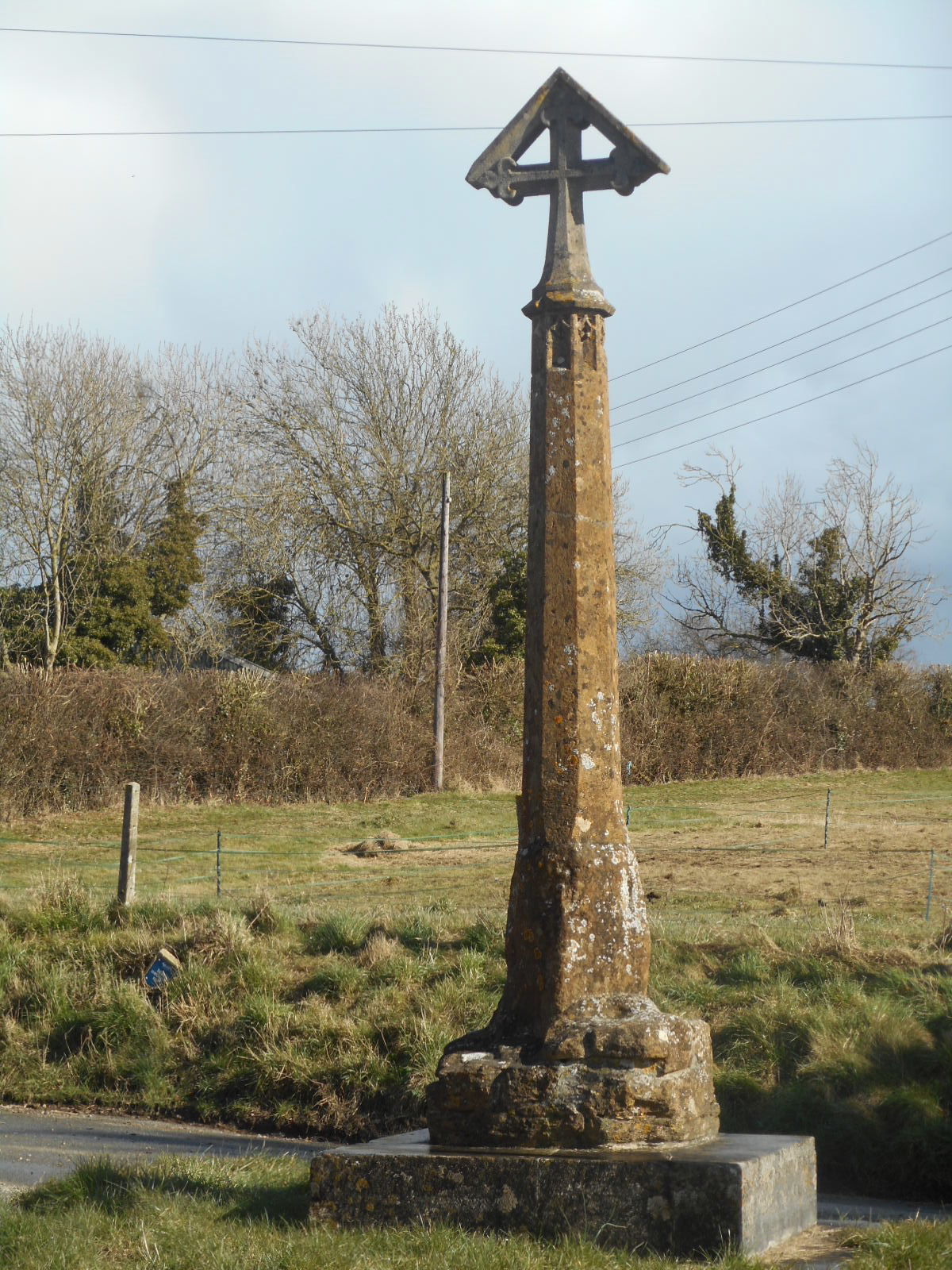
When we emerge from the church it starts raining. Then it starts pouring. And next it begins with the hailstones. And Sherpa Tony turns over the brightly coloured route card and informs us that the walk is 7.5 miles long. And it bloody well feels like it. We decide to omit a field or three and walk along the road; which is just as well because, otherwise, we’d have missed this mediaeval way marker. The bottom and the top cross are later additions but I love it. And it’s stopped raining.

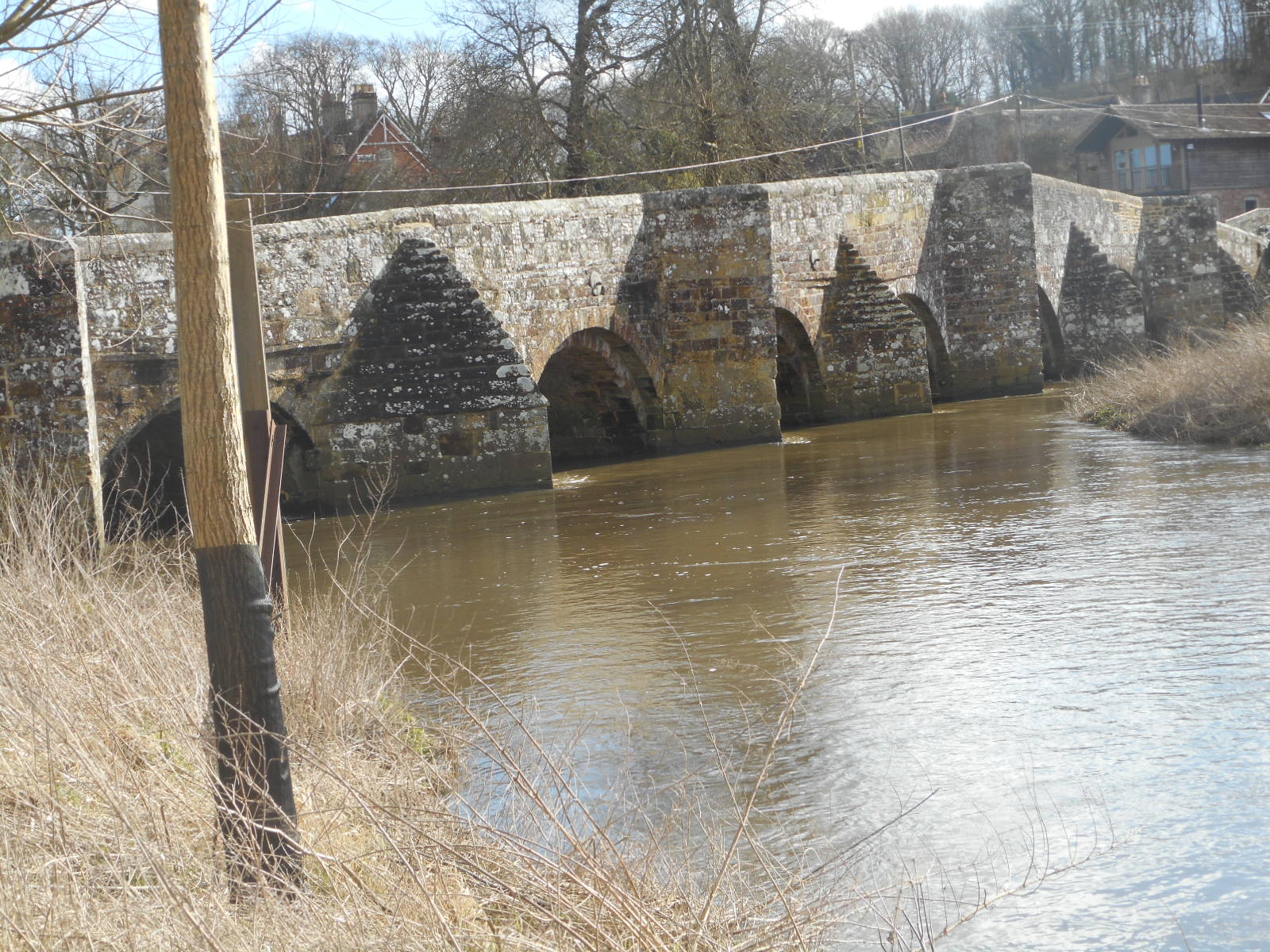
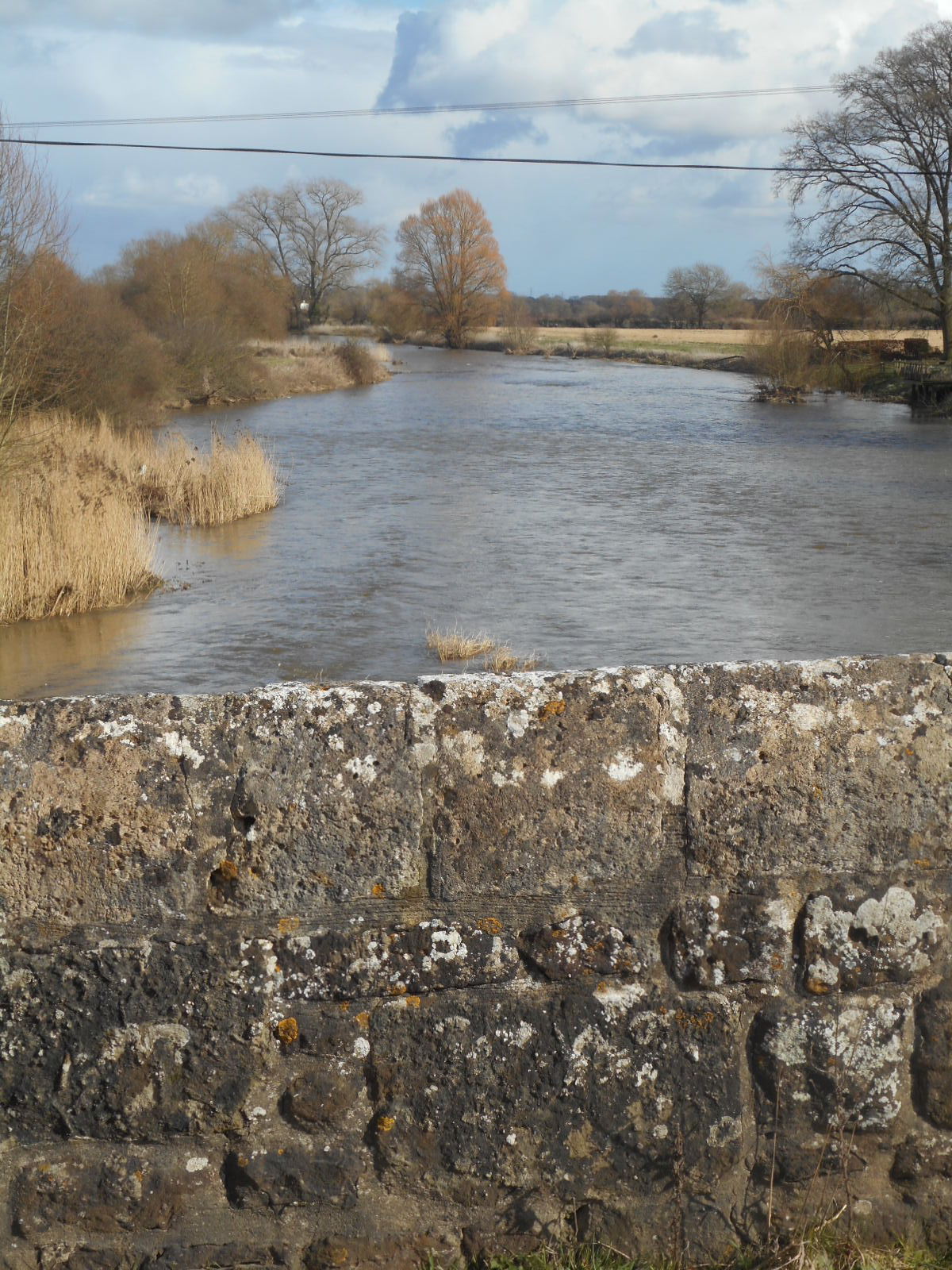
We wander down another long road to see Crawford bridge, first recorded in 1334. It has nine arches spanning two streams of the Stour and was widened in 1819.


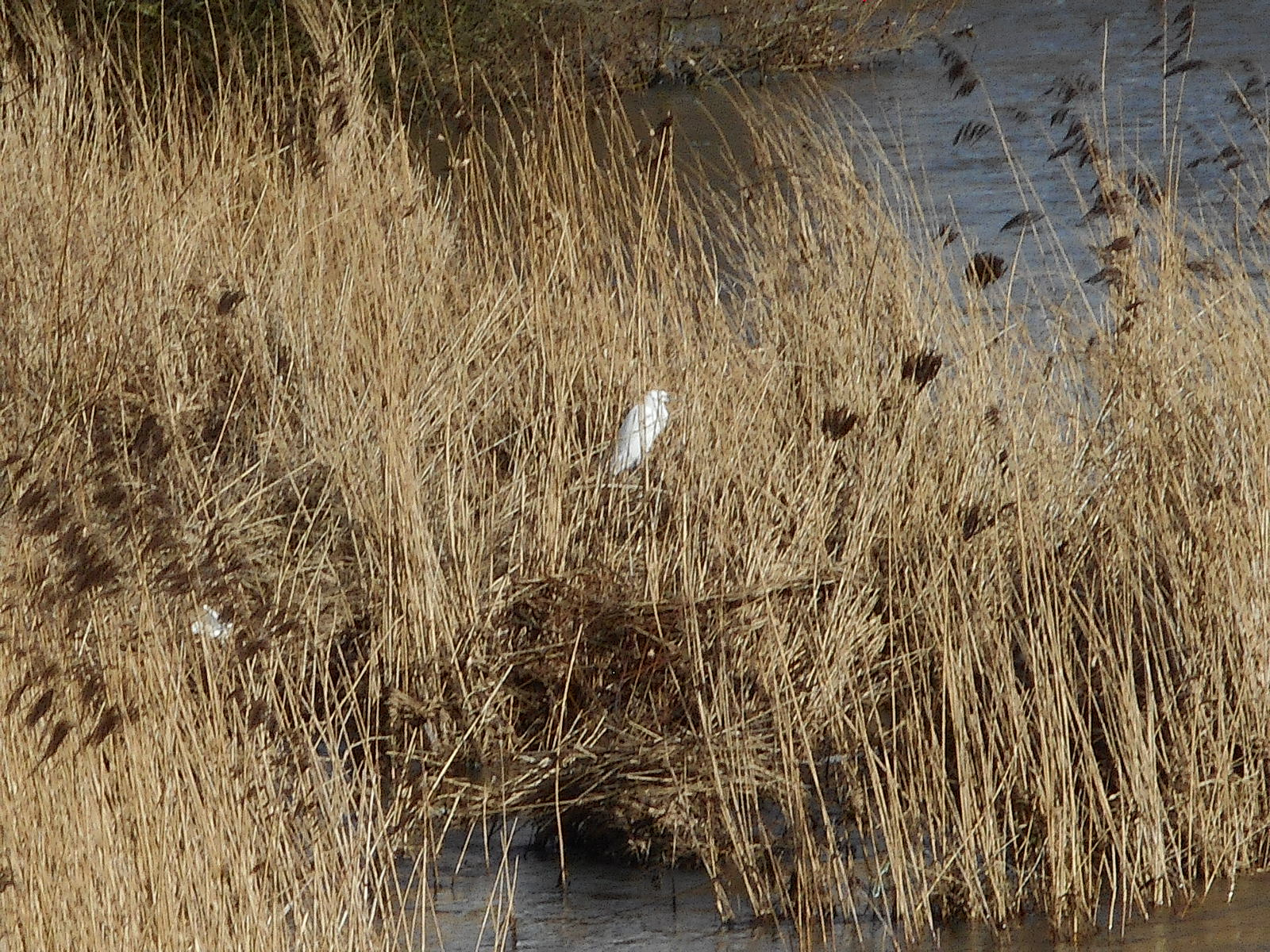
There are handy pedestrian refuge points if you want to take photos of the view; and of lurking egrets. You’ll have to spot them yourself.

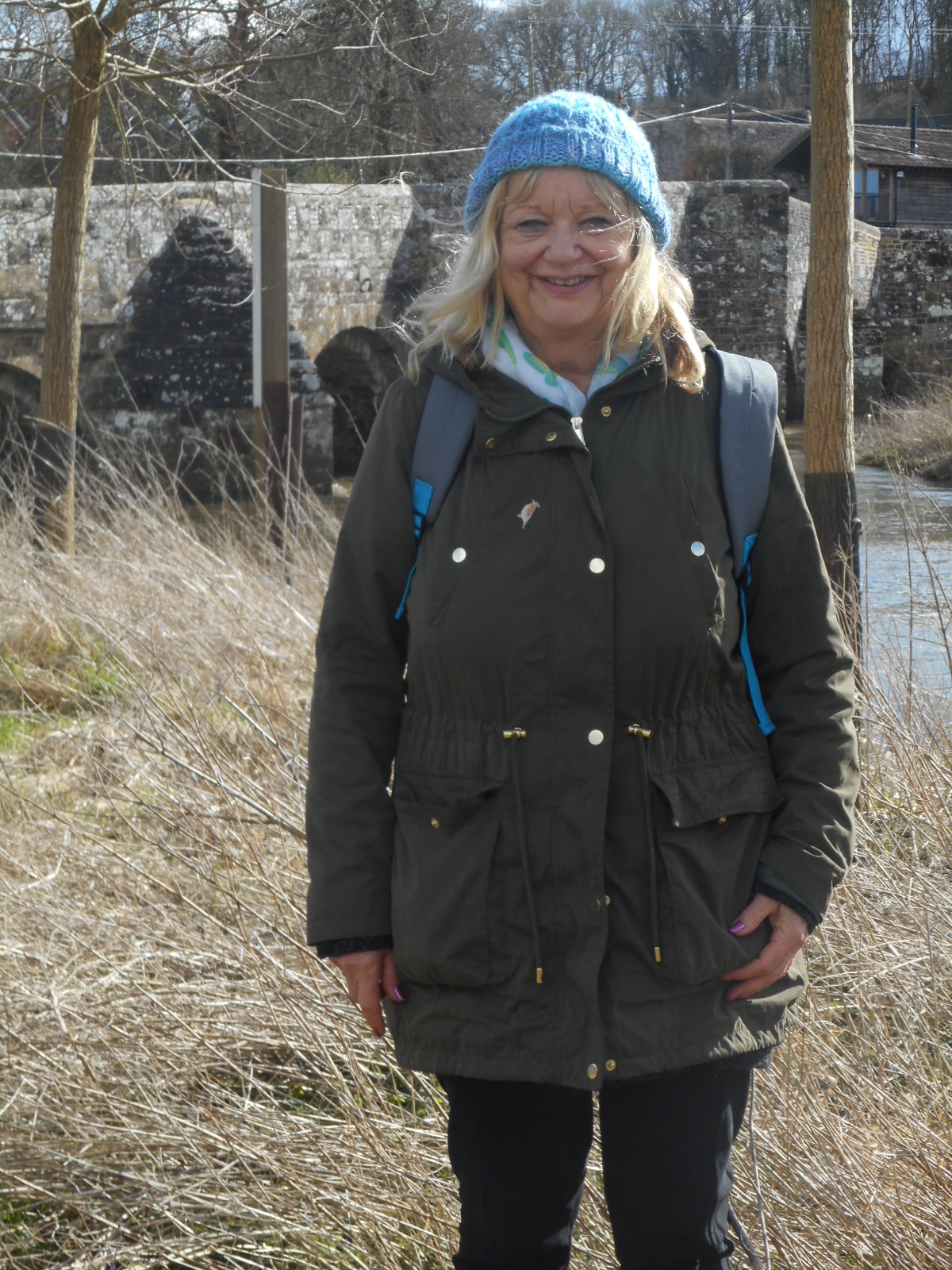
And here am I, looking jolly.


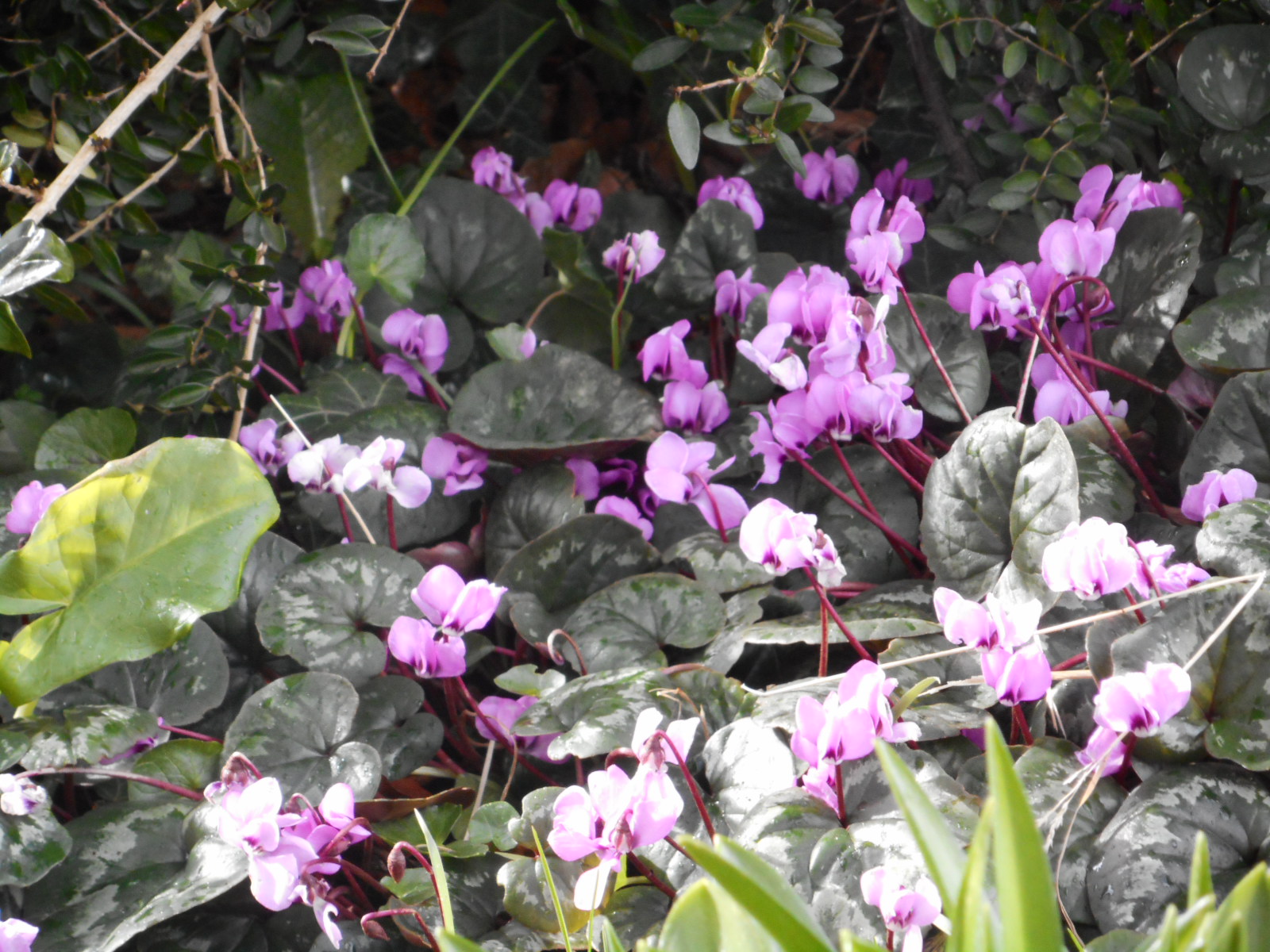
We cross another million fields and finally emerge close to our starting point, welcomed by miniature cyclamen. It was a grand walk, much of which I’ve omitted. Thank-you Sally and Tony


Unspoken conspiracies

On the surface of it all, these are quite the days for the sisterhood. Years of institutional  discrimination and abuse are now openly shouted about. Deafeningly so actually as the rich and famous cling together in solidarity, outvying each other in expensive black dresses that have little significance in the lives of the rest of us. Well, that’ll do it then. Not. Just one of those black dresses would pay for a year’s child care for ordinary working women who wouldn’t then have to depend on their own mothers to step in, thereby perpetuating a cycle that will continue ad infinitum.

It’s not just that the grandmothers I know seem to be constantly worn out and ill from experiencing childhood ailments for the third time – their own, their children’s and now their grandchildren’s – it’s the guilt that’s all pervasive. And I don’t mean the guilt bestowed on them by their children: I’m talking about that unspoken conspiracy amongst grandmothers who ‘care’ towards grandmothers who don’t. Forget the sisterhood because it’s only for young women. Women who look after their grandchildren are in a club marked by embitteredness. How dare we older women live our own lives devoid of other people’s children. Clearly, we’re not ‘proper’ and ‘good’ family types.

I have a good excuse – and let’s face it, I need one. My grandson, of eighteen months, lives 140 miles away so the daily commute would be a bit tricky. Also, he lives in Greater London and I, selfishly, live in the country, by the sea. And I know which is best – for me. His mum, who to my knowledge doesn’t possess an expensive black dress, works harder than anyone else I know. His dad probably does too, but this weasel is about women. In order to give the child the best possible life, she follows a very strict regime. Out of the blue, I am asked whether I can offer some temporary help.

Dad is away working in another country and mum has to stay late at her place of employment. This will be the first time that H has ever been put to bed by someone other than his parents. I’m a bit scared; not by the prospect of looking after him, but by the bloody regime in all its frightening detail. My memory’s not what it was. Remembering the running order seems a lost cause. Life will surely fall apart if I miss a step. They come to stay with me for two days so I can get the hang of it, but things are different in my house. In my house, things are different from the rest of the world.

The mornings are not too bad: get him up and dressed, give him breakfast, play for a while, then take him to the childminder (because she’s already been paid for and anyway, is part of the plan). It’s snowing in their part of the world and their house is exceptionally old and, to my frozen mind, a bit draughty. I’ve discovered a so-called air vent in their front room through which Storm Emma is blowing. H has these jig-saw shaped things that form a play mat. They also form a handy barricade against Emma and I’ve piled them up against the wall. H wants to play with the jig-saw mat. Have you ever tried to explain the concept of a draught excluder to an eighteen month old person? Intellectual explanation fails. I remove the jig-saw pieces and hold his tiny hand against the vent. He’s horrified and replaces the mat. Job done.

Next, it’s time to go out but I can’t find his shoes. ‘Where are your shoes?’, I ask. For such a small person, he’s extremely helpful, looking under tables and around corners. He searches one room, I search another. No shoes; funny because I distinctly remember seeing them earlier. That was before I moved the pushchair to create more space. Finally, I discover the missing shoes have become lodged under the buggy. We are both greatly relieved.

The evening regime is far more tricky as there’s a limited window of opportunity. Whilst play is ongoing, I must cook dinner, then feed him whilst he looks at a book, put the heater on in the bathroom, run a bath, prepare the night-time bottle, go upstairs and turn off the main lights to create an ambient reception, allow him to put the last nappy in the rubbish bin, bath him, remembering to play with the ducks in a certain order, get him to remove the plug, remove him from the bath, allow him to switch off the light, take him up to his room, cover him in anti-eczema cream, dress him for bed, get him to say nighty-night to all his toys and throw him in the cot. Easy from a distance.

Whist he’s eating his dinner – apparently, I gave him the ‘wrong’ pasta – H becomes very involved in his farm book. We have a long discussion regarding how farmers’ markets and farm shops exploit middle-class customers by palming them off with discoloured, malshapen vegetables dressed up in fancy wicker baskets. H agrees that he much prefers Sainsburys. Meanwhile, I’ve succeeded in the rest of the pre-bed preparation, although this has involved a lot of running back and forth and shouting from the kitchen: ‘are you still there?’ I’m just coming’ and suchlike. Fortunately, H is busy writing a letter to the Guardian about farm shop produce.

Having got him in the bath, I suddenly notice the discarded nappy on the floor. ‘I’m so sorry’, I say. ‘Would you mind terribly if I put it in the bin tonight?’ H doesn’t mind; he’s busy trying to get an ancient ET into the water. I think it’s a precious, sacred remnant from my daughter’s childhood. ET’s head falls off. ‘Oh dear, I think ET has a poorly head. Shall we leave him there?’ H regards ET with disgust. Getting H out of the bath is difficult enough but carrying him up the stairs of the Himalayas is another story. And smothering him in cream and trying to fit him into his nightwear in the ambient darkness is a non-starter. ‘I’m terribly sorry’, I explain, fumbling around, ‘but I’ll have to put the light on. Grandma can’t see a frigging thing’. H laughs and I’m amazed that he falls into his cot and goes to sleep instantly.

I go to my room, put on my little black dress, step lightly downstairs to clear up the carnage, before sitting in a darkened room to watch Midsomer Murders. Hello, John Nettles. I’m ready for you. John seems unamused.

There’s a moral to this story but I’m too exhausted to decipher what it might be.