French style

Ten years ago, whilst staying up in Valence, Katy took me to what was my first French car-boot sale in a nearby village. She bought a crate of melons for a very good price in response to allowing the vendeur a glimpse of her own melons; I purchased an old photograph of a group of even older men outside some sort of small factory for one euro. Madame, who was selling the photo, demanded, ‘what does she want that for?’ ‘She’s English’, said Katy with that infamous French shrug. Madame was disdainful which makes me wonder why she had the photograph there in the first place. I gave my dad that photo and he had it on his desk for some years – an unusual souvenir.
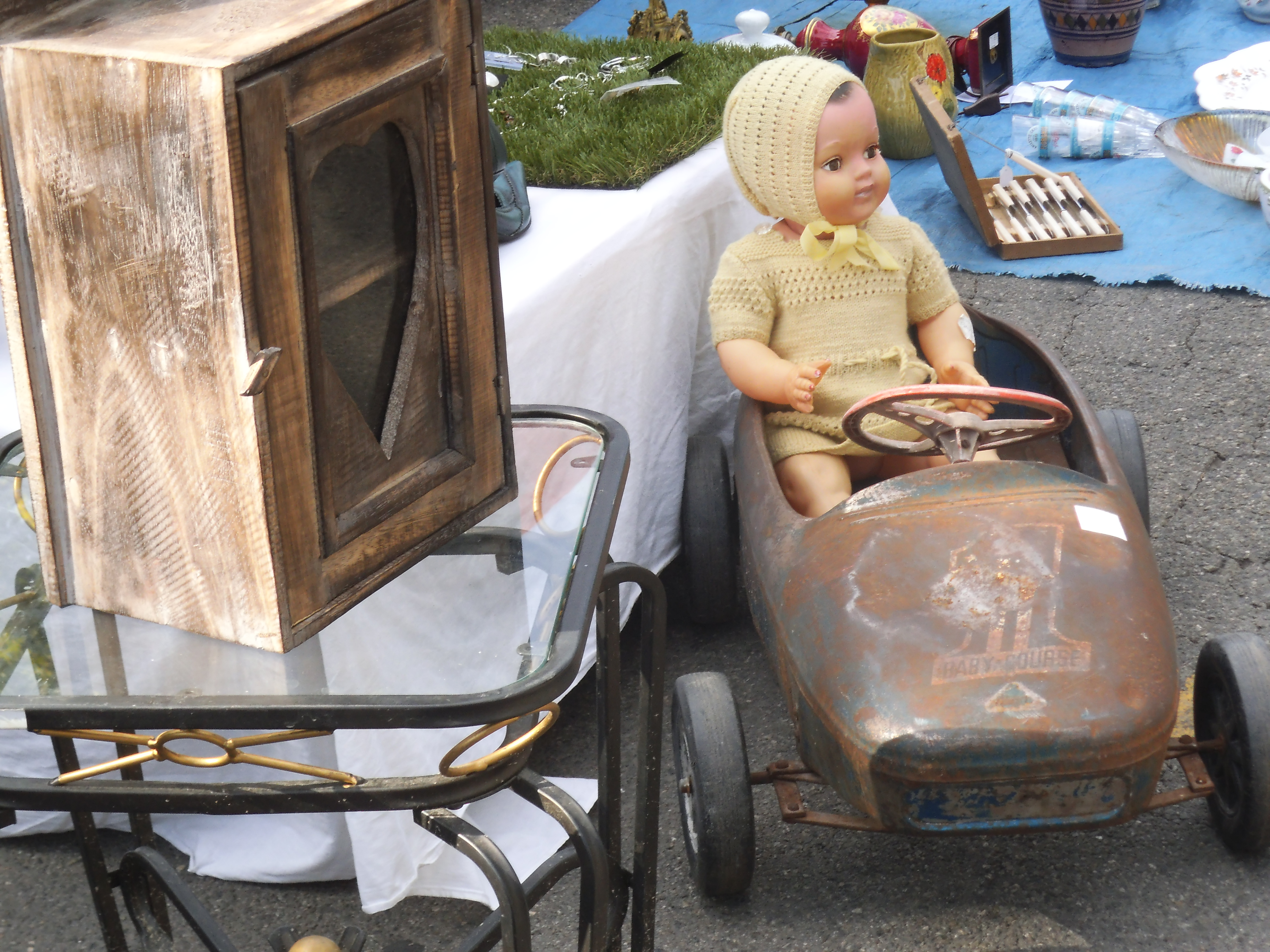
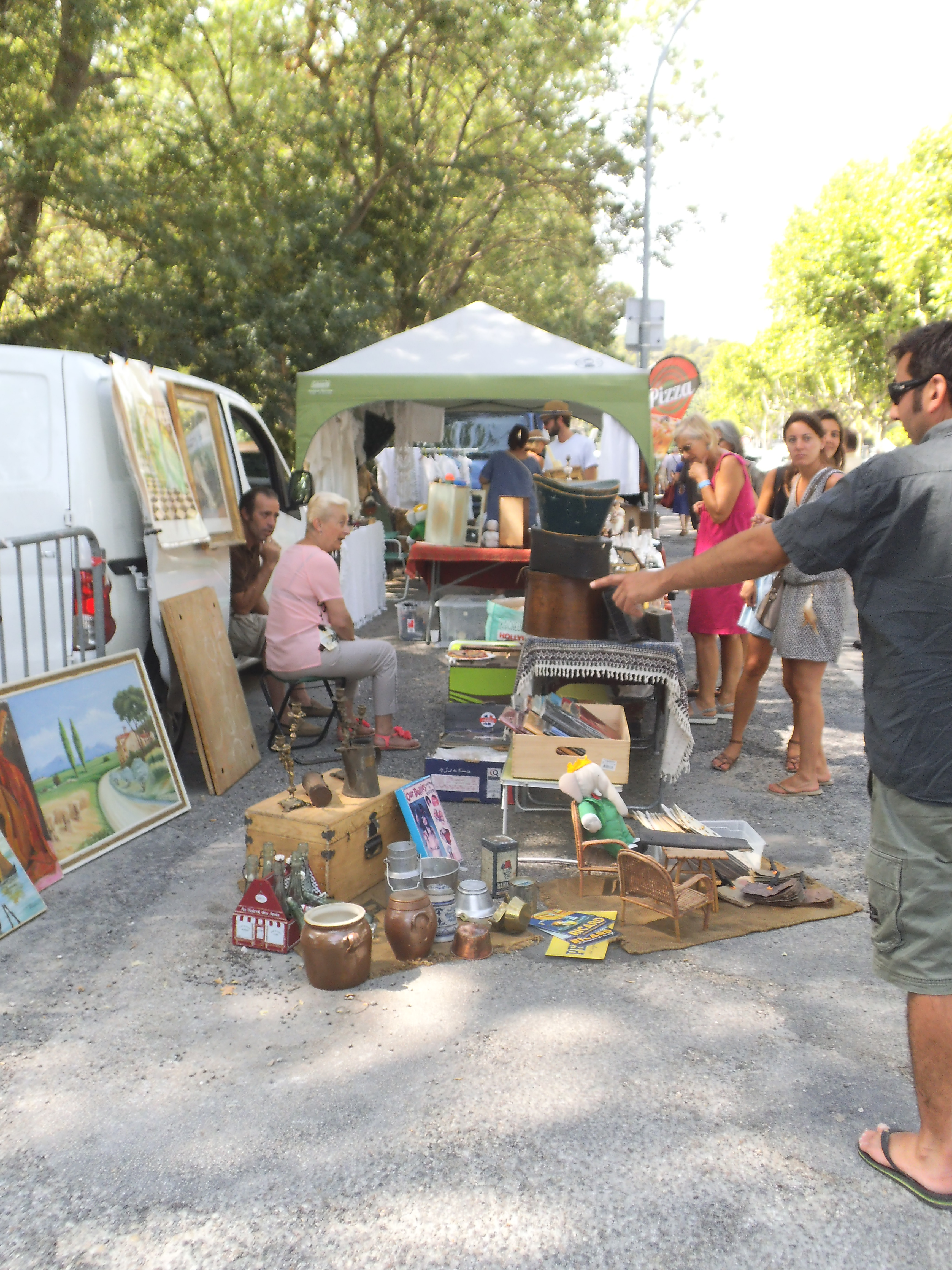
I don’t even think that sale had a name.The French have since caught up and things have moved on, although now there’s nomenclature. Largely, the difference is between Brocantes, Vide Greniers and Marchés aux Puce. In translation, they all mean much the same – flea markets. The reality, however, doesn’t really reflect this.
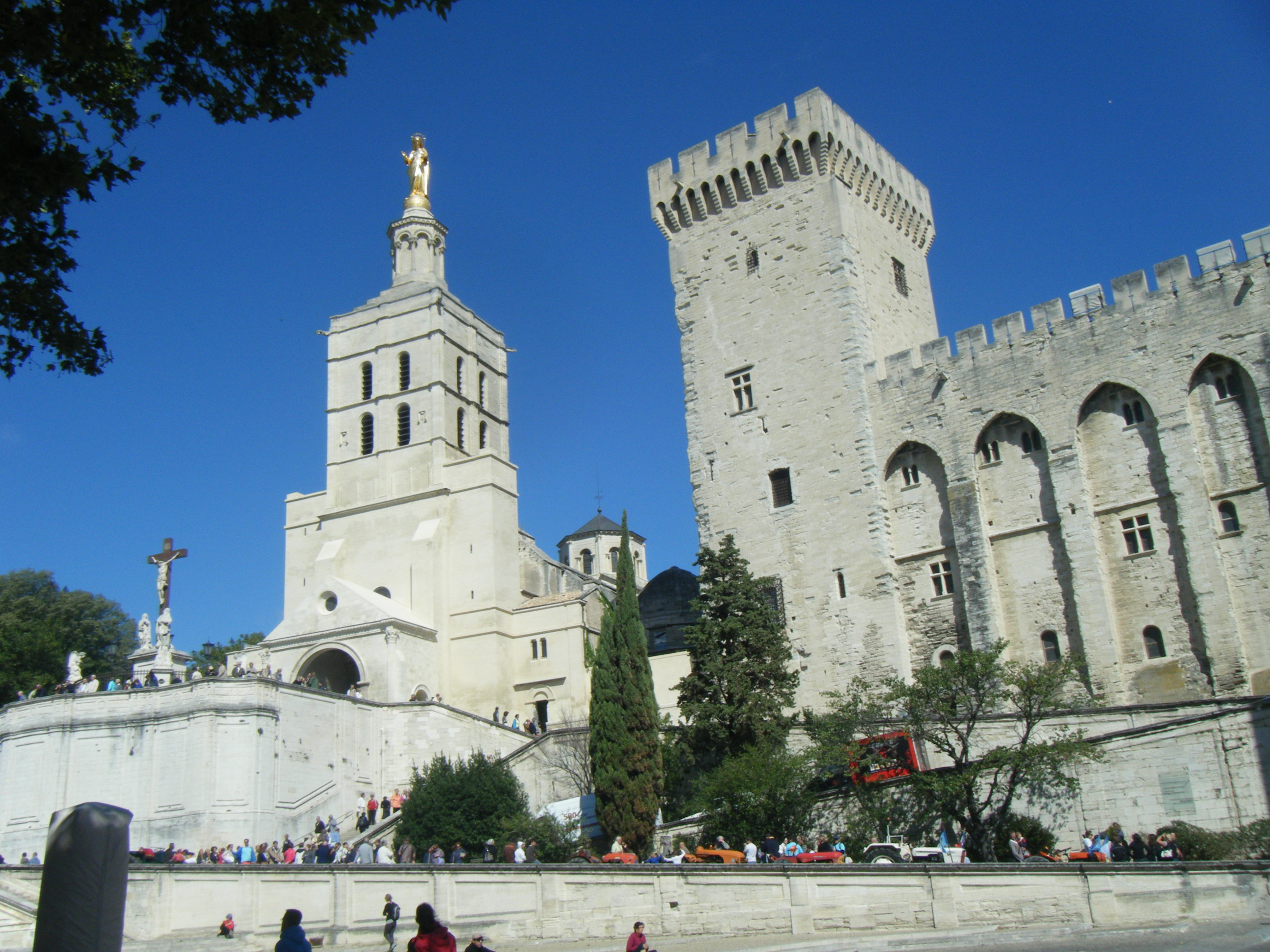
I would say that a Marché des Puces falls at the bottom end of the scale and might well be avoided. In Avignon, for example, you can find a Marché des Puces almost any day of the week, especially in the square nearest to Les Halles. The goods on sale are of a poor quality, at ridiculous prices, just for the prestige of being slap bang in the centre of antiquity. I’ve never seen anything that I wanted to purchase and have moved on quickly to lunch.
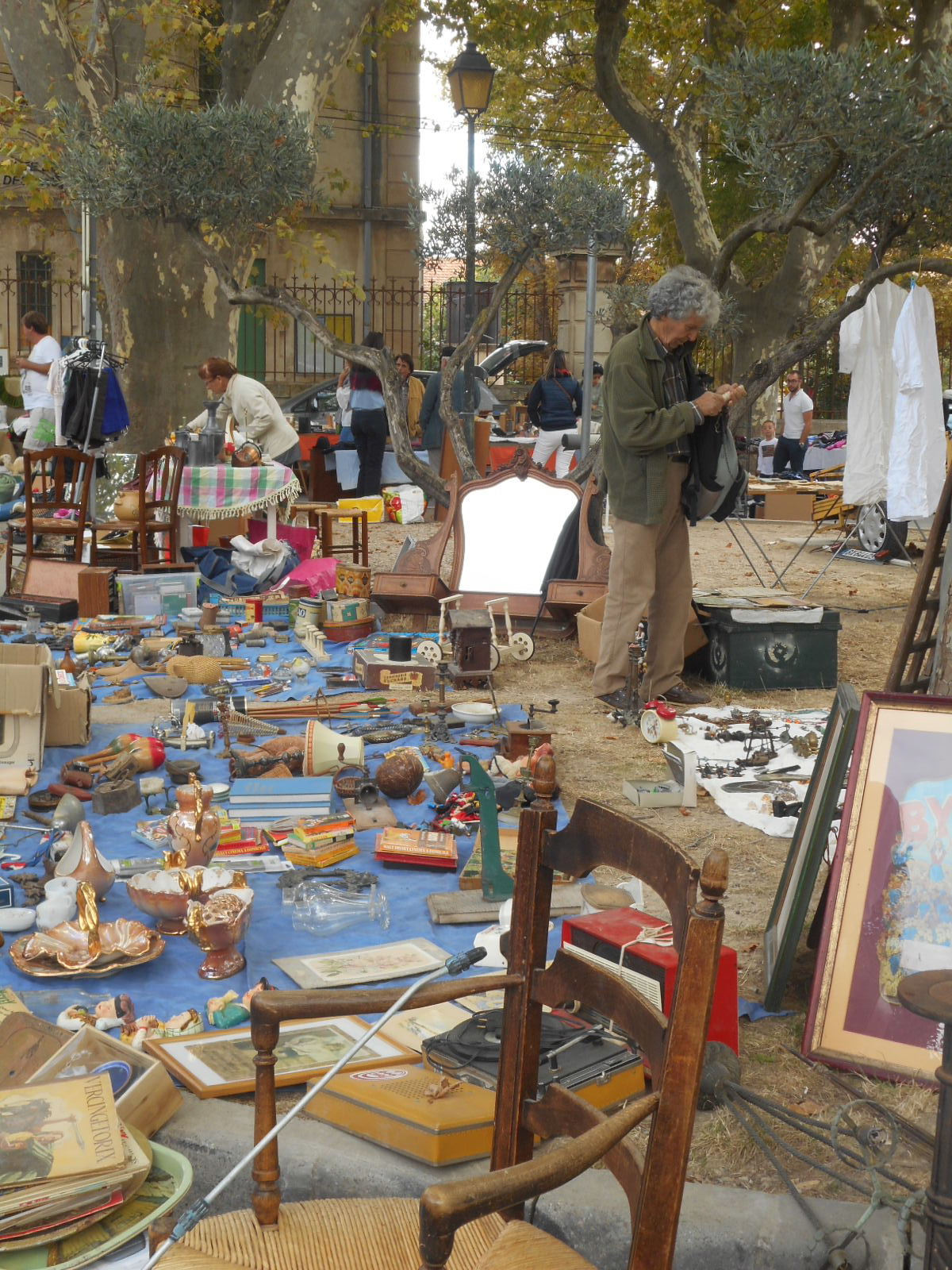
On the other hand, the Brocantes are well worth a visit. These are more up-market and are the haunts of those UK programmes that centre on the benefits of buying abroad. However, the French have caught on. In my humble opinion, one of the most famous – Ilse sur la Sorgue – is to be avoided at all costs on a Sunday if you’re from the UK. There are permanent antique businesses here which predominately target Americans. They even arrange for goods to be shipped which says something about the price. Ok: the town is really pretty but it’s a crush. Far better, after church, to head on over to Carpentras. Settled just underneath the Ventoux, it means you have the opportunity to drive through vine-ridden villages and seek a more authentic venue for your Sunday lunch. Further, the sale doesn’t commence until 10am so there’s no anxiety-inducing need to get up at stupid-o-clock after Saturday night exertions.
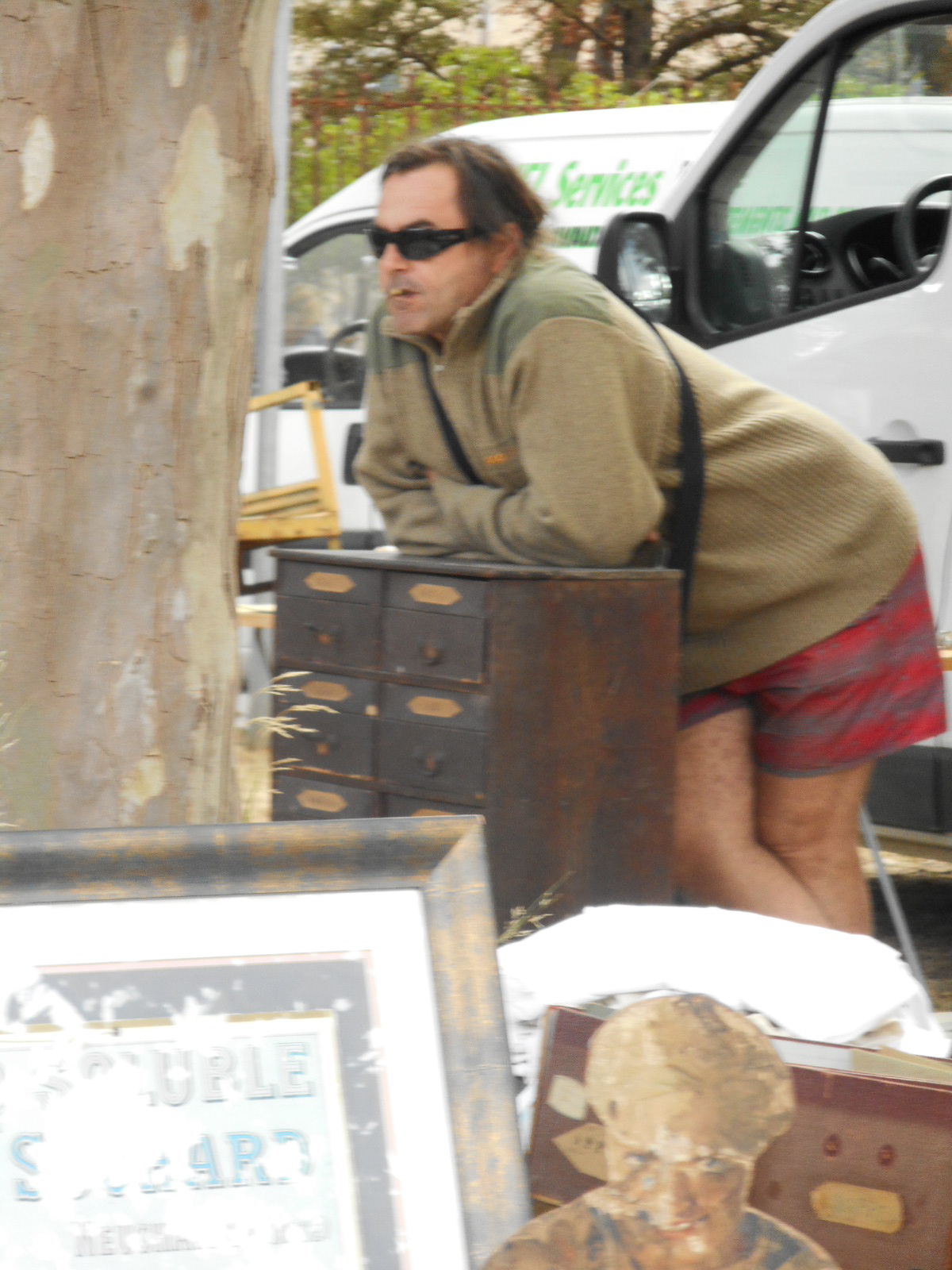
Even so, the stall-holders in Carpentras are increasingly canny and you have to be prepared to barter; and for them to know the game. Along with a variety of friends, I’ve found good deals on things ranging from ostrich feather fans to model wooden horse-driven carts. But my very favourite Brocante is the Saturday morning show at Villeneuve-les-Avignon. The English programmes, such as French Collection, will tell you that this is the best in the South.

What makes it particularly interesting is the buvette in the far corner. A buvette is a small establishment, such as a shed or a caravan, selling liquid refreshment. Options are generally limited: tiny paper cups of the strongest expresso you’re ever likely to taste aimed, presumably, at the stall-holders who’ve arrived at une bonne heure; Pastis for the next stage; beer to keep them going and Orangina for the lightweight tourists. If you go to the counter to purchase a drink, etiquette is maintained and one is told brusquely to find a table and wait to be served. And photographs are frowned upon.
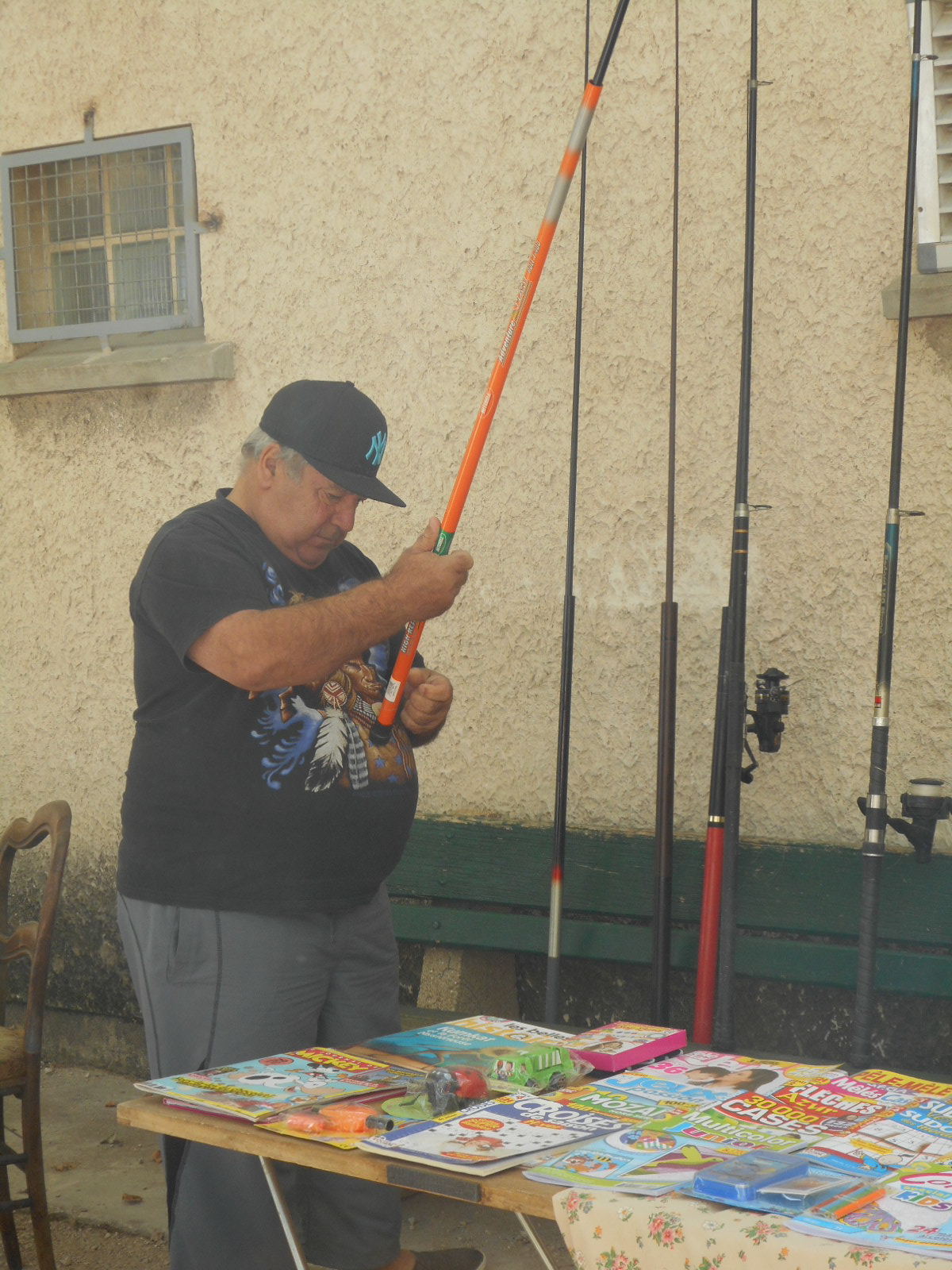
The other week, Elle and I came across a bunch of really interesting looking stuff laid out on the ground. A youth of indeterminate description sat in the back of a nearby truck studying his phone. ‘Monsieur’, I ventured, ‘how much for this?’ He looked up and tried to focus but, having forgotten how to speak, stumbled away to return with an older man in a very sad state of affairs. Stumbling is a good word. The new ‘monsieur’ was having trouble standing, although seemed adept at keeping his beer in the glass. He mentioned a price and I mentioned one lower. Evidently, he’d forgotten how the game works as he then gave an even lower price. Reader, this isn’t normal but who cares? We got some fine bargains and he seemed delighted. Much winking and shaking of hands ensued.
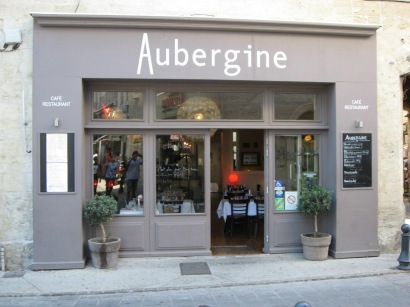
The brocante is done and dusted by 1pm in Villeneuve which enables us to wander up into the little town for lunch in the square. This isn’t a piece on where to eat – however, you could do worse than Aubergine which has tables inside and out, a clean toilet and great food at very reasonable prices. Just saying.
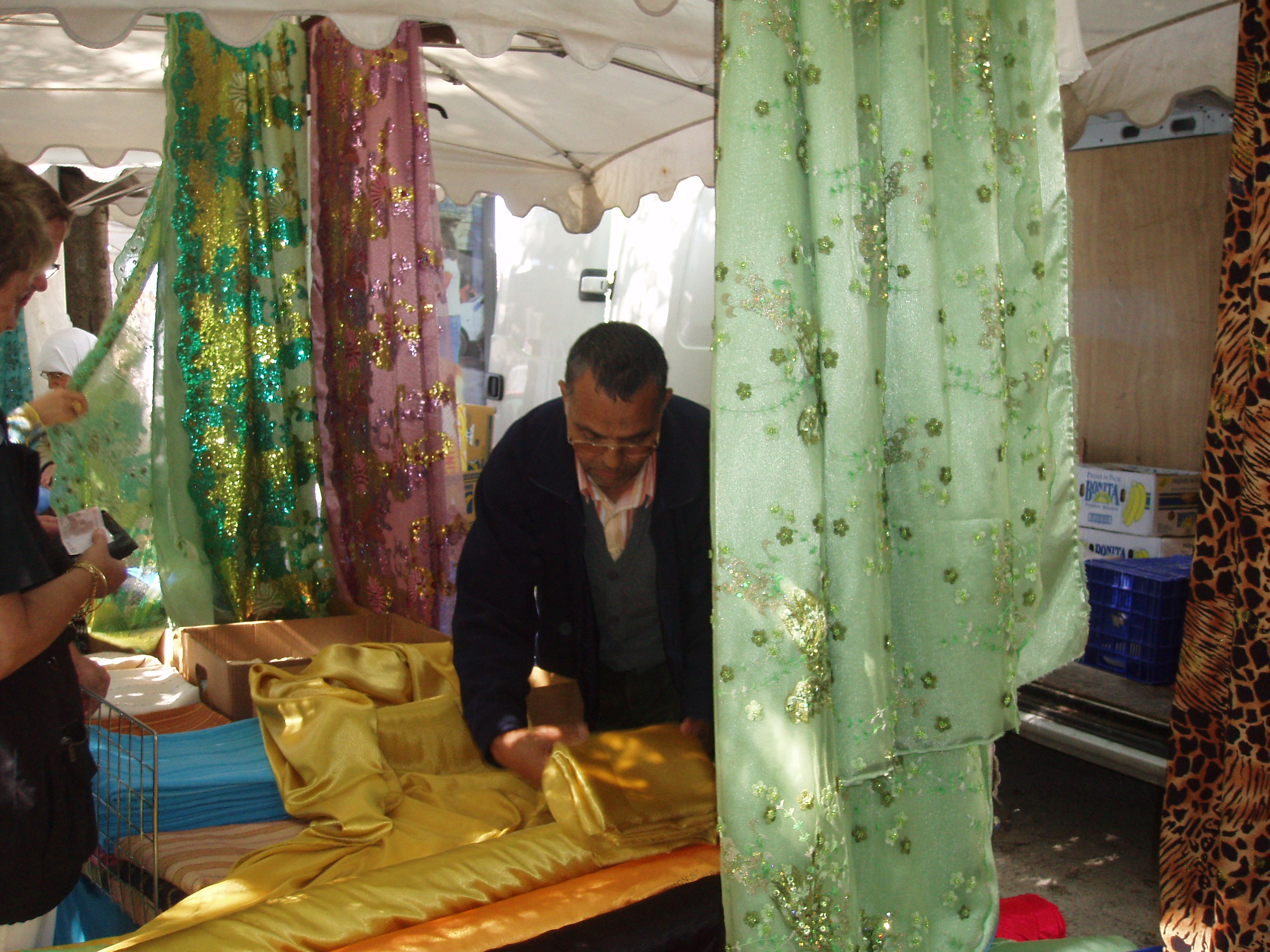
Vide Greniers have come a long way in the last ten years. There’s even a website to tell you when and where but, in practice, it’s easy to find them in the summer as advertising signs are placed on nearby roadsides. Inevitably, as in the UK, they’re held on a Sunday but, unlike the UK, they last all day. Close to the Bricomarché in Tarasçon, you’ll find a weekly one which is still quite unusual. Tarasçon is, unfairly, a much derided town. Sadly, I feel that part of the reason is the preponderance of Arabs… France is a pretty racist type of place. Up in Pierrelatte, there’s a predominately Arab market every Friday and it’s vibrant with colour, high quality material being prime stock in trade. I thoroughly recommend a jaunt north just for the experience.
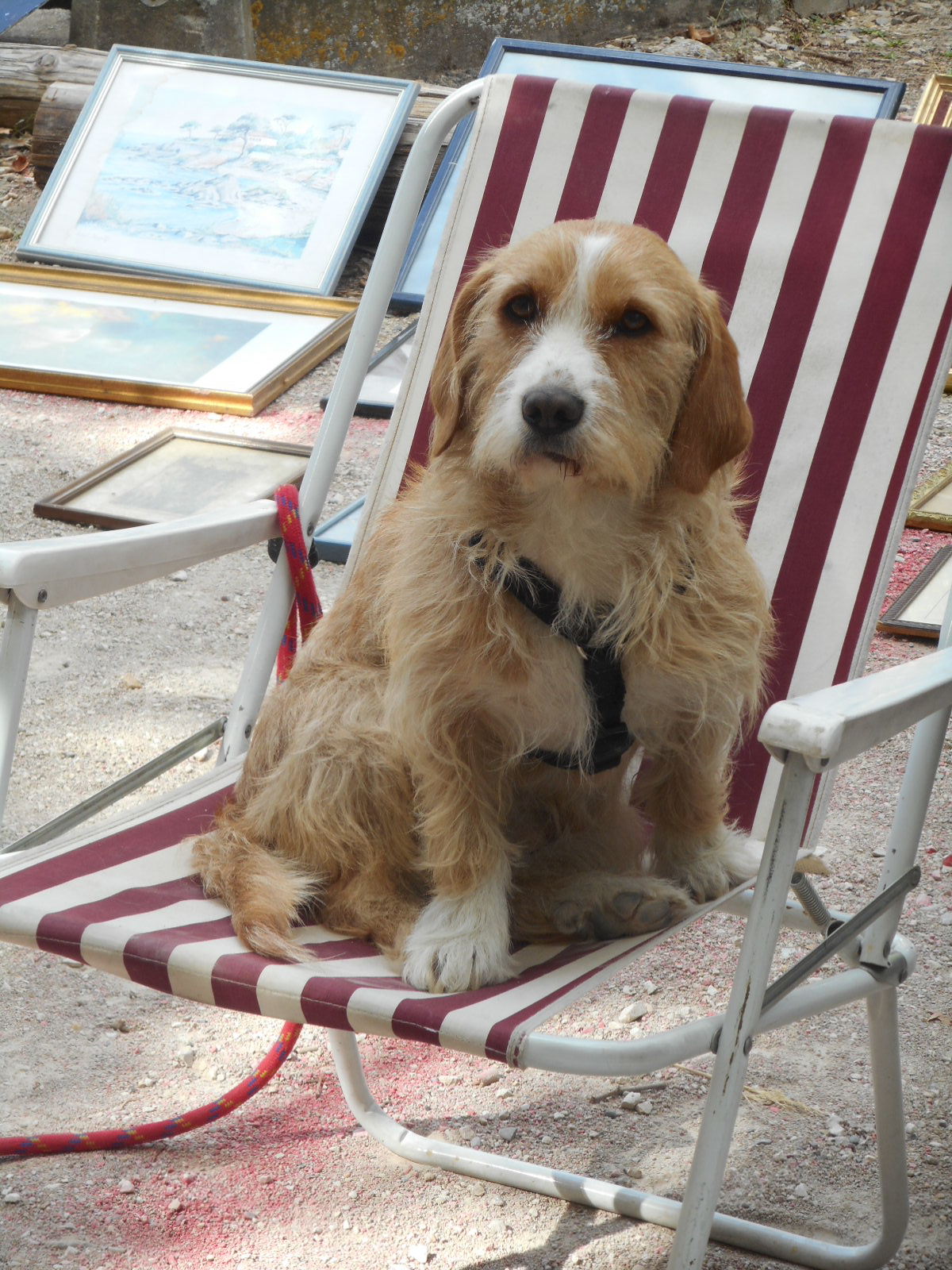
However, Tarasçon on a Sunday isn’t a market: it’s a boot sale. Nonetheless, it’s interesting as all things Provençal are sold alongside old and new goods of Arab origin… a veritable mix of cultures. But if you want French goods, go to a village vide grenier. I’d say pick a wealthy village such as Mausanne but even the lesser known places have good finds. Don’t go for traditional stuff such as French lace or so-called ‘shabby-chic’ furniture because prices are extortionate; look for the things that the sellers haven’t yet cottoned on to. Happy bargain hunting.
Irene

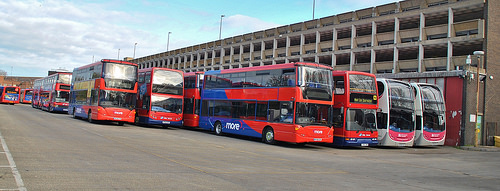
You’d be hard-pressed to find anyone better-behaved, self-effacing and reserved than my friend, Irene. If one was asked, what does she have opinions on, we’d say ‘nothing that I know of’; apart from buses.

Irene doesn’t do cars. So, if we plan a walk a little off the nearby tracks, we must journey to and from the starting and end points by public transport. Nothing too bad in that you might think, especially as we have old folks’ bus passes, but today we’re going somewhere for which I have an almost exclusive parking permit. This fact is disregarded: if you want to be really ambitious, I’m advised, I can get the number 9 from my house into Poole where I can then change to the number X5 on which she will eventually embark. I don’t. I have to go to Tesco and I don’t have enough hours in the day.

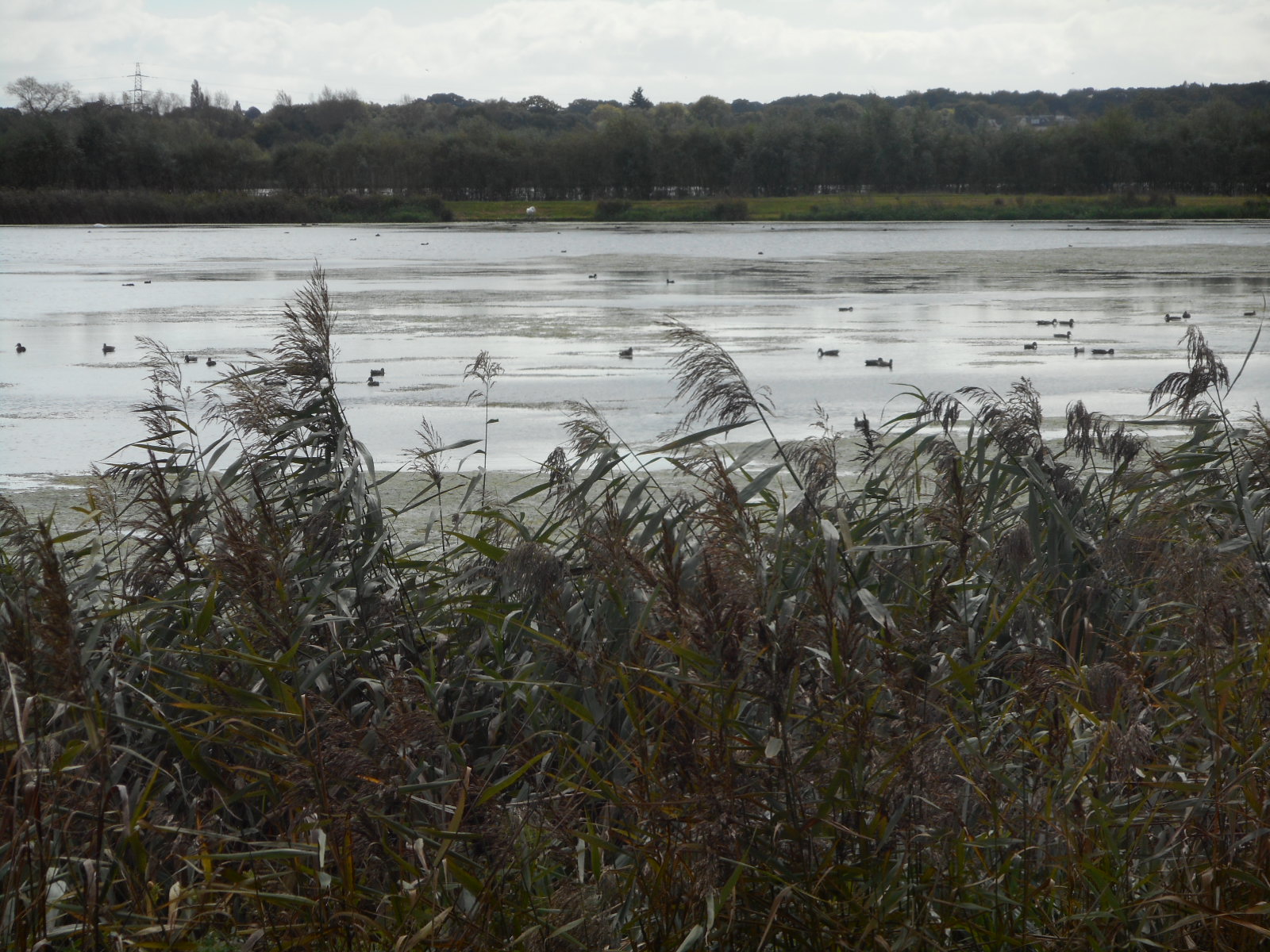
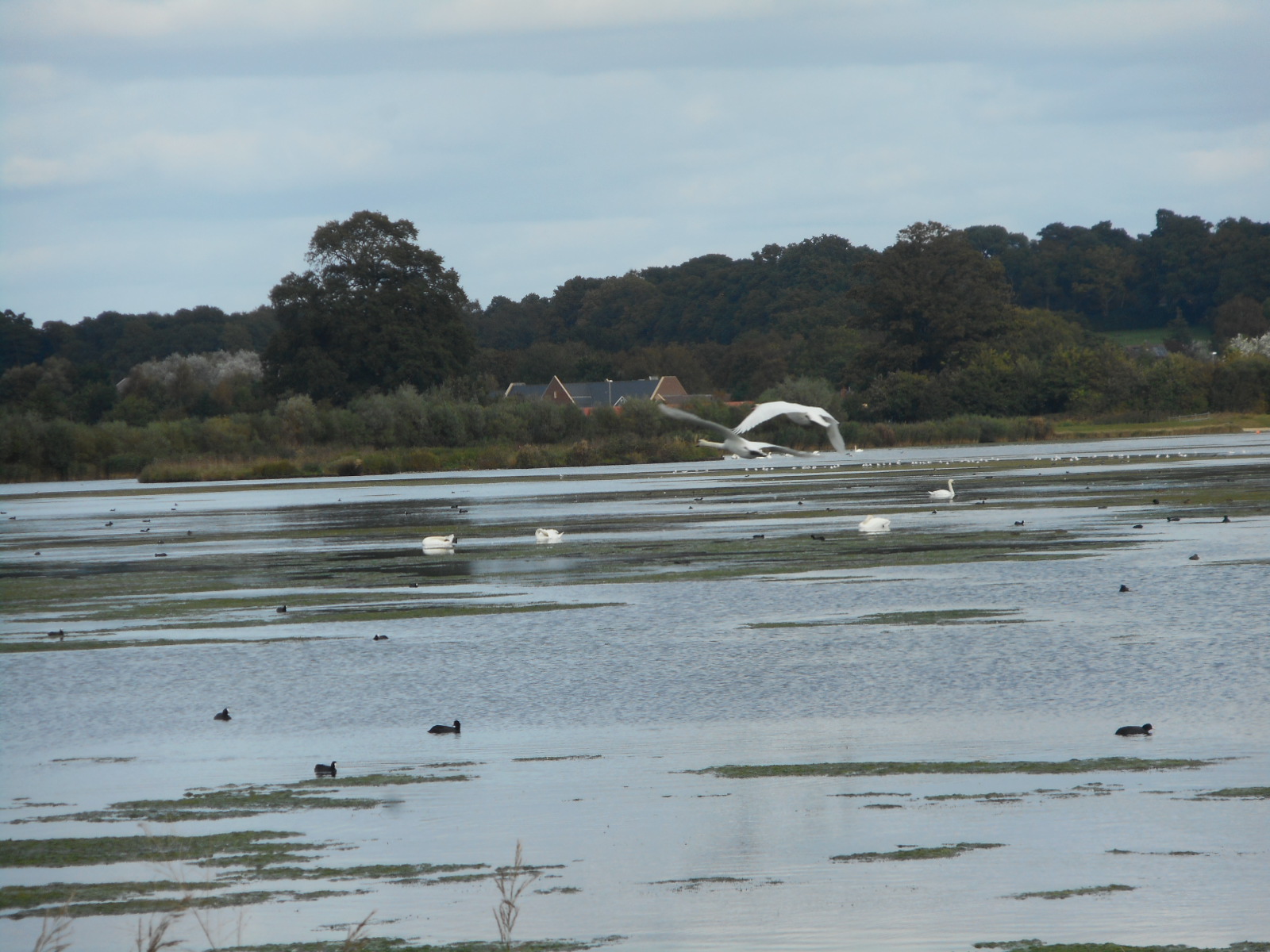
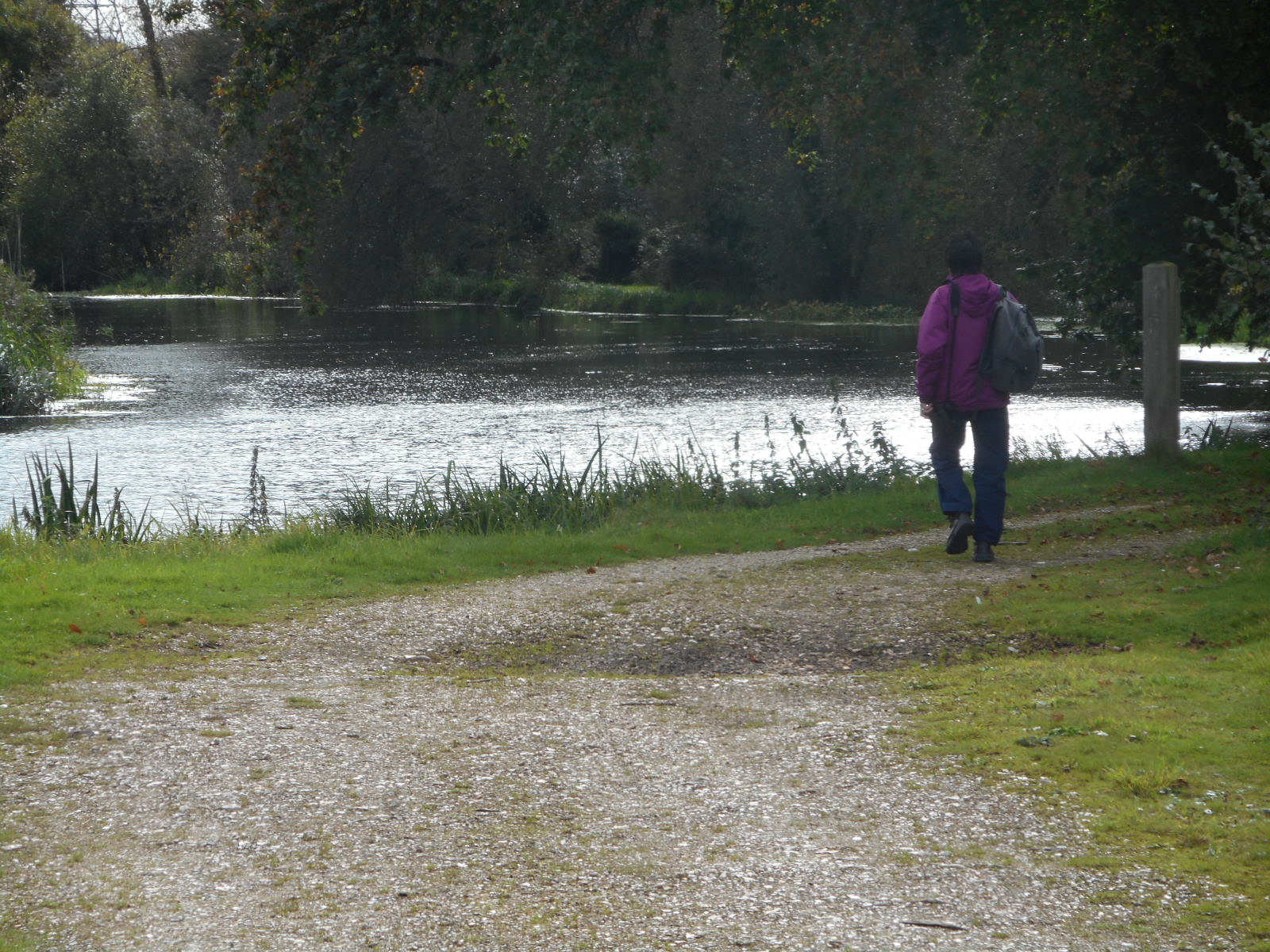
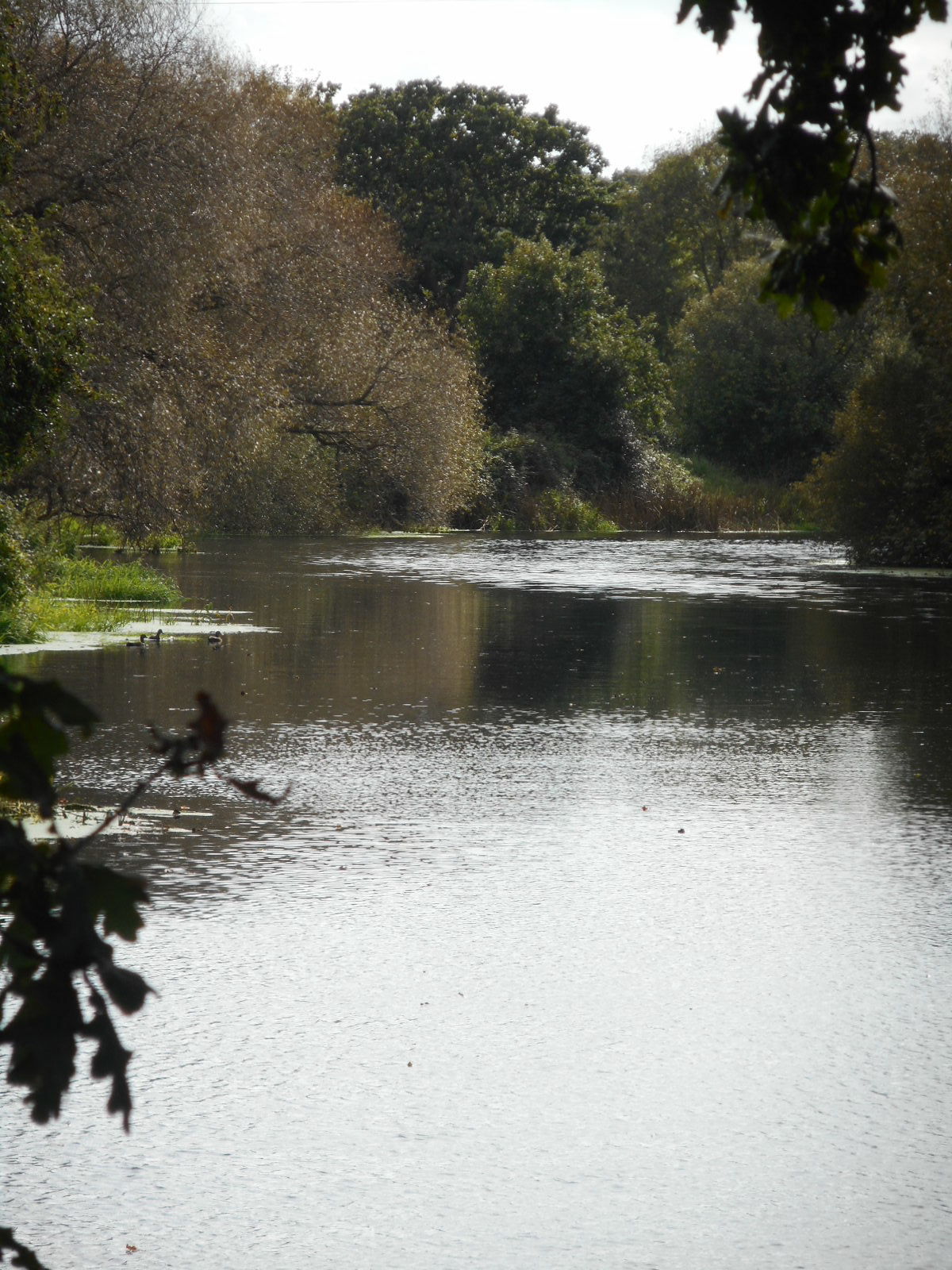
We arrive at Longham Lakes, one of my favourite places for a variety of reasons: peaceful, calm, beautiful scenery, lots of birds, well-cared for paths and so on and so forth. Irene hasn’t been before which is surprising for one who never travels without binoculars. And she loves it. Well, why wouldn’t you? We take a leisurely stroll around the lakes, remarking on a passing heron and the number of coots.

Every now and then, a swan or two departs in a noisy flapping of wings. In the distance, the geese honk their way to who knows where. Paddy O’Connell has a ‘slow radio’ slot on his Sunday morning programme where all one hears are the natural sounds of the landscape and I suggest a recording of this place might fit well.

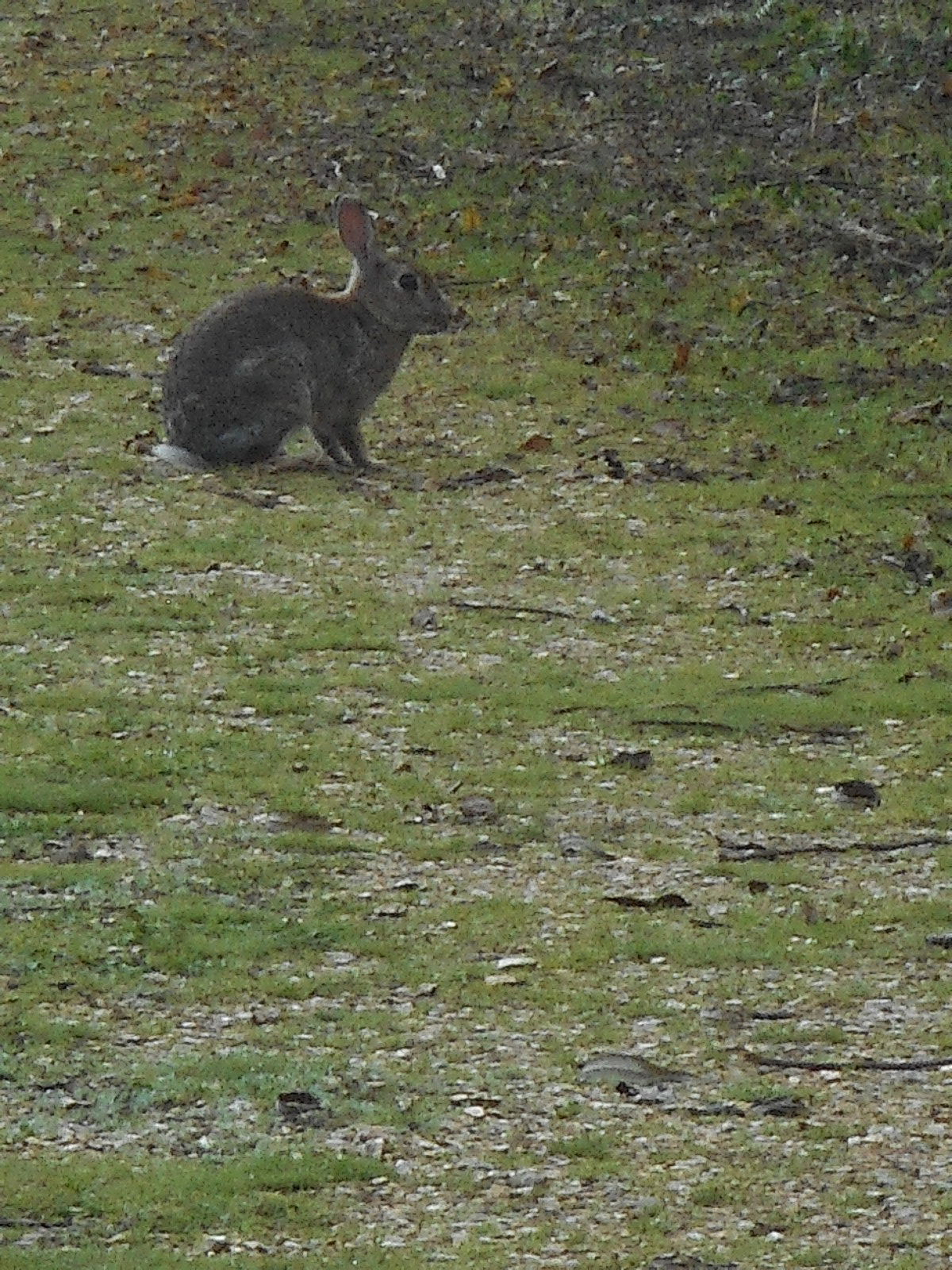
In front of us, a large rabbit suddenly hops onto the path. It’s so big that, for a moment, we think it might be one of the brown hares that frequent these parts; but Irene says it’s just a big rabbit. Yes, all is well in our world.


But, being prepared, Irene has a map which indicates we may leave the path. That sign says no entry to unauthorised persons, I remark. Well, the gate’s open she says with a previously unseen radical hat on her head. We go through the open gate and pass a sign warning of quicksand. That sign must’ve been moved here says the intrepid explorer. Then we pass another quicksand sign. Strange. I’m a little on edge.

We arrive at the exit bridge but there’s no exit. I’m all for going back but then we spot the river and have a little wander until our progress is halted and we turn back.


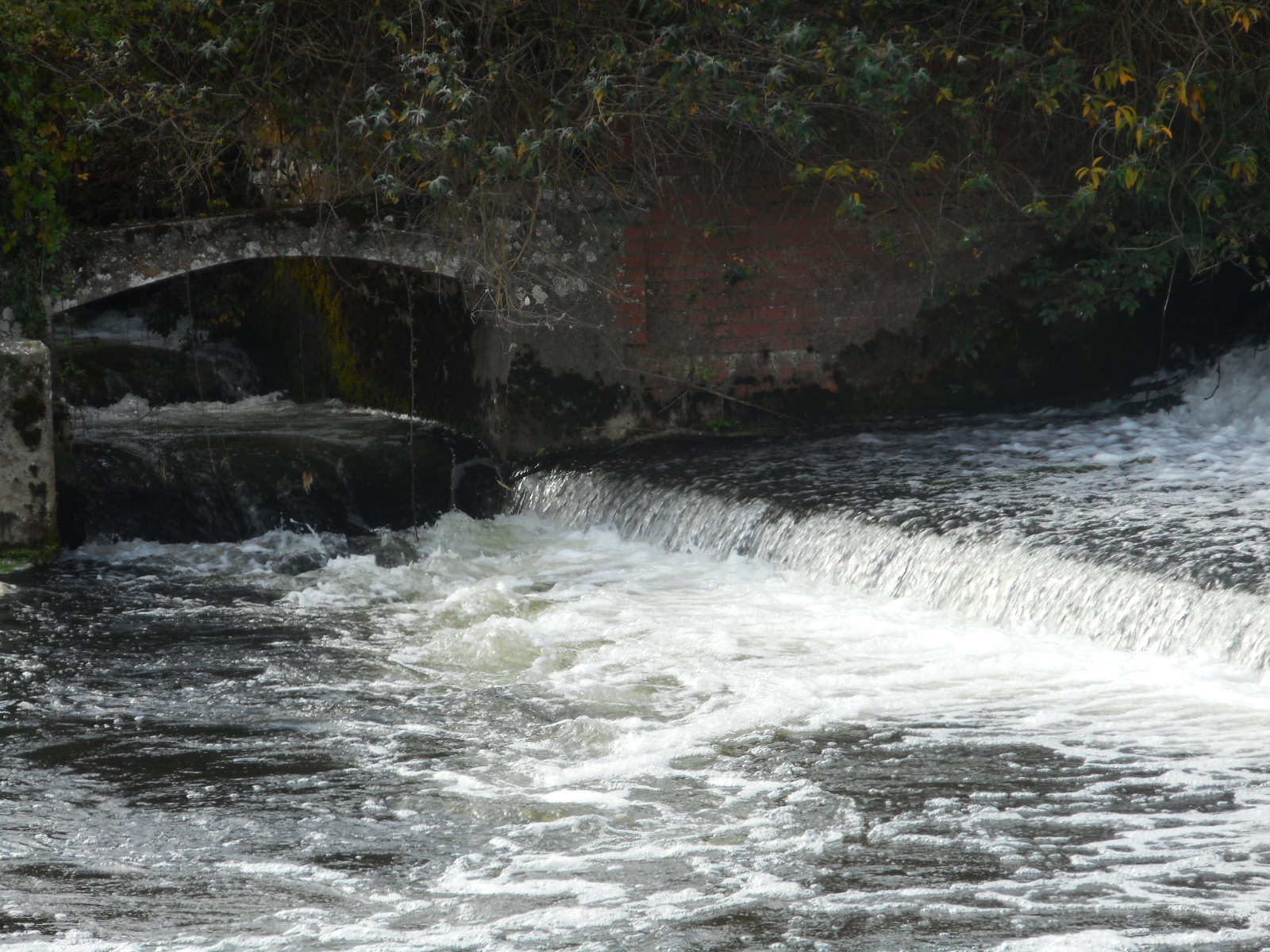
We are accosted by angry men with rods by the waterworks. ‘What are you doing here, they demand? Didn’t you see the signs?’ One of them shows us his permit for which he’s paid £120. ‘You’re probably on CCTV’, he threatens. ‘And you probably have Japanese Knotwood on your feet’. Since retiring, I’ve noticed that I’m less inclined to get into a confrontation. Thank goodness for Irene who bats the aggressiveness to one side with a previously unseen sneer.

Finding our way out, we jump on a passing bus. ‘Shall we go upstairs?’ And we’re like two kids gaining the front seat. She’s right: you can see a lot more up here.


Back from the other side

I’ve been away again. It was just an overnight trip but it was to the other side: Wiltshire. First stop, Trowbridge to bring a little joy and succour to the walking wounded. Well, not really walking, more sitting around. No change there then. I only went out of guilt and the promise of liver and bacon. They were a bit too poorly to organise the liver and bacon so we had a Chinese. I only ever have Chinese in Trowbridge. It’s what passes for multiculturalism in those parts. Deep-fried duck in plum sauce and Malaysian rice. Allegedly. It was quite nice but the thirst that followed it made me feel lost in a desert. Say no more.


Afterwards, we spent a happy three hours discussing the following day’s route to Pewsey, which you’d never guess was in the same county. Worse, we then considered options for the journey home to Poole. My hostess had warned me of an impending weather warning. ‘What’, I ask, ‘is the cloud over Trowbridge finally lifting after all these years?’

You went to Pewsey before, they say. Yes, but I was on foot during my trek along the Kennet and Avon Canal. And I caught a train out of the place toute de suite. And why am I going to the back of beyond again? Because it’s the fourteenth annual convention of earth mysteries of course.

There’s about 150 of us gathered in the Bouverie Hall. If you have a picture in your mind of what the delegates at an earth mysteries conference look like you’ve probably understated the vision. One advantage of going anywhere as a single is that it’s easy to get a good seat. Although I turned up at the last minute, I still got front row. Which isn’t a good seat. There’s no hiding place. With the lights dimmed and 150 bodies breathing minimum available air, it’s tricky not to start nodding off. Suddenly, Celia, who’s trained with the North American native Indians, begins drumming and wailing and I am launched back into reality. I am SO glad the Trowbridge contingent isn’t present because I know we’d have been ejected from the premises.

The first speaker, Eric, is soporiphic. I have no idea what he’s talking about. At a point where I awake, he seems to be discussing fridge magnets. I drop off again. I used to love all this stuff but Eric’s gone right over my head. After, I’m somewhat pleased to hear my neighbours being terribly polite whilst asking each other what the talk was about. The lady next to me engages me in conversation and I learn she’s travelled all the way from Nottingham. She’s had a nervous break-down. Well, not since she arrived in Pewsey but I can’t help but feel she might not be in a good place. Literally.

Just then, a woman wearing Sherwood green, with a large floppy feather in her hat, walks past. ‘Looks like she’s come from your part of the world’, I remark; but wish I hadn’t as I have to explain my idea of a joke.

‘Anyway’, I continue, ‘I’m Alison. What’s your name?’

‘Nave’, she says. ‘I changed it by deed poll’. I misheard.

‘Wave’, I ask, tuning into something along the lines of sun and moon?

‘Maeve’, she clarifies.

‘What, MAEVE’, I spell thinking of that Irish writer?


‘No, MAVE’, says Mave. ‘I thought I’d be different. Why stick with something you don’t like?’

There’s a very long silence.

‘I’m sorry’, I say, ‘but it does beg the question: what were you called before?’

‘Mavis’.

It’s lunchtime and I peruse the stalls. I always have money for the esoteric. Frankly, they’re a bit of a disappointment. There’s no-one to heal me or get me in touch with my inner soul. Or even smooth my chakras. Just a bunch of folk on the make. A bit like Glastonbury really. All the hippies grew up to be good capitalists, disinterested in chatting if you’re not in the alternative market.

I leave early, pleased to be back on the road to reality. I feel a bit cheated. I’m back to my own alternative lifestyle in Dorset. Last night, we watched the ghastly Jonathan Ross with a bunch of folk intent on selling their latest books. Not so different.


Flying in style

So, another sojourn in Provence is over. Leaving is always difficult but this morning it’s particularly tricky. My billet is fifteen minutes’ drive from the tiny airport: generally, one rocks up about half an hour before the plane leaves. Today, however, it’s Avignon Air Show and I receive a text saying I must be there two and a half hours before the flight. Et pourquoi?

Friends advise me traffic may be heavy so I’m duty bound. There is absolutely no traffic on the road but, on arrival, the way is barred by copious numbers of gendarmes and security folk. No entry. I have a rental car to dispose of, I explain. Sorry, says the first officer, no idea what you’re talking about. The second gendarme says I may enter but the third, in charge of the barrier, is not in agreement. If Paul Russell was here, he’d be in a state of ragged disrepair by now. Anyway, he’s not so I press on and eventually gates are temporarily dragged aside.

I dump the car. Of course, there’s no-one to take the keys so I dump them also. I’m shocked to find the check-in open. Normally, they also appear at the last moment. The bag is given over, a seat number is allocated, and it’s back outside in the sunshine with Northanger Abbey. And a prime bench from which to watch the aerial activities. Is this the best thing to see when one is about to take to the skies?

Jane Austen is rudely interrupted by two jets from the French air force doing inexplicable things directly in front of me. Over the loudspeaker comes a pre-recorded speech relating to how they won WW2 and every other thing since, even if, like the Brits, no-one asked them to. Then, the band plays La Marseillaise and two people on the next bench down dutifully stand up. I return to the Bath Pump Rooms but Madame from the check-in ventures outside with news for folk travelling to Southampton: you must go to ‘departures’ toute de suite because the customs people are going home.

We trundle inside dispiritedly but it’s not too bad. The transport has arrived early and the crowds have flocked to the perimeter to watch the idiots who intend to fly away on a prop plane in the middle of the loop de loops.


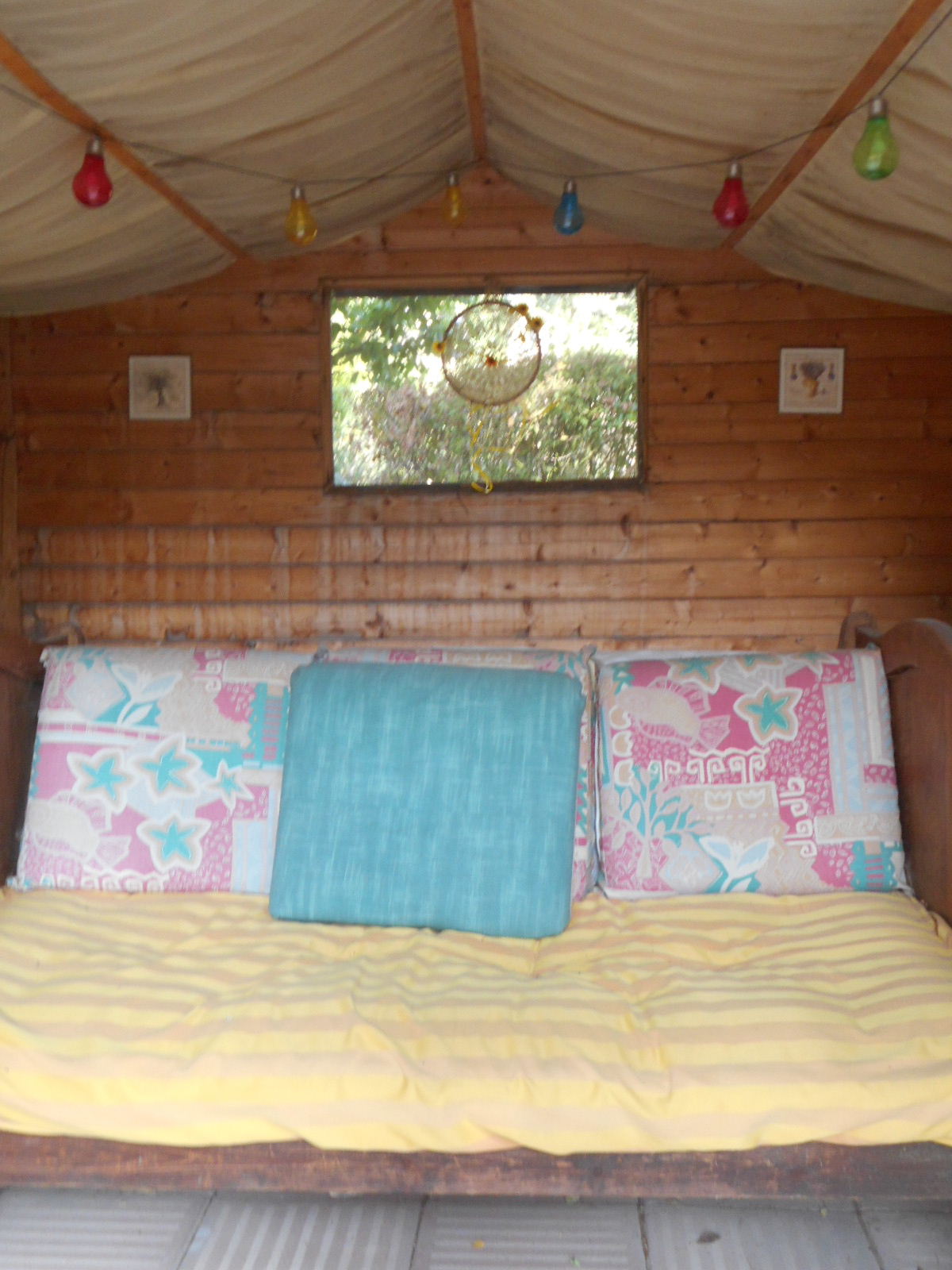
When I arose this morning, I put my coffee on and went down to the village to purchase croissants. Now, I’m back in Blighty looking at my overgrown grass and, having visited my parents, I’m contemplating a proper curry. A couple of hours on the plane and another life. But, if you look closely, you might see one of my dream catchers hanging in the summer house at Mas Sainte Antoine conjoining my two homes.


Le déluge

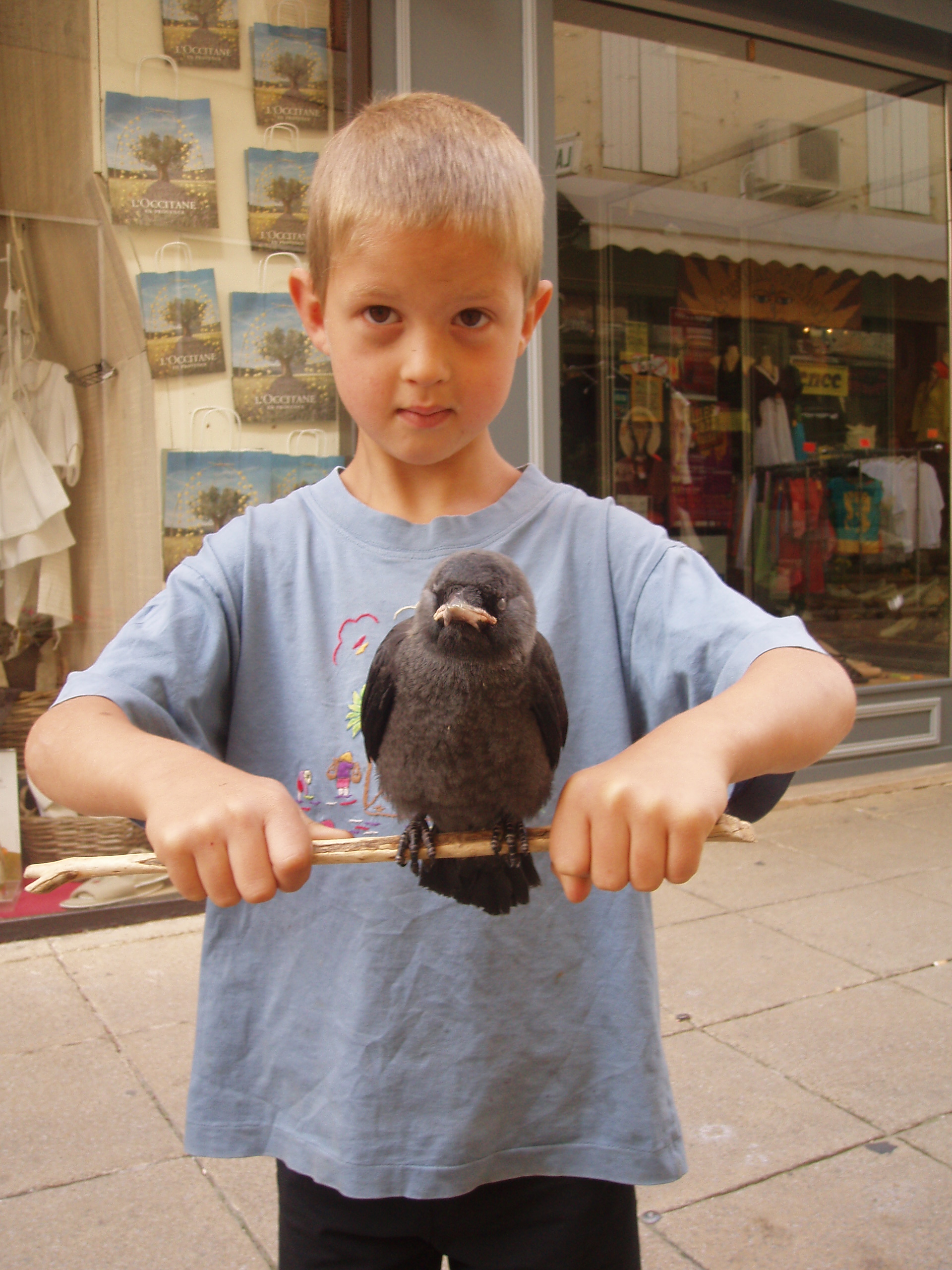
I took this photo eight or nine years ago in Vaison la Romaine, up in the Vauclause. I was a little worried about the darkness under his eyes and the potential poverty he depicts. Vaison is an attractive, quite ‘up-market’ place, famous for its Roman remains.


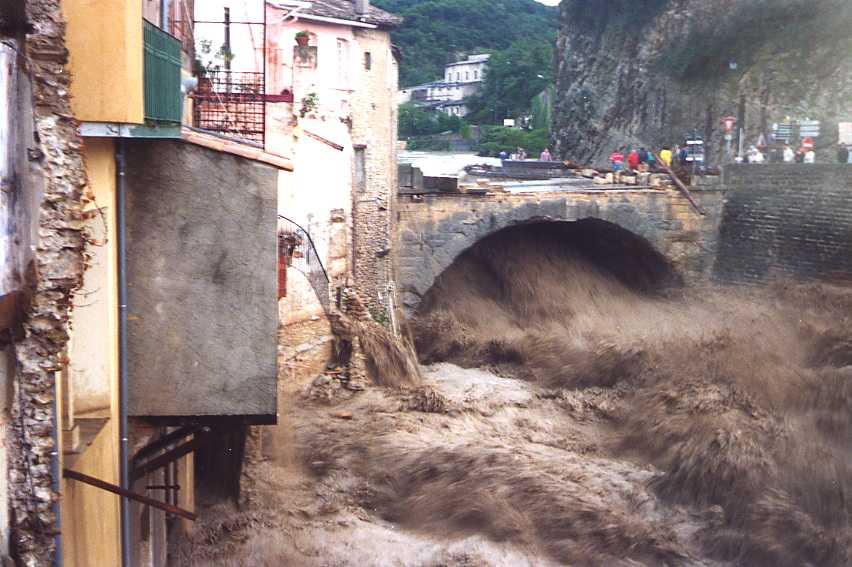
Another picture of the same place which I didn’t take ( source:’Watts up with that’). Down in my village today, my attention was drawn to a special edition of the local newspaper commemorating twenty five years since the devastating flood in Vaison that killed forty two people and destroyed huge parts of the town.

By 22 September, 1992, Provence had witnessed four years of virtual drought but  it had been raining for days, although there was no sense of impending doom. In the afternoon of this catastrophic day, an alert was issued warning of rare violent pluvio-orageux, rain storms, and the security forces were put on alert. However, the campsite upstream from the Roman bridge, situated next to a normally small stream, wasn’t evacuated because no-one realised the  impending danger. Similarly, inhabitants of a small housing estate on the opposite bank of the river remained oblivious.

Nonetheless, by mid-afternoon, the town was cut off from all communications with the outside world. Just after 4pm, the rain stopped but too late in the day to forestall tragedy. An enormous wave, more than 15 metres high, swept onto the campsite causing death and devastation. As it proceeded towards the Roman bridge, it grew in height and speed. The 2000 years old bridge had, uniquely, withstood German bombardment in WW2 and somehow managed to survive this onslaught.

In Vaison, however, not everything was as strong or fortified. The security forces rescued hundreds of people trapped on roofs or struggling in the waves. Bodies were discovered for the next fifteen days and it took years to remove all traces of the deluge.

This link should take you to extraordinary footage of the river in full force on the 22nd September: https://www.youtube.com/watch?v=a9o3tvuN5pQ

On this current sojourn, the weather has been, as we say in England, ‘up and down’, and often ‘unseasonable’. Nonetheless, today I’ve been swimming in the open air and I write this on my terrace in the late sunshine. Over in Vaison, they’re holding a service to remember the lost of another 22 September.


Over the hills and far away

There’s a prevalent view that the English always talk (and moan) about nothing except the weather. I’m here to tell you that it’s no different in Provence: I remember one spring-time when I was told ‘this is the wettest May on record’. This June, they said ‘it’s never been as hot’. Now it’s September and all are agreed ‘it’s unseasonably cold’. One thing is as certain as death and taxes: the wind! Today, however, despite the ravages of the mistral, we three set off in glorious sunshine to walk in the hills behind Aramon.

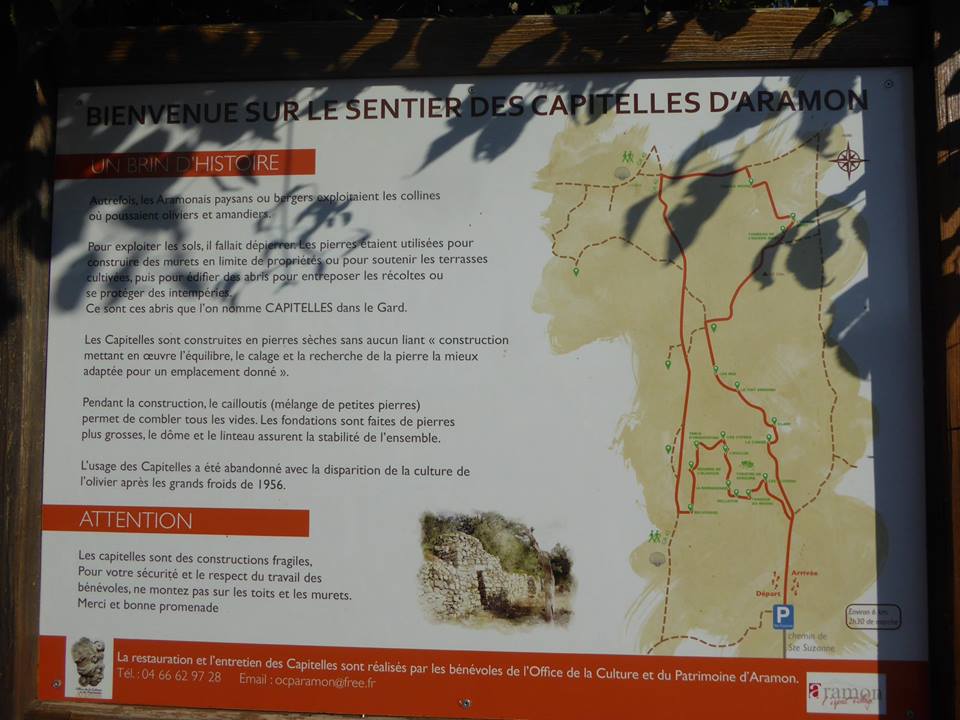
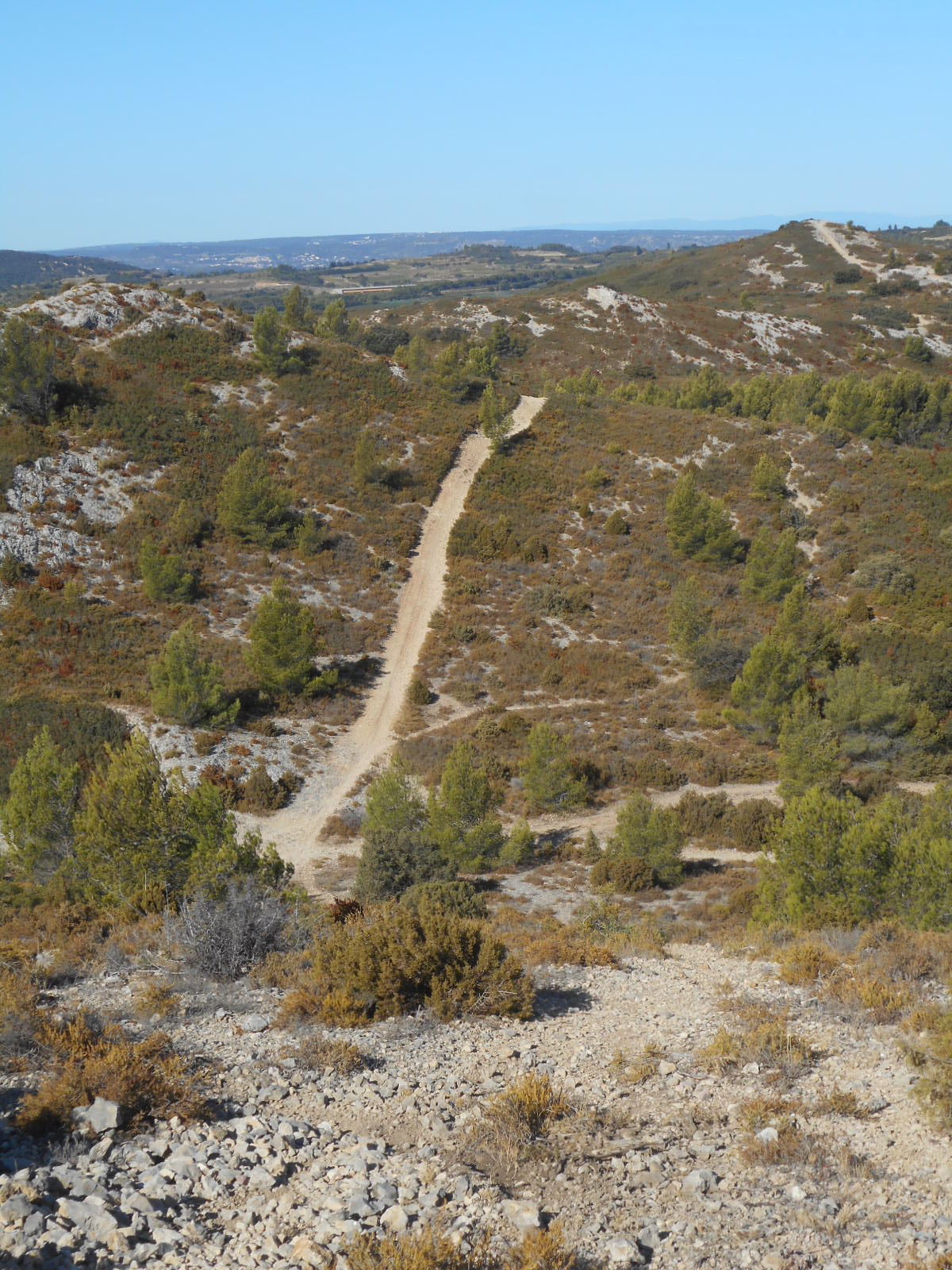
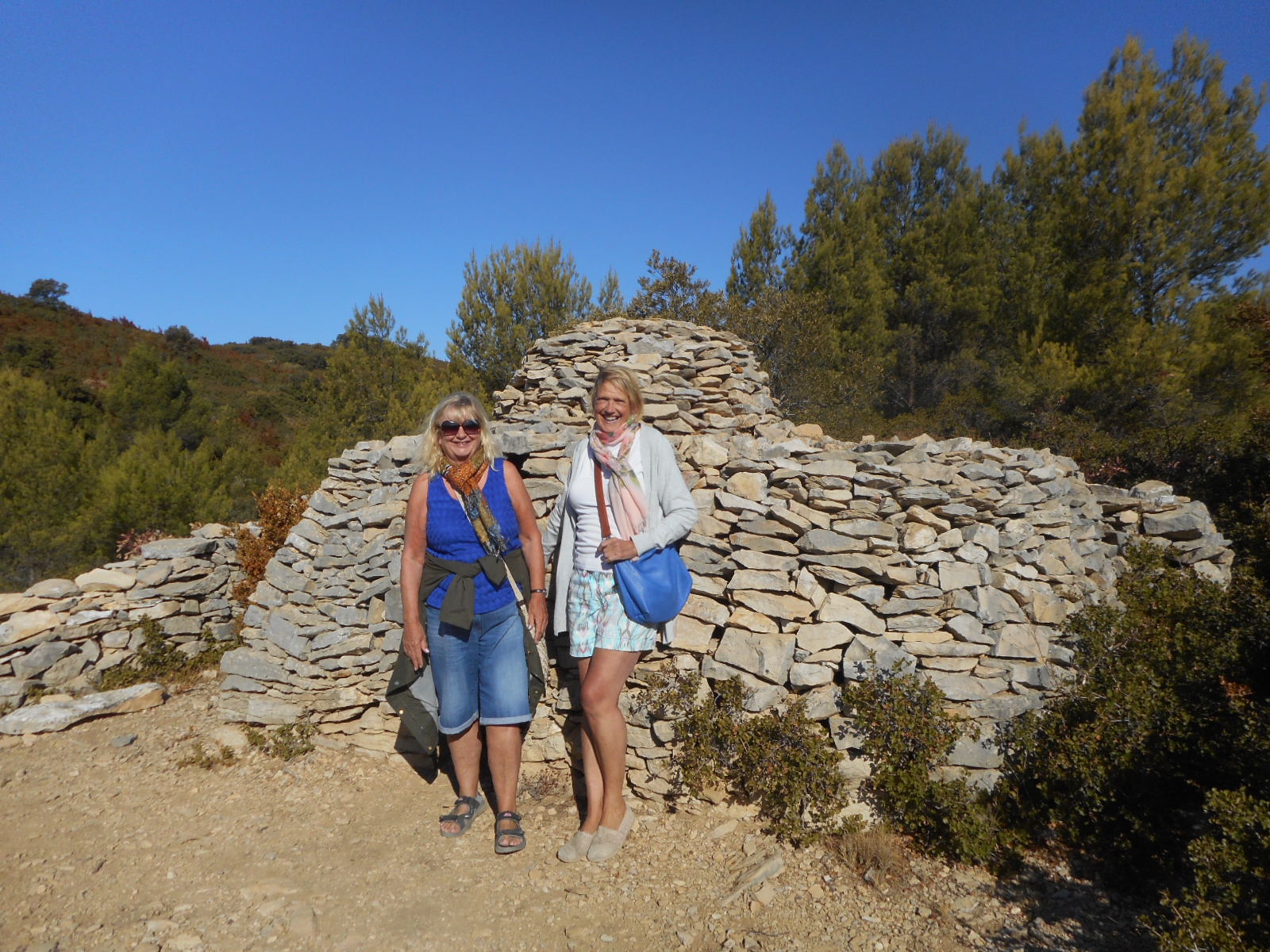
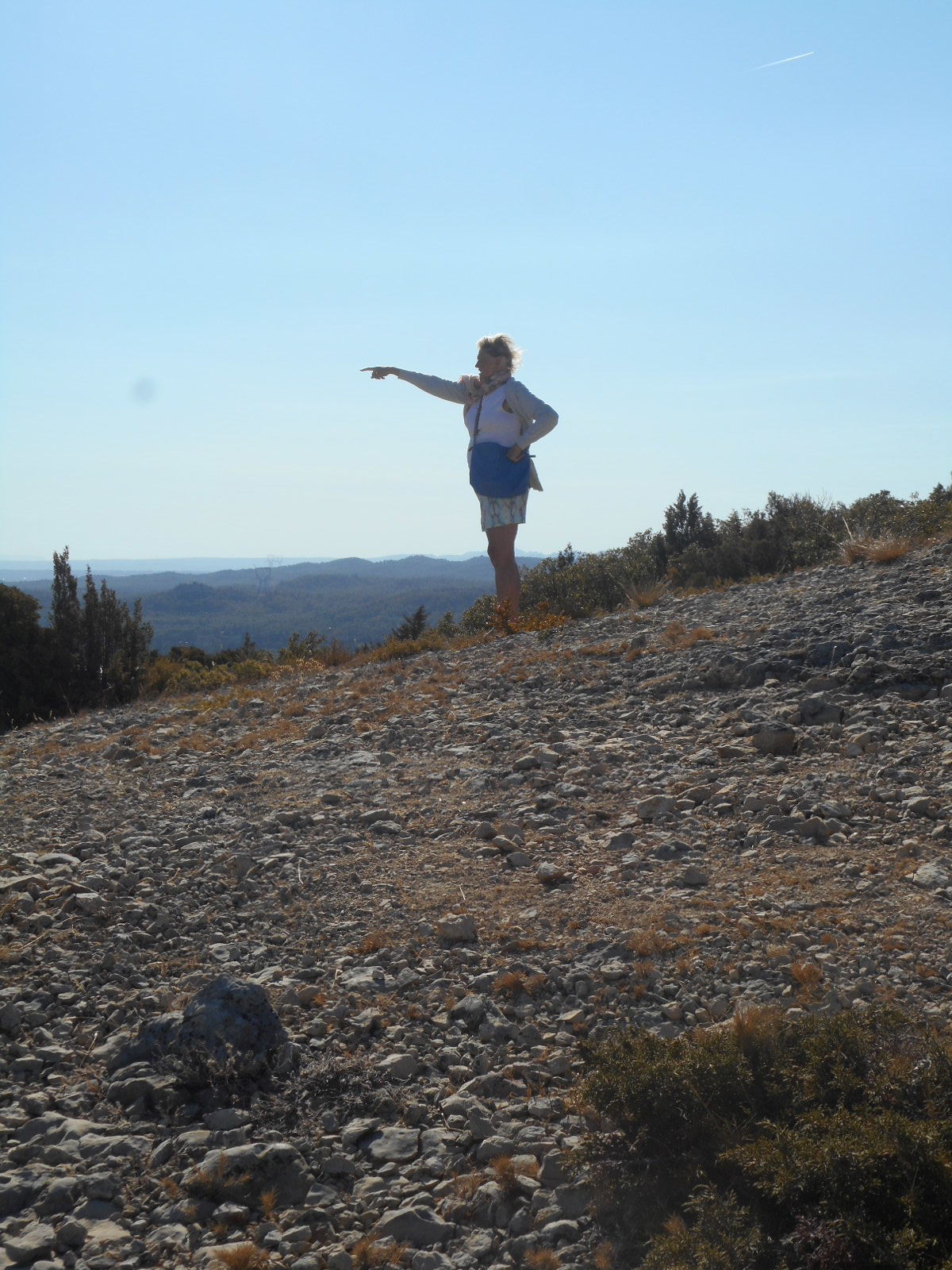
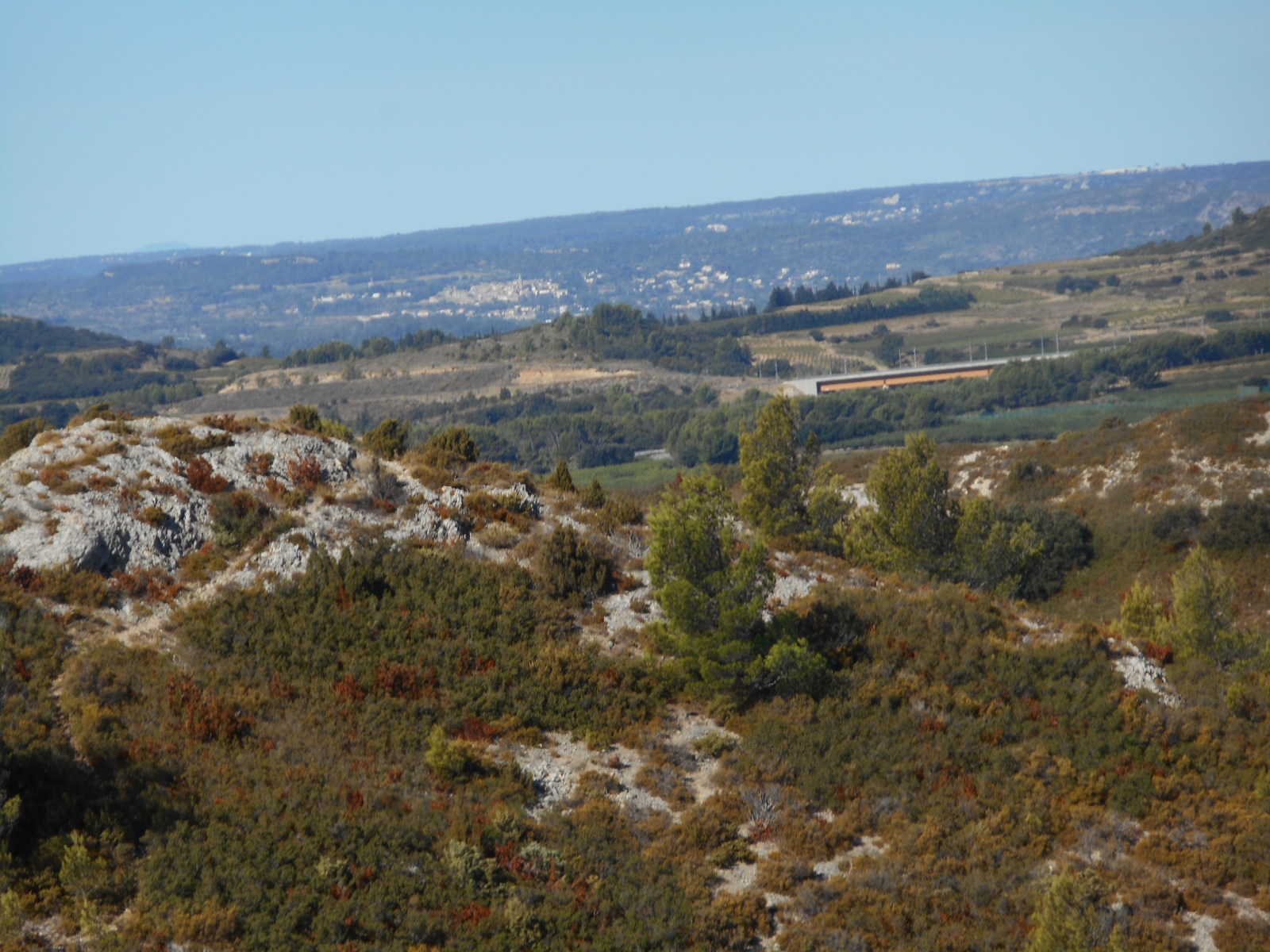
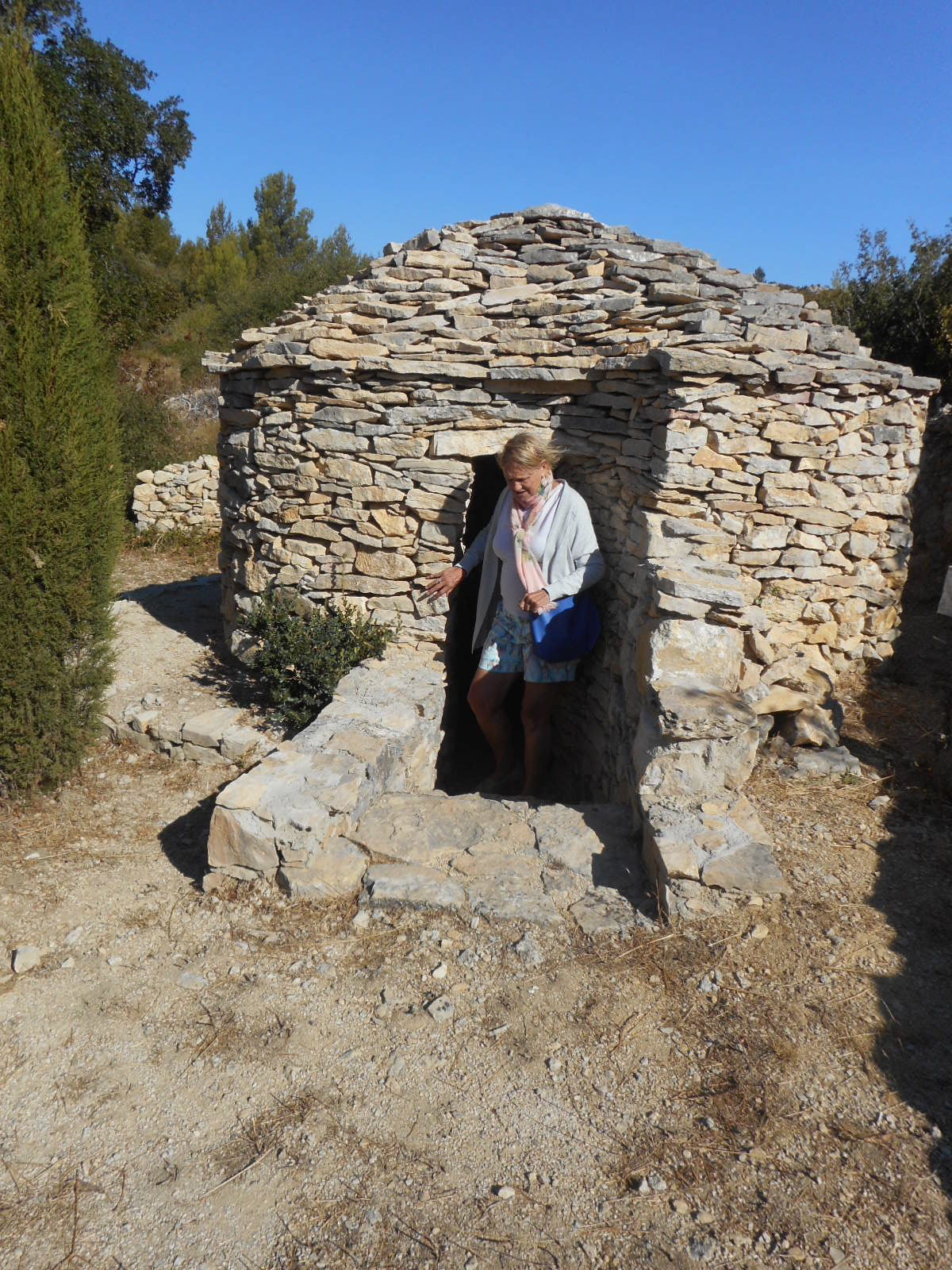
This is no ordinary walk: this is the Sentier des Capitelles d’Aramon. We have crossed the mighty Rhône to be here, thus we are officially in the region known as the Gard. No big deal you might think but, the very words remind you that, until the beginning of the twentieth century, there was no such language as French. For example, the capitelles are small dry stone buildings once used for shelter by shepherds. Twenty minutes from here, they’re known as bories but we are in another country. This photo, taken by my hostess, Keryn, shows the route we’re about to take. I might have been astute enough to take my own snap but I was preoccupied with the birds. I don’t know the difference between swallows and swifts but there they all were, skirting the vivid blue skyline, contemplating a move even further south.

The French are economically sparing with paint. The sign shows the yellow path and we follow this and the subsequent yellow arrow. After this, the decorators have lost the will and we must look for yellow blobs on movable stones to ensure we might be, literally, on the right track.


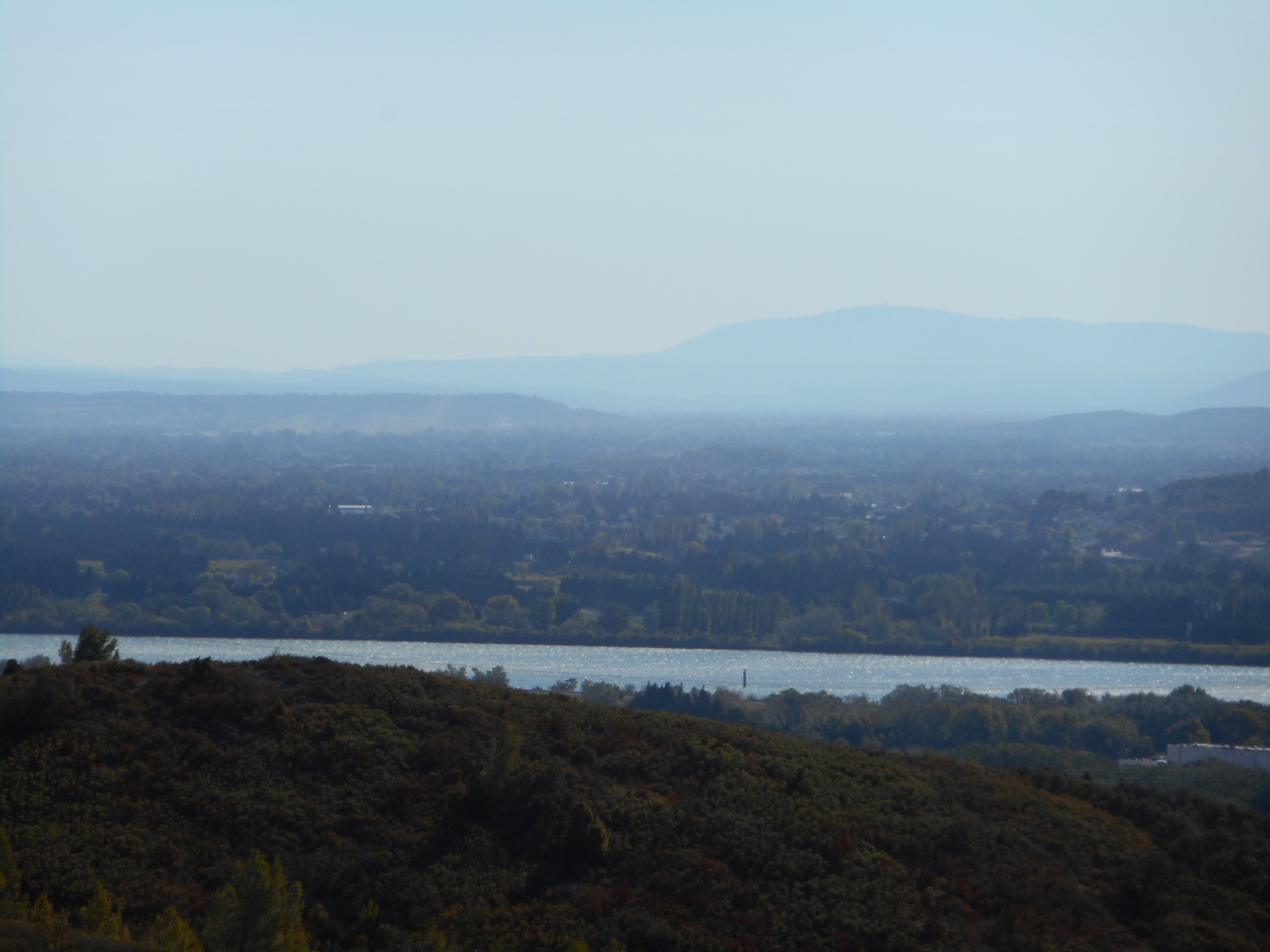
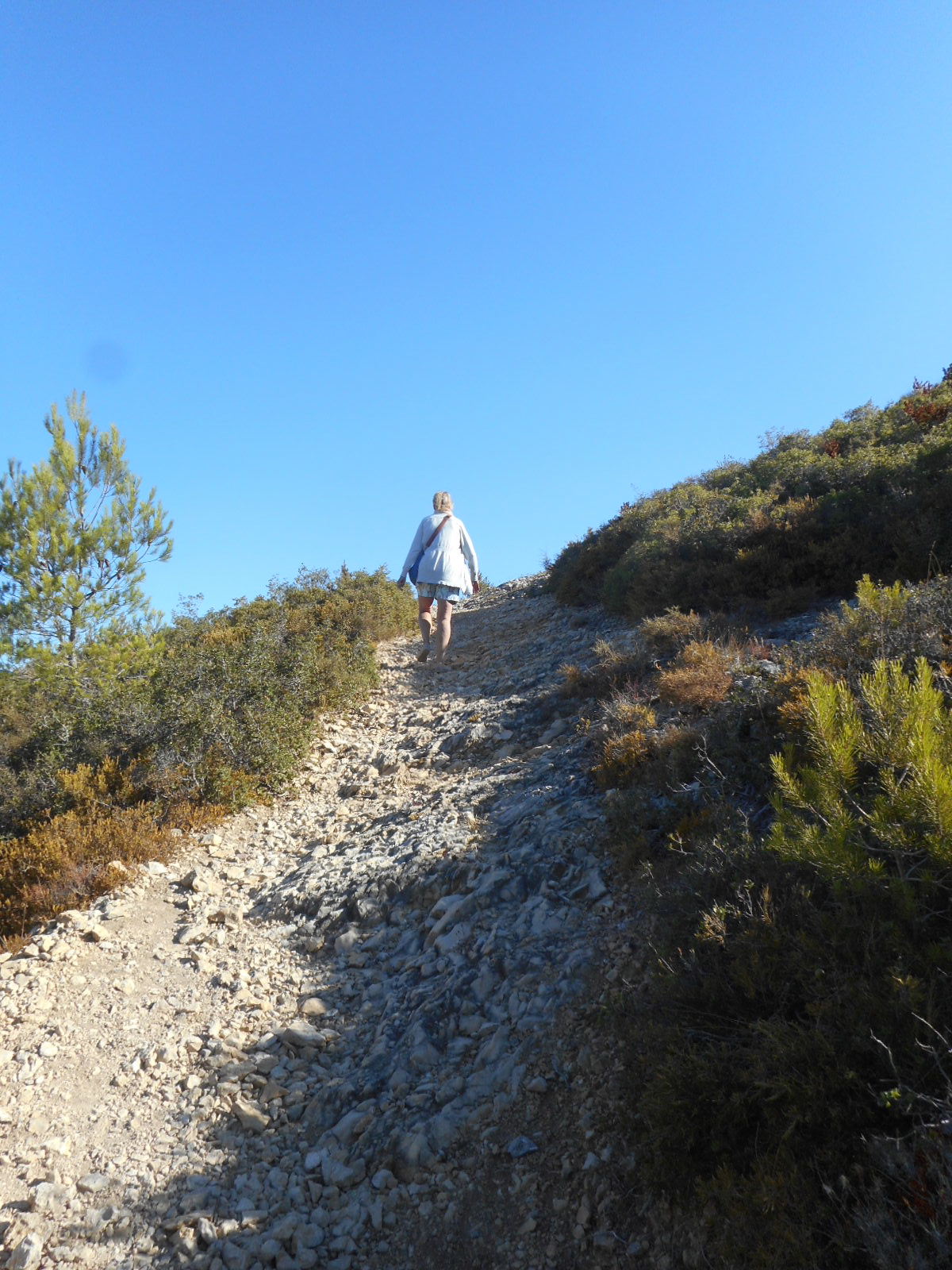
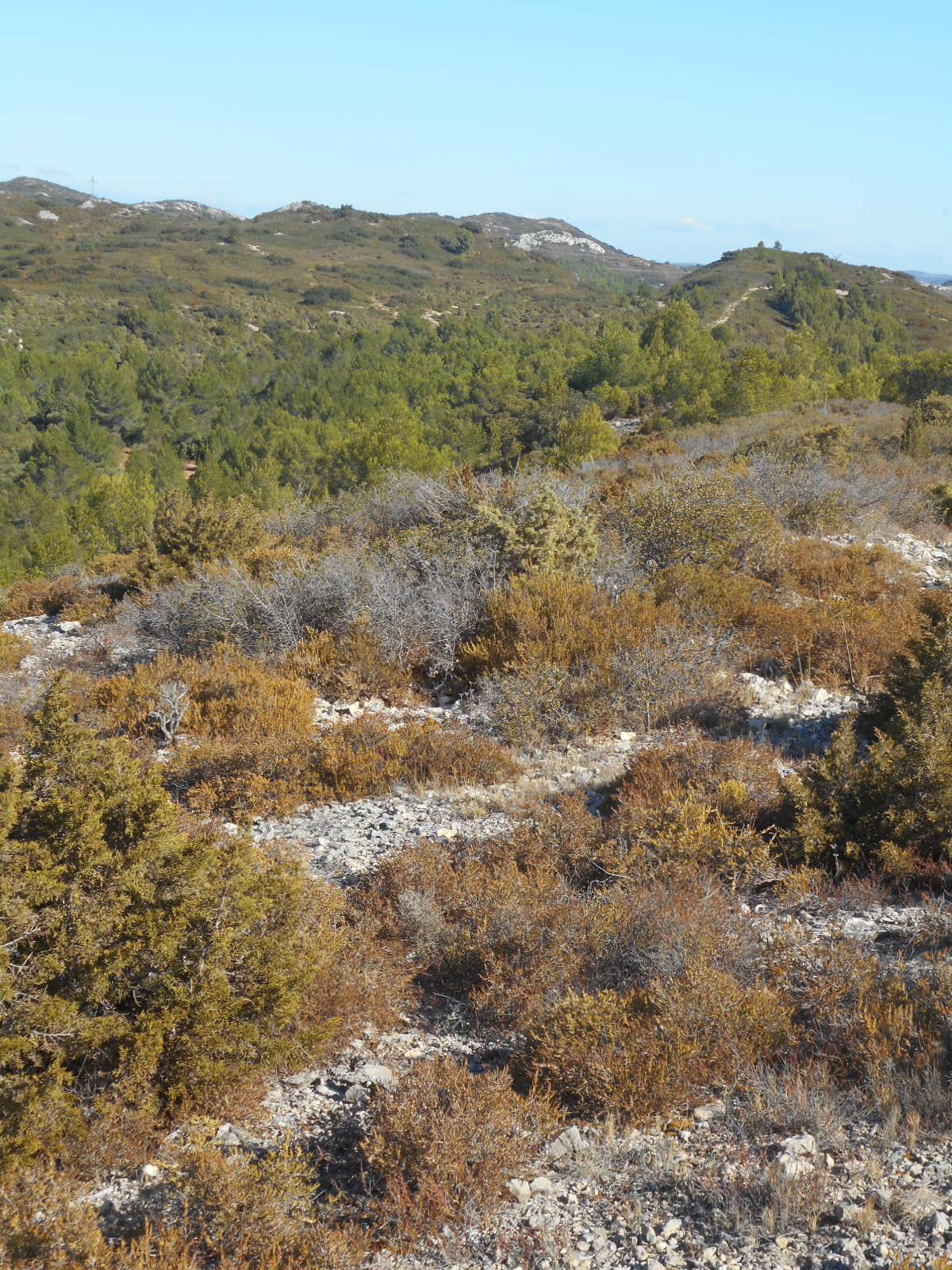
It doesn’t really matter: we regularly come across capitelles in various conditions which we duly enter and inspect as we climb higher and higher. The wind is not so bad – maybe we’re sheltered by the little mountains. There was an initial plan to leave the struggler (me) behind at an appropriate spot. There isn’t an appropriate spot: the garrigue is stunningly beautiful, but relentless. Leave me here and I’ll be lost forever. But then, I look back and see the river which inspires me to climb higher.

At one point, I see something brown crossing the track. No-one else is looking and when I mention this apparition, I am, as usual, ignored. ‘Perhaps it was a boar’, some comedian comments. And the next minute, everyone sees five or six unidentifiable birds scurrying along the path. Told you so. They were too quick for the cameras but even I know they weren’t swallows.


Eventually, we reach the heights which is well worth the climb. From here, we can see, in a 360 degrees turn, the Ventoux, the Alpilles, the Montagnette, Tarasçon and beyond. We’re on the top of the world, under the bluest of skies and the sunshine of the South.


We begin our descent. ‘Here’s another capitelle’, exclaims the kiwi. Haven’t we been to this one before, I query? What I like about being with Keryn and Eleanor is, no matter where we are, we never stop talking. And I don’t mean talking about nothing, for we don’t know each other that well to engage in the quotidian. At this particular point, I am minded of the chapter in Three Men and a Boat whereby the intrepid triumvate, with a crowd of followers, deny being lost in the maze at Hampton Court. Someone says, ‘didn’t we pass that bun half an hour ago?’ This, naturally, leads on to an explanation of Longleat and a discussion about PD James and Pride and Prejudice.

And then we are back at the car. And, of course, lunch beckons. Sadly, Aramon doesn’t boast a plethora of eateries. Nonetheless, we manage to secure a spot on the terrace of an apparently non-descript joint where, as Keryn reports, we enjoy ‘a five star meal for the price of a two star restaurant’. Fish for my compatriots and mignon of porc for me… a million miles from the damp offerings in Avignon yesterday.


A few holes in the ground

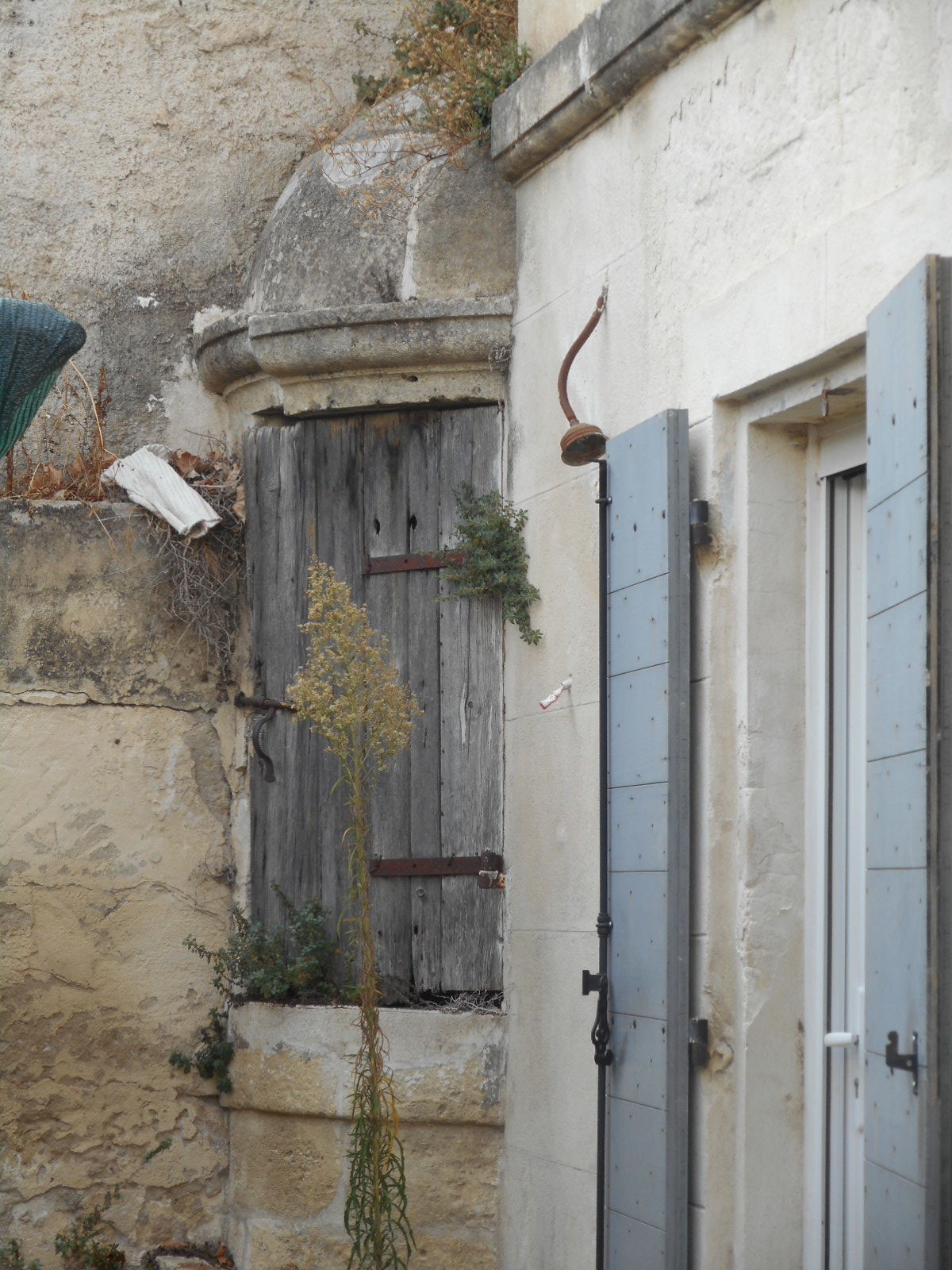
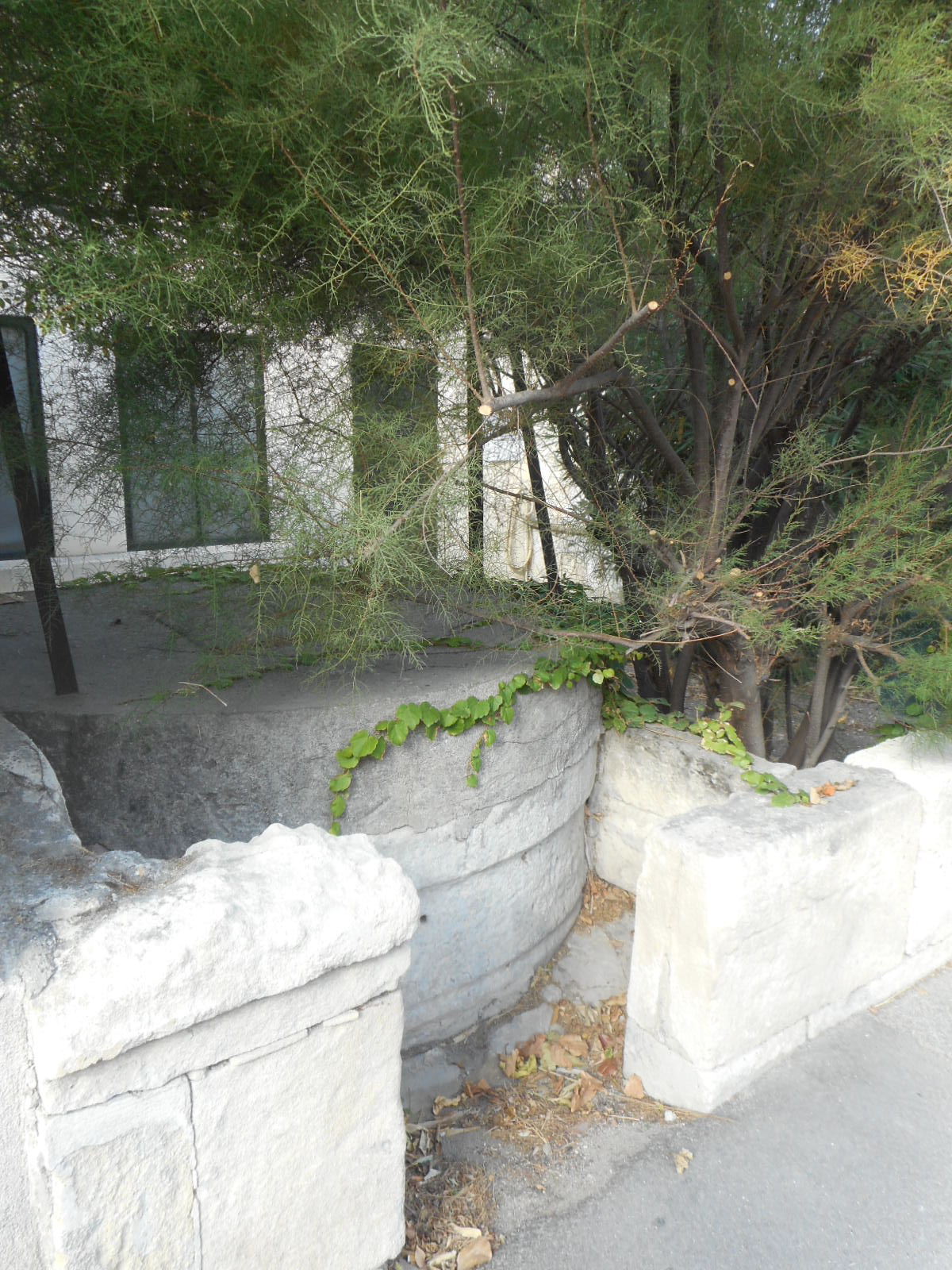
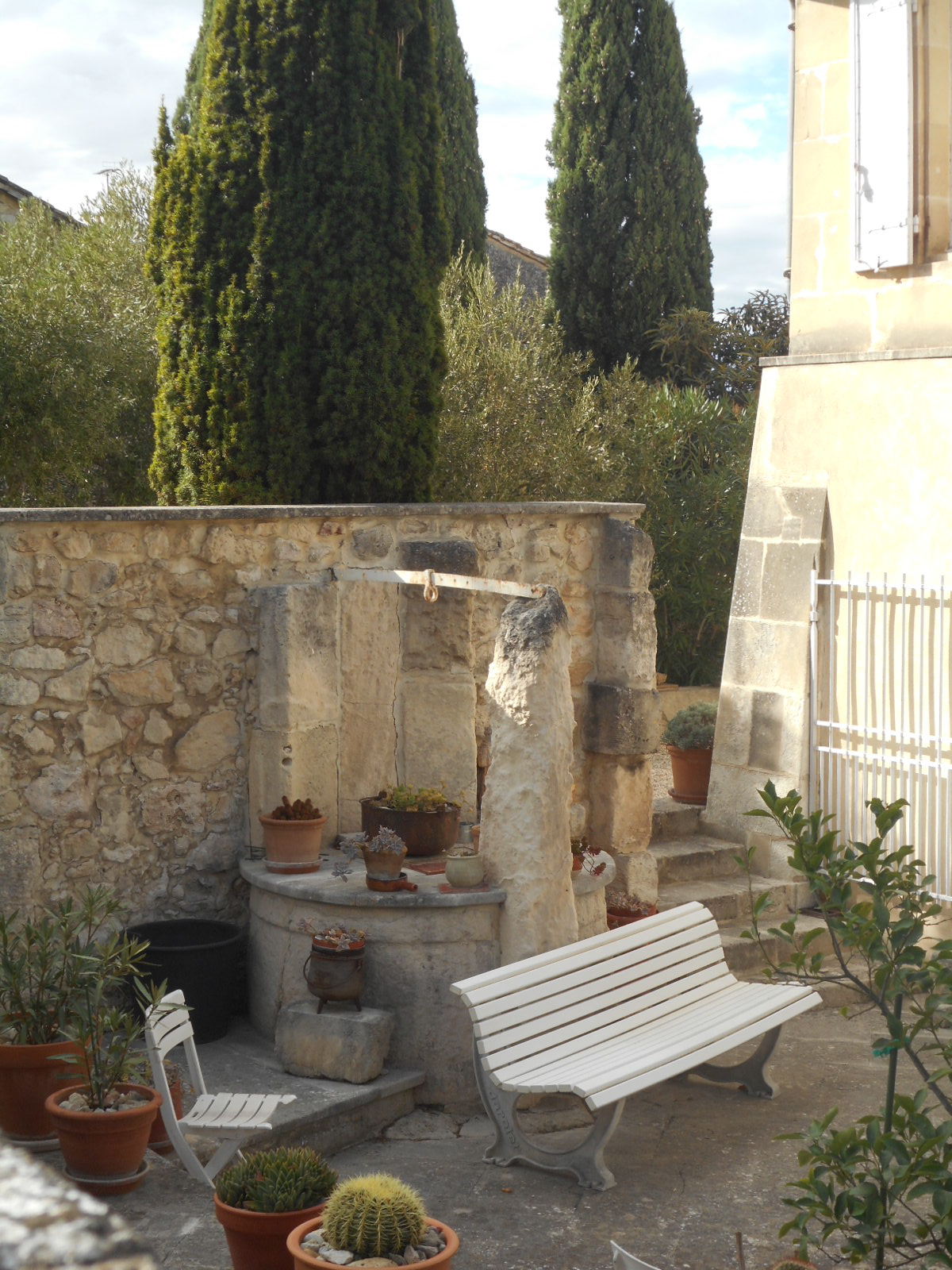
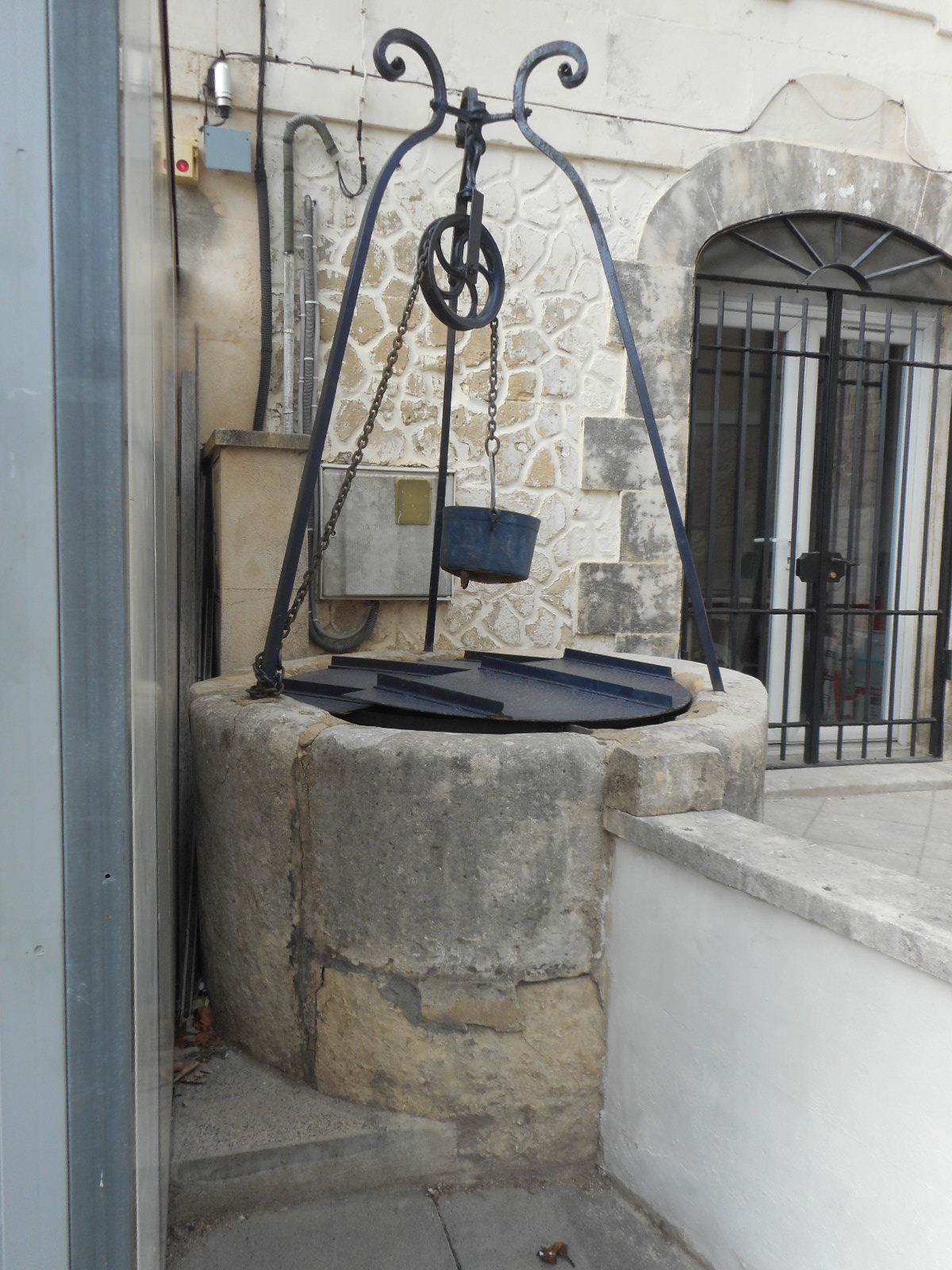
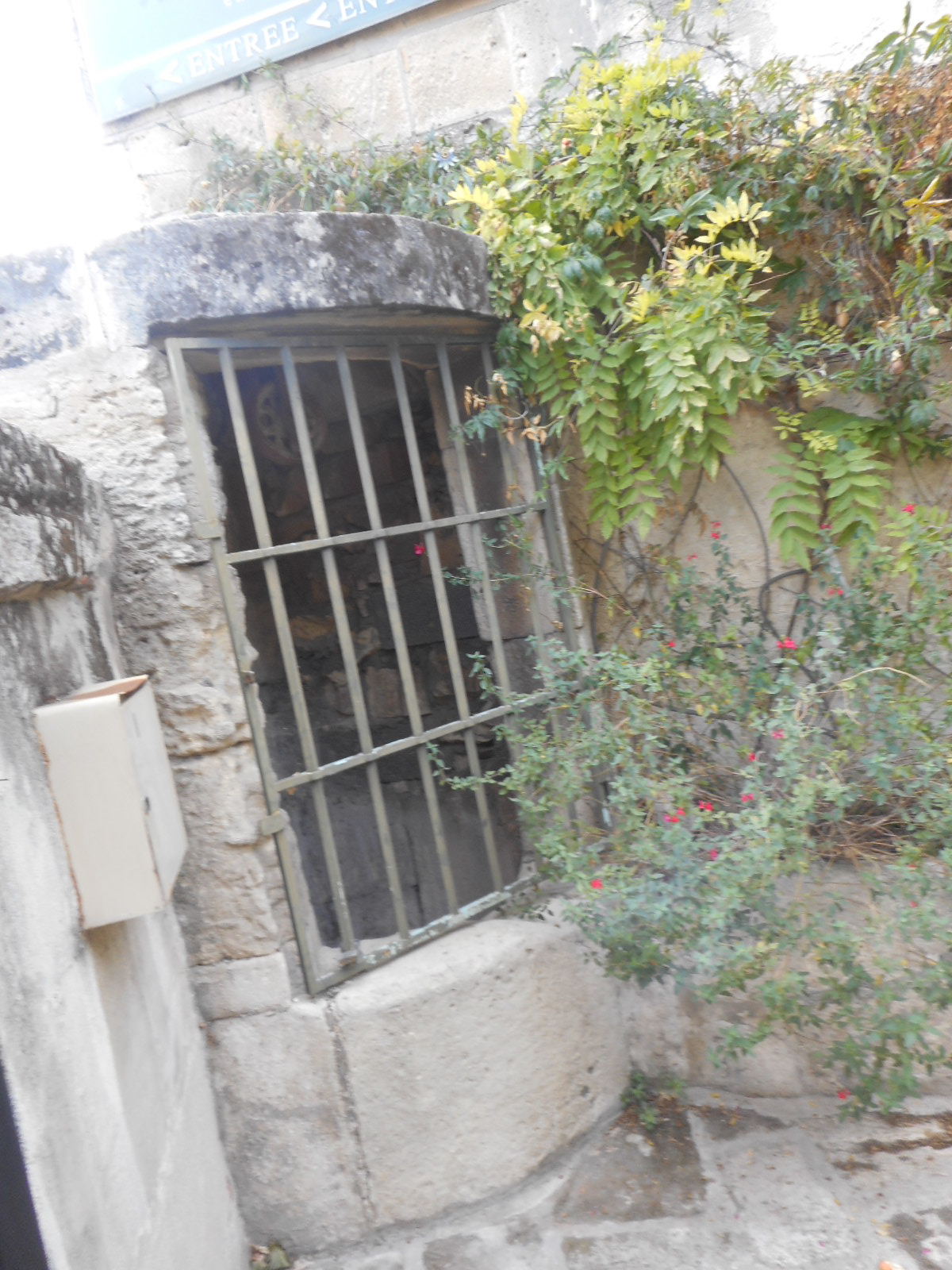
At yesterday’s vide grenière (empty attic =boot sale), I purchase a book about Fontvielle because it has some old pictures and news about the shell altar of which I’ve previously written. However, it also contains a lot of information about les puits which, it transpires, means wells. Apparently, Fontvielle is famous for them. So, with an hour to spare, I decide that today’s mission is to search for the wells of which, my book informs me, there are over fifty. A sort of watery treasure hunt.


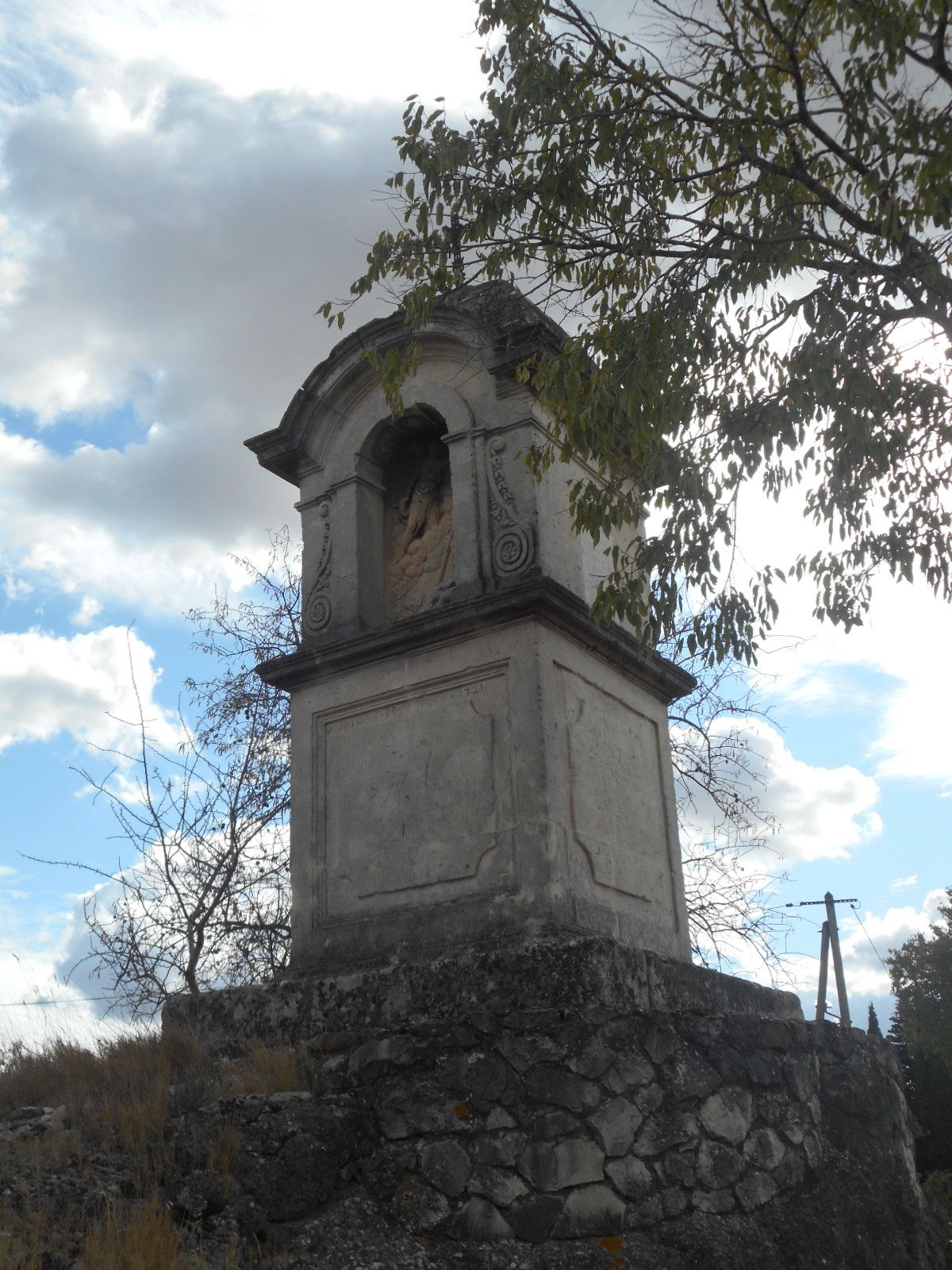
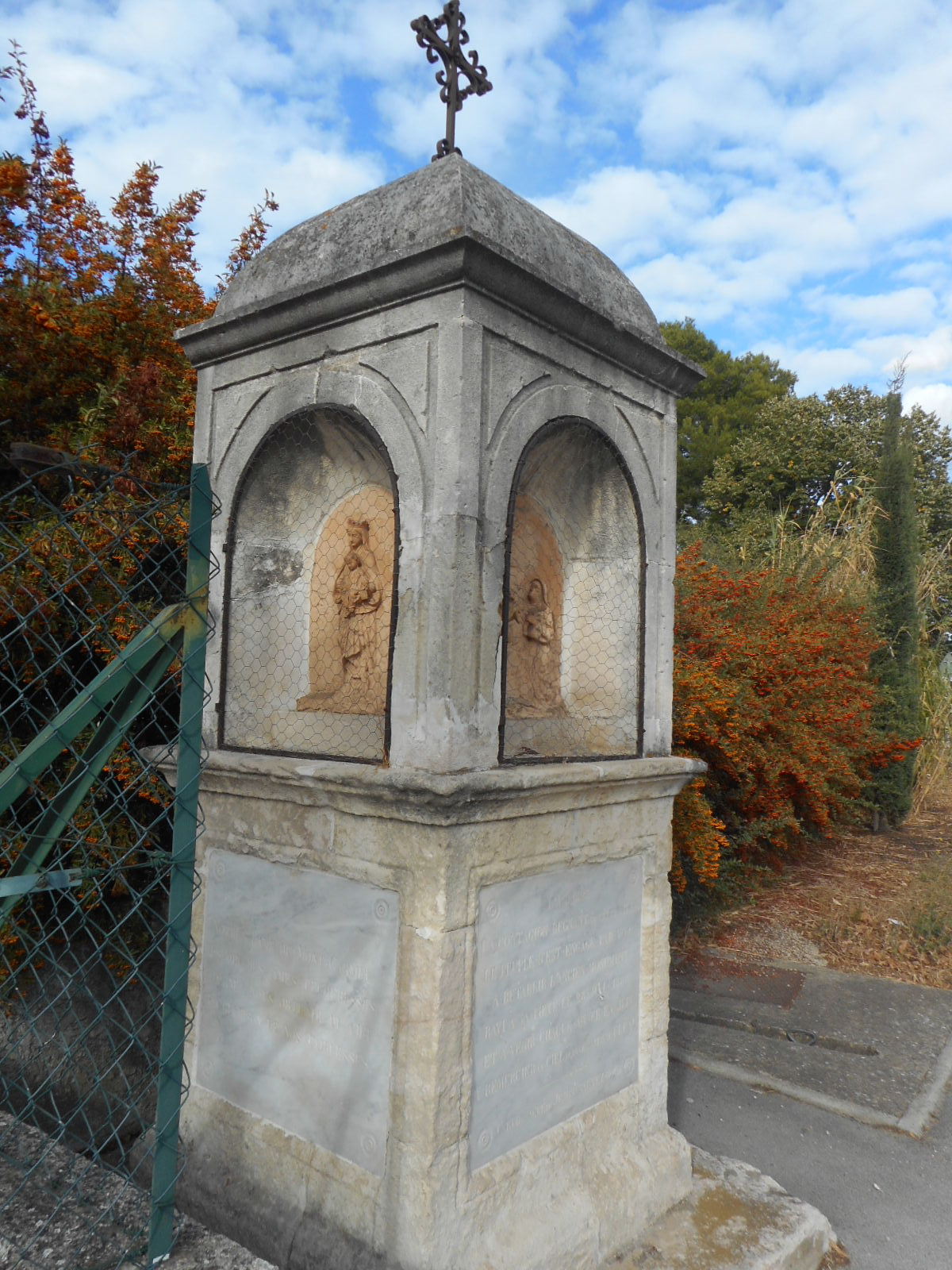
Firstly, I look for the two oratories which are also supposed to be famous. I find the one dedicated to St Victoire easily but upset the owners of the only car that has passed this way in years by parking over the entrance to their house.


The second, dedicated to St Roch, is equally easy to locate but not very accessible as it’s on the side of a roundabout. I doubt whether poor old Roch gets many votive offerings.


Then it’s off to look for wells. I’d say you need about three weeks to find them all. At one point, a man comes out of his house to see what I’m up to. ‘Puits’ is quite a hard word to pronounce and I am unsuccessful. I show him my book. Oh, you mean the wells, he says in perfect English. Anyway, it turns out that he used to live in Zurich but now lives in Berne, and comes to his little house in Fontvielle every six weeks. Sorry, did I ask for your life story? He shows me a well that I’ve just walked past and would never have noticed in a month of Sundays.


Looking for wells is an unusual pastime: I must look over walls and sneak into people’s gardens and run away like a naughty child that’s just rang the doorbell.


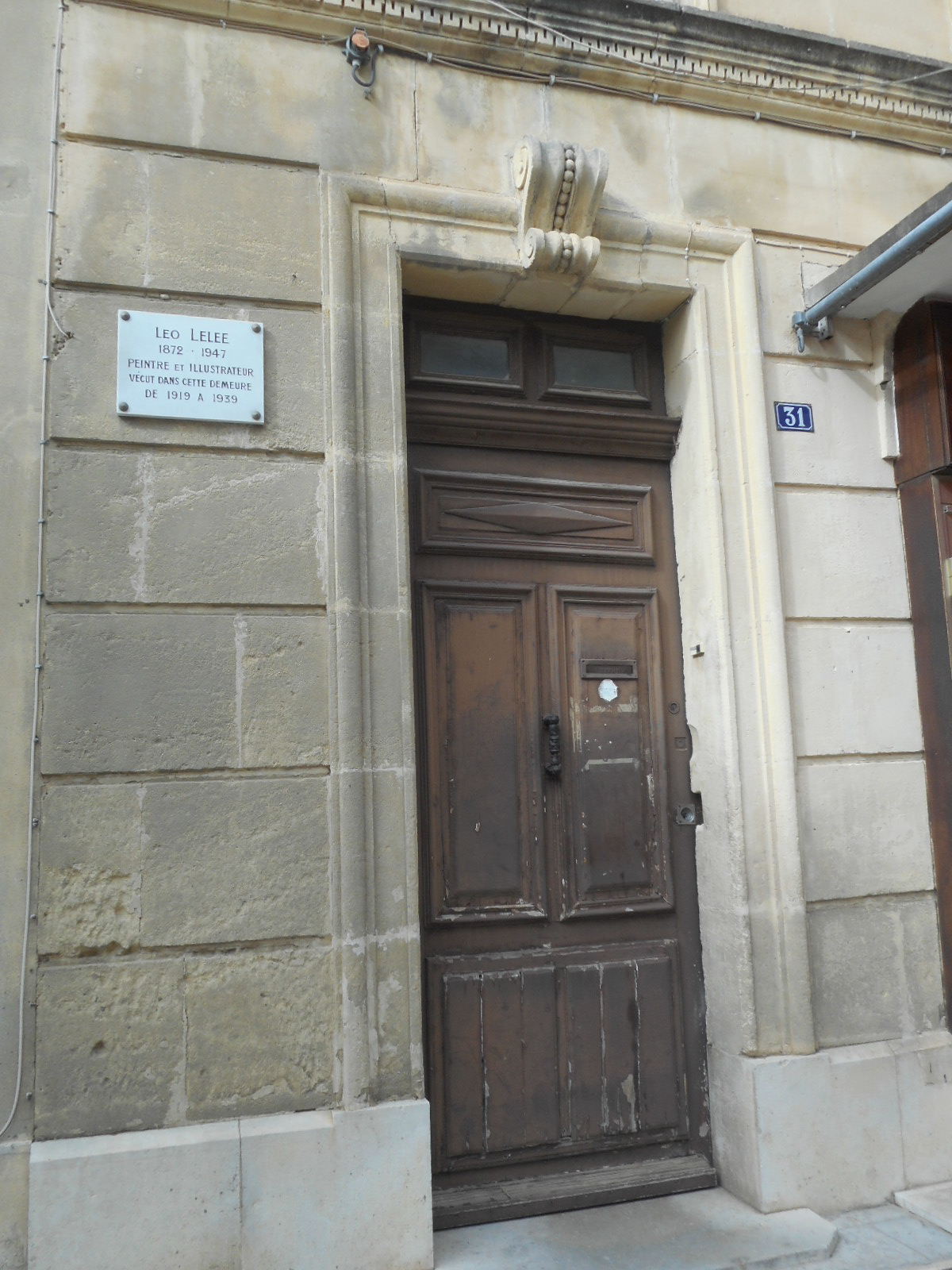
It’s fun though and I got to see some bits of the village that I hadn’t seen before. I never knew LeLee was here. My dad and I have some of his pictures at home – sadly, not originals but some rare ones which we like.


It’s a pretty village and worth a wander.


More open doors

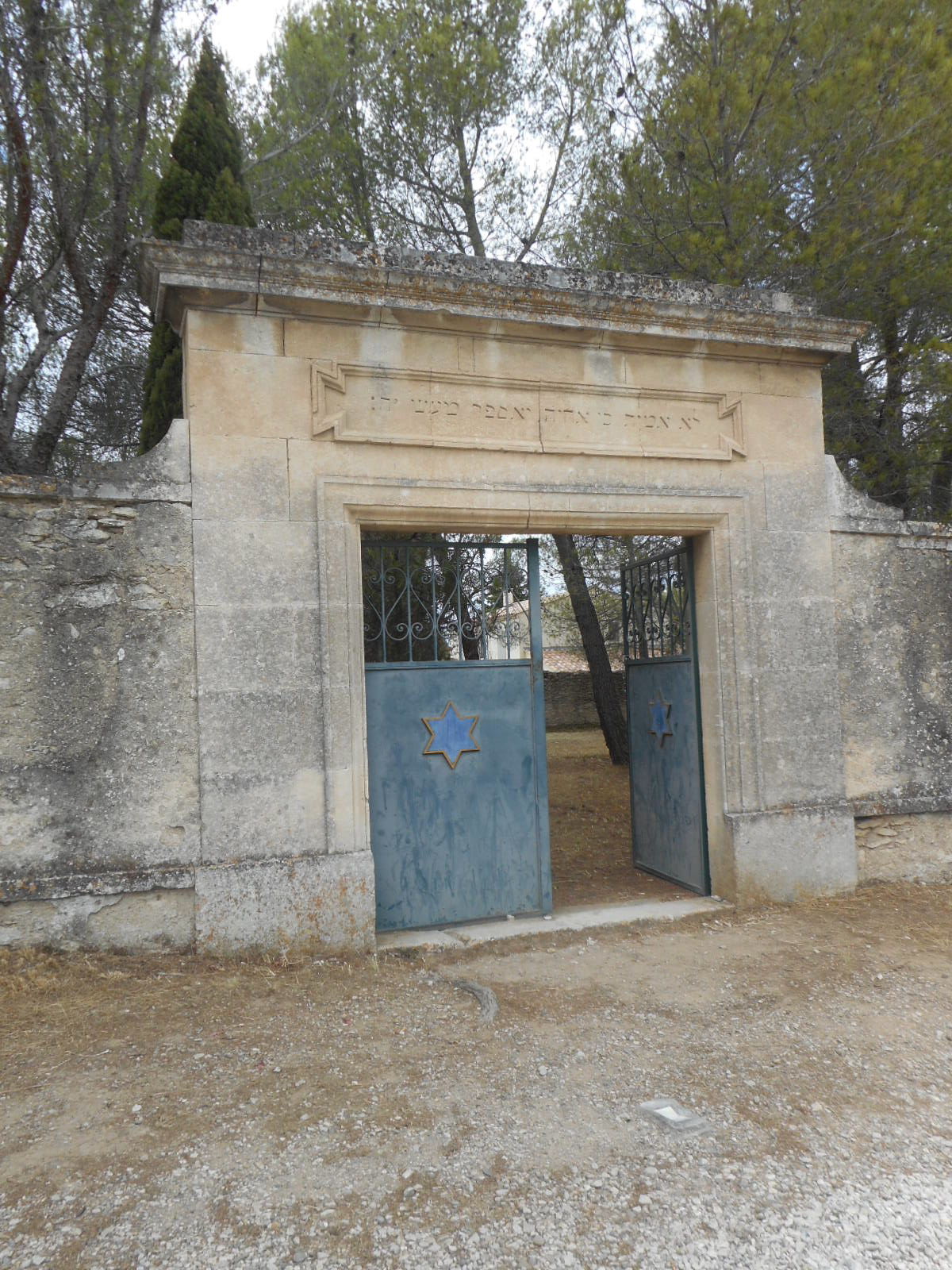
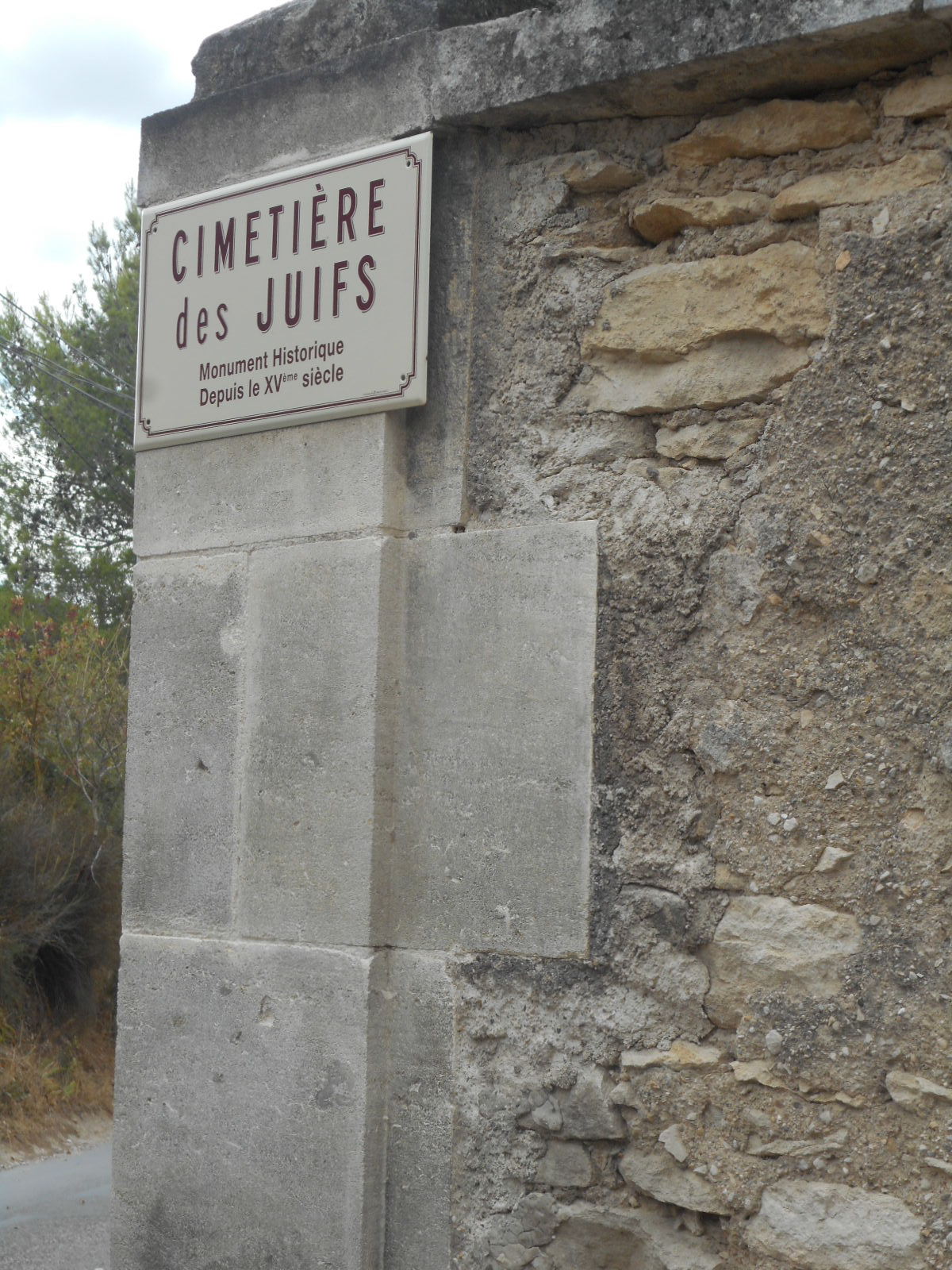
On the second of the Journées de Patrimone, I visit the Jewish cemetery in St Rémy de Provence and, before I proceed with this account, I’d like to say that, whilst I learned a lot today, I must apologise in advance to those of the Jewish faith who are familiar with what follows.


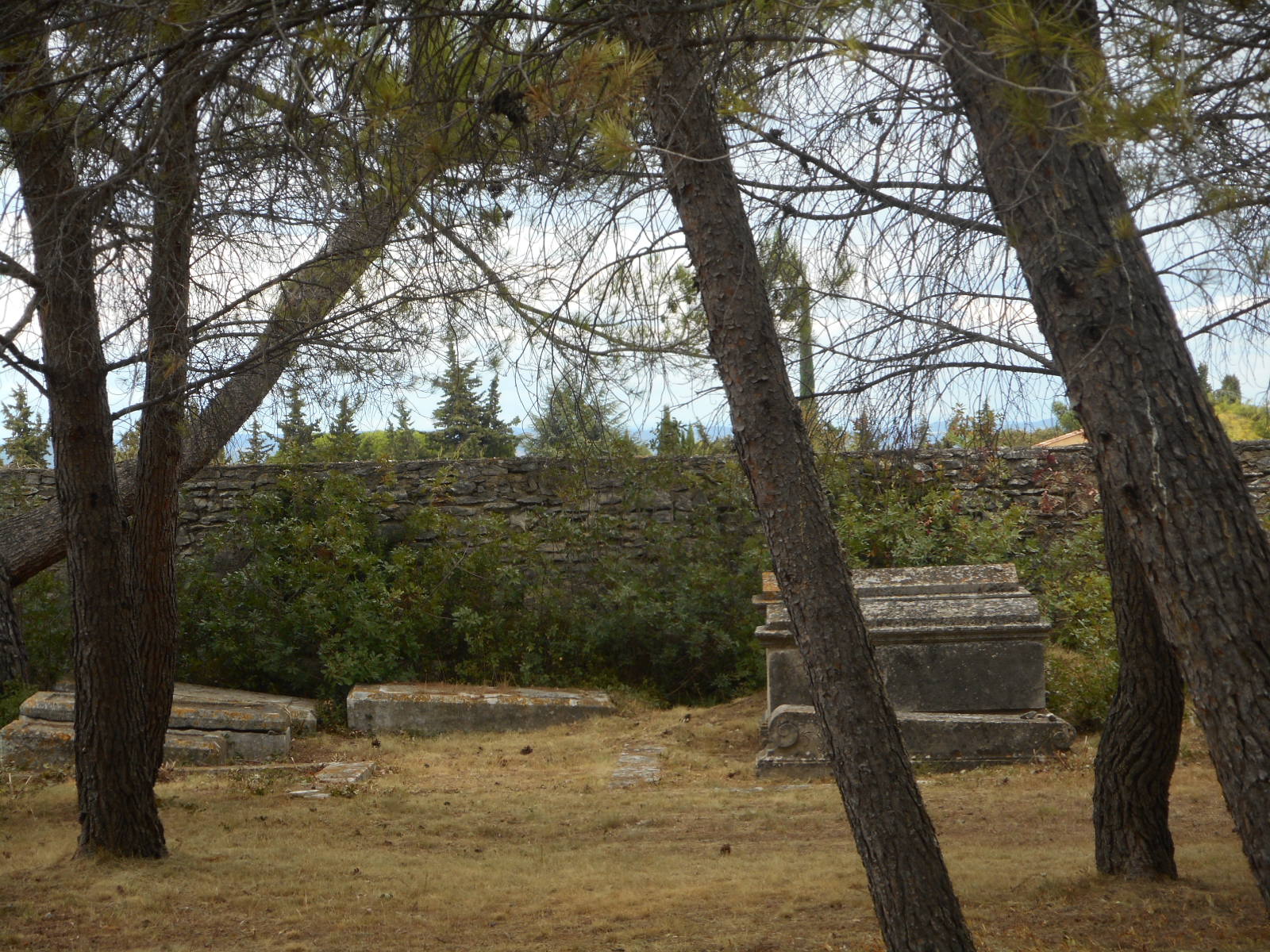
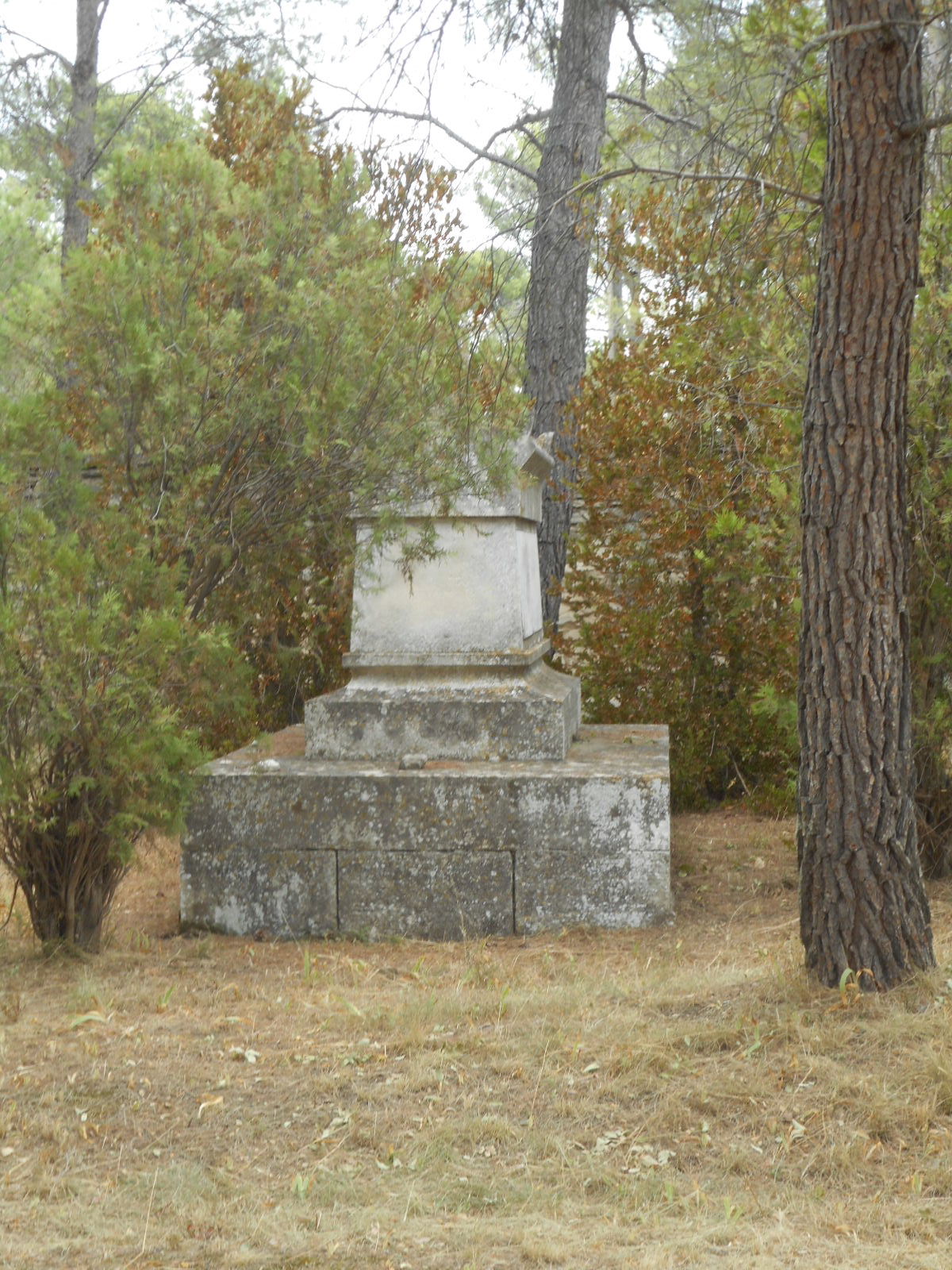
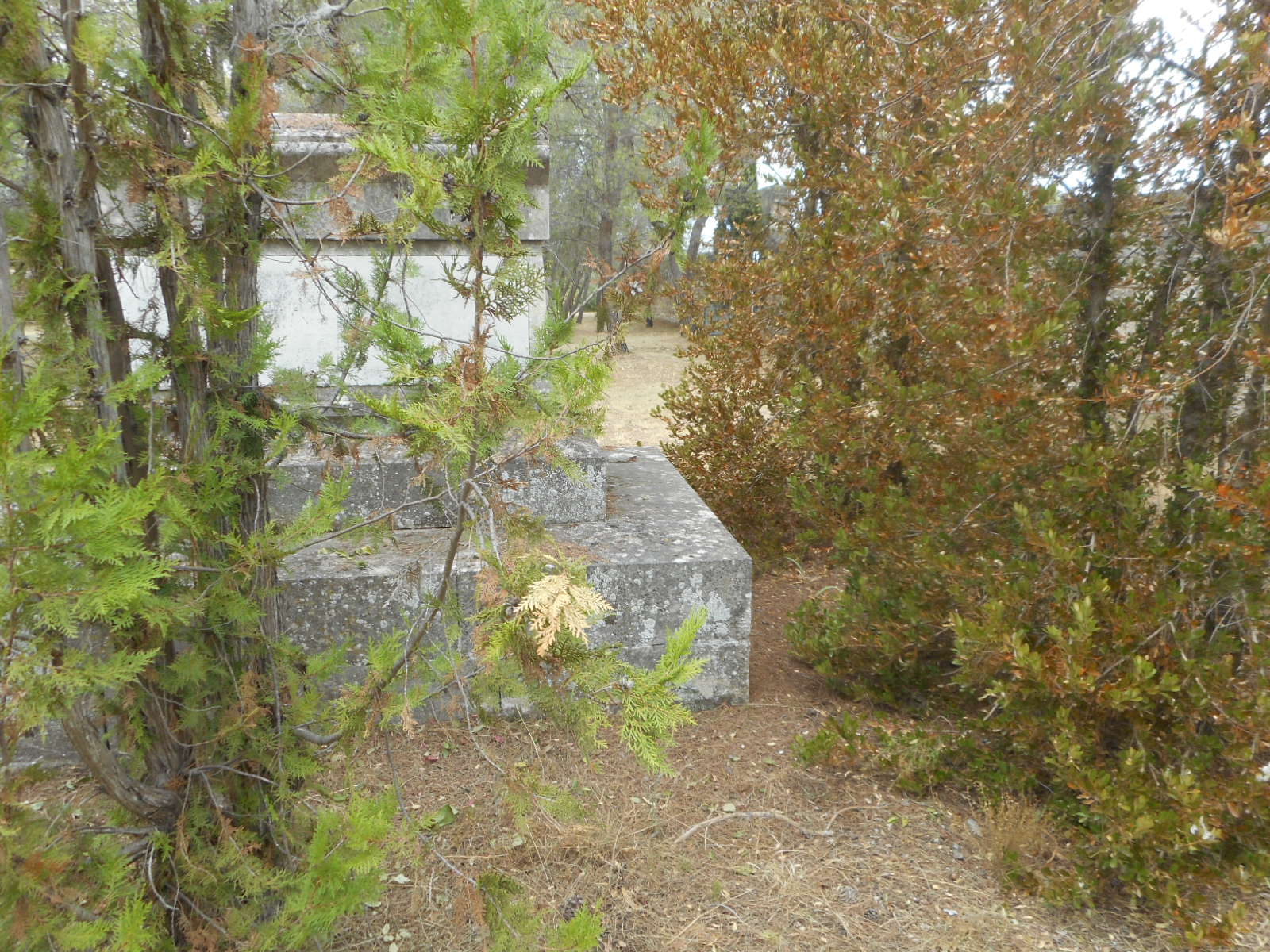
This serene and tranquil cemetery finally closed its doors in 1977 and it’s only thanks to European Heritage Days and the ‘friends’ that we can get in once a year, rather than never. Today, the oldest visible tomb was erected in 1821 and the most recent dates from 1915. However, the cemetery was first mentioned in 1400 and was founded much earlier; indeed, it was built on the site of another medieval burial ground.

There is evidence of a large Jewish community in St Rémy forever, probably since Roman times. Records show that in 1339 all meat sold in the town was ritually slaughtered (Kosher) and the locals made a formal complaint of it being tasteless. St Rémy’s famous son, Nostradamus, was born of Jewish ancestry although his family later converted to Catholicism. The Jews were expelled from Provence in 1500 by Louis X11 and they had to wait until the French Revolution of 1789 for official recognition of their right to return and confirmation of their equality with everyone else.

Back in the cemetery, I see a couple placing a stone on a tomb. Actually, I’d noticed that several of the tombs have stones randomly placed upon them. I gave this half a thought: in Provence, you can see rooftops adorned with stones but this is a practical solution against the whims of the Mistral. Surely this can’t be true for long-ago graves.

I pluck up courage and ask Madame from ‘the friends’. I don’t mean I need courage to ask, but I do need some extended vocabulary to understand the answer. Actually, it’s not too tricky: she gives me some alternative explanations which I later research and find her perspective the best. In no particular order that I know of, they are as follows:


Before the time of caskets and coffins, the deceased was buried in a shroud in the ground so the stones acted as protection against the ravages of wild beasts. Par contre, the stones, which are placed with the left hand, keep the souls in place, thus preventing a haunting. And yet another alternative is the view that placing a stone is a symbol of sending the dead on a safe journey (because the stone represents strength) and a reminder of the resurrection.
I was a bit confused by the latter. Pragmatically, it makes sense: if the stone is removed, then the soul can escape – hence the rolling back the stone from the place of Jesus’ burial. But I didn’t think that this religion believed in the resurrection; what do I know?


Anyway, Madame is on a roll with her audience of one and begins to tell me about the Germans. It’s true that the German army requisitioned St Paul de Mausole in WW2 but trying to confirm her story is a non-starter. Nonetheless, I’ve no reason to disbelieve her. Weasel readers will be familiar with St Paul de Mausole which is where Van Gogh placed himself after the episode in Arles. And where he produced 150 works of art including Starry Nights. So, the Germans threw out all the patients and closed down the cemetery. Just as contextualisation, this little part of the world was, in 1940, ordained as part of the Free Zone under the protectorate of the dubious Vichy government. By 1942, the Germans had moved in and begun a systematic round-up of French Jews.

Everything she passionately recounts begs another question but now more French people have arrived and the discourse is too speedy for yours truly. Still, it’s another piece of local history and culture for me from yet another true representative of Heritage Days.

Open doors

It’s the European Heritage Days today and tomorrow when, all over Europe, it’s possible to visit places that are mostly closed to the public. Well, all over Europe apart from England which, secretly, had its heritage days last weekend. I suppose the Brexiteers feel we’re already no longer part of Europe so why not be different?

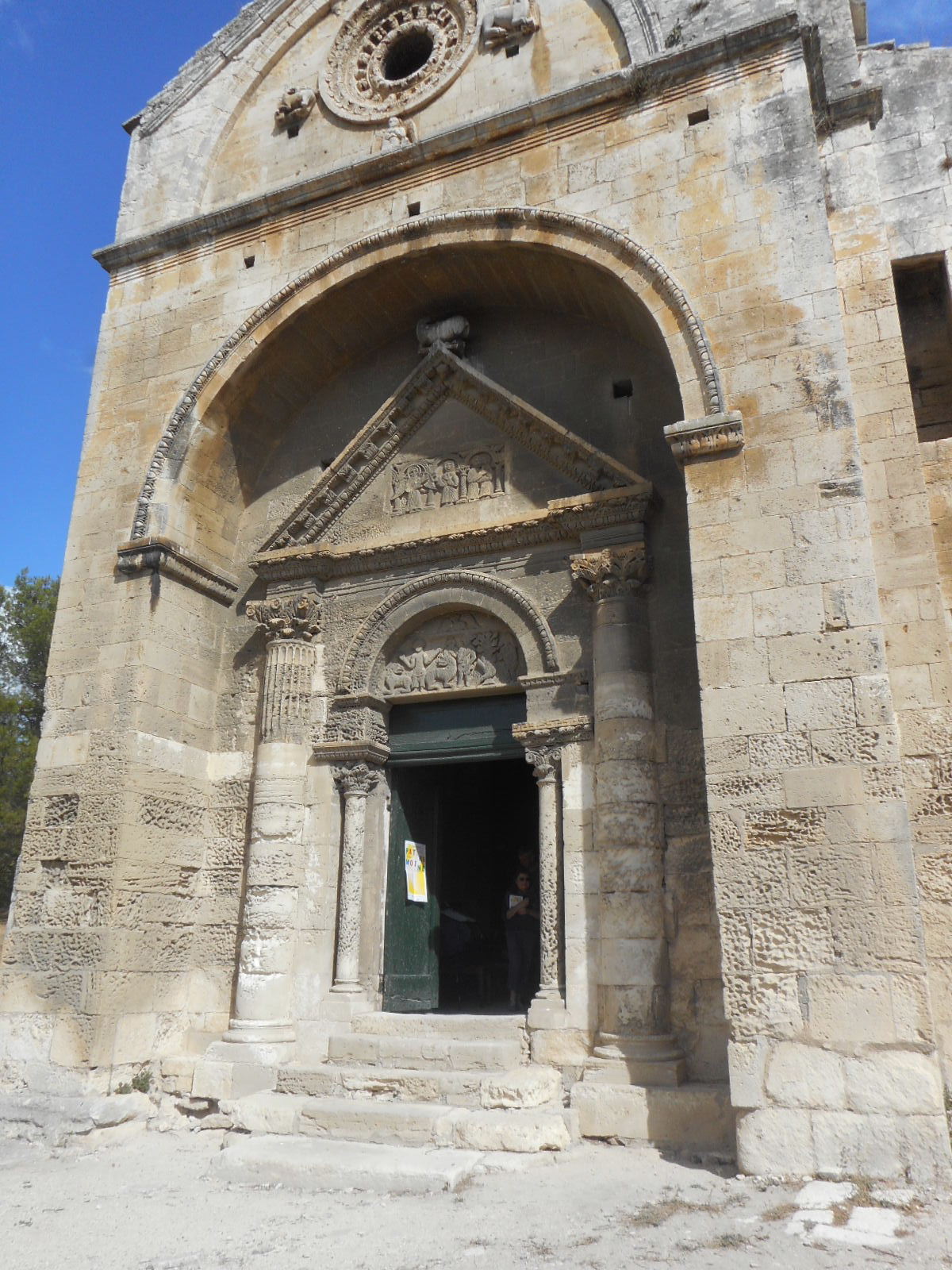
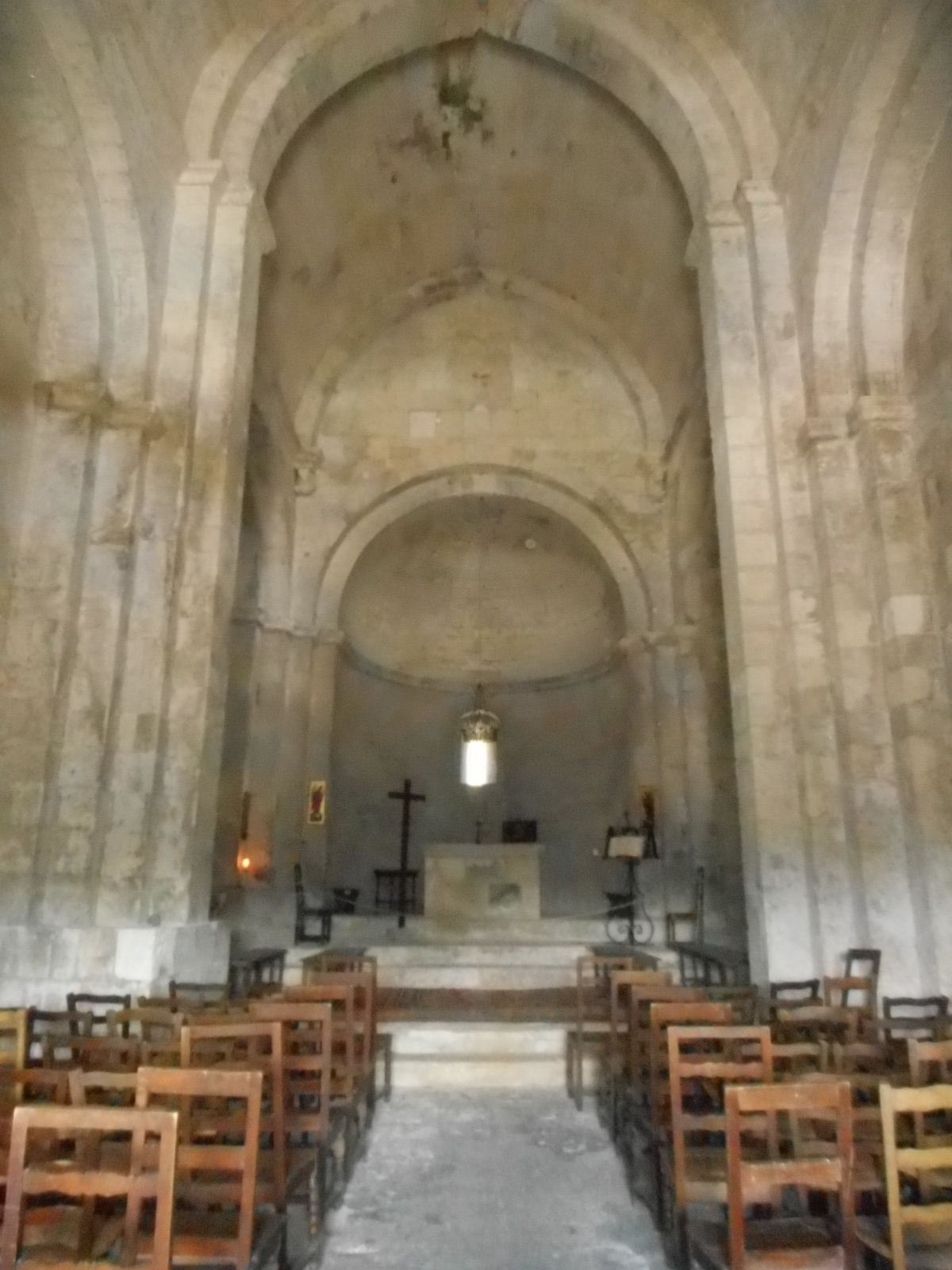
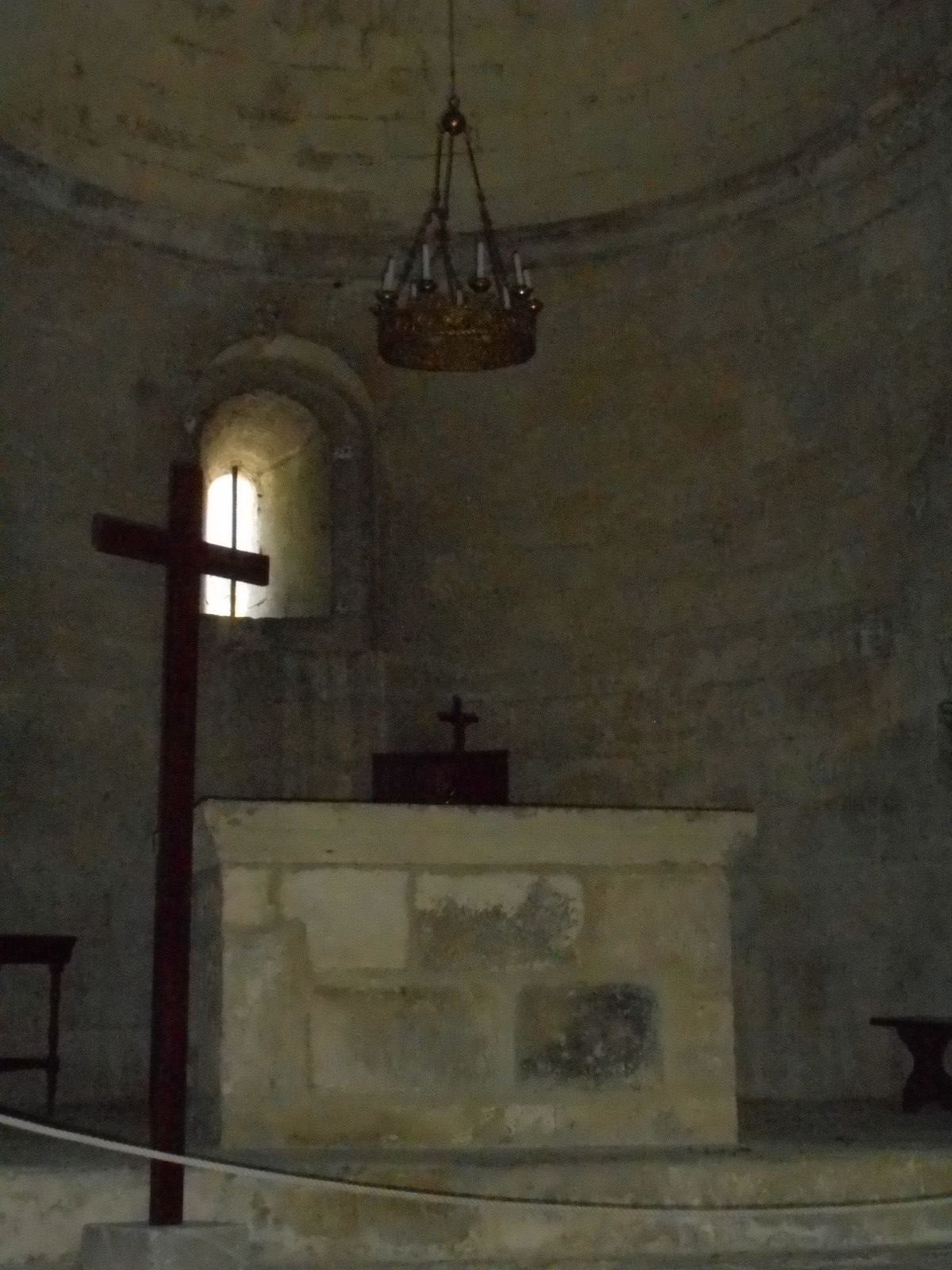
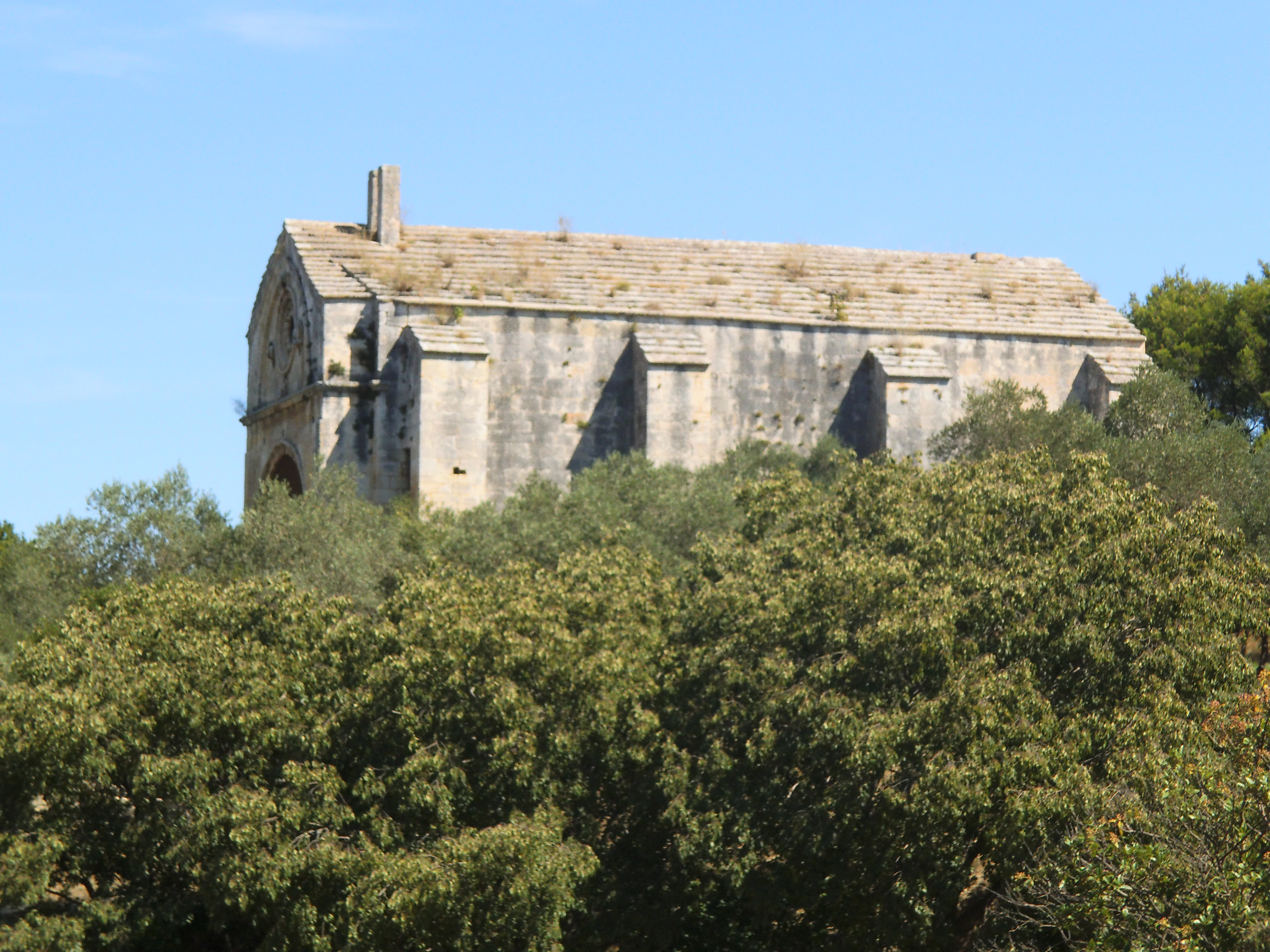
And actually, the French may well feel the same: at my very favourite Chapelle St Gabriel, whose doors are rarely open, on asking the lady from the Association of the Friends of Gabriel if they had any literature in English, I was informed ‘non’, only French, German and Spanish. And pourquoi pas Anglais, I press her? She’s embarrassed, poor thing – ‘une erreur’, she tries with a question mark. You’re sure it’s not Brexit, I suggest?

What she does have, nonetheless, looks interesting even if it’s going to take me some time to translate. So, I continue, as a friend of Gabriel, do you know the secret? She hates me in a charming sort of way. I see blank confusion as she makes a mental note to ensure there’s something in written English next time. ‘Quel secret?’

I tell her I’ve read that St Gabriel’s Chapel embodies a secret hidden in plain sight. Perhaps Jesus was here? (any chance to get back on that overladen boat in a manner of speaking). Madame has not heard of this although, being a huge fan of conspiracy theories, I suspect the Association of the Friends of Gabriel won’t be owning up to anything in the near future.


Or possibly St Martha, I continue? Madame brightens up considerably at this suggestion and begins to tell me how Martha overcame the Tarasque. Yes, yes, I smile but I also read that this chapel was constructed on the site of a previous building that may have been a religious school for girls and women initiated by St Martha. We’re having this conversation in French and nobody like a know-it-all. But Madame, who hasn’t heard this story either, seems genuinely interested. Either that or she’s a pleasant but accomplished actor.

Do you come here often she asks without a hint of either irony or sarcasm? Because, she continues, you could join the Association, which I’ve now decided is a local branch of Opus Dei, and tell everyone else all these things. It was a joy to be in that place with her: she loves it as I do and I’m seriously thinking of signing up.

The Association was formed in 2009, with the aims of restoring and maintaining the chapel and enabling regular access. In 2013, they managed to get the state architect on board along with the national body for archaeological research whose study suggested that a provisional budget of 460,000 euro might get the renovations under way. Some minor building works have been carried out but, today, one of the most worrying problems comprises the parasitic vegetation which is erupting over the building. On the other hand, the Association successfully inaugurated the ‘Dimanches de St Gabriel’, so many of those who previously complained of the place never being open, have subsequently been able to visit. Voila, what began with a tiny group of people now has a membership of over 250.
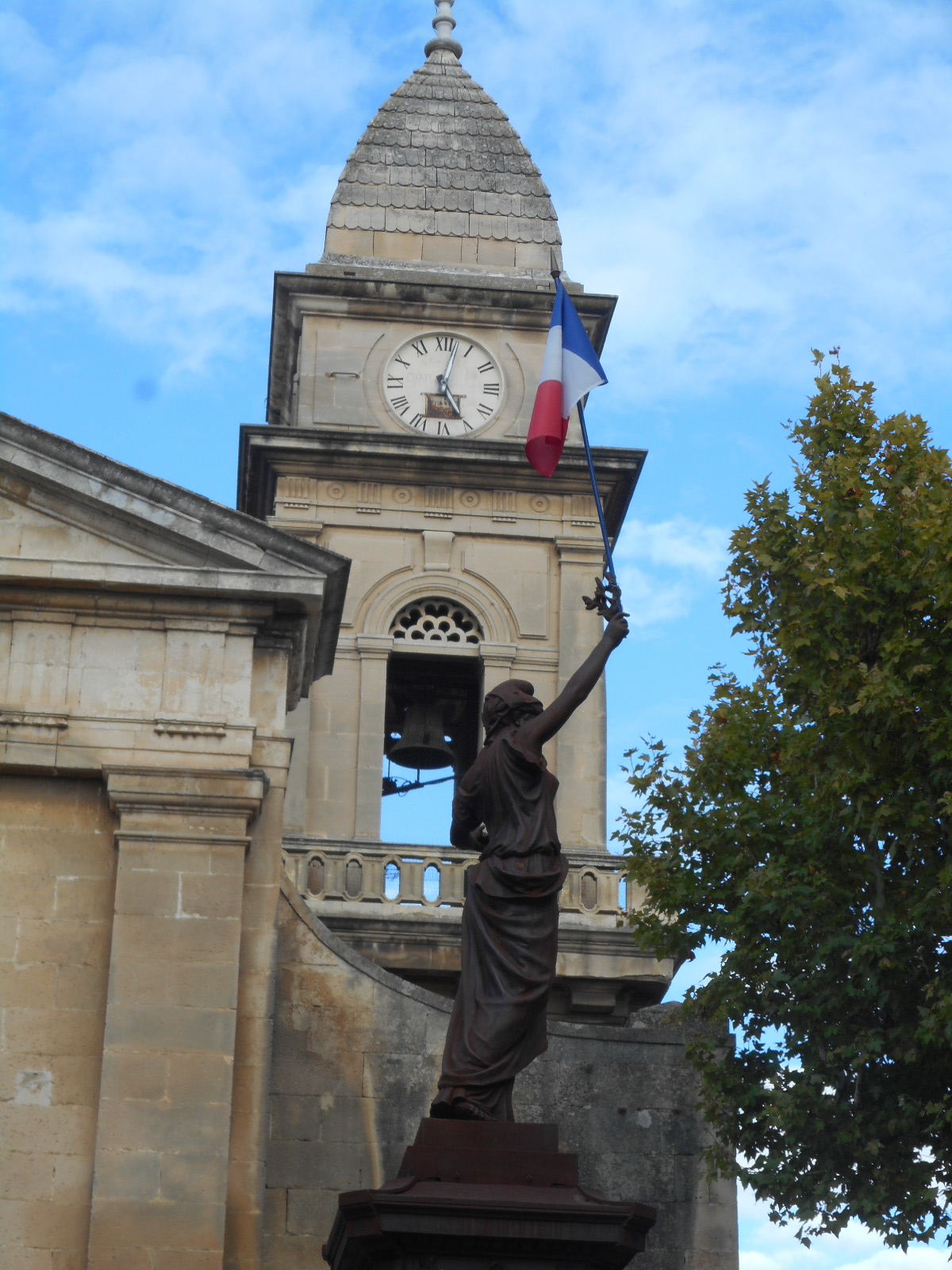
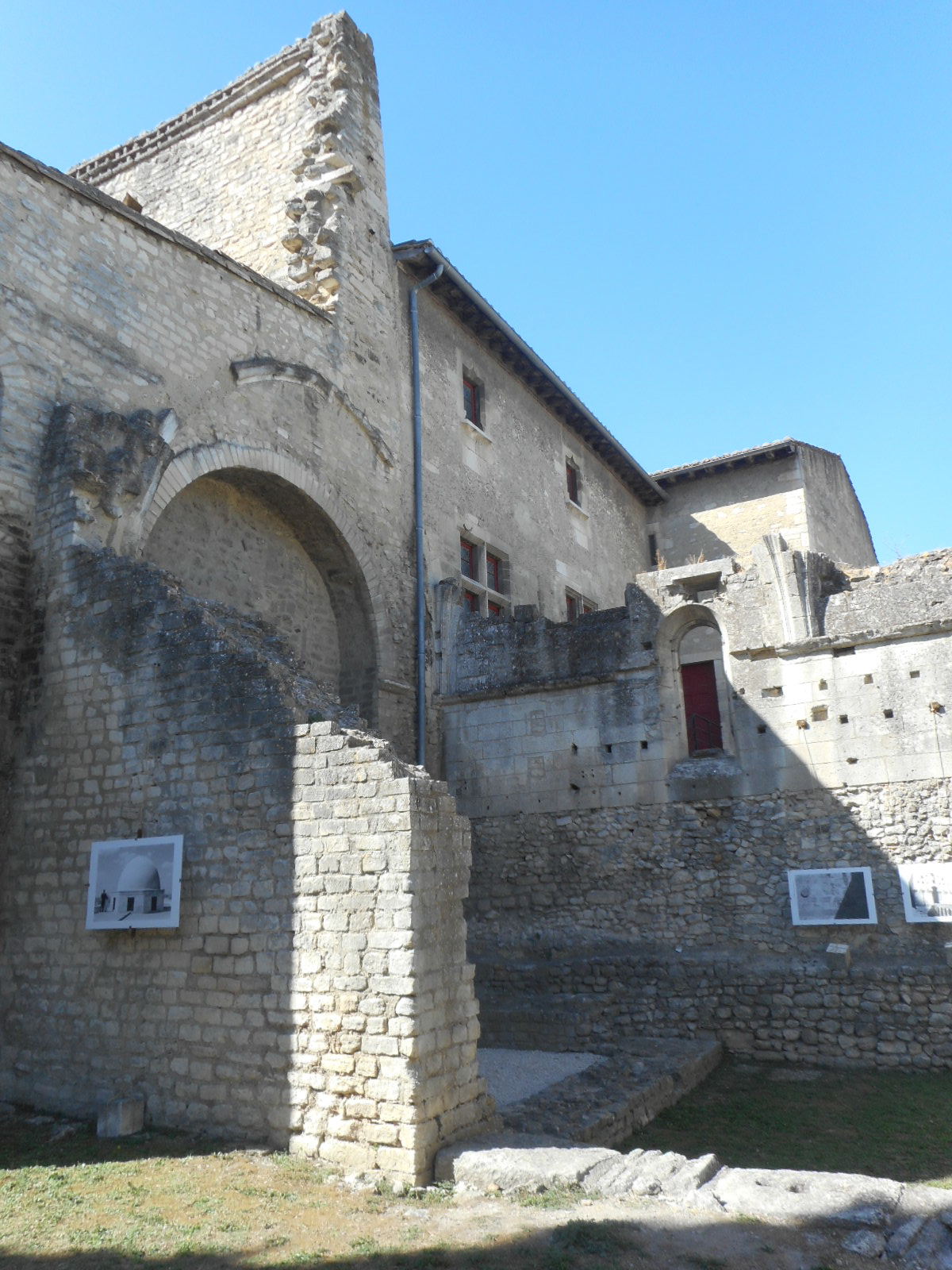
I’ve lost count of the number of times I’ve been to St Gabriel’s Chapel. However, my second visit on the first of the Journees du Patriome was to the Hôtel de Sade which I’ve never previously visited. Balthazar de Sade had a wonderful mansion erected in St Remy in the late fifteenth century. Baltahazar, by the way, was an ancestor of the infamous Marquis of the same name.


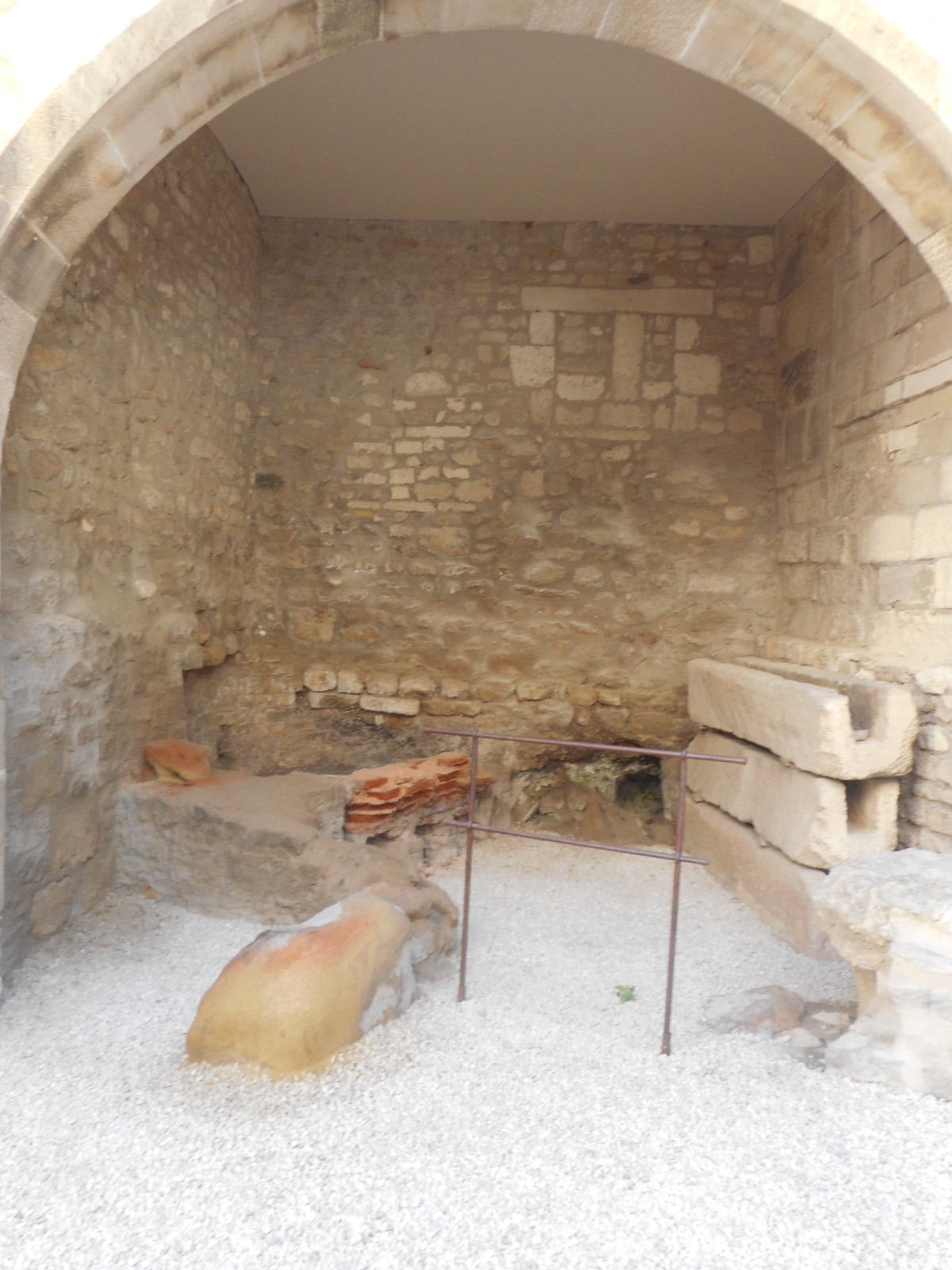
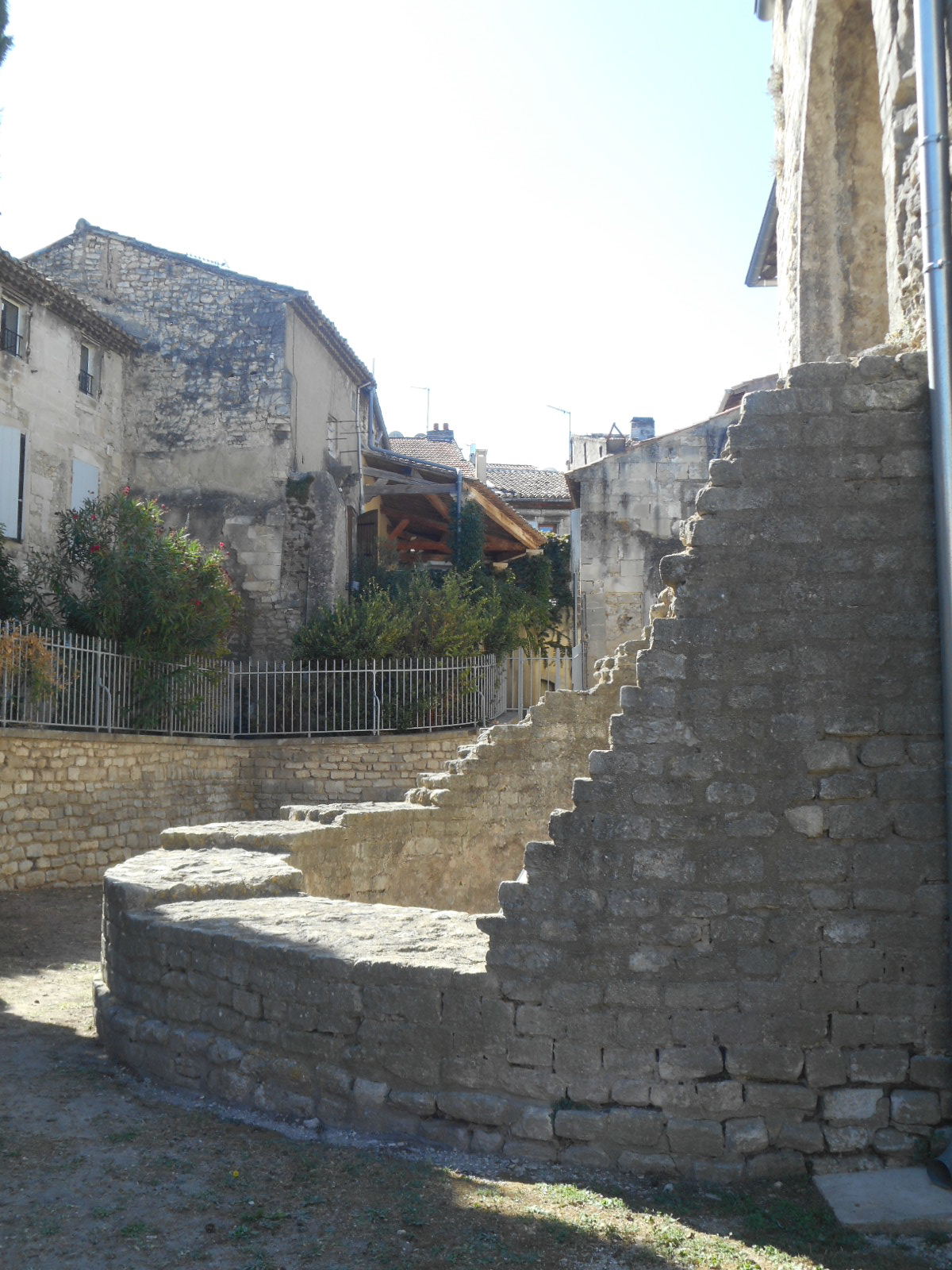
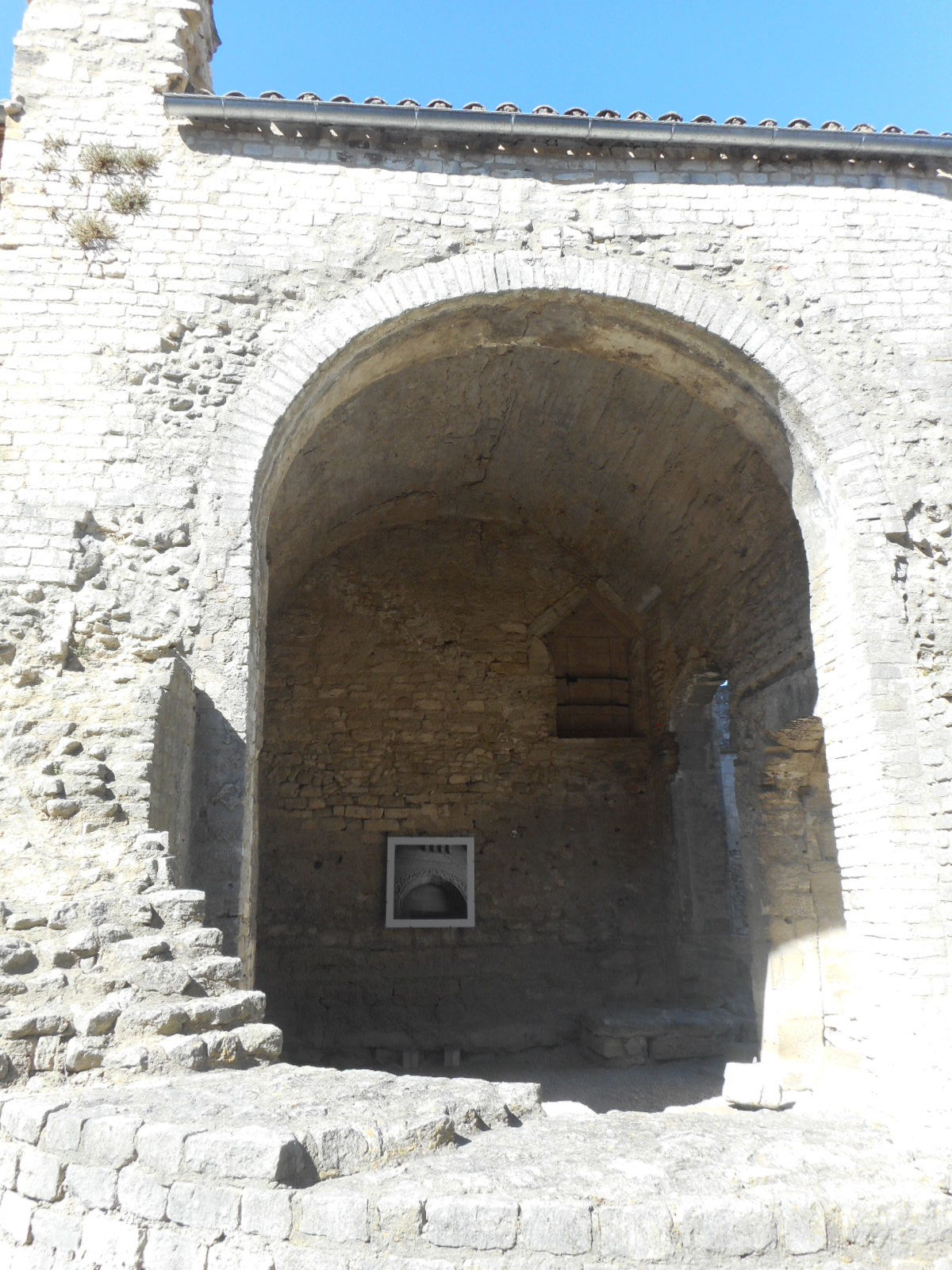
I suppose the main reason for its importance is that Balthazar had his house built around a bunch of much older constructions, most of which are a bit tricky for yours truly to comprehend. Where’s Paul Russell when you need him? Apparently, the new bits are constructed in the ‘flamboyant Gothic’ style whatever that is. However, pre WW2 excavations revealed a huge bath complex dating from the fourth century AD. Not mentioning any names, but it wasn’t that long ago that some Prof from the USA was dragging me round Constantine’s bathroom in temperatures of 40C after a particularly energetic lunch. If only we’d known what was lurking in the back streets of St Remy. I quote: ‘it’s exceptionally well-preserved state is comparable to the thermal baths of Constantine in Arles’.

Here, we have the well-preserved remains of the hypocaust, the palaestro, the pool, the sauna, the tepidarium and the frigidarium. Who knew, Russell? Don’t ask me ; I only take the photos and write a few words.


And if all of that isn’t sufficient, it turns out that the Hôtel de Sade is the repository of excavation findings from Glanum. They’ve got mosaics and sculptures; painted plasters, heads and torsos; tombs and carvings. They only had a few out on display today and they were ‘roped’ off by ugly red and white chains, so I didn’t take any photos. Sorry Prof.

Here’s a tip, though. If you’re interested in historical stuff that the public can’t normally see, visit Provence during les Jours du Patrimone.

The end of something

September in Provence can be charming with its late-in-the-year warmth, excepting the unexpected wind. Something purporting to be the mistral blows down the Rhône when one least desires its presence. But, today, the curse of the South is non-existent.

Market Day in St Remy de Provence and the place is flooded with Americans looking for end of season bargains. It’s like high summer has chosen to make a last-ditch reminder of its economic raison d’être. Those huge tomates anciennes are beckoning to be conjoined to a little picadon. The rennes claudes, sweet and juicy, don’t suffer the fears of their English counterparts: if a tree dies, so will its owner (or vice versa).

By the pool, we few cosmopolitan hangers-on lap up the globally warmed rays, intent on returning to colder climes with the hint of an envied tan. We dip in and dip out of the water and likewise of our undemanding novels; immersed in the care of nothing, to which we cling before reality hits on the next plane home. A solitary tree frog sings a lonely song from time to time.

Later, just before dark, the odd lost swallow flies overhead looking for its compatriots. I sit here quietly, reading of news from home wherein a son has just bought his first house and my parents are accompanied by decorators. It’s an hour and a half away by air and a million miles to another life. My hostess lends me a jacket to combat the sudden drop in temperature, but it’s still warm enough to take supper outside.

My picture is of the town hall at Tarascon, the place to be when celebrating Christmas in these parts. I won’t be there: I’ll be in Dorset with my family.Tomorrow, the temperature begins its downward slide, but Provence will still be here. Different, but still beckoning timelessly with a disregard of the seasons.