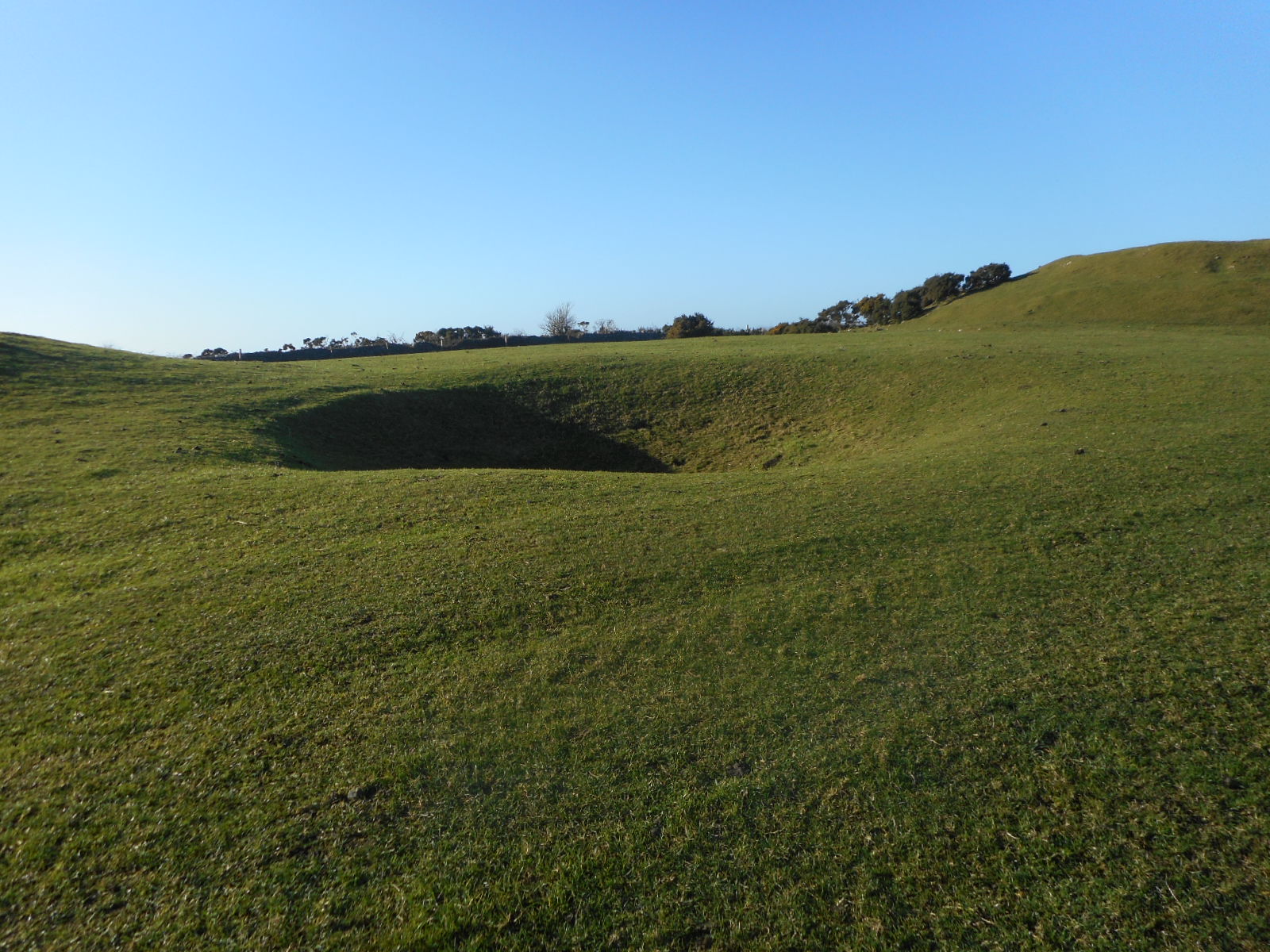
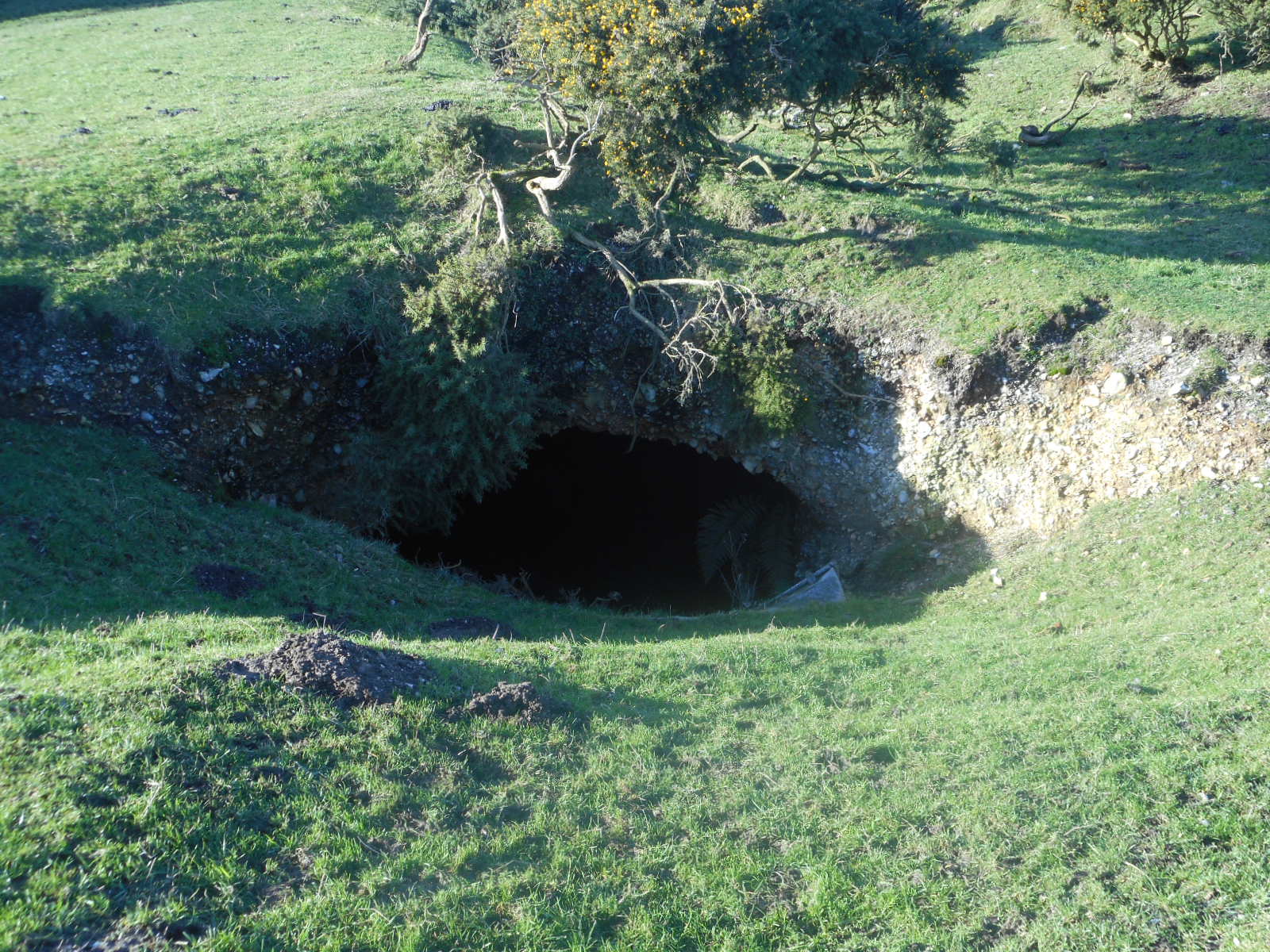
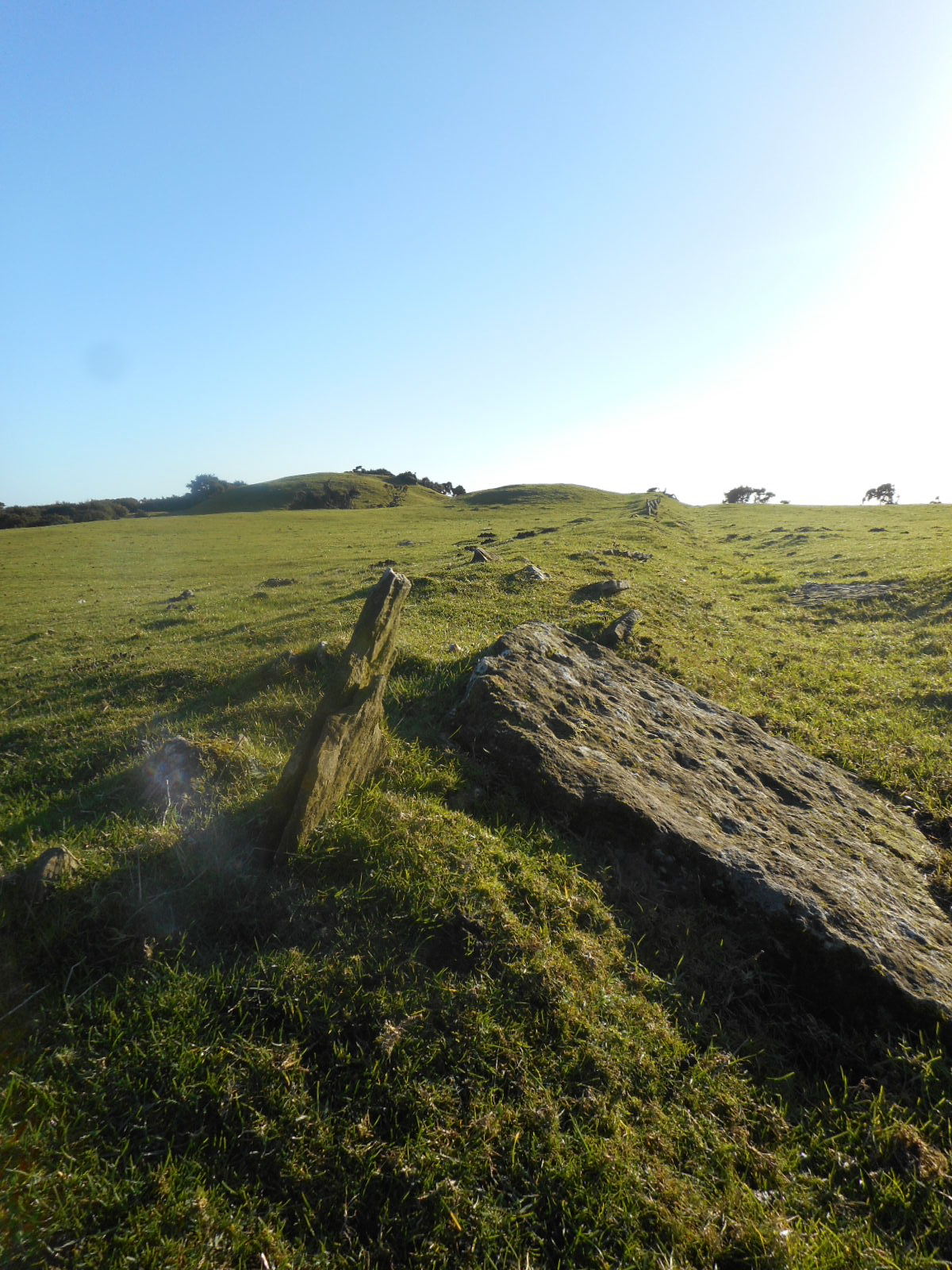
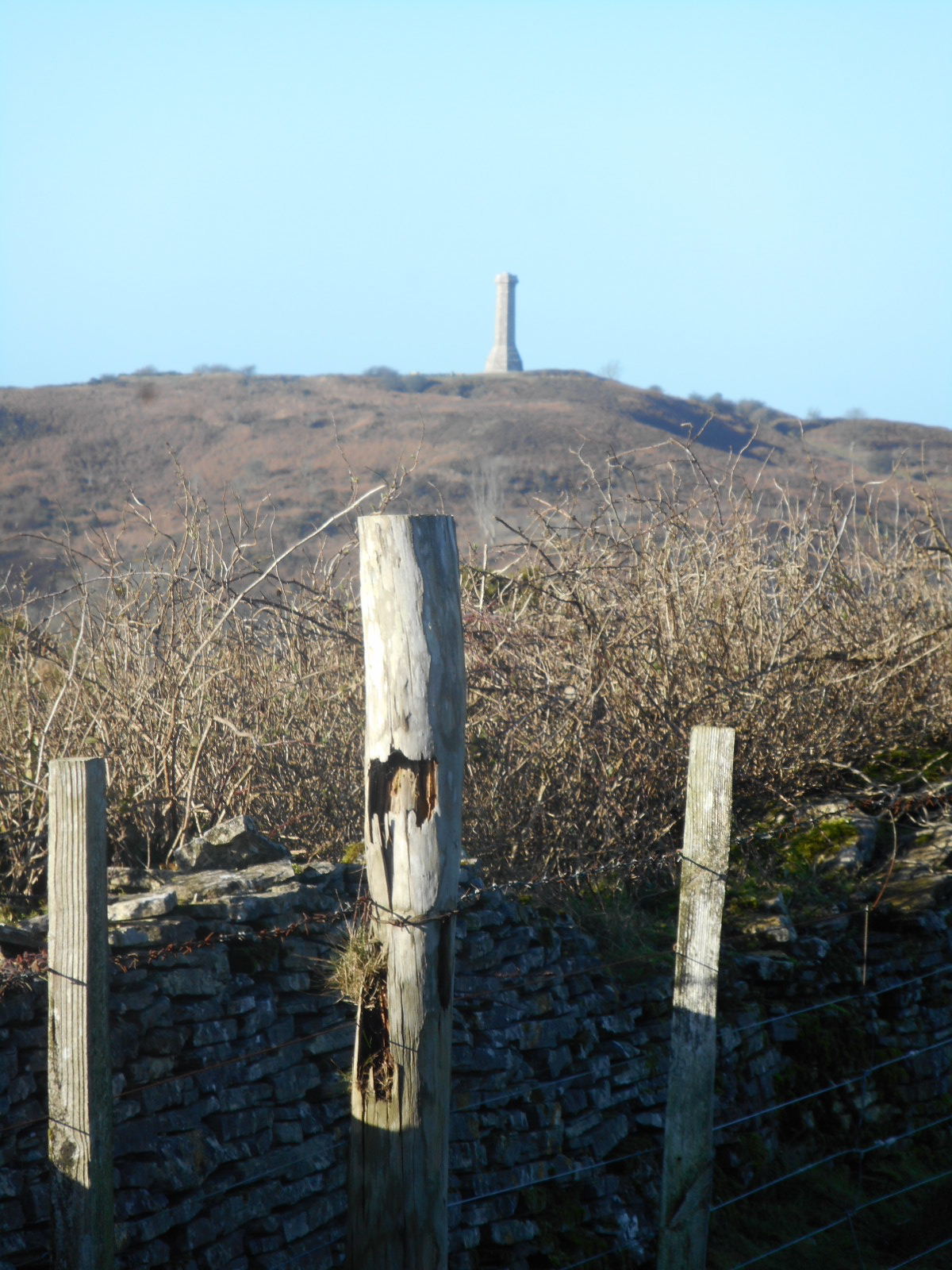
In Kelsey Park

2017_0208kelsley0014 ‘The hunchback in the park, a solitary mister’, is all I can remember of the Dylan Thomas verse slotted in amongst memories occasioned in the municipal park in Swansea. A sad poem that I always found incongruous in otherwise joyful recollections of childhood. We venture into Kelsey Park, a veritable jewel in Beckenham’s affluent crown. Few solitary misters in evidence here, although at one point I feel a hint of anxiety in finding a lone elderly man in the trees, standing with his back to the path. Nothing of concern as it transpires he is feeding birds. And there are plenty of these.

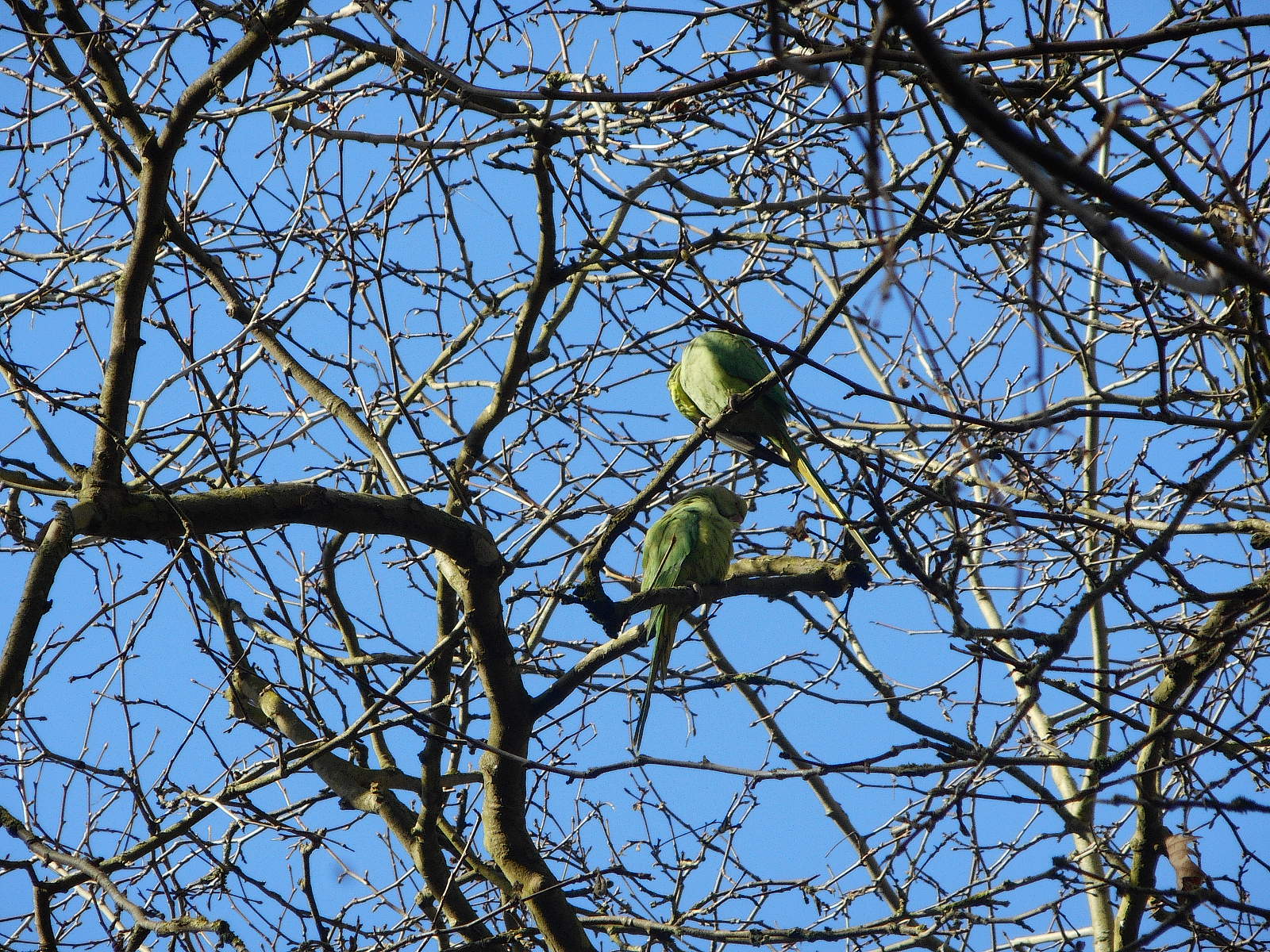
2017_0208kelsley0021Here are the modern day migrants: a source of squawking irritation to those leafy Londoners whose gardens are ‘infested’ by parakeets but a constant joy to we visitors – Dorset types with nothing but sparrow families to enliven our winter gardens. No parakeets in Beckenham’s past though.

2017_0208kelsley0011

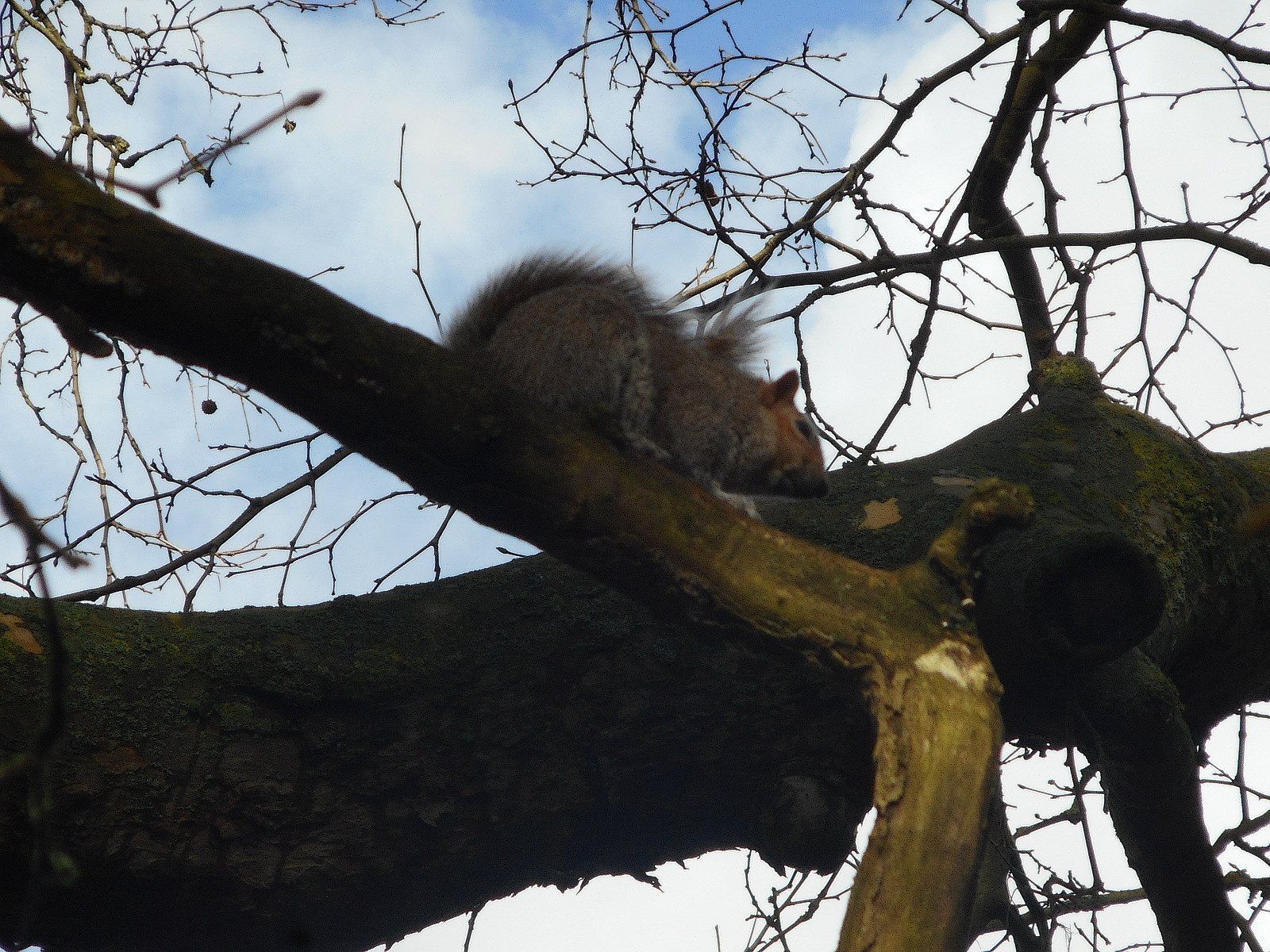
Harrison is fast asleep, wrapped in the multi-coloured blanket which is the only item grandma knitted in time i.e. the only thing he’s not liable to grow out of five minutes before he takes it on. In my experience, Harrison is always asleep unless the adults fancy a grown-up dinner. Anyway, he misses the squirrels who shamelessly wait for us on the path and hover around our feet in a threatening sort of way. ‘You want to be careful’, I say as I skirt around them, ‘one wrong word and they’ll be in the pram’. She hurries off, leaving me to fend for myself.

2017_0208kelsley0005Those squirrels have probably been harassing folk for years because Kelsey Park has something of an history. In the twelfth century, this place was owned by the Lord of the Manor of Beckenham – not on my manor guvnor. Today, it comprises a mere 21 acres but in the nineteenth century the 3000 acres here included a  post for the stagecoach to Sevenoaks.

2017_0208kelsley0033Naturally, there was a grand mansion house – two in fact. The second went through a number of incarnations, evolving from a private residence into a convent for the Sisters of All Saints, ladies who were leaving their options open. After the sisters left, the house became Kepplestone School for the Daughters of Gentlemen before assuming the status of a WW1 army hospital, with the seriously wounded being possibly nursed by those daughters,

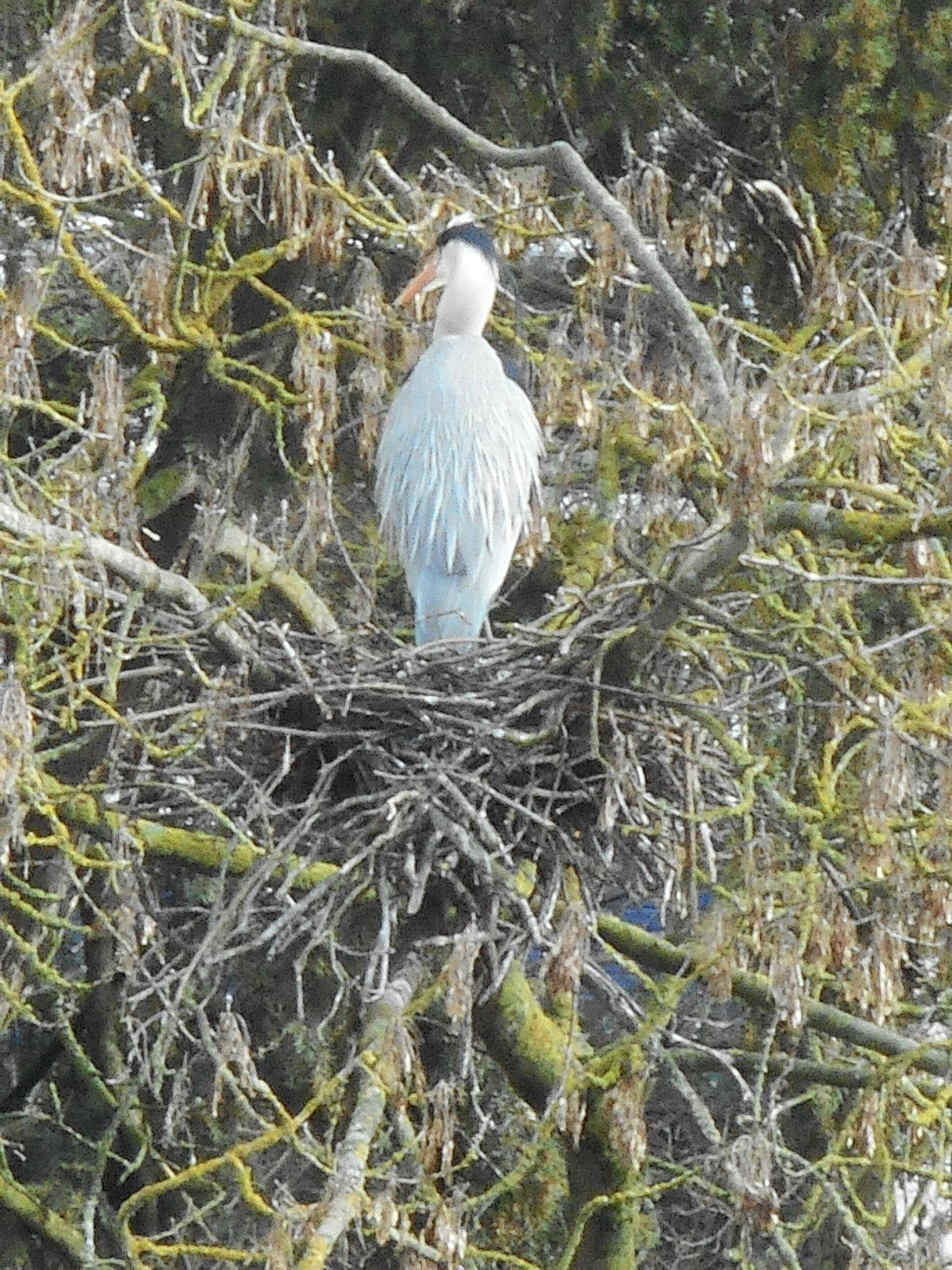
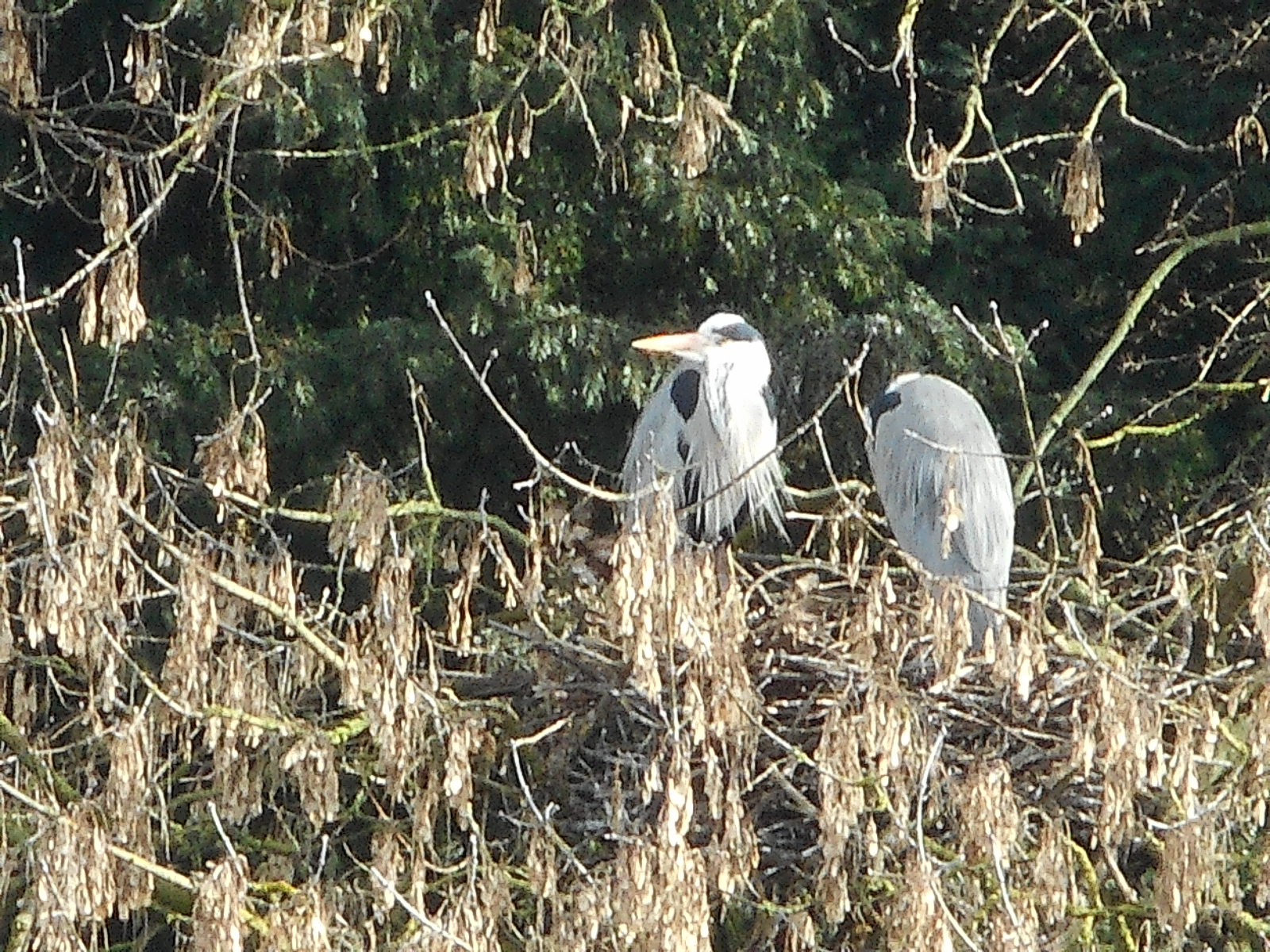
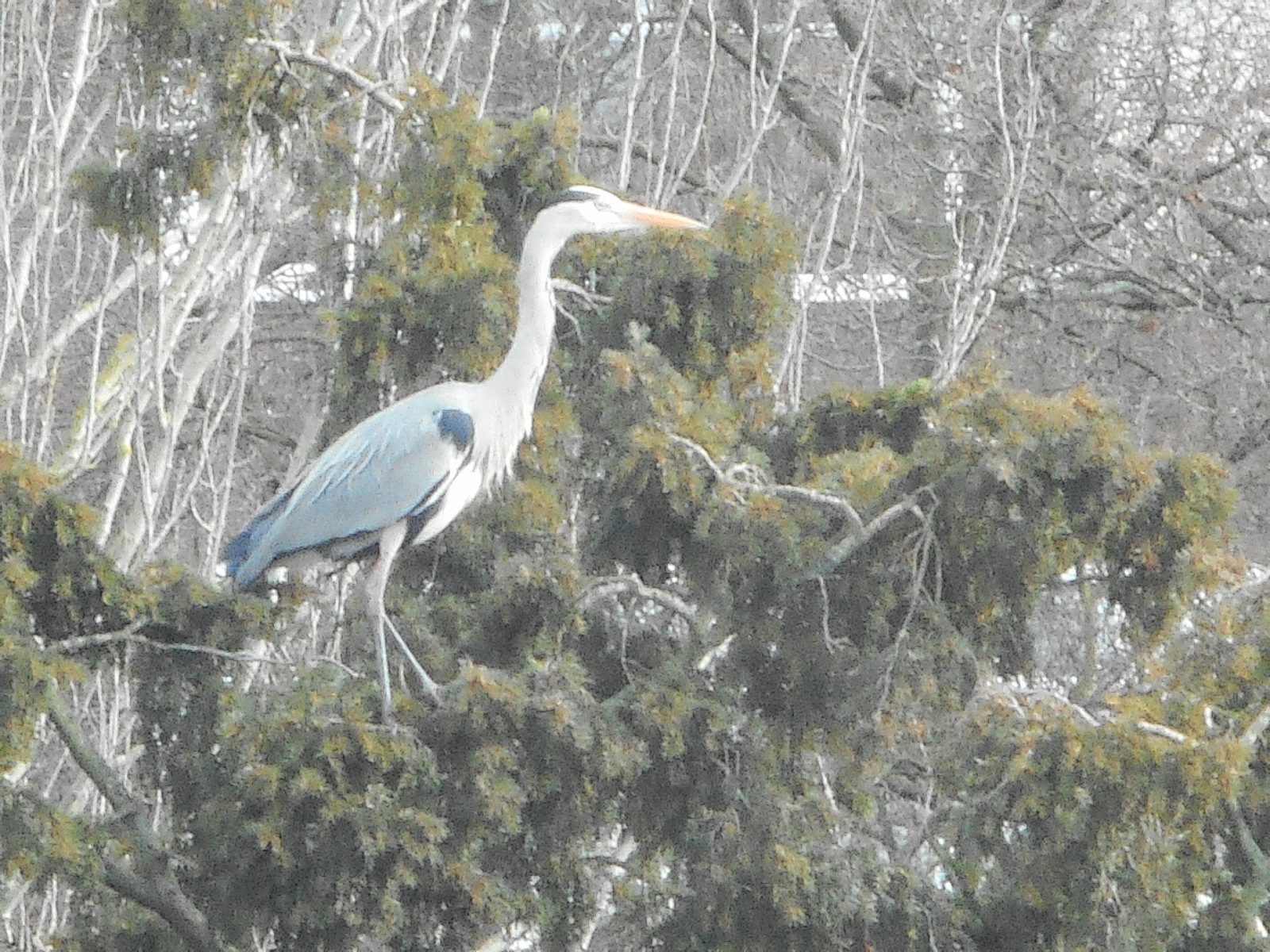
2017_0208kelsley0022Today, the River Beck still runs in and out of two lakes on its way through. Harrison’s mother is some way ahead of her own dawdling mum. She wants to take me back to a place where I can, once more, see the extraordinary heronry where twenty pairs of these graceful birds are nesting and feeding. ‘It’s where the squirrels were talking to you’, she says.

2017_0208kelsley0009I think this is rather sweet. My daughter can be pleasingly childlike at times. After, I realise I’ve missed a joke and that she’s being kind to the elderly. Earlier today, before we ever came to Kelsey Park, my left foot took a turn away from the leg to which it is attached and there was a bit of an incident: ‘mum took a fall’, she reported as though this was the first of many inevitable trips which I can look forward to. Fortuitously, a gas man was to hand. He picked up the crumpled grandma, placed her in his van and drove her home. He reminded me of Jack Branning, a swarthy type from EastEnders, so it wasn’t all doom and gloom.

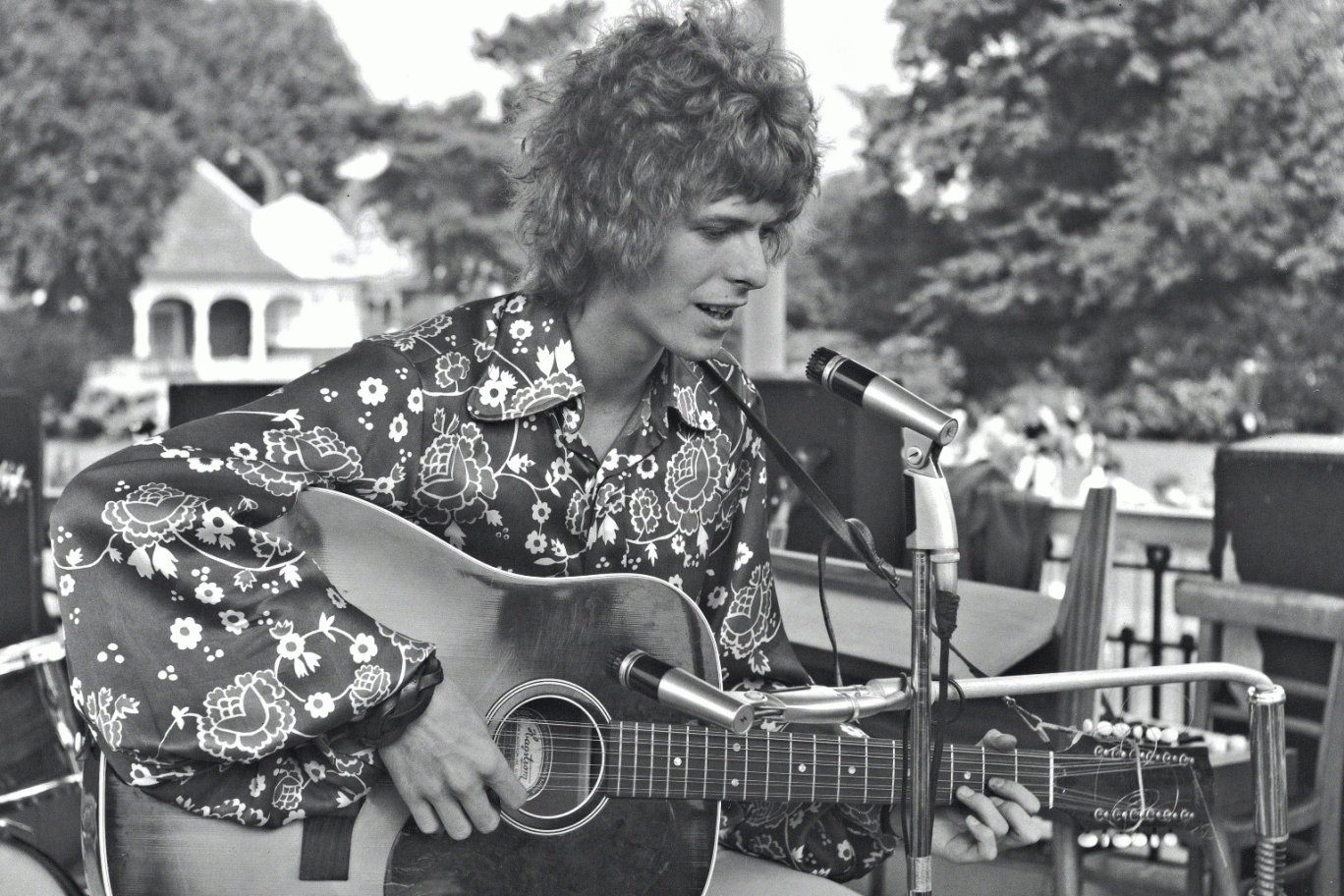
bowiebandstandAnd after Kelsey Park, we retire to some middle class, pram-populated joint in Beckenham High Street for a toasted organic sandwich. I don’t leave a tip, preferring to put excess coinage in a collection tin for the restoration of the Bowie Bandstand in another of Beckenham’s green spaces. Here he is in the process of becoming famous.


NHS (cuts pay for palace renovations)

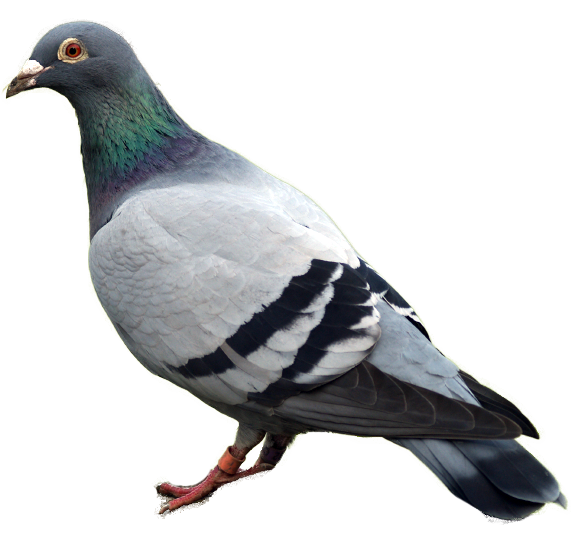
pigeon_png3426

He sent out a text from his hospital bed: can you bring in my lap-top was meant to be read by visiting time at two o clock dead. And please send some biscuits in with Ted as I’m now nil by mouth but I need to be fed; and make sure the pigeons are out of the shed. Ignore all the mess – just mind where you tread.

When I see that trolley it fills me with dread, they won’t even give me a slice of dry bread. It’s doing my brain in…it feels just like lead. And in fact he had really done in his head by trying to jump from his hospital bed.

The alarms were flashing in blue and in red and patterns on screen were no longer a zed, but seemed to be straight lines pictured instead.

And his mobile vibrated just under his head with an incoming message that never got read cause he’d run out of credit and the signal was dead, but we’ll pass on the news to Joan and to Fred.

And the nurse had to text the reply instead: he’s taken a turn for the worse she said, I advise that the pigeons stay in the shed and cancel the biscuits: he’s already dead.

The Poole Muriel

Students of Poole Art School|Todd, Cecil; Poole Scenes and People; Poole Museum Service; http://www.artuk.org/artworks/poole-scenes-and-people-60239

I once had an article, entitled ‘An Unsung Hero of Poole’, published in one of those glossy county type magazines – Dorset or Dorset Life. I forget which but it’s rather remiss of me as in those days, as now, they were an unjustifiably closed shop and breaking in was something of a coup. The hero was H.P. Smith, a man whom I’d discovered whilst writing a thesis about old Poole. The fact that it was published, and that I won a prize for the thesis, did H.P. little good as, nearly twenty years on, you’d be hard pressed to find anyone who’s ever heard of him.

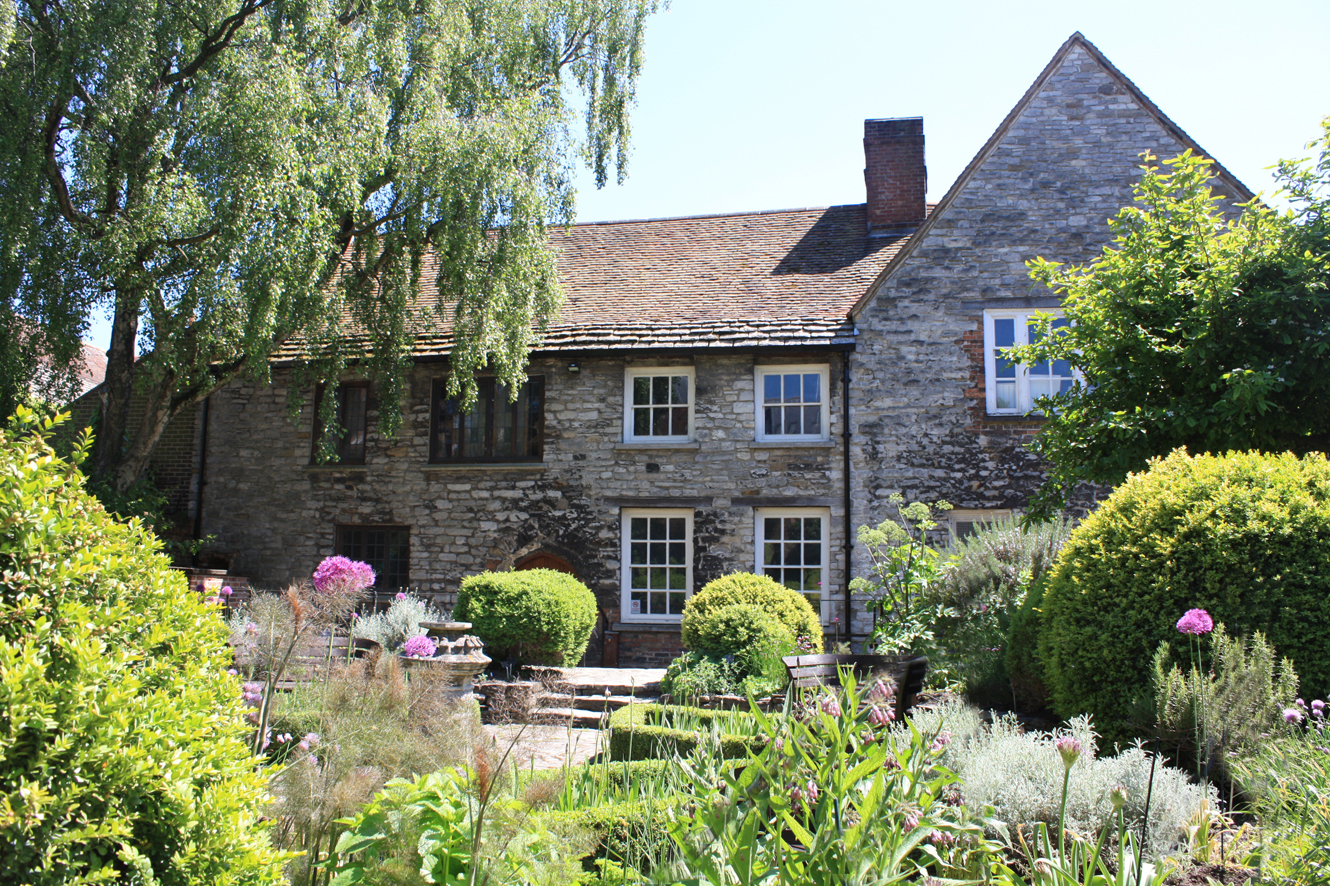
scaplensH.P. Smith, a secondary school teacher lately of our town, was something of a man of discovery himself: Roman ruins and artefacts, an educator who took his students out of the classroom and encouraged them to take a look around, he was, by all accounts, something that some of us once aspired to: a teacher who made a difference. One day, just off the High  Street, he discovered a whole building of huge importance – Scaplen’s Court. Looking at this photo, you might wonder how no-one else had previously noticed it. Well, you need to see what it used to look like, hidden as it was behind the façade of a bunch of tenement buildings. Look it up if you like – I’ve already accounted for it elsewhere.

2017_0202todd0004I probably didn’t extol the many virtues sufficiently. The reasons why I’m mentioning him are twofold: today, I identified him in a picture and I also discovered another Poole resident of whom so little is apparently known, I can find nothing about him on the WWW. His name is Cecil Todd.

2017_0202todd0006It’s not a day for walking. I meet a friend for coffee at an extraordinarily over-priced joint over at Branksome Chine. I’m guessing it’s a case of location, location, location as we take our refreshment overlooking the sea, which must be delightful on days when Hurricane Doris isn’t making an uninvited appearance. It’s so bloody expensive that we share a round of toast. The waitress must have mistaken us for ‘ladies who lunch’ as she’s so overly enthusiastic on arriving to take the order that I have to warn her of impending disappointment. All thoughts of a walk are banished and my partner in poverty says she’s off to Home Bargains where, rumour has it, Vanish is on sale for a mere two pounds. She has a nasty stain on a carpet.

2017_0202todd0005I, meanwhile, decide to spend an hour in Poole Museum. They have two or three paintings within that I very much like but I initially venture into what was once the Town Cellars. These days, it’s the home of the Poole History Centre, a wonderful beamed ceiling secret inhabited by two or three folk that might well have been in situ throughout its various incarnations. Ancient tomes abound along with old filing cabinets that house documents of possible interest and a small model of seventeenth century Poole with a surprising windmill invitingly placed for query. It’s the sort of joint that one would visit only if you had a vague idea of what you were looking for.

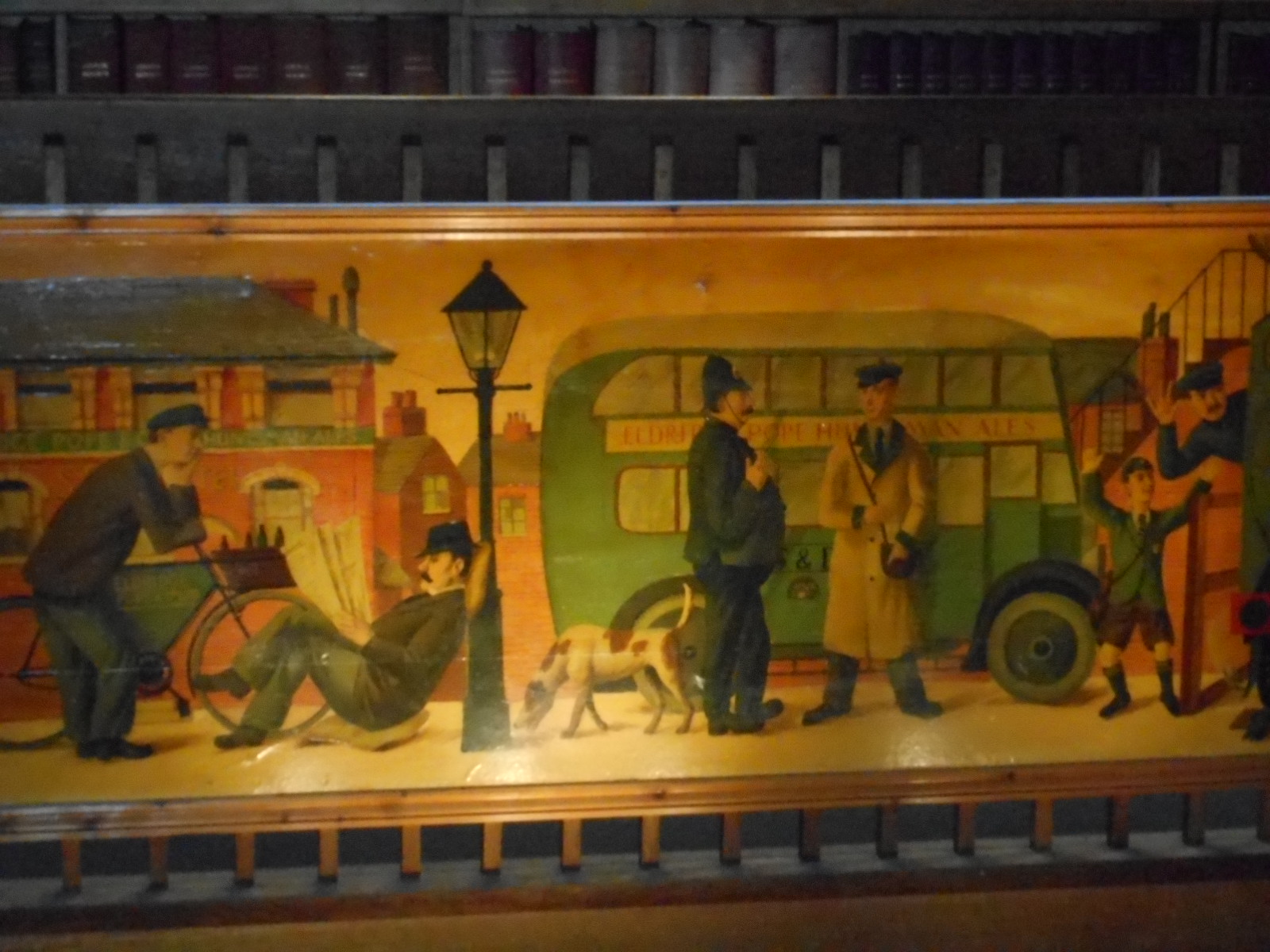
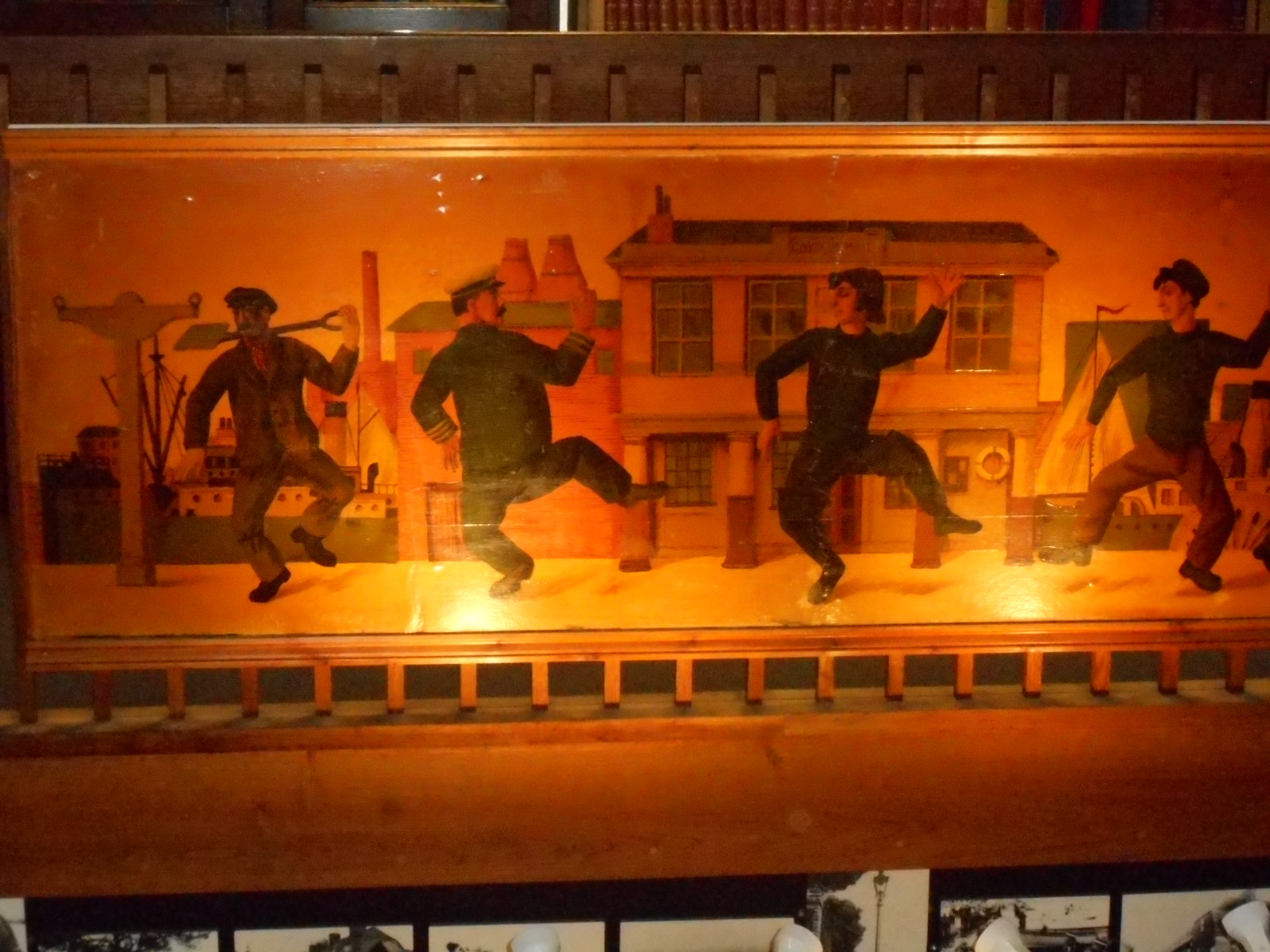
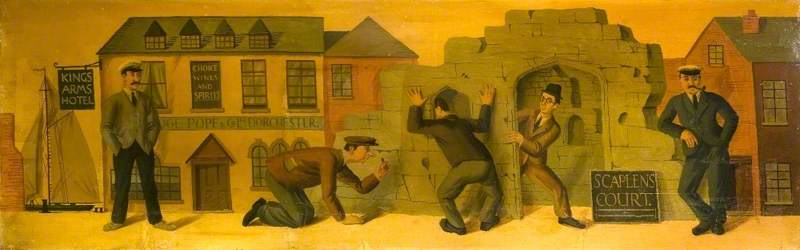
mural1I have no idea. I have a mantra, though, learned from my walking: ‘look back, look up’. And looking up, I spot the relics of the Muriel. Years ago, in another lifetime, Hilda Ogden, stalwart of Coronation Street, had a whole wall in the front room of her terraced house decorated with this glorious scene of which she ever after proudly referred to as her ‘muriel’.

Students of Poole Art School|Todd, Cecil; Poole Scenes and People; Poole Museum Service; http://www.artuk.org/artworks/poole-scenes-and-people-60242

So here is the Poole Mural. And peering out from the door of Scaplen’s Court, I think I espy an unknown hero. I rush up the rickety staircase, past two old codgers having a chat, then I rush back down to accost one of the ancients: ‘excuse me, is that H.P. Smith discovering Scaplen’s Court?’ Yes it is, and on questioning the provenance of the Muriel, I am presented with an old book by Andrew Hawkes entitled ‘A Pint of Good Poole Ale’ and I am hooked. Doris, you can blow your heart out for I am ensconced within these ancient walls learning about the London Hotel.

Nash, Eustace P. E.; Poole Quay from Hamworthy, Dorset; Poole Museum Service; http://www.artuk.org/artworks/poole-quay-from-hamworthy-dorset-60214

Here’s one of the paintings I came to see. It’s a view of Poole Quay from Hamworthy by Eustace Nash. It’s lovely but so is my discovery of the London Hotel, a former posting stage for no fewer than eleven omnibuses a day, which was refurbished in 1936. At this point, Mr Cecil Todd, along with students from the former Poole Art School, created all the glorious frames that comprise the Poole Mural, encapsulating a portrait of our town as it was then, to be housed on the four walls of the main lounge. I doubt they called it a lounge in those days but who cares – it must’ve been something to behold as this wonderful reflection of social history graced a room furnished by Harvey Nichols.


It didn’t last long: in 1940, the joint was hit by a German bomb. But, reader, you don’t want to know that, I know you’re waiting for the punchline – something quirky. Well, here it is. Whilst I was hunched over my unexpected research, one of the visiting old codgers passed by. ‘That’s a very good book’, says he, almost from the grave. ‘Are you the author?’ ‘Yes, I’m Andrew Hawkes’. Oh, serendipity. You never fail.

To hell and back

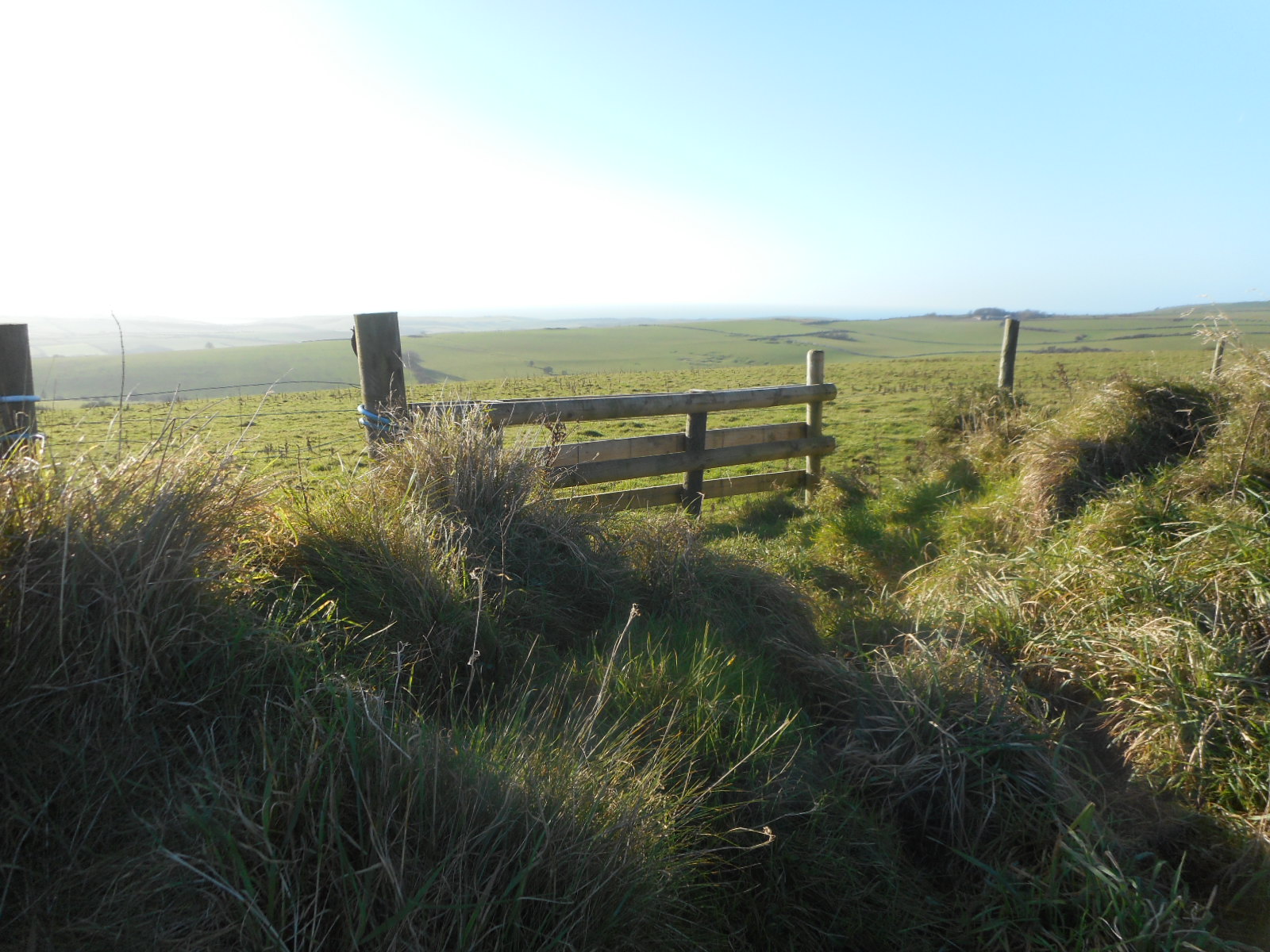
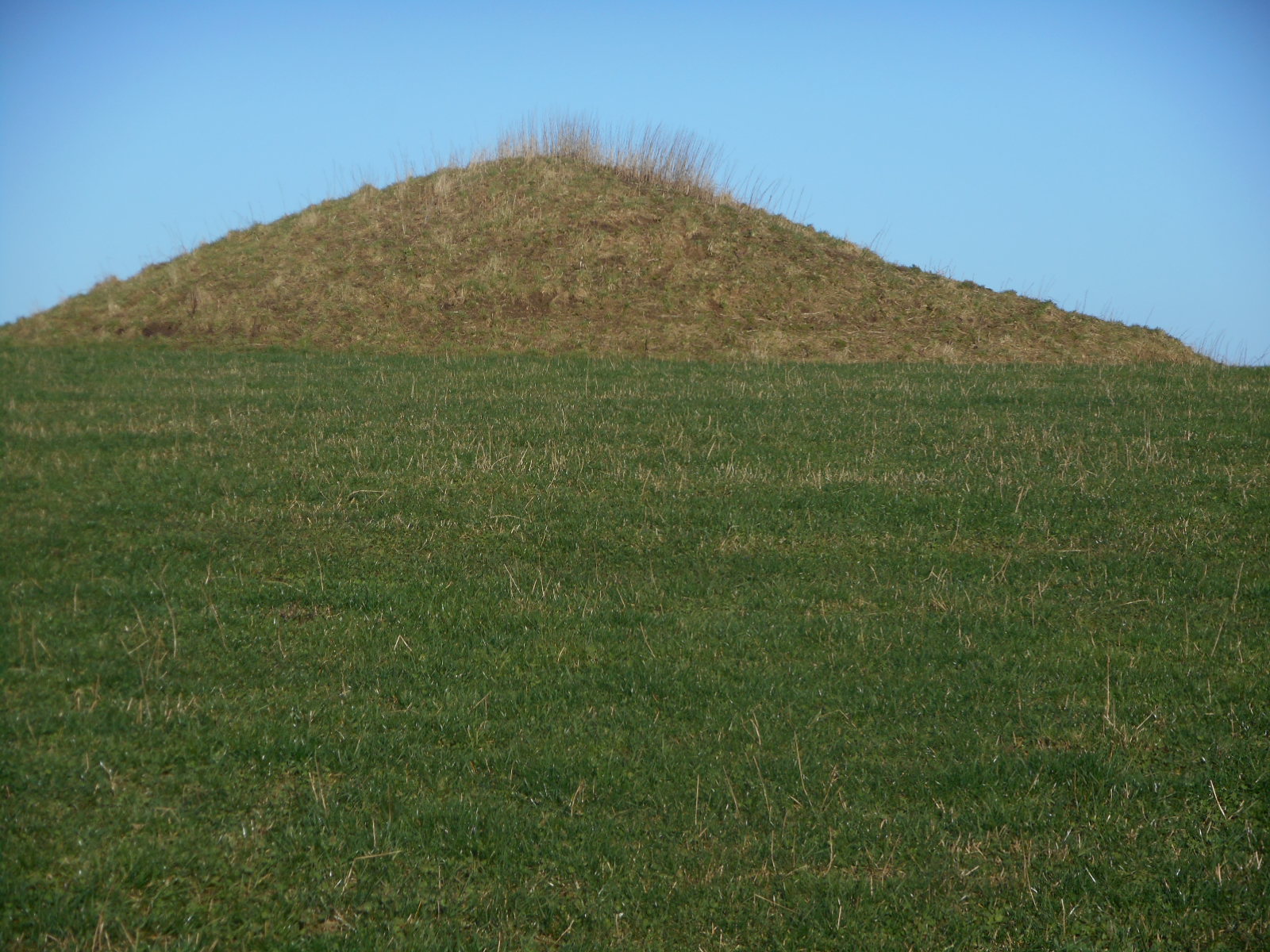
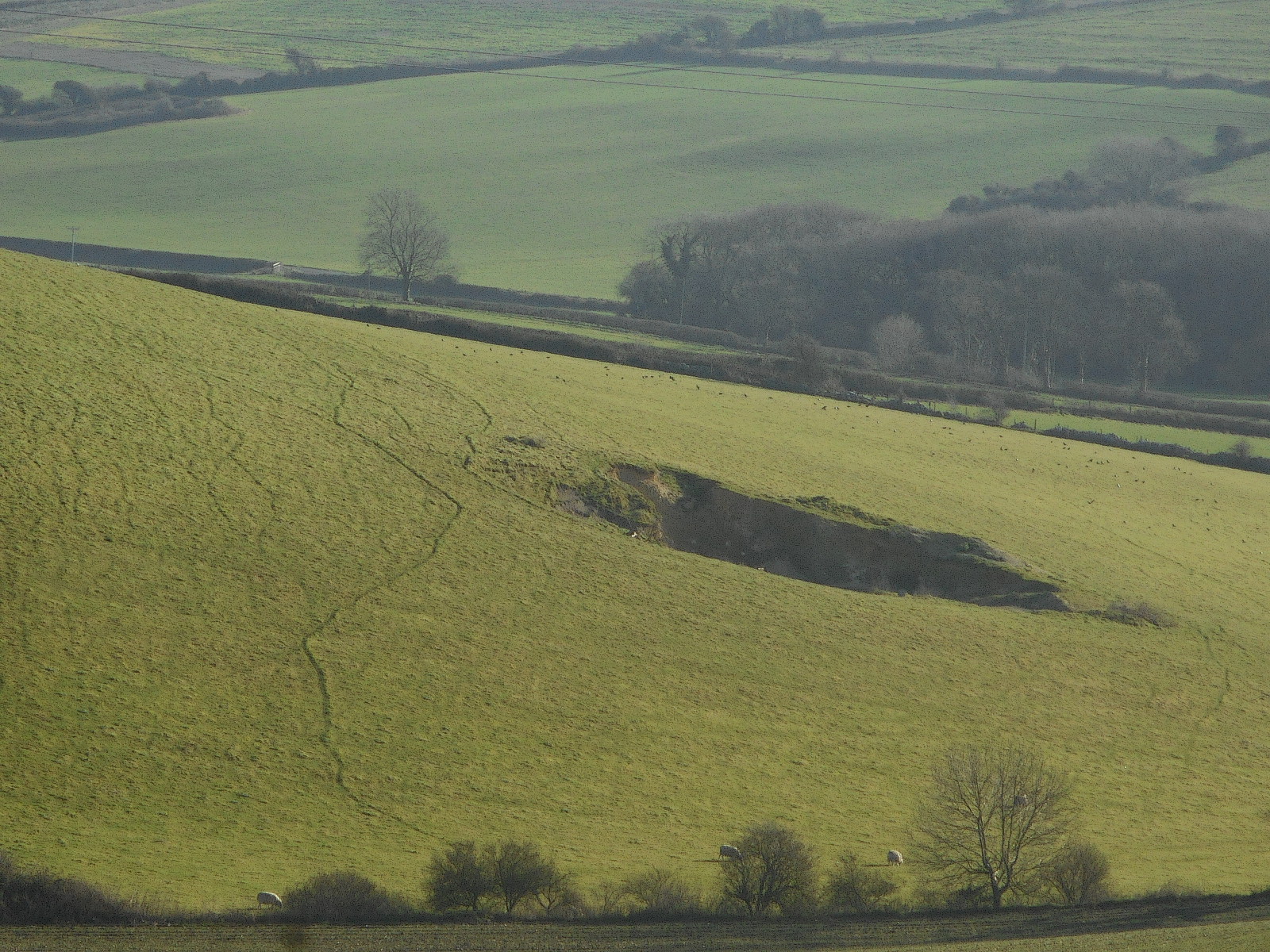
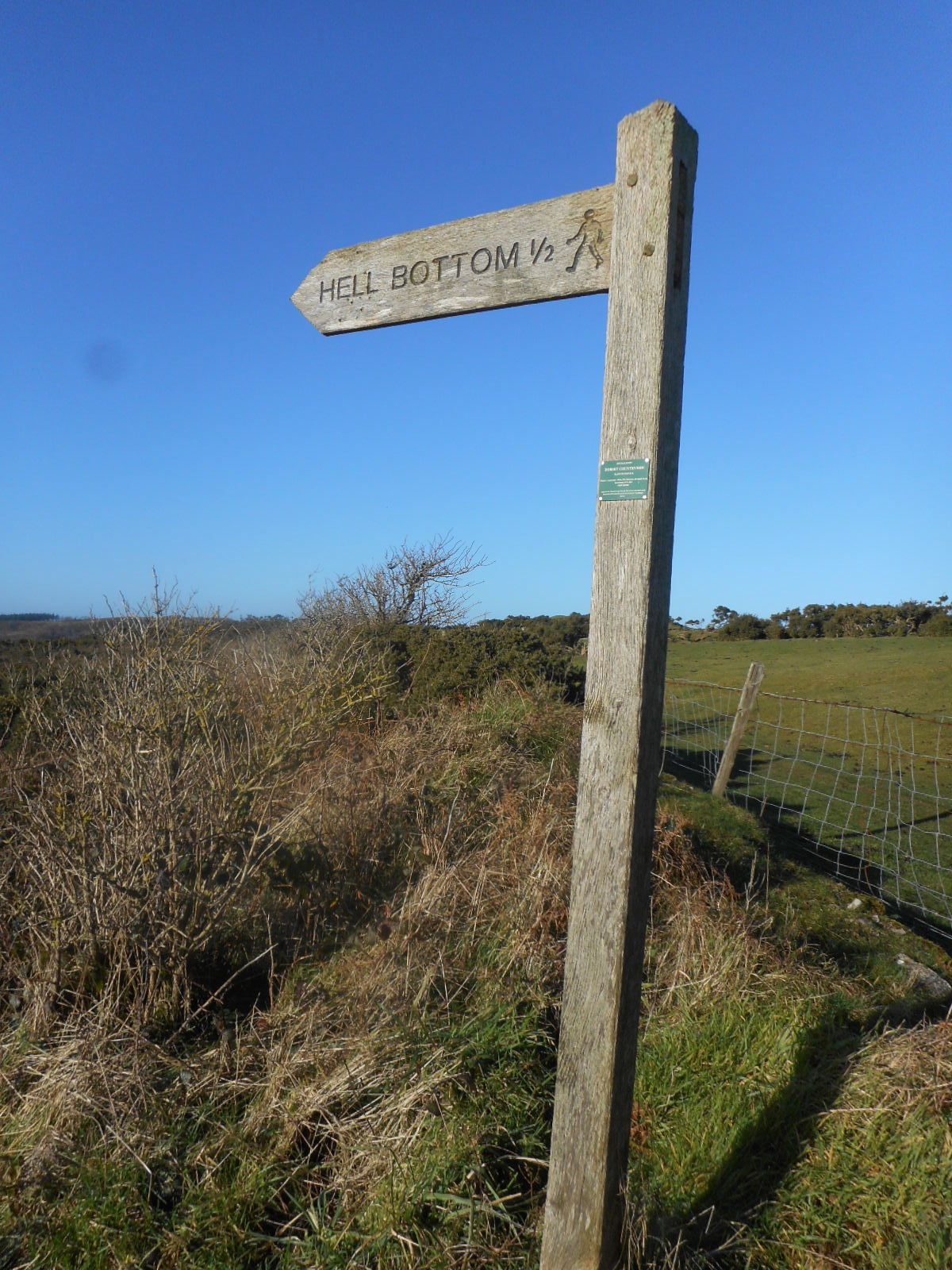
2017_0122ridgeway20018Having been much inspired by my walk along the South Dorset Ridgeway the other week, I decide to try a trek the other side of Hardy’s Monument. It’s a seven miles hike which, in truth, comprises two more miles than I’d like – it’s the old persons’ keep-fit class tomorrow and I’d prefer to be in with a chance. The new walk is an AA route march which includes the Valley of the Stones.

I’ve prepared really well. For a start, I deferred the walk from yesterday to a time when the sun is supposed to shine. I’ve pored over my OS map with a view to finding how I might lose a couple of miles without losing any of the stones and I think I’ve cracked it. I only have a single glass of the red stuff on Friday and none yesterday so I can be super-fit. What’s taken the most time is folding up the OS map in the opposite way to which the creases naturally sit: it takes ages and the result is an unpleasant bulky mess and, frankly, the ruination of what was, half an hour ago, a pristine representation of half the county. Not to worry. I have a brand spanking new rucksack purchased in the sales and all the usual paraphernalia. Lovely.

2017_0122ridgeway20019

It’s minus 3C when I leave home but the day has gained four degrees by the time I reach my starting point. The lane that wanders somewhat torturously away from the randomly placed McDonalds above Martinstown and up to Hardy’s Monument is still icy in patches. It has yet to benefit from the sun which, in truth, is struggling to make headway in the morning mist. Still, it means the ground will be hard rather than muddy. Coat on, rucksack on and where’s the map? Both of them, stuffed into their plastic folder are where I left them. On the settee indoors. Now that my son has pushed me screaming into the 21st century with a smart phone, I consider looking on it for a substitute. But I’m in the ancient past and there is, of course, no signal.

I know I’ll never remember the original route, let alone the shortening adjustment I was going to take – it was simply too complex. All those lost stones: the Hellstone, the Grey Mare and her Colts, Hampton stone circle, Kingston Russell stone circle, all gone in careless haste to get outside and ‘in the open air’. Disconsolately, I tramp up a slope so steep that the sharpness of the incline, combined with the bloody freezing ‘open air’, finds me gasping for breath less than ten minutes into the walk. I consider giving it all up as a bad idea and going home to redecorate the conservatory (another already out-of-hand idea born of the simple plan to invest in new blinds. Bloody, bloody plans). Still, the morning is too lovely to waste on washing plastic and pretending I know how to fill cracks in walls.

2017_0122ridgeway20002

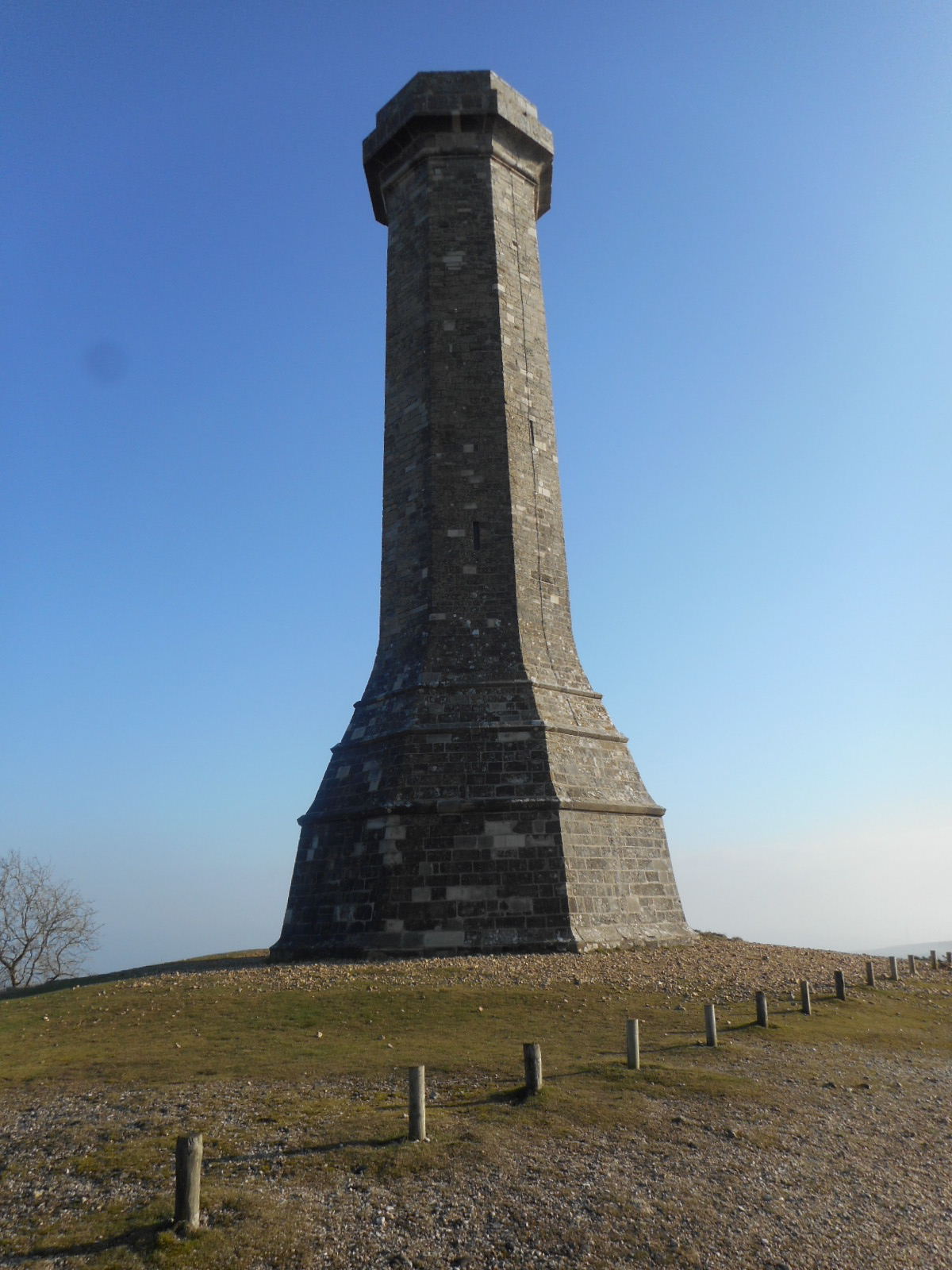
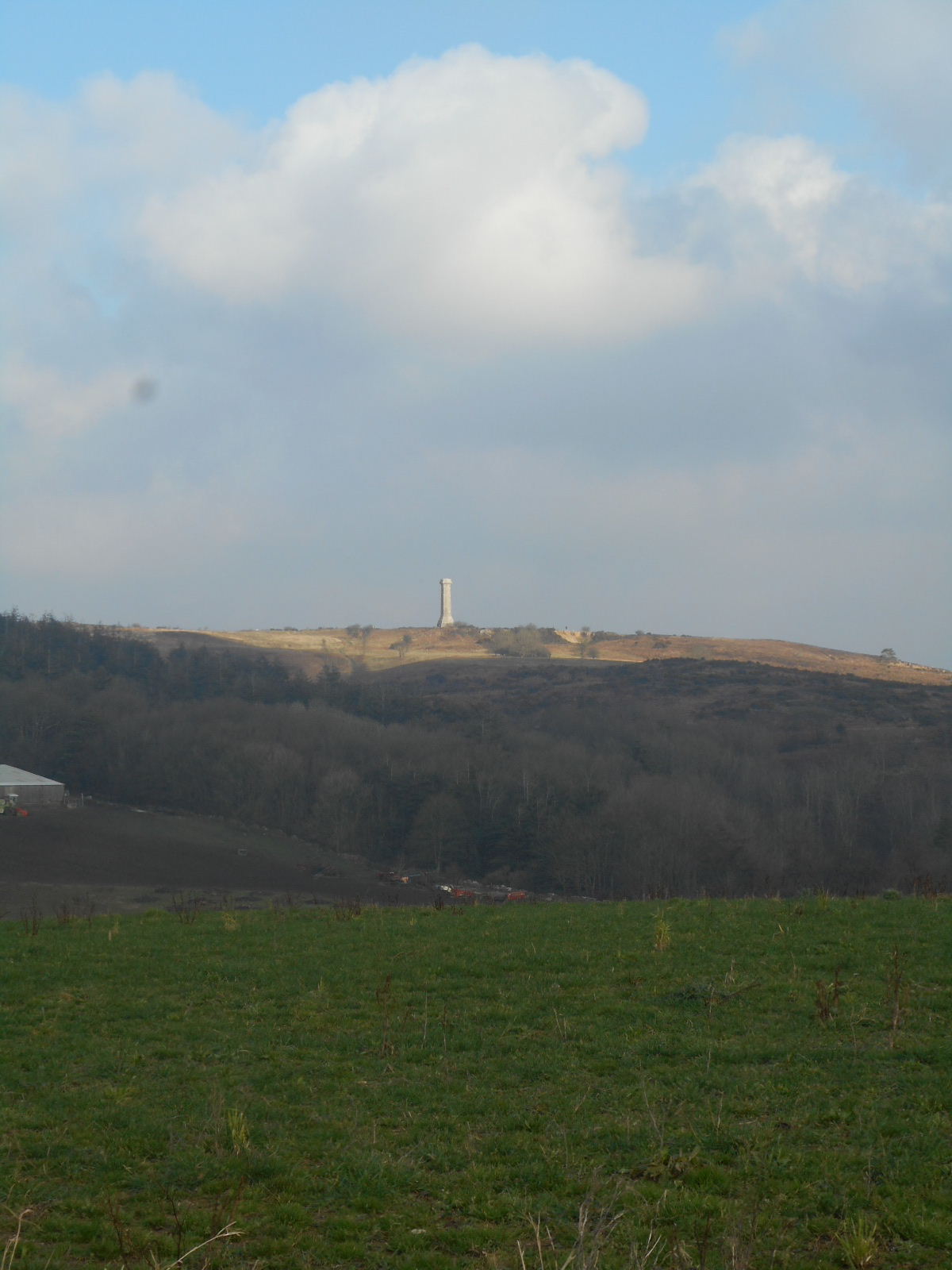
Further, on reaching and passing the strikingly unattractive monument, I find three of those pictorial boards that tell you what you’re looking at. The one that draws me in is the one about the Valley of the Stones and names all my missing ports of call plus a few more. The area is, I am usefully informed, home to one of the largest number of circles, dolmens and long barrows in the UK and thus comprises a most significant archaeological centre. I’m advised to look all around for any amount of important stones that have been lying around for eons. There’s even a sort of footpath marked in blue spots. It’s not the best rendition of a footpath but, nonetheless, the Valley of the Stones being where it’s all happening (or where it all happened), I head off downhill. Quite a long way downhill actually. My head’s spinning like a remake of The Exorcist: I don’t want to miss a single one of these stones that have waited so long for my arrival, especially the Hellstone which will be along shortly. I can’t actually see any stones. All I can see is Hardy’s horrid monument becoming a dot on the top of a hill I presume I’ll have to climb up at some point if I ever want to see my car again.

2017_0122ridgeway20007

Once, I think I’ve spotted a couple of rows of stones reminiscent of Carnac on a faraway hill but then I realise that their uniform shape means they’re actually those huge rolls of straw or corn or wheat or whatever those things are that farmers make and wrap in plastic. I’ll huff and I’ll puff and I’ll blow your stones down. Some time after, and in another direction, I become excited after spotting a promising looking field. The possible stones within are the right colour but then I notice that a couple of them are moving and I realise they’re sheep. Sick of struggling across scrubland, all alone in this world, I make a right turn and follow a proper path. And here’s Dennis and Irene and their dog, George, who has a stone stuck in his paw. Not a dolmen or a cairn though. ‘Good morning’, I chirp (far more brightly than how I feel). ‘Have you seen any stones?’ I’m not even wearing the green hat today but I might as well be dressed as a pixie judging by the expression on their faces. ‘It’s the Valley of the Stones’, I continue. ‘Dolmens and suchlike’. They’re pleasant enough, in the way people are when they’re nervous, but they’ve been walking these paths for years and have never yet seen any stones.

2017_0122ridgeway20003

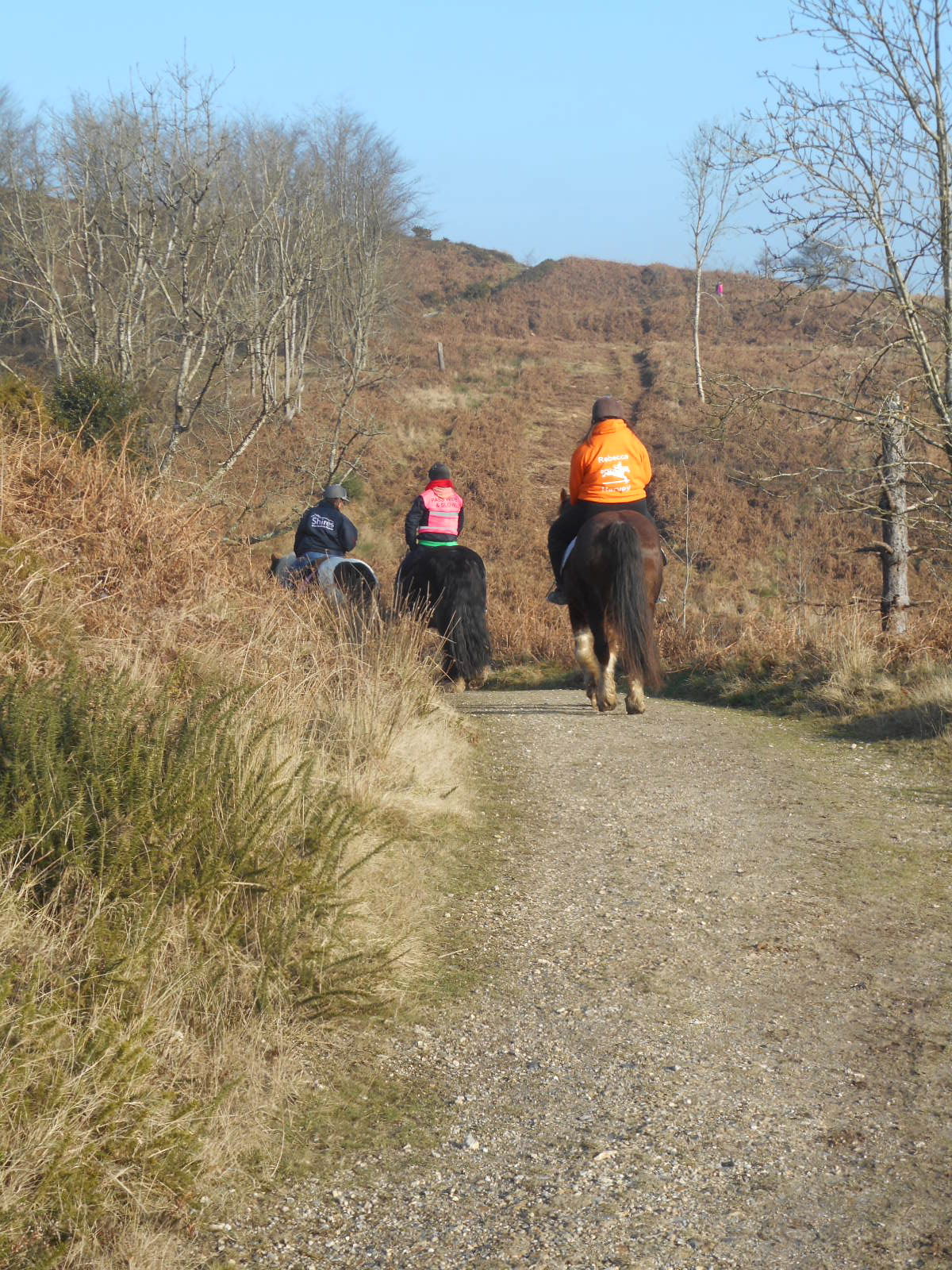
A group of riders appear. Their horses are like gypsies’ ponies. I don’t mean that in a discriminatory way. Folk in the know will immediately understand that these equines are of the heavy footed, long-haired variety. I completely forget the fact that I’m uncomfortable in close proximity to horses and, standing in their path, demand to know the whereabouts of the stones. The lead rider claims to have been trotting around these parts for five years and has never seen a dolmen or stone circle: ‘do you mean stones with writing on’, she asks? I find this an exceedingly curious question. As I’m not entirely sure what I’m looking for, I’m not sure of the answer. I doubt whether the stones I have in mind are inscribed with ‘Lludd was here’ or ‘Mynogan loves Belinus’.

I’ve already walked miles and can no longer see the monument which, devoid of a map, is my marker. I decide to turn right again and begin the ascent up a muddy, tree-lined path whereupon I meet Rachel and Gerry. Wearily, I commence my Valley of the Stones mantra. ‘This isn’t the Valley of the Stones’, Gerry says pleasantly; ‘it’s a couple of miles west of here’. And just as I’m retrieving my Swiss Army knife, in order to slash my wrists, Rachel says, ‘but while you’re here, you should see the Hellstone’. Hoorah! And they walk me back down the path and give me explicit directions on how to locate the Hellstone which, they claim, is well worth the visit.

2017_0122ridgeway20011

So I’m back on the South Dorset Ridgeway and life is grand. I’m off to see a stone except that when I get to the next field, it contains three ginormous cows and not an udder between them. Fortuitously, Simon and Linda are close at hand with their children, Oscar and Liam aged four and six. Reader, I’m going to let you into a secret: sometimes, I make up the names of folk I meet along the way. I attached myself to this family to the extent that not only do I know their names, I become a temporary extended member of their tribe. It’s a case of safety in numbers in the face of udderless cows who, as it transpires, have no interest in us whatsoever.

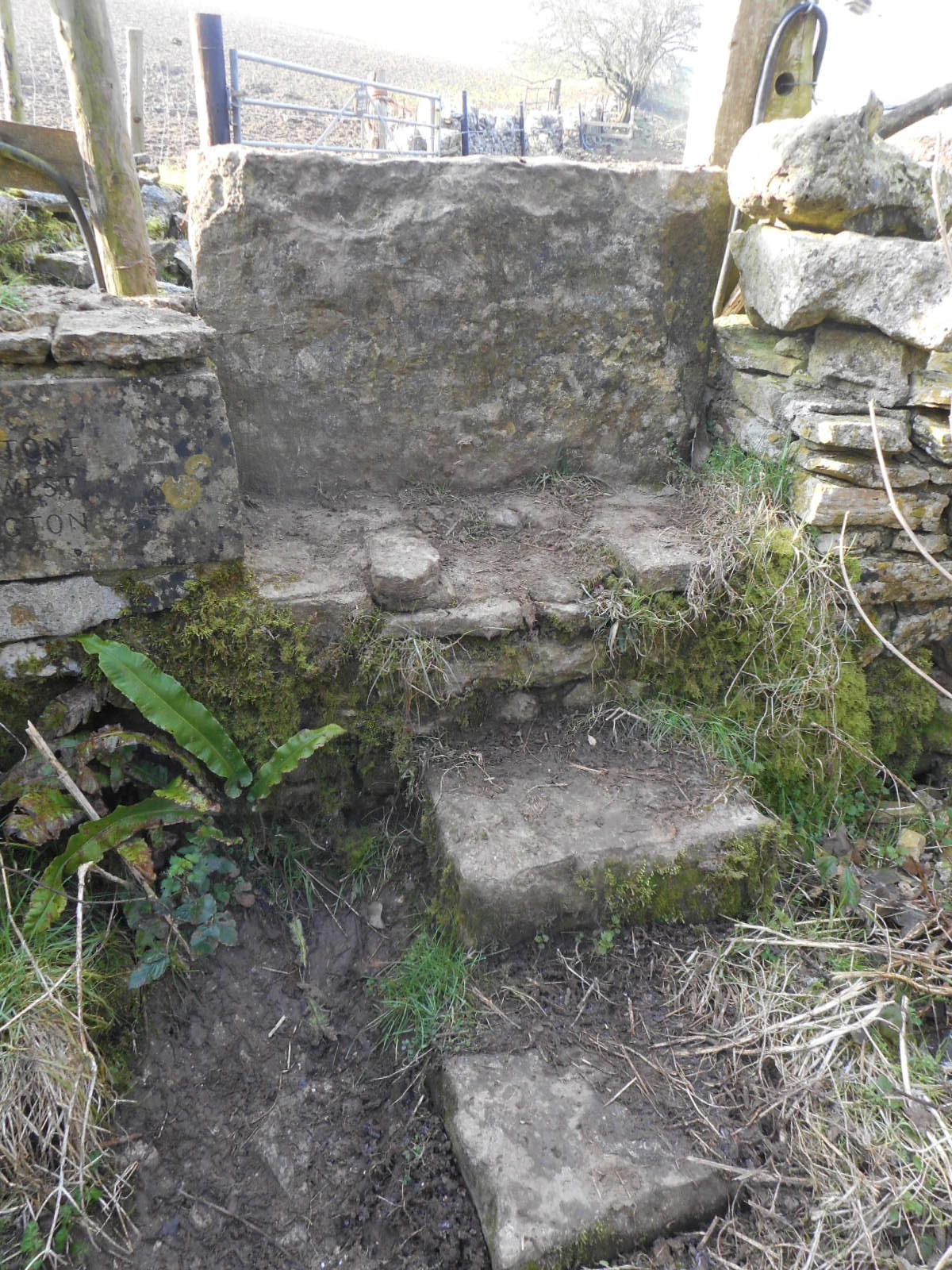
2017_0122ridgeway20004That farmer has done everything possible to thwart us reaching the Hellstone – Simon et al also having this as their goal, plus a map: we tramp though knee-high mud and poo, shimmy past electric fences, climb the most unfriendly stiles and still can’t find the thing. The brave children ask for sweets and are told they can have one when they get there. ‘How will we know when we’ve got there’, asks Liam?

2017_0122ridgeway20010

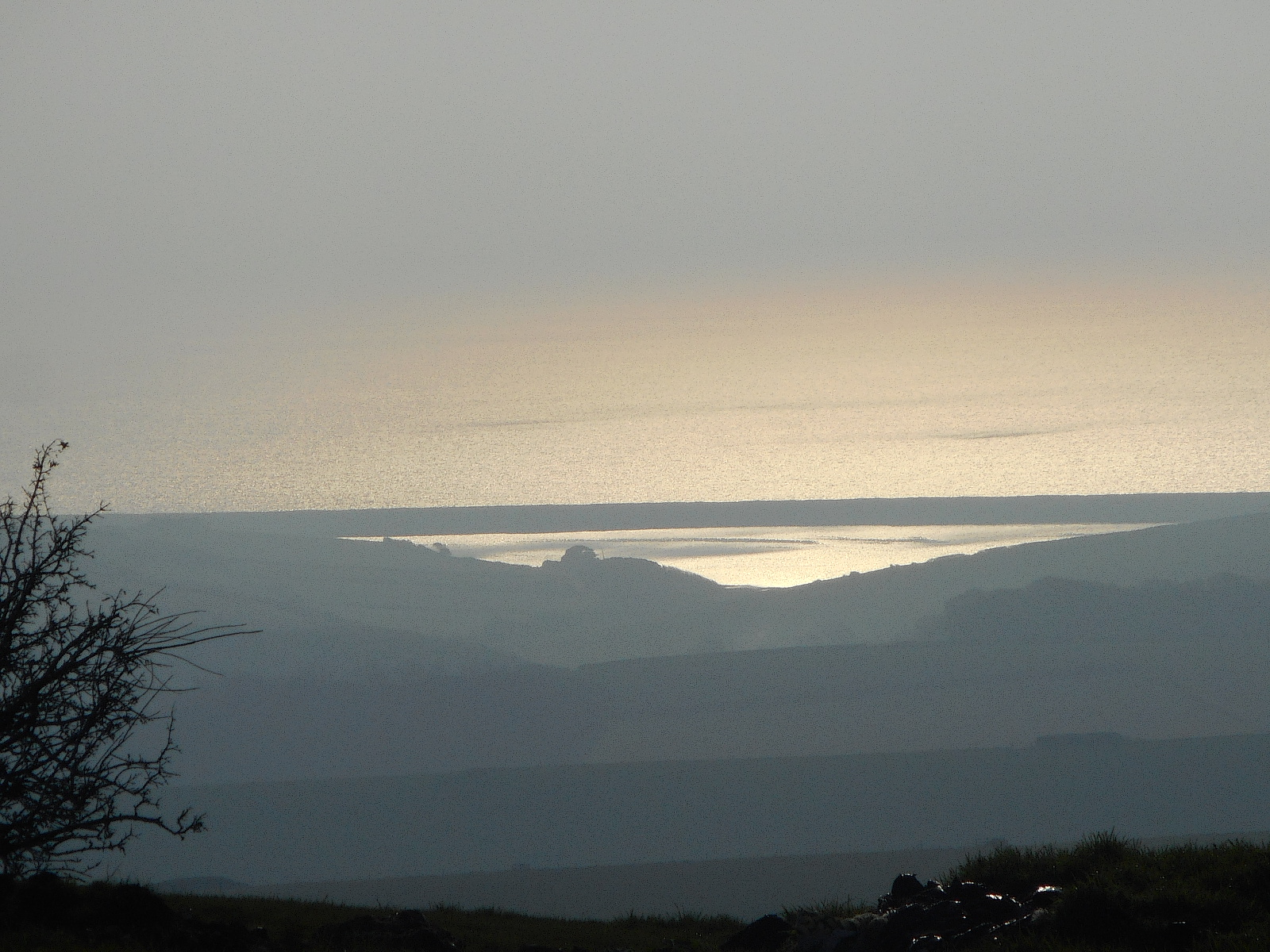
Good point son, none of has a clue what we’re looking for. Simon decides we’ve passed it and we all turn tail back into the mud. Then we spot it, high on a hill and I trudge upwards with my new acquaintances. I have to say, I’m impressed. I’d made my mind up to be impressed whatever, but I love it. Overlooking the sea, it’s Neolithic and is the oldest man-made structure still standing in Dorset. Oscar isn’t keen. ‘You’re so lucky that your mum and dad have brought you here’, I say. And I mean it and hope it doesn’t sound too patronising. ‘What would you rather be doing’, I ask. ‘Going to McDonalds and watching television’, he promptly replies.

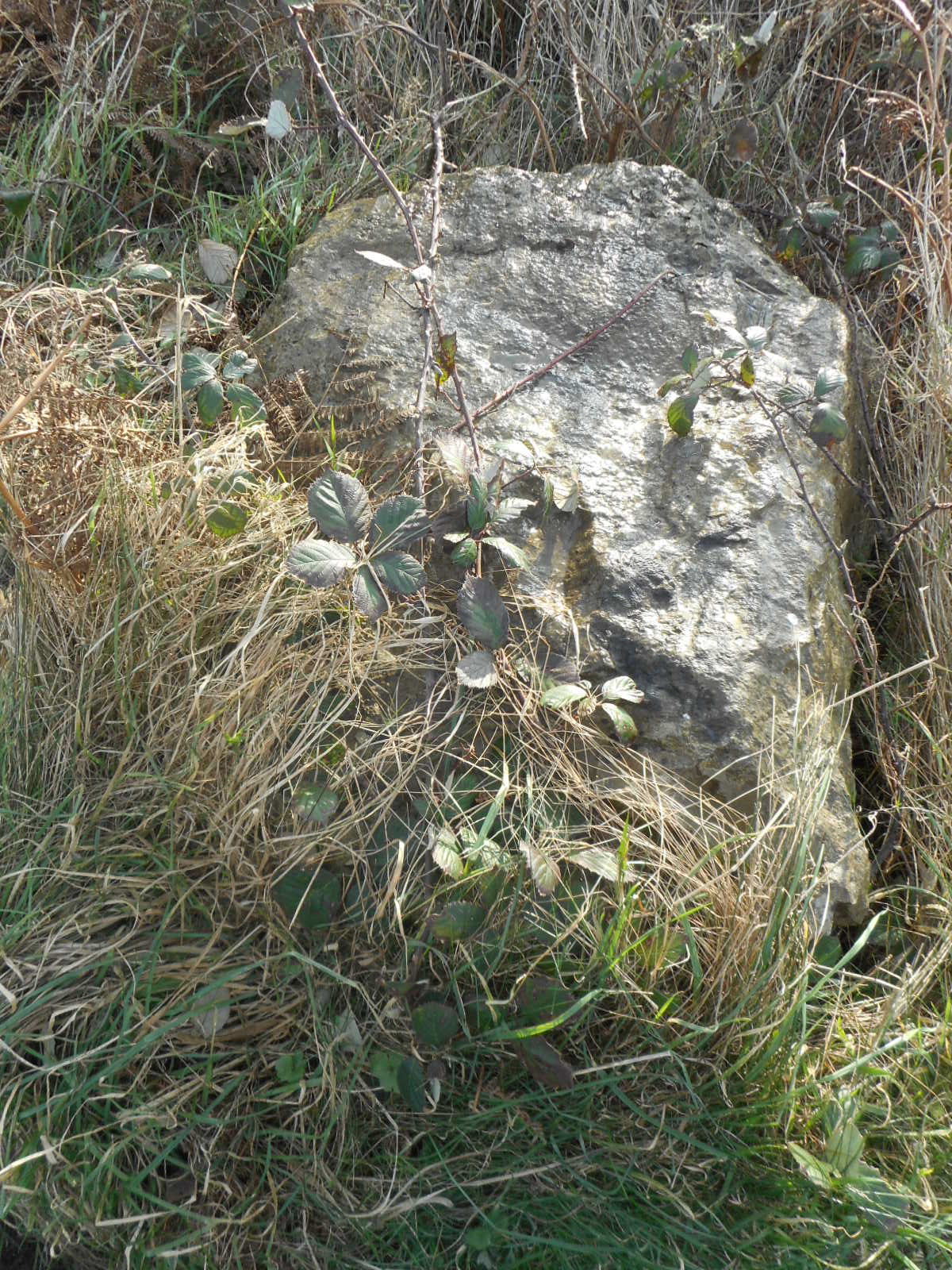
Once back down and through the cow-infested mud, I leave them and trudge uphill to be a welcome toy for many and varied joyously stupid spaniels. By the time I reach the summit, I am a muddy, exhausted mess. I sit on a stone and eat my lunch. When I get up and look behind, I notice the writing. Stones with writing. So that’s what she meant.

2017_0122ridgeway20017

2017_0122ridgeway20016

2017_0122ridgeway20015

Nothing to see here folks. Move along please

2017_0119badbury0012I could’ve done with a friend today. Or a dog. I walk the best part of six miles and never see a soul. Tell a lie: at one point, near nowhere, I see a chap on a bicycle. I’m busy trying to negotiate a gateway of cow poo at the time so don’t have the wherewithal to accost him. In any case, he either doesn’t see me or, alternatively, he’s spotted the hat which could explain why he’s going like the clappers along the edge of the field. I truly am Norma-no-Mates for at least two hours which makes me question the reason for walking alone in the country. Well, the reason is that no-one who’s free to accompany me will do so because they say it’s always too far. But, in the absence of a companion, and after planning tomorrow’s dinner menu, what I’m debating with myself has something to do with ‘place’.

2017_0119badbury0010Clearly, I have a constant desire to be outside, ‘in the air’ as grown-ups used to say when they didn’t want you indoors. And certainly I don’t mind going with me, myself and I on these expeditions. But I don’t crave constant solitude: it’s the little chats with strangers along the way that make the thing meaningful. Fossils and flints hold little sway for your narrator: discovering an interesting nugget of information from another person’s life is what inspires me to write my traveller’s logs. The photographs are by way of a contextual backdrop or an aide memoire if you like.

2017_0119badbury0001This morning, I head off inland to an old favourite – Badbury Rings, with a view to walking the paths behind this Iron Age hill fort that I haven’t previously traversed. Badbury Rings is the 5th in a chain of six earthworks. For the more spiritually minded, there’s a world of esotericism to be explored in the notion of links between these named sites and others such as the geomantic (and close at hand) Knowlton Church and rings which are not in the ‘official’ chain. I’m not immune to such things. I’ve dabbled in the not-so-distant past. More prosaically, many of the routes I follow are the leftovers of five Roman roads that formed an important junction outside the rings and today’s walk commences on one such old straight track that eventually embraces the Ackling Dyke. So when I say, ‘I never see a soul’, I like to think I’m amongst them.

2017_0119badbury0005I purposely skirt the Rings: like the chocolate caramel, I’m leaving them for last. I have to earn them by traipsing along slippery tracks that have no chance of defrosting in the foreseeable future. Had I known that the man with a dog coming in the opposite direction would be the last human being I’d see for some time, I might’ve have waylaid him. But I don’t.


2017_0119badbury00132017_0119badbury0018

2017_0119badbury0019


2017_0119badbury0016I have two maps both of which I’m following the wrong way. By this, I mean I can’t usefully relate to the accompanying written instructions and as I’m in open, unmarked countryside, there’s no useful landmarks which is why I called this weasel ‘nothing to see’. There’s plenty to see in terms of open countryside and all sorts of hints that this was once an important landscape. One of my maps, which is honest enough to admit is has no sense of scale, promises two stars on Kingdown: different symbols to our beloved Ordnance Survey but I suspect they may be tumuli.

2017_0119badbury0023And, all of a sudden, there they are: dutifully protected by a circle of wooden markers in the middle of otherwise organised agriculture. At this point, I’m on The Hardy Way. Never heard of it and when I look it up later, I find it starts at Chesil Beach and ends five minutes away at Portland. In between, having taken the scenic route, it ambles through most of north Dorset and south Wiltshire which I feel is stretching a point or two.

2017_0119badbury0026Finally, I arrive at Sterley Bushes which is the mediaeval name for The Oaks; a plantation of seven hundred years old trees that have been allowed to naturally rot in order that rare beetles and fungi can prosper. In the old days, I’ve been up here on the winter solstice and hugged a tree or three whilst ancient men told even older tales in the oral story telling tradition. That’s all dead and gone now as are they to be replaced by the despicable National Trust – an organisation whose very name comprises an hideous and confusing lie.

2017_0119badbury00282017_0119badbury0031I emerge, much later than anticipated, back on the Rings. In the summer these grasslands will be covered in thirty two varieties of wild orchid and even though there’s no colour today, I feel at ease and thankful.

2017_0119badbury0030After my solitary walk, I drive back into Wimborne and visit not only my favourite shop in that town, but possibly the nicest retail joint in Dorset, with the most gentle proprietor one could meet. After careful deliberation, I choose a gift for my London type friends. As ever, Alan takes a year and a day to dress the present during which time we catch up on our emotions.

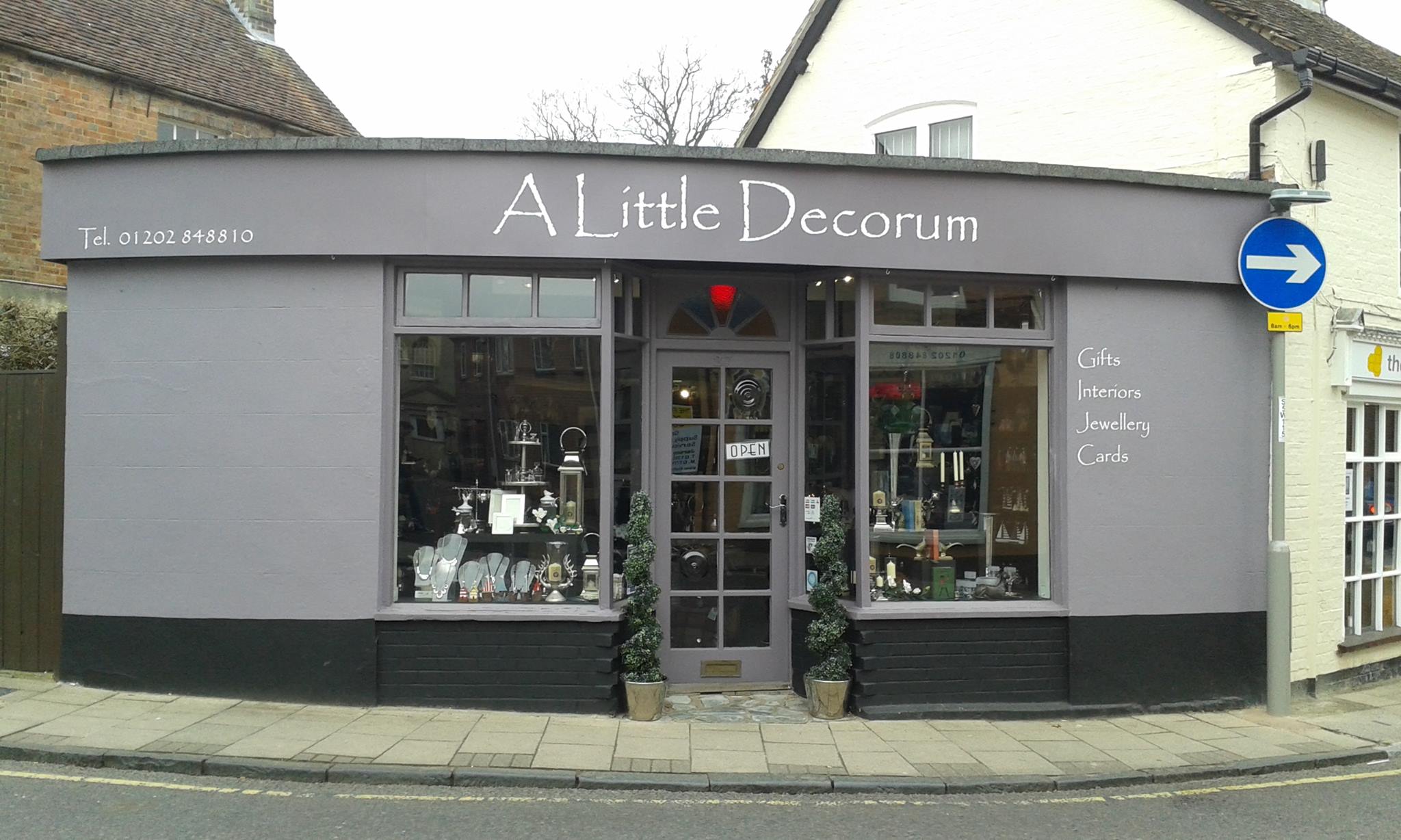
decorumThe last time I saw him, just before Christmas, we were both attending a funeral the following day and we exchange thoughts. And Alan tells me how he used to be a famous costumier. I never knew this. He’d just signed a contract to do Madonna’s dresses for the film of Evita when, the following day, he had a massive heart attack. He left that life and opened his delightful shop in Wimborne. ‘I wanted to be a world away’, he says. I tell him about my walk and he laughs at me having no-one to talk with. But I don’t because I’ve just had the most interesting conversation with someone I thought I knew.


In which I lose two cairns, miss a turning and invent a route

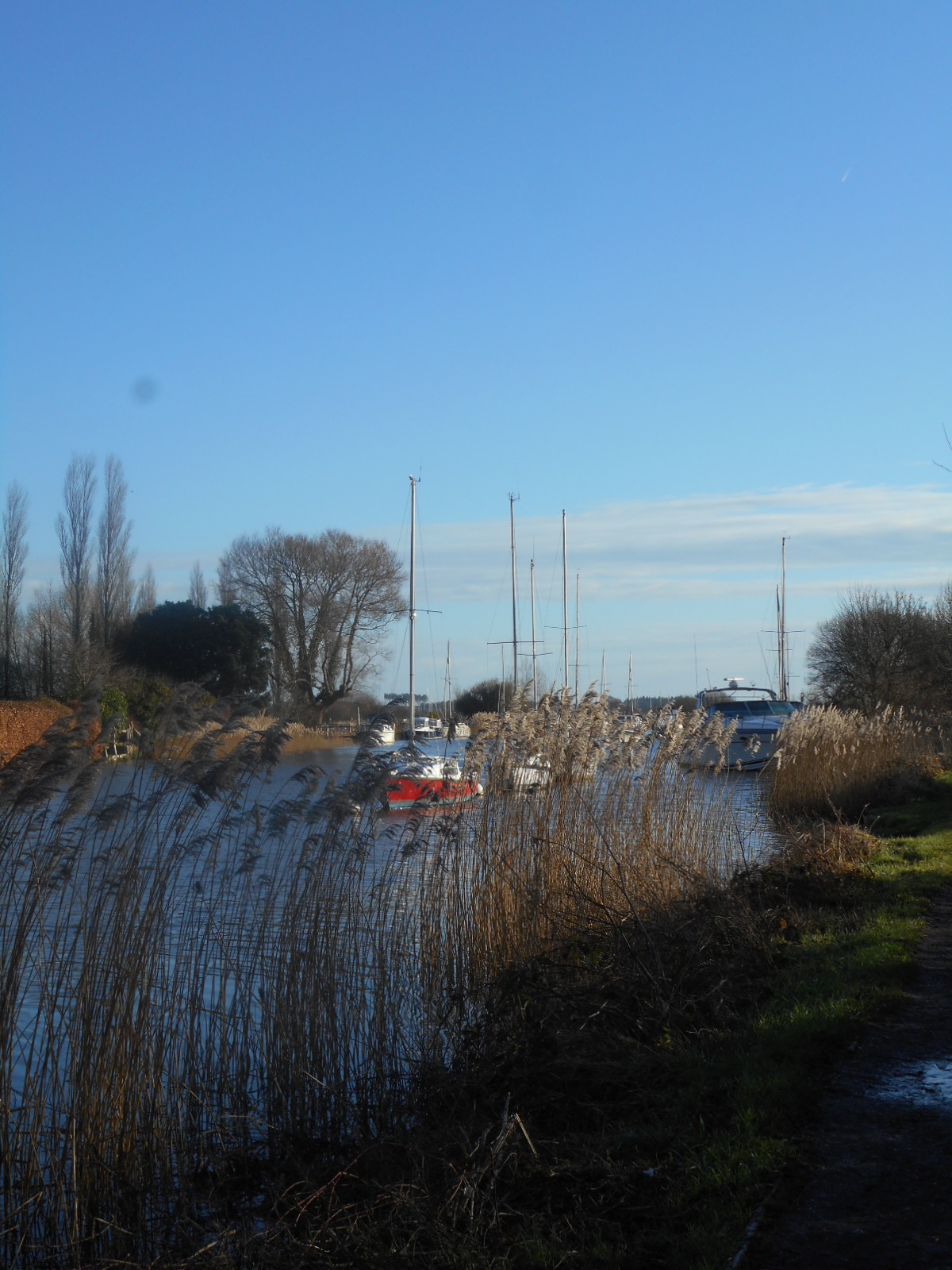
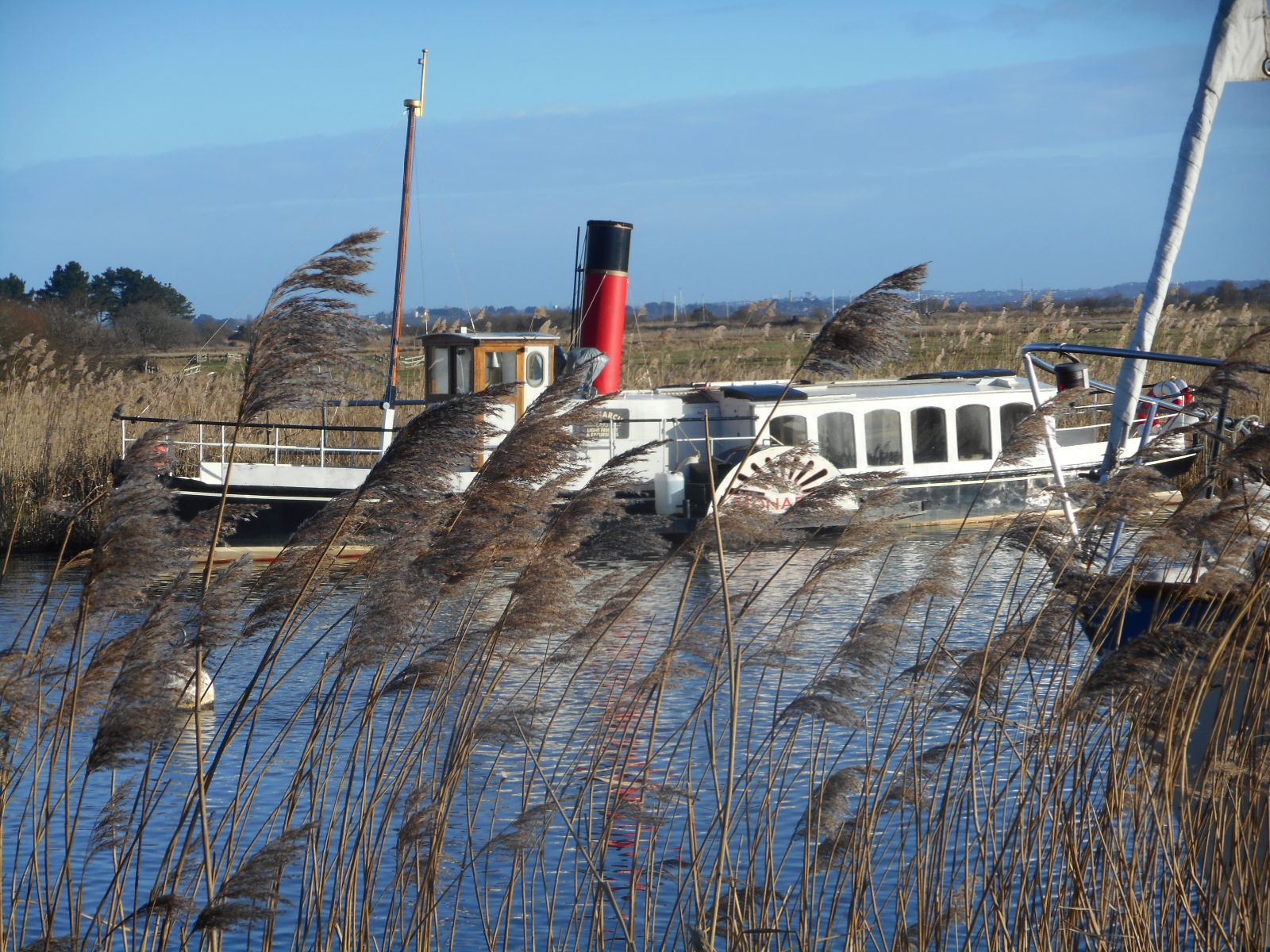
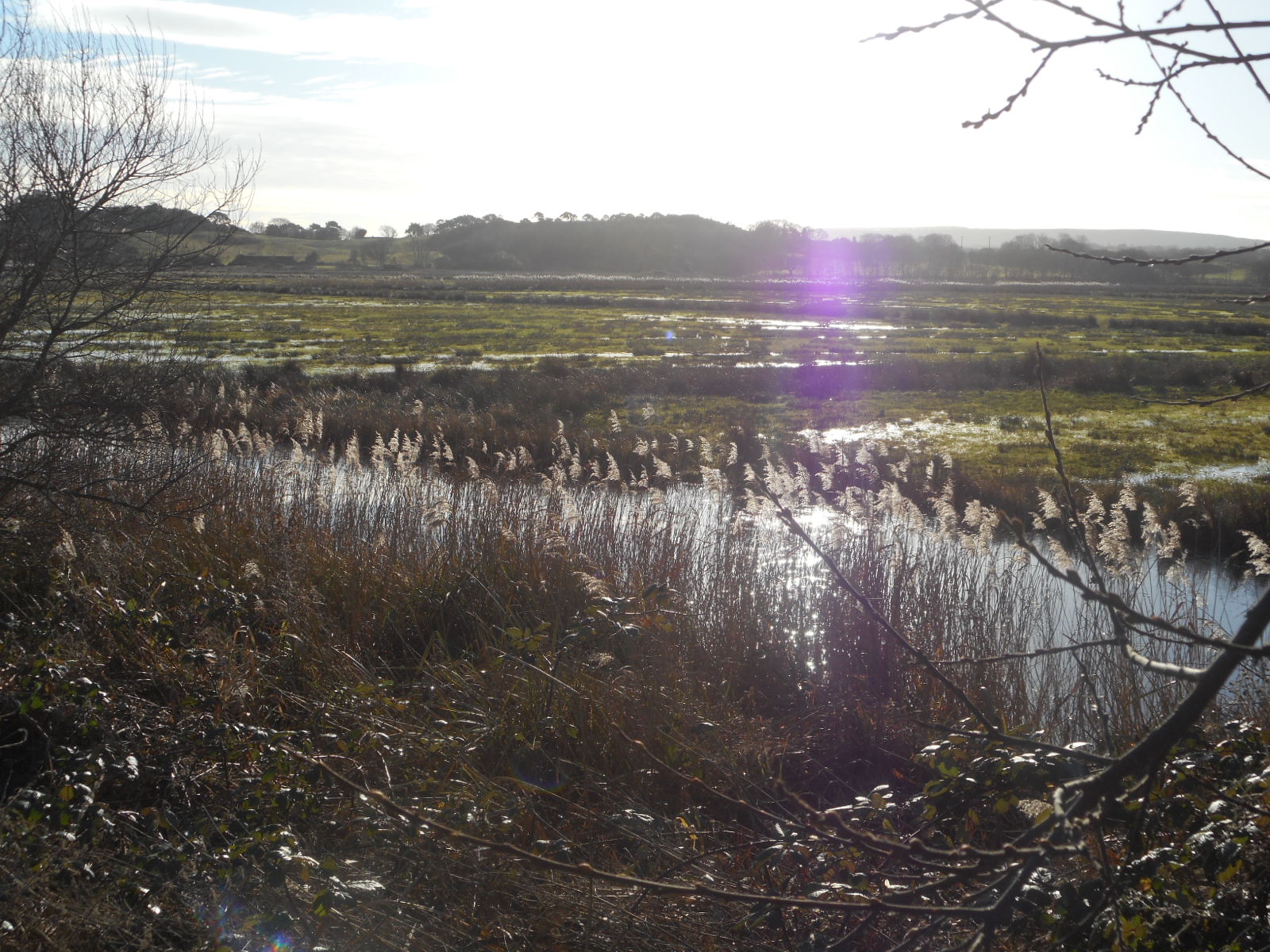
2017_0114warehamwalk0003‘That map’s rubbish’, states Peter angrily and I think he might be right. However, when I begin my walk along the Poole Harbour Trail at Wareham Bridge, all seems well in this freezing world and I have yet to meet him. I’ve walked the opposite bank of the River Frome previously but this side is far more attractive and accessible.


2017_0114warehamwalk0008


2017_0114warehamwalk0006To my right, the water meadows are, unsurprisingly, fairly wet although not yet completely immersed. Think of all the usual descriptions of sunlight on water, pick your favourite, and there you have it. I’m not going to make up any new metaphors and similes. And even though a river is not always my favourite of waterways, I am, as usual, disappointed to leave it behind as I make an eventual right turn up a hill, as indicated on the map.

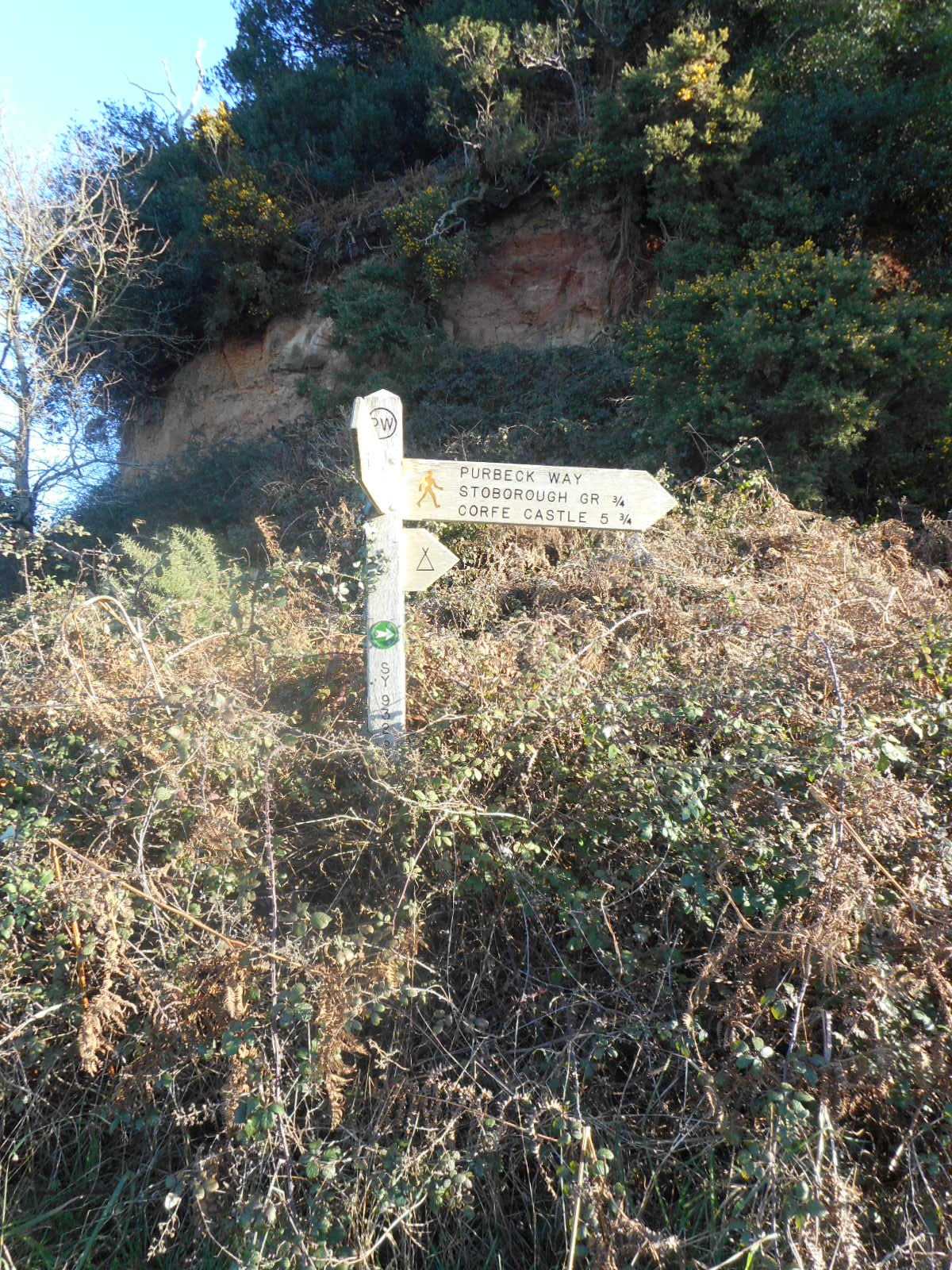
2017_0114warehamwalk0012It’s a pictorial map: it depicts three bird varieties, a butterfly, a deer, a couple of trees and two cairns. Not much in the way of directions though; just some dots wriggling across miles of pale green nothingness. Still, I’m looking forward to the cairns. Wareham boasts archaeological evidence of Mesolithic activity around 9000 BCE so you can be sure the ancients were traipsing  here eons ago. Perhaps, they, too, were following the Purbeck Way. Later, I will reflect on why I’m actually following signs for the Purbeck Way: possibly because they look rustic and, more importantly, because there aren’t any other signs. Perhaps it means do it in the Purbeck Way – a sort of rural Lambeth Walk. Whatever, it’s only in the evening that I notice the infamous PW isn’t mentioned once on The Map.

2017_0114warehamwalk0020

So I trickle on down into Ridge. This is nice. I’ve not been to Ridge before which might explain why I don’t know where to go now. I can see where the next wooden signpost is pointing but it doesn’t look very interesting so I ask Peter who’s just emerging from his car having been into town to collect The Telegraph. Bad move Peter. His day was going so well until that irritating woman in a green hat appeared. I show him my map of which, up until this moment, I’d been quite proud. I explain that I’m following the route backwards. He’s unimpressed. ‘This map’s all wrong’, Peter says. ‘Who drew it’, he demands as he looks for names? ‘You need to go down here, turn right at Sunnyside, go up Soldiers Road, turn left, go over the cattle grid and turn right’. I don’t want to go down there but I’m frightened. ‘I’d like to see the cairns’, I suggest. ‘Oh cairns’, says he, ‘nothing but piles of stones’. Correct. I try to engage him in history: ‘Why is it called Soldiers Road’, I ask in my most pleasant voice? ‘I don’t know’, admits the man who clearly knows everything.

2017_0114warehamwalk0024

During WW1, Wareham became a garrison town, home to 7000 soldiers who lived and trained in the environs. Perhaps they were, from time to time, following the Purbeck Way. Given that it’s a relatively small country town, the cemetery contains many graves of soldiers of diverse nationalities from both of the major wars. I try a spot of green-hatted joviality: ‘perhaps you could go inside and make a lovely new map’, I venture. But Peter’s having none of it. The woman from the tourist information joint lives down the lane and he’s off to make an official complaint.

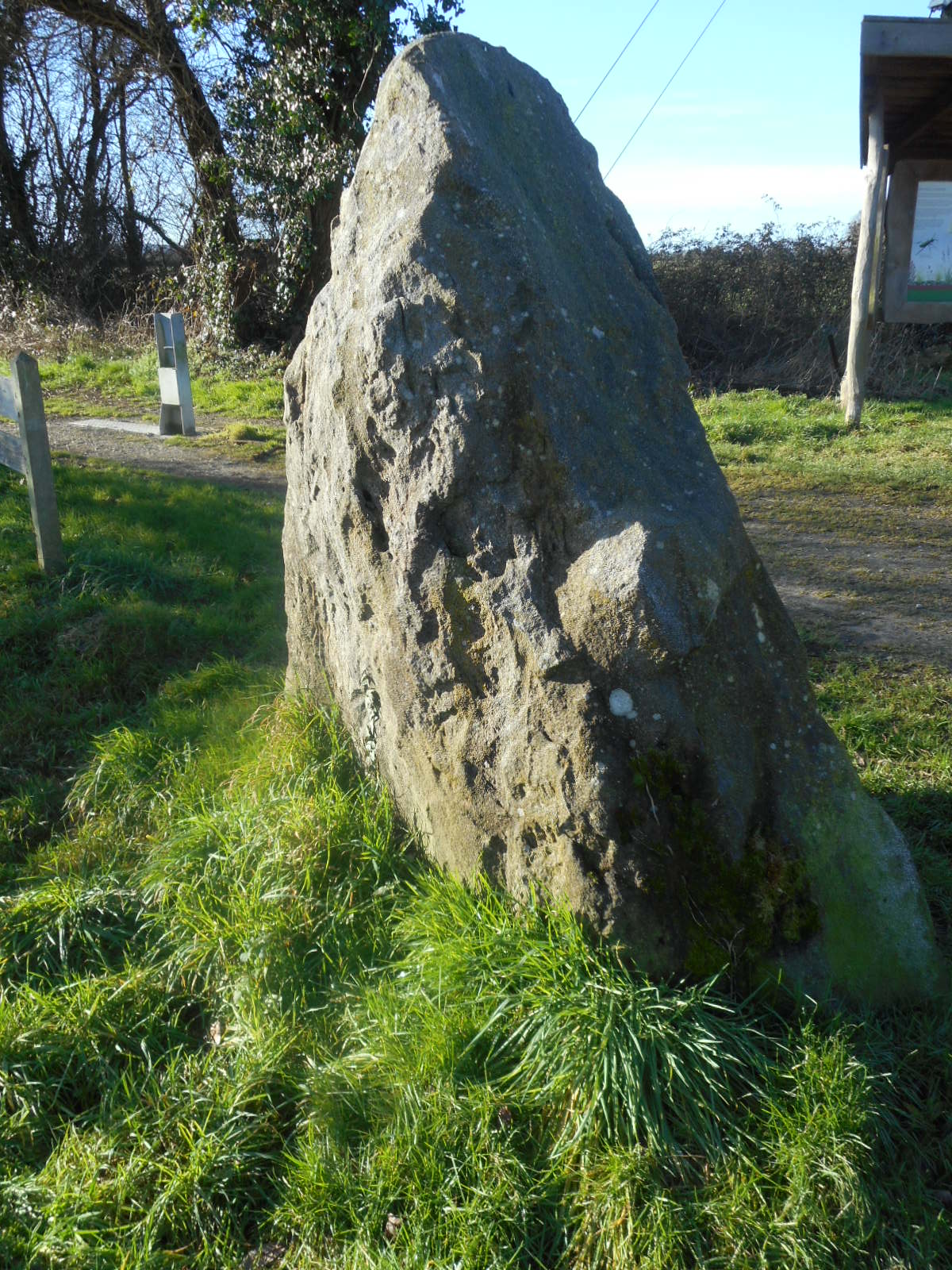
2017_0114warehamwalk0013The thing is, he’s right: I go down there, turn into Sunnyside, up the first part of Soldiers Road, cross the road and arrive, unexpectedly, at a random menhir. So, it’s not a cairn but I like it and it marks my entry to Pike’s Tramway which goes on and on and on and on. Further, this tramway is on my map although its position there bears no relation to the truth of the matter. As ever, I’m all alone. Just the other day, a well-meaning friend suggested that if I was intent on walking alone across vast swathes of countryside populated only by ghosts, it might be an idea to tell someone beforehand and maybe call in from time to time. The trouble is I seldom know where I’m going let alone where I am. And on days as glorious as these, I tend to forget all that outside world stuff which, in truth, is the point of it all.

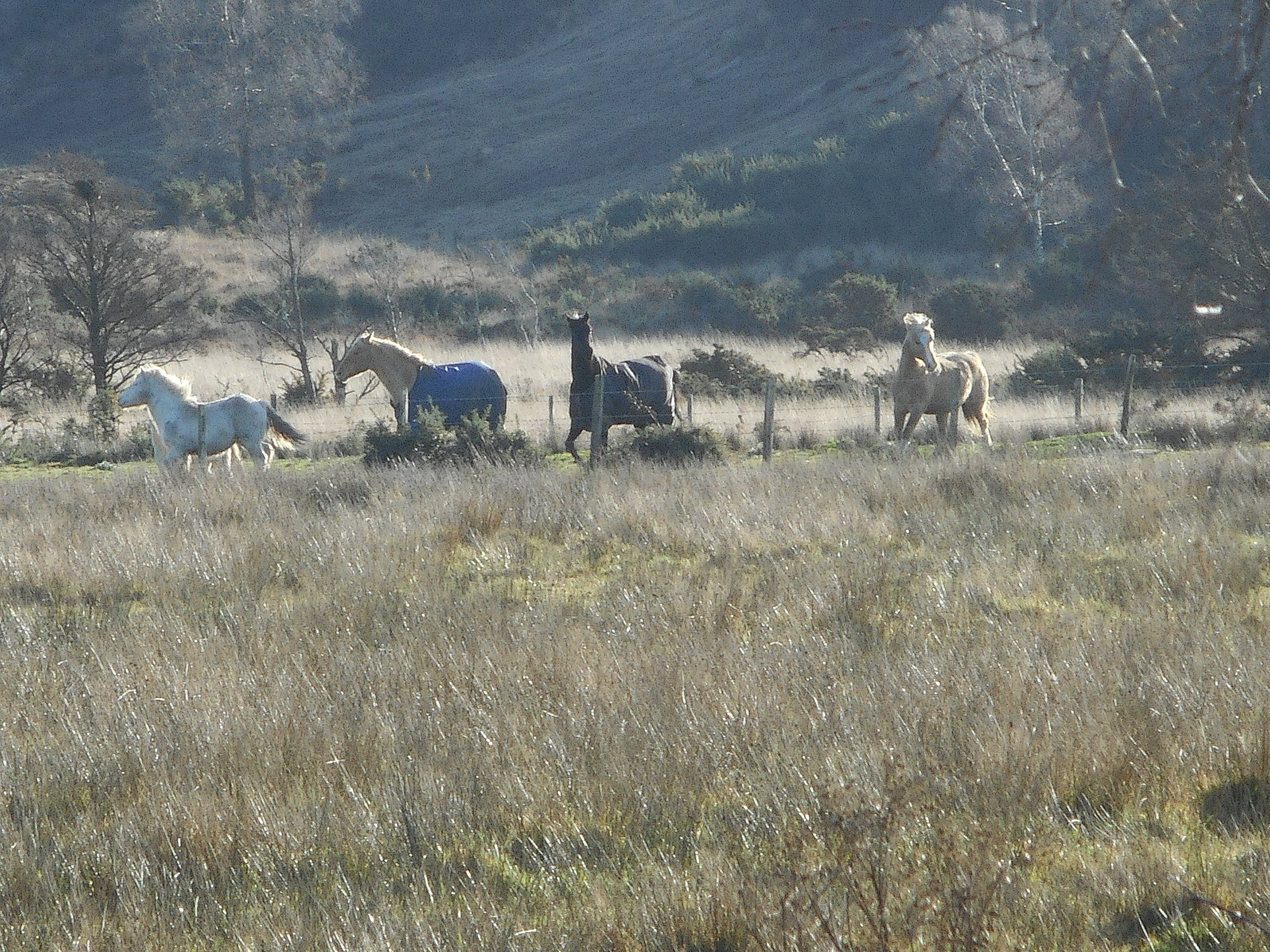
2017_0114warehamwalk0017For example, all I’m aware of now is the thud of a hundred historical horses’ hooves as they gallop across Middlebere carrying armies of soldiers. La de da. Suddenly, to my left, a herd of horses appear, galloping at dangerously high speed across the heath. No soldiers in sight but these animals are both exhilarating and frightening.

Not that long ago, and not too far away, I was driving along happily looking for a ‘pick your own’ joint when I spotted a group of donkeys. I pulled up and left the car in order to take a few snaps of these kindly animals. The kindly animals surged forward. I jumped back in the car whereupon those bastard donkeys surrounded me, showed me their horrid teeth and began to gnaw at the bonnet. That would be the car’s bonnet. I don’t do bonnets: I do lime green knitted hats. Anyway, I’m not too keen on horses, donkeys, cows, unknown dogs and so forth.

2017_0114warehamwalk0019The endless Pike’s Tramway is an old clay railway that once traversed the heath from Furzebrook to Ridge Wharf. It was operated by seven steam engines, all of which must have bypassed the cairns as do I. Oh look, here comes Janet and David. It’s been so long since I had a conversation with anyone and those two were having such a nice morning. Before they can blink, I’ve separated them: David, a sensible type, says, humming an old Simon and Garfunkel tune, he’ll just carry on homeward bound. Janet insists on turning tail to help me find the right gate off the tramway. It’s ok Janet – I can do it. But Janet wants to share her fears. It’s her first trip out for months since she fell over at Scotland Farm and broke her wrist. ‘Scotland Farm – National Trust’, she explains as though that thieving crowd are too inept to manage their own sneaky tree roots. And now, with David a mere speck on the horizon, she has to wend her icy way home alone. I feel immensely guilty. All my life, random people who I will never meet again have insisted on sharing their darkest fears. Can’t they see I’m not a kindly type?

2017_0114warehamwalk0030I try to change the subject and ask her about Soldiers Road. Not a clue. During the English Civil War, Wareham was a ferocious hive of activity although, like Boris, they kept changing sides every fortnight. In August, 1644, 2000 Cromwellian soldiers besieged the town after which, they all went to the pub. And previously, when Corfe Castle was being sacked, the Parliamentarians invaded. Both parties would’ve come up the River Frome, landed at Wareham and tracked across the heath. Neither comprised affiliated armies – they were simply bored and drunken young men looking for trouble.

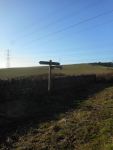
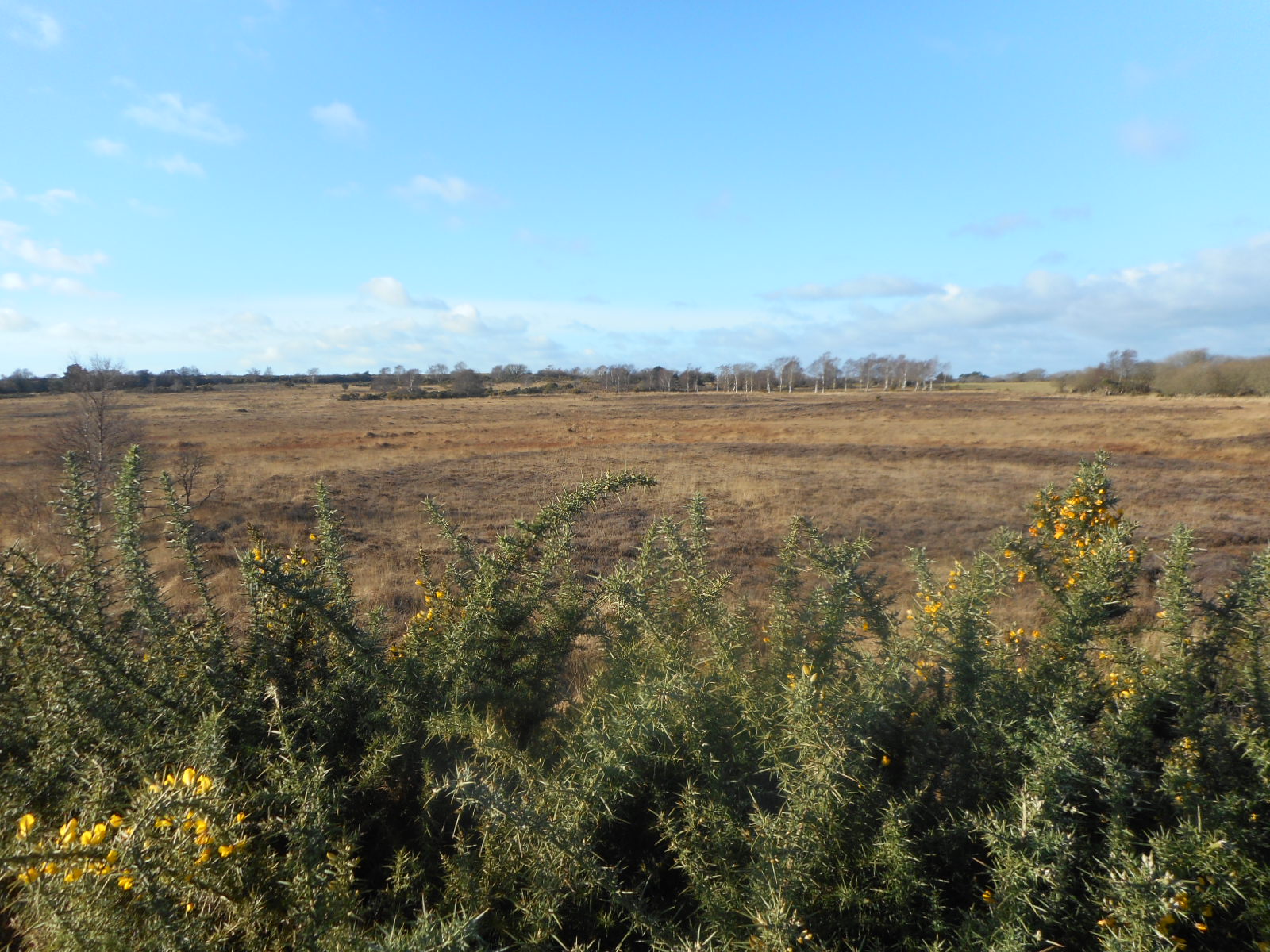
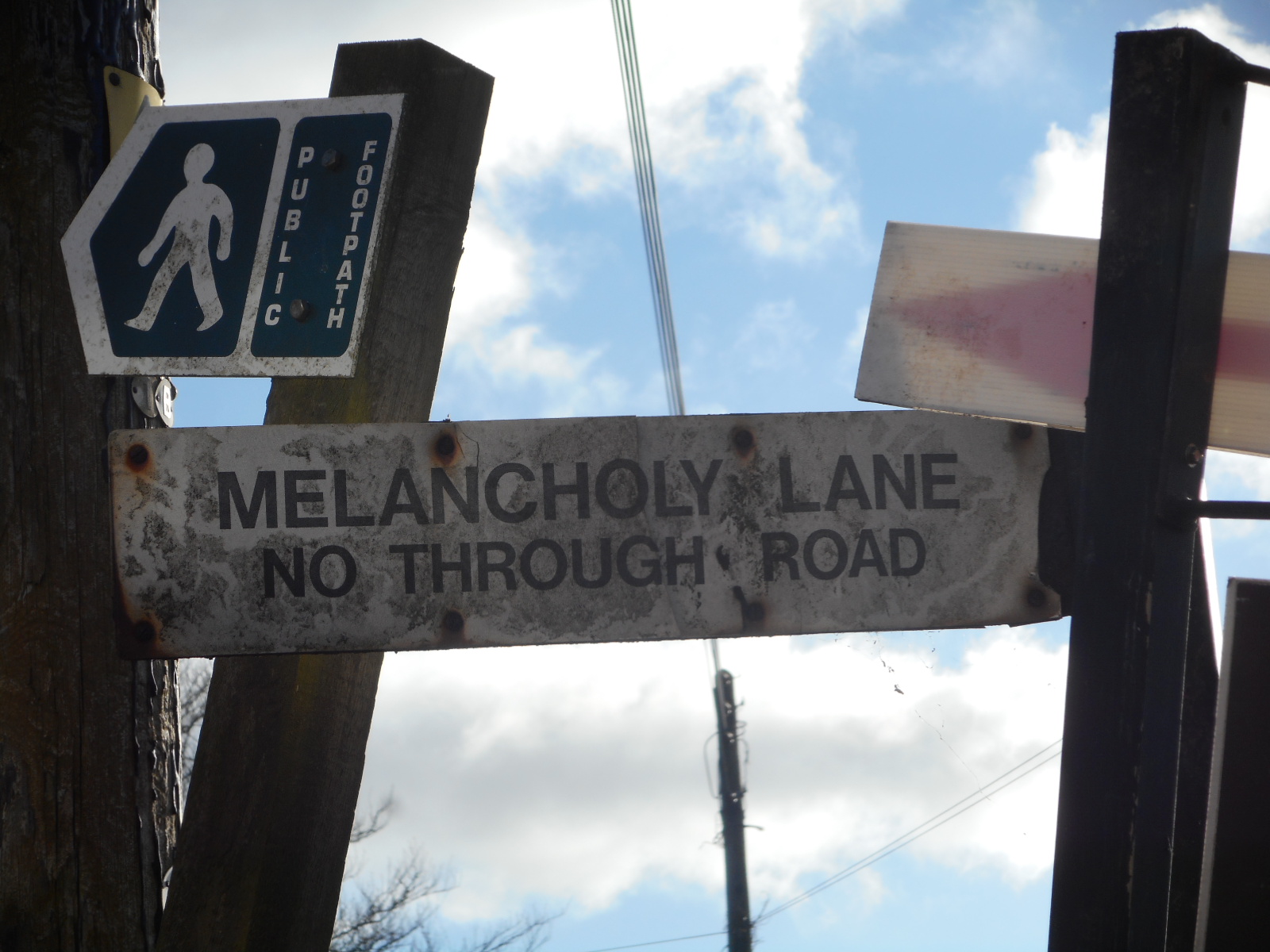
2017_0114warehamwalk0039 I turn from the path and discover that, although I’ve missed the cairns and the so-called view-points, I can see across the harbour. I have lost the path and I’m walking in the wrong direction but it’s difficult to believe I would’ve seen more going the other way. And I find a stile, a wood and a walk down Melancholy Lane which, appropriately, is a ‘no-through road’. Thank goodness, we might have ended in the land of eternal sadness. I walk through Stoborough, cross the path towards Grange, along the causeway, and back into Wareham.

2017_0114warehamwalk0032And speaking of the path to Grange, which waits for another day – the Rev John Hutchins records a phantom army, comprising several thousand, seen from Grange Hill in 1678. Perhaps they’d traversed Soldiers Way.


A barrowful of prehistory

(NB: the photos are rather small but you can click on them if you’d like to see more detail)
2017_0102ridgeway0039A new year and a new walk through the oldest of times. So often I’ve driven along that part of the A35 between Winterborne Abbas and Bridport with my eyes anywhere except on the road. Here are huge skies in which large birds soar, glide and hover over a sacred landscape, harmoniously mapped by nature and the ancients who lived within. To the left, the countryside is especially alluring with its abundance of prehistoric barrows, seemingly aligned with other haunting sites both near and far. When I used to make those weekly trips to Cornwall, with my heart in my boots, this was the only part of that god-awful drive I looked forward to. The only reason I’ve never traversed the South Dorset Ridgeway on foot is because it’s an awfully long way up there. And you know me and hills. But I find instructions for a walk that, whilst sadly not categorised in the ‘easy’ range, might nonetheless be a suitable taster for future adventures.
2017_0102ridgeway0001

I park outside the mediaeval church in Martinstown. I like the idea that Monsieur Martin shadows me, even if he isn’t chez lui with the ponies. The clock-face on the tower reports 10.35 so I should easily be back in time for lunch. Forging a way up the initial incline, I discover that my freshly printed sheets of directions have somehow come into contact with my water bottle and are already blurred. Further, by the time I reach instruction number two, I am already lost and the only way forward seems to involve cows. I don’t much care for cows. Fortuitously, Steven and Linda have simultaneously arrived in the same field at the same time on their way from Maiden Castle to who-knows-where. I look at their map and they look at my water-logged instructions. Linda and I discuss possibilities, Steven yawns, we all wish each other a better year than the last and, whilst the cows have their backs turned, I scamper across the muddy field, through a handy gate and into the woods. There’s a rumpus in the trees to my left: must be a very big bird. Two pigeons scatter away. Bloody pigeons, I think; they’re always making so much noise you’d think a big bird was at hand. And before I’ve time to reach for the camera, a huge brown bird of prey emerges and flies all the way down the path in front of me before disappearing into the ages.
2017_0102ridgeway0005

My damp instructions remind me of Marty McFly’s photographs in Back to the Future: every time I look at them, a bit more of the writing has faded away. Soon, nothing will exist. The wet words, prompts in a surreal pantomime, advise me to look back if I want to see Clandon Bowl Barrow: altogether now – ‘it’s behind you’. And there it is, resting like a huge breast on the skyline. Too late, Marty, the present has gone.
 

2017_0102ridgeway0007

The paperwork comprises largely unhelpful directions such as ‘ignore this track’, ‘look for this gate’, ‘turn right at this barrow’. In my world there are only tracks, gates and barrows. And sheep. But, in this most glorious of sun-soaked mornings, what a fabulous existence it is even if it’s something of a struggle to locate the right track, gate and barrow.
2017_0102ridgeway0016

2017_0102ridgeway0008

2017_0102ridgeway0011


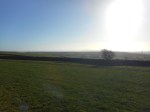
Suddenly, as promised, I’m alone on the Ridgeway overlooking the ocean, the lagoon, Chesil Beach, Weymouth or Budmouth as Hardy would have it. I am Eustacia Vye. I am Tess. I am Bathsheba. I’m an unknown heroine of a literary landscape.
2017_0102ridgeway0020

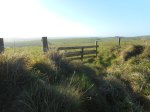
‘Excuse me’, says the Daily Express reader, ‘are you an archaeologist?’ I’m holding the gate open for this unexpected and unwanted intruder. That’s all. Why does he ascribe this profession to me? Could it be my lime green knitted hat? I’ve observed that archaeologists on television sometimes wear bold clothing. ‘No’, I confess. ‘Have you discovered something?’ He mutters incomprehensibly. I discern the word ‘tumuli’ but little else. As I’m about to ascend Bronkham Hill, I graciously share my limited knowledge of this well-known Bronze Age cemetery. I tell him it’s the most famous of its type in the world. As far as I know, this is a lie but it does the trick and he’s off.
2017_0102ridgeway0010

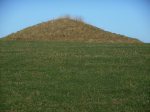
Actually, I’m a little concerned by what’s left of my instruction sheet which suggests I explore the cemetery but beware of the shake holes. I don’t know what a shake hole is so I ask a passer-by. This part of the Ridgeway is rather busy this fine day, particularly with men in lycra pushing bicycles. Here’s one now: ‘excuse-me my good fellow, do you know what a shake hole is?’ His face is expressionless. I imagine he’s probably up here far from the madding crowd with the specific intention of avoiding old women in lime green knitted hats. Helpfully, I read him my instructions and reiterate my anxieties regarding the ground suddenly opening up. Sergeant Troy tells me to wave if I fall down a hole and I will then be assured of rescue. I ask him if he’s ever heard of Stevie Smith.
2017_0102ridgeway0013

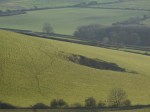
I see a middle-aged couple on their way down Bronkham Hill. I don’t really know what middle age looks like any more although I’ve more than a fleeting suspicion that I no longer qualify. These two look older than me but not yet in elderly territory. She is striding ahead purposefully with a couple of those tall sticks that are all the rage in Norway. He, meanwhile, is some way behind, apparently talking on a mobile phone. Why would you bother to climb to the top of the world (where there’s unlikely to be any sort of signal) to have a chat on a bloody phone? ‘Hope he’s not ringing for a pizza’, I remark on passing stick woman. As he approaches, I can hear the conversation he’s having: ‘the lord be with you and with thy spirit’. I kid you not. ‘Amen, amen’, he continues. What’s going on? Has he forgotten he’s supposed to be elsewhere and is now conducting a service by phone? Has he come up here to be nearer to his god with whom he’s currently communing?
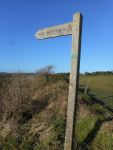
2017_0102ridgeway0021


Or is he taking care to avoid this place?
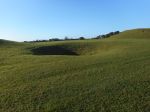


2017_0102ridgeway0024

I’m perilously near the onset of shake hole country and still no wiser. A final couple of healthy looking types are close to hand. They don’t look like Daily Mail or Express people so I accost them politely but without context: ‘morning. Any idea what a shake hole looks like?’ She immediately, and also devoid of apparent context, launches into total recall of a holiday once spent in North Yorkshire. Just as I’m wondering whether she’s about to show me some snaps of this pleasant interlude, they both commence a discourse on the many and varied differences between the swallow holes and sink holes that proliferate in those distant climes. After this, I am educated on the effects of acidic rainfall on calciferous limestone in the Jurassic. Bloody hell, Observer readers with a lifetime subscription to National Geographic. ‘Don’t worry’, she titters, ‘I’m sure your family will miss you and come looking if you disappear’. Hmm.

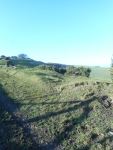
2017_0102ridgeway0027


2017_0102ridgeway0015 2017_0102ridgeway0022


2017_0102ridgeway0014 2017_0102ridgeway0028

Due to the frequent mention (which I have omitted to mention) of Hardy’s Monument in the decrepit remains of my instructions, I assume that the highest high point of this walk will be said erection. At various stages, I’m reliably and accurately informed that I will be able to see the tower which, confusingly, has not been constructed in memory of Thomas the writer. Rather, it was finished when Thomas was only four years old and has more to do with the Hardy whom Nelson asked for a kiss on the good ship Victory. An online search informs me that the views from all sides of the monument are glorious which I read as a euphemistic suggestion not to bother looking at the actual erection. This may explain why my journey never actually reaches its presumed summit but, instead, suddenly takes a sharp right across a field. To be more precise, I have to go through a gate next to two barrows. I wonder whether the joker who wrote these directions ever actually took this walk; and if they did, did they count the number of gates and barrows up here?
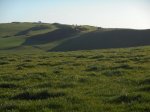
2017_0102ridgeway0029

I descend more rapidly than my knees might care for given the choice. I am truly sorry to leave the ridgeway and the company of the sea although, for a while, I do have the pleasure of seeing the barrows from another side. The remaining fragments of paper tell me to traverse the track alongside Ballarat Farm until I come to a tarmac path.
2017_0102ridgeway0031

Nowhere is any indication of the length of this track given. It goes on and on and on with no sign of life until I see a woman of indiscernible age by an ancient wooden gate. The woman has long unkempt hair, a black shawl and an old, full-length, mud-splattered skirt. It’s difficult to say which of us is the most surprised at this meeting. She smiles awkwardly and even though I know I’ve walked into a lesser known Hardy novel where tragedy is all pervasive, I offer a polite greeting. I can feel her hopeful eyes on my back as I continue down the interminable track and I feel inexplicably disturbed. Only the welcome sight of an egret in a field of cows breaks the temporary gloom that has enveloped me.
2017_0102ridgeway0035

The remainder of the walk involves a bewildering number of stiles, all of which are in an horrendous state of rotting decay. It’s as much as I can do to drag my aching legs up and over them and my trousers become caked in unattractive green slime that contrasts nicely with the knitted hat. At one point, I lose a stile and find myself in a huge private garden replete with lake and summer house. I am mightily concerned as this looks like the type of joint that would employ professional guard dogs and it takes me some considerable time to locate the exit. The penultimate field is a bumpy affair with rutted, uneven ground. This is all that’s left of the mediaeval village of Rew which was long since abandoned and of which I can find nothing during a brief period of research.
2017_0102ridgeway0037

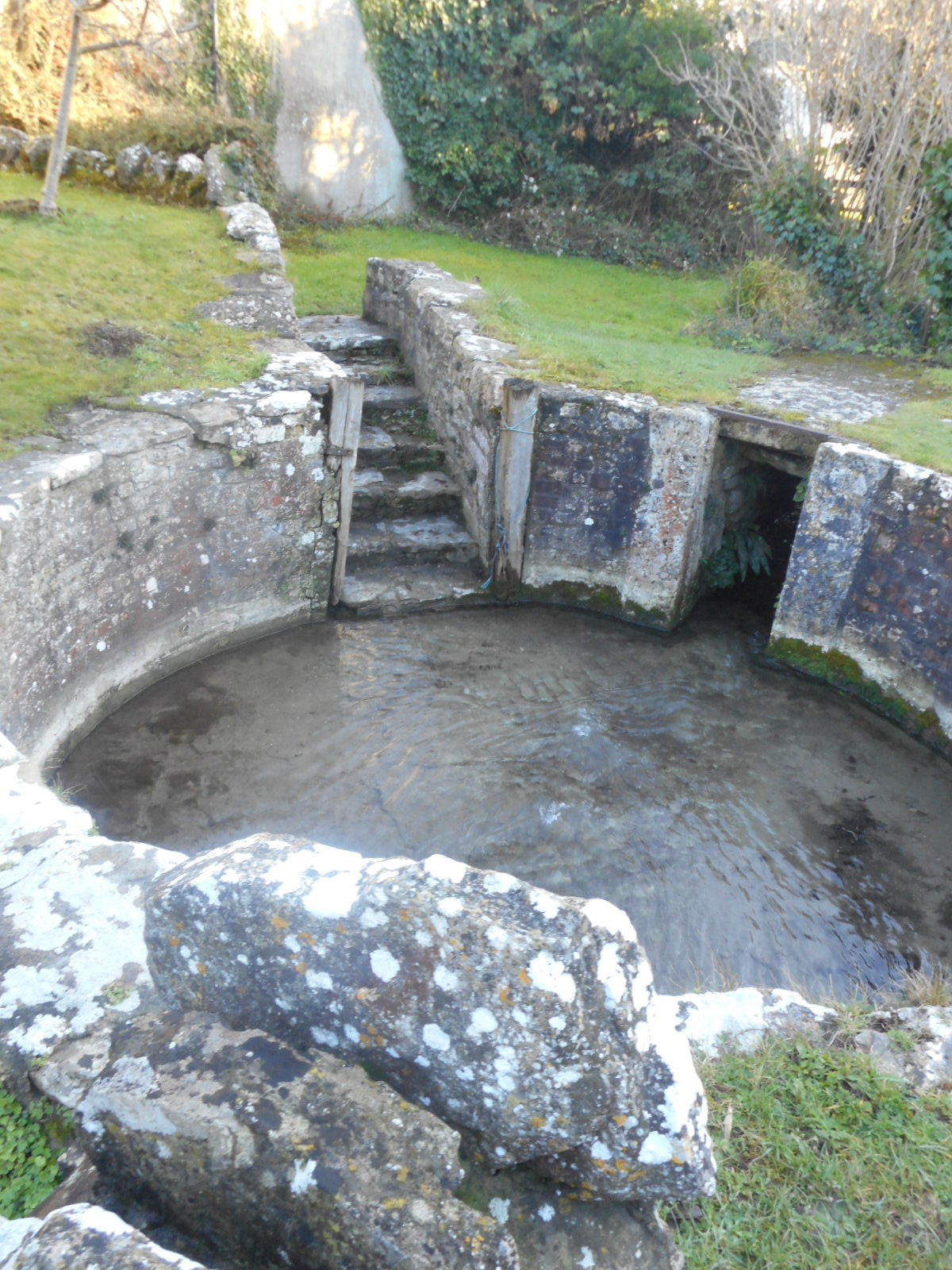
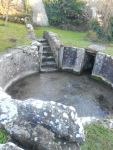
As I re-enter Martinstown, I recall that the now totally disintegrated instruction sheet advised me, rather casually, to do so past the sheep washing pool. I may be wrong but since when did the appearance of sheep washing pools next to village pubs become so frequent that they can be mentioned so glibly? And if you’re bothering to click on the pictures, perhaps you can suggest what that ghostly white blob in the background might be.

 

bengal-cat

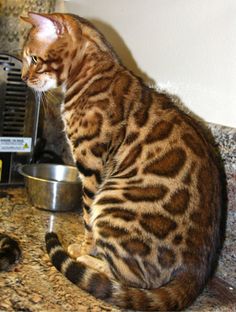
I arrive back at the church exactly four hours after I first left. A final oddity to end this most excellent of walks: as I was sitting sideways on in the driver’s seat, door open, struggling to remove my muddy walking boots, a leopard skin cat appeared from nowhere, jumped into the car, leaped over the passenger seat and briefly sat on the parcel ledge before leaving again without so much as a purr or miaow. I like cats nearly as much as I like hills. It was rather pretty though. It was too quick for a photo opportunity so here’s an identical one I found on the WWW.



Syria did business with you because of your abundant goods…Ezekiel 27:16

Journey of the Magi by TS Eliot

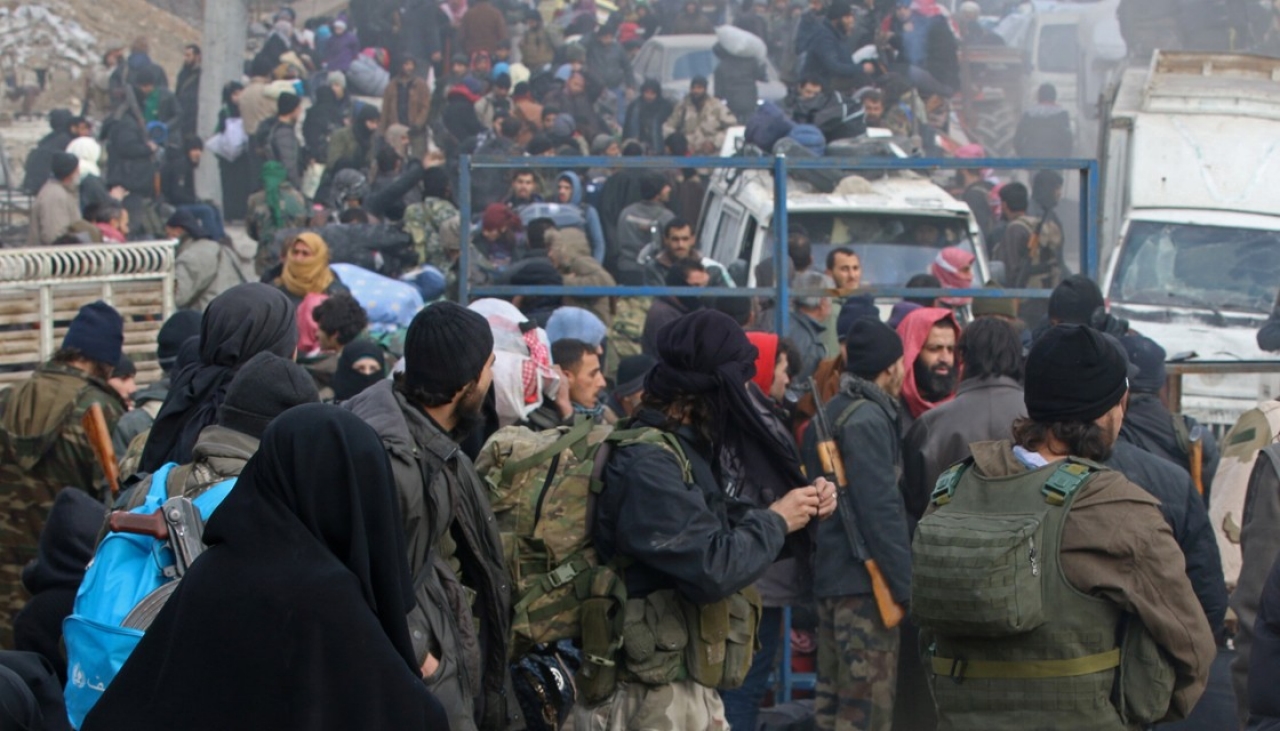
aleppoA cold coming we had of it,
Just the worst time of the year
For a journey, and such a long journey:
The ways deep and the weather sharp,
The very dead of winter.’

aleppo2

And the camels galled, sorefooted, refractory,
Lying down in the melting snow.


aleppo3There were times we regretted
The summer palaces on slopes, the terraces,
And the silken girls bringing sherbet.
Then the camel men cursing and grumbling
and running away, and wanting their liquor and women,
And the night-fires going out, and the lack of shelters,
And the cities hostile and the towns unfriendly

allepo5And the villages dirty and charging high prices:
A hard time we had of it.
At the end we preferred to travel all night,
Sleeping in snatches,
With the voices singing in our ears, saying
That this was all folly.

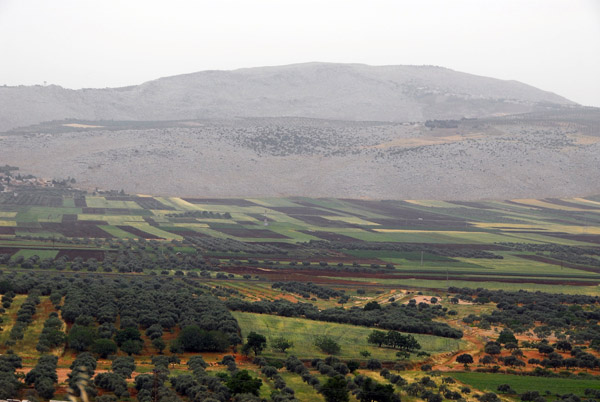
syria-valleyThen at dawn we came down to a temperate valley,
Wet, below the snow line, smelling of vegetation;
With a running stream and a water-mill beating the darkness,
And three trees on the low sky,
And an old white horse galloped away in the meadow.
Then we came to a tavern with vine-leaves over the lintel,
Six hands at an open door dicing for pieces of silver,
And feet kicking the empty wine-skins.
But there was no information, and so we continued
And arriving at evening, not a moment too soon
Finding the place; it was (you might say) satisfactory

aleppo-babyAll this was a long time ago, I remember,
And I would do it again, but set down
This set down
This: were we led all that way for
Birth or Death? There was a Birth, certainly
We had evidence and no doubt. I had seen birth and death,
But had thought they were different; this Birth was
Hard and bitter agony for us, like Death, our death.
We returned to our places, these Kingdoms,
But no longer at ease here, in the old dispensation,
With an alien people clutching their gods.
I should be glad of another death


The village that lost (a) heart

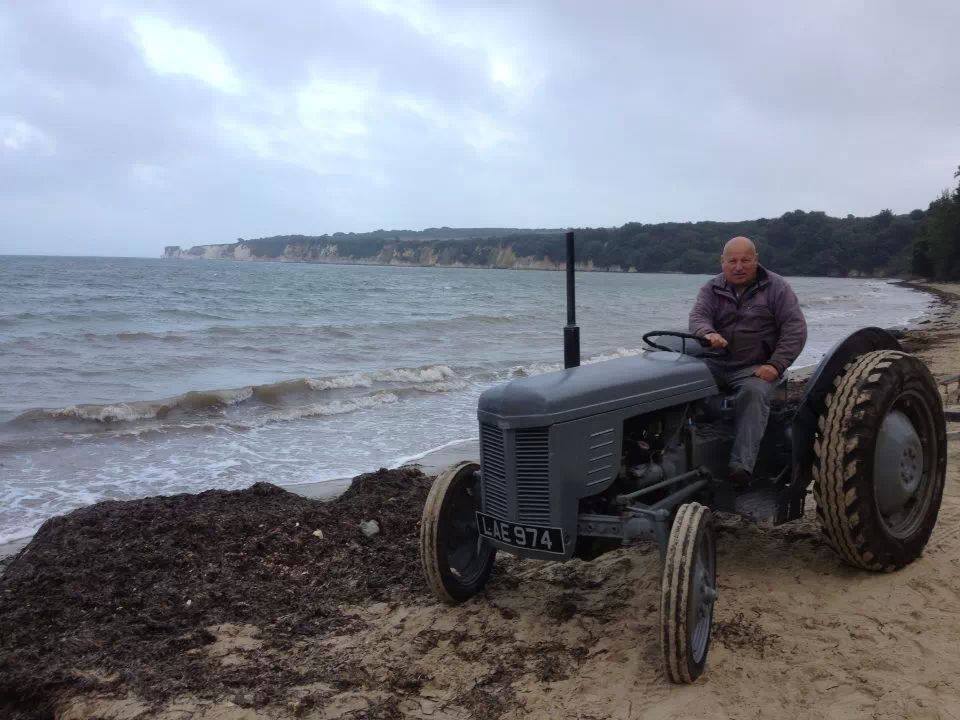
derekA shiny red tractor tows a wooden trailer along the lane of a village in coastal Dorset. It’s a suitably murky December day, just a week before Christmastide. A sea mist hangs loosely over Old Harry Rocks and there’s an invasive dampness in the unseasonably warm air. It might rain or the sun might appear; it’s one of those old English days when, not knowing how the weather will turn, you’d be better off indoors. There aren’t many folk in their houses today though. The parting bell is tolling and, further to the thirty or so mourners following the tractor on foot, the winter-worn roadside is silently lined with scores of those who’ve turned out to pay their last respects to the man in the coffin on the back of the trailer.

In this village as, I imagine, countless others, there’s a grand rural tradition of processing to a funeral. Often as not, the way was traversed from the pub, across Church Meadow, through the graveyard and into the little Norman church. Sad though these events are, I have, in the past, drawn comfort from this walk which forms a timeless link with a Hardyesque past. And I have often thought of my friend of over forty years in a similar way: he was a man out of time; a man of the land. And more importantly than anything else, that rarity of being a man with no known enemies.

All the people from way back when I lived in this village are here in the graveyard. I see them now lined up at the bar: Douglas, whose headstone is, appropriately, inscribed ‘never a dull moment’; Robin, who spoke ‘terribly well’ because he went to Lancing; Peter and Peggy who ran the pub in a haze of fun. Numerous others whose faces I see clearly but whose names dance in my struggling memory. And all of them politely pre-fixed with a ‘Mr’ or ‘Mrs’ by the man who will join them today; the man who, even as a grown-up, never called any of the elders by their Christian names without permission. As I said, he was a man out of time.

The church was full; the church hall was full; and the service was relayed to crowds stood outside. I wonder in what other tiny village so many have come to praise or weep. The vicar, who seemed openly overwhelmed, spoke so warmly and spontaneously, that we knew he was sharing our loss. He spoke of the sheer joy in talking with our friend and he told us that, henceforth, Church Meadow was to be known as Derek’s Field. ‘It’s just below the spot where he’ll be buried’, he continued.

And following some other tradition, they don’t seem to do cremations around here. I don’t like to think of people being placed in the ground. And I have to say Derek, once or twice this evening, I’ve worried about you being out there alone in the dark. On the other hand, you’re just above your field overlooking Studland Bay. Forty years ago, we used to make a joke: we’d say, ‘oh Derek, he can’t leave Studland without a ball of string’. Well, my dear friend, you were a man of this land so I think it will be ok. Rest in peace xx


A man acquainted with grief

bsoSometimes, in the world of literature, you come across a short sentence or brief phrase that embodies such emotion, or simply sums up something in a way no other permutation of words could do. For me, this often happens with Dickens. I can read and re-read an especially glorious paragraph for the joy of it and there, lurking inconspicuously amongst all the other thoughtfully chosen vocabulary, will be the acute simplicity of three or four words that comprises the essence of it all. My two all-time favourite books embody this skill even though they are poles apart in all senses, and neither is written by that king of the social commentators of Londinium. Their titles are a contextual irrelevance really, but, in case you’re interested, they are Midnight’s Children and Three Men in a Boat.

Once a year, generally on the second Wednesday in December, I hear about ‘a man acquainted with grief’. And every year, I’m suddenly alerted to the poignancy of the description and not necessarily in a Religious sense (the capital R is there on purpose). It’s always impossible for me to write those words down at the time and I inevitably forget by the time I get home because I’ve been overcome by the hallelujahs. You see, I never read those words – I hear them at my own private Chrismassy self-indulgence … a performance of Handel’s Messiah. And there’s a lot to this particular selfishness.

For a start, there’s the place. Years ago, I began with the old hang-out of Morse, The Sheldonian, Oxford. It’s a great venue but its sense of self-importance endangers the worth of the music. Nonetheless, on one memorable occasion – I recall ‘twas the extraordinary choir of New College – the Hallelujah Chorus was so well-received that the radically brave conductor instructed an immediate re-run and allowed applause. The purists were dropping like flies. It never happened again of course and a veritable flurry of academic papers was subsequently published on the dangers of populism to cultural mores.

I’ve also tried candlelit churches. It doesn’t work. The audience has to keep its coats, hats and scarves on because these joints are so draughty plus you can only fit three or four musicians and a small harpsichord inside. It’s all very seasonal and, dare I say it, Dickensian but the hallelujahs without a choir is a bit of a disappointment to say the least. Everyone willingly stands but only for the opportunity to stamp feet in a desperate attempt to restart the circulation of icy blood.

Who you go with is also important. I don’t go with anyone. One of the justifications is that it’s always possible to get a better seat if there’s only one of you. And you can always talk to the folk either side if you’ve such a tendency. However, the main reason for going alone can be found in the notion of self-indulgence. There’s a clue in the word ‘self’. I do a lot of things alone but I’m happy to share most of them. Not, however, if I know the other person will be bored out of their skull. So, with the exception of a particular person who has the misfortune to live in Trowbridge, I never invite anyone.

Yet again, I go (alone) to the Lighthouse in Poole. Aesthetically, it’s the most unattractive venue available. I go because it’s the Bournemouth Symphony Orchestra and Chorus which is about as good as it’ll get in the whole world. There are, naturally, minor distractions: the tenor shuffles on doing a most excellent impression of Robbie Coltrane: the short bloke on the organ has scruffy facial hair, a long coat, and an unfortunate lean – he is Reg Christie. And the incredibly superb lead trumpet looks, in between blows, as if he’s waiting for his car to be repaired.

The man on my right asks whether I know who the conductor is. I apologise and looking along our row, notice that we don’t have a programme between us. ‘We’re in the cheapskates’ seats’, I explain. I embellish: ‘no point asking the chap behind as I heard him ask who the band is’. ‘Does he know where he is’, my new friend asks? ‘He doesn’t know WHO he is’, I reply. And after we are suitably sated, I say to the woman on my left, ‘well we know it’s Christmas now’.
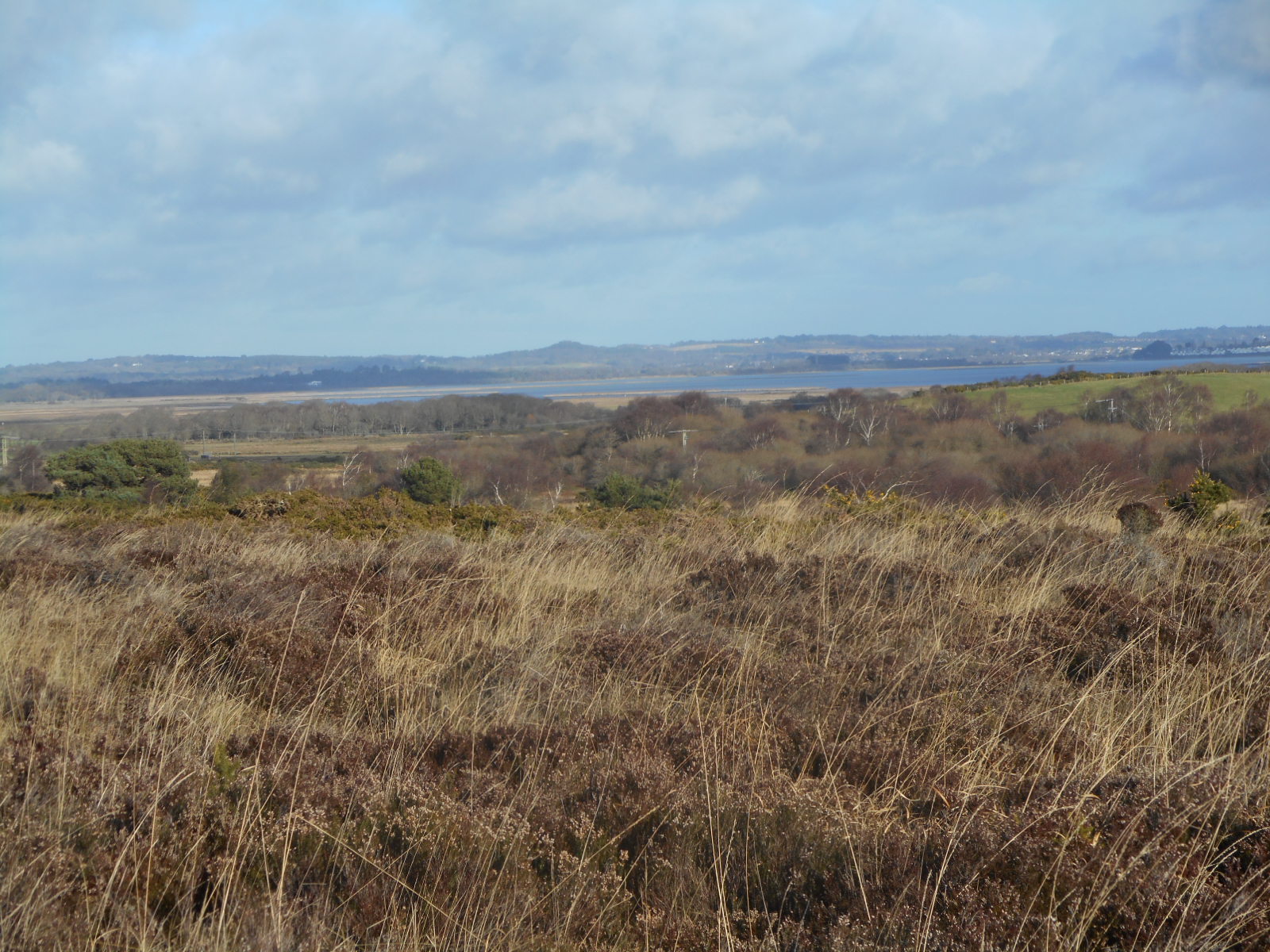
‘Merry Christmas’, we all say somewhat emotionally to each other. ‘And Merry Christmas to you dear reader’.