Who knows where the sloes grow (in 2016)?

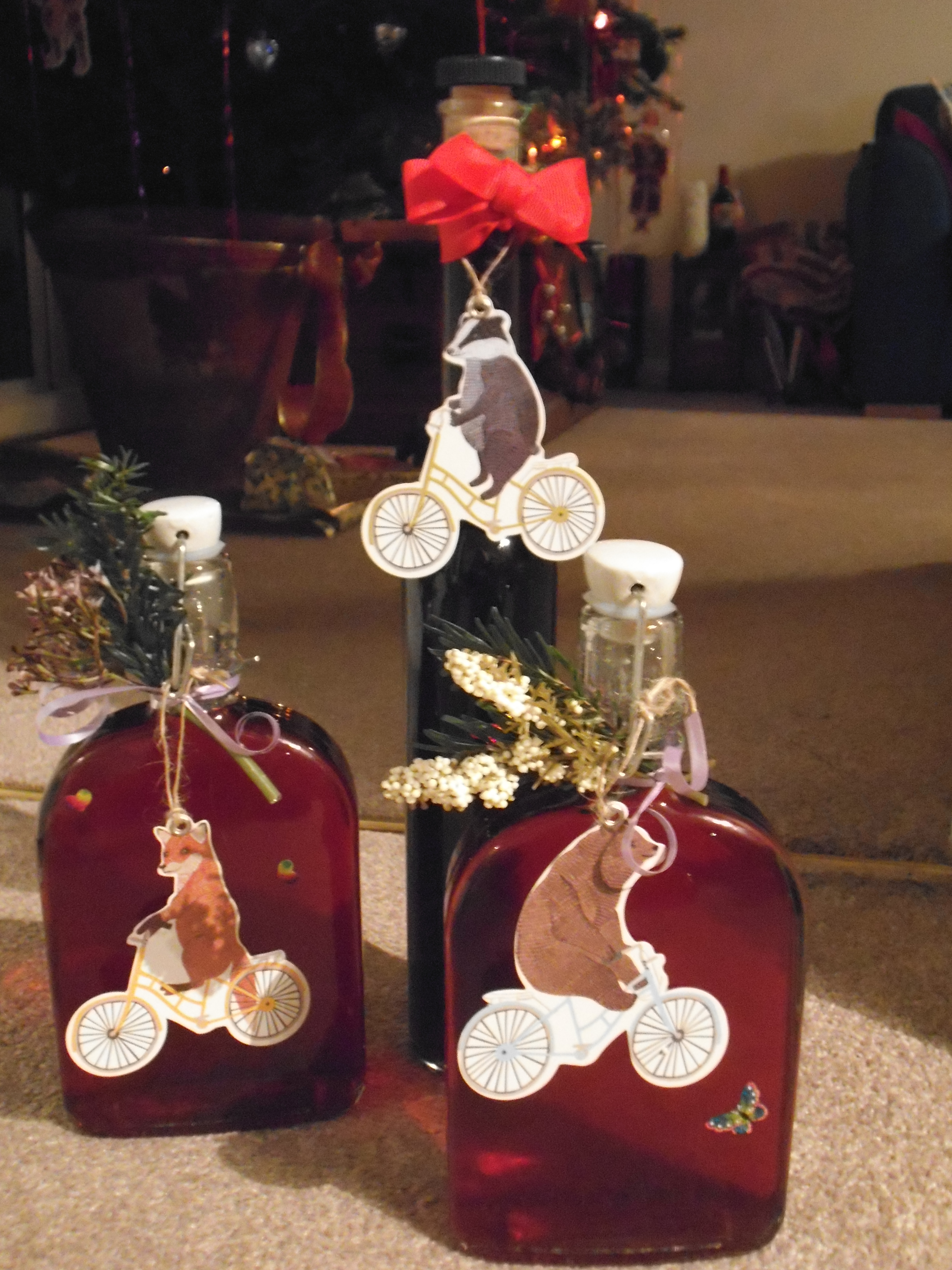
dscf0987This time last year, I was busy concocting personalised alcoholic Christmas gifts: specifically, sloe gin and blackberry brandy. The presents were well received even if folk fell over after half a teaspoon of the brandy. They soon re-grouped and decided to tone it down. With champagne. Alternatively, the gin was deemed delicious and left imbibers in a pleasant, if slightly soporific state of well-being.
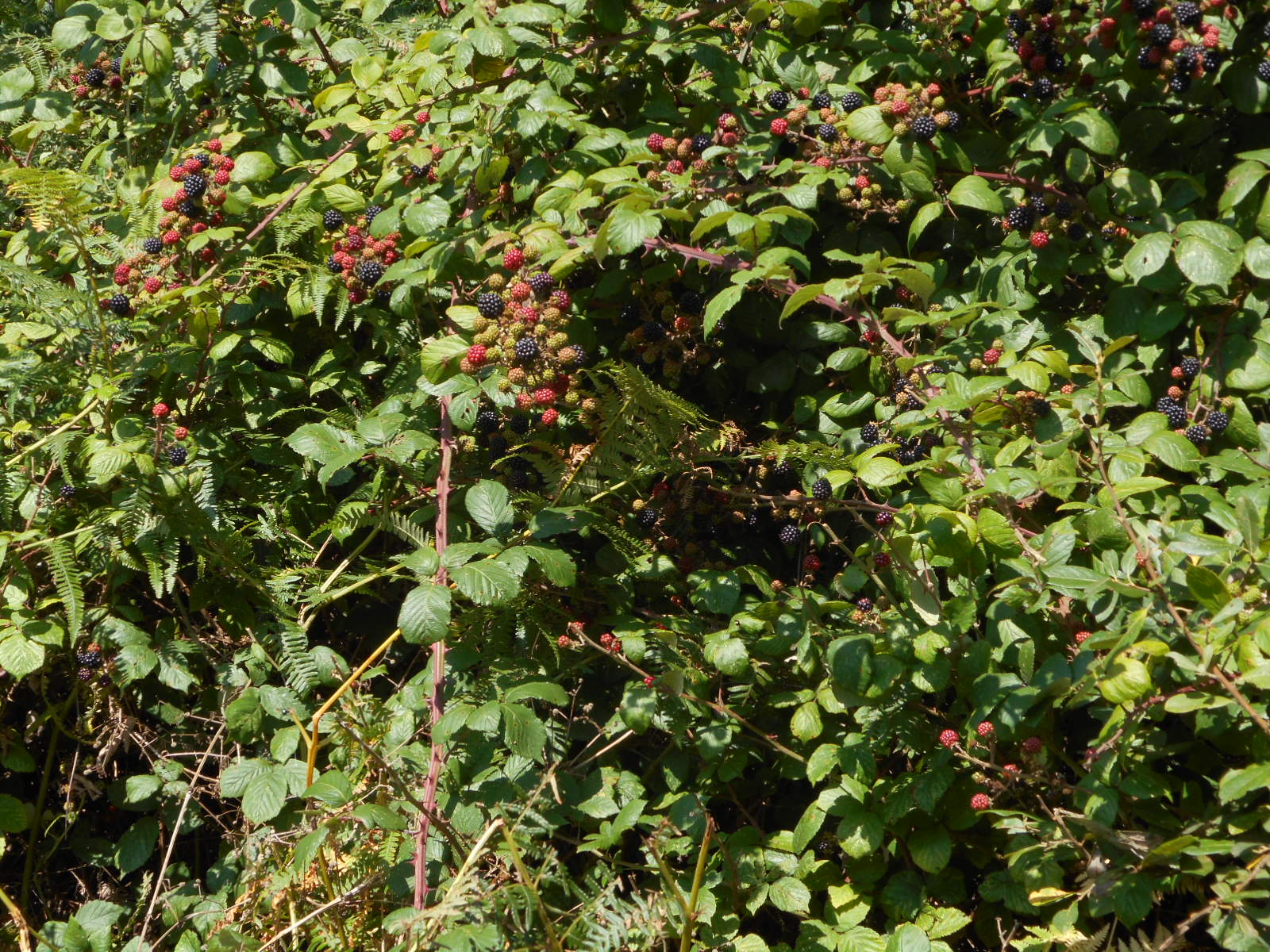
 

foraging-007This year sees a bumper crop of blackberries; there’s no stopping them and hedgerows have been lined for the last three weeks by Tupperware toting foragers. No waiting for a never-to-arrive frost in this mild part of the world. My blackberry brandy and blackberry vodka have been suitably shaken every day for a fortnight. The ruby red potency sits alongside another newcomer – damson brandy. I foraged the damsons locally by attacking a small child who’d been released from Sports Direct for the day to flog plastic bagfuls of fruit outside her aunt’s bungalow on something worse than a zero hours contract. ‘My cousins have been allowed to go inside due to the heat’, she cried plaintively. ‘Do I care, small person?’
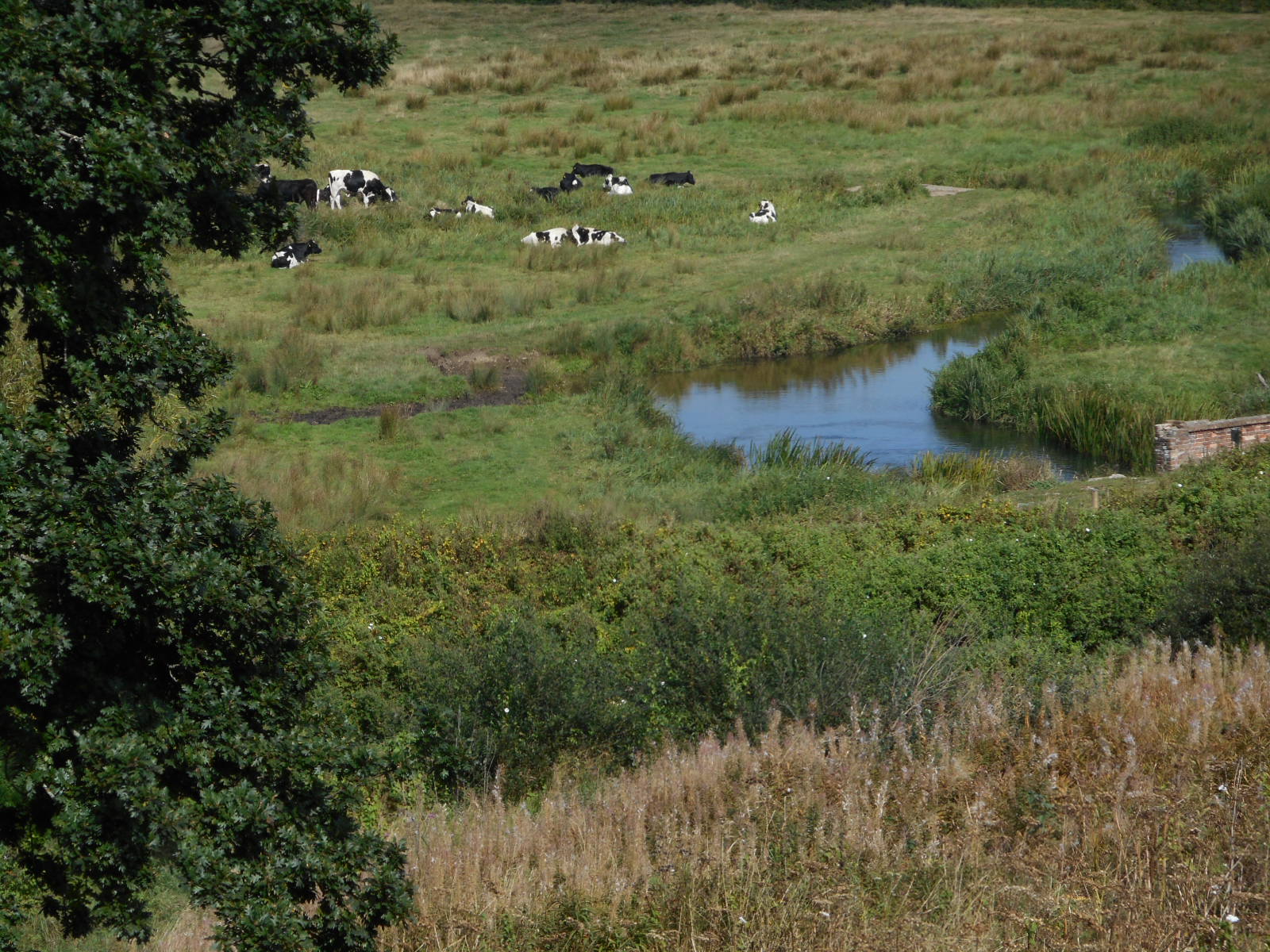
foraging-001Yesterday, I went with my friend  to Longham Lakes in search of sloes. S was looking, rather late in the day in my opinion, for blackberries. S doesn’t do brandy. At ten past nine in the morning, I’d already tried her blackberry wine. It goes down well after a Sainsbury’s sausage sandwich and I can see why her husband had brandished the whip and sent her off to reap this year’s provisions. Last year, Longham Lakes was abundant in sloes. This year, nothing so I was forced to help her with the blackberry harvest and save her another beating. And this is why, today, I went to Wareham Walls.
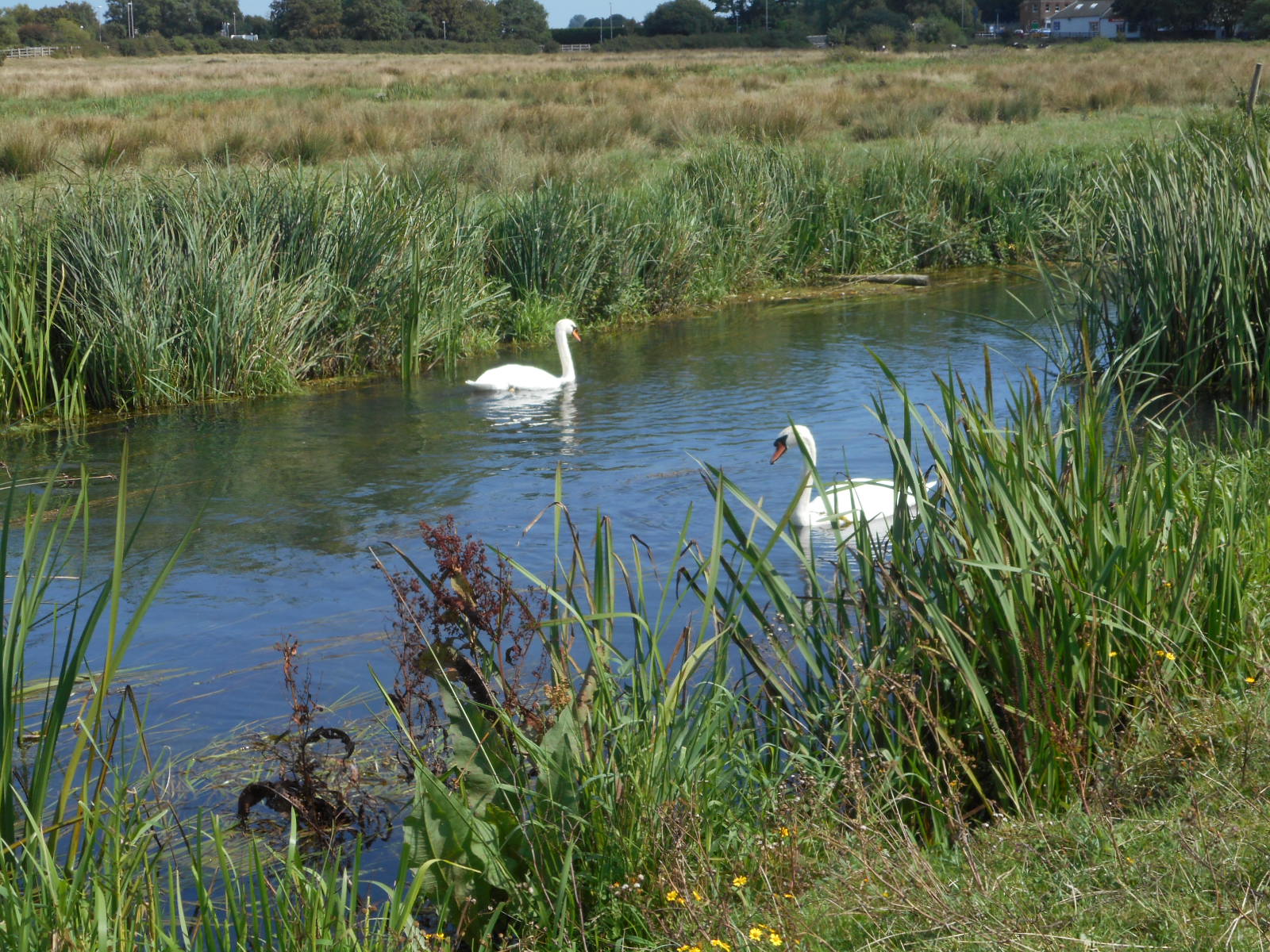
foraging-002Many years ago, in a time we never mention, I harvested my first crop of sloes on Wareham Walls. I didn’t even know what they were and was forced to take a late-in-the-year trip to France in order to purchase gin. Why? Who knows. Now we just get it from Lidl. To this day, I can see the precise location of those sloes. Well, let me tell you: not only are there no sloes, the bloody bush has disappeared.
foraging-003No problem. This is September in Dorset and the month is outdoing itself in terms of last minute heat and sunshine. In February, these water meadows will be flooded beyond recognition. Today, it’s simply glorious – a pleasure to be part of it all. And what I really like is the conversation with strangers.
foraging-010In truth, I pass a great deal of my life in awareness of the fact that no-one has a clue what I’m talking about. And if they do know, they mostly don’t understand my choice of topic. Not today. Today, ambushing total strangers with questions relating to my search for sloes, not only did a single person fail to brush me aside, they all had an input to the conundrum.
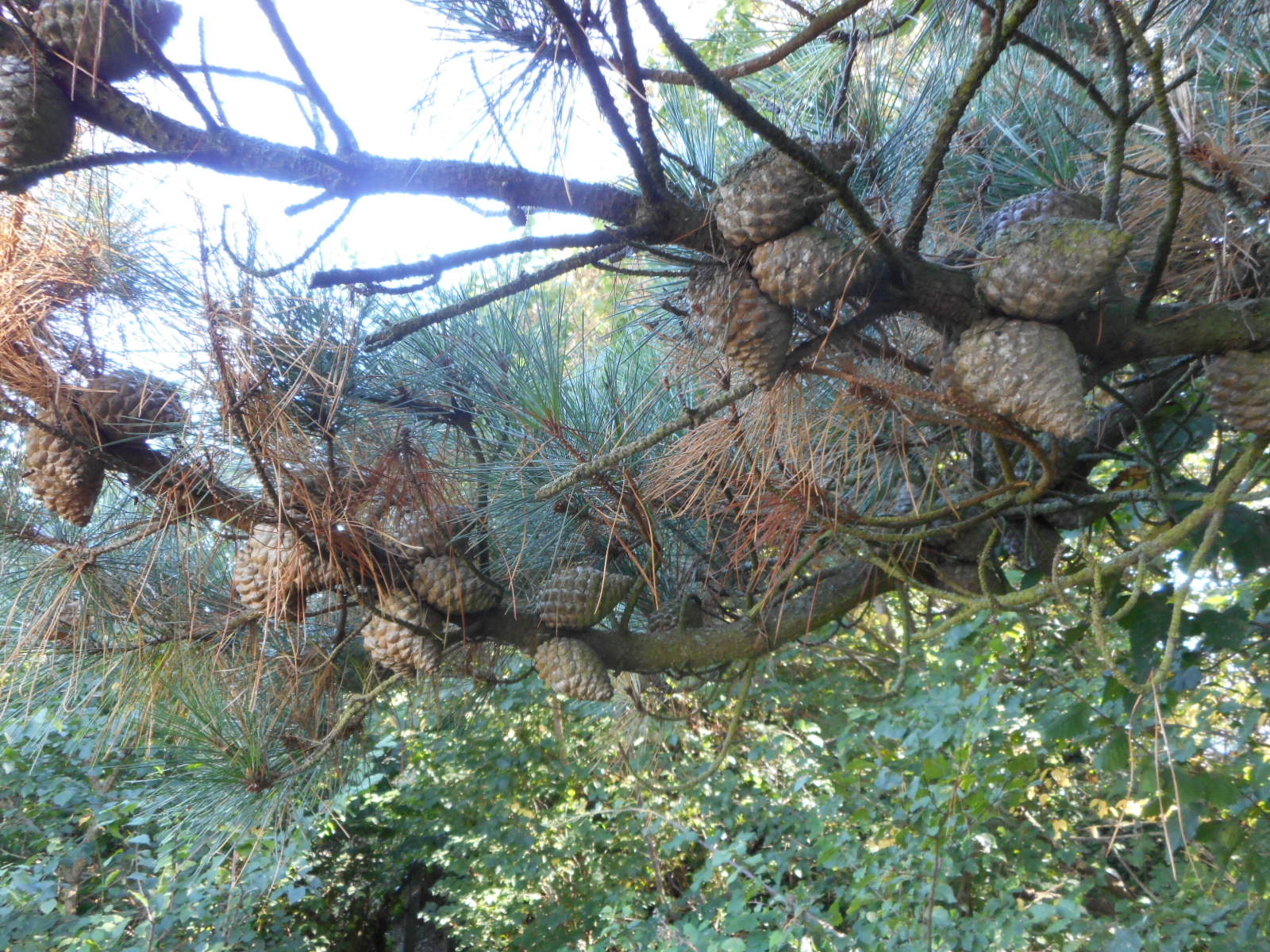
foraging-016I met people who had been stressfully commissioned by their son to provide 100 miniature bottles of sloe gin to act as favours at his wedding. Favours? I’d say it was a favour to get invited. It reminded me of those horrendous birthday parties in the past where visitors were returned home with exotic goodie bags and I gave away a piece of cake wrapped in a serviette. Wedding parents were in despair: they’d travelled over from Swanage where Ballard Down is, apparently, suffering a dearth of sloes.
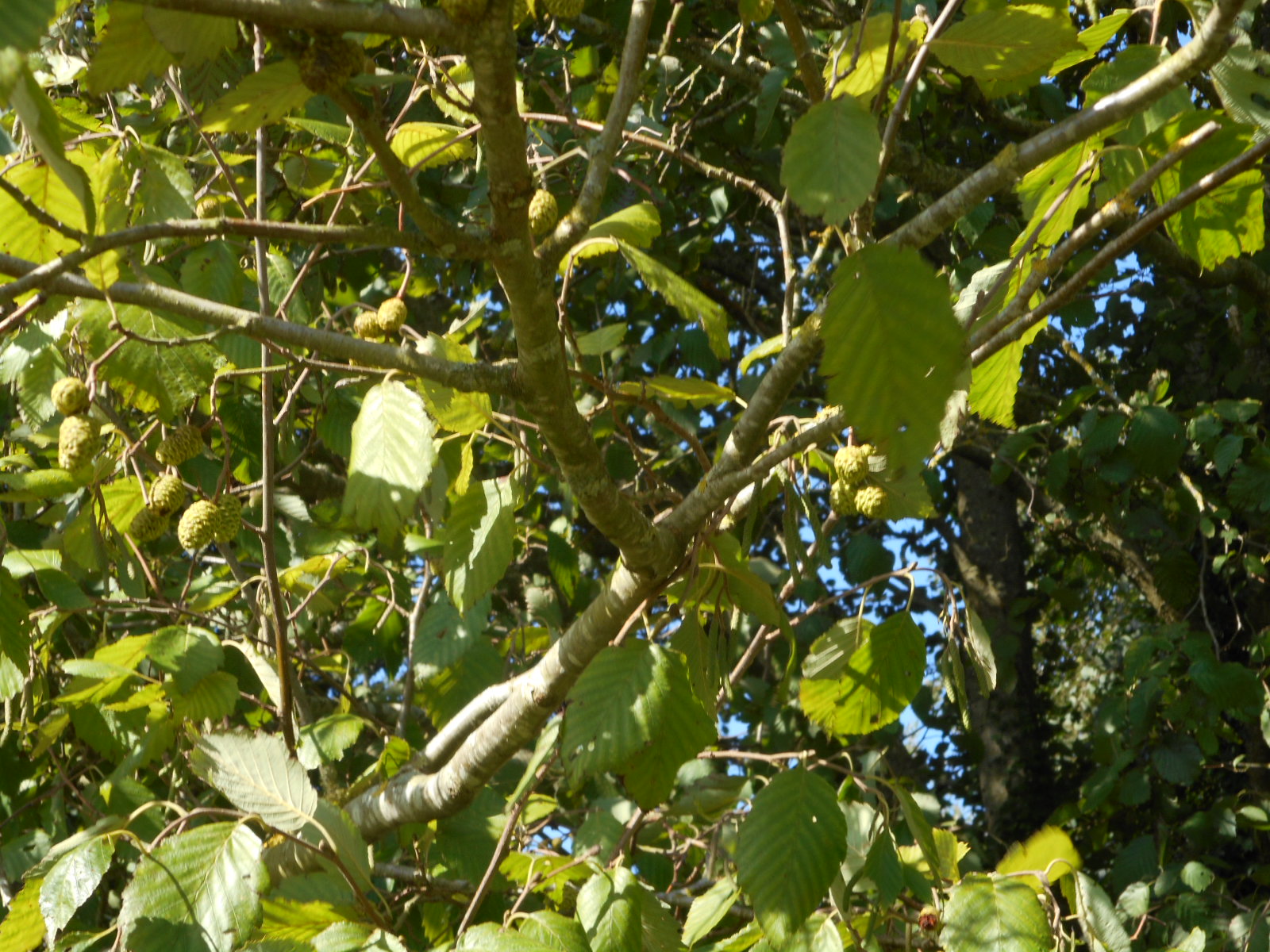
foraging-019Nancy and Joy had come from Weymouth. Can you believe that? No wonder there’s no bloody sloes on Wareham Walls if folk are coming that far on safari. Nancy was troubled because she’s seen a train on the other side of the river. How can that be? I helpfully pointed out that Wareham station is on the other side of the river. Nancy said she’d lost her bearings. Get out more, Nancy.
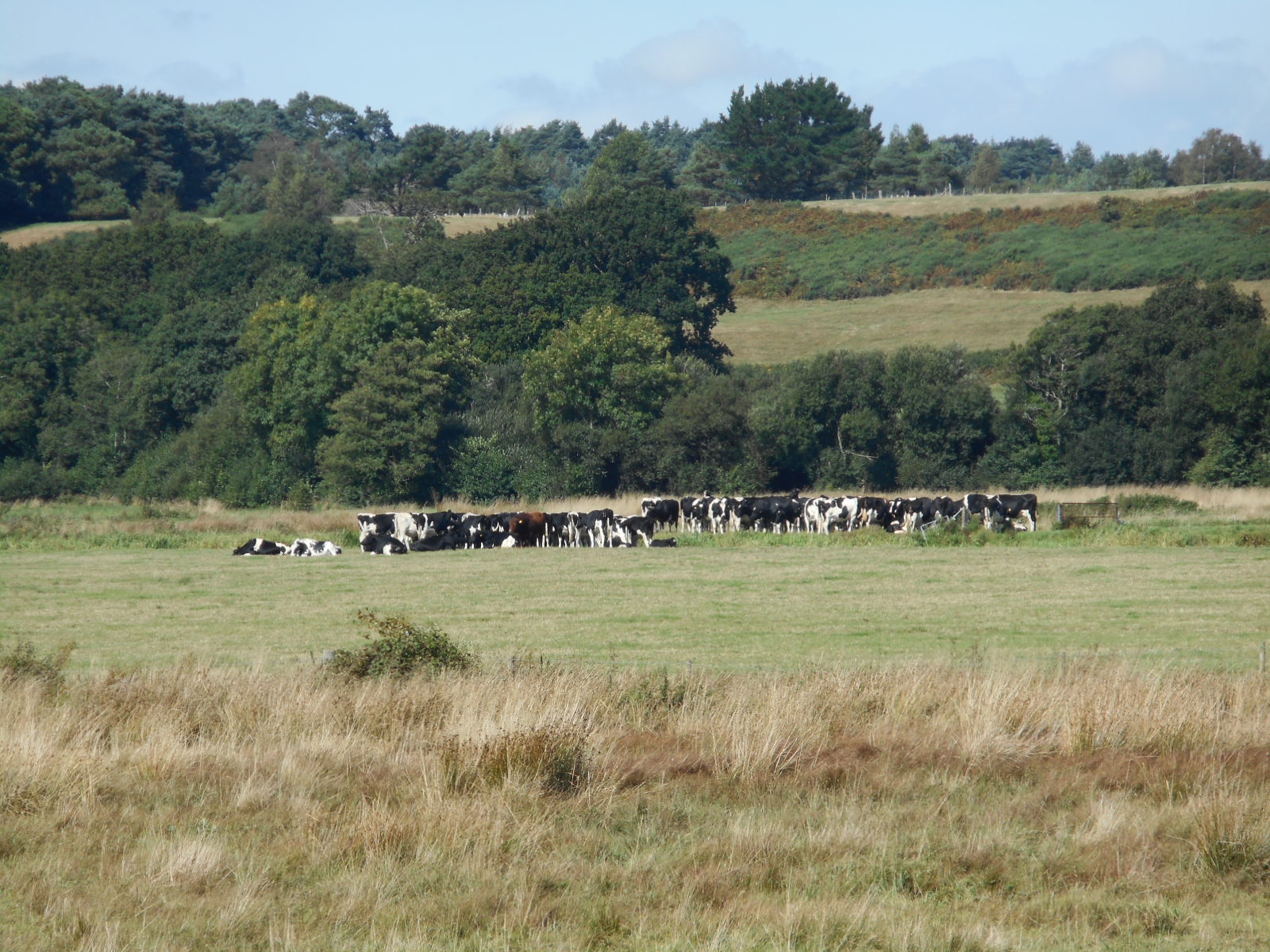
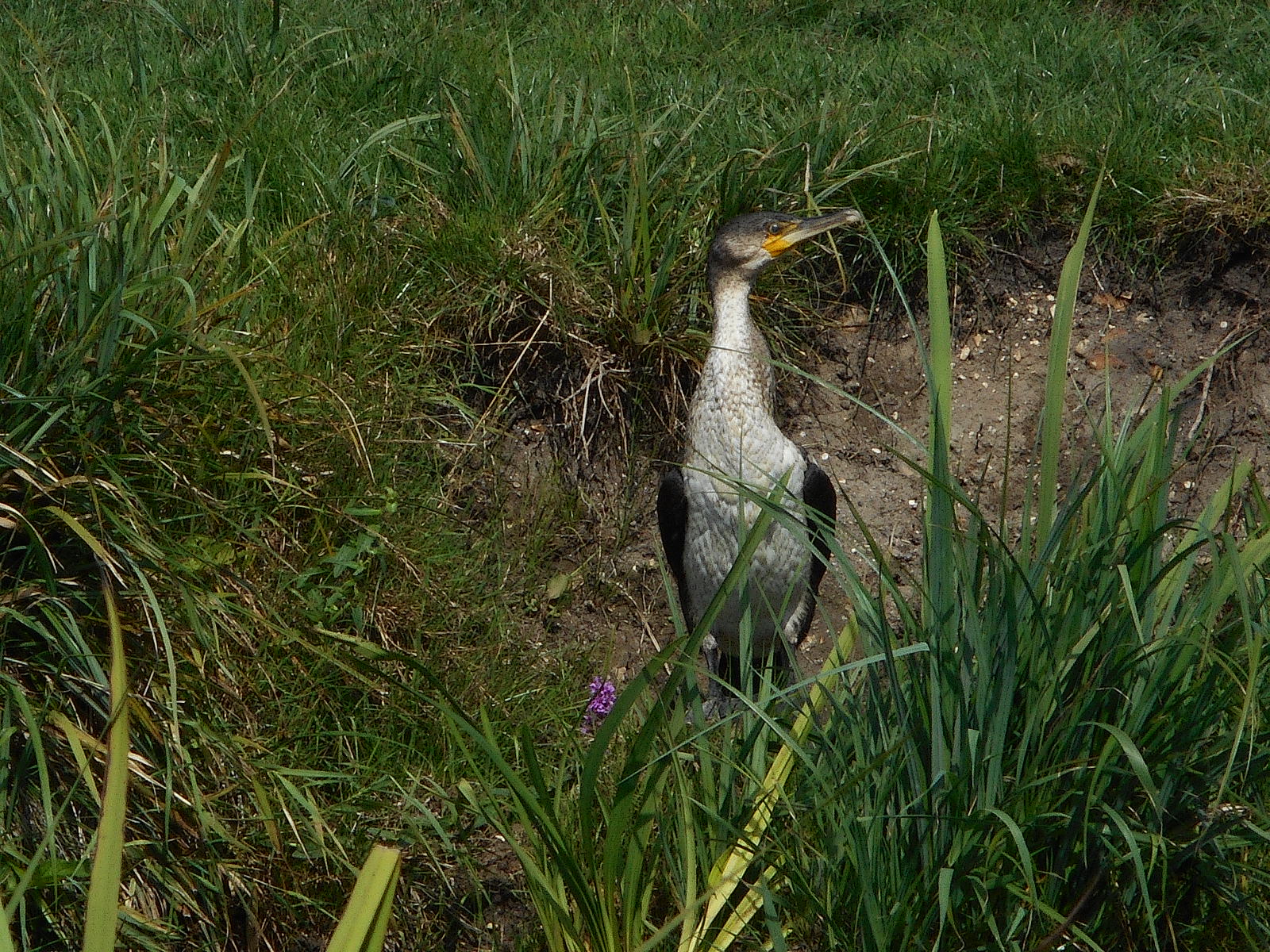
foraging-004I left the walls and wandered into who-knows-where. Places I’ve never been: wide open spaces and ancient earthworks. Cows sufficiently far away not to cause alarm, but large fresh pats to make me wonder what or who else was in the vicinity. And never a sloe in sight. I walked for two and a half hours and it was sublime. The sun beat down, the midges hovered and the heron that I saw earlier sat soaking the warmth for so long that he was in exactly the same place when I returned sloeless.
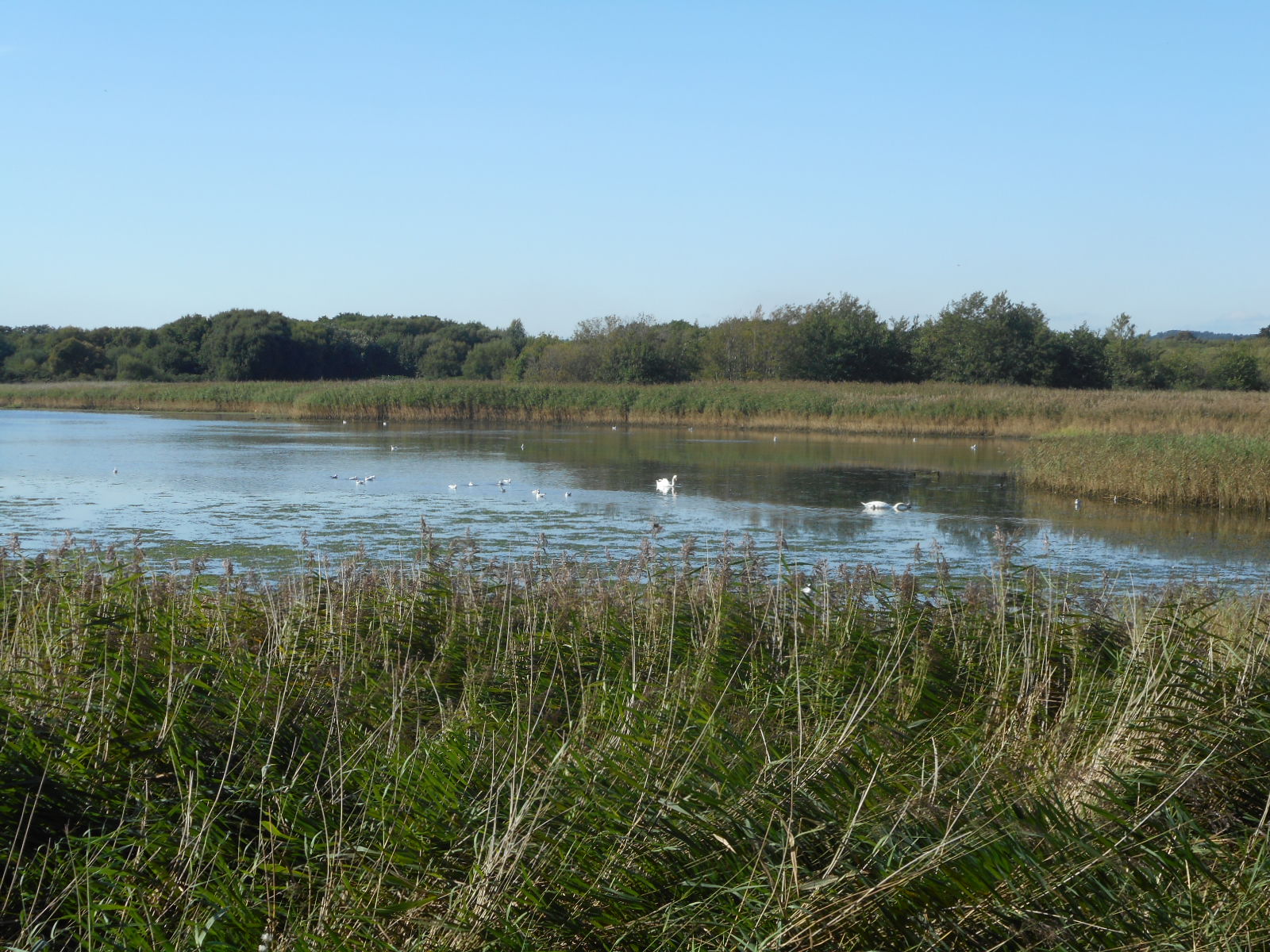
foraging-020I live by the water and it occurred to me that sloes might be found nearer to home. Exhausted, I dragged myself around the nature reserve where I met Jean. ‘I’m looking for sloes’, I said. And Jean tells me that not only is it a bad year for sloes, but that other fruit is a non-starter. Last year, Jean had more pears than she knew what to do with. This year, she’s hardly managed a plastic bag of fruit.
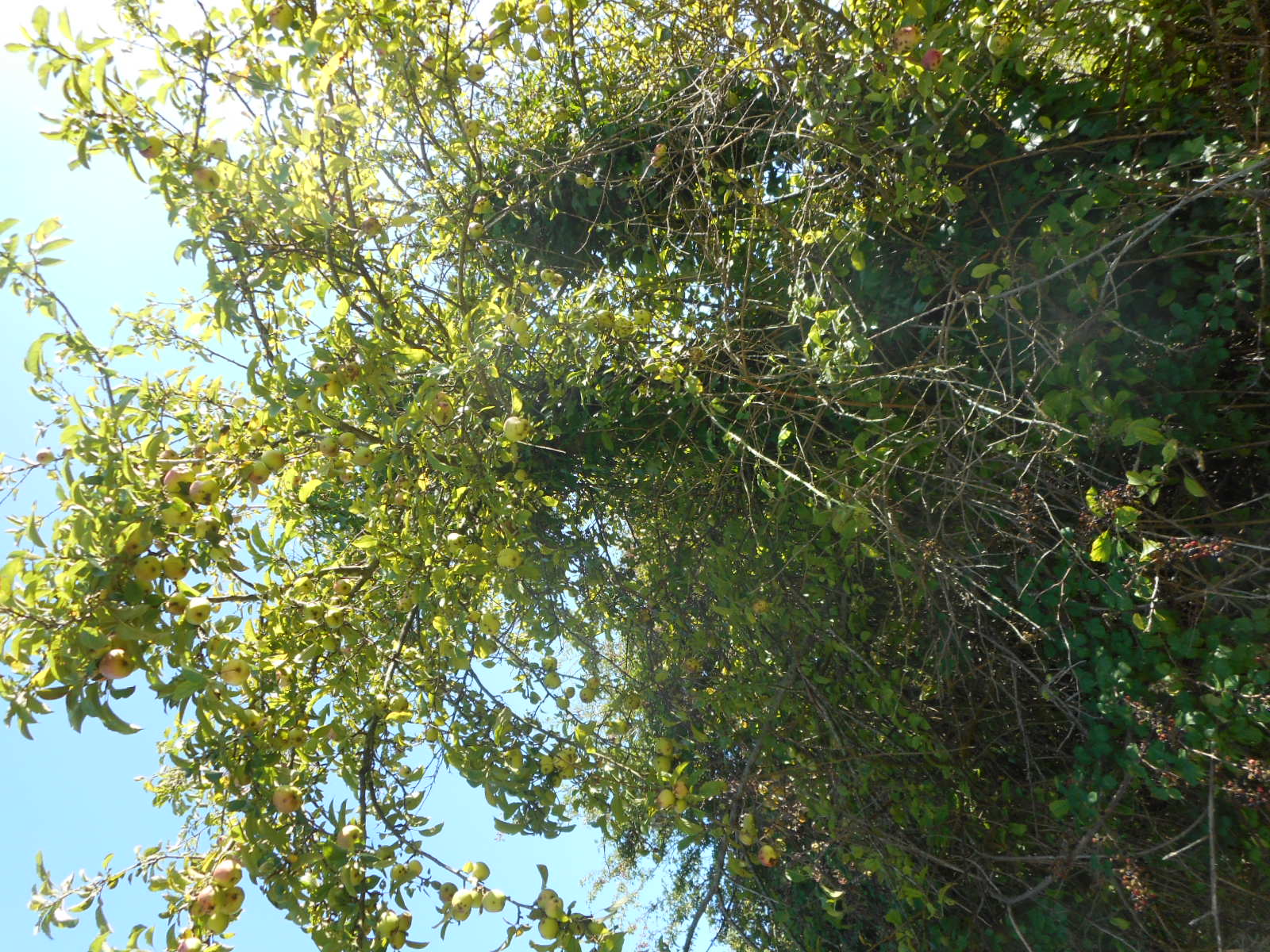
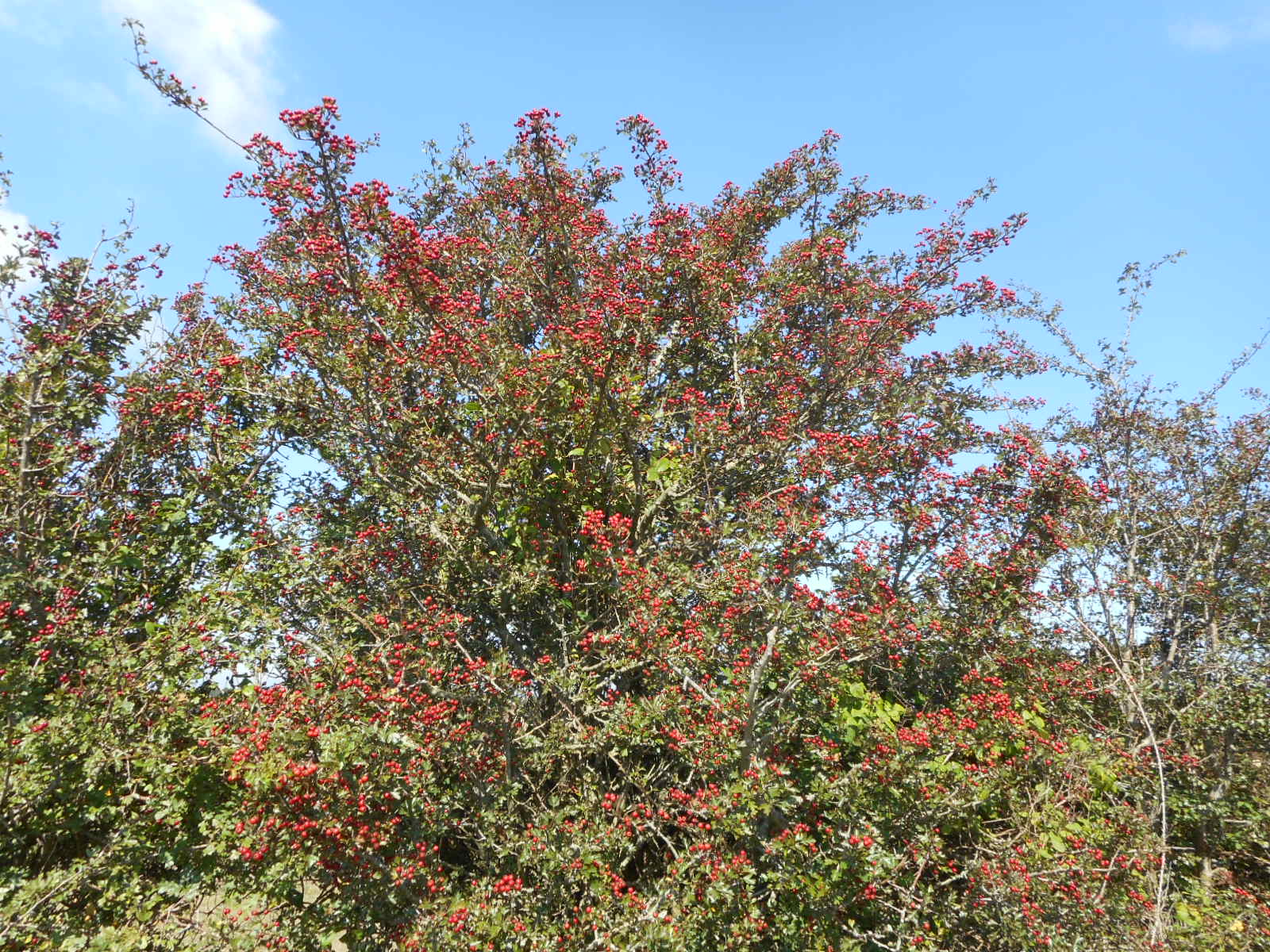
foraging-017And if that wasn’t enough bad news, the apples are rotting on the trees, both in her garden and here on the reserve where I took this photo. Actually, all of these photos were taken today. Even if it’s a bad year for sloes, and even though no-one’s getting gin for Christmas, they do illustrate what else a September in Dorset is offering.
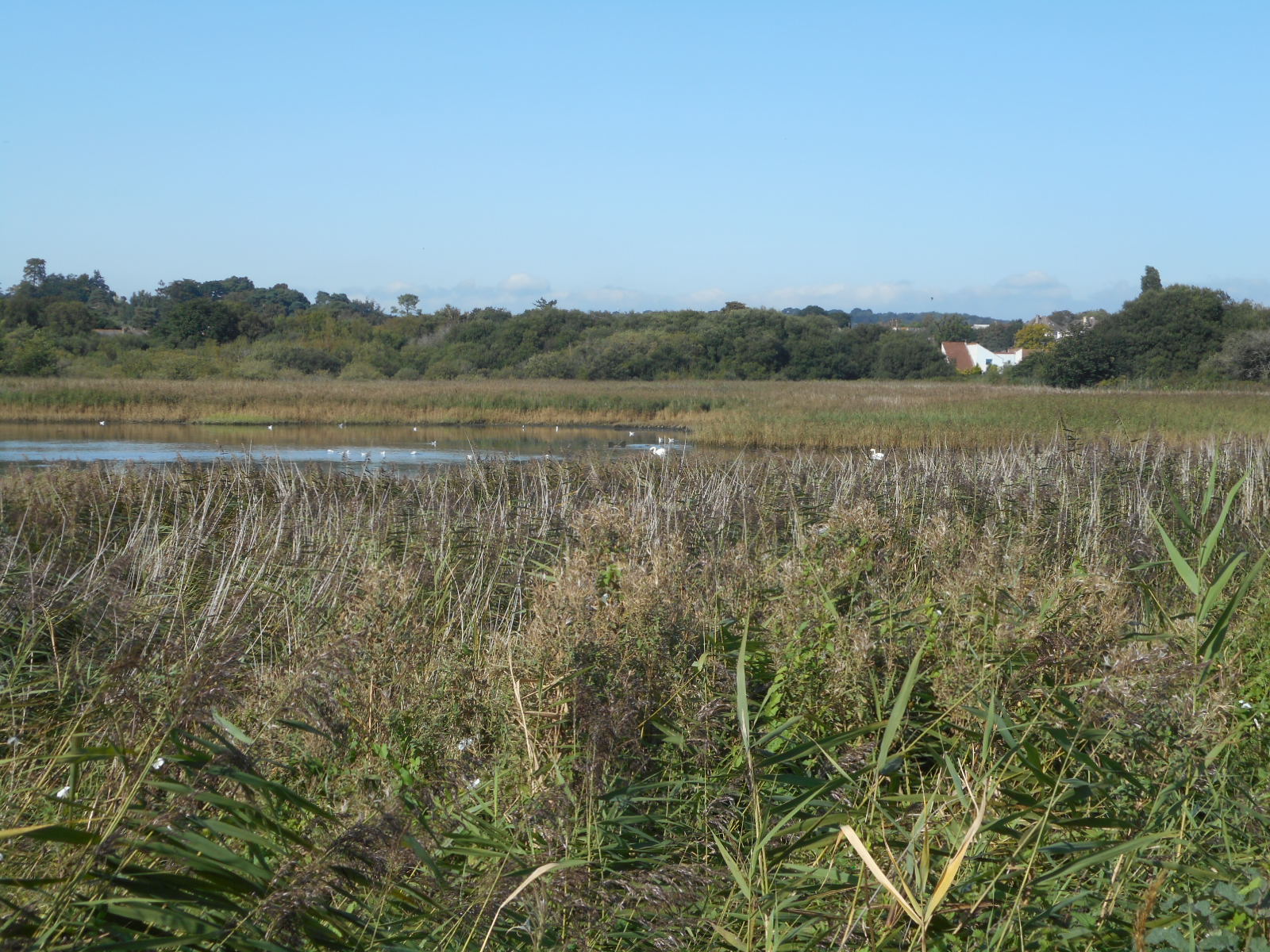
foraging-021And just in case you think I’m unsatisfied with my lot, here’s a view of where I live taken from the water this morning. Who needs sloes – we have the brandy.



The train to Walford

shimpyI’m going to Walford. Trains are few and far between because – and this may come as a shock –Walford is fictional. I might as well be going to Hogwarts, of which I’ve read nothing; although I have watched EastEnders for the last three weeks. A young woman embarks at Winchester and, despite my best efforts to appear sound asleep which, largely, I am she asks whether she might sit down. I’ve spread my meagre belongings across two seats in an unfriendly sort of way and, eyes closed against the world, ignore her plaintive request. You can do this if you’re old. Unperturbed, she taps my naked wrist with an icy finger: death is clearly calling her and refuses to leave. First impressions suggest she seems a likely client for Coker’s funeral parlour in Albert Square. Her touch is so cold I fear she may have already passed. Sadly, she hasn’t passed me. I open a bag-ridden eye and pretend to be surprised by her presence. Yes, of course I’ll clear a space, but I manage to make quite a to-do about the process.

Having bad-temperedly scrunched myself and worldly belongings against the window, I fall back at an awkward angle into catching-up sleep mode for sufficient time to allow the onset of an unpleasant crick in my flabby neck. No sooner am I back in Dorset-inspired aboriginal dreamtime, than she wakes me again; this time by sobbing wretchedly and dabbing at her watery eyes with a much abused tissue. At first, I think she has a cold or hay fever and turn to glare at her. Hasn’t she noticed this is the quiet zone? Can’t she weep outside the toilets? She’s plugged into her phone from whence apparently distressing news is arriving via the WWW. This not-so-silent sobbing continues all the way to Clapham Junction and it’s impossible to either sleep or concentrate on the tribulations of David Copperfield who, at the age of 10 years, has far more reason to be noisily distressed. Let’s face it, even when life improves for David, it’s conditional on the fact that he agrees to be called Trotwood. Can this crying creature surpass this?

My friend B says I am hard-hearted. She mentions this whilst sobbing uncontrollably through a DVD of Paddington Bear. I am sorry for her distress over the death of Paddington’s uncle in deepest Peru and take pains to explain that it’s not real. B works on Eastenders so spends her life in an unreal otherness. She has kindly taken me onto the set of this iconic soap where, irrationally, I am thrilled to meet Shrimpy in the allotments. I don’t even watch EastEnders generally but I know who Shrimpy is. He has a rather minor role in life but so do I. Shrimpy’s optimistic that his role will expand soon. You never see Shrimpy sobbing. As Robin Williams said, ‘carpe diem Shrimpy’.

Large yellow courgettes and lemon cucumbers are donated from the allotment. Too much wine is consumed and Jane worries that my journey home might not be uneventful. I like eventful journeys. EastEnders is where a scriptwriter’s view of life occurs. Keeping your eyes open in real life is where you see things.


Stations in life

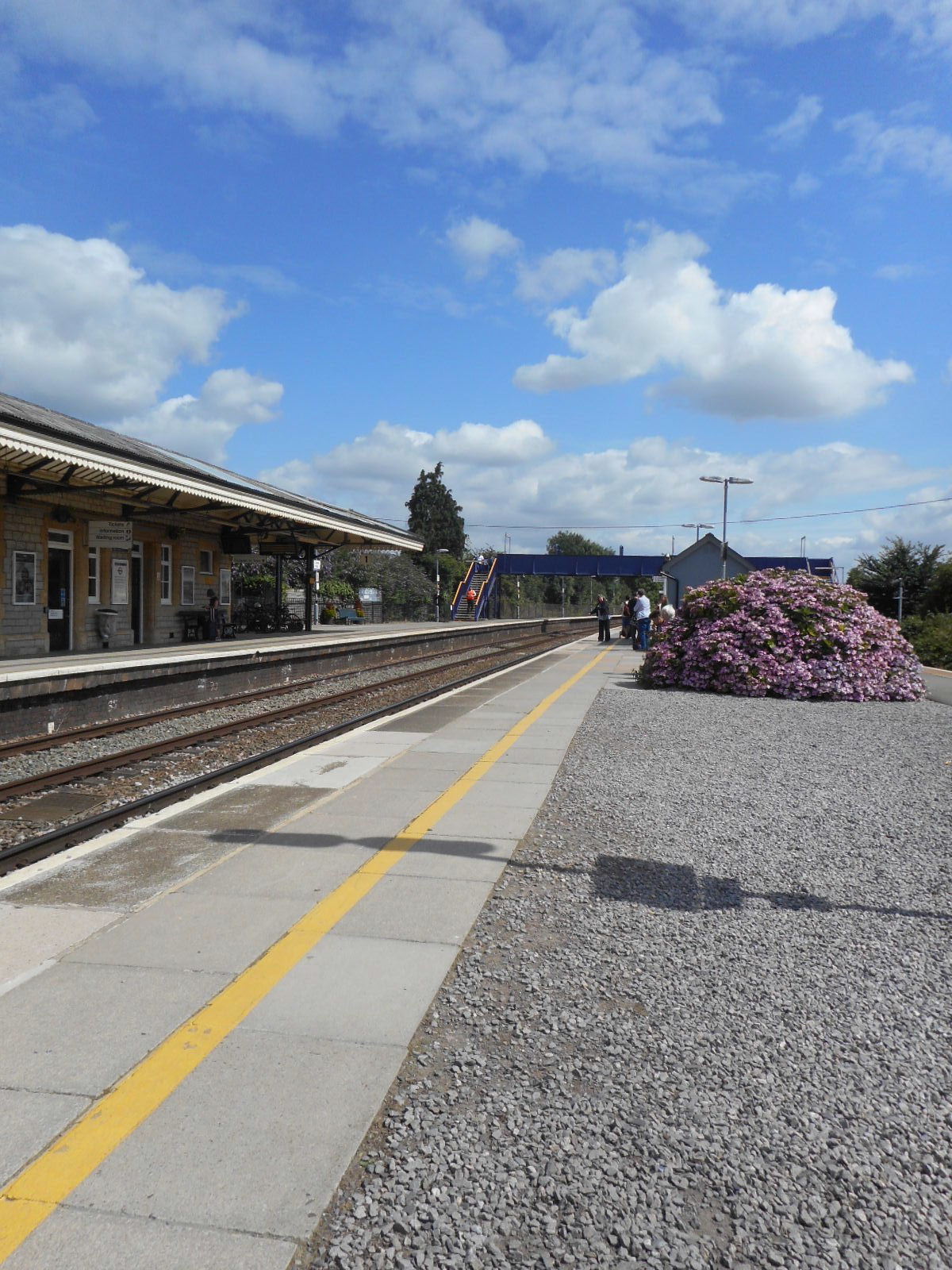
dwestWell, the previous post was about a train journey and here are a few more stations for your pleasure. There’s no getting away from the fact that I do enjoy a good trip by rail; especially, as, in this case, it’s along a previously untravelled line. It begins badly, however, at Dorchester West – an unmanned, unwomaned affair at which parking is non-existent. There is, admittedly, potential: there’s a ginormous area to hand called the Market Car Park. Sadly, it’s Wednesday and the market car park is full of  – the weekly market. To the left of this photo of Dorchester West, which I stole from the WWW, and which I would like you to study carefully, is a huge parking area belonging to The Range. During my pre-journey research, I investigated The Range and discovered a range of reports about folk who’d been fined £100 for parking in the car park when the shop was shut, at a time when nobody else needed to park there. Worth a look as the excuses of these heinous criminals are quite inventive. Anyway, probably in response to the many ongoing court cases, there are a number of signs in evidence advising sanctions.

To the right of the picture, other potential parking spaces are available belonging to a shop called Mud, Sweat and Tears. This emporium has different signage which warns of unwelcome cars being clamped so that was a non-starter. In front of the picture is an electrical wholesaler whose employer said I was welcome to park in one of their spaces. Until I mentioned that I wanted to stay there for two days.

Perilously close to the time when my train would depart, I dumped it on the pavement at an odd angle outside Dominoes Pizza – bad move.

I’m off to Totnes, firstly by means of The Heart of Wessex line. This is an 87 mile route between Bristol and Weymouth calling at stations in places that I’d say are largely unheard of by the wider travelling classes. I have to change at Castle Cary. I don’t even know in which county Castle Cary resides. Furthermore, stations in between Dorchester West and my destination are ‘request’ stops. Now, I think it’s quaint and quintessentially English that you can have request stops on a train. Reader, think about Southern Rail who have cancelled so many trains in the last fortnight that folk have lost their jobs because they can’t get to London on the day they want, let alone at the right time because unions are arguing about whose job it is to open and close the bloody doors. Now The Heart of Wessex doesn’t sound so quaint: it sounds sensible and caring and well-populated with staff. Moreover, there aren’t any electronic doors: once you’ve advised the conductor that you’d like to leave at Chetnole or Yetminster or Hogwart’s Central, upon arrival you lean out of the window and open the door yourself, making sure to politely shut it behind you.

By Maiden Newton, I’m already wondering whether to disembark and return to my abandoned car at Dorchester West. I should’ve looked at the internet photos beforehand as the one I’ve posted clearly illustrates that it’s perfectly normal to park on the pavement.

DSCN0866It appears to be a largely single track affair to Castle Cary yet the train driver spent most of the journey with hand on the horn. Perhaps this was to warn stray cows of impending death. The Heart of Wessex website informs me that all of their stations offer ‘opportunities for adventure and discovery ‘. Here’s a photo of Castle Cary, established in 1856, on the day I arrived. Actually, there are quite a lot of folk around as this spot in the absolute middle of nowhere seems to be a crossover point for travels to Paignton, Piccadilly, Plymouth, Weymouth, Exeter and almost anywhere really. It’s like a rural portal or black hole. I’m quite sad to leave The Heart of Wessex, but needs must and I’m heading for Exeter St Davids.

DSCN0867There is nothing identifiable in the countryside as we rush past “faster than fairies, faster than witches, bridges and houses, hedges and ditches, and charging along like troops in a battle…” No points of reference. The corn is already shorn and the harvest safely gathered in. Horse country followed by cow country. Followed by the drainage ditches of what must be the Somerset Levels. In some other life, Leonie and I came to Glastonbury on a most unexpectedly fortuitous day when part of the Sweet Track was open to the unaware public for a mere twenty four hours. It’s an ancient timber tracked causeway, constructed over 6600 feet in 3807 BC and was the oldest known roadway IN THE WORLD. Well, until 2009 when an even older one was discovered close to Belmarsh Prison. It’s an evocative story and just as well as the photo shows the view awaiting the intrepid explorer at Taunton Station.

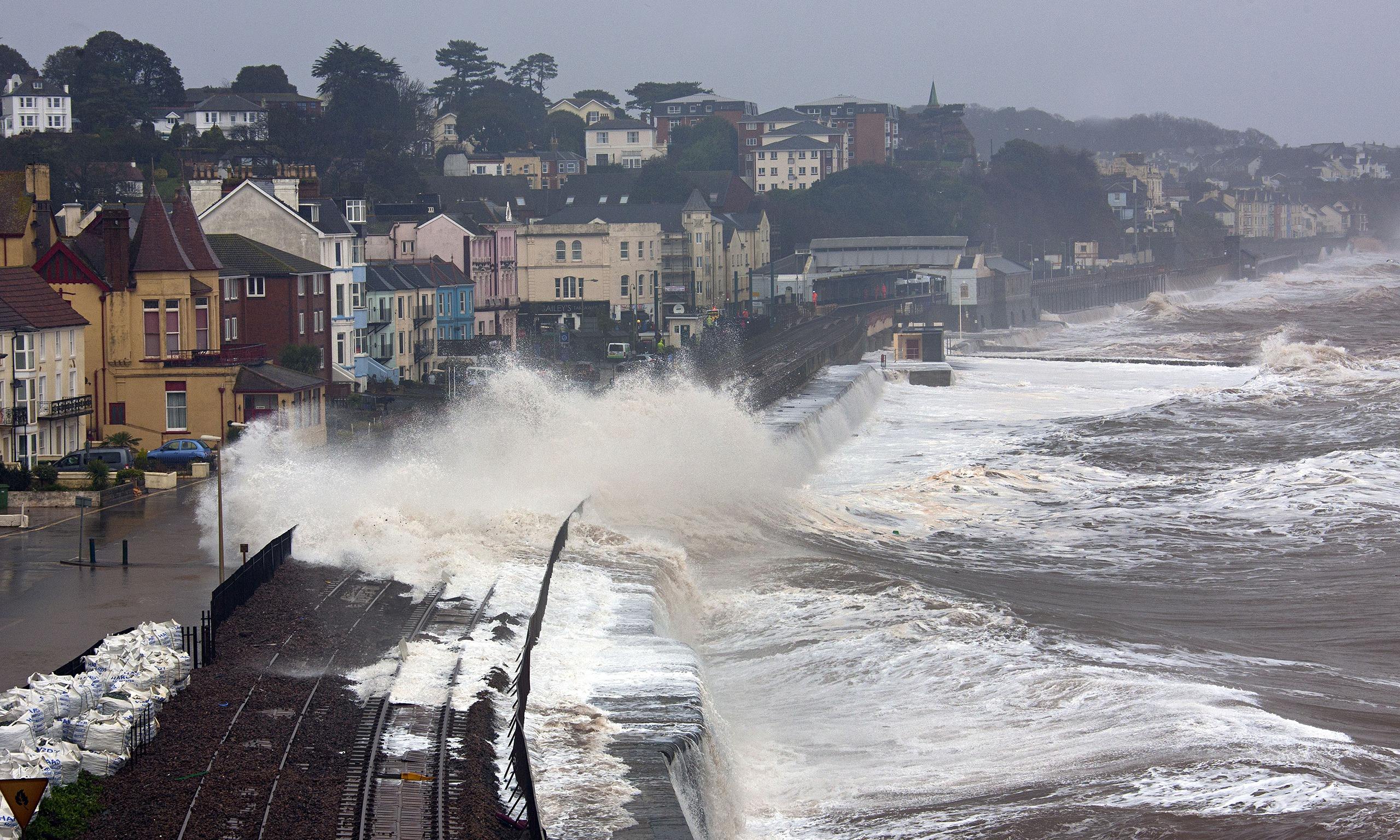
Dawlish, DevonI notice a sheep in a field, upside down with its legs in the air. Is it tired? Dead? These are called Cast Sheep and, having fallen over, are unable to get back up due to pregnancy or heavy coats. They die quickly. An ancient being walks through the carriage, nodding and smiling at everyone like royalty. Those who have been graced with the nodding and smiling look the other way. The royal lady joins another who is wearing the most extraordinary straw hat. At the front, it has two points like animal ears. At the back, it runs out of ideas and looks as though the straw has been tucked underneath whilst the milliner pops out for a cup of tea and further inspiration. And the next thing I know is Dawlish. What idiot would build a railway on a sea wall? Oh. So it’s Isambard Kingdom Brunel is it. Well, he should’ve know better. My picture, yet again stolen, shows a sorry state of affairs in February, 2014. Mind you, it only took them two months to rectify matters. That’s not too bad when you think of the London to Brighton line and the bloody doors.

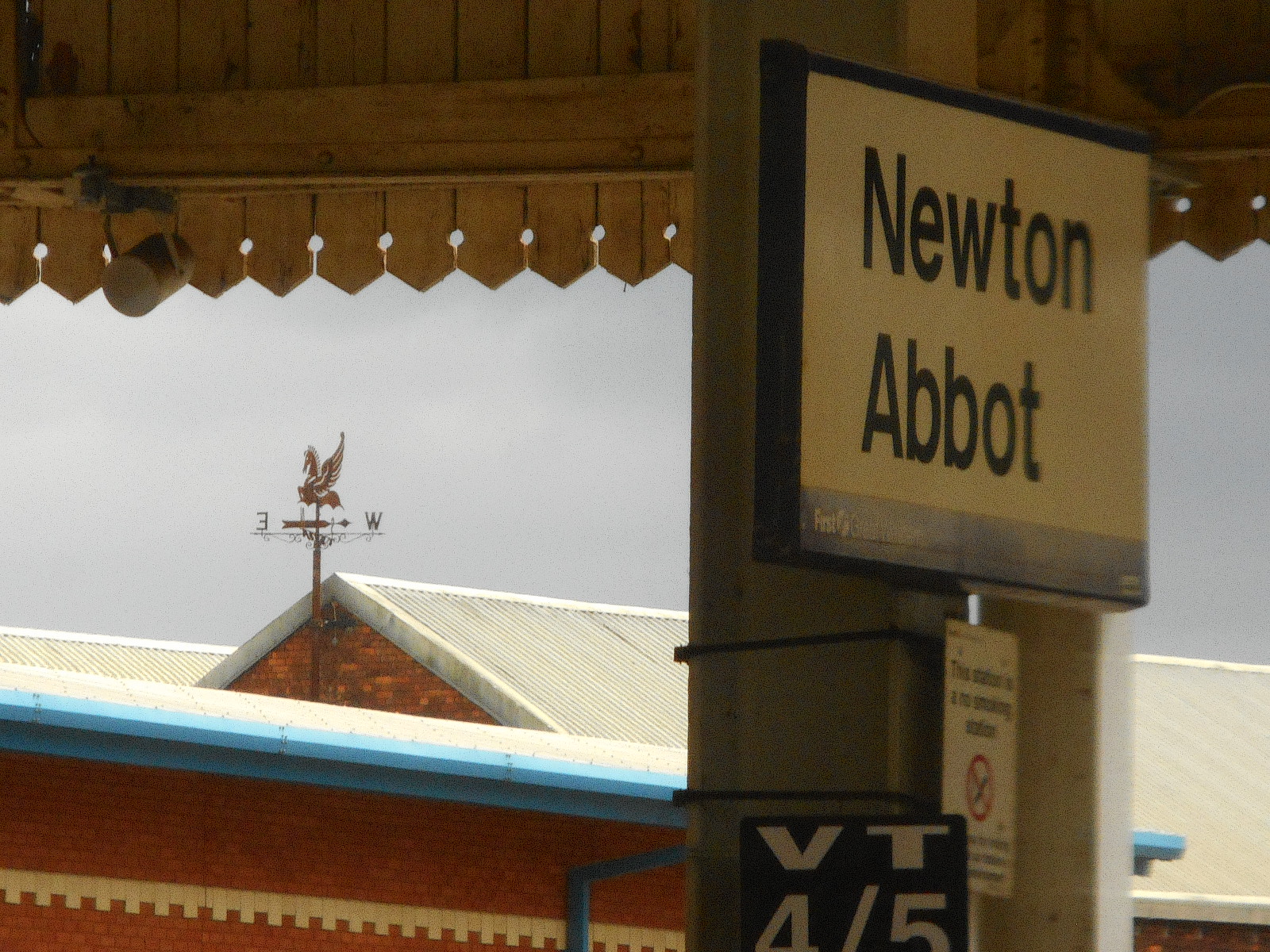
DSCN0869Finally, past the windswept beach against which the holiday makers of August  are heavily wrapped, we reach he home of nag racing. And from the train, I spot a rather beautiful and  enigmatic flying horse. Reader, you can research its meaning should you choose. Me – I’m meeting my friend at Totnes in ten minutes.

laurame

(Poem by Robert Louis Stevenson)


.


The 15.35 from Waterloo to Poole

trainSitting in the so-called ‘quiet zone’, being terribly intellectual (in between bouts of Sudoko), reading Lawrence Durrell’s Caesar’s Great Ghost, and waking only to hear the following announcements:


  1. ‘This train will divide at Southampton. If you’re going to Bournemouth, Poole or Weymouth, you should be in the first five carriages. If you don’t know which part of the train you’re in, the first five carriages are at the front of the train. The front of the train is the part of the train that was furthest away from you when you came through the barrier’.
  2. ‘If you’re going to New Milton or Christchurch, you should be in one of the rear five carriages. If you don’t know which part of the train you’re in, the rear five carriages are those furthest away from the front of the train. The rear five carriages were nearest to you when you came through the barrier’.
  3. ‘If you still don’t know which part of the train you’re in, there is a sign in the middle of your carriage which tells you which number you are in from a possible ten.’
  4. Ditto number one.
  5. Ditto number two.
  6. ‘If any passenger who came aboard successfully at Waterloo has lost a doll, I have it. The doll has long yellow hair and a pink and yellow dress and is now in carriage number four of a possible ten. Carriage number four is in the first five carriages of this train.’
  7. ‘The first five carriages of this train are going to Bournemouth, Poole and Weymouth.’
  8. ‘ We are now approaching Southampton where the train will divide. If you’re going to Weymouth, you need to be in the first five carriages which are at the front of the train. If you’re not in the first five carriages, you’ve still got time to walk through the train.’
  9. ‘On arrival at Southampton, if you discover that you’re in the wrong part of the train, you’ll have to get off the train and either walk up or down the platform depending on which part of the train you think you should be in.’
  10. ‘Someone has clearly moved forward and left their luggage on the rack in carriage number five. Carriage number five is still with us but the luggage has now been moved to carriage number four.’
  11. ‘Hot drinks are no longer available on the trolley.’
  12. ‘You have reached your destination.’

From the air

niceThese are strange days. I leave France a week earlier than anticipated and in so doing depart a grief-stricken country for a homeland that has changed beyond political recognition in a mere two weeks. It’s as if the world is so unstable that each day’s news merely functions to outdo the previous in terms of panic, fear, distress or all of the above. The only thing to be said about continuity is that it no longer occurs. Except from the air.

The mistral has blown a tiresome course for four days. Latterly, the wind has subsided comparatively but still we wobble our way upwards from the inconsequential airport in Avignon in something more than a breeze. And we never get so high that we can’t clearly see the topography below. There are no promenade-speeding lorries or coup d’états or exits up here. From my window, the South is still lush with vineyard , cypress and olive as the noisy little plane flies over the greenery of Chateau-neuf-du-Pape. I can name some of the grapes on the Route des Vins to my right as they sit, sun-soaked, in front of the bicycle-climbing, white-topped Ventoux. Rien ne change ici. Jamais.

We must be following the origin of the mistral as we fly north along the Rhone. In the distance, I see the jagged, snow-tipped peaks of the Alps (only tipped and not covered since global warming came into fashion). Below, is the waterside industrialisation of Valence and Lyon and other river boasting nuclear monstrosities: vast conglomerations whose names escape me. Cities that have developed on the bends of unknown rivers through eons of trade.

Later, I am minded of leaving France, this nation of many countries, eight years ago. At that time I was not alone but on another unplanned exit; then by road and in good company. Below, mile upon mile upon more miles of brown fields occasionally broken by tiny hamlets. I wonder whether these are the immense and endless wheat fields that Barbara and I drove through in another life.

And here are roads so straight and long that the linear Romans must have passed this way. And huge tracts of forest devoid of evidence of human habitation. What creatures lurk within a greenery never to be called verdant? And now rogue clouds pre-empt a sickly thick greyness that foretells of La Manche and the end of France. Well, geographically speaking.

And here are two grown-up children waiting to collect their mother at another tiny airport. All of which means that from the air and below the important things are constant.


In the Elysian Fields

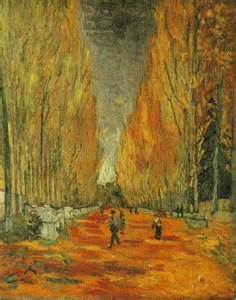
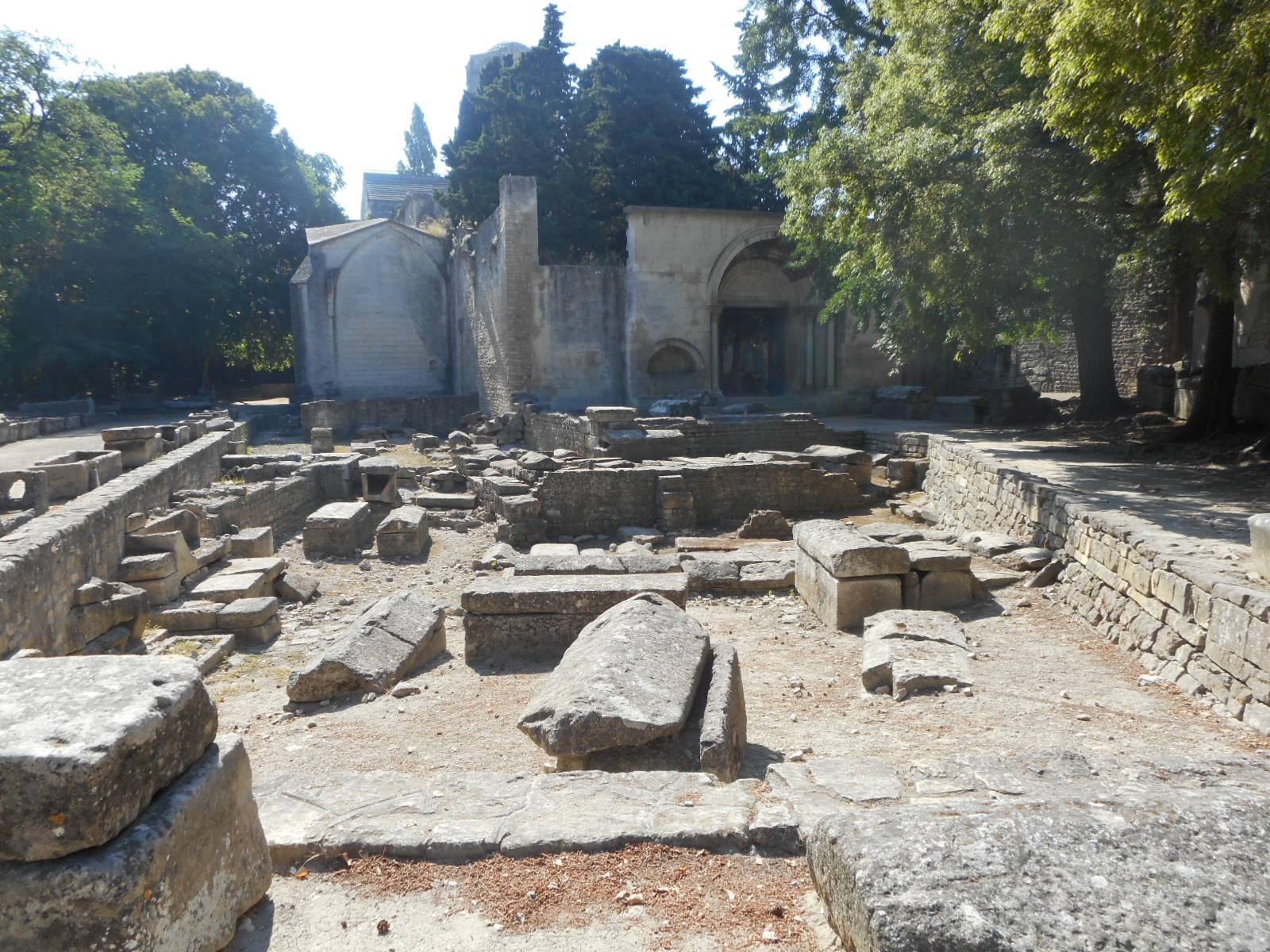
elysianLes Alyscamps comes from the Latin for the Elysian Fields where, according to Homer, the favoured enjoyed eternal peace. So, this is a cemetery wherein the tree-lined path leads to heaven. In this famous painting, it’s been forever immortalised by Van Gogh who, along with his pal Gaughin, frequently painted this lovely place during that tortured spell at the Yellow House. By that time, many of the sarcophagi had been destroyed and the avenue had become a favourite place for the Arlesiennes to promenade; perhaps on le dimanche.

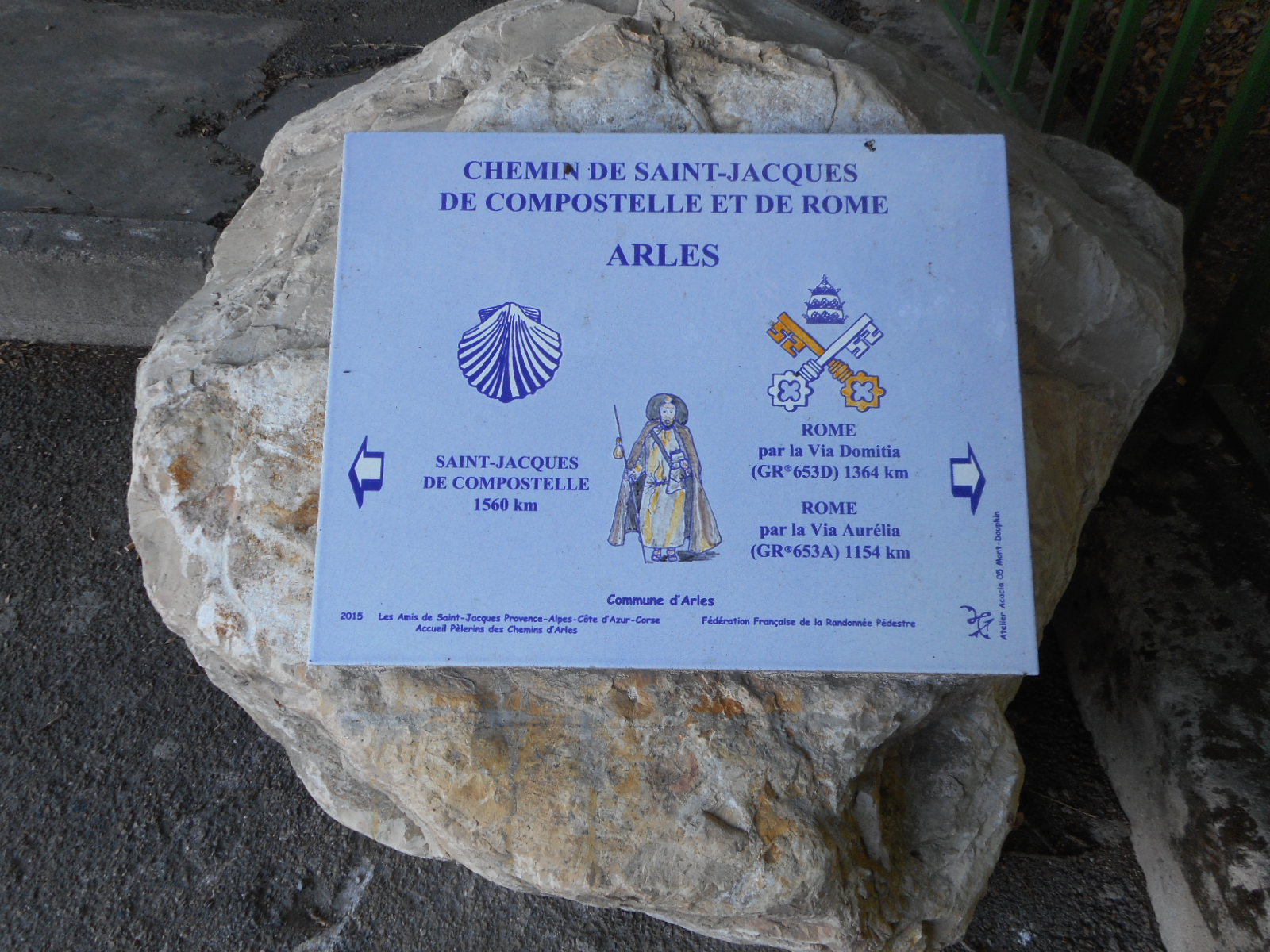
DSCN0750Being Sunday, I’m up early for a little 21st century promenade and am first here. In the past, long before painters passed this way with their easels, pilgrims either stopped by for a spot of prayer on their way to Compostela or made this their starting point. In France, especially in this area, the roads to St Jacques are many. Both the Via Aurelia and the Via Domita pass through the town. I’m delighted to find this plaque on a stone at the entrance. It might not look like much to you, but if you could see the other so-called memorials on the route through Arles, you’d be impressed: scratched, scraped and covered in graffiti – same old story.

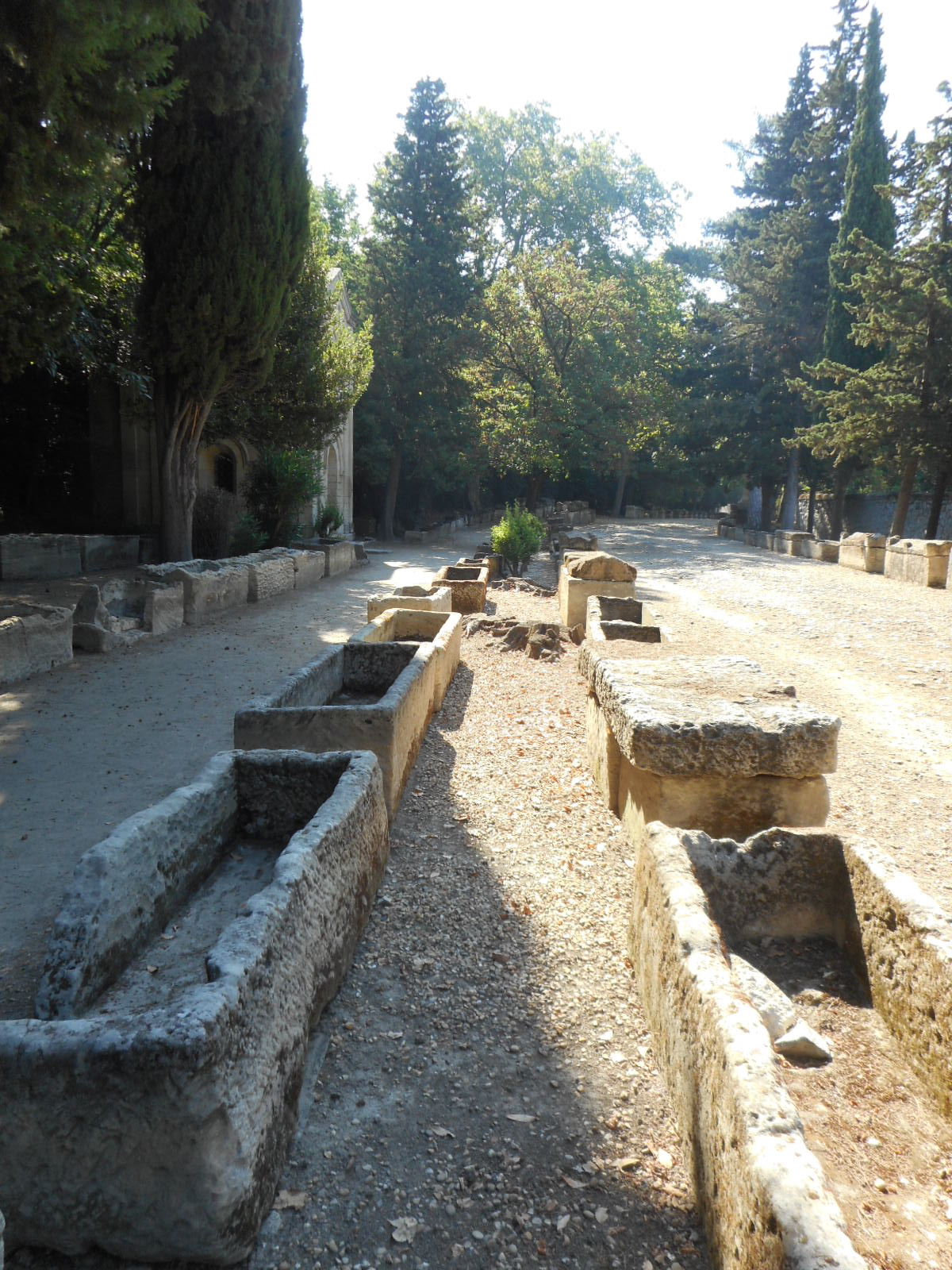
DSCN0758These days, it’s a UNESCO World Heritage Site, probably for a number of reasons: apart from the cultural heritage of those two warring artists, here, in tidy rows, lay the remains of Roman and medieval dignitary. And to begin with, it’s a peaceful place that I relish, apart from the flies. Well, it’s a cemetery so I suppose you’ve got to expect a few flies. But then the mosquitoes arrive to pinch and prick unclothed shoulders and to sit on a head devoid of cover. There’s a canal to hand, plus the infested swamps of the Camargue – a breeding ground of all things unpleasant.

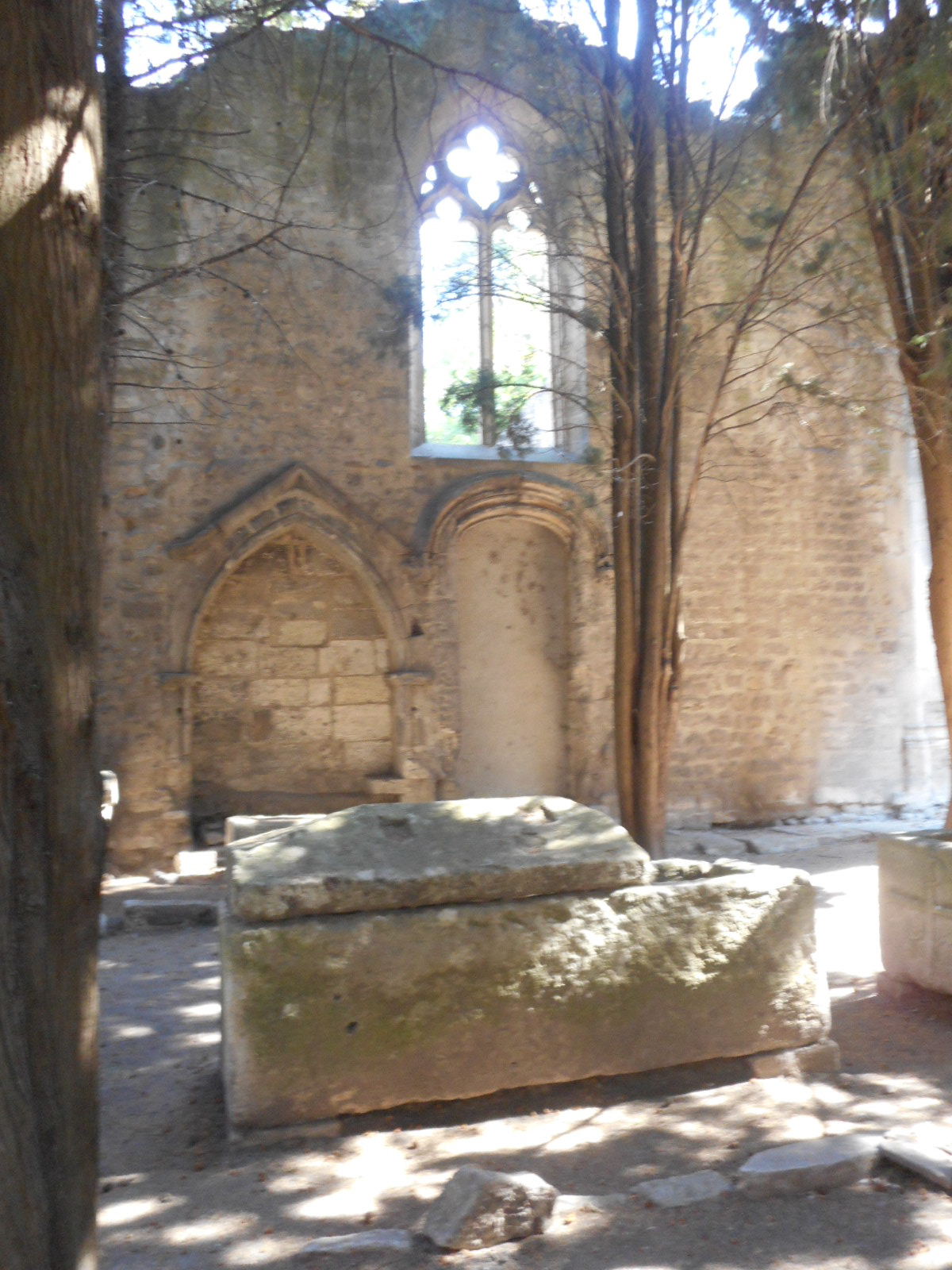
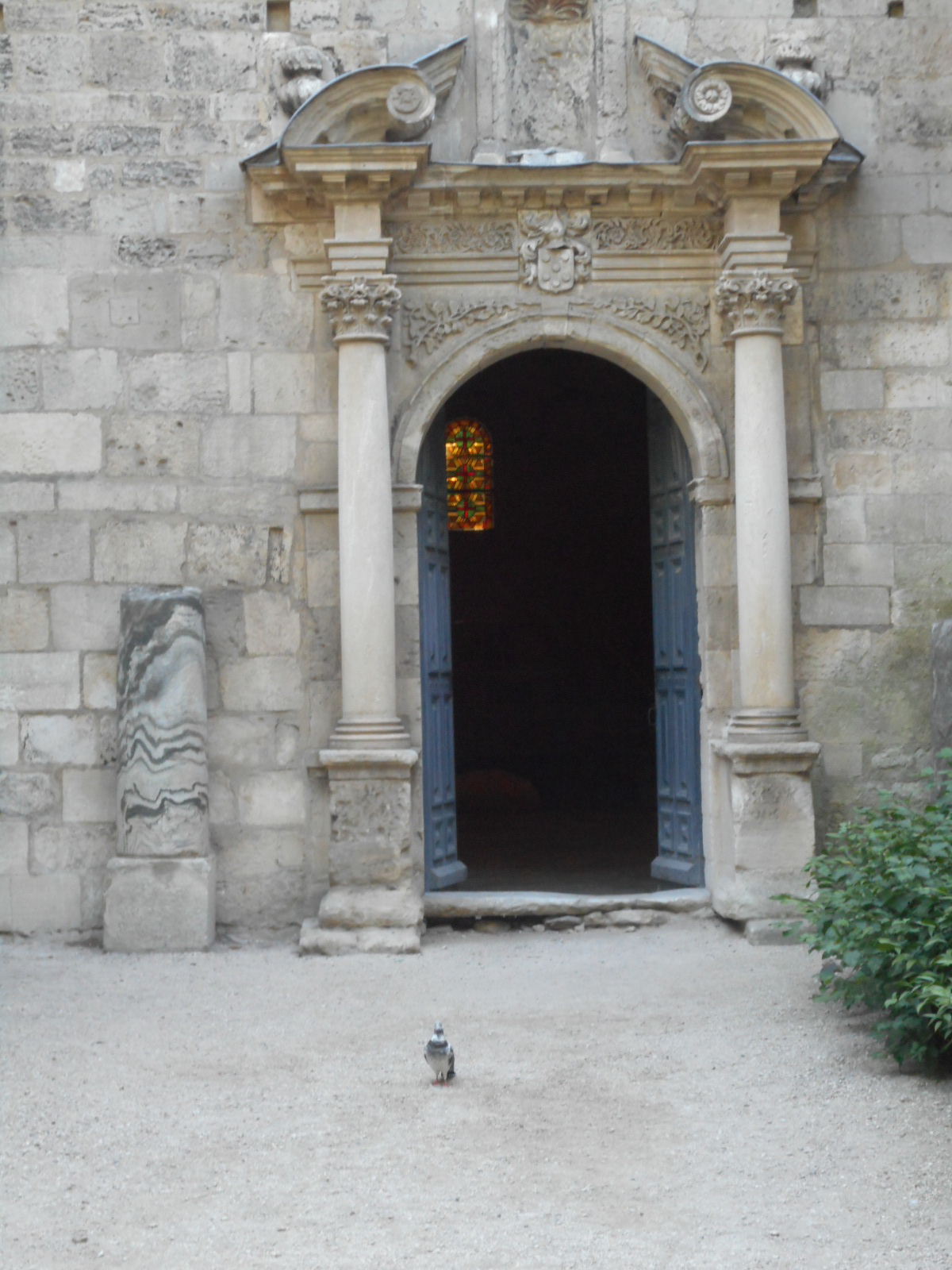
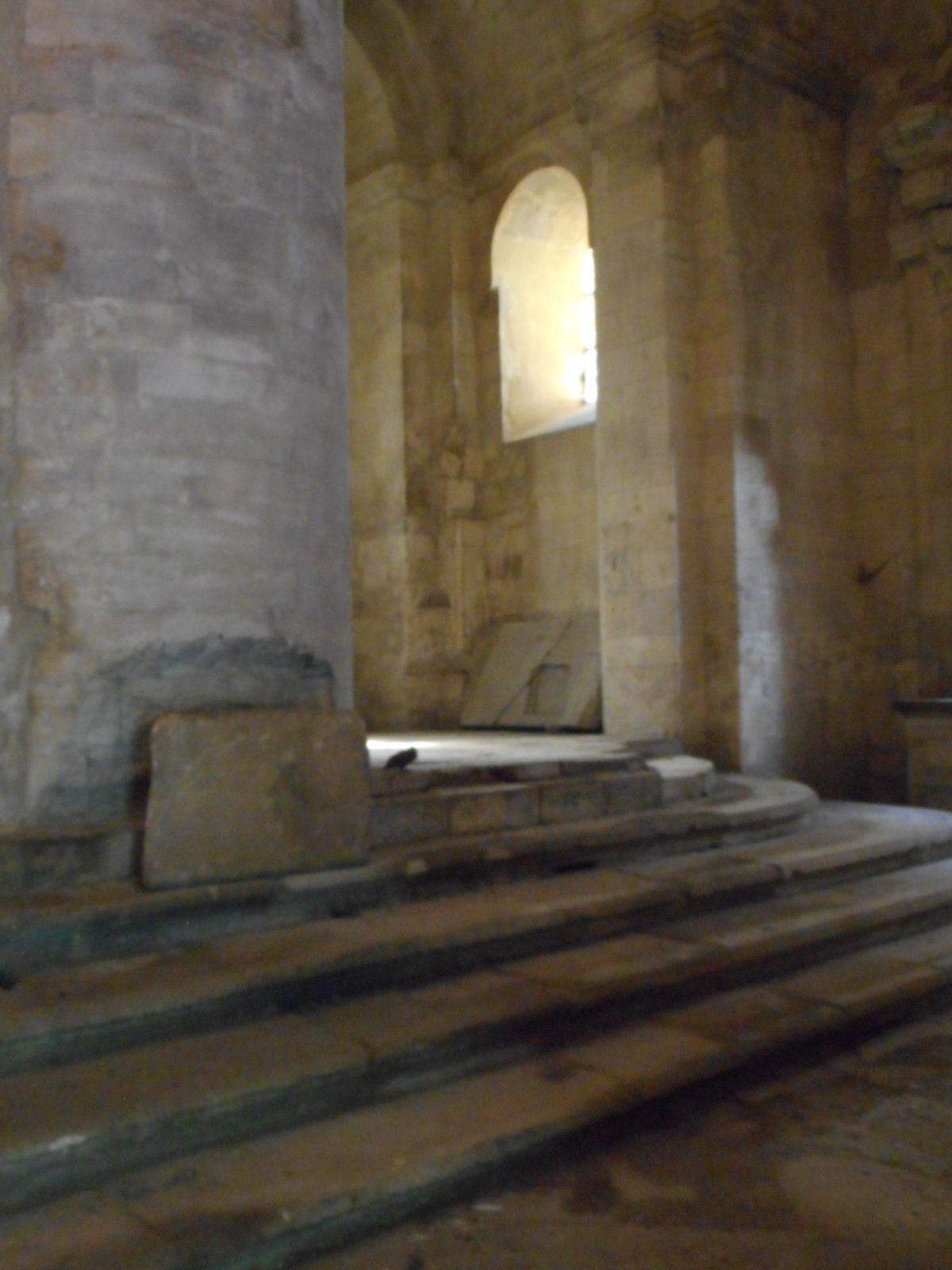
DSCN0768At the end of the promenade sits the 12th century Romanesque church of Saint Honorat. There’s all sorts of architectural information available. What’s available today is a sanctuary from the heat and the insects. Here’s a couple of snaps.


DSCN0772 DSCN0773It seems that the mosquitoes don’t like the sacred ground. But something else is lurking within. Inside the church, a strange noise echoes all around What is that?


DSCN0777

The ghostly moans of souls long since departed? It’s spooky and clammy within. Or maybe I’m spooked and clammy. I wander around tentatively, but even your brave explorer can’t force herself down those steps.


DSCN0775And now there’s a squeaky, squeal-like noise. It’s the sound of one who hasn’t yet crossed to the other side and doesn’t like the look of what’s over there. Then, I spot the source: it’s  a baby pigeon that’s been abandoned by a million grown-up versions roosting in the eaves of this largely forgotten place.


Obviously, I became a little lost on the way to Les Alyscamps. I ended up on a rather unpleasant looking estate with the same name. I asked a man for Les Alyscamps. You’re here, he said. Then, seeing my confusion, he continued, oh, you mean the garden. Which made me think of the other Van. Maybe read the post again whilst listening to this?

A shell in the wall

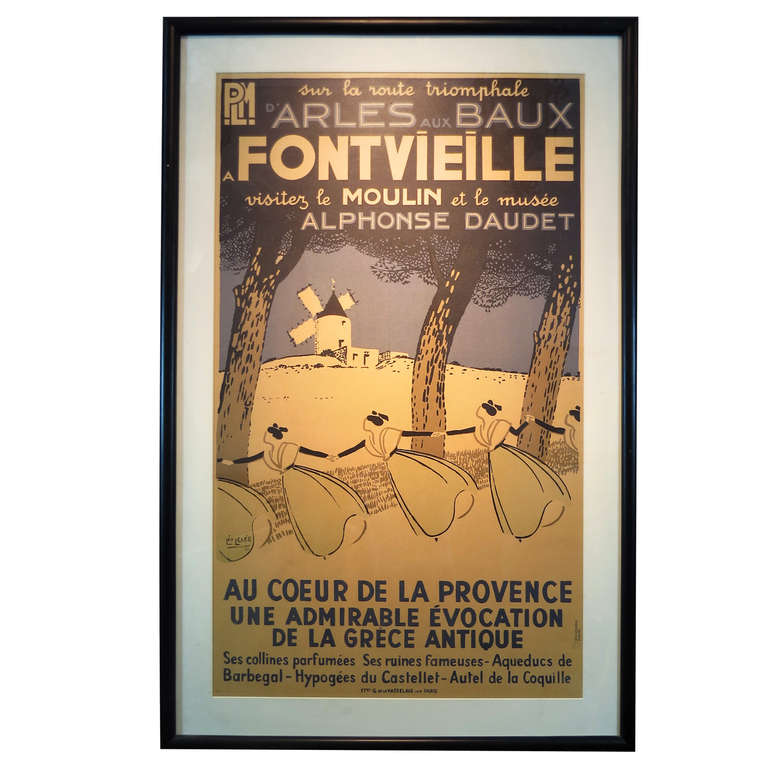
leleeA couple of years ago, I bought a copy of a famous Lelee poster from a man I know in Eygalieres. I’d been told by a number of ‘experts’, including a woman in Arles who claimed to have worked for the publisher of Lelee’s estate, that it was impossible to purchase a facsimile of this work that included the writing below the Farandole-dancing Arlesiennes. It’s true that the words are missing on all the cards and posters easily available. However, it wasn’t too tricky. Monsieur has, over a number of years, sold me a few items including a beautifully illustrated Lelee map of the Bouches du Rhone. Every time he sees me coming down the street he jumps out to shake my hand.

I took my poster home, had it expertly framed by Nigel, and hung it on the wall next to my bed. I love Fontvielle: I’m a huge fan of Daudet, his writing, his house in which I’ve stayed and his windmill. I’ve written elsewhere about the aqueduct at the bottom of Fontvielle which is one of my favourite places in Provence so it’s a pleasure to go to sleep and wake up looking at my poster. However, it’s taken me two years to notice that it contains writing that I’ve never bothered to translate: Autel de la Coquille. The Shell Altar. Qu’est-ce que c’est? I sent an email to the Kiwi: ‘do you know where this is?’ ‘No, but you always find the interesting things. We’ll go’.

DSCN0738We set off at une bonne heure on an unusually overcast, but stifling morning. I generally come to Provence slightly later in the summer when the sunflowers are bowing their heads so we make an unexpected stop on the side of the road to take a few snaps. Here’s the Kiwi trying to hide amongst the blooms. The lorries thundered past on their way to Arles and the Camargue but we were happily immune to their busy noise.


DSCN0741She has a sat nav which is just as well because the Shell Altar is not something you’d just come across. This is France where, no disrespect intended, no-one seems to bother with the wonders of the ancient world. ‘Turn right’, she said so I turned into an olive oil producing domaine. ‘Are you sure’, I ask? But the domaine is called Moulin de la Coquille’. Bit of a clue there. At a fork in the road – and I use the term loosely – the way to the right is marked ‘private’. We take the left and arrive at the centre of olive oil production whereupon we try to explain to a random youth what we’re looking for. He can’t translate our garbled French but assumes we’re looking for ‘the shell’. Others have been this way before. He tells us we should’ve taken the path to the right. I mention that this was marked ‘private’ and he tells me not to worry about that. And thus we find a place of significance.

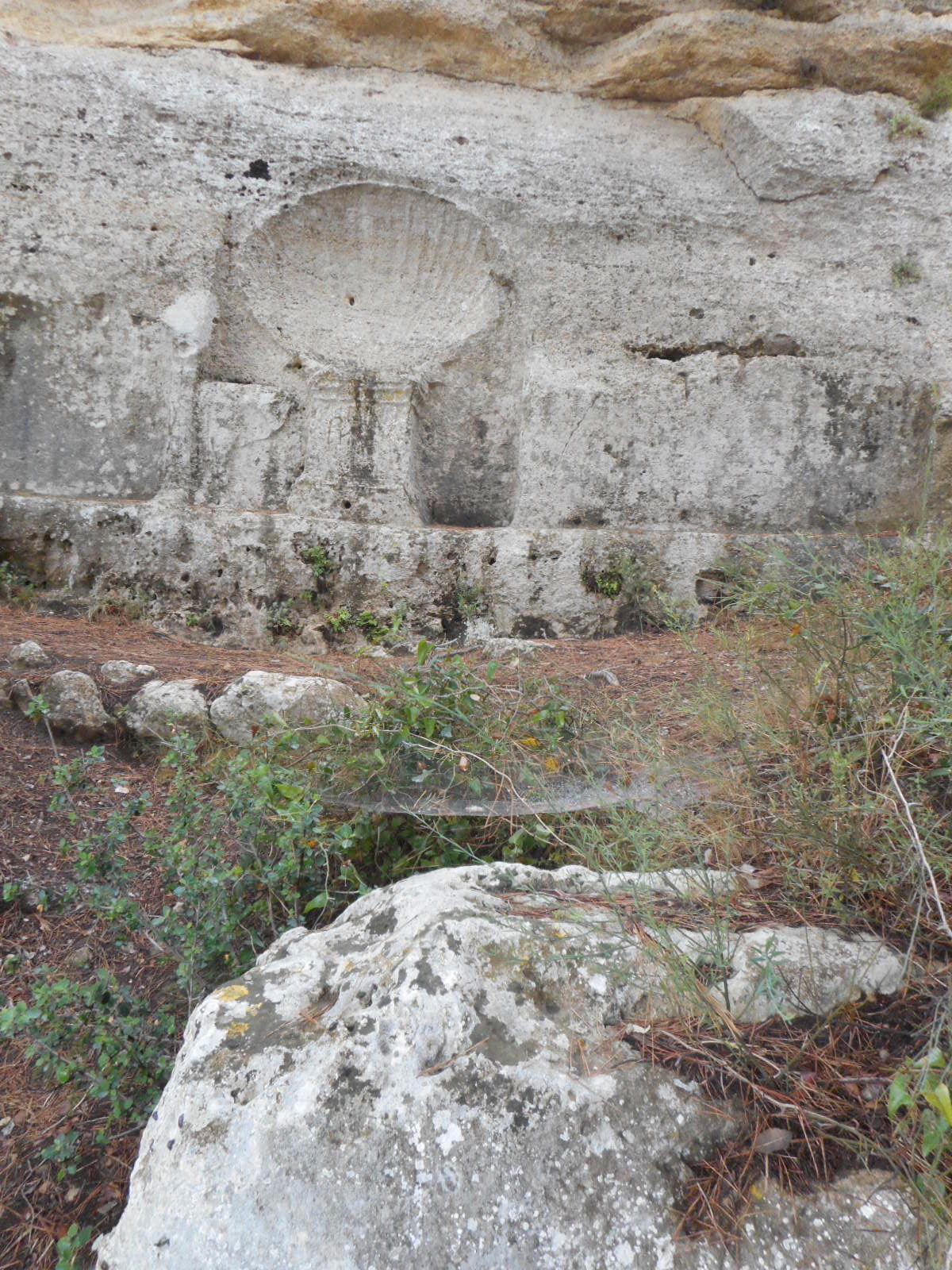
The Autel de la Coquille is an altar carved out of a limestone cliff. It was a place of worship for pilgrims along the Via Aurelia which is one of the routes to Santiago de Compostela. The shell is the symbol of St Jacques i.e. Coquille St Jacques. On the other hand, this so-called Gallo-Romano edifice was probably placed on a point where earlier folk worshipped a water deity and was a site of sacrifice of bulls – hence the term, a ‘taurobolic altar’. I love all this stuff. And I loved the opportunity to explore with the Kiwi.


Some questions from the Dutch

Dear Little Britain, I had lunch with some Dutch people today who work in the high end of the international catering business. They were still absolutely astounded by Brexit: ‘all these years, we have thought the English were so kind and polite and tolerant. We loved the English. Why have they f***** up the European economy? We had no idea they were stupid and didn’t understand how much they were liked and wanted. We didn’t know that they had no knowledge of – anything. Why are they all running away?’

Here are some questions, in no particular order, that I couldn’t answer:

To Cameron: ‘Why didn’t you explain things properly? Why did you quit so soon? Why can’t you take charge and reverse a decision that hasn’t yet been implemented?’

To Johnson: ‘Why did you divide your nation and your friends in Europe? You’re a clever man, why didn’t you see what would happen? Where are you?’

To Gove: ‘Why can’t you see that a Brexit PM will have no leeway in future negotiations with Europe?’

To Farage: How did you have so much influence? Where are you now?’

To Chris Evans: ‘Who?’

I report these questions exactly as they were asked. Apart from Chris Evans, they knew all the participants by name and their parts in the process (which is more than I would if it was the Netherlands that had quit).

It’s not an objective, representative sample but I suspect there are English holidaymakers all over Europe wondering how to respond.


Brexit from France

DSCN0659It appears that Flybe have stopped selling gifts and take-away booze on their flights to France. I don’t mind because I never buy anything anyway. However, aboard their noisy prop driven little plane, it was always pleasantly distracting to browse a brightly coloured catalogue of cosmetics and perfume. About half way through the journey, the stewards seemed at a loss as to what to do next. I was second seat from the front so I could hear them:


‘Shall we ask them if they’d like another drink’, suggests number one?

‘That’s a good idea’, number two replies. And over the tannoy comes the momentous announcement that if anyone would care for further refreshment, they simply need to press the buzzer above their head. It’s not yet 8.30am and the demand for alcohol is lacking. I wonder if Flybe are ahead of the game and are currently garnering a new range of products in readiness for the time when Brexit = duty free.

……………………………………….

At the airport, I was eventually met by my American friend who, despite having sent me an email that included a photo of her calendar marked ‘Saturday – meet Alison at Caumont, 10.30’, had forgotten that Saturday comes after Friday. Terribly apologetic, she stated her embarrassment.

Me: ‘You’re not as embarrassed as I am turning up here after Brexit’

Her: ‘We feel your pain. All I do these days is try to explain to people that I am not responsible for Trump’.

……………………………………..

I’ve not been too well lately and my case is packed with prescribed medicine that fails to work. I went to see a doctor this morning. What follows is NOT a criticism of the NHS; it’s just another way. I arrive at the surgery without an appointment. I wait less than five minutes before a jolly medic arrives and invites me into his room. I explain the problem and show him the empty pill carton so he knows what I’ve been taking.

Dr: ‘Bah! These are no good. They don’t work. Here’s a prescription for different medication plus some proper pain killers’.

Me: ‘Merci beaucoup’.

Dr: ‘Drink plenty: water mostly, no Pastis and some wine’. He writes some notes on EU headed paper which necessitates him asking me where I’m from.

Me (quietly): ‘Angleterre’.

Dr: ‘Ha! Ha! Pas EU now’.

Me: I’m sorry.

I take my prescription to the pharmacy. A young woman relieves me of the script, goes out the back and returns toute de suite with two packets.

YW: ‘Seven euro please’.

Me: ‘Crikey, that was quick’. Young woman is confused.

Me: ‘Sorry, I’m English’.

YW: Ha! Ha! Ha!

………………………………………………..

DSCN0648The Kiwis who run the joint where I’m staying didn’t have a vote. In the week that included that fateful day, all their guests were English; folk who’d taken advantage of the advance voting facility. The news broke on Friday morning just as a huge cloud of despondent gloom swathed Mas Saint Antoine like the Turin Shroud. K1 told me that one couple felt unable to leave their gite, being too distraught. Others stumbled around in bewilderment and the shroud did not lift until the following afternoon. It’s difficult to stay sad for too long here.

Books I have not read

madeleine cake

Amongst all the dreary EU blah blah, my attention was, this morning, alerted to a report of importance concerning literature. It was courtesy of Paddy O’Connell who is my second favourite radio broadcaster after the sublime Eddie Mair. Eddie doesn’t work on Sundays and when Paddy has the day off, which he did last week, the world falls to pieces; causing disorientation and lack of direction, at least until Tuesday when I have to go back to work. Anyway, the report concerned itself with an apparent revival of Proust’s sponge cake saga, A la Recherche du Temps Perdu or, in English, Looking for the lost Madeline.

Six Ionian Olives - FoodCollection

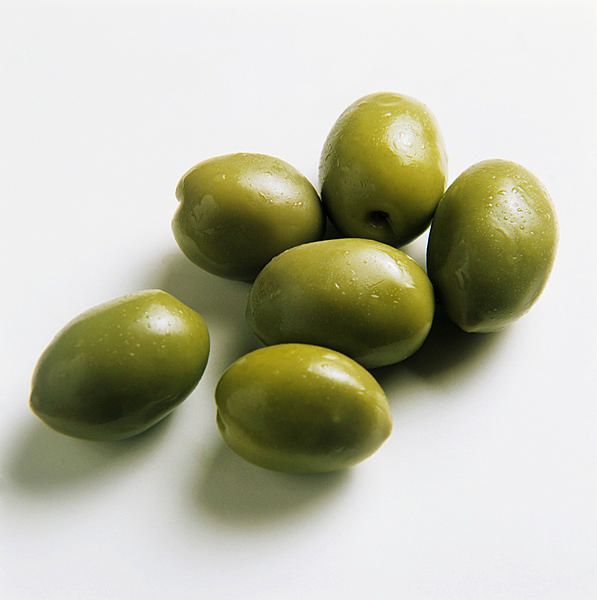
For me, Proust has always been like olives: you know you’re supposed to like them but it’s hard work. As an older adult, I grew into the black ones (as long as they’re covered in herby bits), but the green varieties have always been a non-starter. It used to be a rather pretentious secret; the rationale being that you never feel sufficiently grown up unless you can happily spear an olive that isn’t noir in colour. Come to think of it, the same thing applies to Madelines that must comprise the most boring cakes ever invented (only don’t tell anyone I said so).

Paddy sent someone off to le deluge ridden French capital to see what the bright young things were saying about the born-again Proust. One or two types, with their mouths full of green olives, maintained that A la Recherche was like the bible: every time you returned, you found something new. On the other hand, most of the interviewees admitted that, not only had they never finished reading it, they knew no-one else who’d succeeded, which is hugely reassuring. Even now, I can picture a wine-driven evening in the South, under an old fig tree, where one precocious youngster claimed it was impossible to journey into rural France without being au fait with Proust. Naturally, we called for another glass of rouge and kicked this upstart back to dear old Blighty.

I’ve attempted A la Recherche a couple of times. I think my record is thirty pages. I don’t mean to boast but I’ve devoured (and enjoyed, unlike green olives) Pagnol, Daudet and Flaubert amongst others so I don’t believe I’m out of the French literary loop. My point is, not everyone likes the same stuff. When I was a person who wore younger women’s clothes, we had a saying: so many men and so little time. It was short-lived. It didn’t take long to realise that the meaningful truth was, ‘so many books and so little time’.

In my country, it’s the same thing with all the ‘classics’: I adore Dickens because I love those long, rambling descriptions of people and place. Most of my closest friends and family hate him precisely because he uses fifty words when three or four would do the trick. And if you read Dickens on Kindle, you can see their point: the facility to turn back and remind oneself of the temps perdu is de rigeur. I love Hardy because, for me, he conjures the very essence of Dorset. But it’s the essence of a solitary and reflective walker. On the other hand, I’ve never got to grips with most of our so-called classics. I like Pride and Prejudice but only, I fear, because of the infamous BBC production. I’ve never finished Jane Eyre or Wuthering Heights: I find no empathy with character or place. I could go on. I’d like to say that it’s essential to be able to relate to something but, despite the acceptance that France is my other country, there’s nothing in a green olive that draws my sensibilities.