Travelling East (and back again )

At a time of year when we think of men with crowns from the east travelling westwards with gifts, I go in the opposite direction to a place not ventured to for a year. Lewes to be precise: a centre of anarchy where kings, and anyone else deeming themselves to be ‘in charge’, generally get burned. All those fiery crosses and blacked-up faces are a step too far for the uninitiated. I went there once on 5th November. I might as well have been in outer space for all I understood. Be very afraid.

I’ve been to stay with Bev. I haven’t seen her for ever and a day. Almost to the day. It’s taken us that long to get over the storm-spoiled, chicken-sitting trouble in Provence. I don’t take breakfast which is dangerous. Whether or not one gets any food at Bev’s is a lottery. After all, there was that business with lobster tails in the distant past. I might pass away from malnutrition. However, these days, things have improved greatly. Bev now has a selection of grandsons whom she looks after and there is food in the house; albeit, chopped and mashed. Bev has also changed beyond recognition: she is revitalised by the presence of all these charming small people. How very, very.

The plan, in as much as we two can ever make a plan, is a spot of culture. We are to travel some distance to see some rare frescoes in a Sussex church. This is England in December and the plan is instantly thwarted by the freezing elements. Thus, we must embark a shopathon. Splendid. Firstly, we visit somewhere or other below the Sussex downs. ‘Look for the elephant’, she says amongst the sparsely dressed trees. As ever, I have no idea what she’s talking about but, surprisingly, we find The Trading Post and it’s glorious. I make some purchases and secure a discount on the basis that I will mention them in my blog. They think I’m famous. Possibly not, but here I am keeping my word.

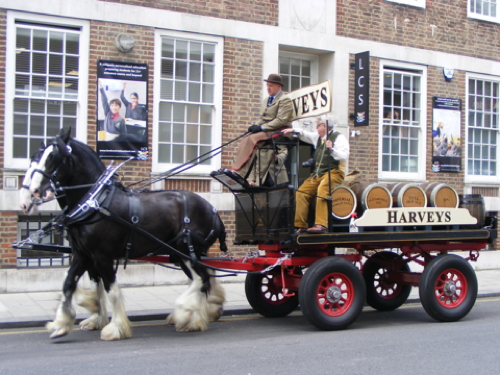
Bev pretends she can’t cook. Then she presents a roast beef dinner to die for. Actually, as I sink into my cosy bed, full of cow, I could die happily. But there’s shopping in Lewes to undertake the next day. To be honest, Lewes has let itself down with its Christmas decorations – there aren’t any. However, there is late night shopping. In Lewes, they only have one night of this and the whole town is out and about. My very favourite bit was the horses. Harvey’s Brewery still deliver their beer by drays and the enormous, beautiful, shiny black Shires were out in the street, amenable to petting by the masses. I’ll forgive Lewes the lack of decorations for where else can we be both spoiled by such animals and an archaeologist explaining all the wonderful local finds with such enthusiasm. And we bought all the gifts we didn’t even know we were searching for. I once wrote a Weasel entitled ‘Lewes is Lovely’ and it is. Odd, but lovely.

The next morning, the house is over-run with tiny folk. On my way in search of coffee, I inadvertently succeed in overloading the smallest with a Weetabix. Job done, I look around this Sussex war zone. It’s 9am and Bev is fighting to dress an 8 month old person. It’s time for me to leave. Returning westwards, I am, worryingly, stuck behind a Daish Holidays’ bus. Caliphate Coaches, have superseded camels. Who knows what gifts are on board? I am too afraid to comment further.


How to become dispirited

 Eldest daughter and I planned to have a stall each at a car boot in November. We are boot sale/charity shop/junk garage aficionados, thus we have a lot of suitable stuff to shift. Don’t get me wrong – we utilise a lot of our purchases but we have small houses and gardens so we have to get rid of some in order to make space for more. Our lives would be otherwise meaningless if we couldn’t seek a bargain. This ethos doesn’t run in the family: youngest daughter (a metropolitan type) claims ‘your houses are full of ‘stuff’. True. Father once mentioned that the garden looked like Steptoe’s yard. Not true. Mother is a closet bargain-seeker. She only chose her hairdresser because it’s two shops down from Julia’s House (which is an up-market charity shop).

So, we have all this ‘stuff’ but our aim was to add more interesting things to our junk: which is to say, all our craftwork, including mother’s patchwork goods, that we haven’t managed to palm off on unsuspecting friends. Anyway, November came and went without any action due to a combination of wet weather and competing commitments. The first Saturday in December seemed a good idea as folk would be in the Christmas spending mood. However, daughter number one had to go to work so the first piece of bad news was that I had to venture forward alone.

The alarm goes off at 5.15am. Having previously telephoned Wimborne Market, I learned that traders start queuing for a stall at 6.45 so I have to allow time to acclimatise to the still pitch blackness of a December morning. As I’m driving through the silent streets, willing myself to be positive, and spending all that lovely forthcoming cash in my mind, I wonder whether I’ll be first in the queue. Arriving at 6.40am I am directed to the back of a line of folk who surely must have been there all night. And here I sit for 45 minutes. What seemed to have been a relatively mild start i.e. not necessary to scrape the windscreen, the car becomes icy in a short space of time. The die-hard regulars further down the line have left their cars and vans to walk their bored dogs around the block and converse with a huge amount of jollity.

Suddenly, we’re allowed in and I am jostled into a space between two vehicles, next to a line of cones that are strapped together. No quick exit from here then. And it’s pandemonium as drivers leave their cars and frozen canines in a bid to see who can set up stall first. I’m not about to be rushed which is just as well as I can’t even open my brand new trestle table. The dealers are circling like anxious and irritated sharks. One of them is so desperate that she tries to prise open my table with a key. ‘Got any jewellery?’ NO. ‘Got any cameras?’ NO. I am already deflated as it’s only 7.30am and I can see money changing hands on nearby stalls. And it’s so cold.

Eventually, it calms down and we wait for the general public to arrive. The general public are a sensible bunch: they’re still in bed. We wait and we wait and we wait. Folk drift in and out and everyone else seems to be doing a roaring trade. But in what? Everyone around me seems to be selling nothing short of rubbish. My stall looks lovely. I know my stall looks lovely because other traders keep coming over and saying ‘you’ve got some lovely things’. Some of them even purchase some of my lovely things, but not much. Mother’s patchwork comes in for many accolades: ‘you tell your mum her quilts are lovely’, they say. But they don’t buy one. ‘They’re very cheap’, I encourage them. ‘Yes, it’s a shame after all that hard work’, they mumble as they walk away.

And just when you think life can’t get any worse, here’s some cheerful bastard who wants ten quid from you for the pleasure of using a freezing cold and empty market space. ‘What time does it all finish’ I ask him? I mean the market but the end of life could also be a hopeful interpretation. 12.30 apparently. I look at those cones and the nucleus of a plan is born. After considering the doubtless subsequent need to locate a toilet, I go to a near at hand stall for a cup of sweet black coffee. It’s very cheap, as indeed scalding black water should be. Sally arrives from her Dorset Homebrew emporium and asks whether I’d like to use their loo. I take my bird-framed mirror for Tony’s inspection. ‘Nah’, says Tony but lets me empty my frozen bladder in their icy loo. Sally, meanwhile, is left in charge. A new face, not so desolate, might be just what’s needed. And here’s Sally chatting away to a prospective punter. Has she sold anything? No, it’s just Sally chatting away.

I notice that the freezing dogs have been laid out on mats and covered with blankets. The woman from the next stall comes over for the second time. On the first occasion, she told me they were having a really good morning. This time, she gaily informs me that John’s just sold three books for forty-five quid. I hate John. A lady comes past pushing an empty wheelchair. ‘What you need’, I suggest, ‘is a nice lap quilt’. ‘No I don’t’, she angrily replies, ‘I’ve only got this thing because my son made me get it. I have no intention of sitting in it’.

By 11.30, I’ve had enough and pack up my stall. I don’t  normally feel the cold but today it’s all pervasive. Out of the corner of my icy eye, I can see the others, who mistakenly believe they’re my new friends, wondering how I’m to attempt an escape. Well, quite easily actually. I unwrap the strapping, remove one of the irritant cones to the other side of the roadway, drive over the detritus of prisoner–inducing restriction and, with heater blasting, I’m off back to my bed.

At some earlier point in time, I’d imagined myself eating a quick instant dinner after the morning’s tiresome exertions. It took some effort but there’s nothing like a home-cooked meal to restore the balance. As I write, a lovely bottle of Wolf Blas has reached the halfway mark. In the oven are roast parsnips and a liver & bacon casserole. There might be plums braised in sloe gin for pudding. On the bed is a pile of patchwork quilts which I’ll worry about another day.


Fit to drop

You know it’s Monday when you awake with a sense of dread. Why so, I hear you ask? You don’t go to work any longer, they say. No, these days, Monday mornings mean the over-sixties’ keep-fit class. It’s advertised as the over-fifties but, apart from the instructor, we comprise a decrepit bunch of relics whose combined ages probably exceeds a millennium.

It’s therapy: we go to remind ourselves that another week has started. We can’t remember where to go next, let alone the names of any of the other forty or so masochists present. Most of us have forgotten to have breakfast and by Wednesday we’ll have lost track of the days. And if we failed to notice that it’s pouring with rain, a strategically placed bowl has been positioned to catch the leakage in the community hall roof. Those to the right must (pretend to) march and grapevine and box-walk carefully to avoid said obstacle. Yes, it’s another day in paradise.

Obviously, greetings don’t involve the time honoured question ‘how are you?’ We’d be there all week describing various symptoms. Which isn’t to say we don’t make enquiries: ‘feeling any better?’ And, of course, everyone is thrilled to have made it through another week – ‘I really didn’t feel like coming this morning’; ‘it was hard work getting up today’. We queue up to pay our £4 subs and the room is filled with an air of bitterness. To be fair, the instructor remembers all of last week’s excuses: ‘how are your hips?;‘did the antibiotics work?’ how’s your father?’ ‘how’s your mother?’;‘how are your ankles?’ The questions are a bit tricky for those who’ve had to learn how to update ‘the dog ate my homework’ excuse. That was last week. Last week has gone, never to return. You have to possess some semblance of memory to be a good liar.

Eyes on the clock, we complete the warming-up exercises after which the woman next to me says she’s had enough and is going home. We’re allowed to pause for a sip of water and replenish our drips. Who’d have thought a plastic bottle of tap water could be of such importance.

It’s time for the pelvic floor muscle exercise. Having obtained the correct position, which involves holding in a tummy that generally precludes sight of one’s feet and would be better achieved with a winch, there are four parts to this activity most of which, from a distance, are difficult to recall. I think the first involves standing up straight and tightening the ‘abs’. I don’t know what the ‘abs’ are, let alone where they might be located. After this, we must relax. I’m good at this bit because I think it means letting it all back out again. Next, comes stage three. I’ve never really understood stage three so always speed on to the final part which seems to involve standing up straight again. Anyway, today, I finally discovered what stage three means. I think. Basically, you won’t understand this unless you’re female. And aged or pregnant. You know that squeeze you do to stop yourself peeing, well that’s stage three. That one that you can’t see other folk doing. Of course, it doesn’t work in a practical sense when you’re old otherwise Tenna Ladies’ wouldn’t have been invented: we’d all be standing in the Co-op squeezing bits that have lost their raison d’être happy as Larry.

After this, we fetch our mats and lay on the floor and I start yawning. It doesn’t matter what time of day it is, every time I lay down I want to go to sleep. Some folk are scattered around the water collecting bucket and there’s a hiatus whilst they discuss the weather and how wet they are. I spot some previously unseen liquid by the door but, apparently, someone has spilt their water bottle; or misplaced their umbrella; or forgotten their Tenna Ladies’. We stretch out and draw our legs up to our who knows what. If we feel like it, we can pull our chins up to meet our knees. Snores and farts join the drip, drip of the leaking roof.

And we always finish with a dance. Thankfully, that business with the scarves has been abandoned as has all that Indian nonsense. Today, we’re doing something that involves a hop, skip and a waving of arms. The instructor has her back to us so we can follow her steps more clearly. She is hopping and skipping and jumping like a demented banshee. Behind her, forty pensioners are standing still and waving their arms half-heartedly. And afterwards, we give ourselves a well-earned clap and rush to the loo


Remembering Derek

Time goes so quickly they all say. One of my more esoteric friends recently claimed the ‘energies have been rushing past’ since January. I don’t even know what this means. For some, time stands still. ‘Twas ever thus for the dead and often, sadly, for the bereaved. Especially those who left without warning.

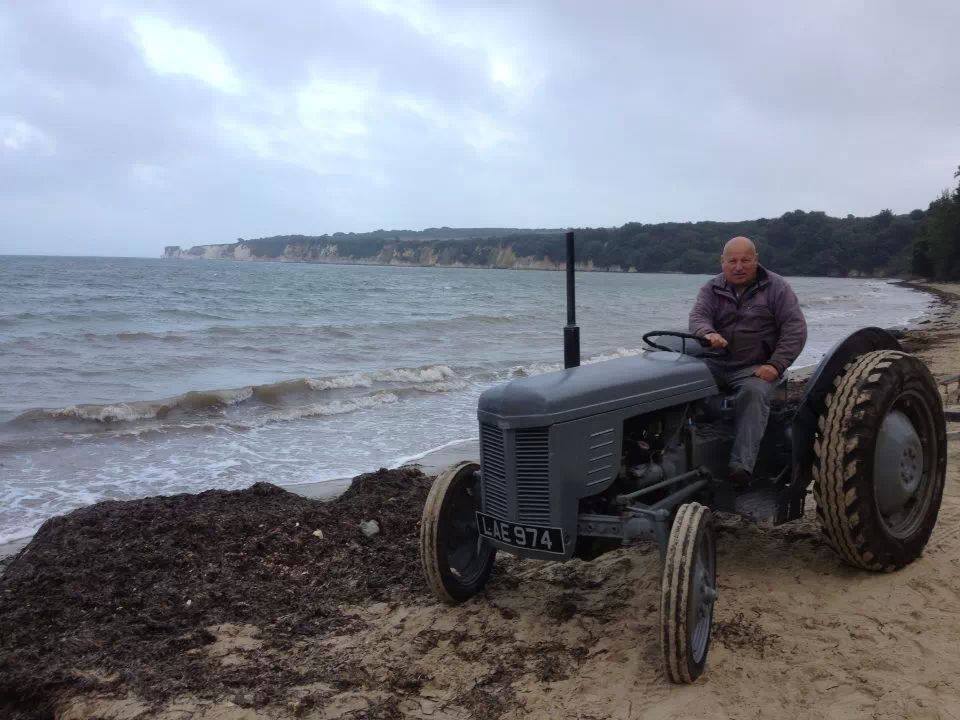
On a dank November day, I visit Derek in deepest Dorset. It’s almost a year since he left. Someone has trimmed the grass so the original offerings are displayed more clearly: two model tractors and a solitary can of Guinness which, I suppose, are meant to define a lifetime. One or two forlorn messages that have withstood the worst the sea-blown weather can throw at them. My own contributions are a nod to the English seasons – one day I clear away the detritus of Spring-promising crocus; another time, I remove the summer roses. Last time, I took daffodil bulbs in readiness for another year. It all looked a bit desolate so, having washed out a redundant vase, I trudged along the perimeter, picking berries and teasels for an autumnal display that might withstand the elements.

Sometimes, I’m the only person in the grave-yard; on other occasions, older ladies, tending the graves of their loved ones, stop to speak. No-one cares who I am but, without exception, everyone has something to say about Derek. It’s important and gratifying. And after this, I always learn so much of the social history of Studland.

This little graveyard that overlooks a tiny sea, jammed with wrecks that link us to the rest of the world, is an unknown entity in the vastness of the Jurassic Coast. It’s a miniscule moment in the eclipsed time of protohistory and beyond. All sorts of stories linger here. Mine is a dot in the memories of those that passed a few tiny moments in Studland. It’s a very important dot because we were lucky enough to pass through history at the same time as Derek.


Out with the Hanwell ladies

The 4.40 to Brentford is rammed as I attempt embarkation at Clapham Junction. From the relative safety of Platform 5, I spot an empty seat which no-one is interested in claiming due, I assume, to the fear that they’ll never escape its confines and will be trapped upon the Waterloo loop at least until 10pm. Hundreds of us are crushed in the doorway: an amoebic mess of humanity gasping for air that defies the intrepid explorer, with only a small suitcase,  to venture further into the jungle of the condemned.

With not inconsiderable force, I gain a seat next to a small child whose pushy father is supervising her extra-curricula activities. This train carries the privately educated offspring of the wealthy classes into the leafy suburbs west of the city: Barnes, Chiswick, Kew and so forth. My tiny travelling companion is busy on her phone on which she has an app comprising the nearest thing she’s going to get to a game before her thirties. In her digital laboratory, she has to choose appropriate colours and activities that will change one element to another – pour the blue contents of a test-tube into the correct receptacle and voila, a liquid will become a gas. The reward will be gaining another informative square to her growing set. For tiny traveller is constructing the periodic table. Having discovered plutonium, she turns and smiles engagingly at me.

‘How old are you’, I demand?

‘Five’.

‘You are scarily clever’, I inform her.

‘Say thank-you to the nice pleb’, says papa.

At Barnes Bridge, most of the train’s cargo, including Marie Curie, fall out through the doors, and possibly into the river for all I know. Jane emerges from the adjacent carriage wherein she’s been entombed since a week last Tuesday.
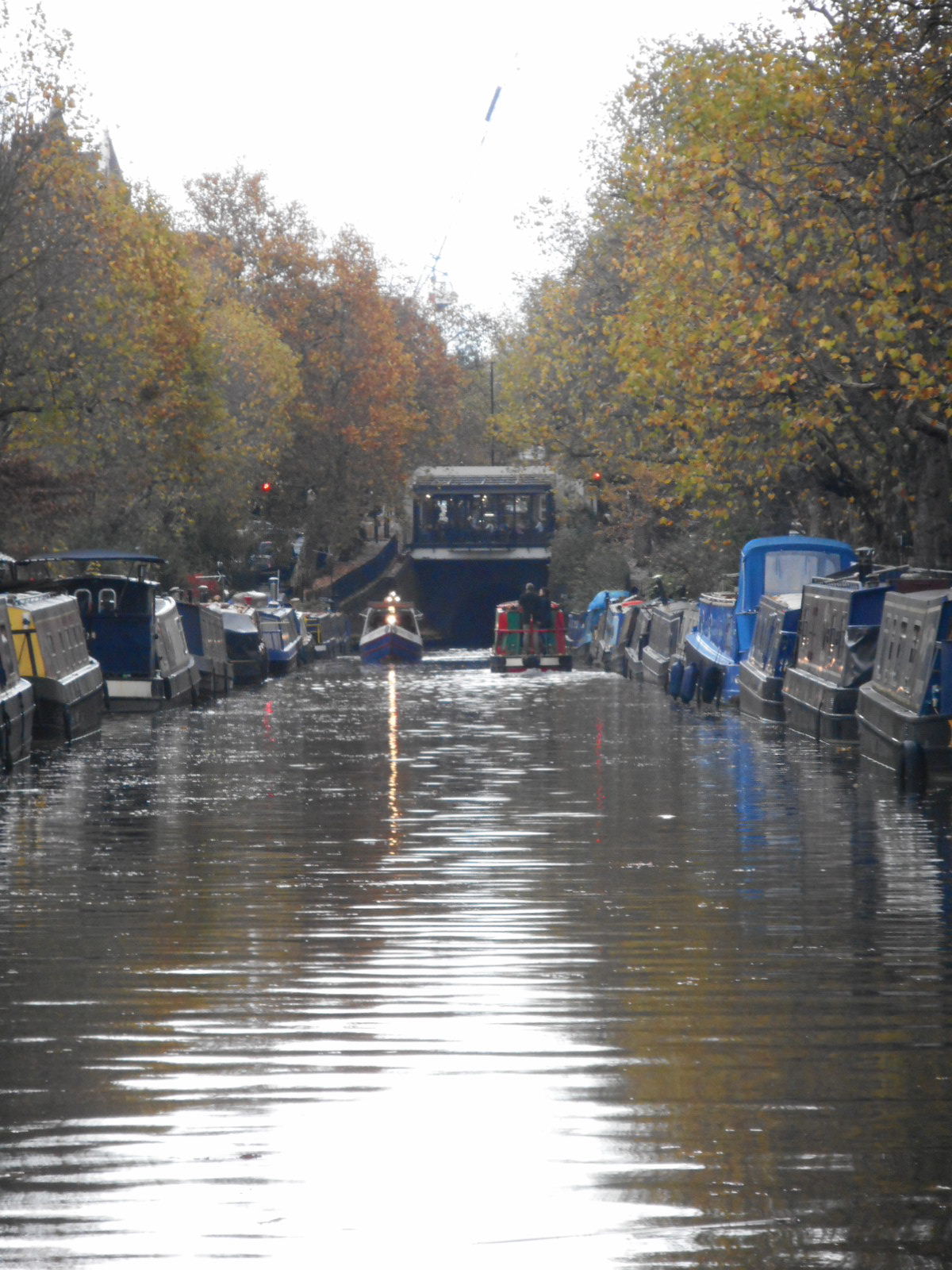
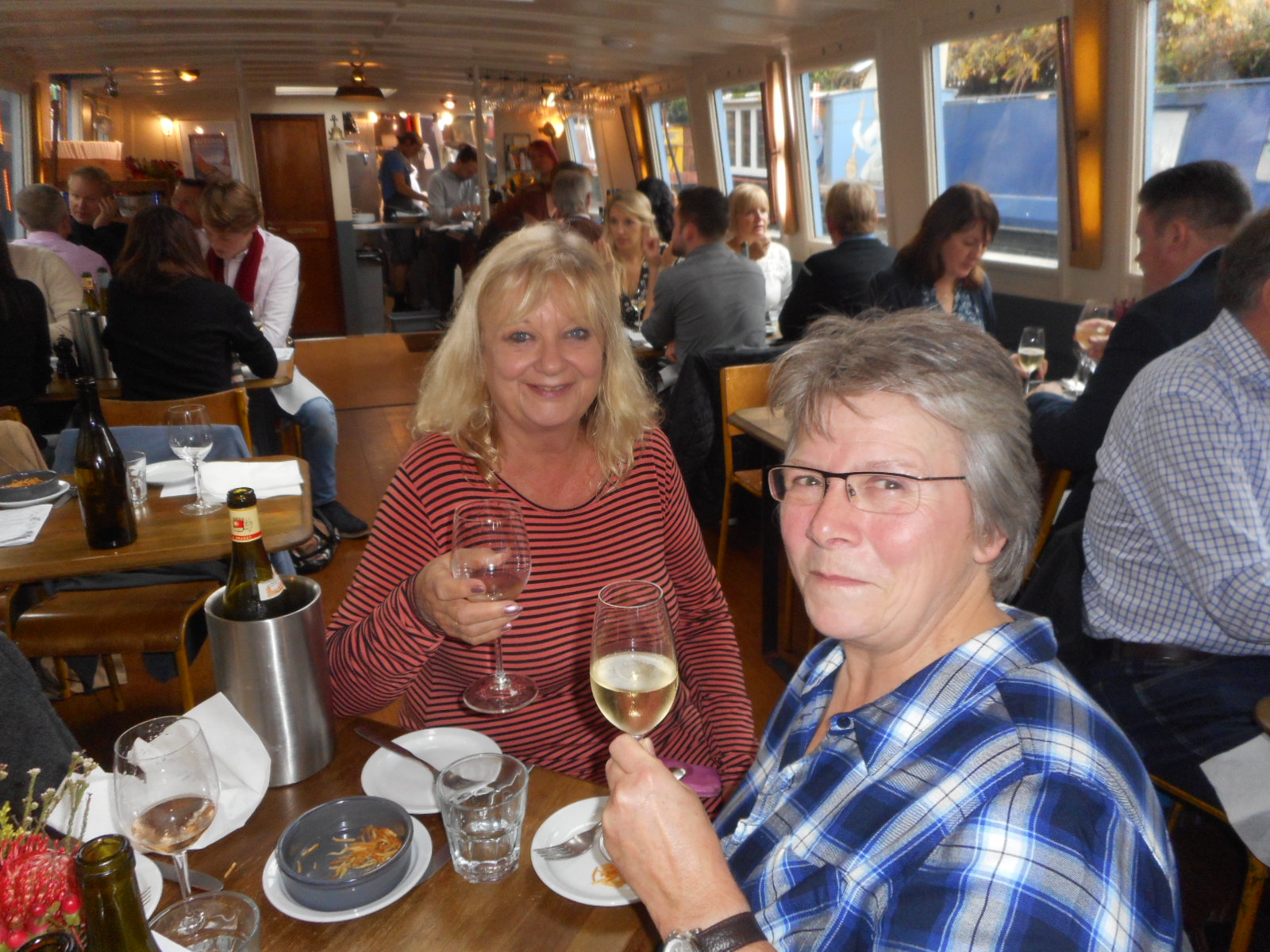
Saturday sees the predominant reason for my visit and the highlight of the weekend. As a belated birthday gift, I am to be wined and dined aboard a narrow boat which will take us from Paddington Basin to Camden Town and back in three gastronomic hours. With due serendipity, this morning’s Daily Torygraph informs us that the trip, courtesy of the London Shell Company, currently ranks among the top ten eating experiences in our capital. Our set menu for today’s extravaganza comprises Lindisfarne Oyster & Mackeral Tartare with Angel Hair Fries, Crab with Watermelon Radish, Braised Cuttlefish with Mussels and Saffron Aioli, Blonde Ray Wing with Turnips, Black Cabbage and Caper Butter and Apple Streudel with Raspberry and Yoghurt Gelatto. No wonder it’s going to take us three hours and I haven’t even mentioned alcohol.
Naturally, given that the galley is the size of a wardrobe, there are long pauses between each delicious course whilst the crew regroup. However, during these times, we can venture forth to watch the passing scenery. I’ve written about this part of the canal elsewhere but today I learn that we’re passing the Sultan of Oman’s house, the garden of which is the second largest in London after Buckingham Palace. We’re also lucky enough to see some of the animals that live in Regents Park Zoo who were hiding the last time we ventured this way.
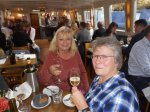
 

Obviously, we need to keep diving back in for more refreshment. As you can see, and as you might have deduced, the accommodation is cosy. No matter. We share our table with three Japanese tourists, two of whom speak no English. We thought you liked speaking with strangers, say my companions.

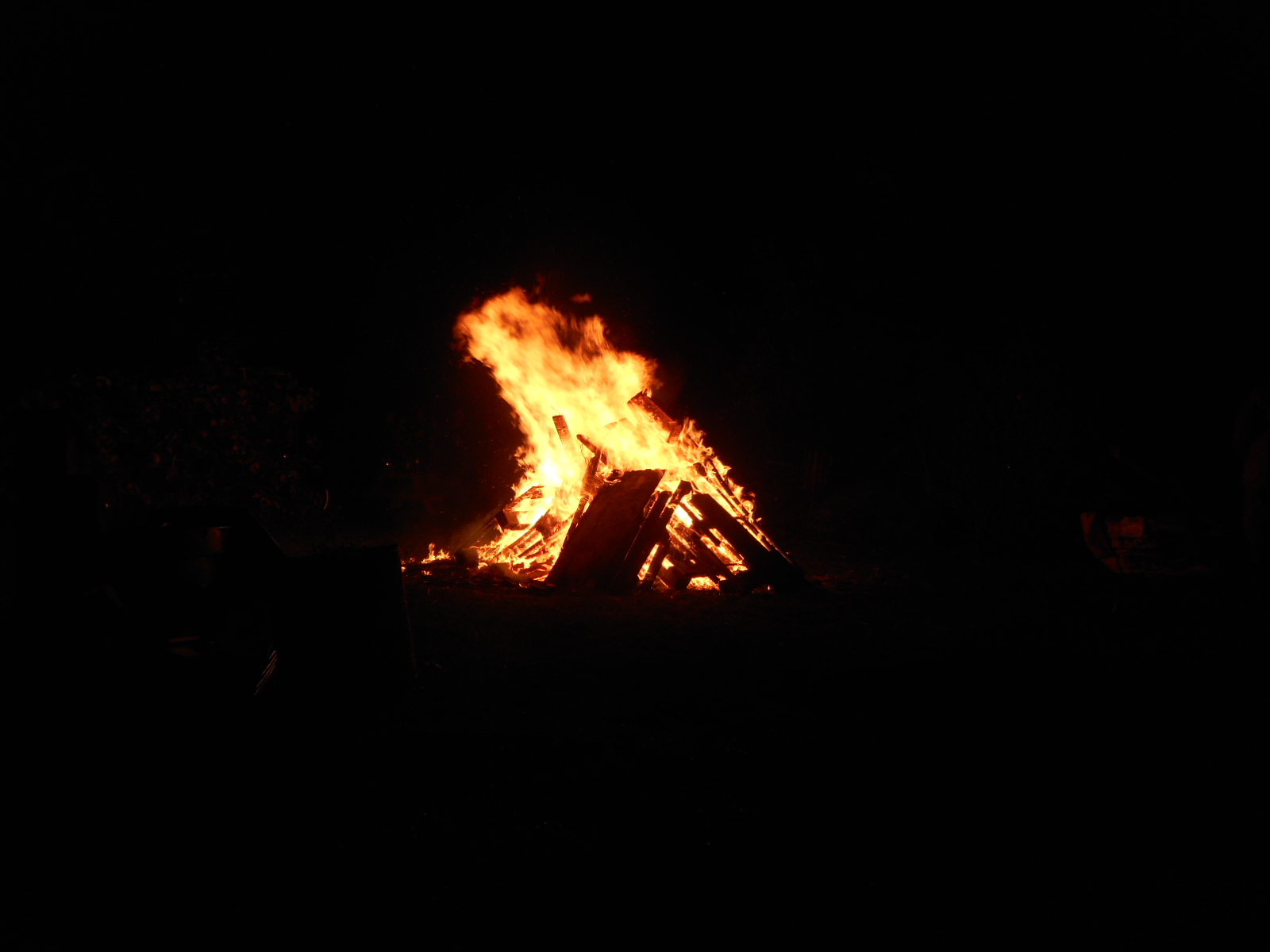
Those Hanwell ladies are the epitome of generosity. They also have high expectations in the ‘joining in’ department. Later that evening, when the day’s excitement might have proven sufficient for the Dorset contingent, we yomp on down to the allotments at The Fox for a bonfire and BBQ. You probably think we’d eaten enough for one day but, let me tell you, those hot dogs went down a treat.
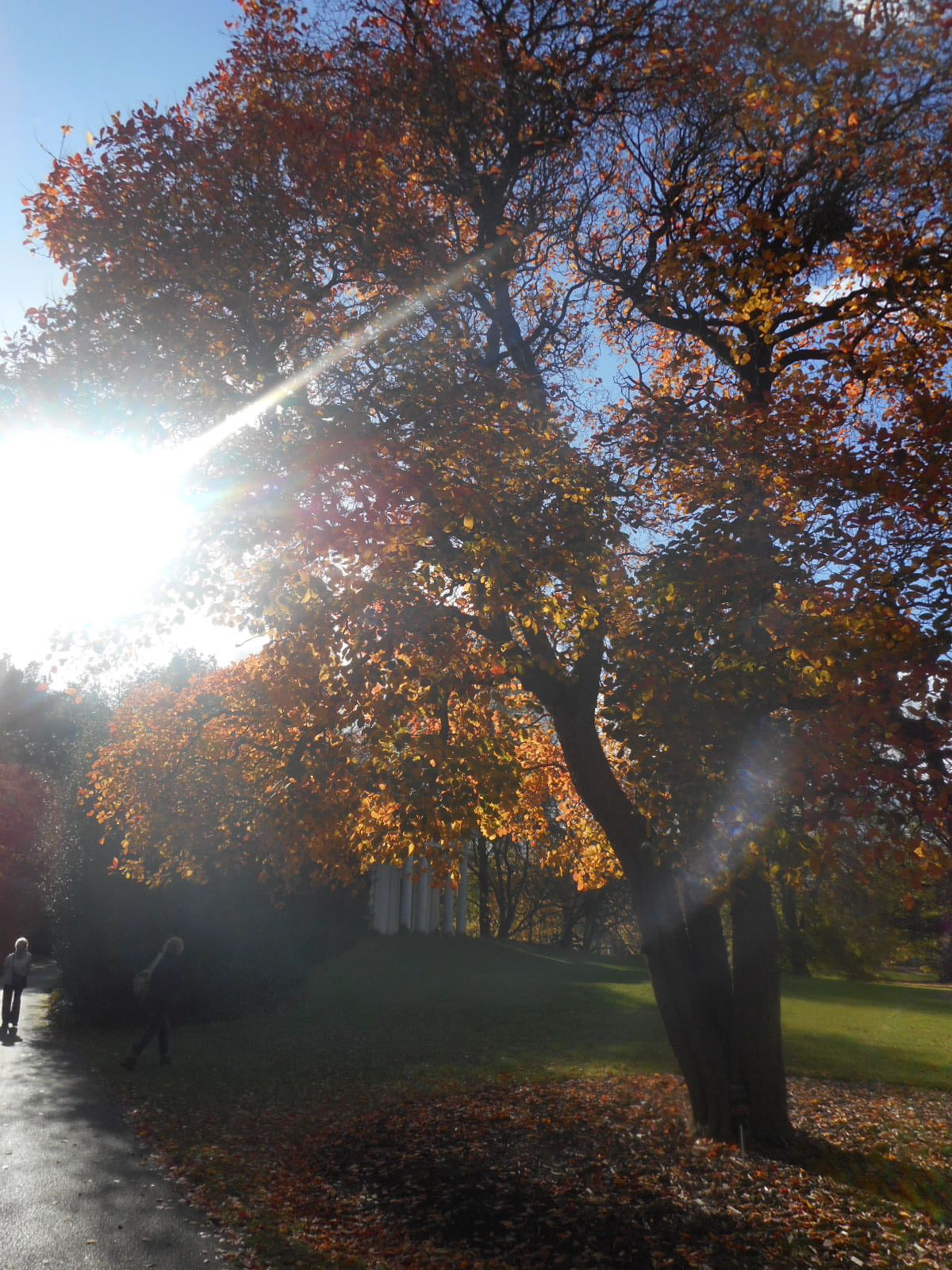
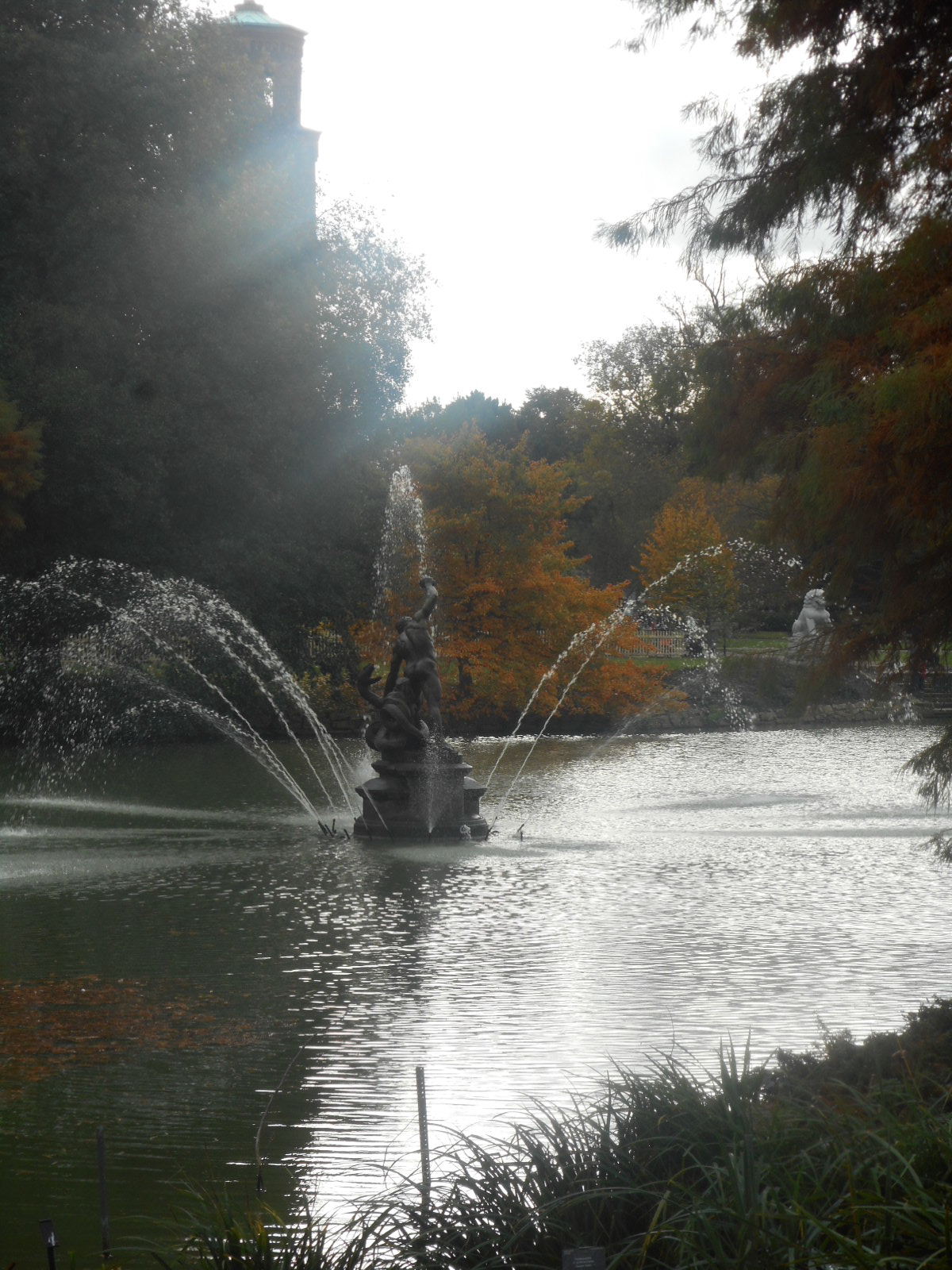
Sunday, and it’s all aboard the Kew Gardens road train which, forthwith, will ever be known as the Unicorn Express. Or whatever the opposite of an express train is. From the start, driver Christine tells us that the ride will be bumpy. She also informs us of the certainty of being attacked by passing trees. After such cautionary warnings, both of which prove justifiable, Christine’s voice turns strangely soporific.
 

It’s as though, having dealt with the prosaic nastiness of life, she has fallen back into the world of the …………… unicorn. For Christine soothes the listener whilst simultaneously keeping us awake in anticipation of the last word in the sentence: ‘and through the bushes to your right, you will see the …………..unicorn’. ‘Said mythological creature adorns the gate which royal princesses used to access the gardens. ‘Nowadays, they mostly arrive through the main entrance by car but, in the once-upon-a-time days ……’ Christine trails off into her own world. ‘By what’, we shout. Tube? Bus? Unicorn?’
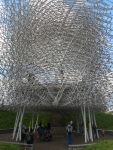
I duck to avoid a rampaging holly bush that’s attacking us via the glassless window. ‘We’re going to turn …………right’, says Christine. ‘When I come to this part’, she continues, ‘I always feel I’ve arrived in …….’ ‘Where, where’, we demand looking through the trees. ‘………… Narnia’, sighs Christine. Helplessly, we look around for wardrobes and lamp posts. An evil shrub attempts access to our carriage. ‘To your left’, intones the stoned engine driver, ‘is our largest …………’ tree? bush? flower? ………..’picnic table’. claims lunch-denied Christine.
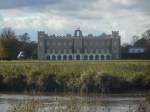
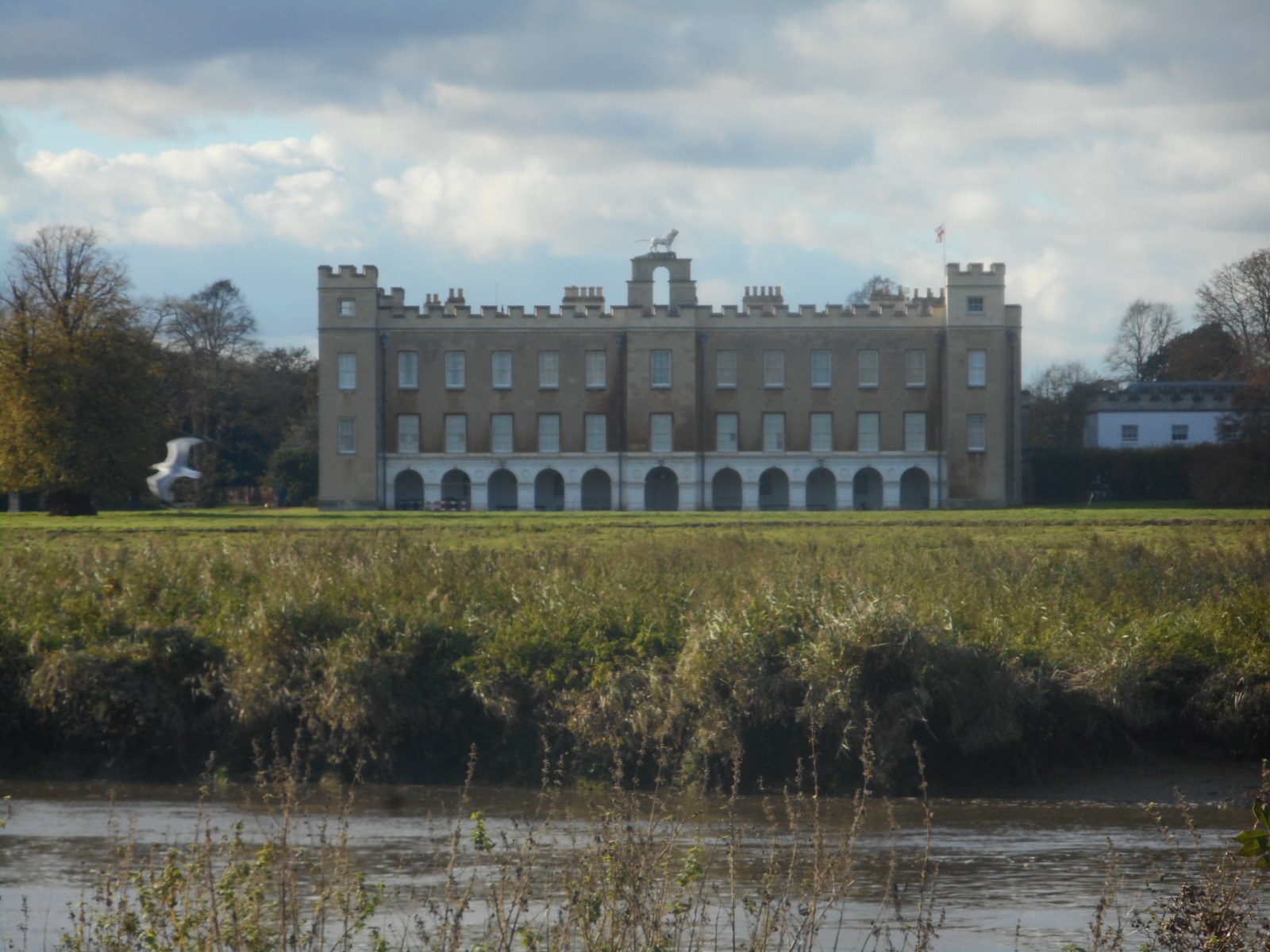
Speaking of which – we have brought a small picnic with us. When this possibility was initially raised, sub-zero temperatures weren’t mentioned. We leave the train, not by the enormous picnic table upon which Aslan was slain, but to perch on a bench by the river overlooking Syon Park, the home of Ralph Percy, 12th Duke of Northumberland.
The sun was out when we arrived but it’s since disappeared behind a large black cloud. To take my mind off the all pervasive frostbite, I quietly study the amount of pickle in my friends’ sandwiches. I was allowed to add my own pickle to my sandwich this morning. Reader, this probably doesn’t seem such a big deal. However, I am staying in a house of kindness in which I’m allowed to do nothing. On being presented with the Branston jar, it was to garnish bread that had been sliced for me with geometric precision on which identical slices of cheese had been lovingly displayed. Thus, spooning out the pickle was a big deal; but not literally, as, obviously, I only took a polite scraping. I can’t help thinking I’ve missed a trick as I notice the abundance of pickle oozing out between their slices of bread.
Anyway, I’m spared the opportunity of commenting on the unequal distribution of pickle by the arrival of Edith and her husband. Edith wants to know whether that’s Syon Park across the river. Apparently the husband, who has now disappeared, told her it was. B & J, mouths crammed with Branston politely inform Edith that it is indeed Ralph Percy’s gaff. And that should be an end to it but Edith is like a bloody terrier and won’t clear off.
It should be blindingly obvious, even to the thickest of dimwits, even with the pickle disparity, that we are three friends on a bench having a private picnic. She’s asked the question, received an answer, described the overhanging cloud, obtained directions on how to get to Syon Park, now knows about opening times, told us where she lives, discovered the precise address of Jane’s sister and for all I know expanded on her views of globalisation and world poverty. I’ve stopped listening. I’m sat on the far end of the haemorrhide inducing bench and have devoured my sandwiches, a pork pie and a bottle of water before she finally toddles off into oblivion. Those two turn round and are surprised to see me without any lunch. ‘We thought you liked talking to strange people’, they say.

And later, there’s a delicious home-cooked roast chicken dinner, silly board games a tearful viewing of Tim and Pru, and early to bed. Thank-you dear ladies of Hanwell for a glorious weekend.




Social history is so out of date


In the previous Weasel, I wrote about a walk around Corfe Castle, a place one might consider timeless. The piece below, written in 2011, illustrates how quickly things change. Apart from the sheep and the Purbeck stone houses, little remains the same. Not a single shop exists today in the same format. In less than ten years, most have been replaced by estate agents offering an opportunity to purchase a piece of something that no longer exists. How difficult it is to get a grasp on history


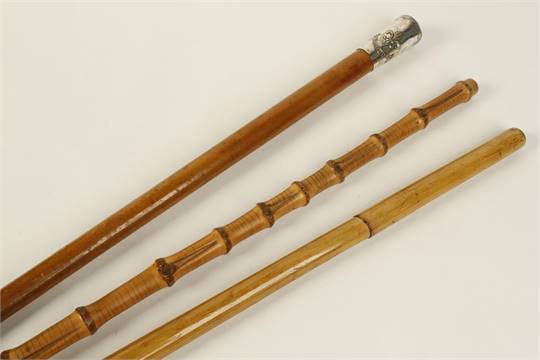
In East Street, greenery clambers up the Purbeck stone facades of cottages that wait for the appearance of roses and camera-laden tourists. Raised flower beds edge the worn slabs of the pavement and just as I’m inspecting the faded daffodils and a few early bluebells, Joan appears with the Malacca cane which once belonged to her mother; a gift from a long-passed brother who brought it back to Corfe from his travels to Sumatra. Joan will be ninety years old in August and, having lived in Corfe since she was eight, this seems an early and serendipitous opportunity to discover first-hand the ways in which the village has changed.

However, as is often the way with those who are seldom asked to recount their stories, I learn more of what is interesting to the narrator than to the quest of the interviewer. I hear of Joan’s scholarship to the grammar school at Swanage necessitating a daily journey by steam train and bus and of her subsequent employment in the cordite factory on Holton Heath. Her first week’s wages were spent on a Hercules bicycle which had no gears but which was an essential purchase in order to travel to and from her job. Thus is Joan’s account underpinned by the methods employed to both escape from and come home to the isolation of Corfe; a neat update to Hardy’s notion of the departure-arrival-return narrative. With regard to the village, little, she claims, has changed although many cottages are now holiday homes and therefore empty in winter.

Long before Nash was here, Treves had described the village of Corfe as a symphony in grey: ‘the houses, all old, are for the most part low; the roofs of crumpled slabs’. In this respect it’s true that nothing much has altered; any obvious changes concern the current usage of many of these buildings. For example, the butcher’s shop, which sold delicious game pies, has disappeared and with it, my lunch. It’s been replaced by an establishment called Delight which seems unable to decide what to sell apart from things that no-one needs and probably no-one wants as it’s closed. Peering into another bowed window, I see that the Purbeck Practice – Health and Beauty is also shut, reflecting a possible lack in demand for facials, waxing, eye-lash tints and pedicures on the part of the villagers. The sloped roof of number fourteen hangs precariously over Cherry Heaven, a shop displaying expensive clothes for babies in one window and a random selection of kitchen implements in the other. Such is the indecision which prevails in a place apparently devoid of position on a temporal line. Even The Fox, the oldest pub in Corfe, circa fifteenth century, has lost its sign. Perhaps it’s gone to be re-painted in readiness for the forthcoming season. Members of the Ancient Order of Marblers, whose antecedents worked in the quarries of Purbeck, still meet here every Shrove Tuesday to run through the village, mug in hand, without spilling their beer in order to celebrate a tradition whose meaning has become lost in time.

Across the way, the parish council notice board announces that the first meeting to prepare for the Queen’s diamond jubilee will take place in June. Underneath, Rachel is offering pottery classes for all abilities. Elsewhere, I discover that the allotment association is close to signing a new lease on additional plots and building of the new surgery is about to commence. Of course, what currently predominates in Corfe, along with most of the country, are the events to be held to mark the royal wedding. The Greyhound, entry to which is still through the porch that Treves noted supported a small room like a miniature house, will be hosting a royal brunch with celebrations available for viewing on two screens, to be followed by a Tom Jones tribute in the evening. If this is not to your fancy, the British Legion is holding a William and Catherine look-alike competition followed by prize bingo. The owner of The Ginger Pop Shop, who leans heavily and profitably on Enid Blyton’s links with the village, has temporarily dismissed the Secret Seven from her window and replaced them with a wedding display. The William model sports a curious beard and wears gold sequins on his RAF uniform as he observes a raggedy coach and horses alongside some other indeterminable regalia.

I am surrounded by the sounds of the still invisible birds as I commence the steep climb to the castle but, as I reach the Butavant Tower half way up, the pleasant background song has been replaced by the rasping of ravens. These birds first became resident in medieval times and appear on the castle’s seal. However, in 1638 they left abruptly only to return eight years ago, since when they have established a permanent nest in the castle’s keep. A sign informs me that a trap door once existed at the foot of the tower through which prisoners were thrown into the dungeon where ‘their screams turned to hoarse croaks’. Perhaps it’s the ghosts which I can hear and not the ravens. Either way, the noise is subsumed by the chatter of a school party which has paused nearby for a picnic lunch.

Soay sheep also live here. They are primitive, but domesticated animals, descended from those in the St Kilda archipelago. They are accompanied by Dexter cattle, the smallest of the European breeds and originating in the south west of Ireland. Together, these animals graze the hilly pastures of the castle mound .This return of animals and birds, the latter a result of nature’s idiosyncrasies and the former a deed of man, occurred long after Nash wrote and painted here. For him, there would have been nothing tangible in the way of residency; merely the shadows of falconers and fletchers, blacksmiths and masons. The absence of man or fauna would have been of little consequence to him.

And little tangible in the way of residency today: nothing save shadows of the past.

Scary

With Halloween just around the creepy corner, Sally and I settle down in our comfy cinema seats to watch It, the latest remake of Stephen King’s novel. I look around to the left, then to the right, to make sure there’s nothing unexpected lurking to the rear. Just darkness. Could be anything waiting to grab us from behind.

Over the years, Sally and I have been steadfast companions regarding attendance at scary films. We always get very excited beforehand and much deflated afterwards. In fact, we’ve yet to see anything that requires viewing from behind hands. I recall sitting amongst shrieking and screaming people during a screening of Paranormal Activity and discussing how, during the three week setting of the story, no-one had changed the bed-sheets. Yawn. Blair Witch was a stroll in the woods; Babadook was a bad day at the library. The Conjuring was a short lesson in not listening to the estate agent and so on and so forth. Nothing but disappointment. I suppose we’re old school. Or just old.

For my money, you can’t beat the 1973 film, Don’t Look Now. Even Poltergeist or The Omen are still worth yet another viewing. And tonight’s offering? Well, if you’re not scared by clowns, and we’re not, forget It. It dragged on and on and on. Two and a half hours in, they’d reached September. Bloody hell, I observed, is it going on until year’s end?

On the other hand, earlier in the day, I visited the Christmas shop upstairs at The Range with my daughter. Before we’d even arrived amongst the tinsel and baubles, we were greeted by a particularly unpleasant mechanical Santa riding a unicycle along the aisles. That’s a bit scary, I remarked before we advanced into the world of jingle bells and super furry animals. We wandered and oohed and ahhed and immersed ourselves in all things Christmassy. Suddenly, the screams of a distraught child alerted us to something far from seasonal. This wasn’t the slap-deserving wail of yet another spoilt brat: this was FEAR.

The parents of a little girl, maybe 18 months in age, had momentarily turned to look at something leaving her sat in the trolley. Small child, attention grabbed by an unusual sound, had twisted in her seat to see evil Santa approaching the trolley on his bike. Real tears were falling as her mother, instantly in action, ran to place the mechanical atrocity in the opposite direction. Evil Santa was having none of it. Refusing to be turned, he continued on his dastardly route straight for the now hysterical child.

This being The Range, no staff were in evidence so other customers, largely of the extremely aged variety, rushed to help the young mother. Santa refused to be turned so the, by now extensive, rescue party, baying for blood, picked up Santa and his unicycle and placed him at the end of a nearby aisle. As in all good horror films, the problem was only partially resolved: Santa came away from his bike and slumped on the floor, doubled up in apparently drunken repose but, I suspect, lulling us all into a false sense of security. The unicycle, however, kept going. Fortunately, the oldies managed to wedge it behind a snow-covered wooden lamp-post, at least until Epiphany.

And the moral of this story is, if you want a scary sight to remain with you, don’t go to the cinema; go to The Range. Alternatively, if you’ve never visited the ‘about’ page on this blog, then you’ve missed this photo of the author


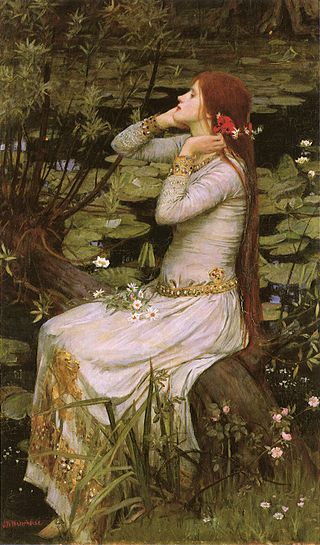
Ophelia

With no business to be writing, given familial arguments and copiously consumed glasses of red wine, way past the aperitif benchmark, I sit outside in the autumnal darkness of my tiny garden claiming the final breaths of evening air. The gentle sea mist has evolved into a heavy-duty fog that appeared when no-one was looking. The temperature is sufficiently warm to warrant open doors but the dampness clings to the very soul that was believed lost in time a few sad hours ago. It’s almost fearsome to close those doors and invite the night to do its worst. The honking geese have made their evening’s journey to Brownsea Island; my multitude of sparrows is hiding in the hedge whilst the brave fat robin has forsaken my company until tomorrow.

The other day, nature, or something purporting to be normal, frightened twenty-first century folk. In the middle of the day, having spent the morning trying out various shades of yellow, the sky suddenly turned black. At the surgery, undertaking a prosaic pneumonia vaccination, Nurse Judy exclaims, ‘thank-you for coming in on such an auspicious day’. And it’s as if ‘such a day’ is an omen of terrible things to arrive imminently. The receptionist says, ‘have you seen the sky?’ A woman in the waiting room claims, ‘I just want to be home’. Radio 4 interviews a soothsayer.
Back from disease prevention, I stare blankly at the darkness through my French windows. Suddenly, the fierce red sun appears like a terrible omen. A portent of things to come. Well, they arrived. Hopefully, they will pass but I doubt it. The world is spiralling downwards. But the door’s still open.


A reading

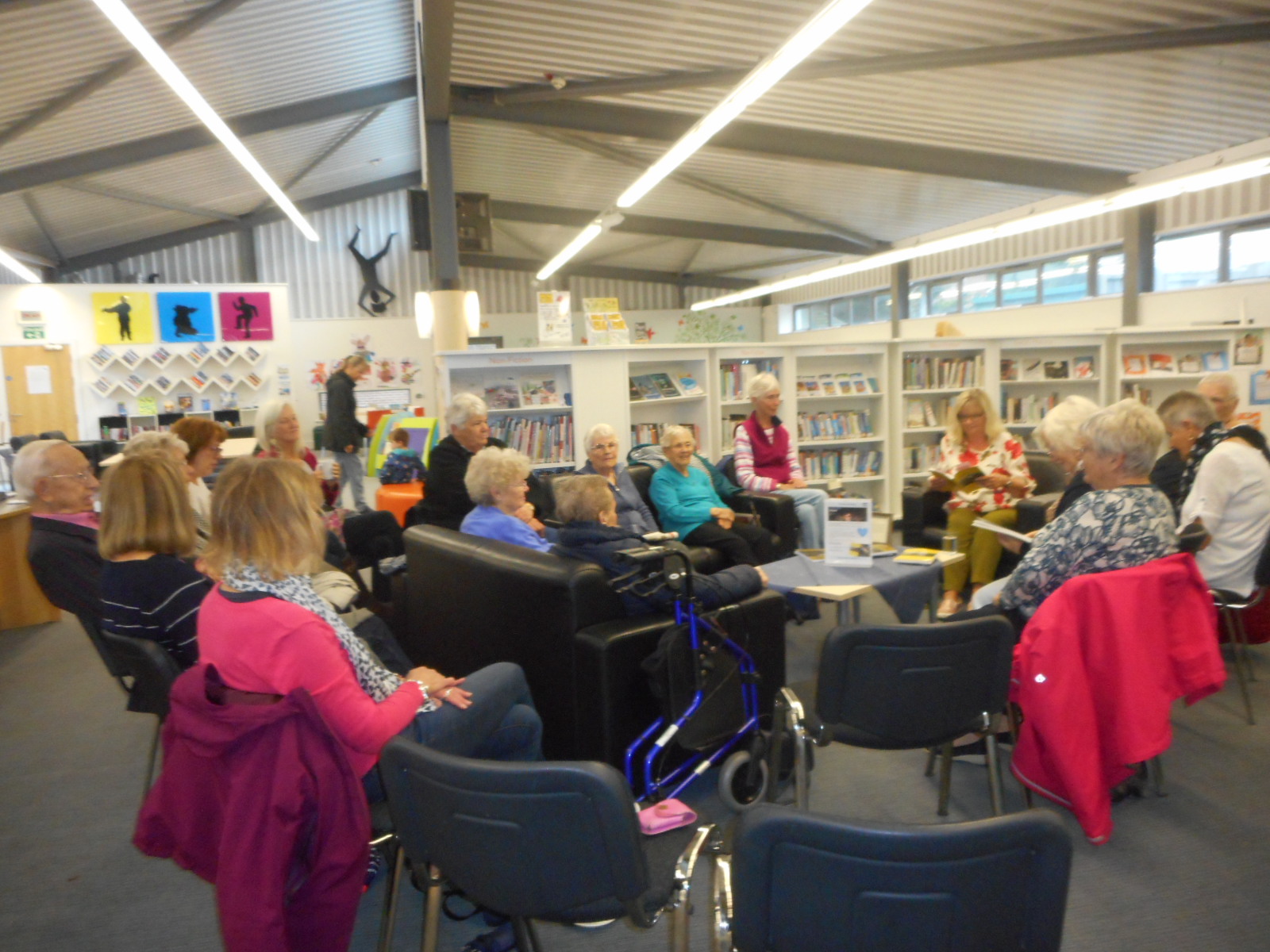
An unexpectedly warm day sees quite a few folk gathered at the local library where I am to offer a reading of my last book, The Road That Runs. Once again, it’s set in that fruit growing area of Provence where one can expect something meteorologically consistent. So much so, in fact, that it’s easy to write against a backdrop of the seasons: the almond blossom of spring; the seemingly endless heat of high summer; the chilly winds of autumn and the sudden arrival and even more speedy departure of Christmas.

An age ago, I stayed in Provence during what passes for winter. The only thing that marks this temporary hiatus between the end of one level of warmth and the beginning of another is the somewhat fabular Mistral. Emulating the hand of Satan, it shuts down the electricity, the internet and sometimes the water supply. Depending on its strength, it closes the motorway or, at the very least, forces mad truckers to travel more slowly than they would like. It makes ladies’ hair stand on end, literally. And people seeking refuge in Avignon, where the wind reaches a climax alongside the Rhône, down which it has hurtled, are accosted by flying placards. But this is a picture of Dorset!
On that long-ago sojourn, having succumbed and adjusted to the nuances of what they like to call winter, I was appalled to wake to snow on the morning I’d planned to go home for Christmas. It won’t last, they said. And it didn’t.

Inevitably, having given a reading, folk always ask whether I have a house in Provence; and if not, would I like one. Well, no actually. Of course, if I was a rich woman, I would. Who wouldn’t? That instantly reviving warmth, the vibrant Provençal markets, the lost-in-time antiquities, the never-ending aperitif and, naturally, all those eclectic friends made over the years. It’s all so – reliable. But I wouldn’t stay all year in that hypothetical house because what’s even more reliable, and more demanding, is home. Some folk seek a warmer winter but I can understand those who hurry home to the grey dampness of England.

Global warming may have led to the English seasons being less discernible than those of childhood but, regardless of temperamental weather, they still exist. The Provençal autumn is marked by gunshot: the onset of the hunting season where anything moving is fair game. The English autumn is signalled by the sight of random berry collectors along the hedgerows. In my books, Madame Martin and Madame Lapin become entrepreneurs selling confiture and pickle made from the goods that Monsieur Martin grows. In my real world, everyone is making crumbles, jam and chutney. Those of us devoid of sterilised jars and inherited know-how, shovel their sloes and blackberries and damsons into brandy and gin.

In France, no-one talks about Yuletide until about half an hour before the Christmas Eve celebrations. In England, we’ve started purchasing gifts in October. Because, largely, we love it. In France, there are beautiful crêches to be seen in December but the nativity comprises a tiny part of the scene which depicts the year-round culture of Provence. In England, which, for me, is Dorset, there is story-telling, Dickens and the Bournemouth Symphony and Chorus performing The Messiah. As I said, it’s all so wonderfully predictable.

I read my stories of Provence aloud and they always say, ‘it’s so evocative; I must go’. Maybe I should write more about Dorset. And maybe you should stay.

On the lash

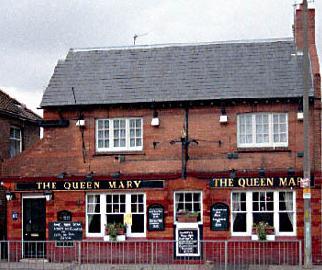
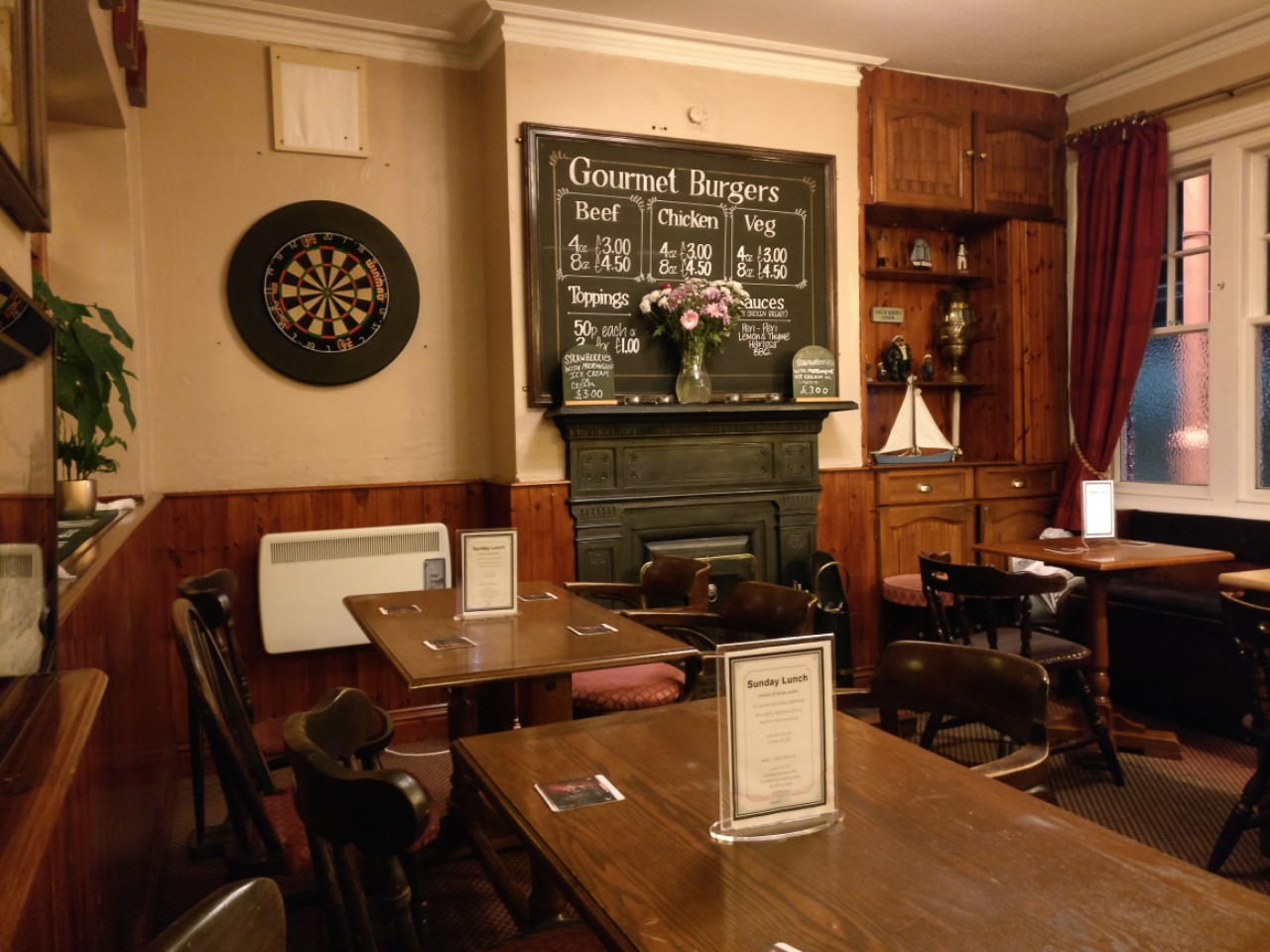
Last Saturday evening, five of us set out on the alternative pub crawl around old Poole. The rationale is to visit hostelries that are not normally frequented by any of our number. For example, although The Queen Mary, our starting point, is just around the corner from my son’s house, none of us had ever been inside previously.


I don’t know why it’s been disregarded; maybe because it’s away from the Quay, isolated amongst traffic lights and junctions. It wasn’t always that way: before the so-called town regeneration of the 1960s, there were many more pubs along West Road and up to Towngate. The Queen Mary is the last survivor and, as such, the excellent Town Centre Heritage Report notes, quite rightly, that this Victorian pub, wearing original Carter’s tiles on it’s façade, should be cherished.

It’s really nice inside with quite a few interesting artefacts. This photo is a copy of the framed picture that Palmer’s brewery gave to Lizzie, the landlady. She also has very old photographs of Poole and a map of the harbour with all the named buoys – I didn’t even know buoys had names. You can tell this was our first port of call as all the photos are sensible. Into this tiny space, 35 folk were expected for Sunday lunch the following day so, clearly, we weren’t quite the pioneers we might have thought.

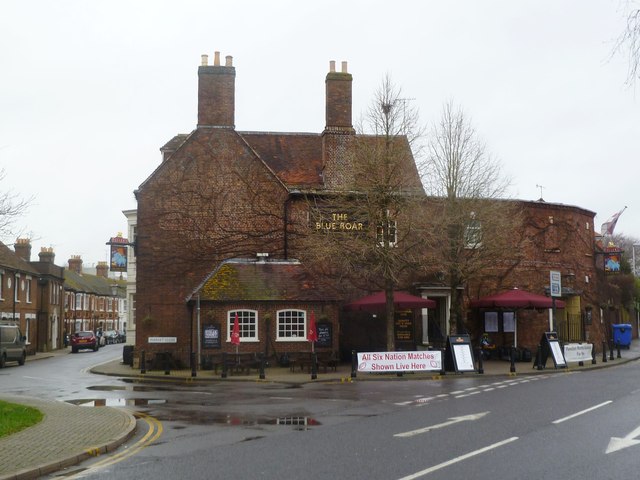
Next, we’re off to The Blue Boar which is in Market Close and not, as you might’ve thought, in Blue Boar Lane. Actually, I’m having trouble locating the latter so perhaps the owners did too. The Blue Boar pub is housed within the former building owned by the Adey wine merchant family and was re-opened in 1996.

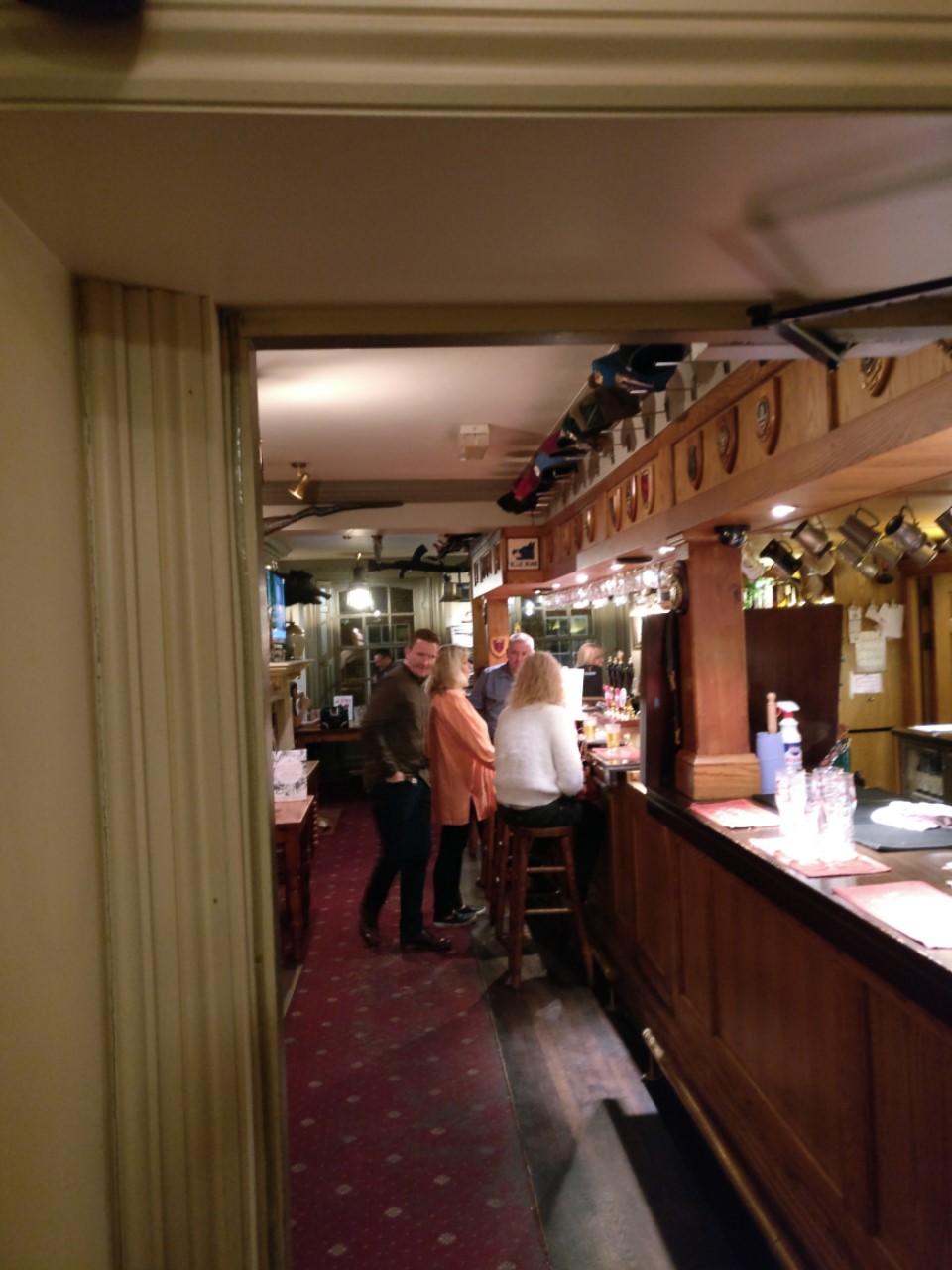
In truth, we shouldn’t really be here: we’ve all been before, some of them on many occasions, so it doesn’t fall within our remit. They like it, however, and it has very good reviews so I’m on my own in finding it all a bit soulless. It boasts a bunch of diving memorabilia and is famous (or infamous) for being the venue for the post-New Year’s Day bath tub race on the Quay. You can see we’re slightly more organised as now someone’s remembered to record our visit. You can also see that the joint is not exactly jumping.

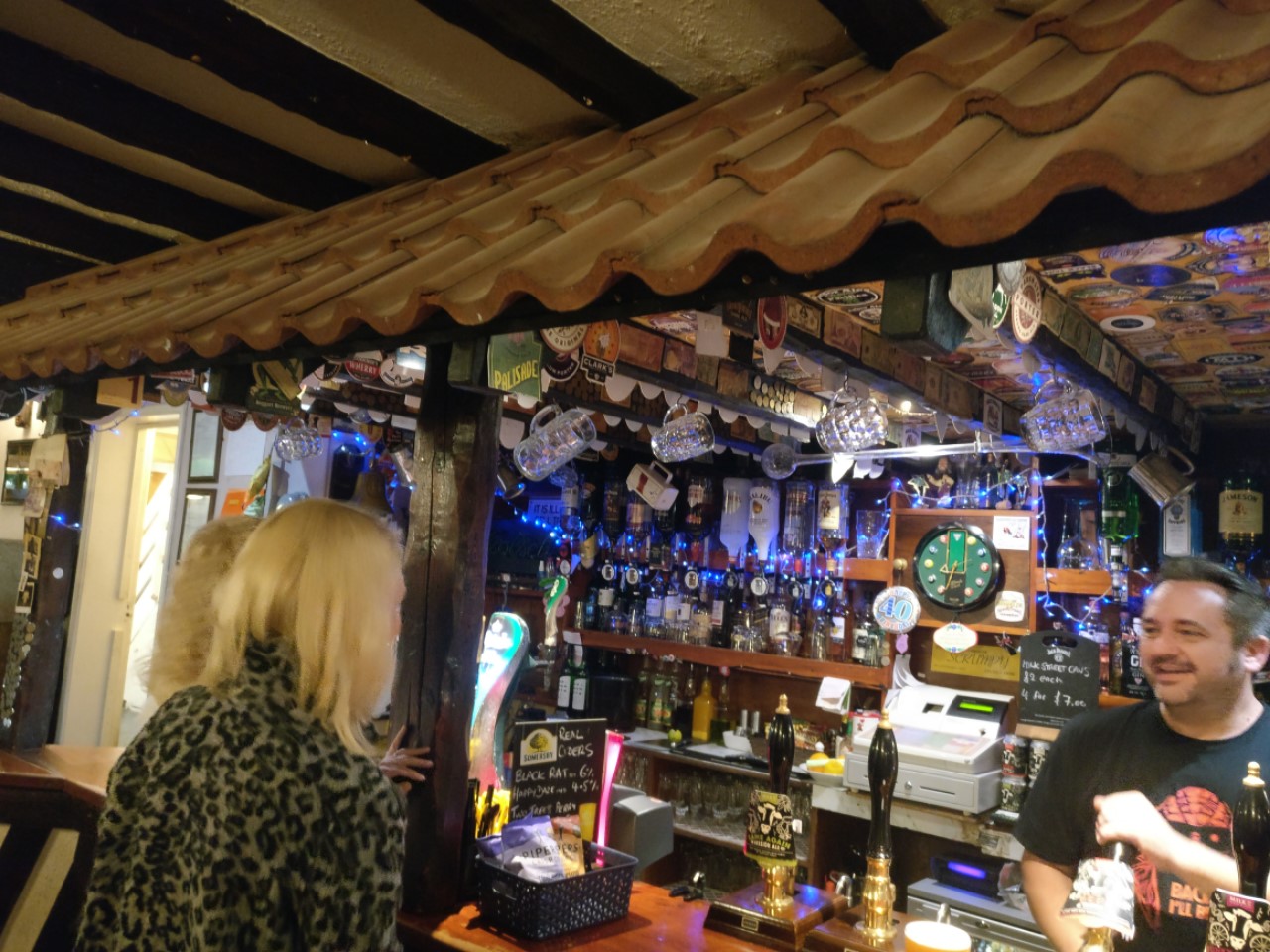
And now for something completely different. We’re definitely in the High Street and most probably in a pub called The Brewhouse. Finding reviews is tricky as Poole also has a hostelry called Brewhouse and Kitchen. This isn’t it. This is Pub of the Season, Spring 2017. No comment.

This converted shop looks like a long, narrow mock Tudor joint. Others in our party claim it reminds them of Disney, whilst the one in the new leopard-skin coat (also mock) says it’s like a place they visited in Bratislavia or some such place. No matter, we’ve a couple under our belt and this pub, compared with the previous two looks like a pub ought to on a Saturday night. Sort of. Mine host seems a jolly salt.

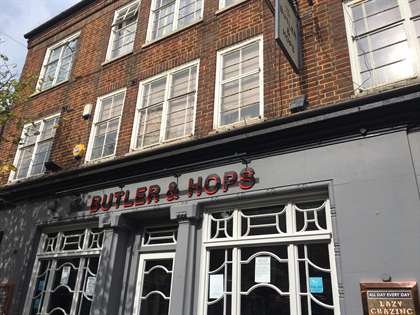
Conversely, Christy, landlord of The Butler and Hops, seems a bit down in the dumps. He’s only been in the job a week and is currently surveying his vast emporium which is largely empty. Maybe folk have never heard of the place as it changes names for a pastime. And maybe he doesn’t know it’s history which is more than a tad interesting.

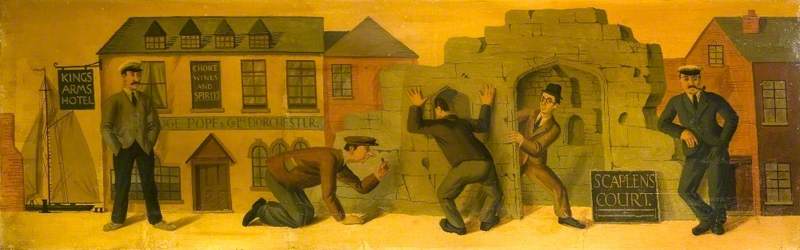
 John Butler built the pub in 1761 when it was called The Angel. Within five years, due to the trade with Newfoundland, it was one of the most valuable properties in the High Street and, for reasons unknown, he changed the name to The French Horn and Trumpet. By 1777, it had become The London Tavern, a staging post for coaches between Southampton and Weymouth. In 1936, it was demolished and rebuilt in the art deco style, decorated with the friezes that are now on display in our wonderful museum. Bombed in WW2, it subsequently opened in 1961 as The Old Harry, and finally as the Globe Café. Too late: it had gone right downhill and gained notoriety.


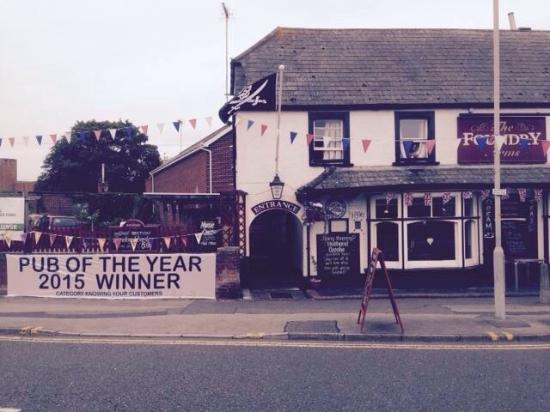
Poole is a Royal Marines’ base and the headquarters of the Special Boat Service. This fact is reflected in many of the town’s pubs, not least the Foundry Arms in Lagland Street. It regularly wins awards in the ‘pub of the year’ contest specifically in the ‘knowing your community’ section. It’s a pub run by and for marines.

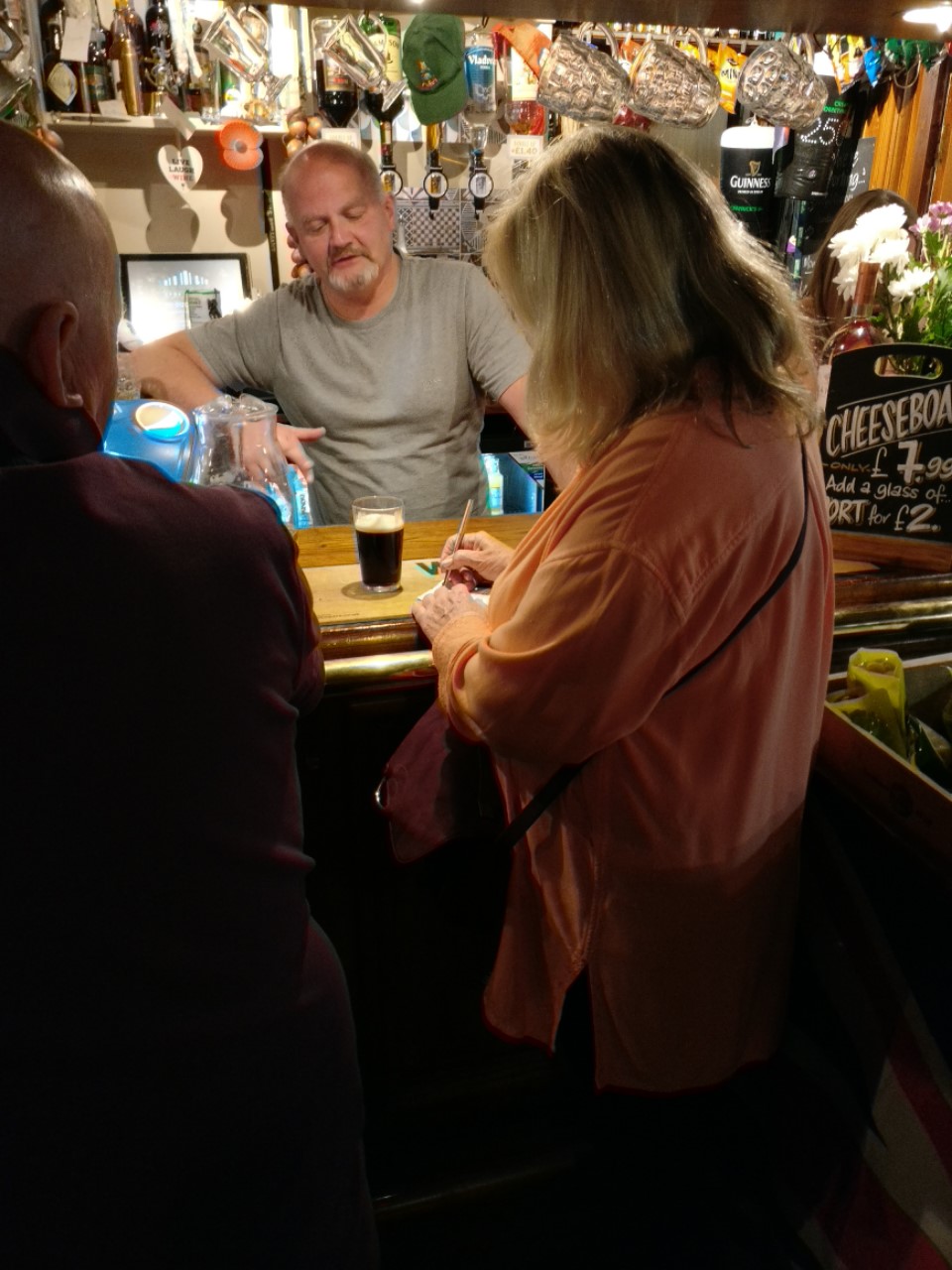
This is me, your adventurous reporter, trying to get the low-down from landlord, Moz. I’m standing next to another former marine who we previously met in The Blue Boar. What I’m trying to discover is where the foundry, whose name the pub takes, was sited. It’s tricky: I’ve had quite a few of those little glasses of Guinness you can see but at least I’m still standing. The rest of my party has fallen over.


Moz reckons the foundry was sited where Sainsburys is now located. The bloke from The Blue Boar says it was on Baiter. Well, maybe there was more than one but my subsequent research shows that the Dorset Iron Foundry was initially located in the early nineteenth century on West Quay Road, directly opposite my son’s house. I should’ve asked him. The goods railway actually ran past his house and down onto the Quay to where the foundry expanded and subsequently became Hamworthy Engineering.

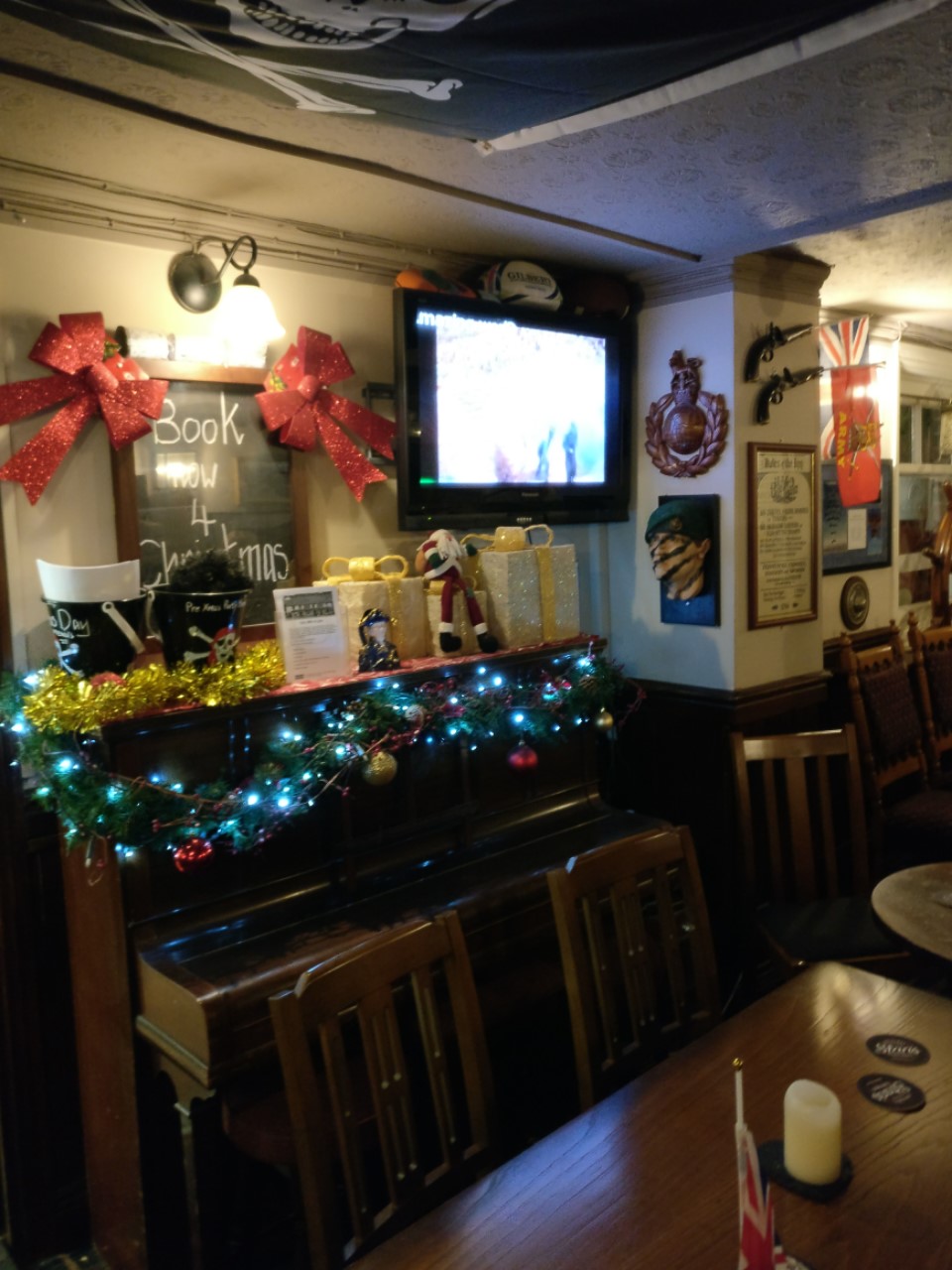
I didn’t particularly want to go to The Foundry and I still think we hit the joint at the right time. The place was exceptionally busy with a coach party of men dressed as hippies on a day tour. This was their eleventh stop so they made our lot look pretty sober. There’s a veritable shed-load of Royal Marine memorabilia proudly displayed in this pub so it’s not a joint for pacifists: it’s a place for objective observers who don’t mind a television showing a screen of constant scenes of instruments of war. Nonetheless, with my woozy academic head on, Moz is interesting and welcoming and eager to speak about his establishment.

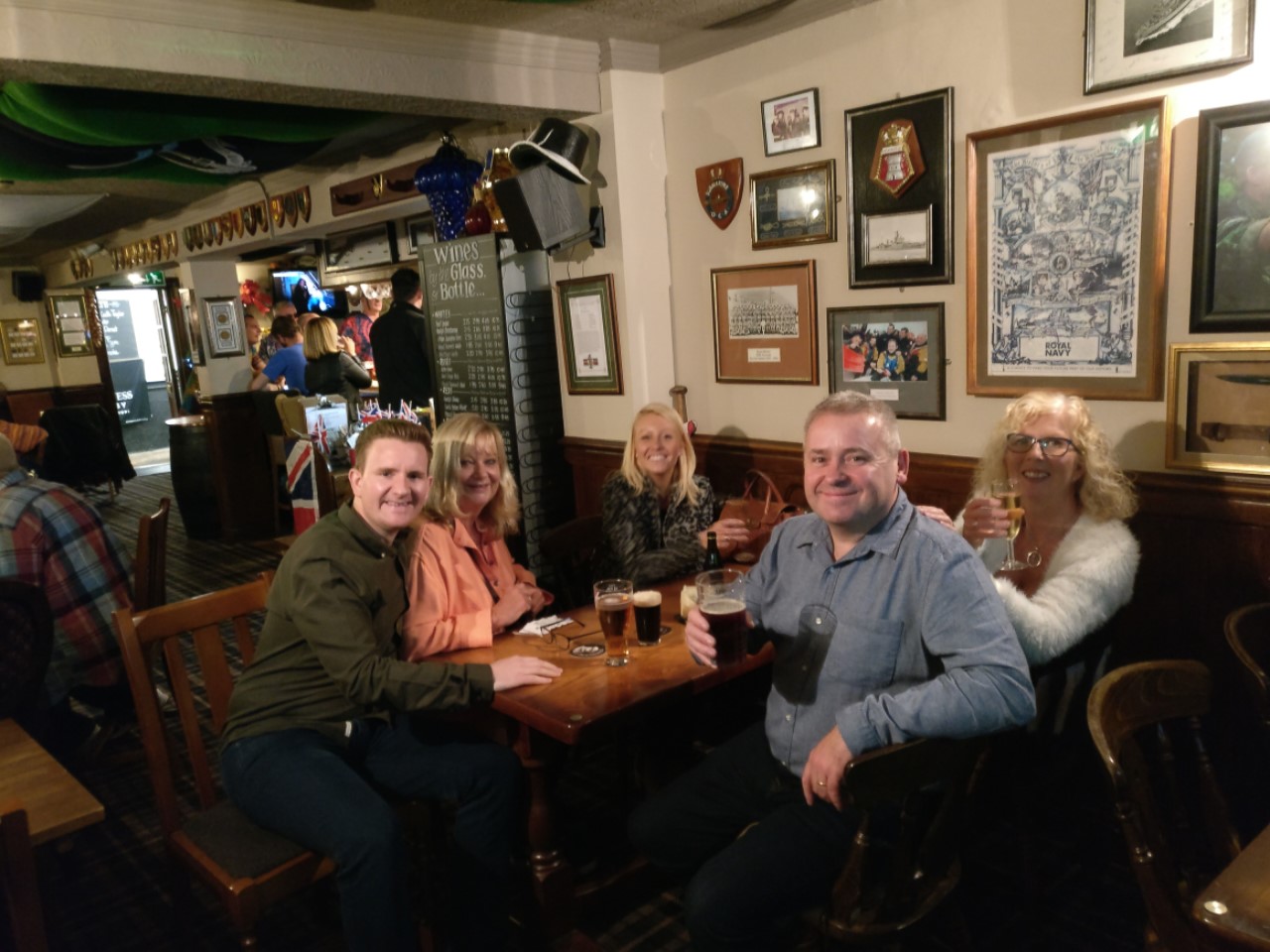
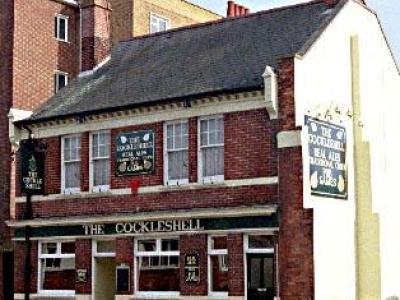
And so to my very favourite pub in Poole: The Cockleshell, which, in times past, used to be The New London Tavern. presumably after the old one became The Old Harry. The cockleshell heroes were, of course, the first small group of the now SBS force that went to occupied Bordeaux in WW2 with the aim of destroying the German fleet. Six of them were executed and two died of hypothermia.

I love this pub. Walking through the door is like stepping into a time warp. There’s no fancy dress but everyone is dressed from the eighties. As my son says, ‘are we in a scene from ‘Life on Mars?’ The smoking laws haven’t yet arrived: the landlady has a cigarette and the DJ is smoking. Our party, now quite the worse for wear, are drawn easily into the fray.


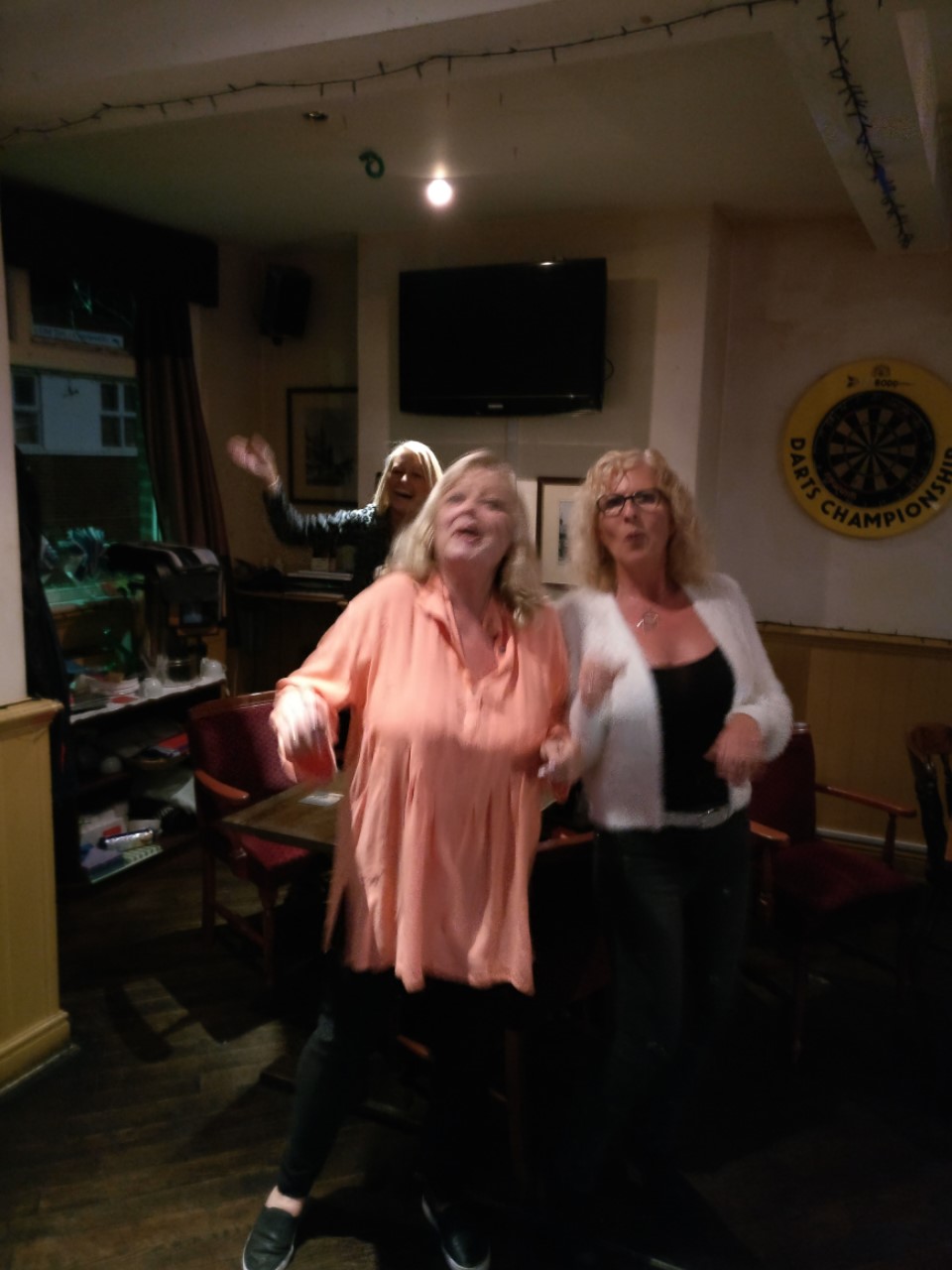
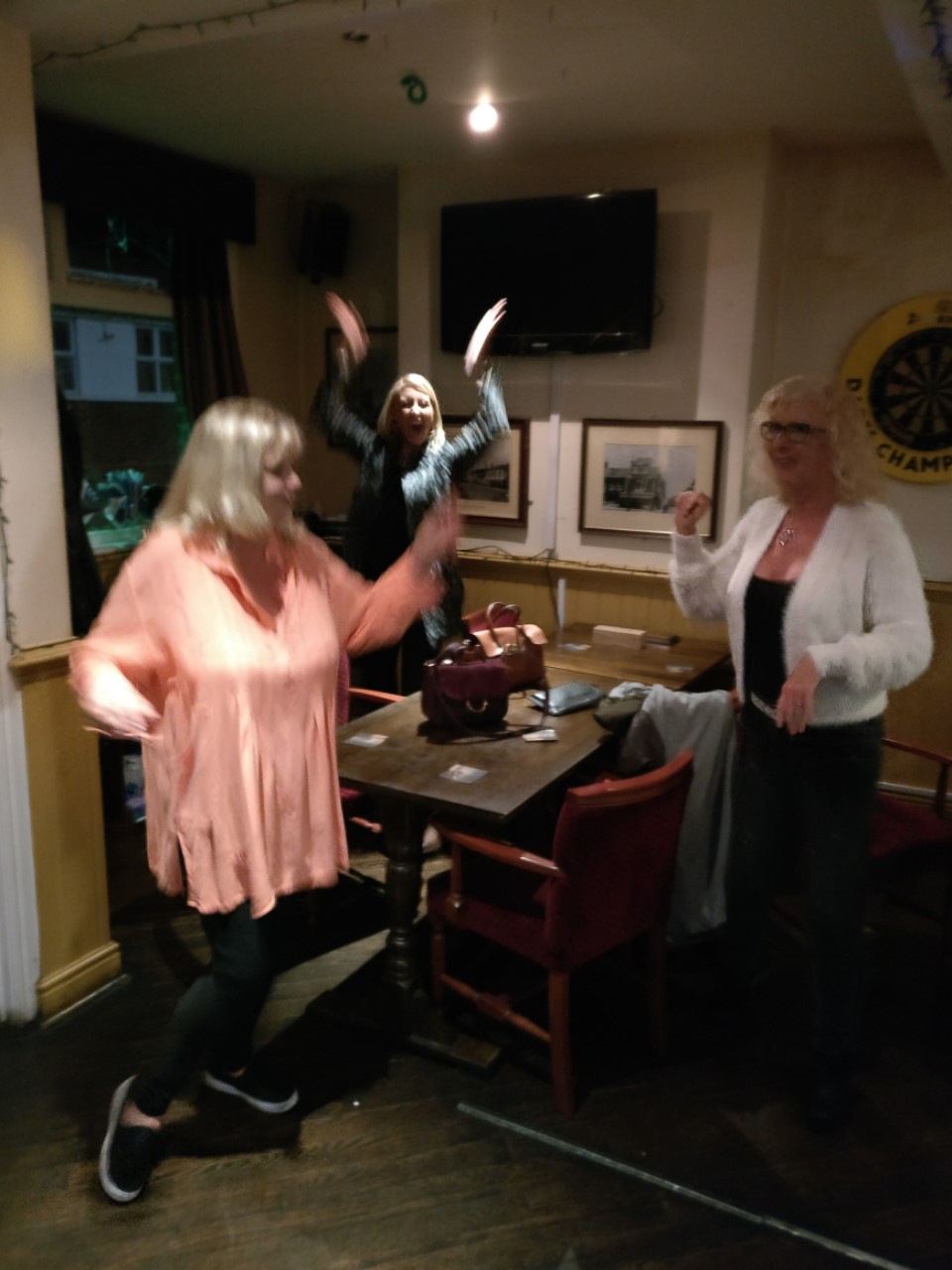
Some of them attempt the karaoke. At 10.50. last orders is called. At 11pm, there’s a change of plan and there’s an announcement stating that the bar will stay open, followed by a loud cheer. At 11.20, I’ve decided that, if I want to see another day, I should find a taxi. It’s been a great way to discover some history of our beloved town.