Re-inventing Arles

I’m reading a rather lovely travel book about the Midi at the moment which was published in the early 1960s. In some respects, rien ne change. In others …

… having just described the antiquities of Arles, the writer comments, ‘today it lies smiling and sleepy, full of memories’. Well, I’m here to tell you they’re rebuilding the joint, adding a new layer of architectural history and it’s so noisy, there’s little chance of a nap.
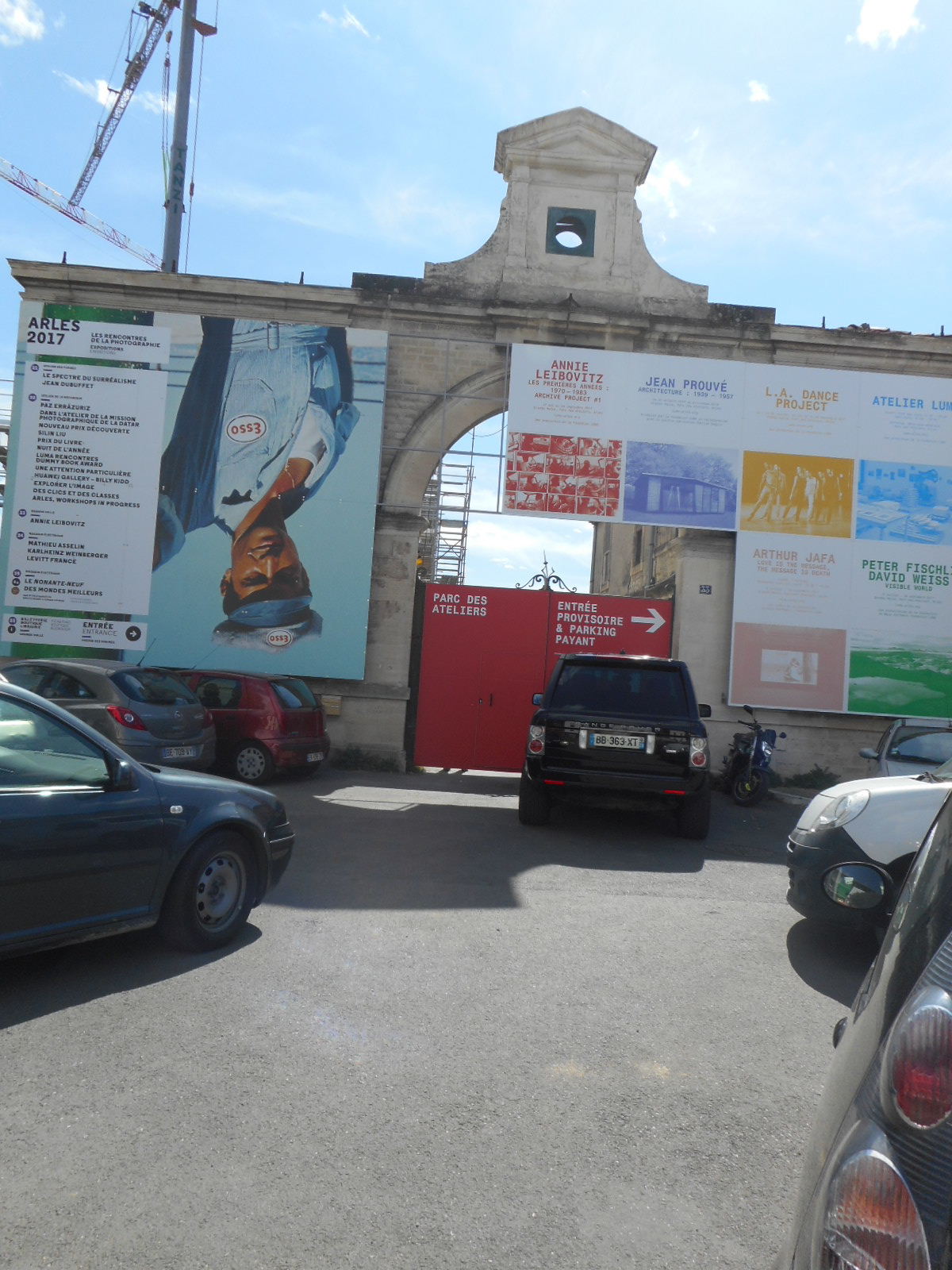
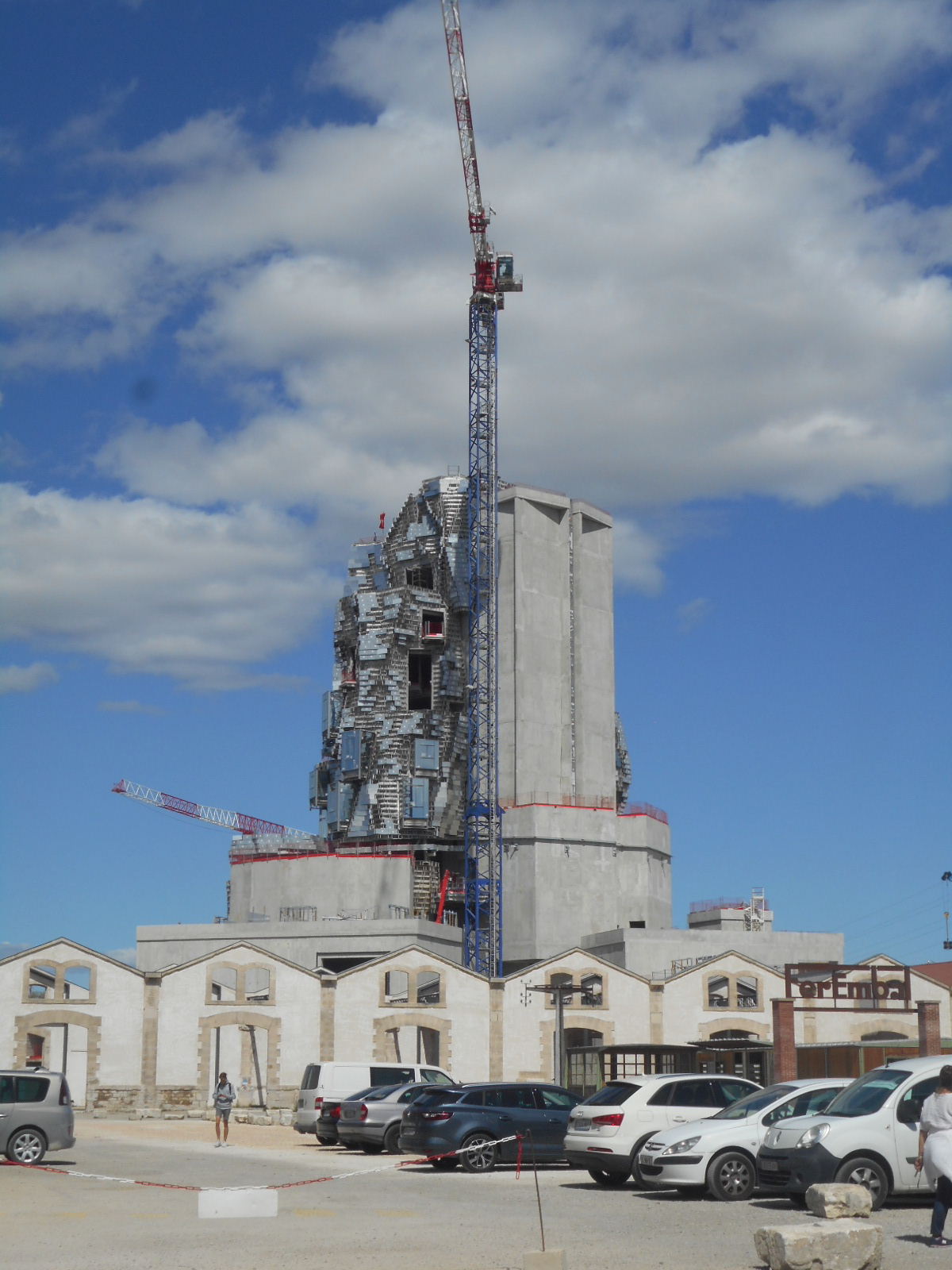
I’ve come to town to visit a major exhibition of the work of Annie Leibovitz: The First Years 1970 – 1983 which is being held in the new Parc des Ateliers. No-one I’ve spoken to knows where the Parc is so I’ve consulted a map. Thus, I know I must turn left at the traffic lights on the delightfully named Boulevard des Lices (look it up if you don’t know what it means – it’s worse than you think). The good news is that the Parc is signposted. The bad news is that the route is barred and, with a load of traffic behind me, I’m forced to push on and dump the car in some huge commerce place. Now on foot, I’m instructed to cross a make-shift bridge across the main railway line, negotiate two building sites and assorted dumper trucks and cranes, before collapsing at the first bar I find which is adjacent to the view in the above photo. They seem to be building on something old. What was here before, I ask the waiter? Nothing, comes the informative reply. Well, clearly there was something, I don’t say.
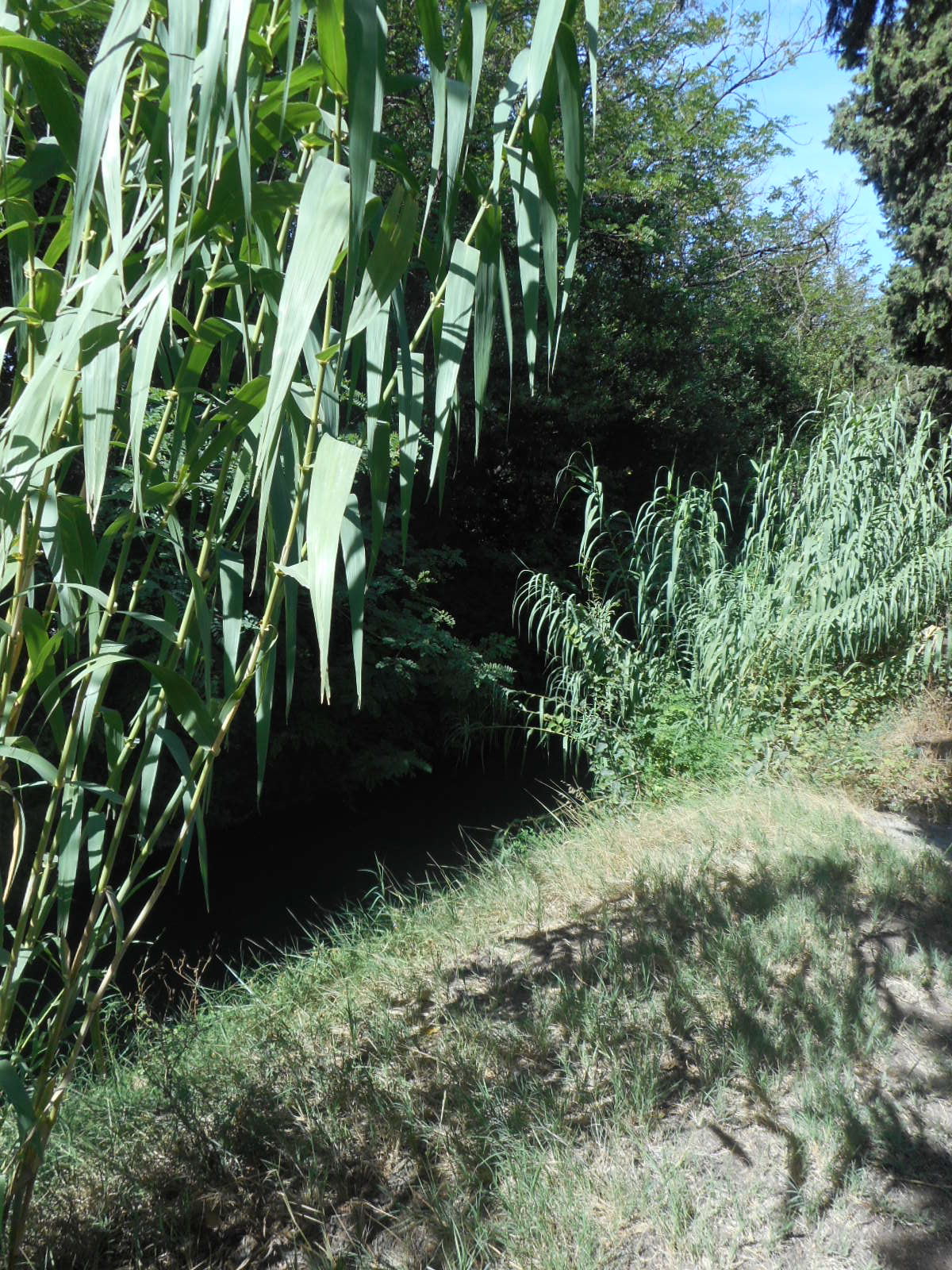
I walk for ages down the road to nowhere but, when I reach an entrance, I carry on for I think, unexpectedly, that I know where I am. It’s the canal which I believe borders the Roman necropolis, Les Alyscamps. I haven’t actually seen it before but I’ve felt the venom of its mosquitoes.
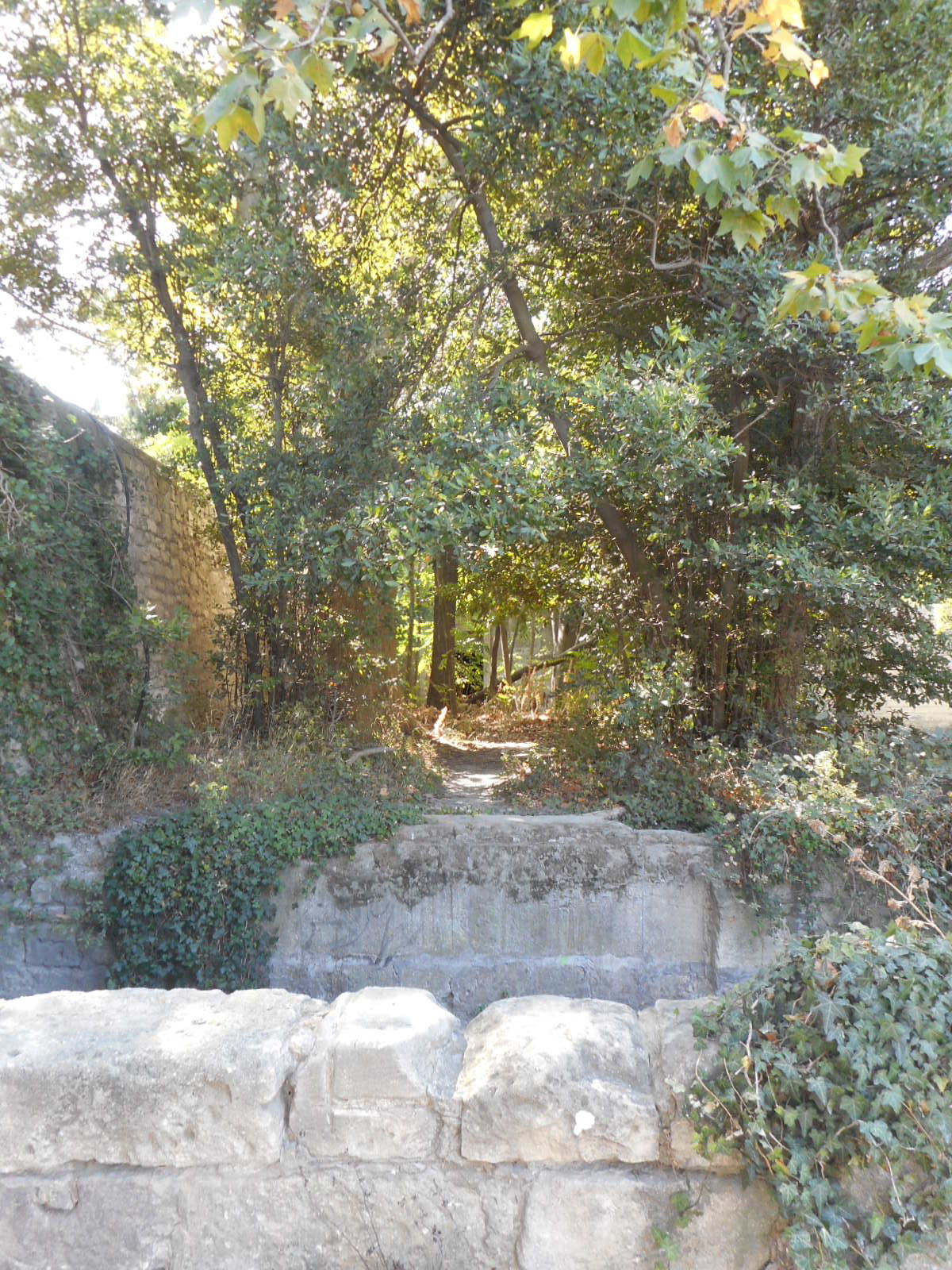


I’m right! Tracing the bank, I can just see the enigmatic church of St Honoratus through the trees, along with a couple of Roman sarcophagi. And here we have the ultimate juxtaposition of ancient and modern. On one side of the road, a necropolis so famous that bodies were floated down the Rhone just for the prestige of being buried there; a place where, more recently, Gauguin and Van Gogh wandered with their paint boxes. And on the other side …
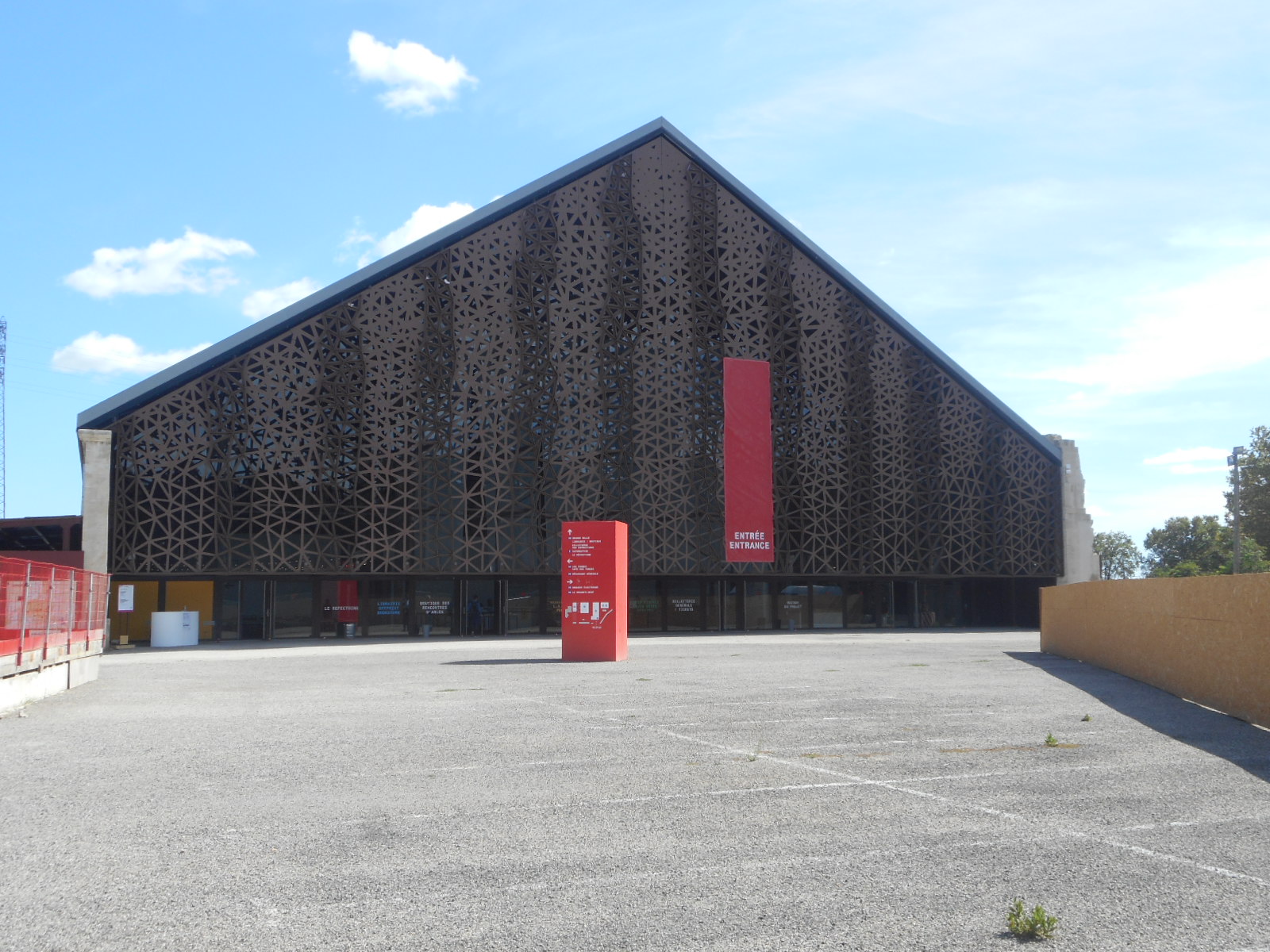
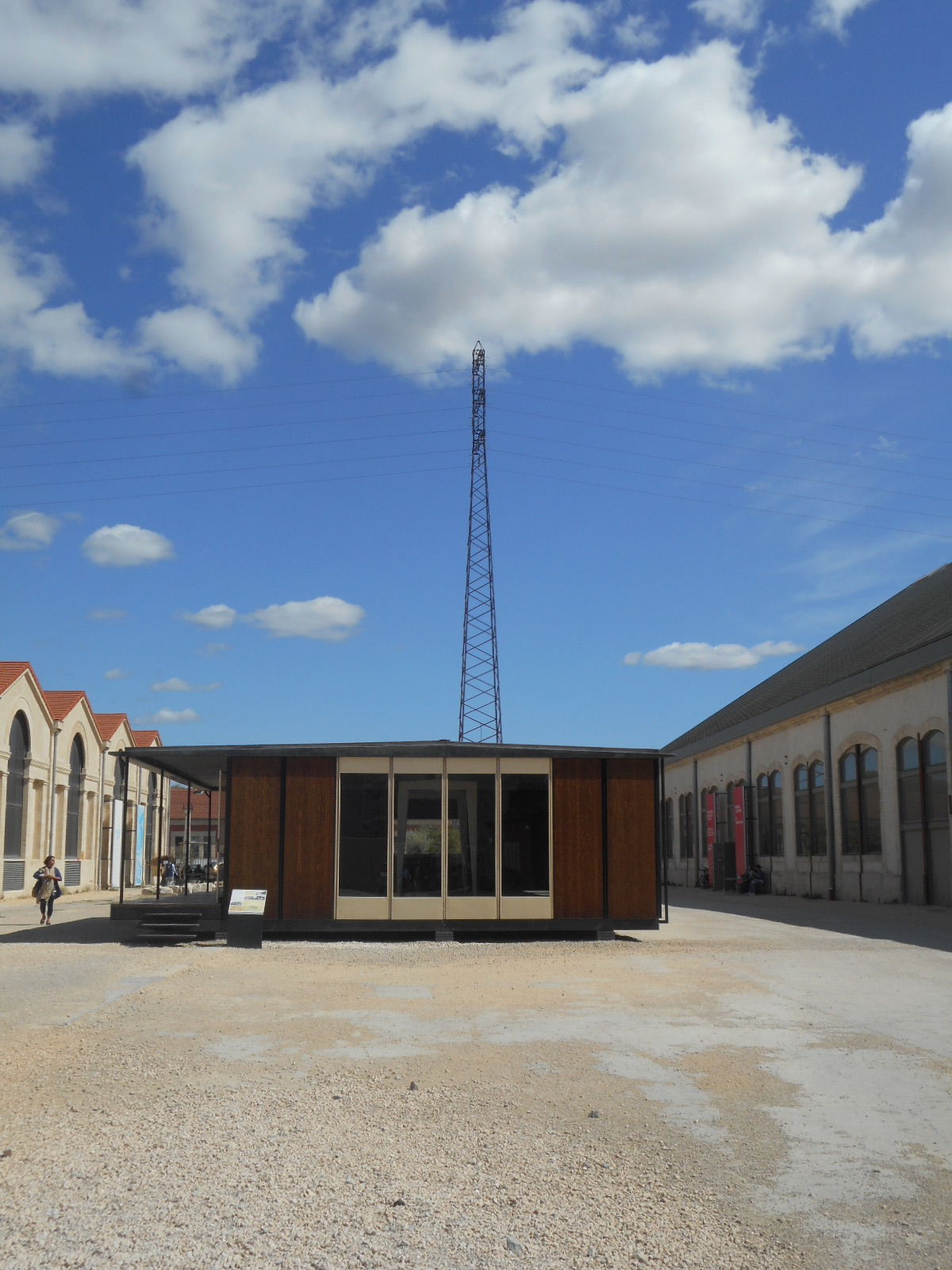
… admittedly, behind a stone wall, the main exhibition galleries of the Parc des Ateliers. WOW. These are all past SNCF buildings which have been transformed into something amazing. I don’t know if I like it but they probably said the same about Constantine’s Baths at the beginning.
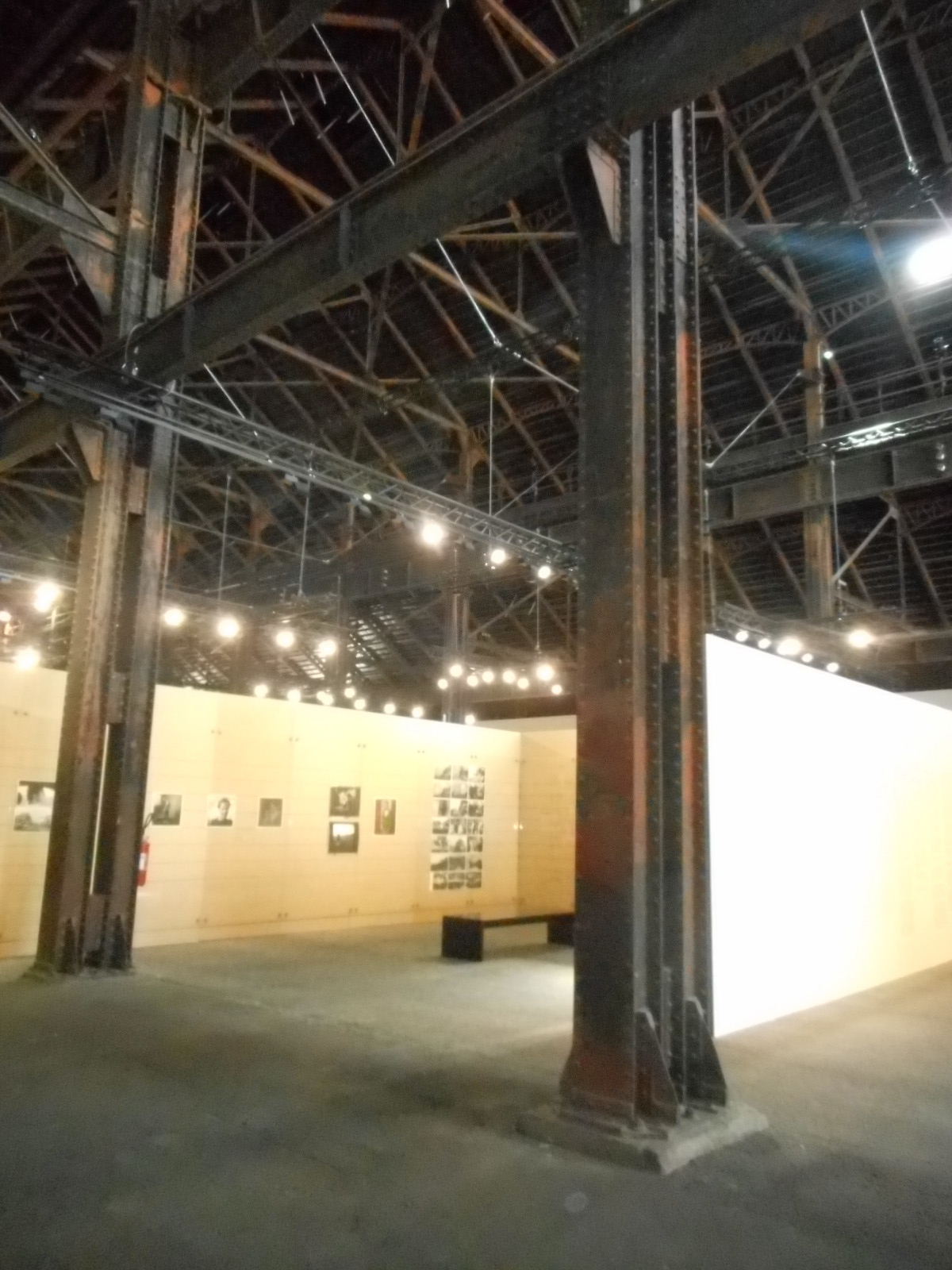
The Leibovitz collection is extraordinary. The photographs – and there are literally hundreds of them – manage to make the glamour of the USA look dirty and sordid. Here are Jagger, Springsteen, Dylan, and just about anyone you can think of from the 70s and 80s music scene, drunk, stoned, tired and ugly in their dingy dressing rooms and hotels, all looking in need of soap and water and sleep. Here are Warhol and Liberace, ridiculously disarmed and precarious as Leibowitz catches them off pose.

And here are the politics of America, as far removed from the sanitised House of Cards version as is humanly possible. Numerous stills show Ted Kennedy ever smiling and professional but with a less than attractive entourage. Badly dressed men, and always men, ‘doing the business’ on planes, in offices and generally behind the scenes, looking shady and untrustworthy. The placards pronounce, effectively, ‘the other two died for you so you’d better vote for Ted’. Leibovitz captures an interminable sense of squalor on so many levels. In the end, one is so overwhelmed by both the brilliance and ghastliness of it all that it’s just too demanding.

The Parc des Ateliers is sadly lacking in the eating department. There’s a sort of canteen where people queue up to purchase plastic food which is then consumed at long tables with a bunch of people you don’t know. I suppose they think it gives the place the modern look; actually, it reminds me of a motorway service station. Back up the long track there’s a burger joint which is equally disenchanting. However, across the road, on the building site, I manage to acquire a rather nice steak with Roquefort sauce. That’ll do nicely thank-you.

P.S. The book I’m reading is called West of the Rhone by Freda White.
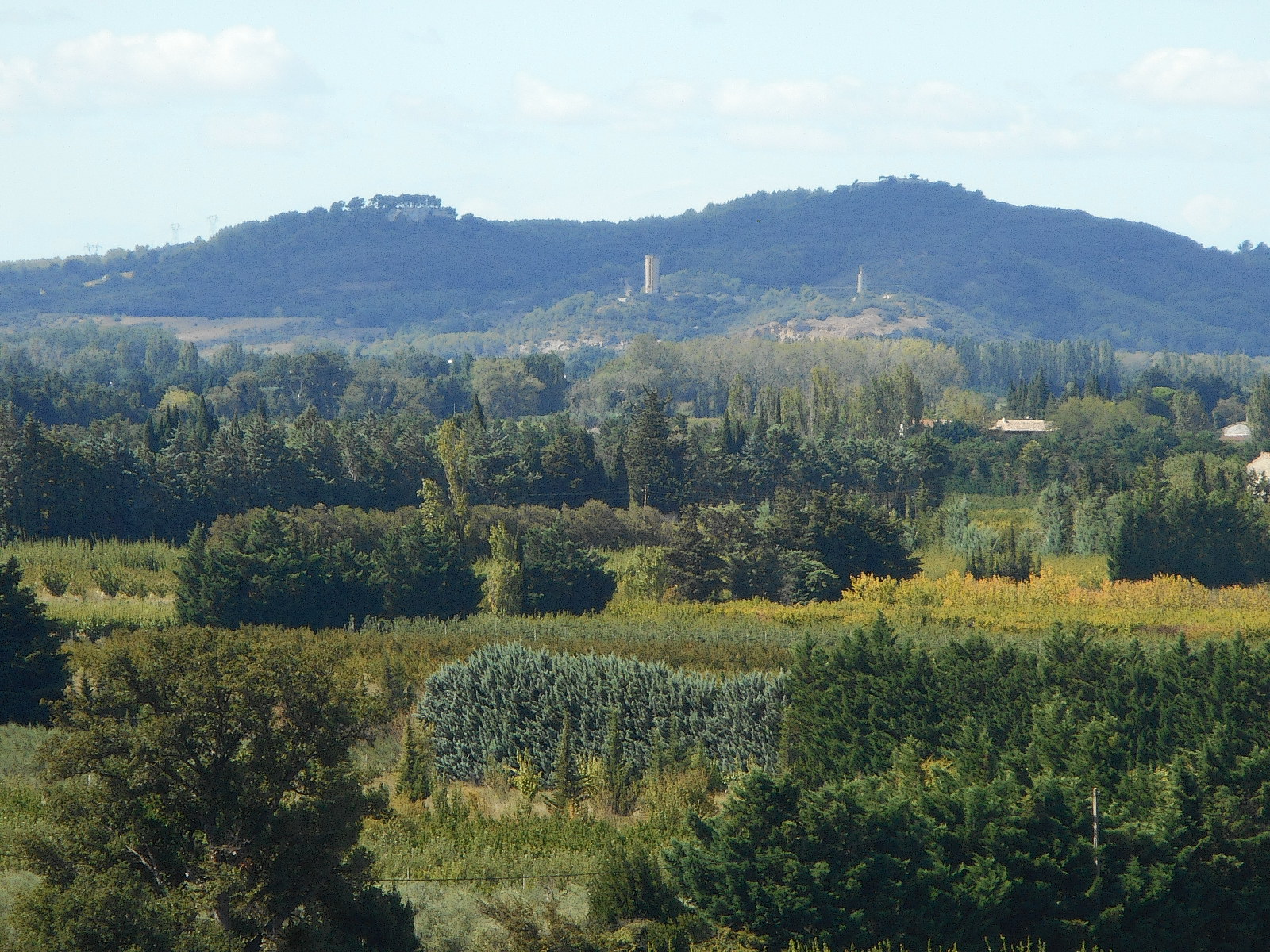
 

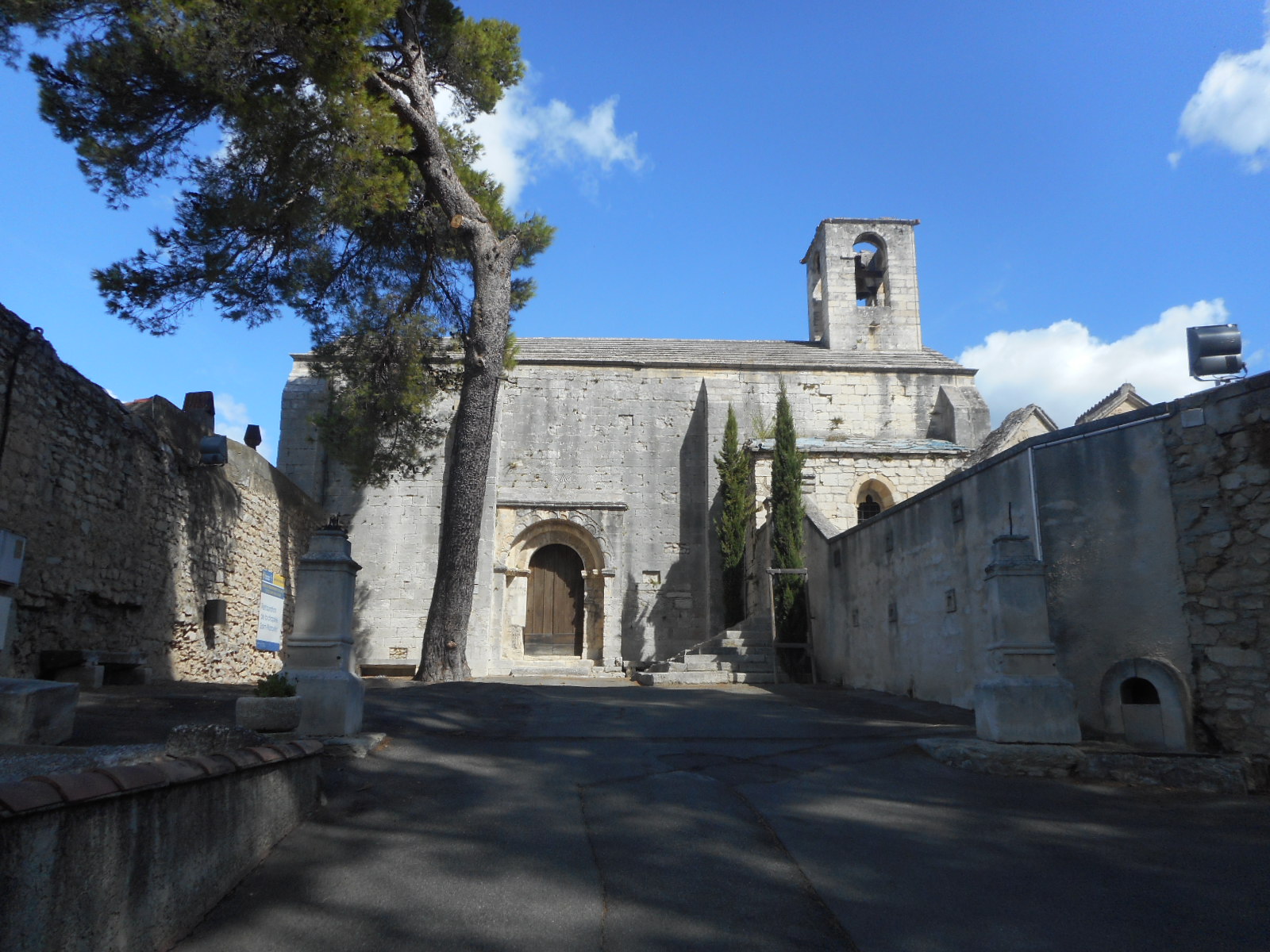
Boulbon

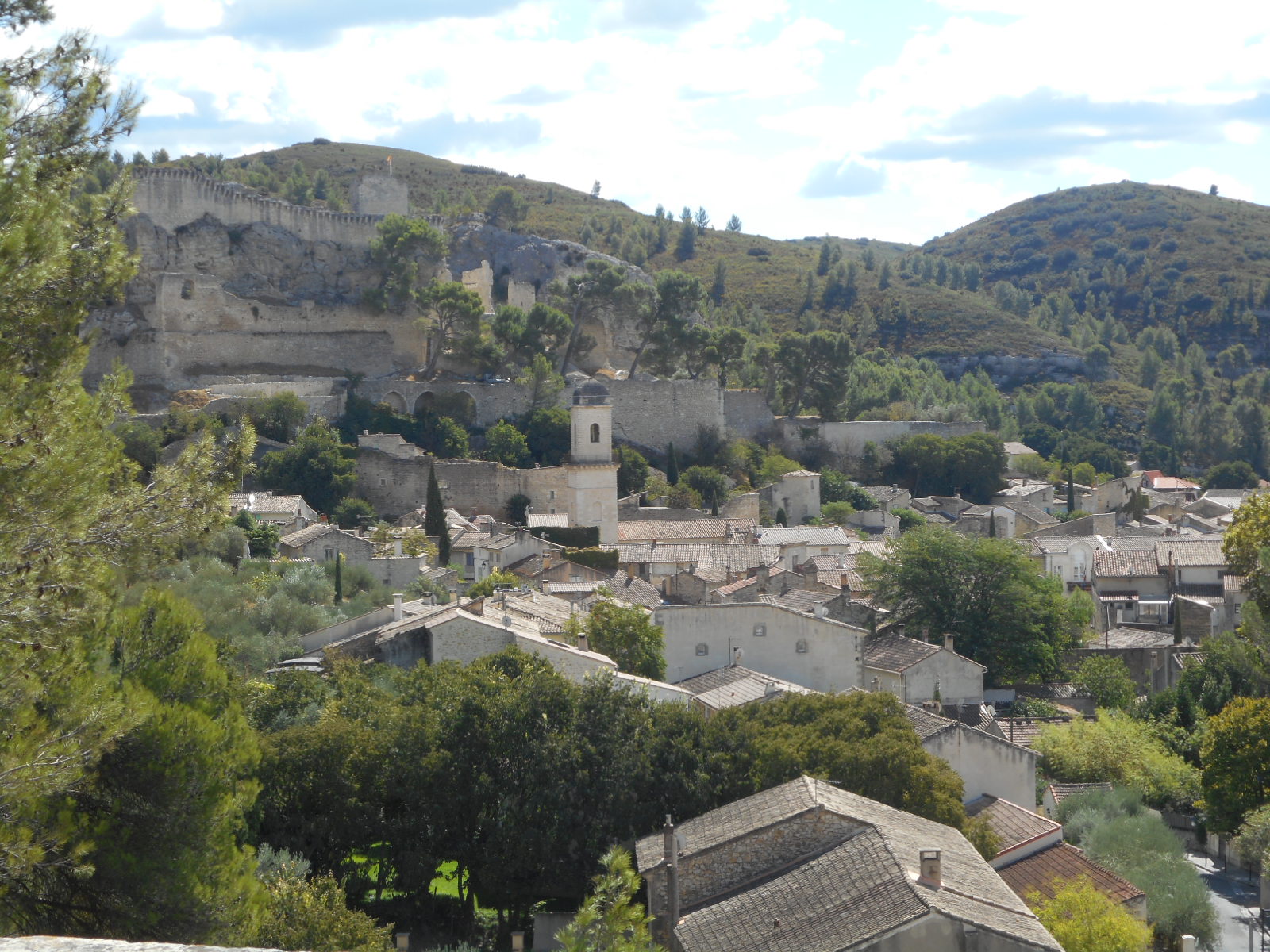
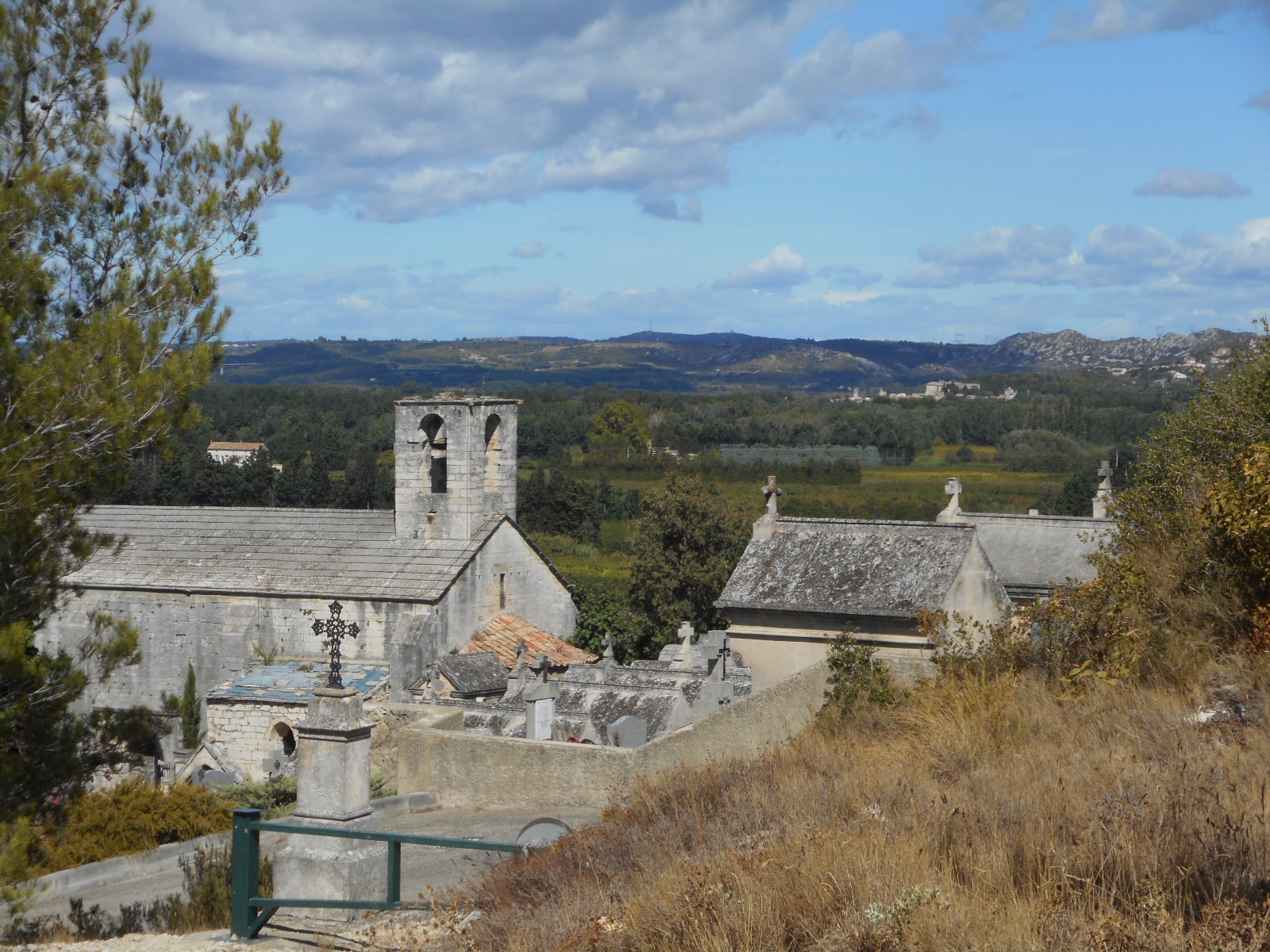
In all the years I’ve been coming to Provence, I’ve never been to Boulbon, which is strange as it’s a mere twenty minute drive from where I’m staying. Looking in my notebook to see what can be said about today’s visit, I see that the first thing I wrote was ‘there’s a good view from the cemetery’. Fortunately, there’s a bit more to the place.

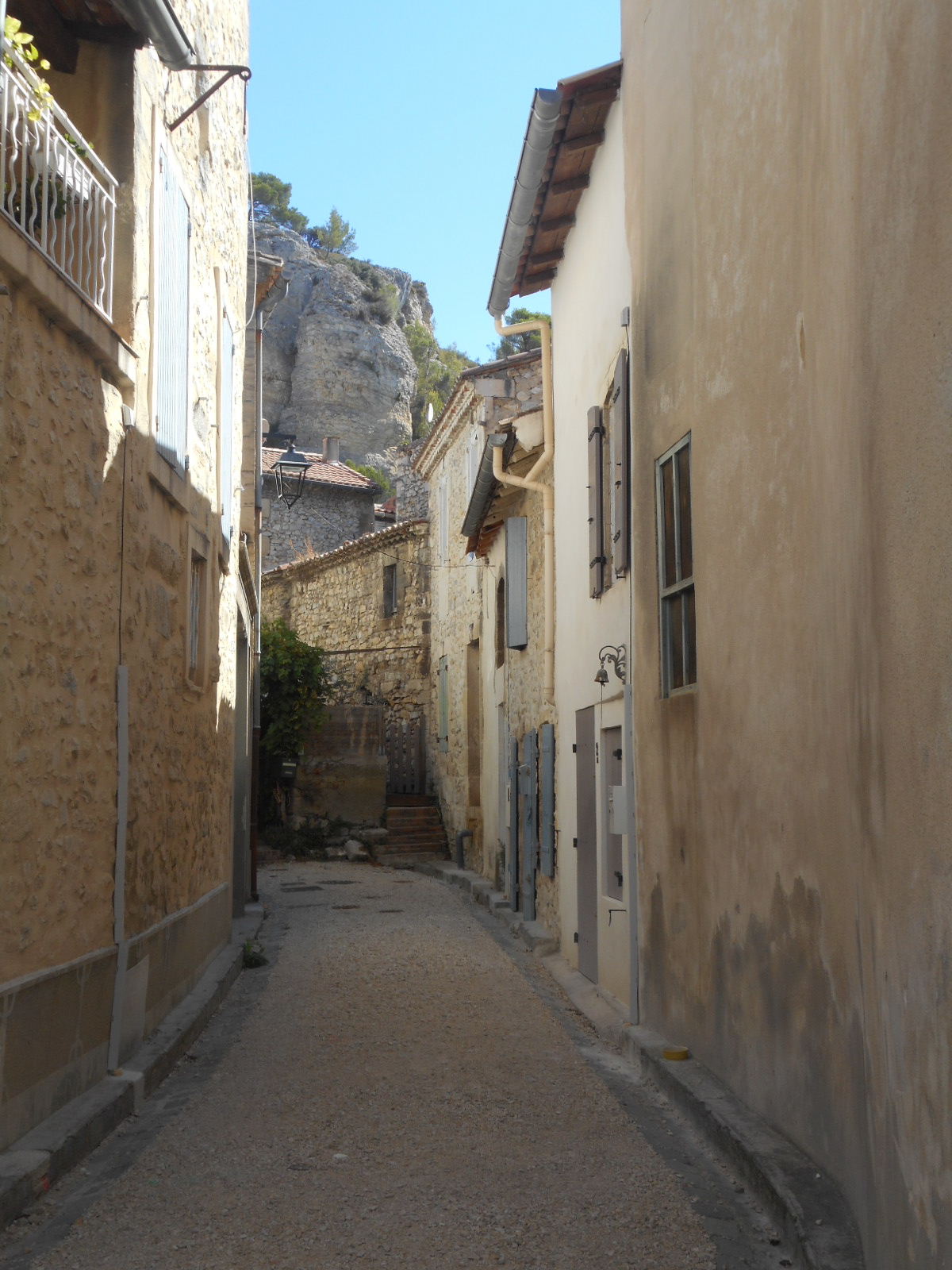
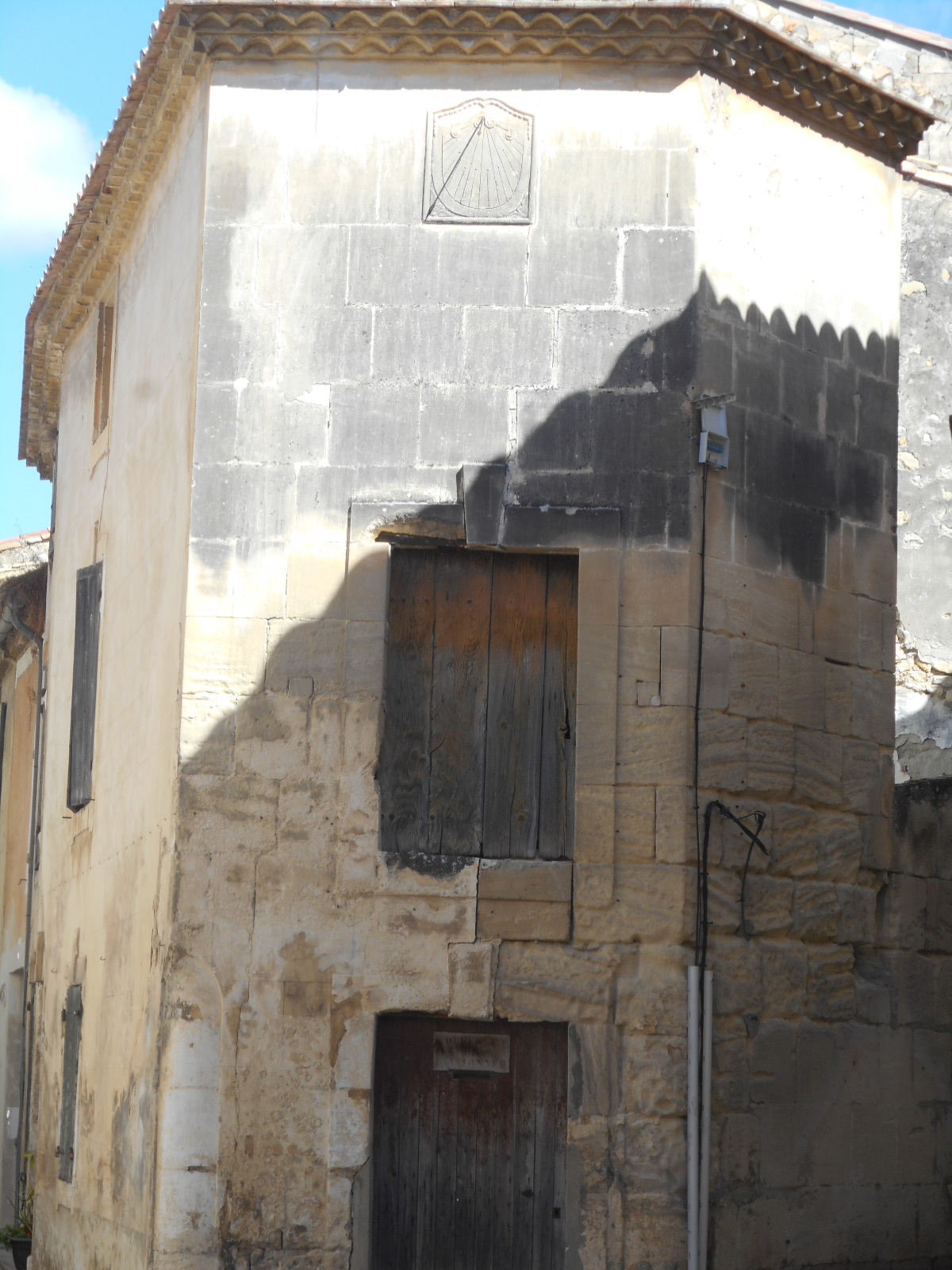
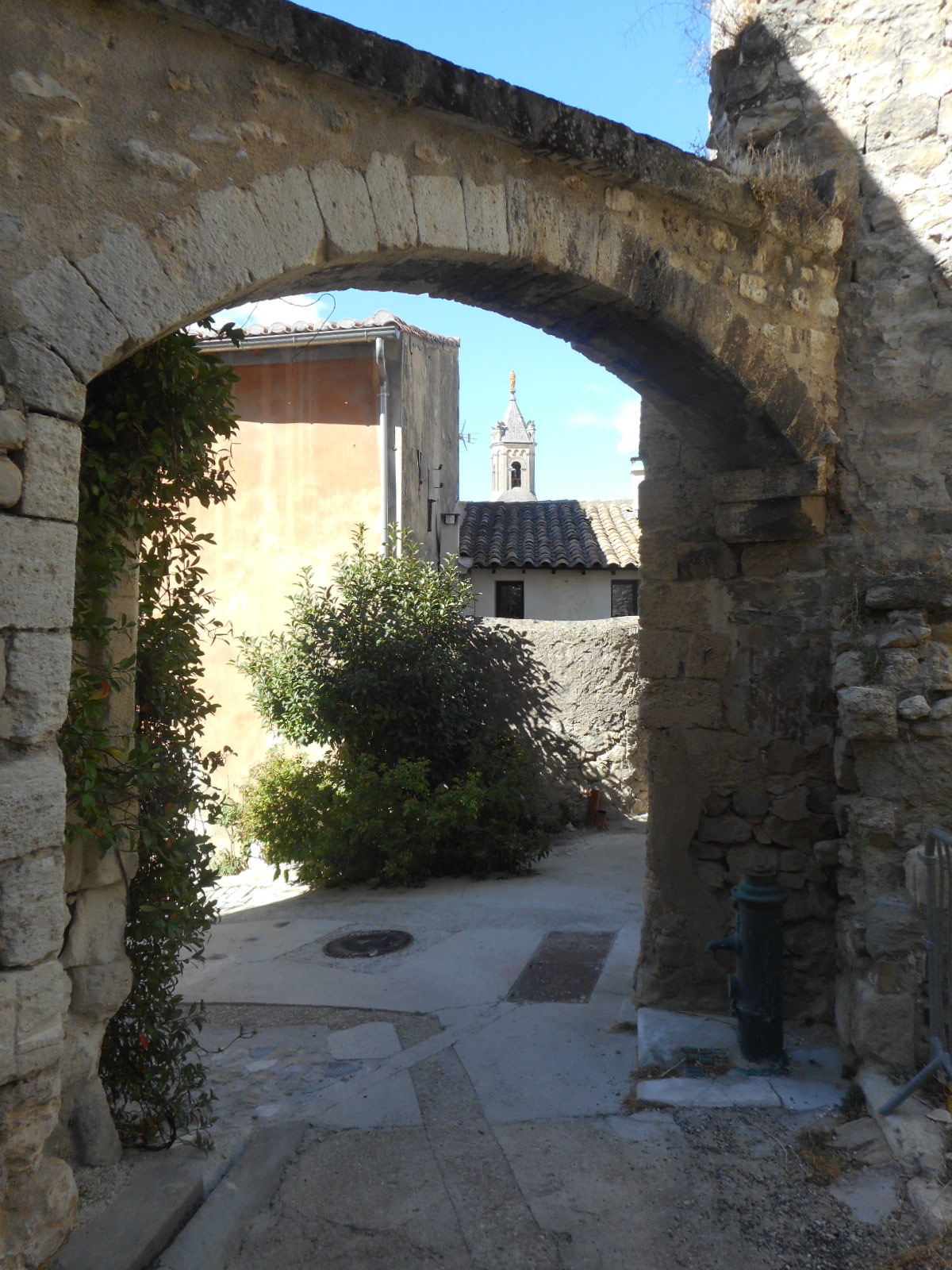
To begin with, Boulbon is worth a visit just to wander around the labyrinth of ancient streets and lanes


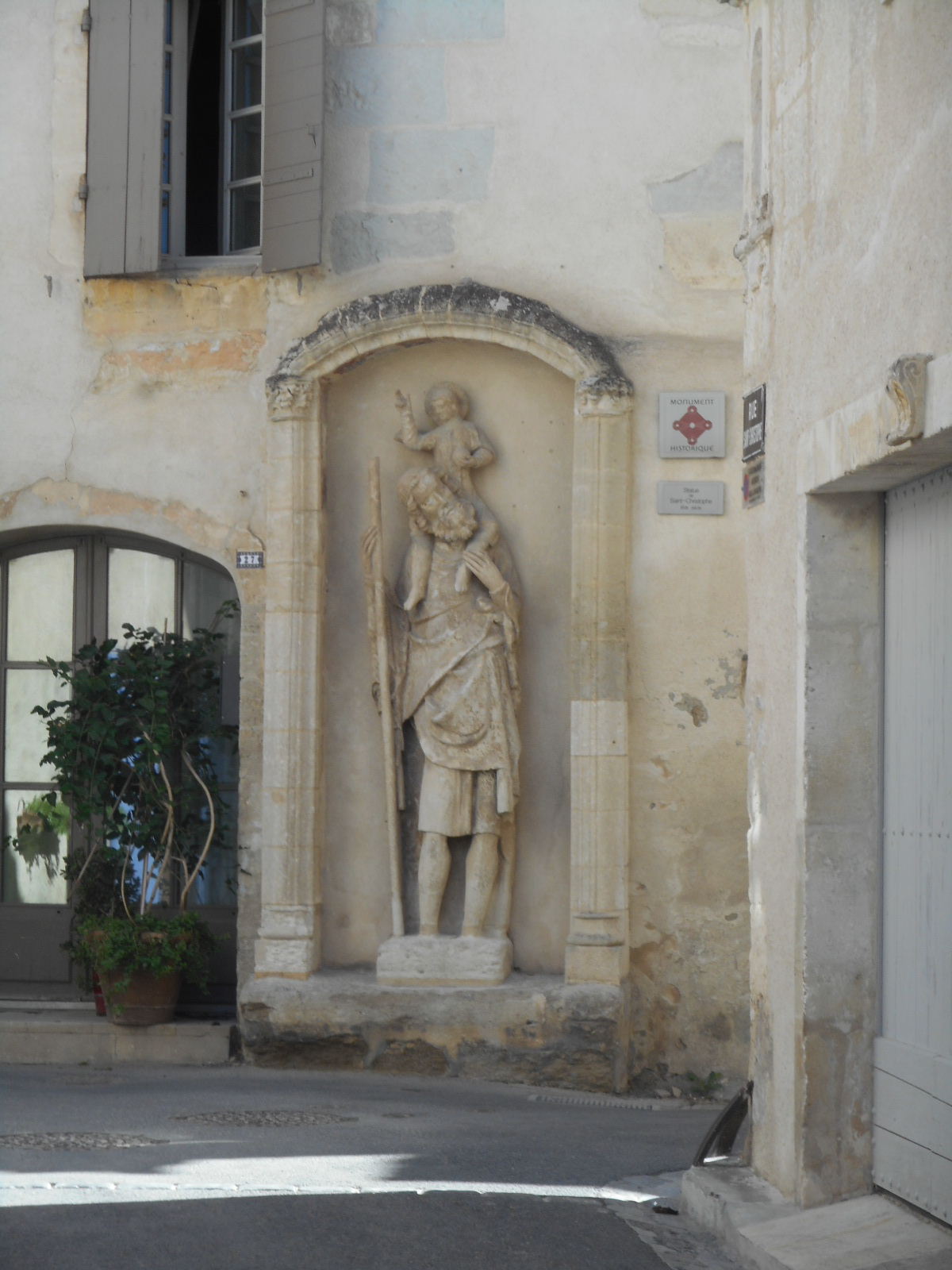
Eventually, you’ll come across this fourteenth century carving. Most of the depictions of saints in this tiny part of the world are either of St Eloi or St Roch. This, however, is St Christopher with his feet submerged as he carries the Christ child across the Rhone. As we know, folk round here are keen on the story of Jesus being born in Provence, so maybe this is somehow related.


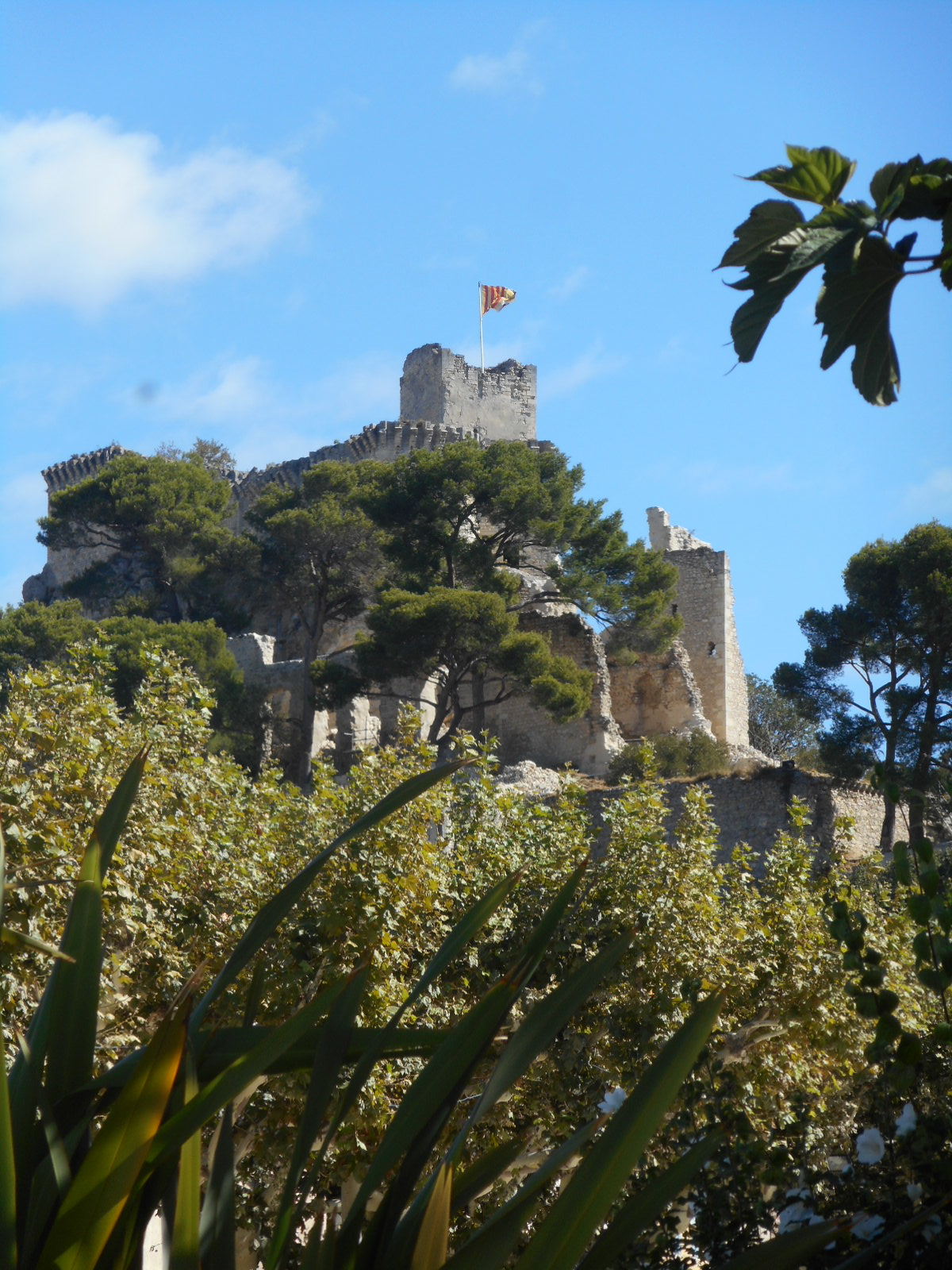
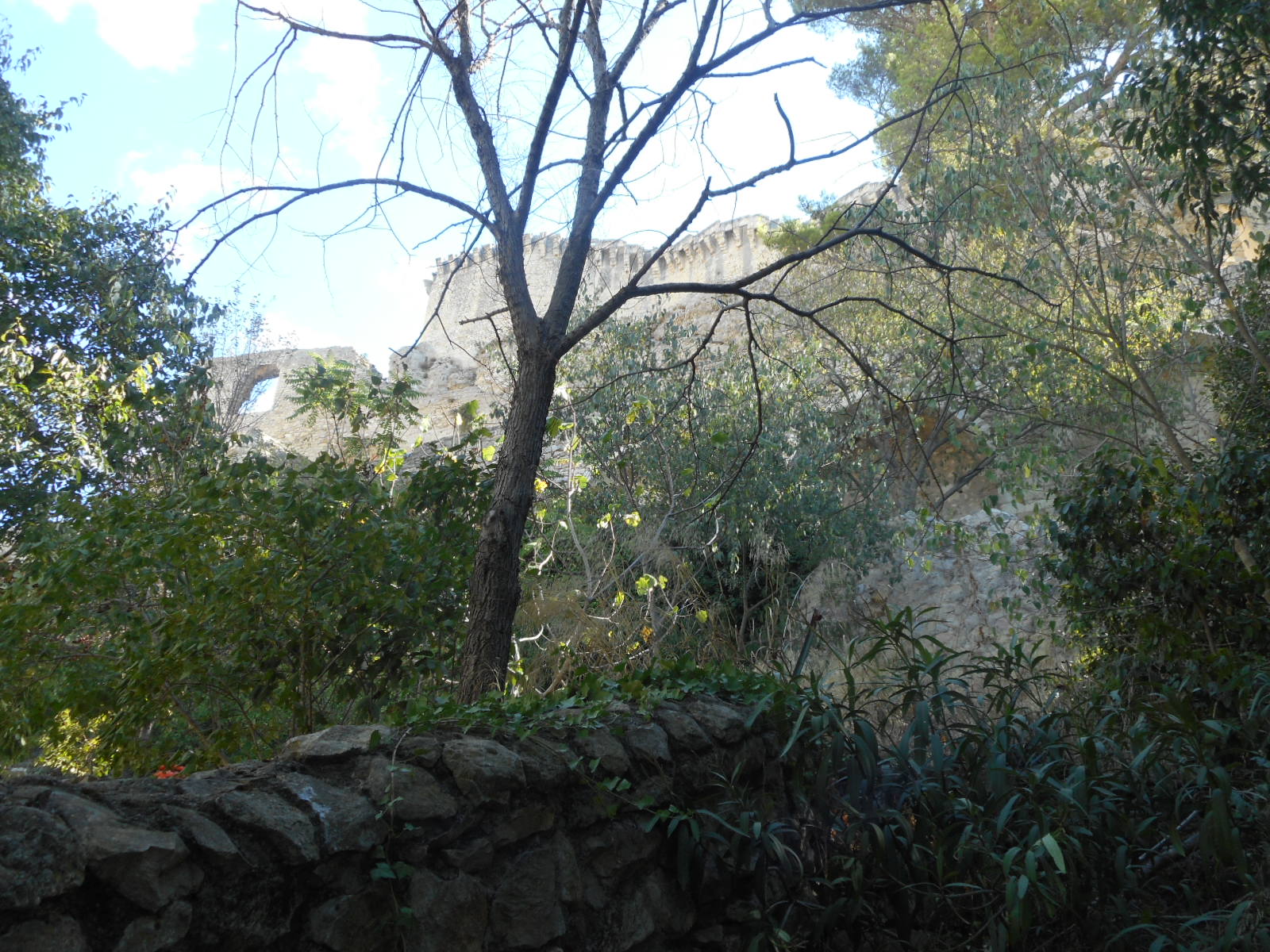
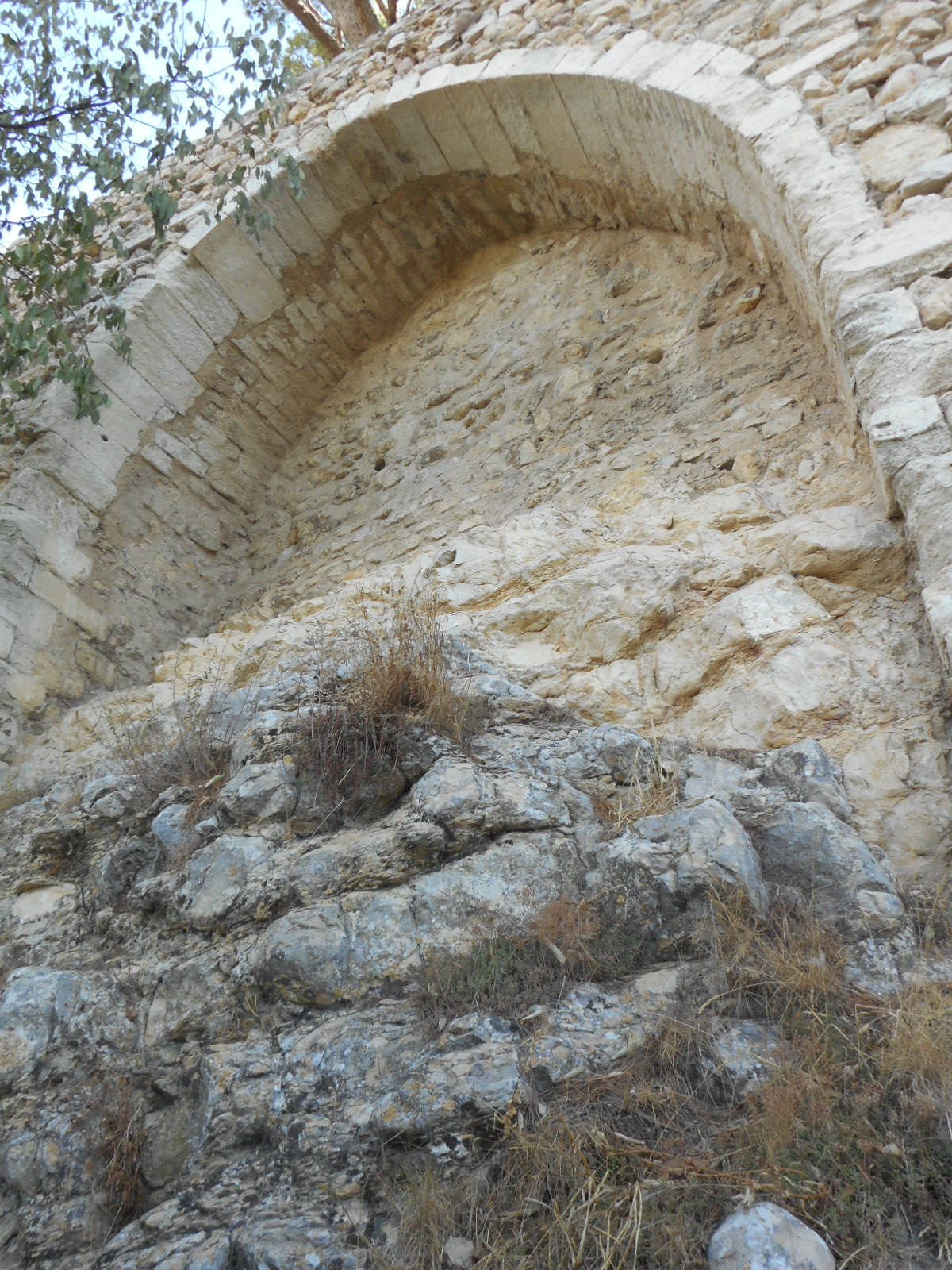
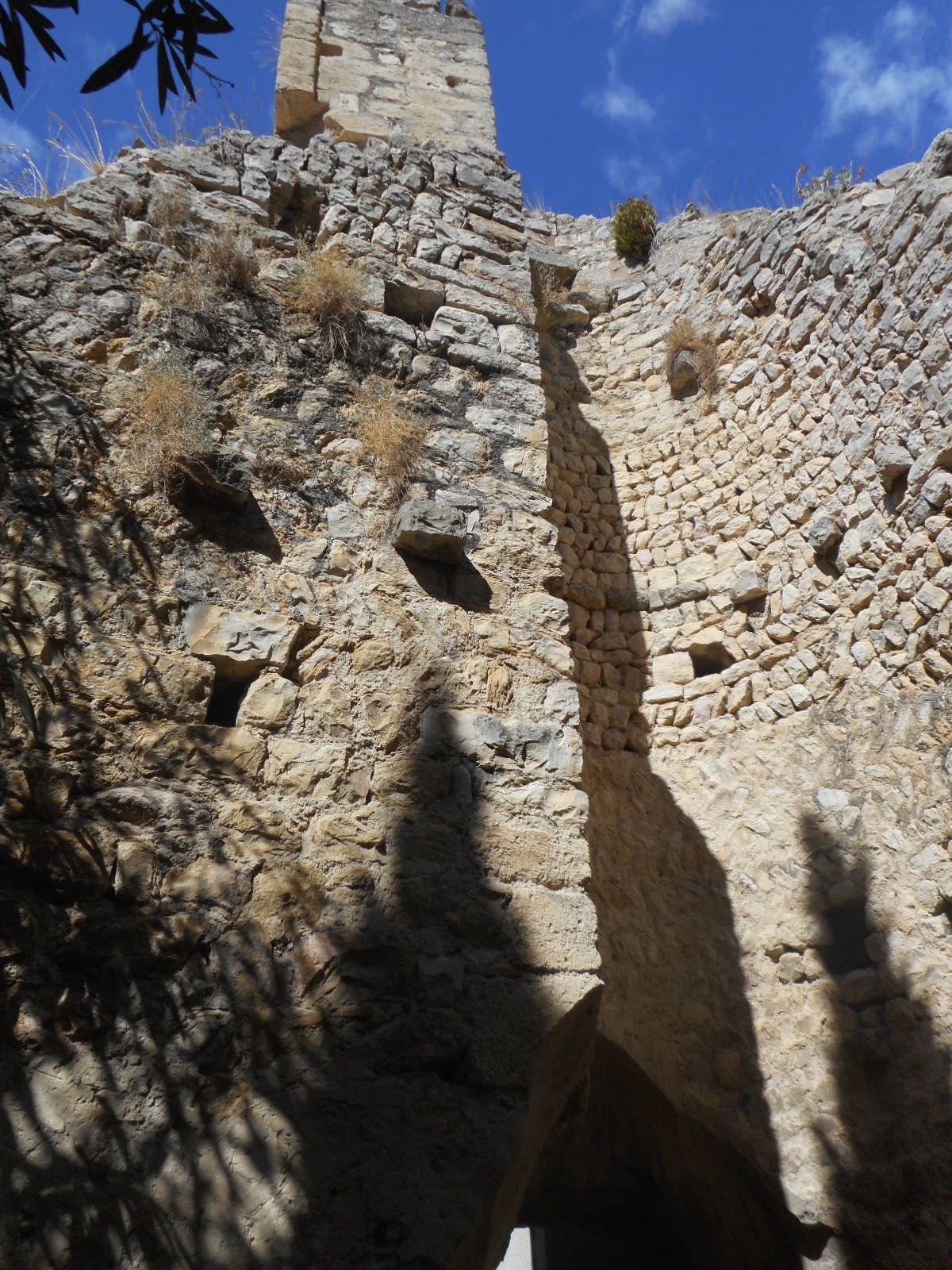
Probably the main reason for a visit to the village is to see the eleventh century feudal fortress come chateau. It’s been added to and updated over the centuries, to accommodate the vagaries of the war machine but, today, is largely ruined. A quick perusal of any relevant literature will inform tourists that you can’t get in due to private ownership and the instability of the joint. That doesn’t mean you can’t try.


I find a street that turns into a path which becomes a track and make a torturous ascent. I say torturous not because I don’t like hills or the way is both stony and slippery, but because of the crowds. Down in the village, with high noon approaching, there was barely a living soul to be seen. Up here, just as I was negotiating a particularly difficult step past the last tumble-down house in near-civilisation, I suddenly find a man with a small child in one arm close on my tail.

Bonjour, I say, clinging onto a tree in order that he can pass. Bonjour, he replies. I stagger upwards behind him only to hear the snapping of twigs behind. Turning round, I see a woman who’s even older than me virtually on all fours. Bonjour, I say. Bonjour, she replies and begins to speak some impenetrable language that she clearly thinks is French and I know isn’t. She’s trying to ask if I’m with the man and the baby.

Now, we seem to have formed some sort of rambling troupe in which no-one knows where they’re going. No sooner have we re-grouped than two more climbers appear. Bonjour, we all say politely to each other and make suggestive noises and grunts regarding the castle.

I forgot to mention an ancient woman had emerged from the shack with two bin-bags full of dead foliage and weeds. She looks up the path. Bonjour, we all say but she glares at us. She doesn’t seem overly happy at so many idiots passing by her house, all of whom, it transpires, have English as their first language despite coming from a variety of countries. Of course, none of us get anywhere near the castle: some of us realise broken ankles are in the offing and others just get fed up with it all and lose the will to live. I begin my descent and pass the withered old crone again with two more bags of weeds that she’s surreptitiously dumping somewhere or other. I don’t speak.

Once I get back down, I wander across to the other side of the village and begin climbing another hill. This one leads to the cemetery via St Marcellin’s Chapel to which it’s adjoined. It’s difficult to find anything about St Marcellin that doesn’t involve cheese so I don’t know who he was. His twelfth century chapel is built on the site of an earlier edifice and is, of course, shut. It’s a mystery to me why all the interesting chapels are never open whilst all the boring churches never seem to close their doors.


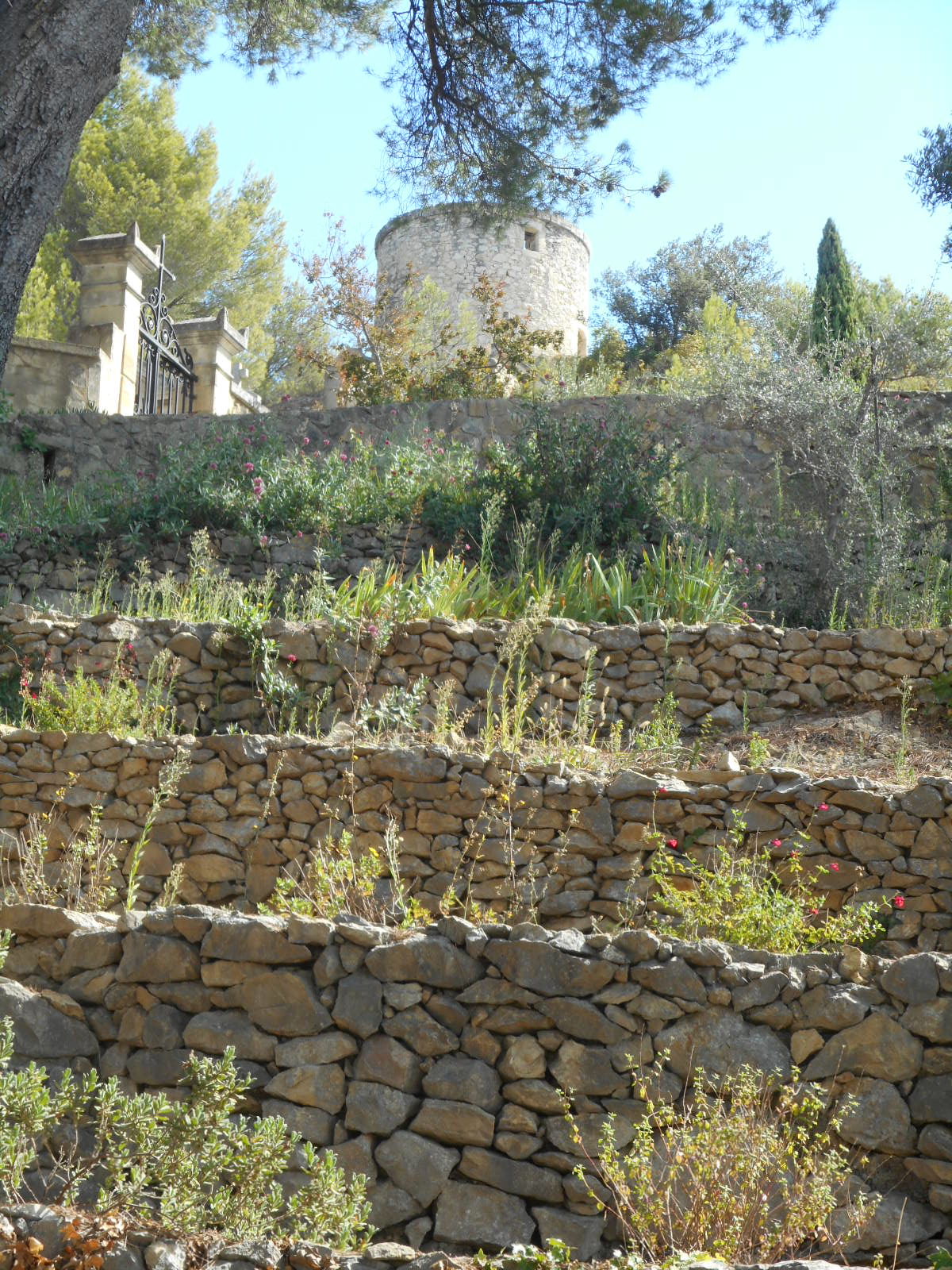
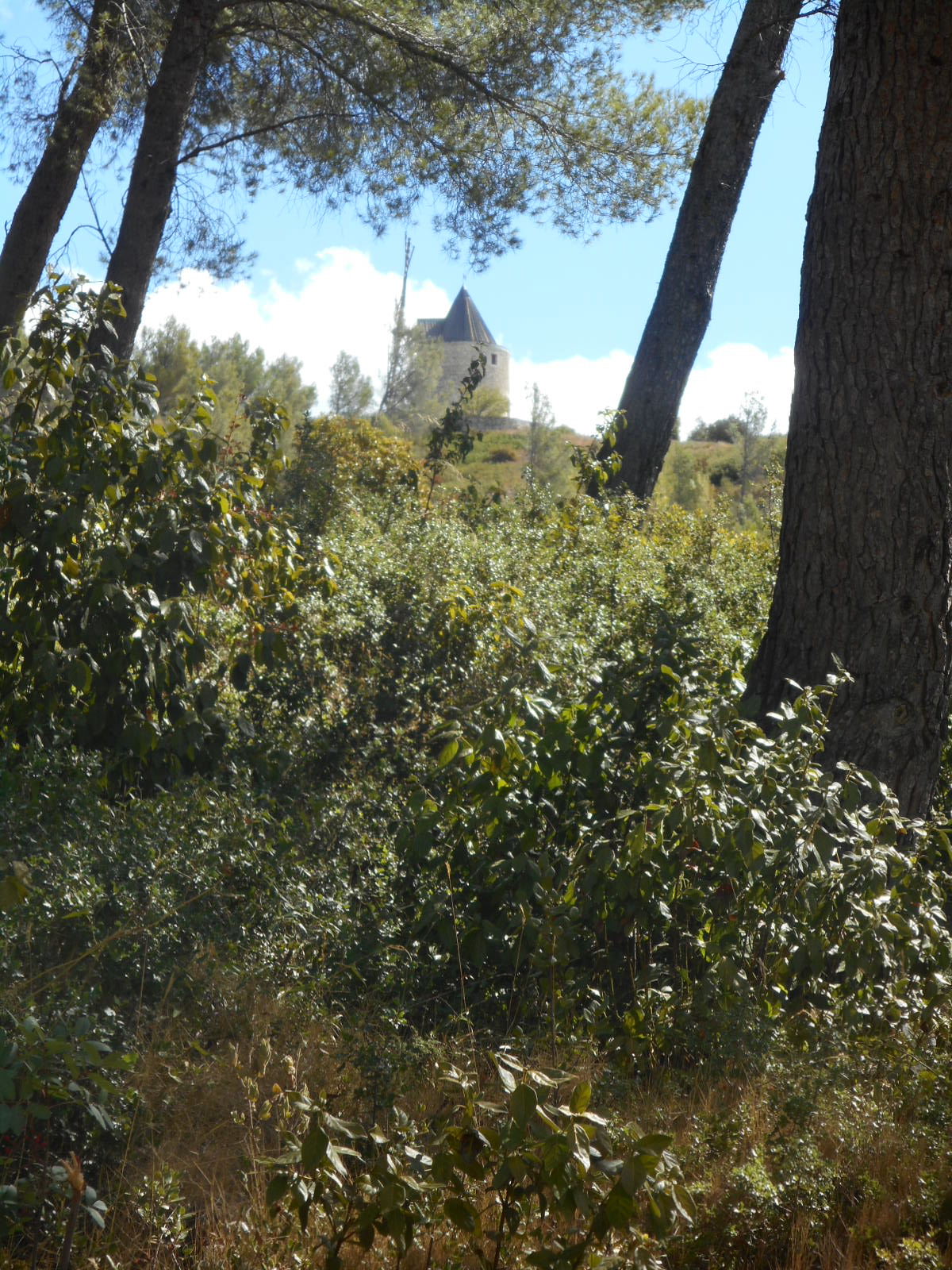
Close to hand, I can see the windmill but it’s not THE windmill, renovated and complete with sails, that can be seen from the road below the village. That windmill has completely disappeared so I make my way to the second best option


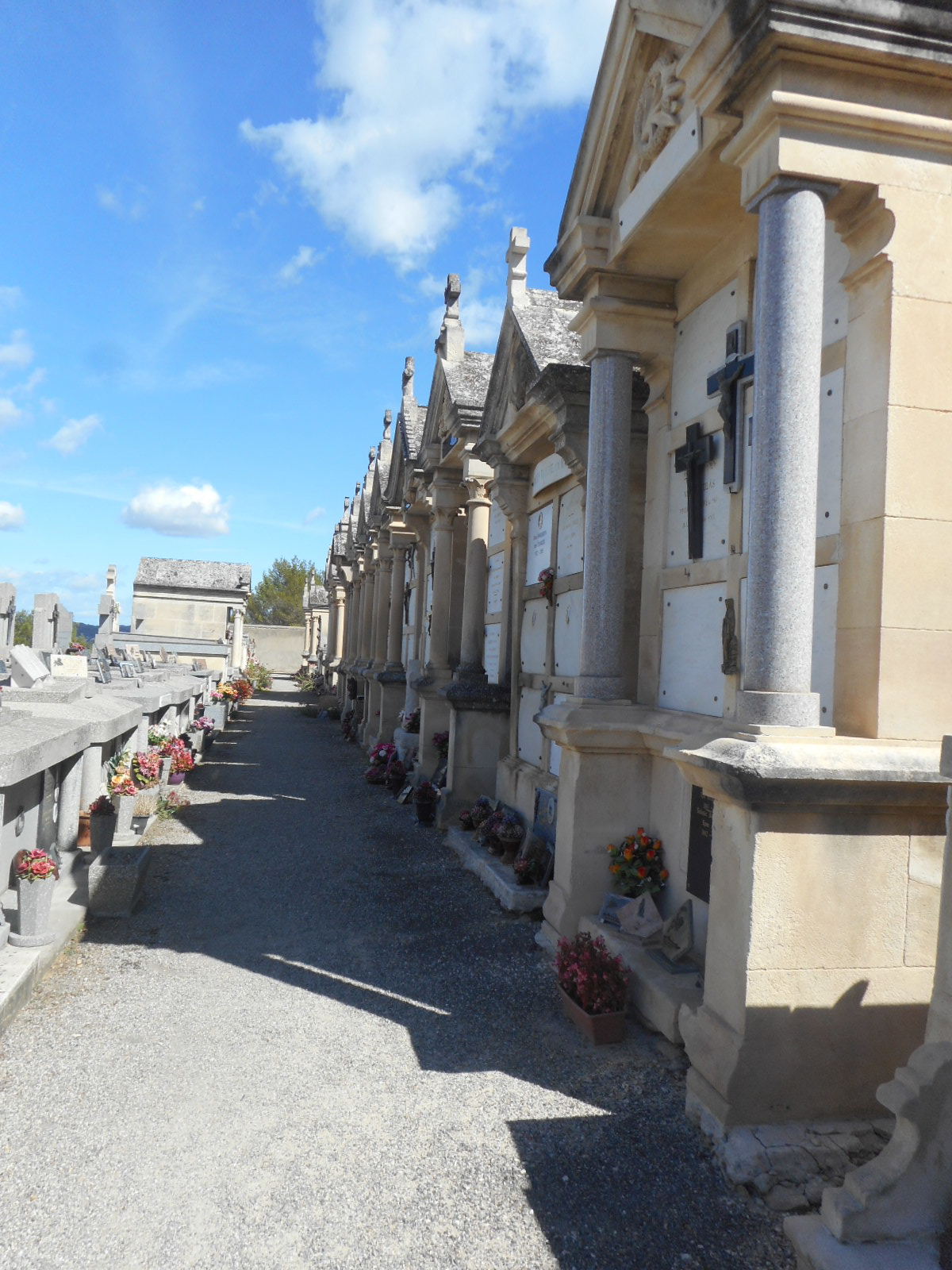
This involves another climb through the terraced cemetery where the grandest tombs are right at the top, nearer to God. They remind me of a row of ornate beach huts.


Finally, I reach the top and see the ‘proper’ windmill in the distance. The views up here are amazing and worth the climb. But now it’s surely time for lunch. In the Café du Commerce, where all the local workmen are eating, I join them in a chicken curry which is dish of the day. It bears little resemblance to the curry at home but it’s very tasty.


The man who invented a country

The man across the lunch table in St Maries de la Mer, one who knows quite a lot about a variety of things, informs me that the Camargue is an invention. I don’t necessarily disbelieve him but it’s hard to see how a wilderness can’t be natural. Re-wind.


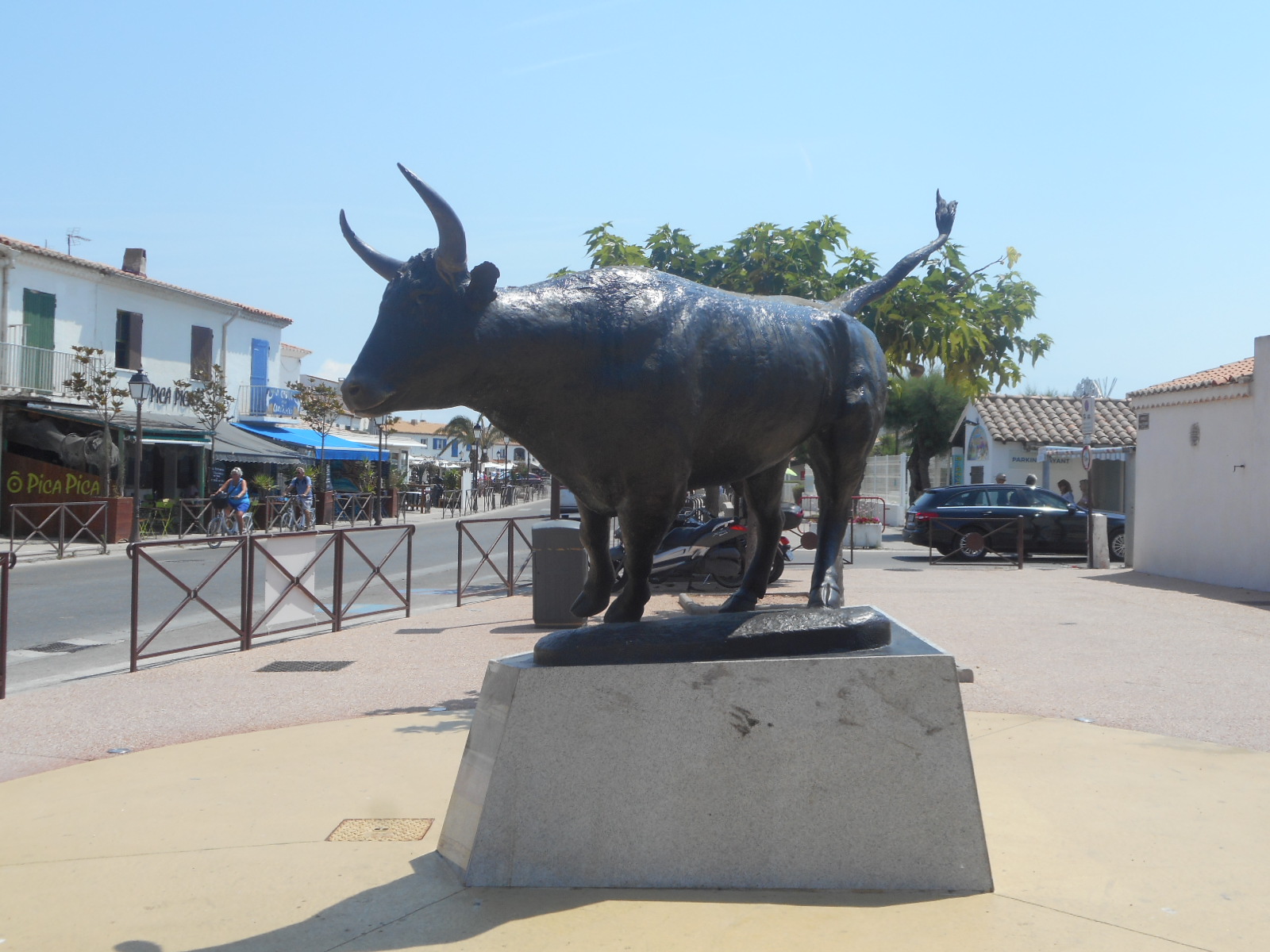
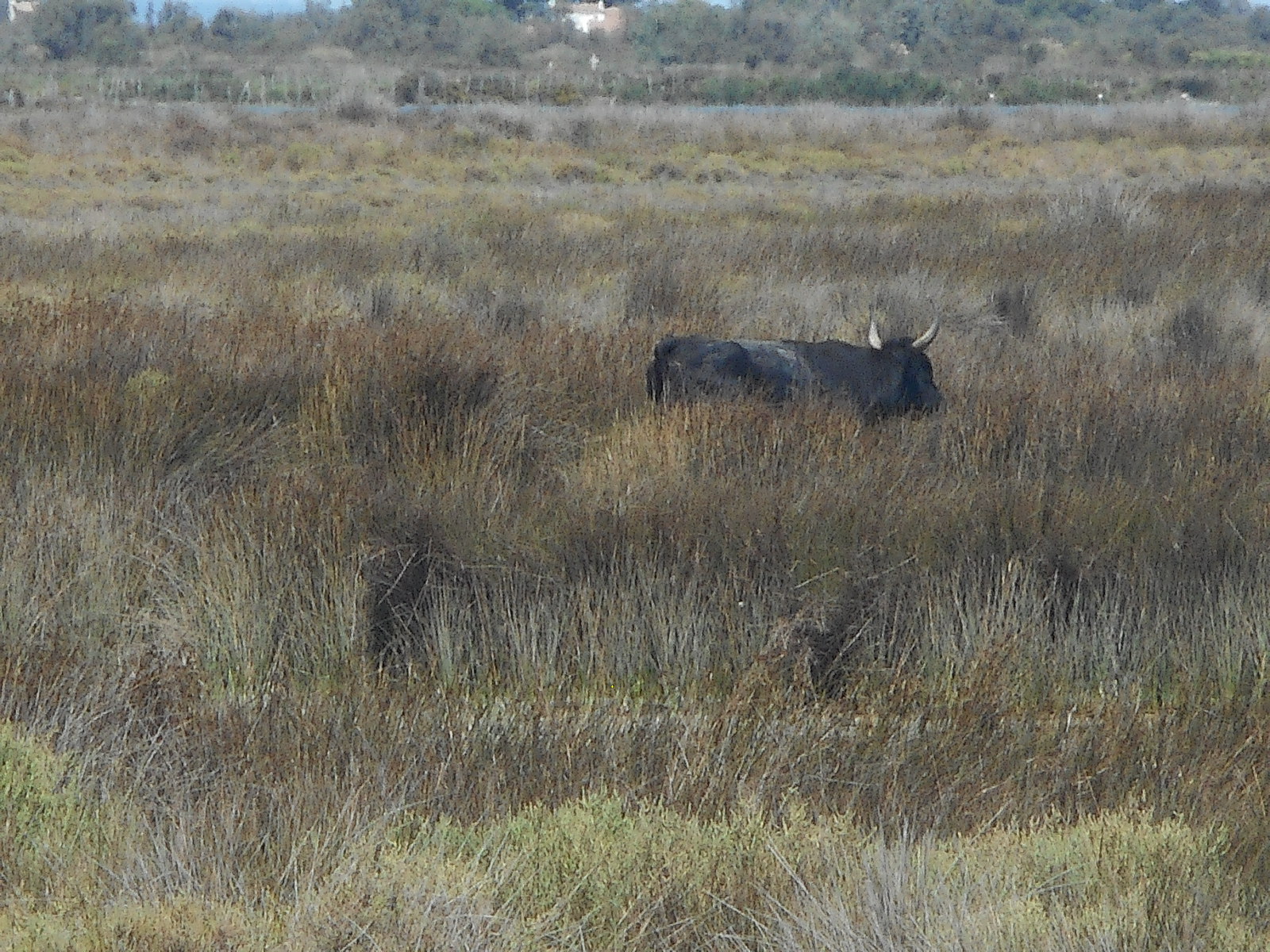
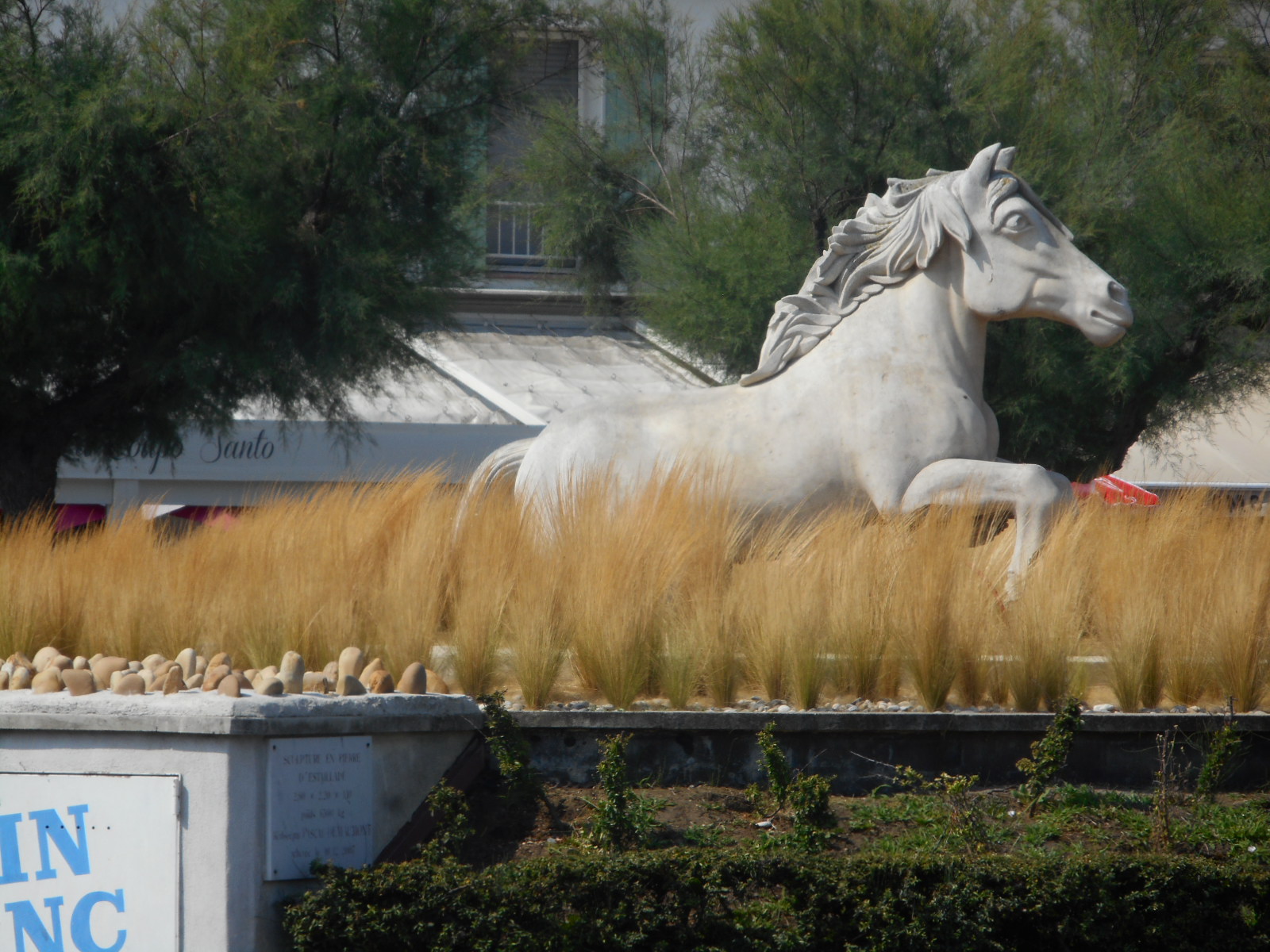
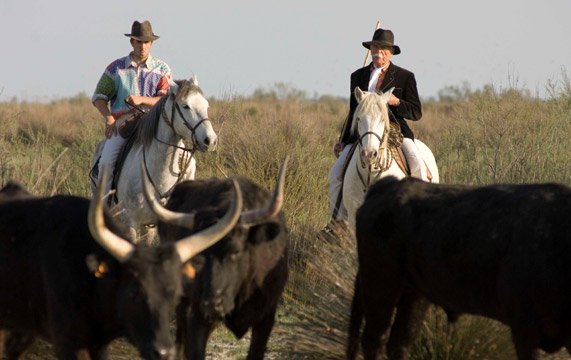
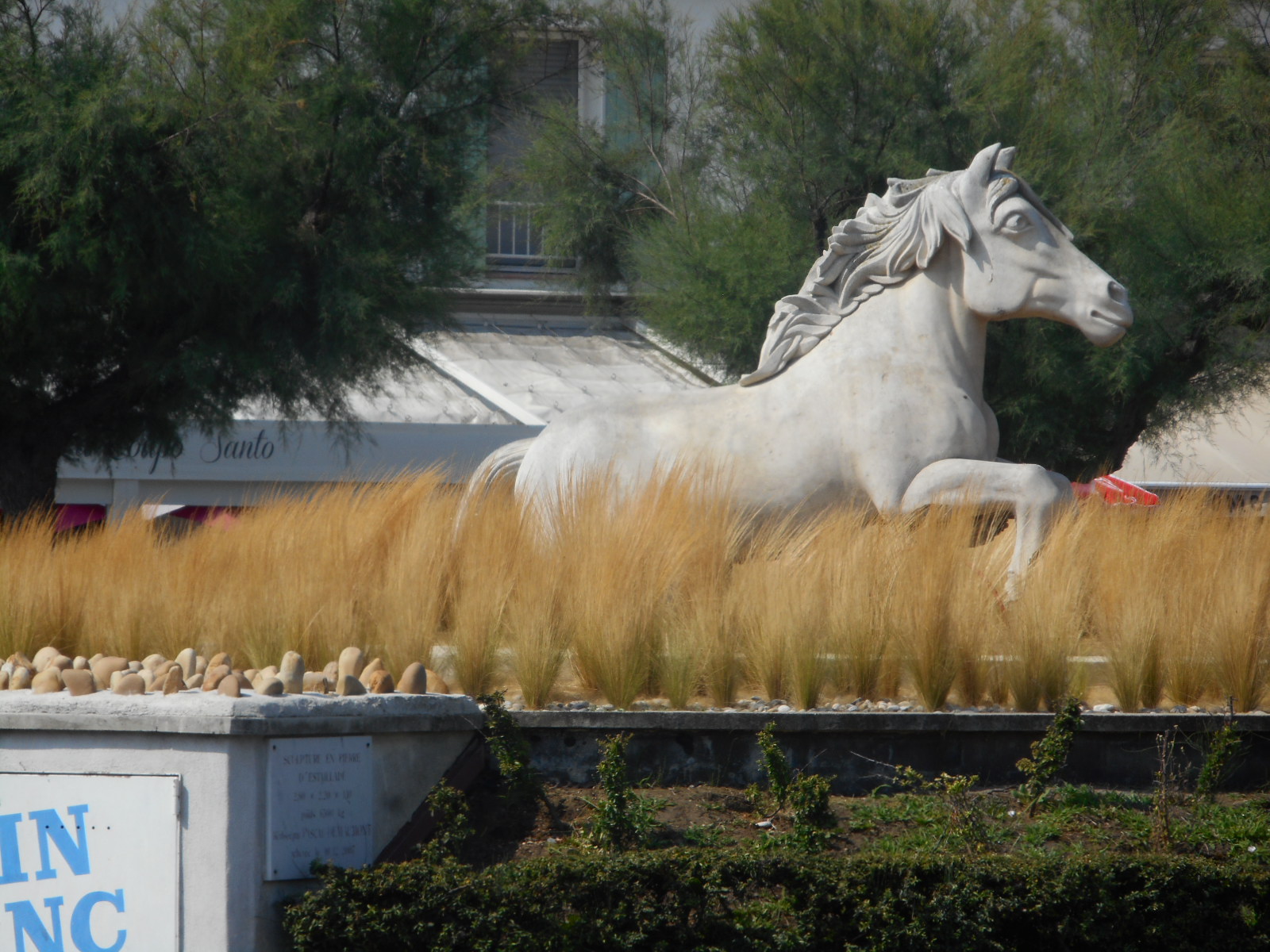
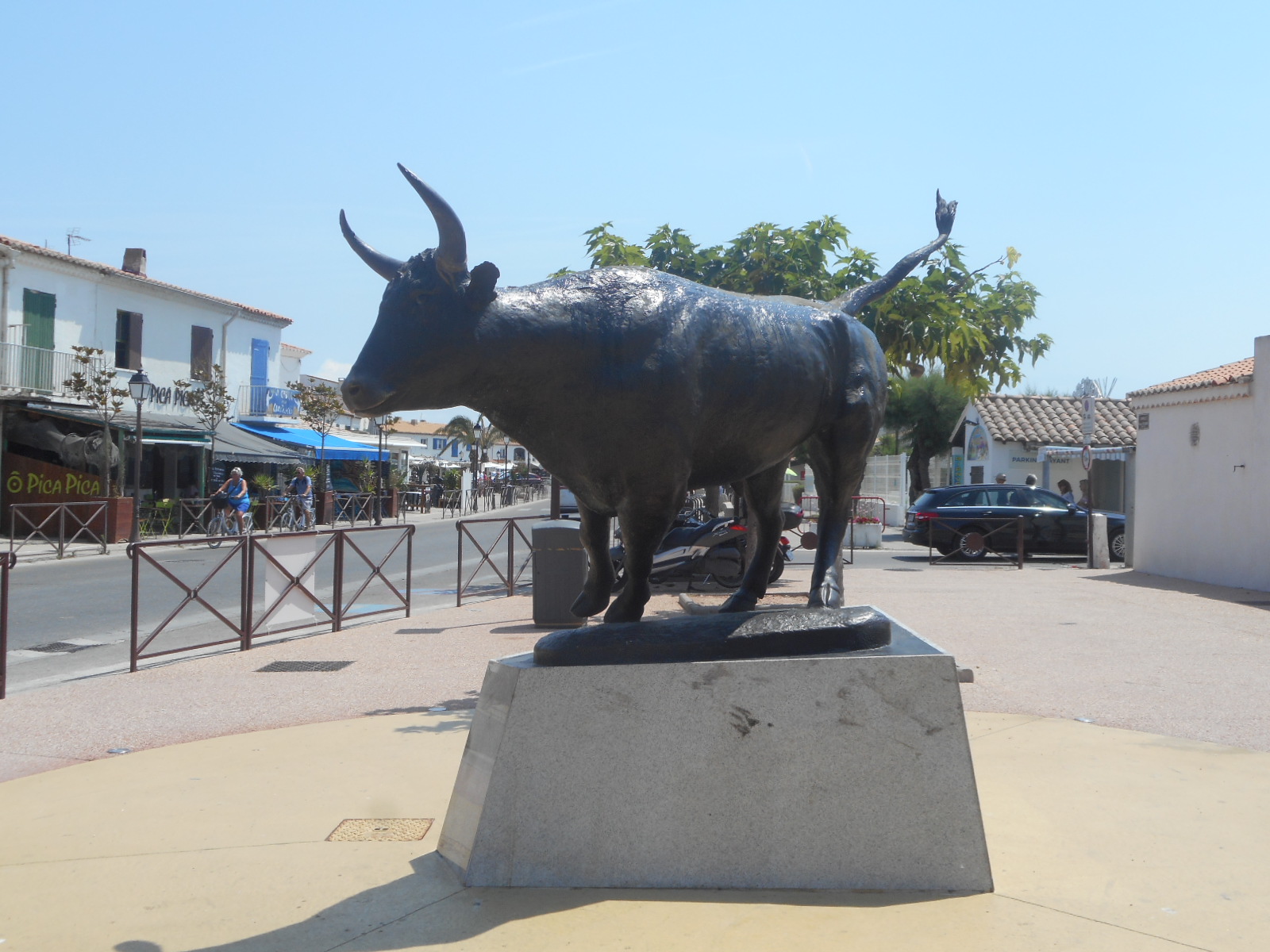
The Camargue is the largest Mediterranean delta after the Nile. It’s famous for rice fields, flamingos, white horses, black bulls and cowboys known as the Camarguaise Gardiens. It’s also a mosquito-infested swamp which one must traverse in order to reach the seaside resort of St Maries de la Mer. It’s like a humid version of Cornwall: one drives across the tedium of Bodmin Moor to arrive at some non-descript joint on the coast where nothing happens until the population has been swelled by 50,000 holiday-makers looking for a beach and some sea-food.

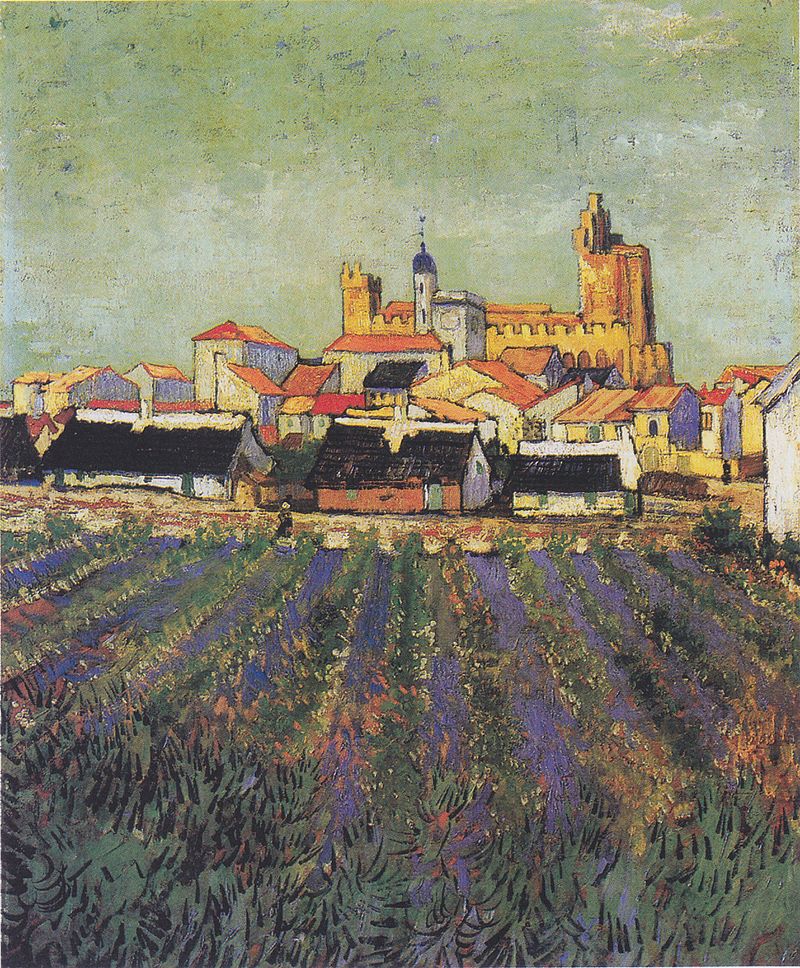
And like Cornwall, it’s off the map. It’s a veritable wasteland that’s on the road to nowhere. Except that artists in their hordes went to Kernow and invented a whole genre of painting. Likewise, St Maries de la Mer has been a magnet for the artistic elite. Hemingway was here as was Picasso. Van Gogh manged to make the place look attractive and Dylan wrote ‘One More cup of Coffee’ in the town. Et pourquoi? Search me: it’s crammed full of tourist traps selling tat and nothing worth visiting.
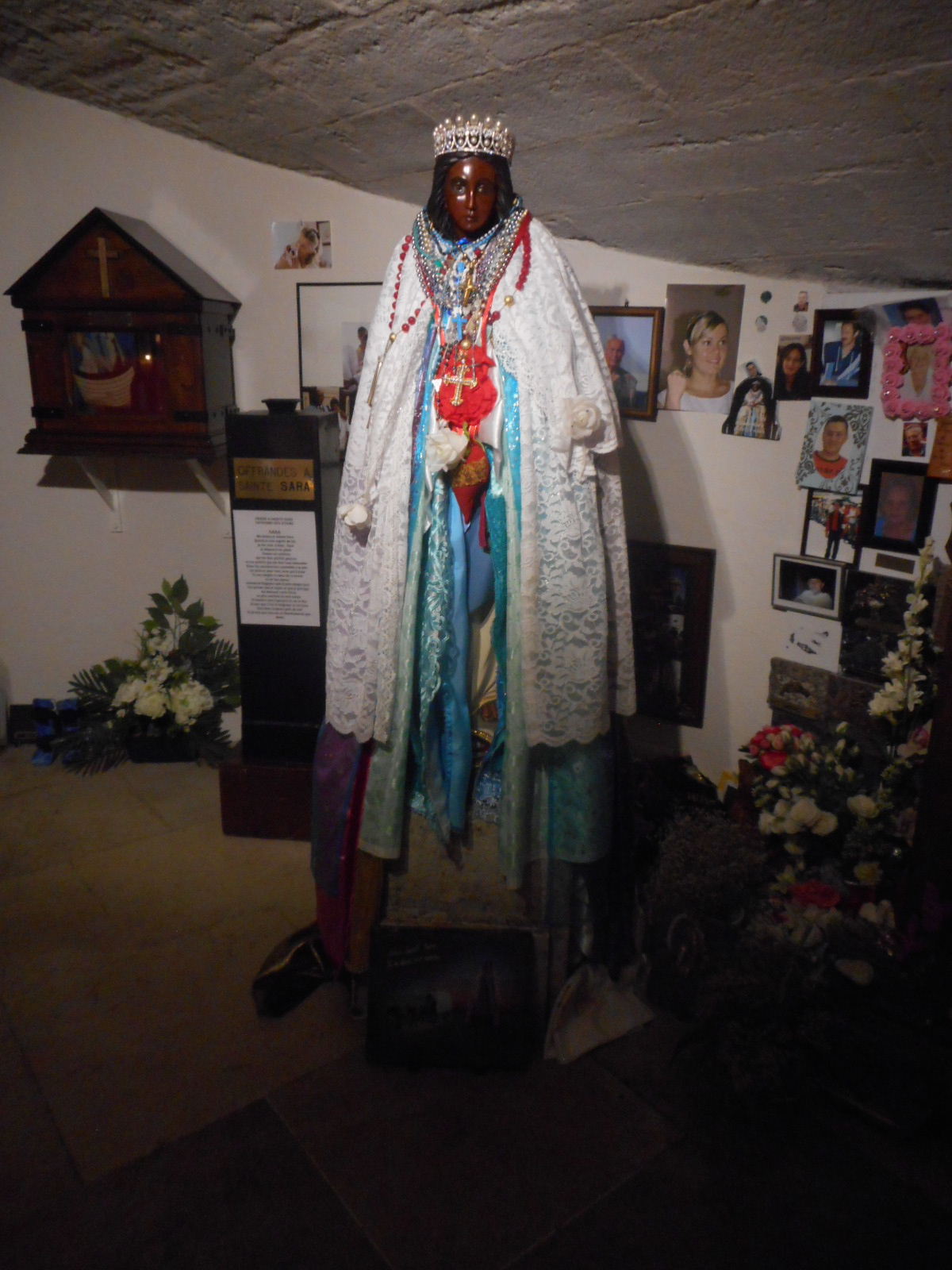
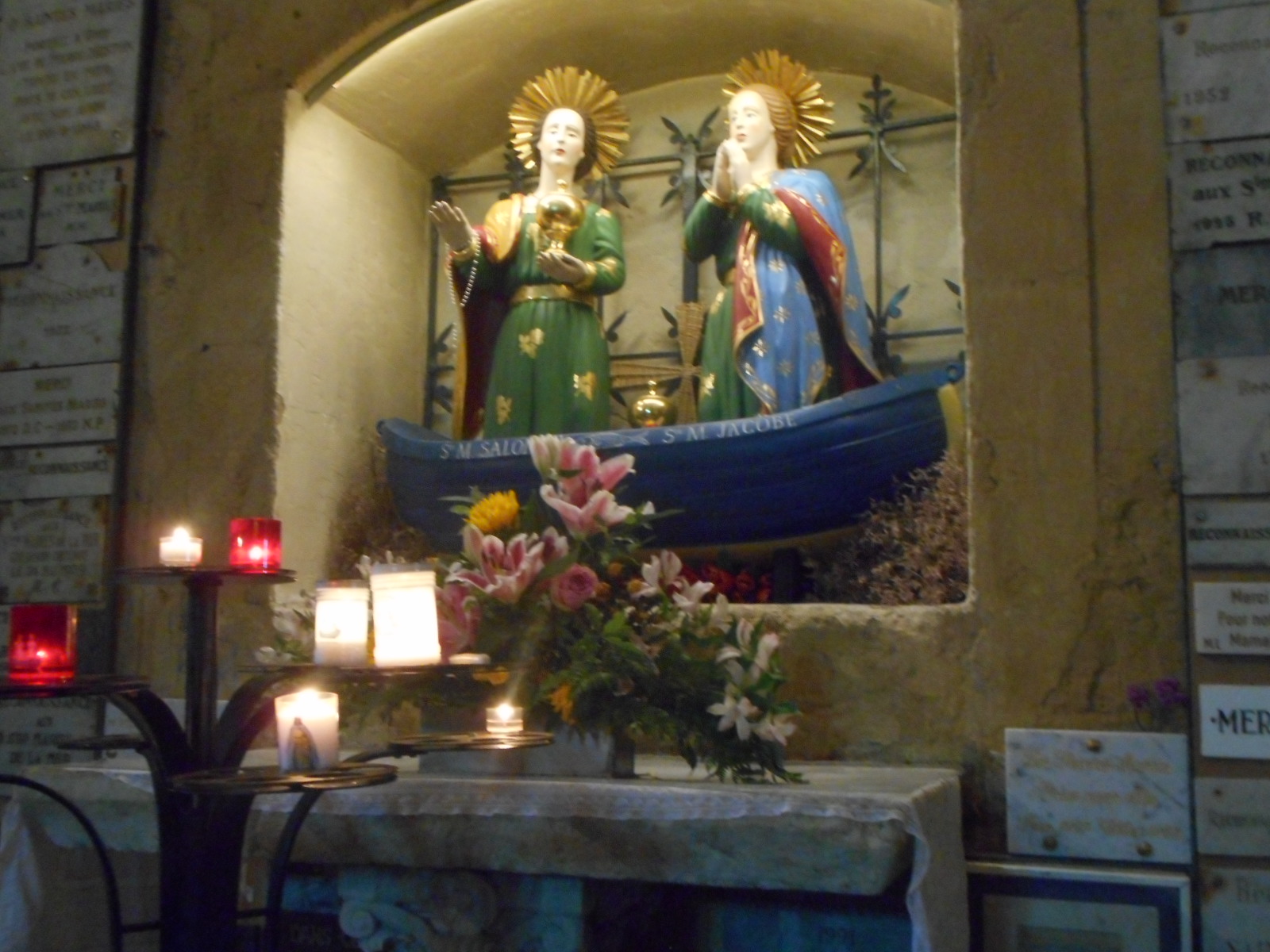
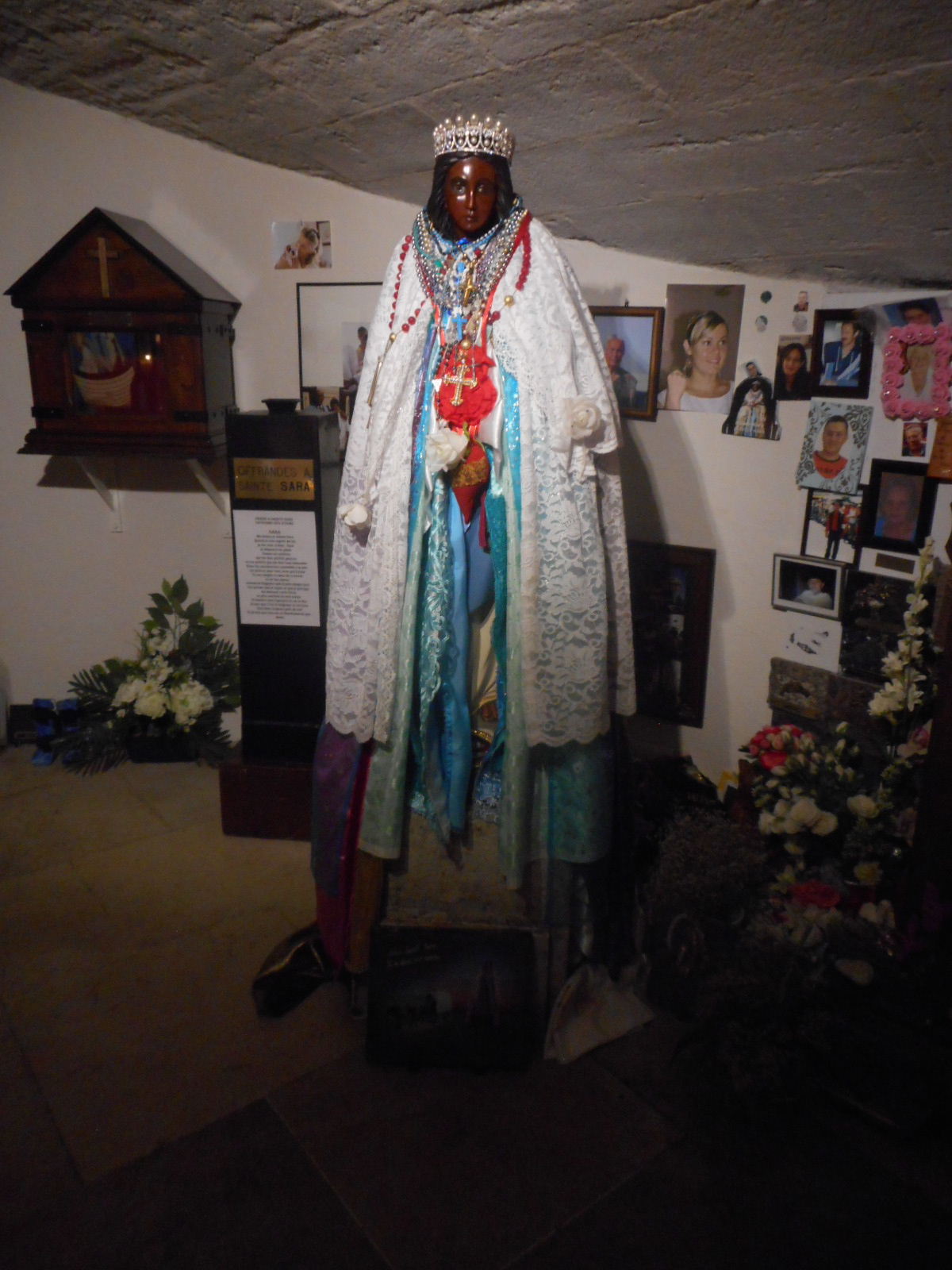
Well, there’s the church. And that’s worth seeing because of the Maries. Weasel readers know all of those stories and although I don’t want to repeat them, it’s hard to write about the place without reference to assorted persons, commonly referred to as ‘the first family of Christianity’. This town used to be called ‘Notre Dame de Ratis’ – our lady of the boat and the place is still famous for the annual pilgrimage of world-wide travellers of gypsy origin who come to worship St Sarah. And then there’s Folco de Baroncelli – Marquis of said parish.

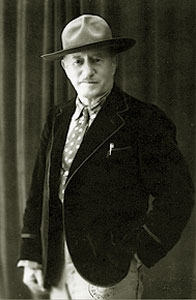
Baroncelli was born into an elite Florentine family in 1869. Unusually, his family spoke Provençal which was considered rather down-market: the language spoken by the poor people. He spent his childhood in Nimes where he developed a love of bulls. Nimes, like Arles, is one of the few places in the area to still follow the Spanish tradition of bull-fighting. And when I say ‘tradition’, I mean killing. But Baroncelli was a fan of the bulls. In 1895, he moved to the Camargue, home of fishermen and ranchers. Re-wind again.

Those famous black bulls were not, originally, an indigenous species. The first attempt to cross-breed Spanish bulls with wild French ones was made as far back as 1869. However, it wasn’t until 1909 that the bull prouvenço was officially recognised, by which time bulls had been moved away from Nimes onto the lower pastures of the Camargue and Baroncelli had also moved south to create the Mandano Santeco, which means ‘holy herd’.


Baroncelli, regarded as something of an unknown hero, lived to promote the region. He was a pal of Frederick Mistral who ‘rediscovered’ the provençal language, for which he was rewarded with the Nobel Prize for Literature. Mistral and Baroncelli started a newspaper called The Aioli with the express intention of promoting all things provençal, especially life in the Camargue. One of Baroncelli’s aims was to gain formal recognition of the Camarguaise cowherds who are latterly known as Gardiens. These days, you can visit any town or village in the South and see the Gardiens riding the white horses which belong to one of the oldest breeds in the world and are the last of the working horses still bred and ridden in France.

You’d be forgiven for thinking their riders had been admired for ever but it was only in 1909 that the Nacioun Gardiano was established to defend the traditions of the Camargue. And who was the inspiration for all of this? Bring on the Americans. Inspired by the history of the Wild West, Baroncelli met Buffalo Bill who had brought his travelling circus to Nimes. Bill journeyed down to the Camargue along with his ponies, his native Indians and a film crew which gave the place an international credo.

Baroncelli codified the activities of the Gardians thereby conferring an hierarchy onto the former cowherds. He introduced the Camargue horse races and, ever a promoter of minority rights, won the gypsies, who’d been travelling to the area since 1448 from all over Europe, the right to worship St Sarah publicly. Finally, he commissioned Hermann Paul to design what we now recognise as the Camarguaise Cross, inaugurated in 1926, which embodies faith hope and charity and completes the stories of the Camargue by combining the Gardiens, the fishermen and the Mairies.

Thus, my friend who tells me the Camargue is an invention is not wrong, for Baroncelli created the social identity of a swampland. Sadly, the end was not a happy one. In 1942, his farmhouse was requisitioned by the German army. In 1944, they destroyed it when they left the country. The ashes of the inventor of the Camargue were eventually laid to rest on the remains of the place he loved.

Effects of

Not so many years ago, I passed the last six weeks of the season in the South. At every turn, I seemed thwarted by unexpected changes to plans that had been made months in advance and, eventually and unexpectedly, with nowhere else to turn, found myself ensconced in a small outhouse – euphemistically described as a chalet – adjoined to the Hotel Villa Glanum just outside St Remy. This was a time when the heat of high summer had dropped to a bearable heat but still warm enough to warrant a long aperitif at the Bar-Tabac des Alpilles. A time when the cicadas had run out of things to chatter about but, late-in-the-day tourists, thinking I was a bronzed local, still remained to ask me directions to who knows where.

The market, unspoiled by the hordes, managed to offer exceedingly realistic prices on goods they wished to rid themselves of. A time of which, against all odds, I recall feeling solidly a knowing part of something elusively called ‘The South’. And having experienced all this, the opportunity to visit again in early September was too tempting to turn down. Who wants crowds?

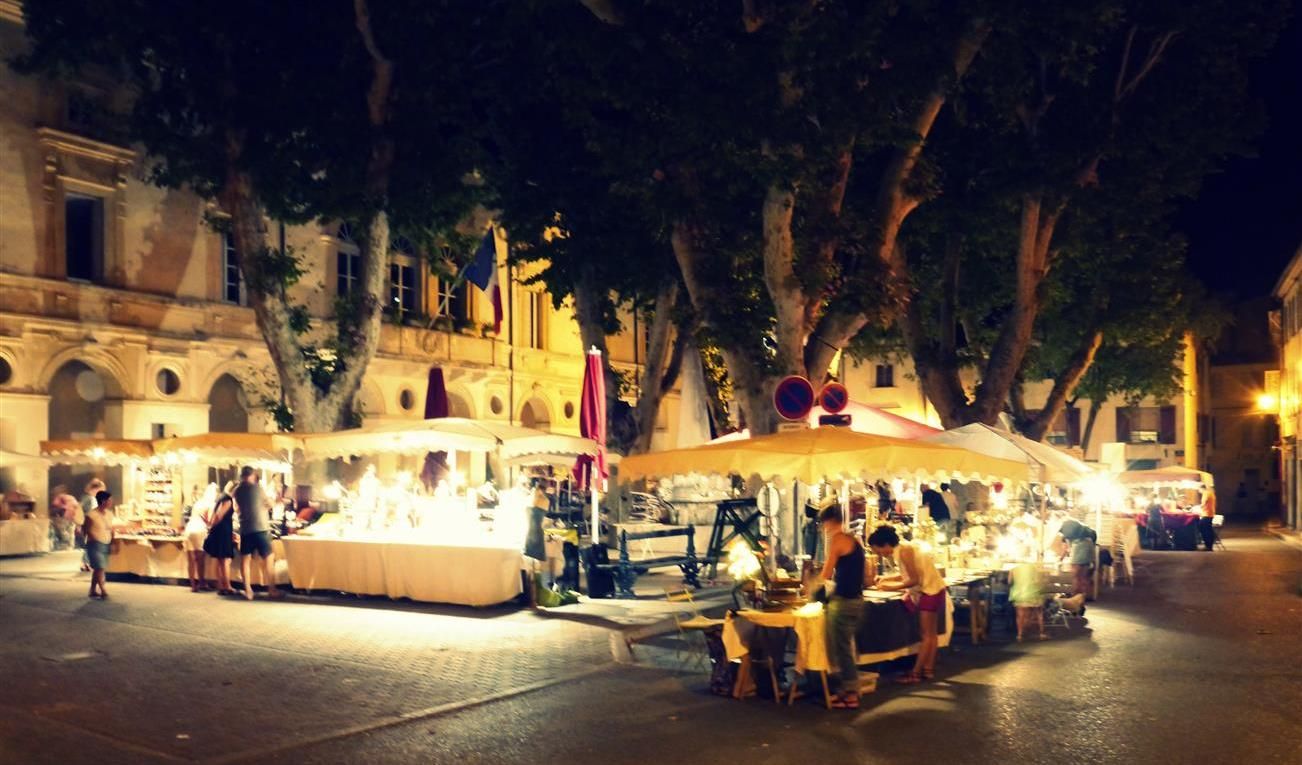
A year after Brexit, things have changed. Perhaps I’m making correlations where none exist but the place is very quiet. Their economy is, once again, booming but at whom is it directed? Not the Brits, I fear, for we are few and far between and our economy lessens our spending power by the day. The Tuesday evening artisanal market is as quiet as the cicadas who have given up their notorious provençal accompaniment. There’s nothing worth wasting sacred money on; the days of spontaneous spending have long since passed.

On the other hand, a lack of holiday-makers lends an air of latent authenticity to the place. One is able to envisage a time when the not-so-demanding travelling classes graced the area with their presence. Almost a time to feel smug in knowing one can eat and make unexpected purchases at bargain prices. There’s always a sense of the South. The trick is in discerning what this means.

Passengers

What is regarded as an irritation in Lyons is nothing short of a curse by the time it arrives in Avignon. Thus, in our increasingly noisy prop plane, we are blown into town by the force of the mistral. Having descended dramatically, many miles north of our destination, we fly alongside the mighty Rhône as if we might be a lonely WW2 bomber, returning from a bridge bombing sortie, in an attempt to reach HQ before the enemy. In this instance, the windy enemy, hot on our tail, was also by our side. The pilot did his very best but, nonetheless, we arrived buffeted and shaky; feeling the need to make post-hysterical comments with folk we’ve never seen before and will never meet again in order to disguise the fact that we’d just shared a near-death experience.

The planes of yesteryear carried no such leisure-seeking passengers as, directed by lone pilots, they flew up the Rhône looking for trouble. On 19 August, 1944, an allied bomber left the river and flew along the railway track until he arrived at the station in Pierrelatte, where he deployed bombs and grapeshot to destroy what he had mistaken for a German military train.

This was the infamous Ghost Train which had begun its journey to Dachau, from the south-west, some weeks previously. To begin with, there were 900 doomed souls aboard. Naturally, these mostly comprised those unfortunate enough to have been born into Jewish homes. However, other passengers included Italian anti-fascists and French communists with the entire cohort emanating from 23 countries. Since the inception of the journey, the train had been stopped and its route reorganised many times. On the way, its sorry cargo, having had their space-taking dead friends and relatives disposed of at various points, had been fed by both the Red Cross and the Quakers and stopped by a squadron of allies at Remoulins; all of which begs obvious questions regarding the continuation of its relentless course northwards.

By the time the Ghost Train arrived at Pierrelatte most of those aboard had been entombed in the carriages for 10 days. Their number now totalled 700. When the bombing and grapeshot began, the German soldiers ran away. Those aboard, still in possession of clothes of a recognisable colour, contrived a makeshift tricolour to wave at the pilot but to no avail – they were not seen.

If you choose to research Pierrelatte today, you’ll find numerous references to the Gustave Jaume School and nothing to explain the origin of its eponymous title. On 19 August, 1944, Doctor Gustave Jaume became a hero. Alerted to the carnage at the train station, he arrived to treat and safely transport the wounded. With his help, and that of friends in La Resistance, those deportees who were able, were accompanied to the safety of the Spanish border, via Nimes.

As with so much in France, few are aware of events at Pierrelatte. If you go to the train station and look carefully, you’ll find a small plaque on the exterior wall offering a limited account of history. We also know that on that infamous date, the sun was oppressively hot. No-one knows whether the mistral was blowing along the Rhône.
Making mother happy

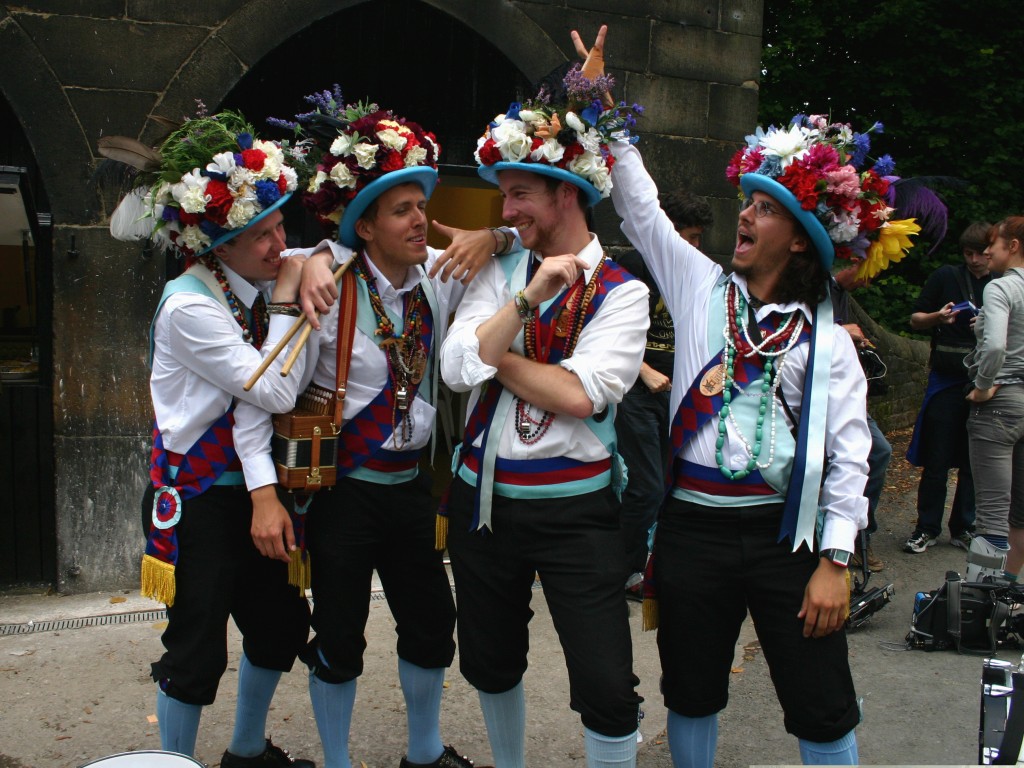
We’re off to the Eighteenth Century Street fair. Set in the heart of Dorset, in a village boasting a desirable private educational stronghold that looks like a castle – Milton Abbey School – and thirty six identical thatched cottages, there will be plants and craft stalls and Morris Dancing and all sorts of rural activities and entertainments. Except that it’s July and it’s monsoon season.
Shall we, shan’t we, will you join the dance? Well, in a word, no. It might brighten up? You know it won’t but I’ll go if you want to. Now comes that other polite familial dance. Who really wants to go? I make a move – I’m not that keen on getting wet but mum will be disappointed. Dad joins in, even though he’s not going: ‘your mum doesn’t really want to go’.

Plan B.

Me: let’s go to all the shops that dad won’t take you to.

Mum: done.

First stop is B & M Bargains. It’s a risk because they don’t normally allow entry to folk devoid of tattoos but their fat balls are super cheap as is their weed-killer. And it turns out that the price of Vanish falls far below that of comparable establishments. Well, it would if there was anything comparable. Frankly, I don’t know how people exist without Vanish. Hanging my washing on someone else’s line once, the man of the house asked his wife why my clothes were whiter than hers. If you knew the man in question, you’d be surprised that he’d even noticed. Especially as he was French. Well, like other sad Brits who take their tea-bags abroad, I’m seldom seen in foreign parts without a handy slab of Vanish soap.

With a basket of goodies, I lose mother in B&M Bargains but find her again clutching a large bottle of Lenor – mango scented – and head for the checkout where we receive excellent service due to our ability to say please and thank-you.

After this, we head off for the new tip shop – Renaissance. Not that long ago, there was a shed at the local tip in which Linda sold discarded goods for pennies. She did so well that they gave her an old garage on the business estate for a couple of years with even more unwanted things. Here’s the rub: Linda is an undiscovered interior decorator. She dressed that garage as though it was a professional emporium for the shabby chic seekers and she sold things for next to nothing. All those upscaling, eBay selling craft types swarmed the place and in not being greedy and selling goods for a few pounds she made the council a small and unexpected fortune. Now, they’ve given her a proper shop which is huge: materials, ornaments, furniture – you name it …

I say to Linda, do you remember when you were in a shed down the tip? Now look – you have your own department store. Linda replies sadly, yes, life was so undemanding in that shed. I made too much money for them.

Boot full, we’re off to Home Sense which is a sort of satellite of TK Max. I lose mother but end up with a collection of goodies. But mum, when I locate her, is hungry, and so am I. Earlier, we might have envisaged ourselves eating tasty local produce in the rain drenched Dorset interior. Now, we head off to Sainsburys for cottage pie and egg and chips. The rain is pouring down and we congratulate ourselves on not having ventured further afield. We have a look at the sale and mum purchases a cauliflower before heading back for a cup of tea. Sorry Milton Abbas but we had a lovely time.

A postcard from the seaside

Hoorah! In this, the final card I’m sending from France, you’ll be pleased to learn that we’re finally off to the seaside. It was a close run thing: first he wanted to go, then he didn’t, but now he wants to see the Camargue so, Saints Marie de la Mer, here we come. Of course, there’s some academic, rambling, preambling debate regarding the positioning of the apostrophe on the word ‘Maries’ to get out of the way before proceedings can commence. I point out that it’s the ‘saintes’ that are plural and not the ‘maries’; something I’m happy to do since he recently observed that I put the question mark in the wrong place in my literary attempts. What fun we two share.

There’s also another minor contretemps when, even before we’ve left Arles, – yes, we’re there again – the navigator is so busy talking, probably about the differences between English English and what he dares to call American English, that he fails to direct me to the relevant turn-off and we’re trapped on the auto-route to Nimes. He’s desperate to visit Nimes but I know his game and I find a hasty exit towards the swampland that is the Camargue.

I’ve already warned him about the mosquitoes and the fact that we’ll be safe as long as we’re out of the place before five o clock. Before then, there are flamingos and bulls and white horses to look for. Once, under some considerable pressure, I went horse riding in the Camargue with Barbara. Actually, the full Trowbridge contingent was present, along with my son and a pal of his. In the event, people kept dropping out, preferring, for some inexplicable reason, to sit in the bar at the stables. I asked for a horse that was on tranquilisers and some old nag was dragged out of the abattoir for me to sit on to the huge amusement of everyone, including the cowboys. How they roared. Well, if I can make someone happy … it was one of the best things I’ve ever done. I ask Russell if he fancies a spot of pony trekking. He looks as if he’s going to be ill and doesn’t even bother to answer me.

To my knowledge, there are no cloisters and no Roman ruins in Saintes Marie de la Mer. There is, however, a church and as we enter the town, I remark on the people on the church roof. What’s happening there then, I demand. He seems a bit perturbed but there’s no time to worry about it as I’ve spotted that it’s Market Day. We’re going to the market, I state with some force. He capitulates and I wander around happily examining the fridge magnets of the Maries. He’s covered the ground in about ten seconds and is heading for the church. I don’t mind going to this church. For a start, I’ve never been before. Further, this is the church built to commemorate the arrival of the Maries, and allegedly seventy others belonging to the entourage of Jesus, on the shores of Provence. However, before we can get inside, there’s an altercation.

Now, I don’t think Russell will be offended if I mention men’s jobs. Mostly, I like to think of myself as gender neutral when it comes to taking one’s turn. Nonetheless, on this holiday, there have been a few occasions when I’ve informed him he’ll have to deal with something or other because ‘it’s a man’s job’. In my lexicon, this refers to the repair of something that’s broken that I can’t be arsed to deal with. The first time it happened – probably a broken corkscrew – he said he’d never undertaken a ‘man’s job’ in his life. Well, you’re sixty now and you’re travelling with me; get over it. Anyway, outside the church, I was accosted by a particularly vicious looking gypsy who pinned a brooch of St Sarah on my dress which seemed immovable. Try as I might, I couldn’t remove the bloody thing. Russell moved forward, exhibiting a surprising display of macho threat, and she immediately tore off the emblem and scurried away. I don’t know which of us was the most embarrassed.

The church was fabulous. Wait, did I just say that? Icons to the left, icons to the right. A fantastic display of paintings that folk had presented over the centuries with the Maries in a floating boat saving the day. And downstairs, a full-sized model of St Sarah who’s the patron saint of gypsies. I loved it all so much that I was happy to accompany him up to the roof.


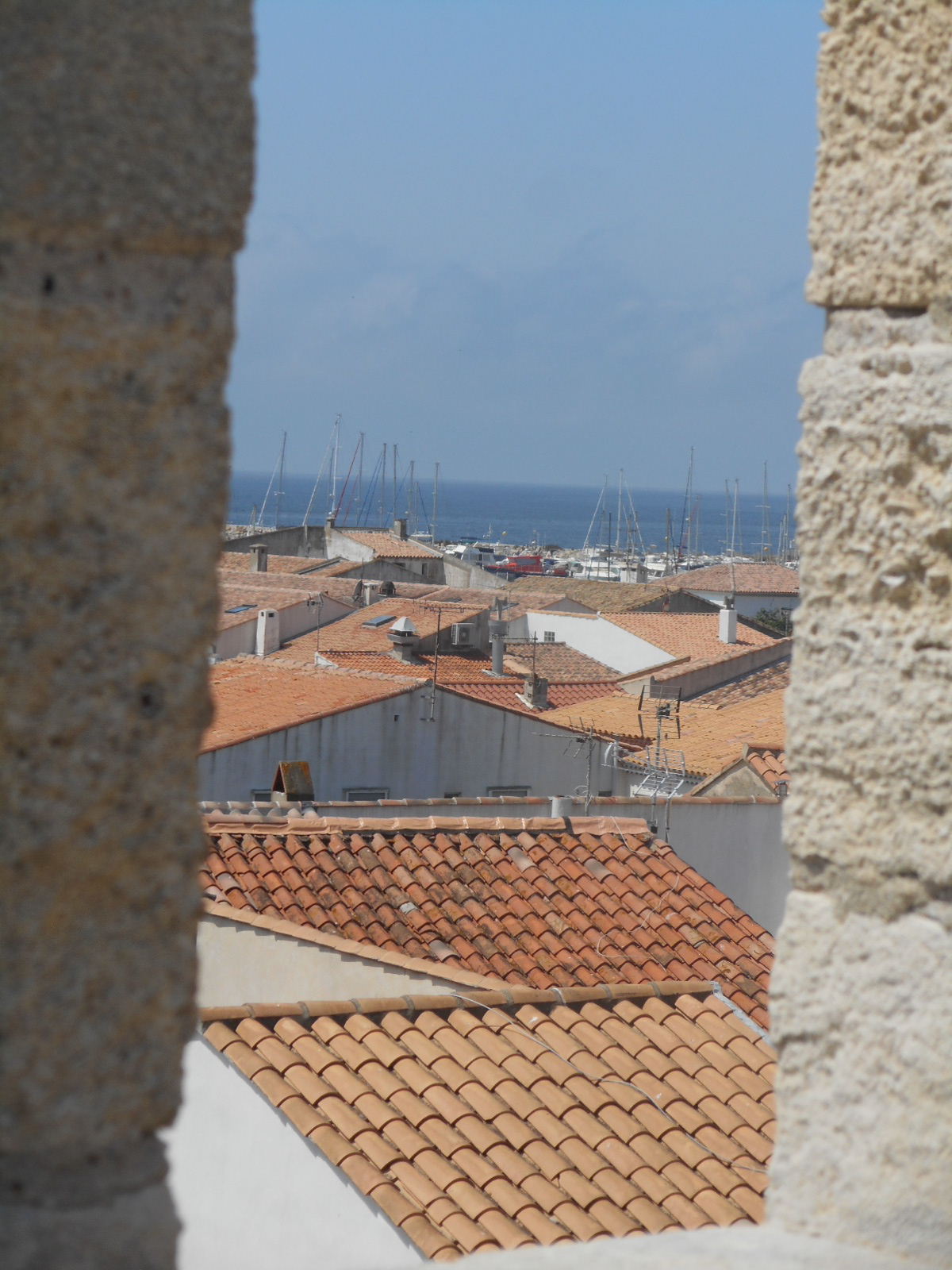
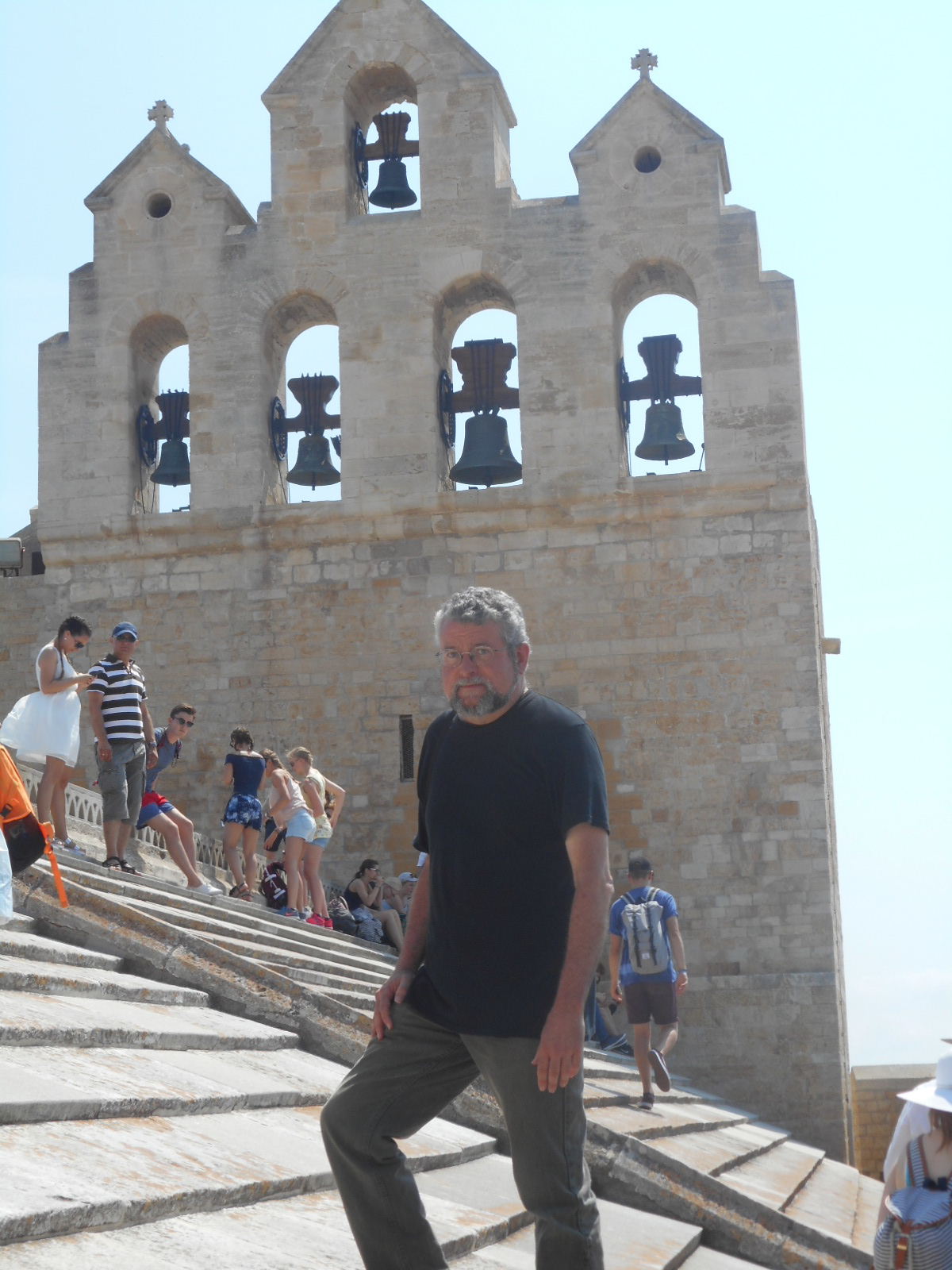
Pardon? I don’t know how this happened. One minute I’d parted with three euro, the next, I was overlooking the sea and the town. I took a snap of him and he took a snap of me. I sat down and watched as he slithered over the tiles. Then, he cleared off and I realised that I had to crawl the length of the roof alone in order to get back down again. I think this was the most upset I’d been with him on the whole holiday. I was rewarded with an absolutely superb lunch of seafood and pasta – possibly the best meal I ate in the whole two weeks. We were the only tourists in the joint which was full of French workmen. Even the chef came out to see whether we’d enjoyed our food. Russell – you’re forgiven.

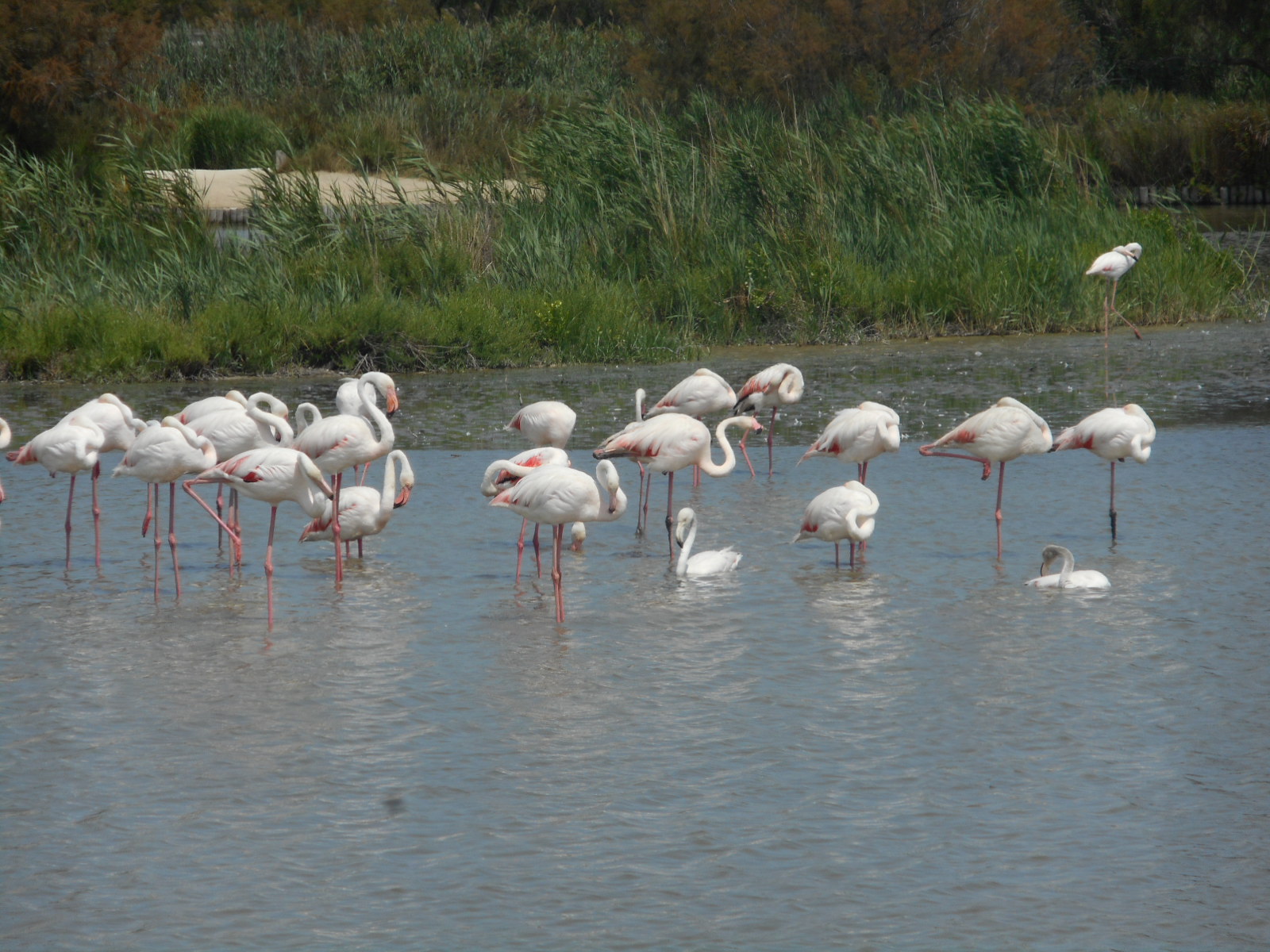
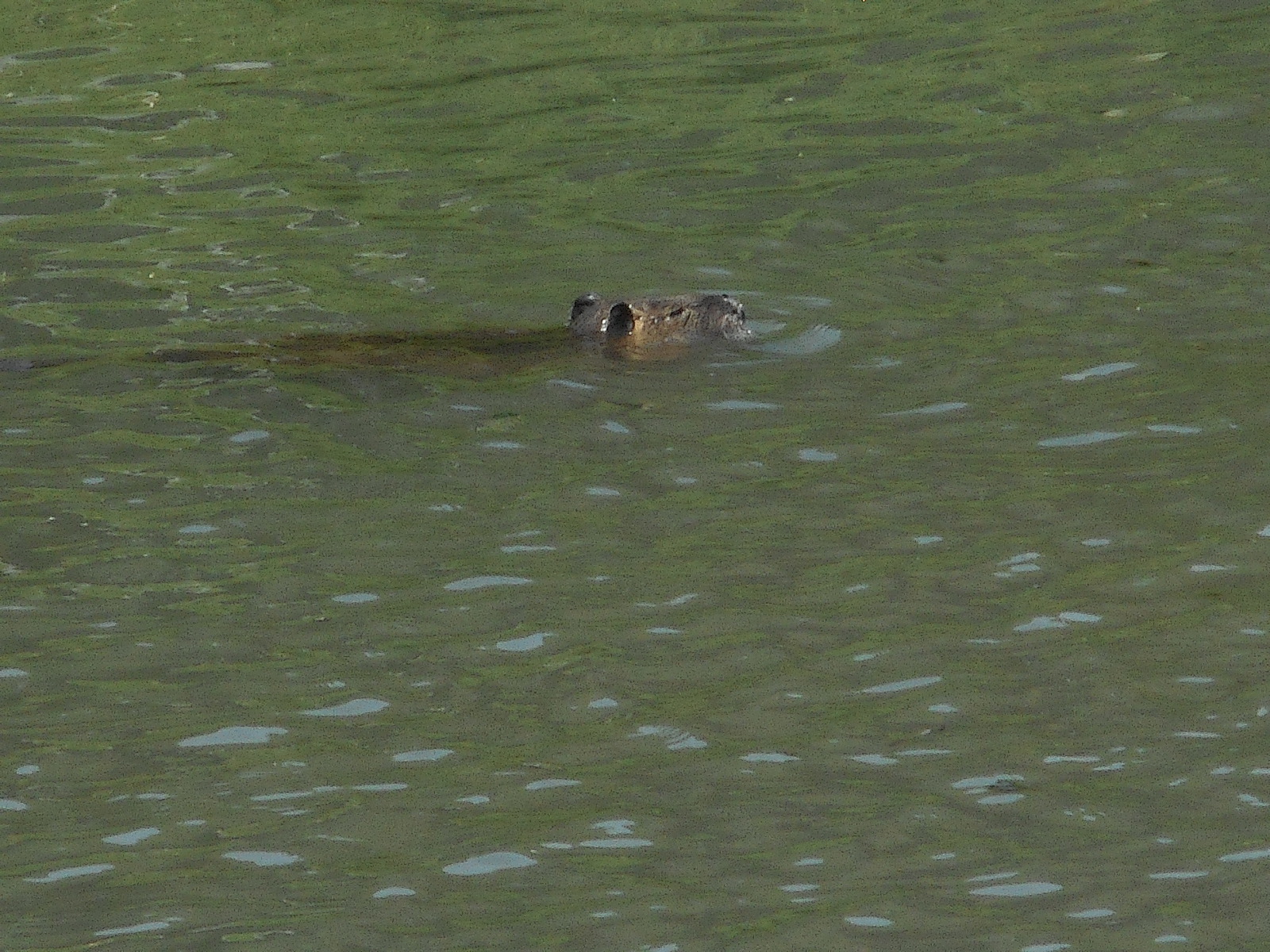
On the way back, there was an opportunity to visit a nature reserve. I sort of wanted to and kind of didn’t: I was so hot and, yet again, full of molluscs. It was an absolute treat – flamingos and storks and egrets and, the best thing ever,

the ragondin. By the end of this day, we weren’t in the best of spirits having experienced way too much sun. But a dip in the pool and yet another bottle of the pink stuff, and all is well with the world.


I’m not doing any more of these postcards. But if you think our holiday was not what it might have been, I’d like to put you right. We are the original ‘odd couple’ but we had fun. We danced around each other a bit but I never wanted to be alone, nor wished for alternate company. It was a joy. (He doesn’t smile much).


A postcard from the past

There’s an interesting triangle of places to visit just outside St Remy, all within easy walking distance of each other. My American friend is beside himself with anticipation – we’re going to Glanum, a fortified town taken over by the Romans in 27BCE. I park under a tree on the lane that leads to the local sanatorium whereby Russell disembarks to study a pictorial sign which disturbs him greatly. He particularly dislikes the image of a fist clenching a hammer which is about to enter someone’s rear window. I am advised to move the car to somewhere less dangerous. He’ll wait in the shade. To be fair, he has a point: this looks like the very same hammer that smashed the rear window of last year’s hire car. The chauffeur moves the car and trudges back along the sweltering, dusty track to re-join the seasoned passenger.

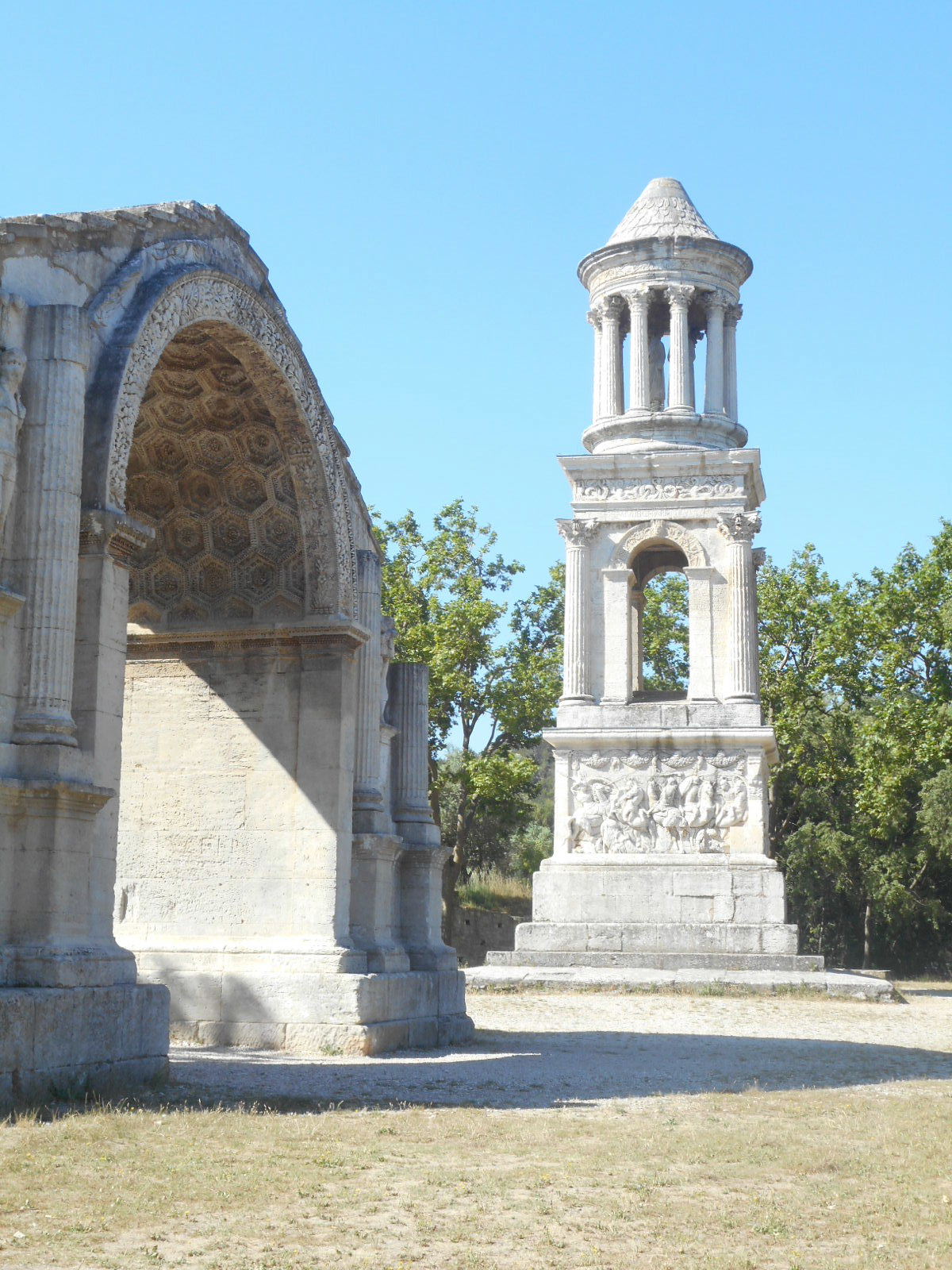
First, we visit the mausoleum and triumphal arch – the latter being the oldest in France – which are situated on the other side of the road. Established Donald followers know this story only too well: local folk wandering up and down the road for eons, never bothering to question why these two antiquities might be thus situated. Poor old Vincent, busy painting views of Les Alpilles from the point where I originally tried to leave the car, without the slightest inkling that there was a whole Roman town between him and the mountains; let alone any idea that folk would soon be passing by with hammers. Even my companion, who knows everything about anything, and whom I’d previously primed like one of Vincent’s blank canvases, was astounded: ‘didn’t they think the arch was the entrance to somewhere?’ Je te l’ai dit mon ami, je te l’ai dit.

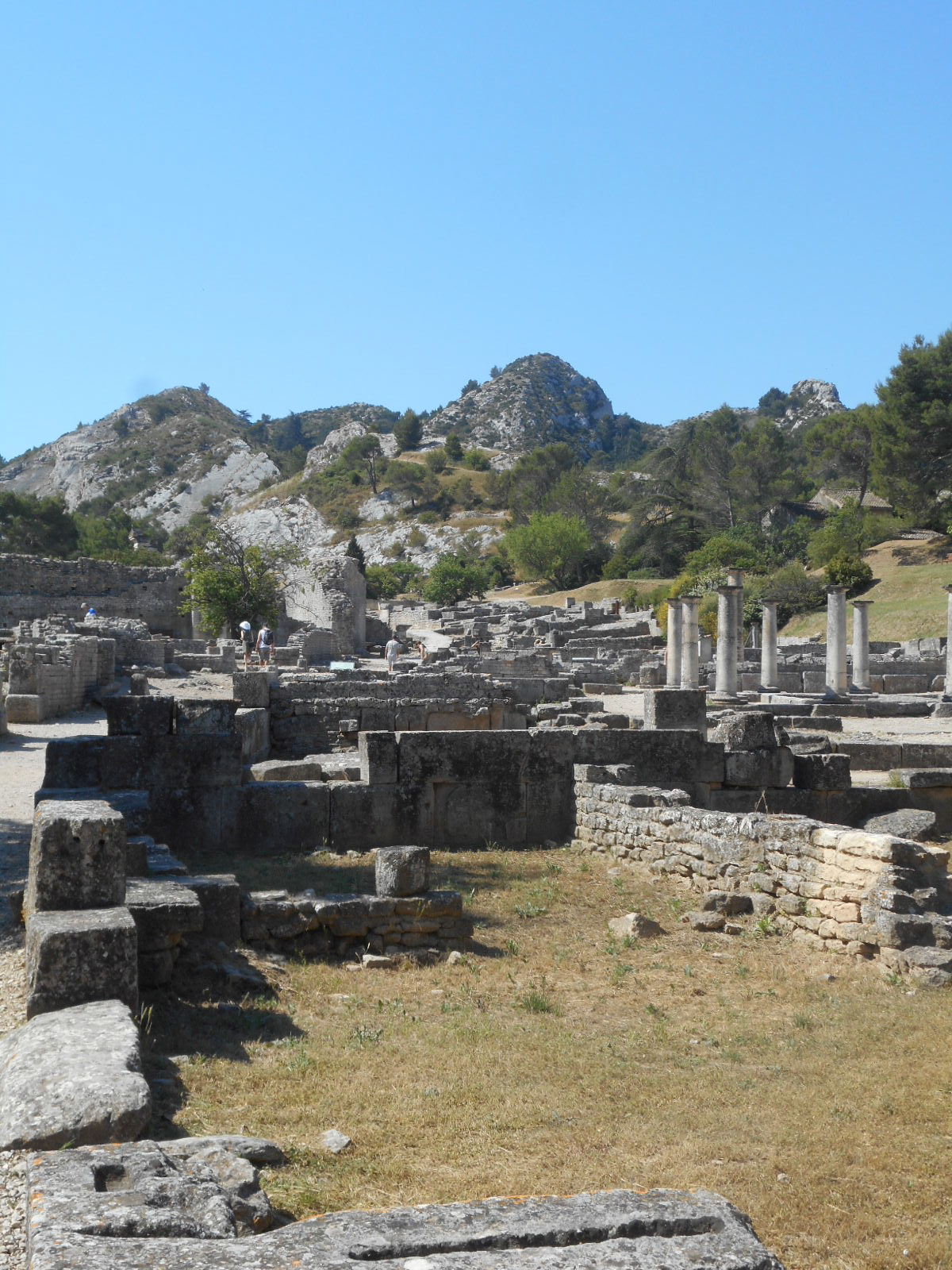
Following my astute advice, Glanum is our next port of call; in this searing heat, I don’t think it will be possible to remain standing in the place much later in the day. As it happens, the woman who collects the tickets we purchased three steps before advises us that the place will close for the remainder of the day at noon. Strange, I think, and think no more. Russell views the ruins and is positively orgasmic. Nice to have it to ourselves, I remark. Just then a crowd of three hundred schoolchildren appear noisily around the corner and he’s off; pushing and shoving his way through the unwelcome intruders. The stride has practically evolved into a sprint. But I thought you were an educationalist. Russell, I screech, you’re missing the well, but he’s gone, leaving only a cloud of Roman dust.


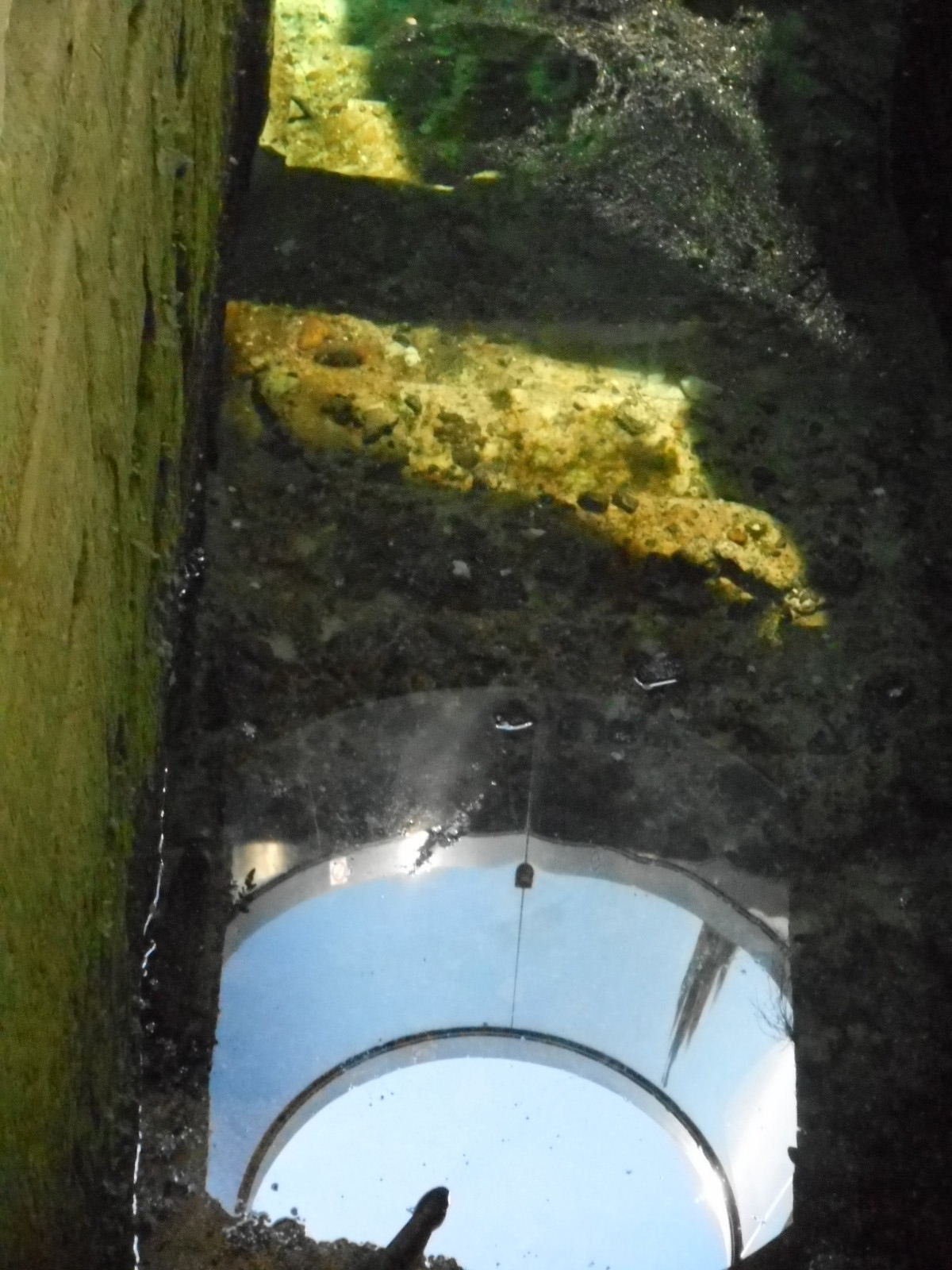
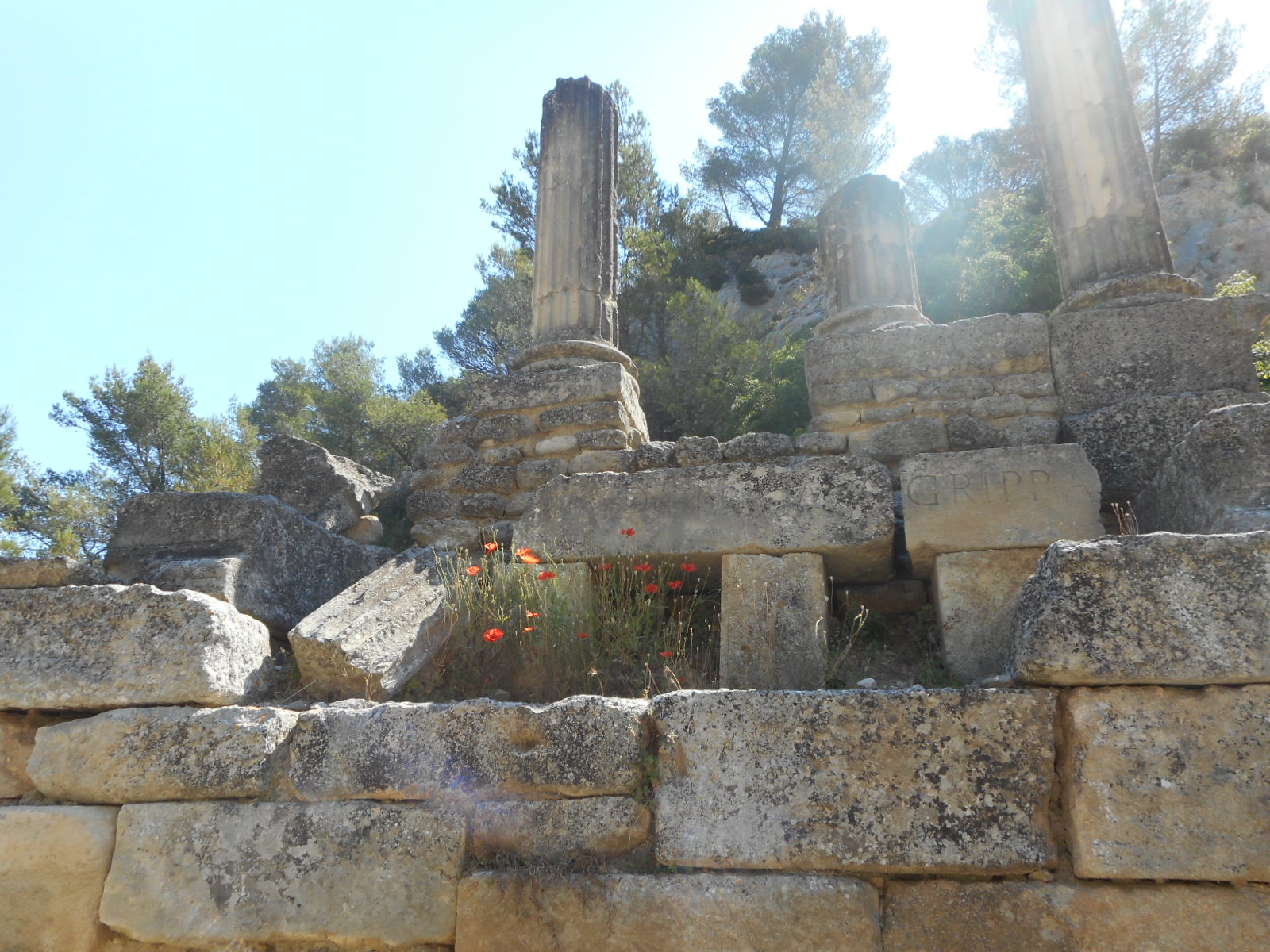
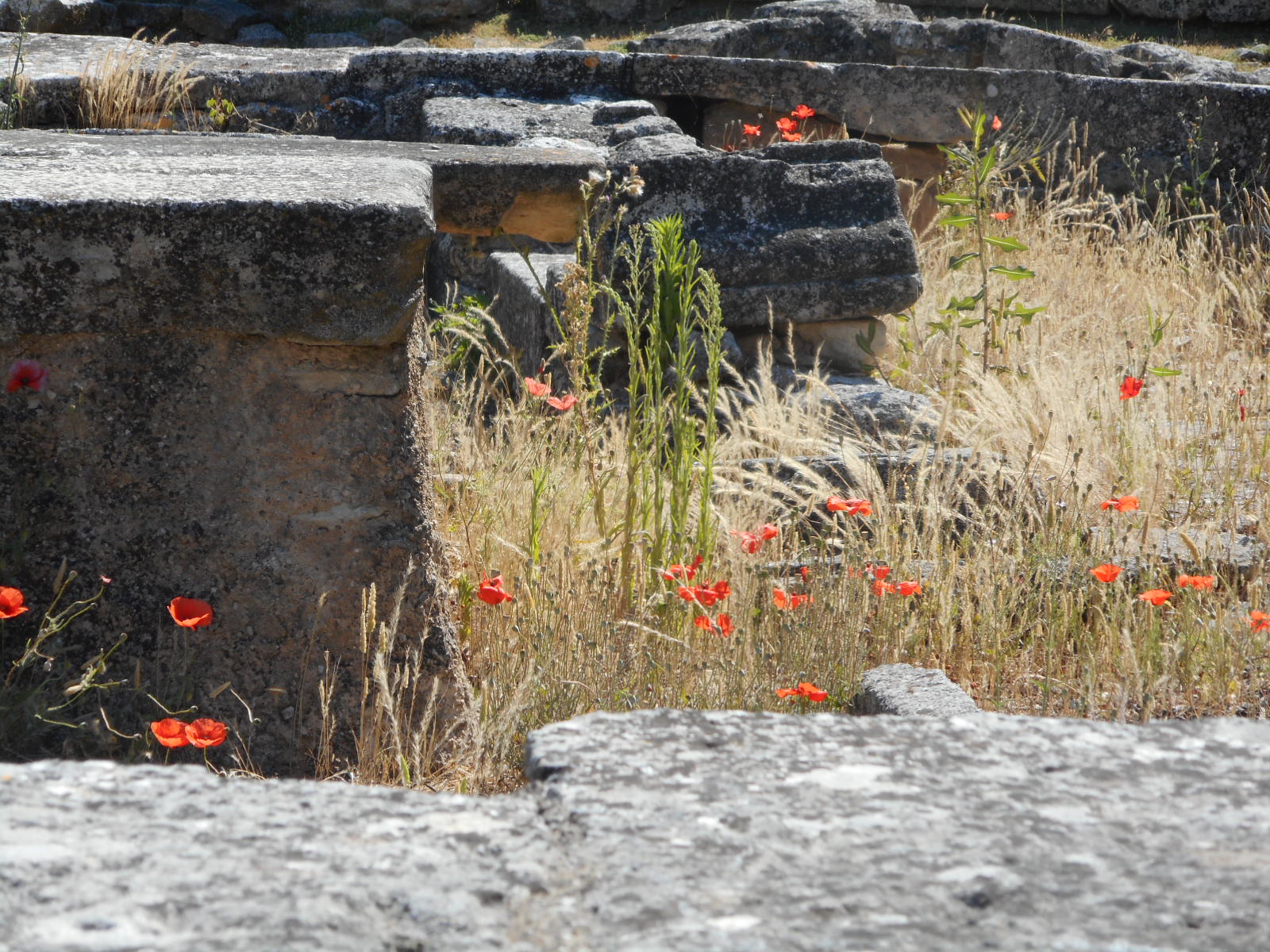
I love this place, probably for all the wrong reasons, and decide to try a few botanical snaps: random poppies juxtaposed against the ancient stones; that type of thing. Sometimes, I catch a fleeting glance of him, knocking children to the ground, but largely he’s lost in the midst of time. Eventually, I catch up with him by the sacred spring where he’s muttering about sewers. Then he’s off up the hill and I’m gasping for breath in his wake. Finally, we get back to the entrance to find the place crawling with gendarmes and a variety of police vehicles. Do you think there’s been a murder, I ask excitedly. He has lunch on his mind and, as usual, no interest in the quotidian. These academics are clever types but I sometimes feel a whole layer of life passes them by. Me, I’m just plain nosey and have to ask someone what’s occurring. A crime of passion, apparently. They’re filming the one and only episode of NCIS St Remy. Lovely.

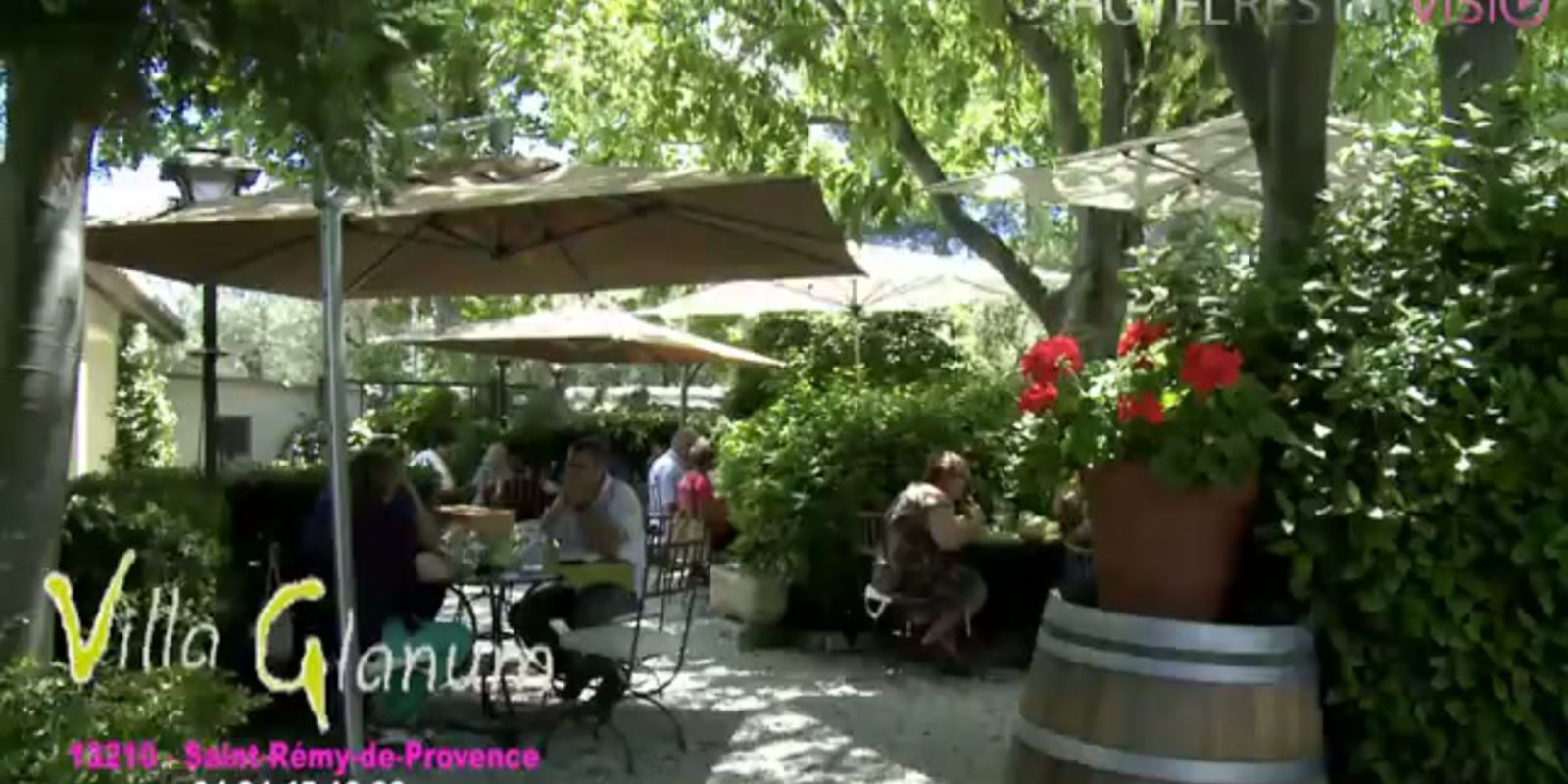
We take our luncheon on the terrace of Villa Glanum, another old favourite of mine. Today, it’s a somewhat tired but, nonetheless, enchanting hotel. Once, it was the home of Alphonse Daudet, who sometimes pretended he was writing letters from a windmill in Fontvielle. Back in Blighty, I gave Russell a choice of bedtime reading: Daudet or Mistral. He chose the latter but I think he missed a trick. To my simple mind, Mistral is too arrogant whereas you learn a lot of social history from Daudet. But what do I know? Another time …

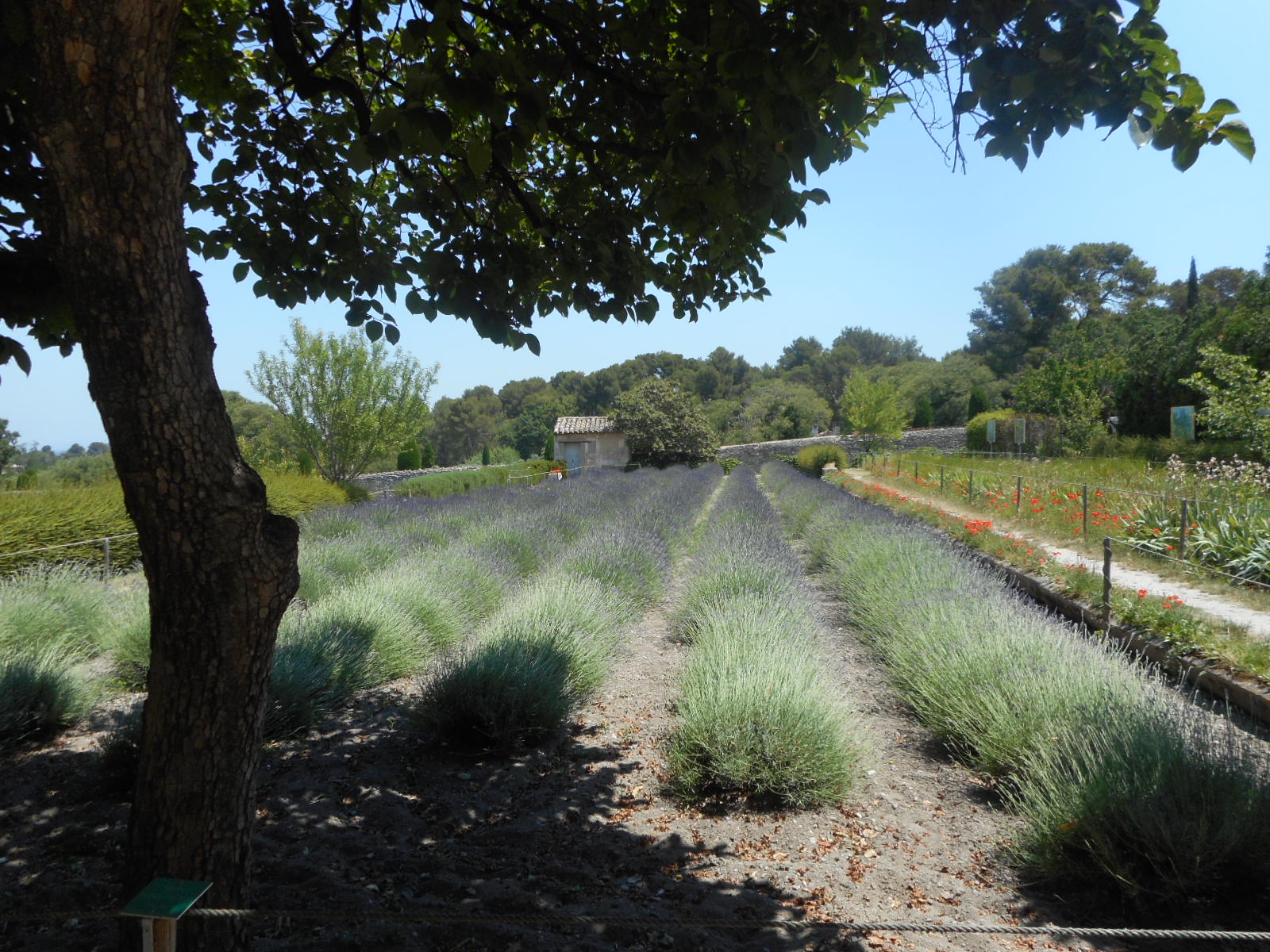
And so to St Paul Mausole, the sanatorium where Vincent placed himself after the disaster that was Arles and where he painted many of his most famous pictures. When I first came to these parts, I had little knowledge of or interest in Van Gogh, but you don’t have to be here long to realise how he captured the very essence of Provence. I’m pleased to report that my travelling companion has, at last, noticed this and threatens to return home and study the paintings of the genius. Personally, I’m just thrilled to be in Vincent’s garden with the lavender.


Another postcard from Arles

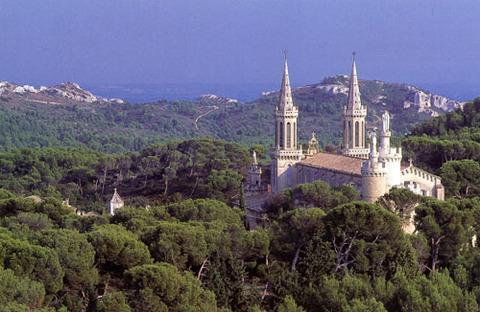
There aren’t too many tracks out of Rognonas and the one that leads to Arles is a road well-travelled. Mistral was up and down here like a fiddler’s elbow; largely on his way to Avignon, apart from his childhood travels to a hitherto unknown school at Frigolet. Russell doesn’t like Frigolet; claims it’s brash and tawdry or other suchlike adjectives that I’ve made a point of dismissing from my mind. It’s also, apparently, not old enough. Later, he’ll tell me he doesn’t like Mistral either. Ha! Guess what I’ve got for his birthday.

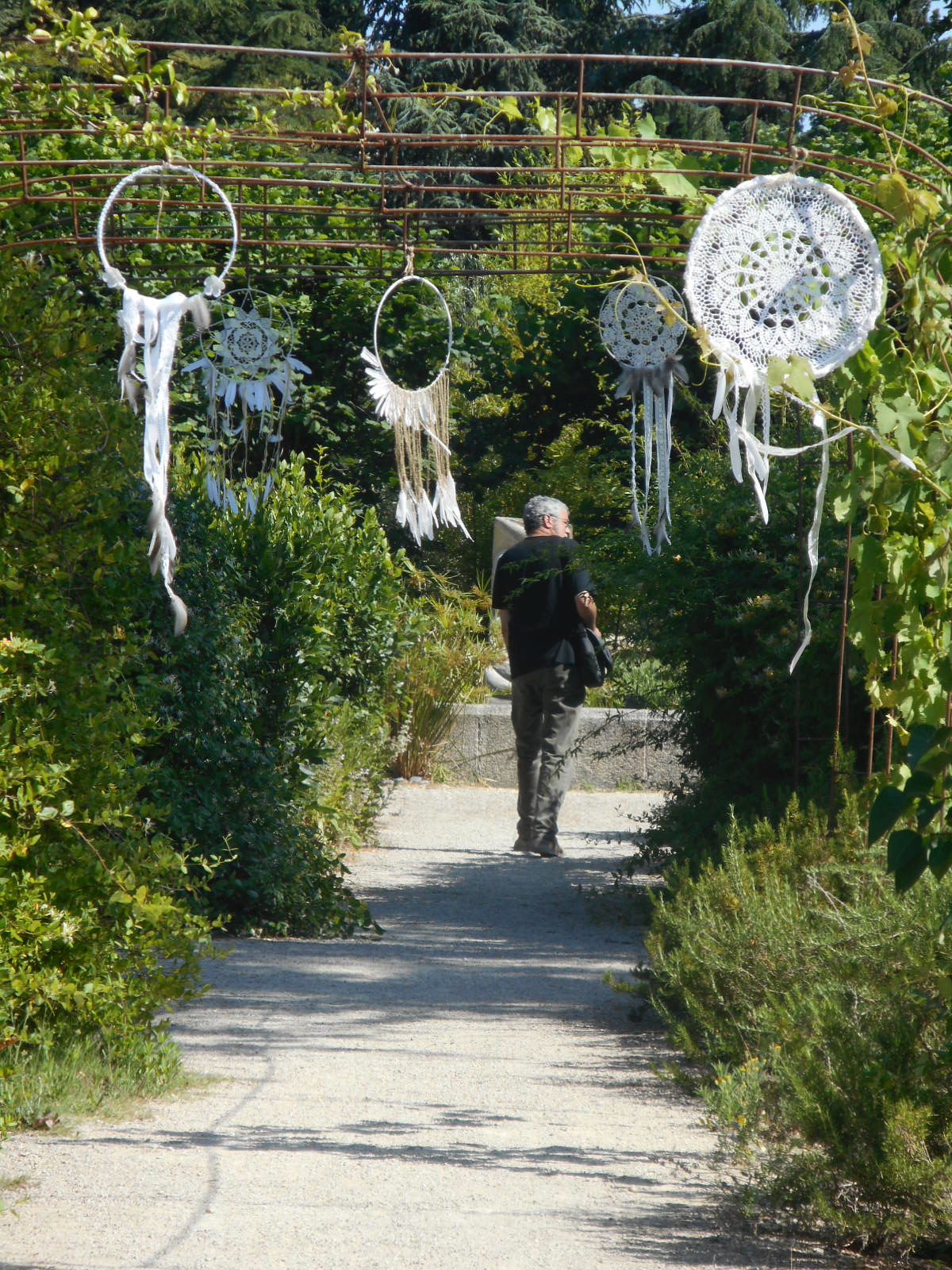
We seem to be passing along the Arles road so frequently these days that even my companion feels finally grounded so I make an unexpected left turn down the lane that leads to the perfume museum. Although I want to purchase some Eau de Violette, the main purpose of this detour is to visit the gardens which are cloaked in a myriad of bees and butterflies. It smells nice too. The place looks particularly lovely today as it’s still dressed in the dreamcatchers that were part of yesterday’s wedding decorations. We wander along, searching hopefully for Russell’s bride who, it seems, has already run away.

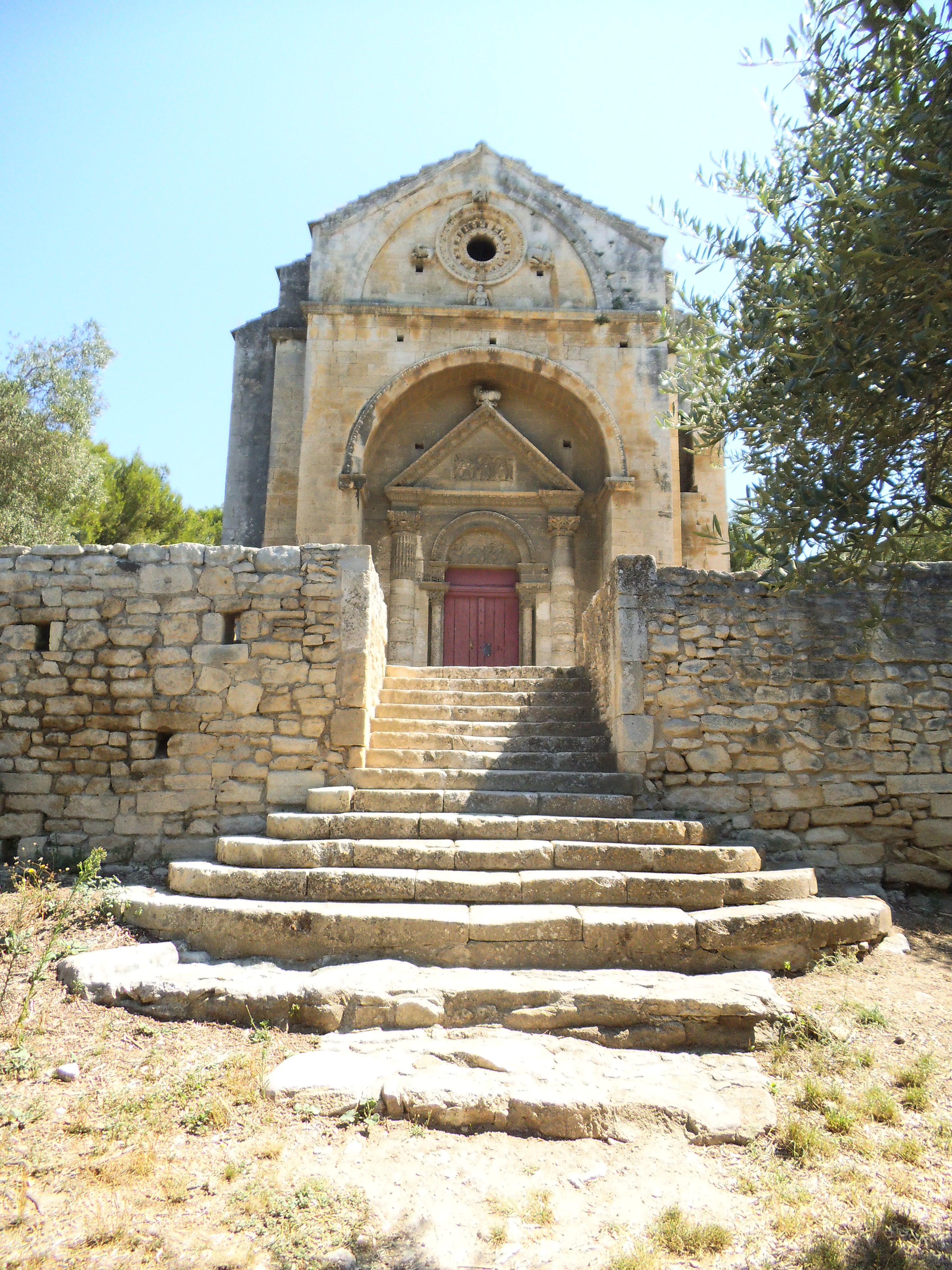
And after this, and a minor incident involving the front of the hire car and a large boulder, we traverse a few more kilometres along the D570 before taking another left turn to my favourite venue in Provence: Chapelle St Gabrielle. Reader, you don’t need me to tell you about this place: it appears so many times in Donald and also in The Road that Runs. I’m slightly anxious. I want Russell to love Provence but I especially want him to embrace this place and all its conspiratorial history. He’s off doing that striding business again and I’m just sitting and soaking the goodness. Then he’s back: ‘I’m sorry, but this can’t be your favourite place any more’, he claims. And pourquoi pas? ‘Because it’s MY favourite place’. Oh deep joy. What fun we’ll have later with a couple of bottles of wine and an exchange of research. We know how to live.

And so to Arles. Again. This time we park at the top of town where I’m able to suggest a backwards glance at the place where the Yellow House once stood. The railway bridge, replete with running train, is as it was when Gauguin and Vincent passed their heady nine weeks just below. I hope certain people will be glad of a chauffeur, with a useful smattering of French, who also knows about this place because, let me tell you, not many people do. And the good folk of Arles have done nothing to mark the site, let alone commemorate it in any useful way. The only reason I know about it is because I once passed a day in this town with the partner who cannot be named; a man who, inordinately temperamental , verging on the downright moody, is the most wonderful guide one might hope for. He also knows the best places to eat.

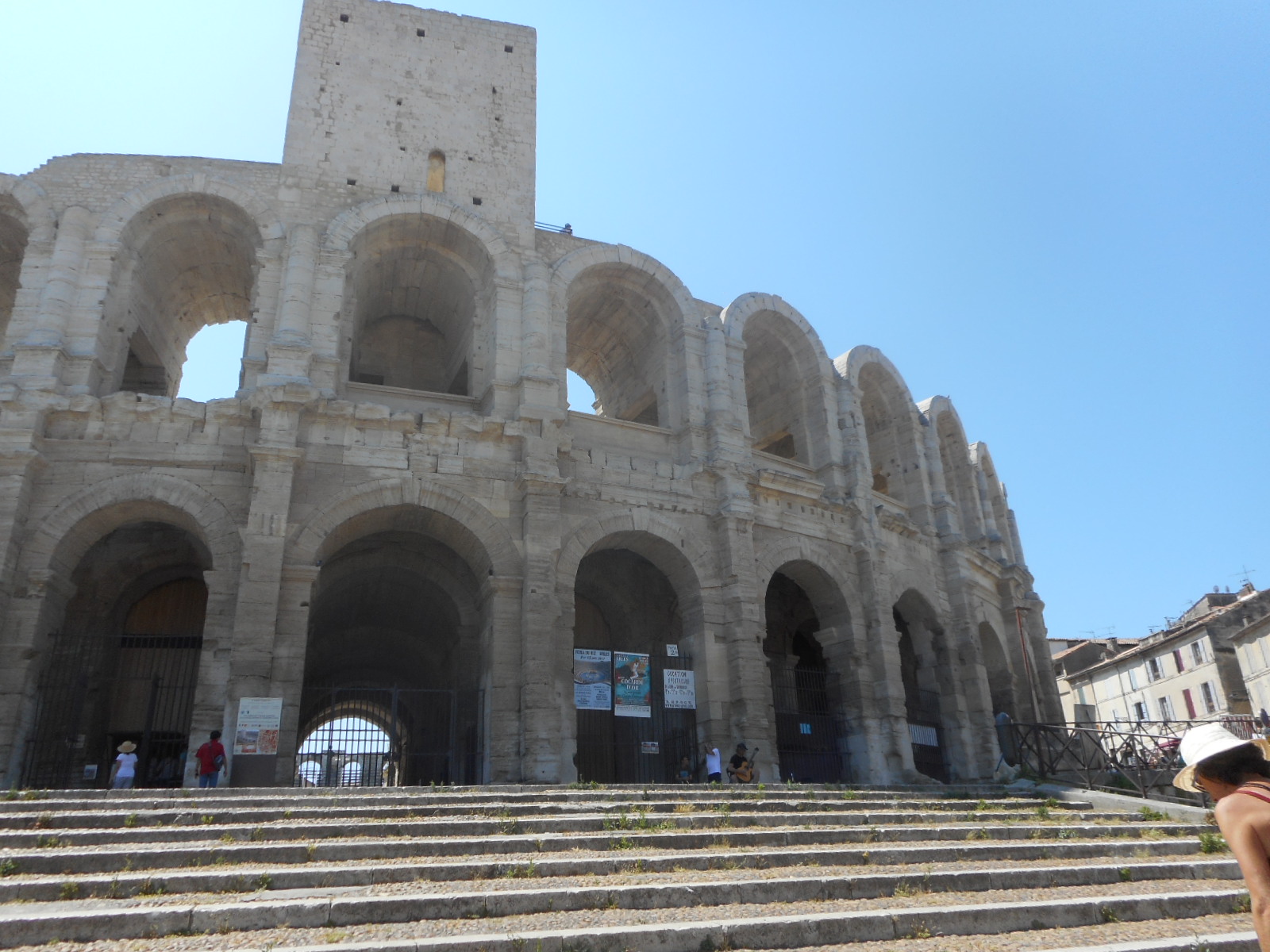
We head off to the amphitheatre, which seems to please the American no end. It’s so hot. I sit on a bench where they once watched gladiators and recall another time I was here with that crowd from Trowbridge. It was hot that day too and a couple of men were painting the wooden barriers behind which the brave matadors hide. Suddenly, a large rat appeared in the arena and we shouted a warning. One of the decorators entered with his paint cloth and, treating the vermin as a small bull, began the matador’s dance to much cheering. After a while, he got fed up and hit the rat over the head with a shovel.

Russell wants to visit the Roman Theatre and I don’t. It’s my least favourite place. I don’t know why – it seems full of glaring concrete to me. His opinion is that it’s like a Roman junk store and we’d better get some lunch toute de suite. Good plan, although we manage to get a bit lost on the way: geographically, historically, spiritually and all other permutations. Eventually, he picks a place in a shady square but I’m hot, bothered and put off by the blackboard that advertises fish and chips. Not going there. Sulking. We go next door where I order a risotto of mussels and tellines (clams). I forgot to mention that Russell is the slowest eater in the whole universe. Well, there were so many bloody tellines requiring shell removal that the American had finished his lunch before I was even done with the preparation of mine. Lunch was superb. Of course, we’d already agreed not to have pudding. But then the waiter arrived and announced desert of the day was – Isles Flottantes! My most favourite thing to eat in the whole world. Even the waiter looked delighted at the expression on my face.

Finally, full of shellfish and raw egg, we must visit the Thermes of Constantine. Up the hill, down another, along this lane. Phone him up, Russell – maybe he’s still in the bath and it’s shut. So now, Constantine’s baths assume the mantle of my most hated place in Provence. Who cares. The travelling companion is happy and we were able to walk back along the Rhône. And later, a late afternoon in the pool, a bottle of the pink stuff and an infusion of bonhomie.


A postcard from Arles

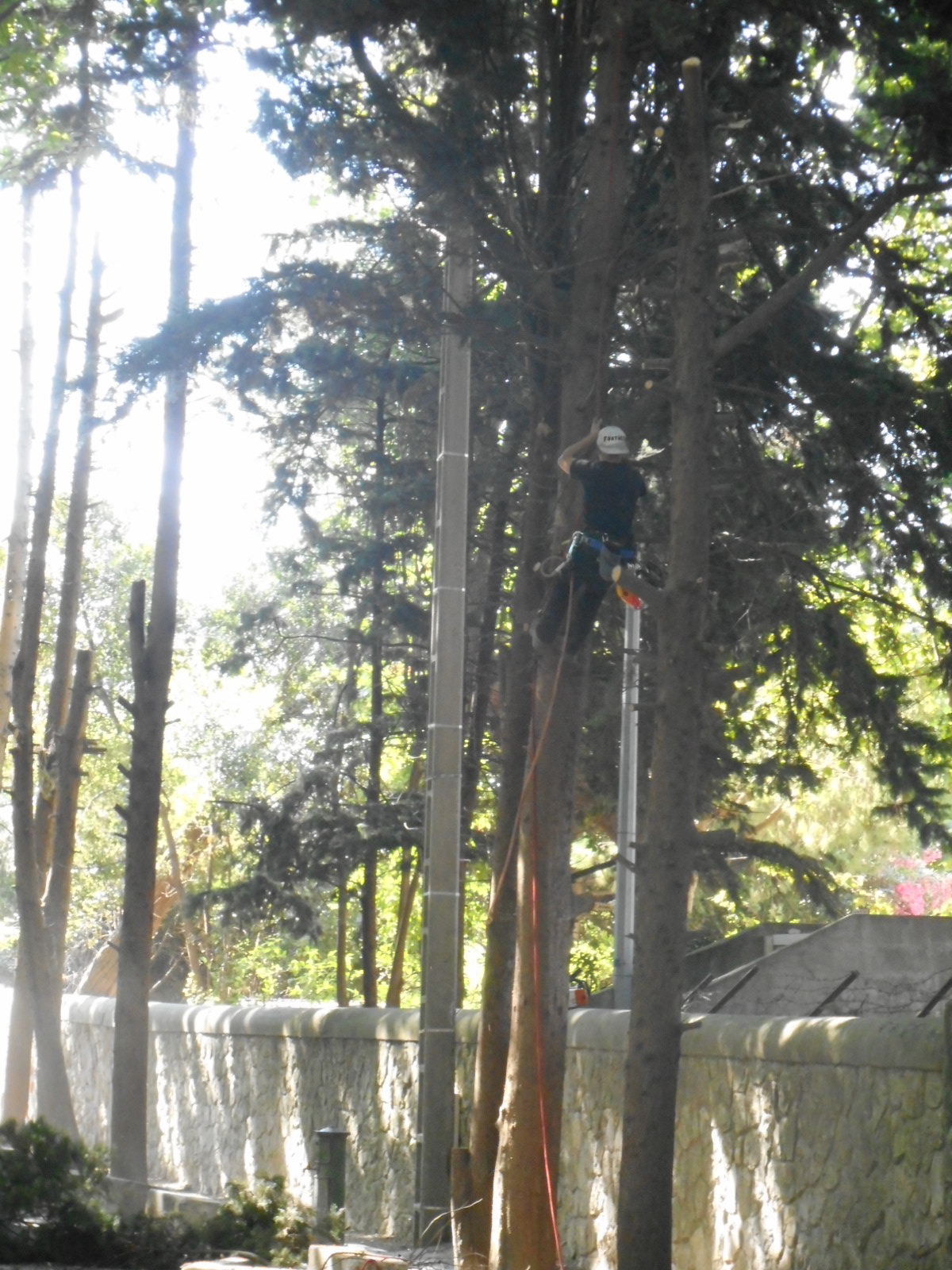
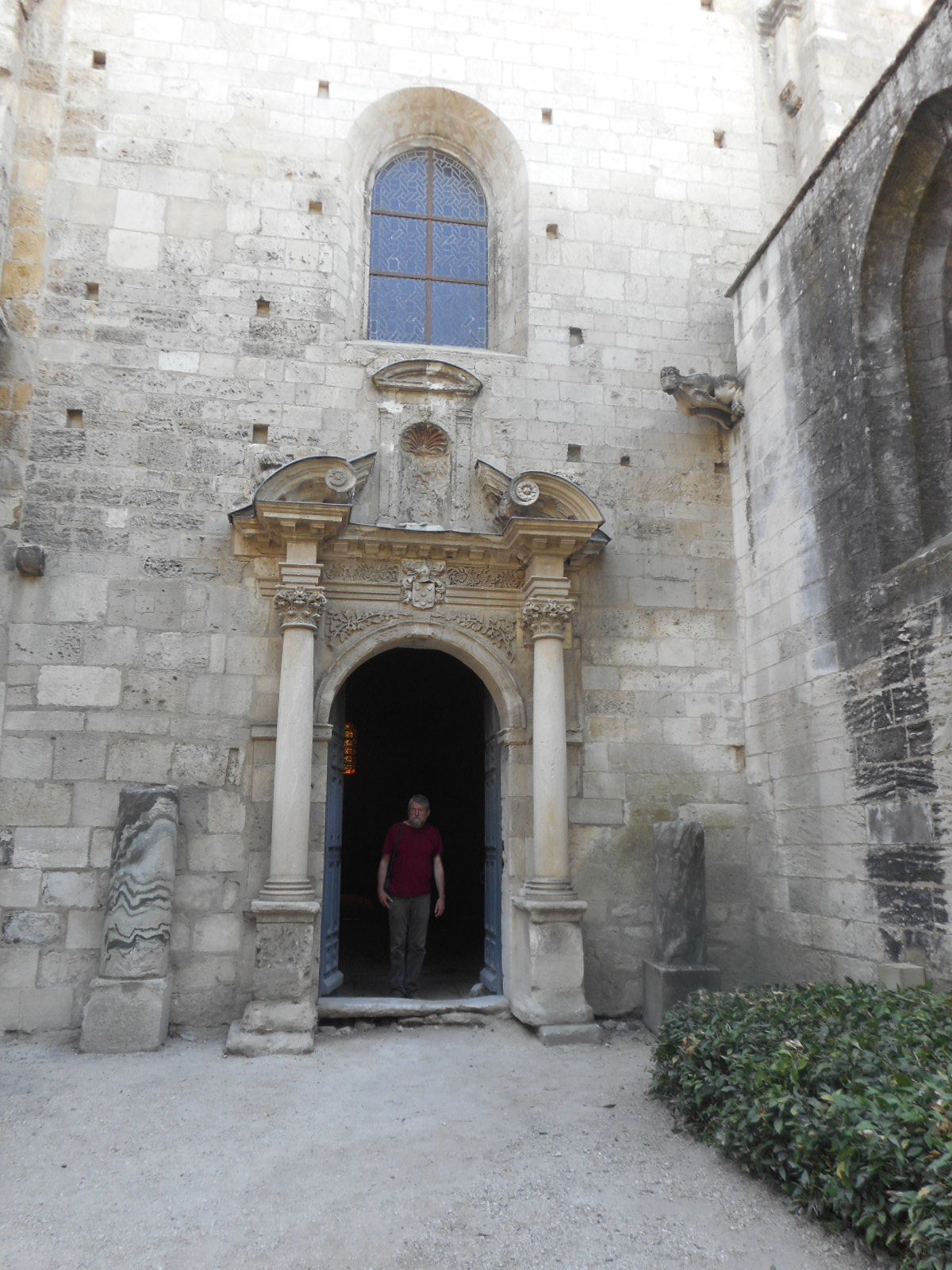
Making an early start to a day in which temperatures will again soar into the high thirties, we purchase a couple of those tickets that allow optimistic entrance to multiple antiquities. Our first steps into the past are taken at the atmosphere soaked Les Alyscamps, once the largest and most famous of Roman necropolises in the ancient world. Certainly, it’s my favourite venue in Arles but Russell is already perturbed by the noisy presence of three men, a chainsaw and a machine that pulps the overhanging branches they’re busy trimming from shady cypress trees. Get over it, Russell. Look at all the sarcophagi. And wait until you get to the church – surely the spookiest you might venture into.

Les Alyscamps is a remix of Champs Elysees – the Elysian Fields, through which that underpaid boatman rowed the dead across the Styx. Prior to that dangerous passage, many of those who found themselves in this necropolis had already been brought down the Rhone in their coffins from all over Europe courtesy of less esoteric mariners. A watery end to it all amongst 4000 other dead Romans. Tomb upon tomb upon tomb, literally at one time when they were stacked in threes due to overcrowding.

Russell’s striding on ahead knowledgably, oblivious to my warnings of looming phantoms. This travelling companionship is still in its infancy but already he needs to say nothing in order for me to know my helpful information is again dismissed. In a few days’ time, this sort of thing will have ceased but, for now, I linger awhile to inspect a lizard which has appeared between the cracks of a sarcophagus.

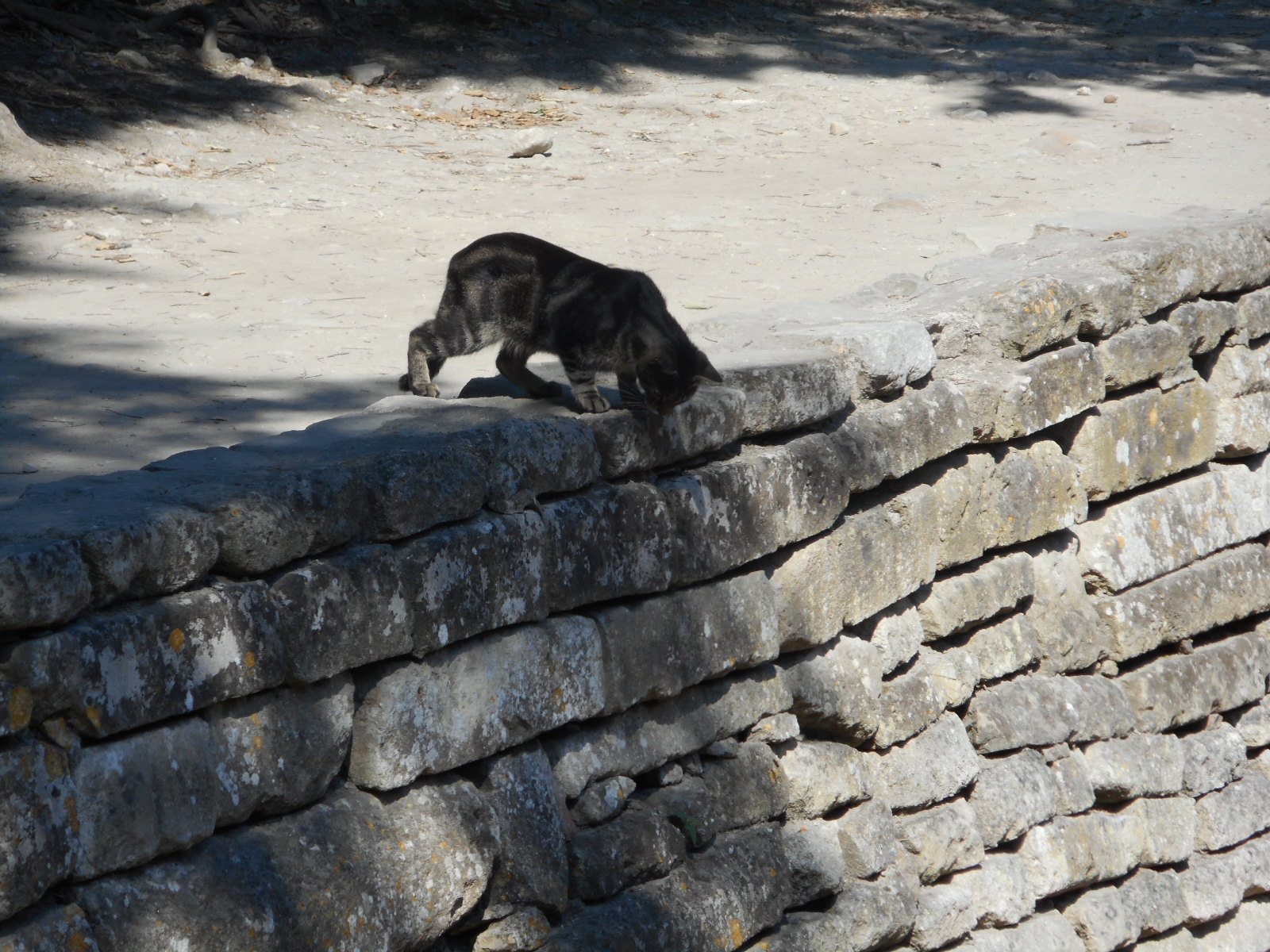
After this, I pass some time watching the graveyard cat which lives daily in the past and who, I think, was either never conceived of by T.S. Elliot or perhaps thought too scary to mention in Old Possum.


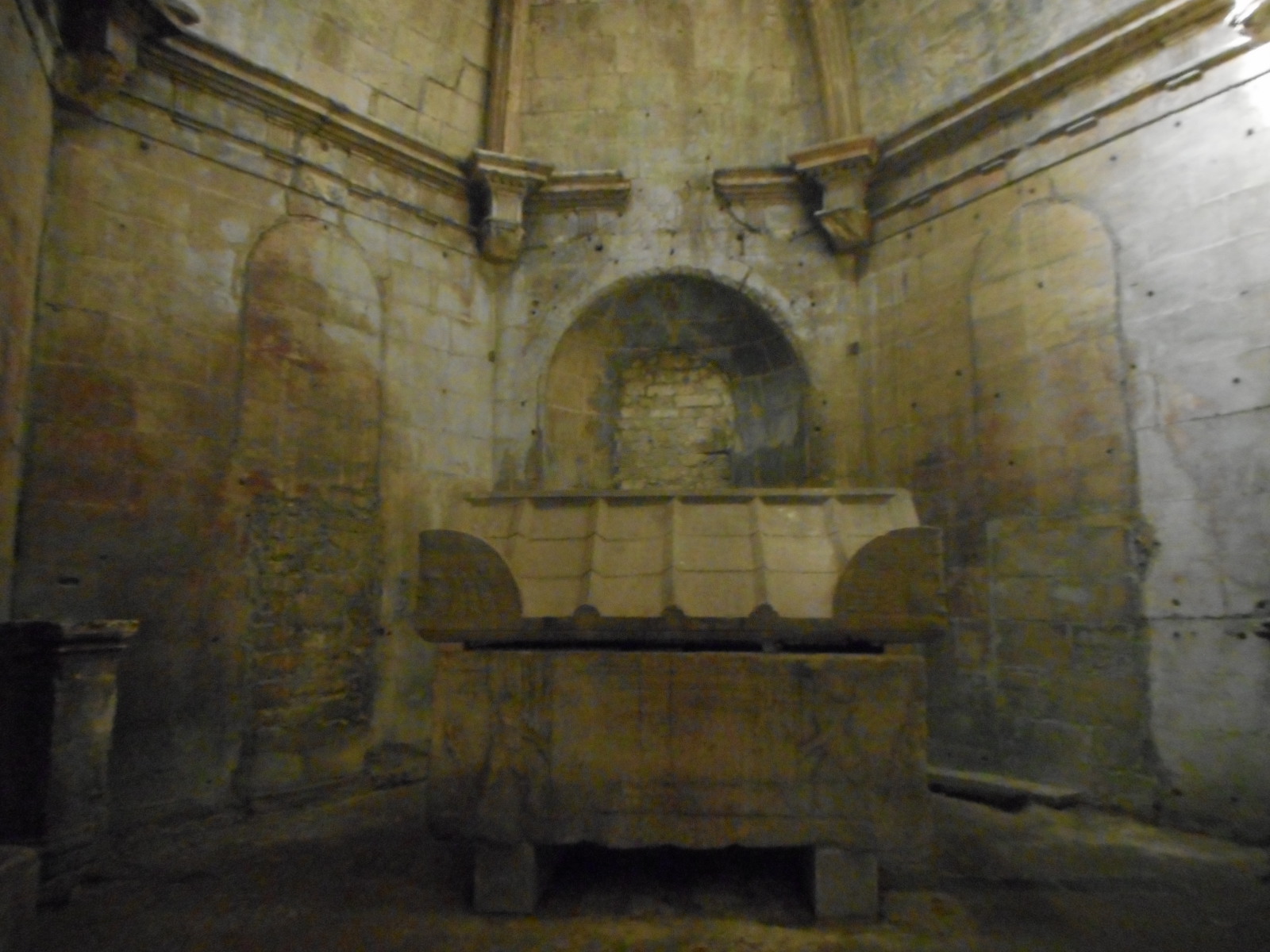
What practical use does a Roman cat serve other than to tidy up the ancient and modern vermin? Or possibly as an unexpected warning to the delights of Saint Honorat’s church? For even before I’ve attempted entry, here is Russell exiting with some speed and clothed in an aura of anxiety: ‘it’s the spookiest church I’ve ever been in’, he shudders. Well, who knew? Je te l’ai dit I don’t say as we go back inside together.


Here’s the rub with this church to which I once came alone and never ventured into the dark below stairs. It’s infested by pigeons. Pigeons that coo from their lofty, hidden heights but not in chorus. Unlike the consensually chattering cicadas, these pigeons coo – and I use the word loosely – independently.

At ground level, the received messages are mixed and fuzzy and unclear and sound not unlike the mumblings and moanings of the dead who have yet to reach the underworld. Pay the ferryman, Russell. (Can you see the ghost?)

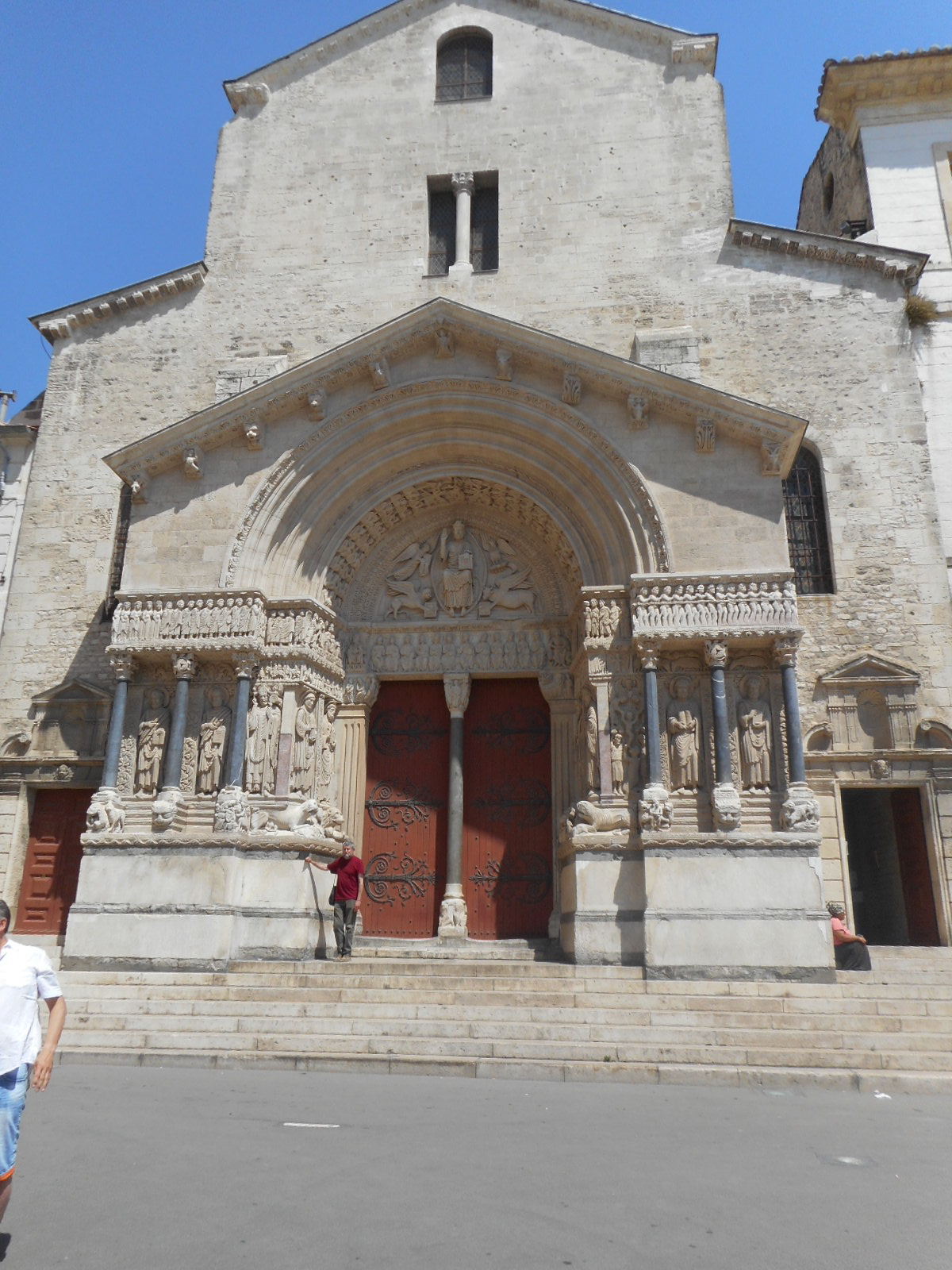
Some time later, we find ourselves at another church – St Trophime which has been my companion’s goal since the idea of this trip was first conceived in another lifetime. I make a big effort given the potential overkill of church, chapel and cloister we’re experiencing. How I long for a provençal market or a little pottery shop, but he’s striding off again. I stop in front of an interesting looking stone frieze. Quite a lot of action it seems so I return to the lady in the fish bowl at the entrance to purchase a guide that will stay with me. It’s a heavily edited guide. The best word to describe it is ‘useless’. Clearly, it’s been written by some character who has subjectively picked out what they think are the best bits and omitted to account for anything that the uninitiated may be interested in. Hmm.

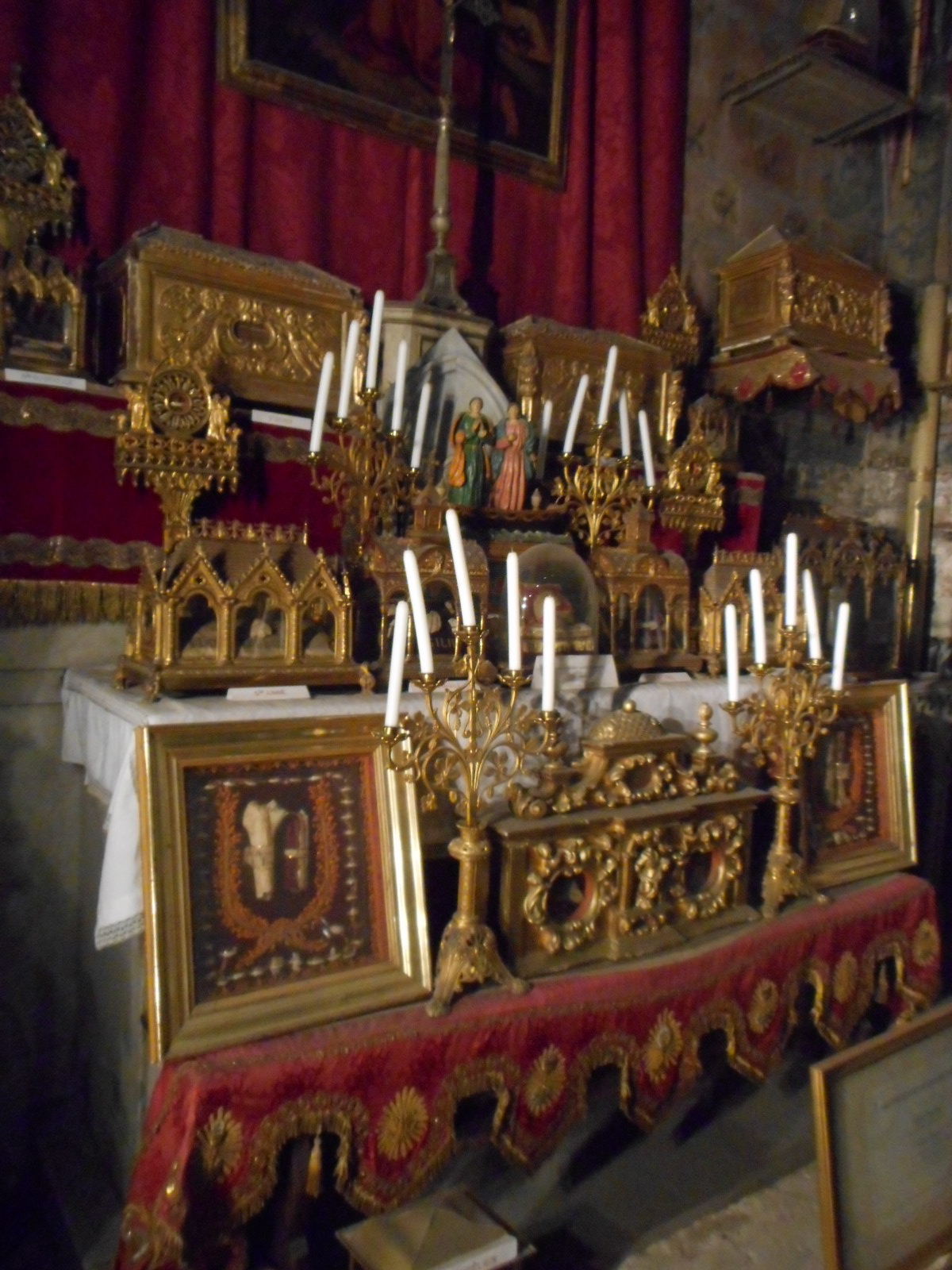
What I do like enormously is the reliquary. Just before I arrived in front of it, some easily bored type had popped a euro into the machine, lit up the sideshow and cleared off leaving it all for me. Let me tell you, the gang’s all here. There are fingers and skulls, hair and limbs, bones and organs, all sorts of pleasurably revolting body parts belonging to all the saints you may or may not have heard of in a variety of golden boxes and caskets. Slap bang in the middle are two santons on a boat – unnamed of course, but we know who they are…the ubiquitous Marys without whom no party would be complete.

Russell turns up later when I’m on the other side examining the blood clots of John Paul 2 and claims I have to visit the reliquary with him. I don’t want to spoil his fun by mentioning that I’ve already seen the bones and bits so I go back with him. It’s worth it as it’s the only thing in a church that will excite both of us, especially as he claims it’s the best euro he’s spent so far.

Of course, it was a mistake to show any interest as now we have to visit the cloisters. This is the third set of cloisters I’ve seen in two days and frankly my dear … Russell’s ecstatic and I am hot. I inform him I’m post-cloistus and I’m off outside for an ice-cream. I haven’t had an ice-cream since I arrived in France and I’ve already noted that there’s an artisan glacier in the Place de la Republique where I have my sights and taste-buds set on something infused with lavender.

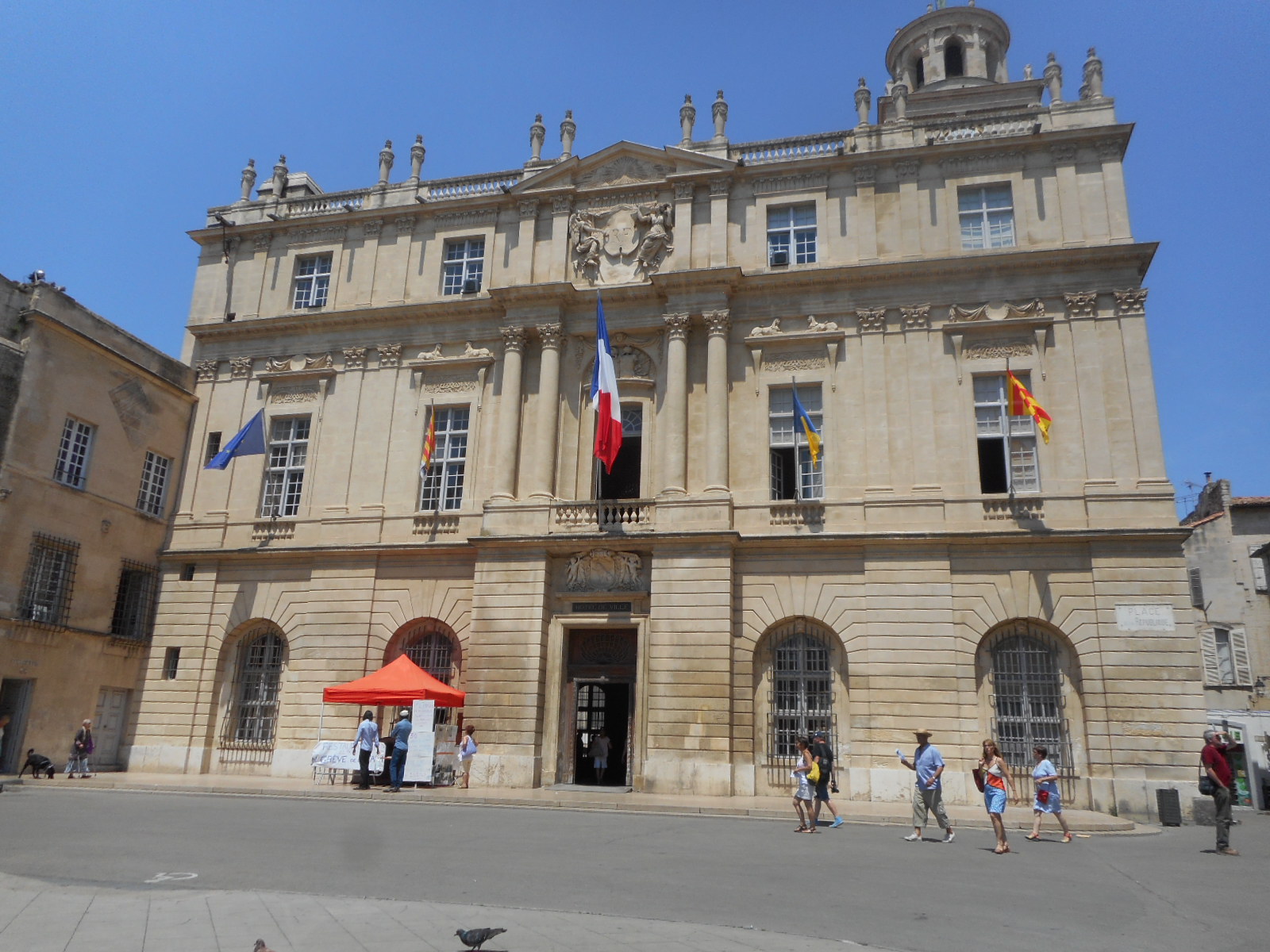
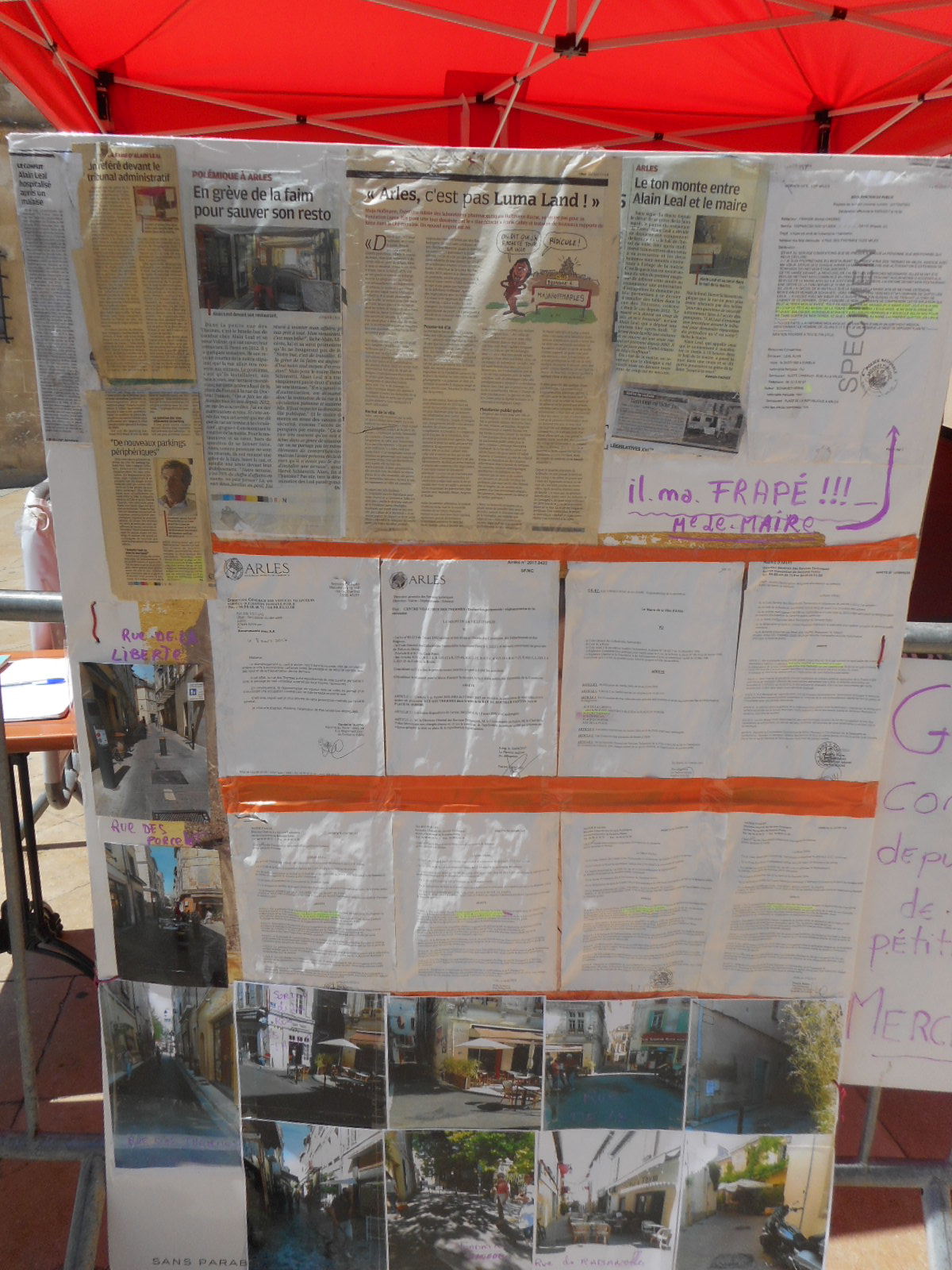
With purple ice-cream dripping down the cone and along my arm, I sit in the shade opposite St Trophime in a spot where I’ll be able to see him emerge. ‘Bon Glace’, comes an unexpected voice or three and I look round to discover I seem to be part of a group of dog accompanying degenerates. This will become a theme over the next few days: every time I abandon the American, I will be immediately surrounded by down and outs and their canine accomplices. The police arrive but not to our part of the square. They’ve come to remove the man who’s staging a one-man hunger strike in the town hall and replace him in his tent outside the main entrance.

He’s a restaurateur who, apparently, has been put out of business by the mayor. It’s a complicated story – something to do with the re-routing of traffic. Anyway, he’s had nothing to eat since 16 May. I wander over to inspect his publicity but it’s just too damned hot to get energised. I sit down under some sort of Egyptian pillar.


This is the trouble with Arles: everywhere you look, there’s something else and we’ve barely touched the surface. Russell reappears and there’s talk of the amphitheatre, and the Roman theatre and the baths of Constantine but we’re beaten. We’ll save that for another day and another postcard.