Monday: Overton Hill to Alton Barnes White Horse
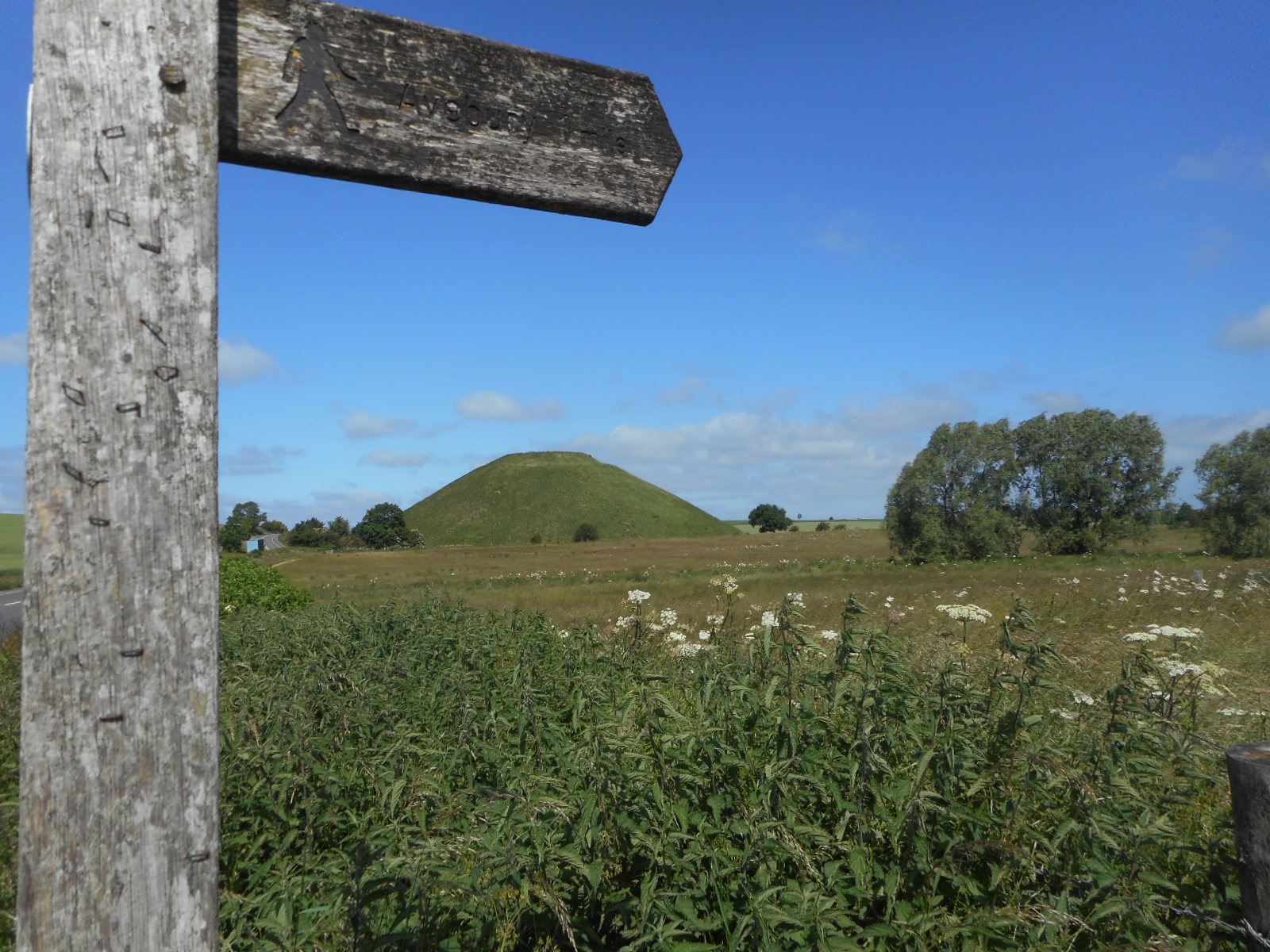
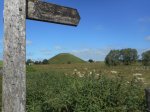 Prior to today’s walk proper, we are paying a visit to West Kennet Long Barrow, parking for which is conveniently situated in a layby on the hideous A4 opposite Silbury Hill. It’s an ideal spot for a photo opportunity; and for getting mown down by pantechnicons and suchlike.
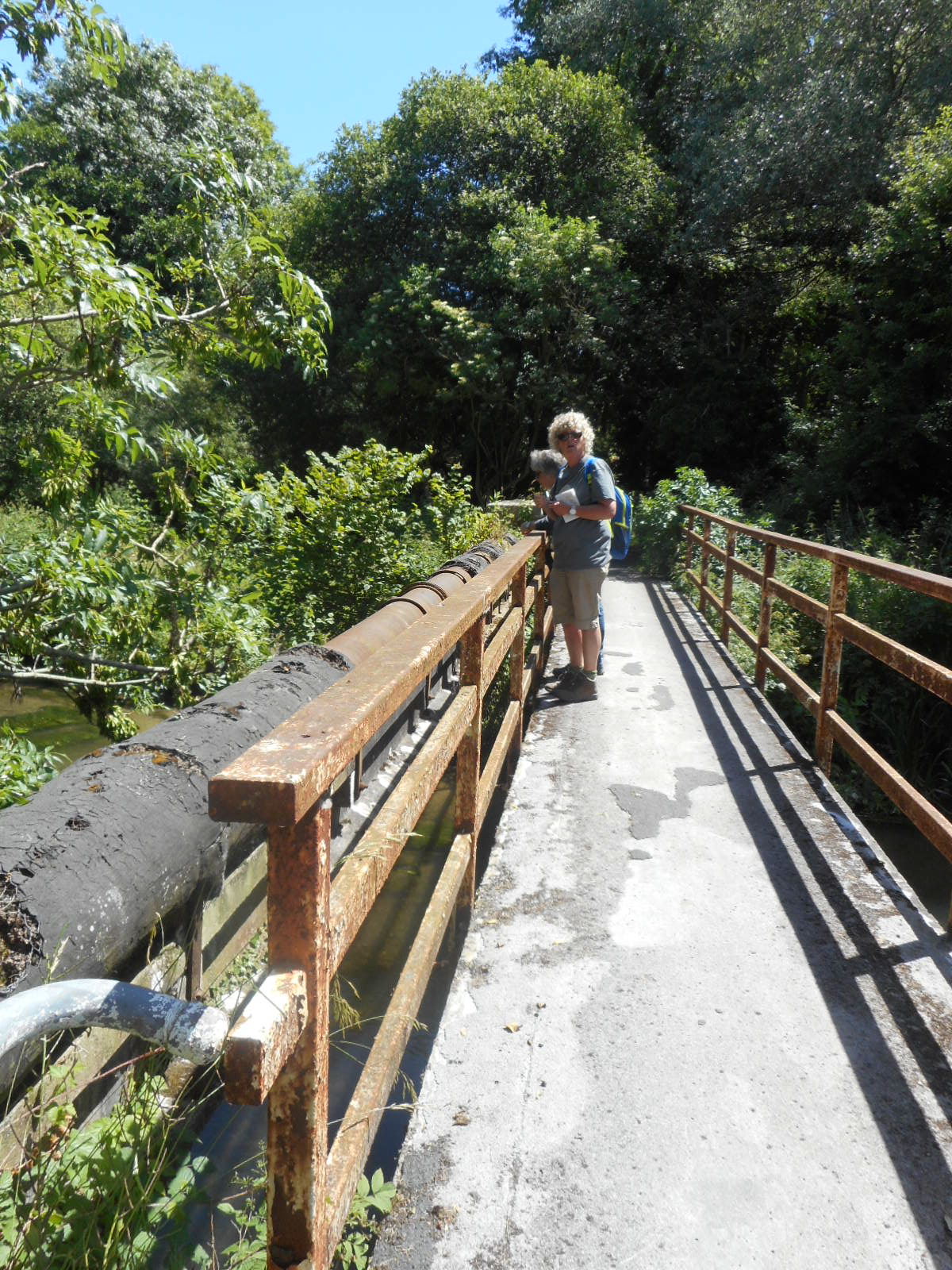
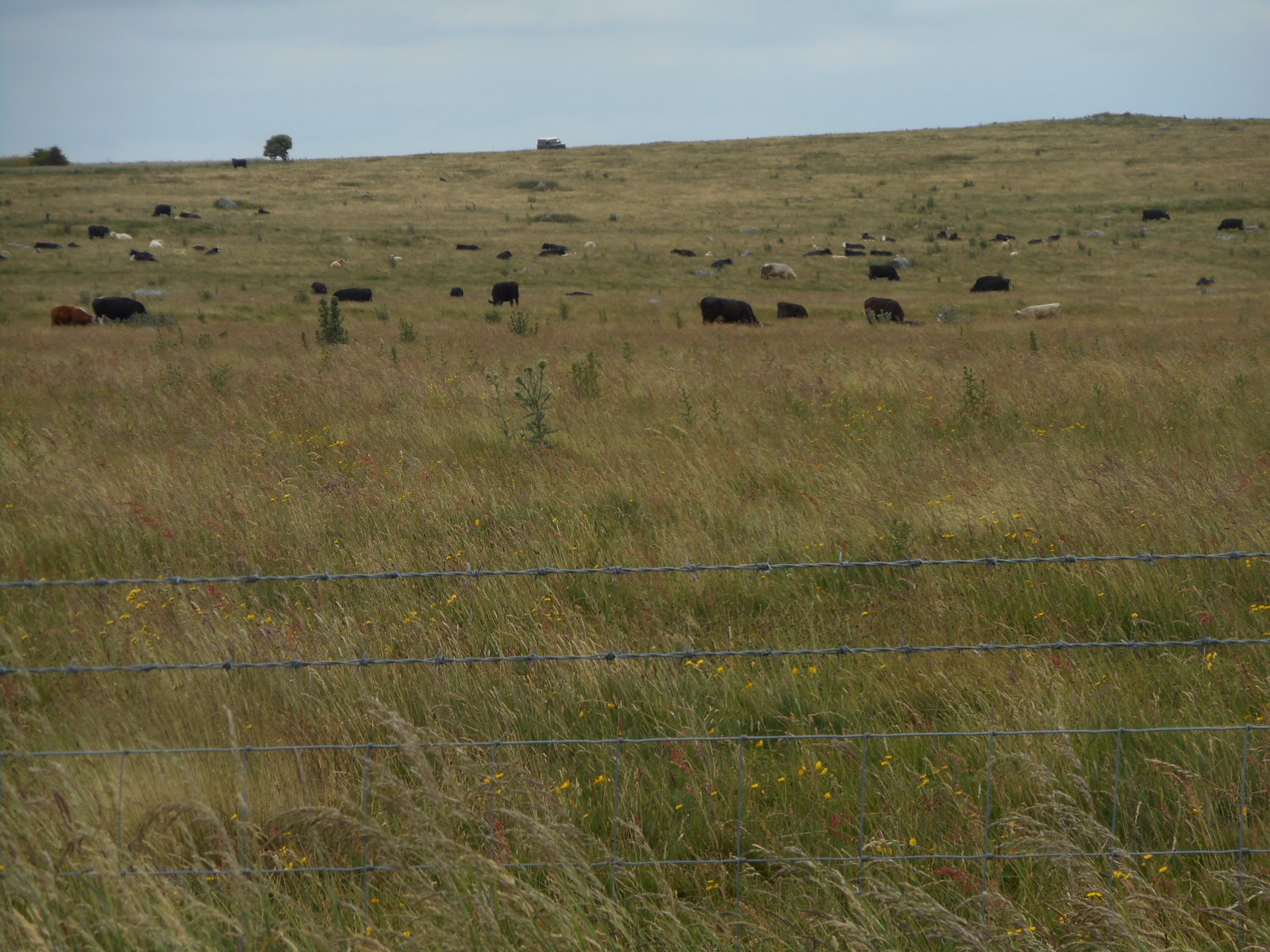
Commencing our walk over Pan Bridge and up another ‘rise’, Pathfinder Powell is suddenly alerted to the presence of black cows. Not too big, not too many, but cows nonetheless which are blocking the entry to the barrow track. I am all for pressing on. B is wavering from loyalty and the pathfinder is resolute – she’s off back to the car. This bovine denial of all things ancient is a shame but we are who we are. I’d be the same if the only route was via a very high bridge. Meanwhile, the cows shuffle off to another part of the field and B and I make our escape through a small gate to begin the next ascent.
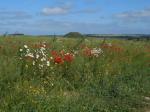
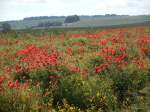
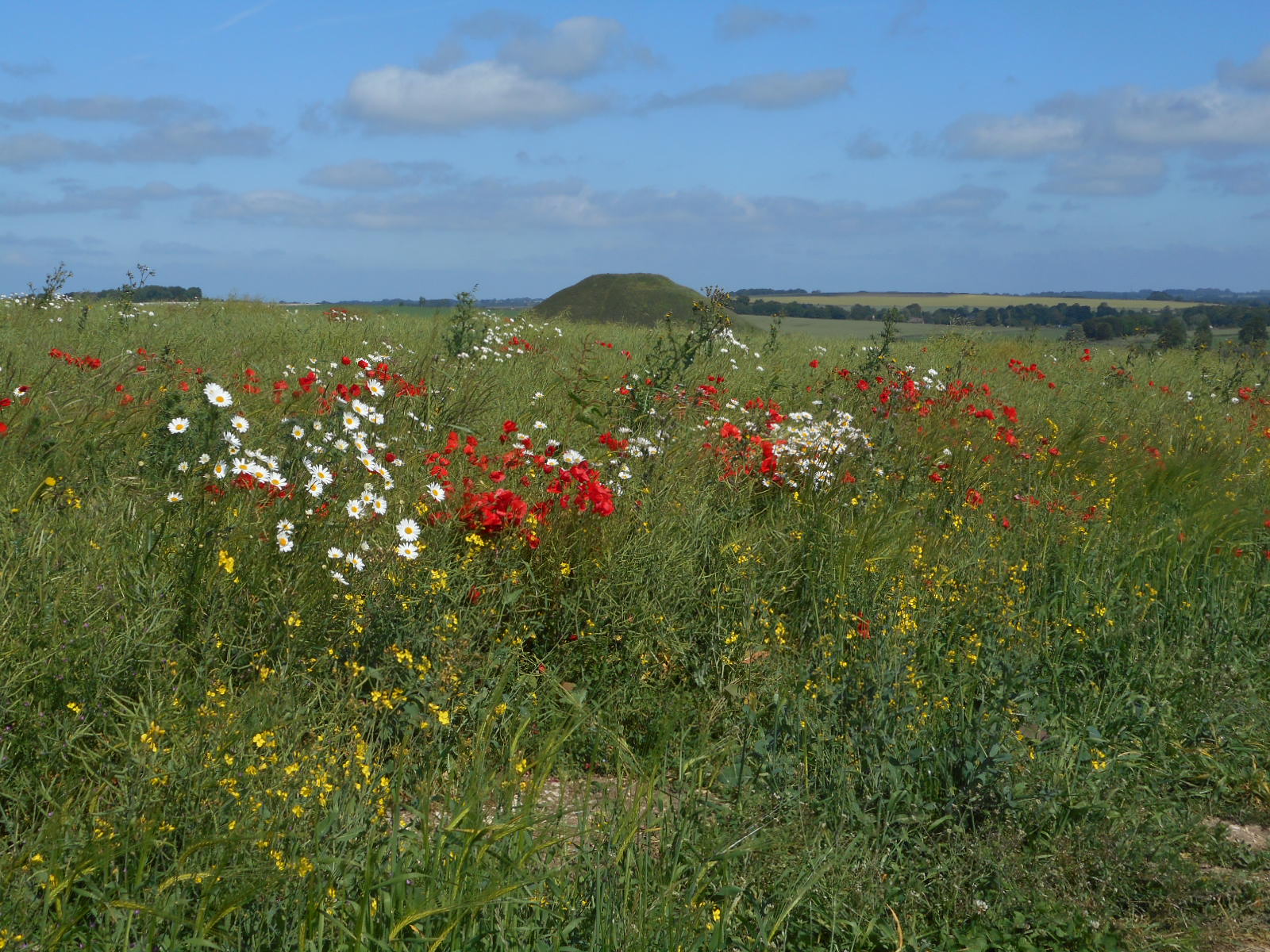
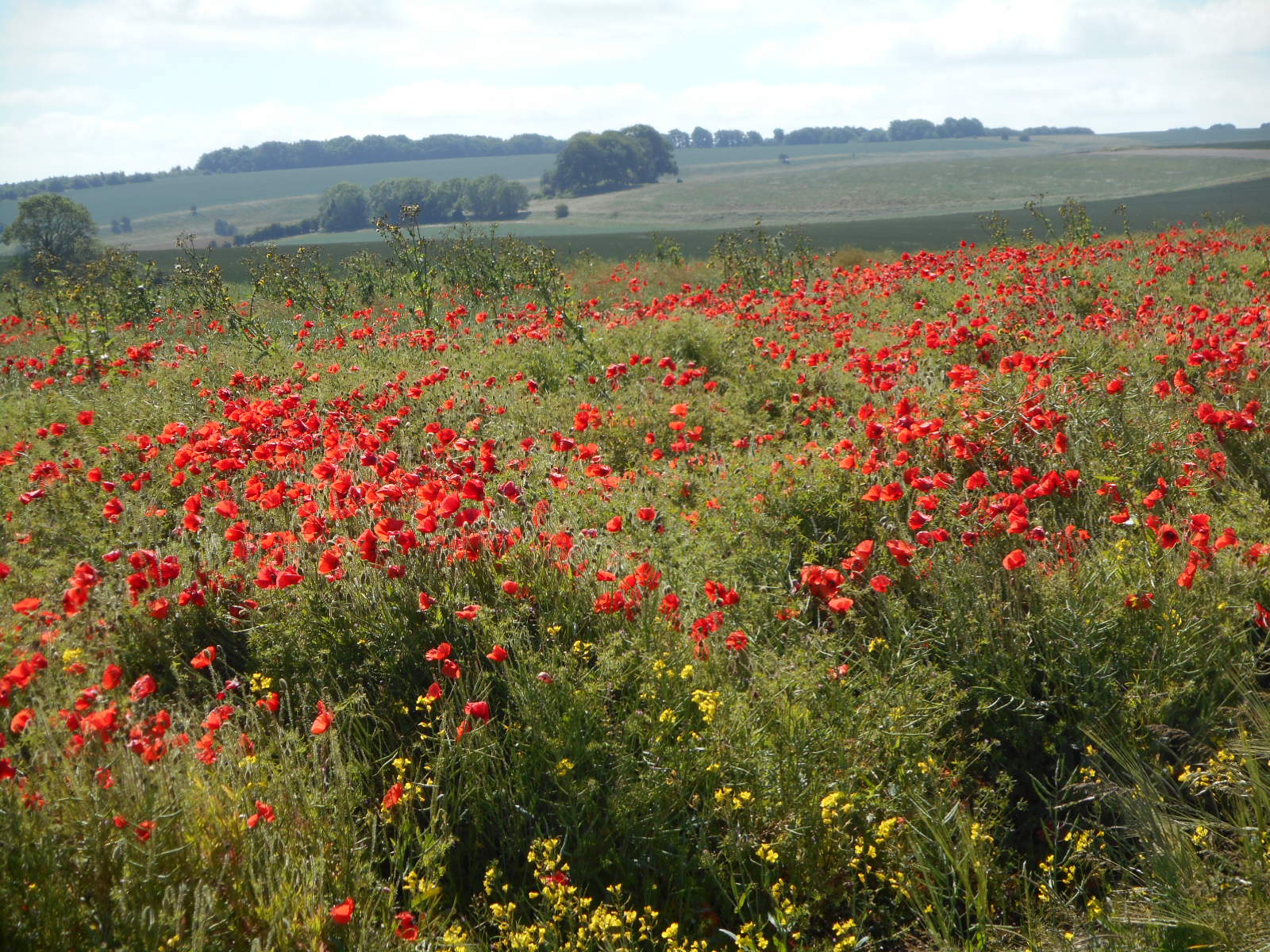
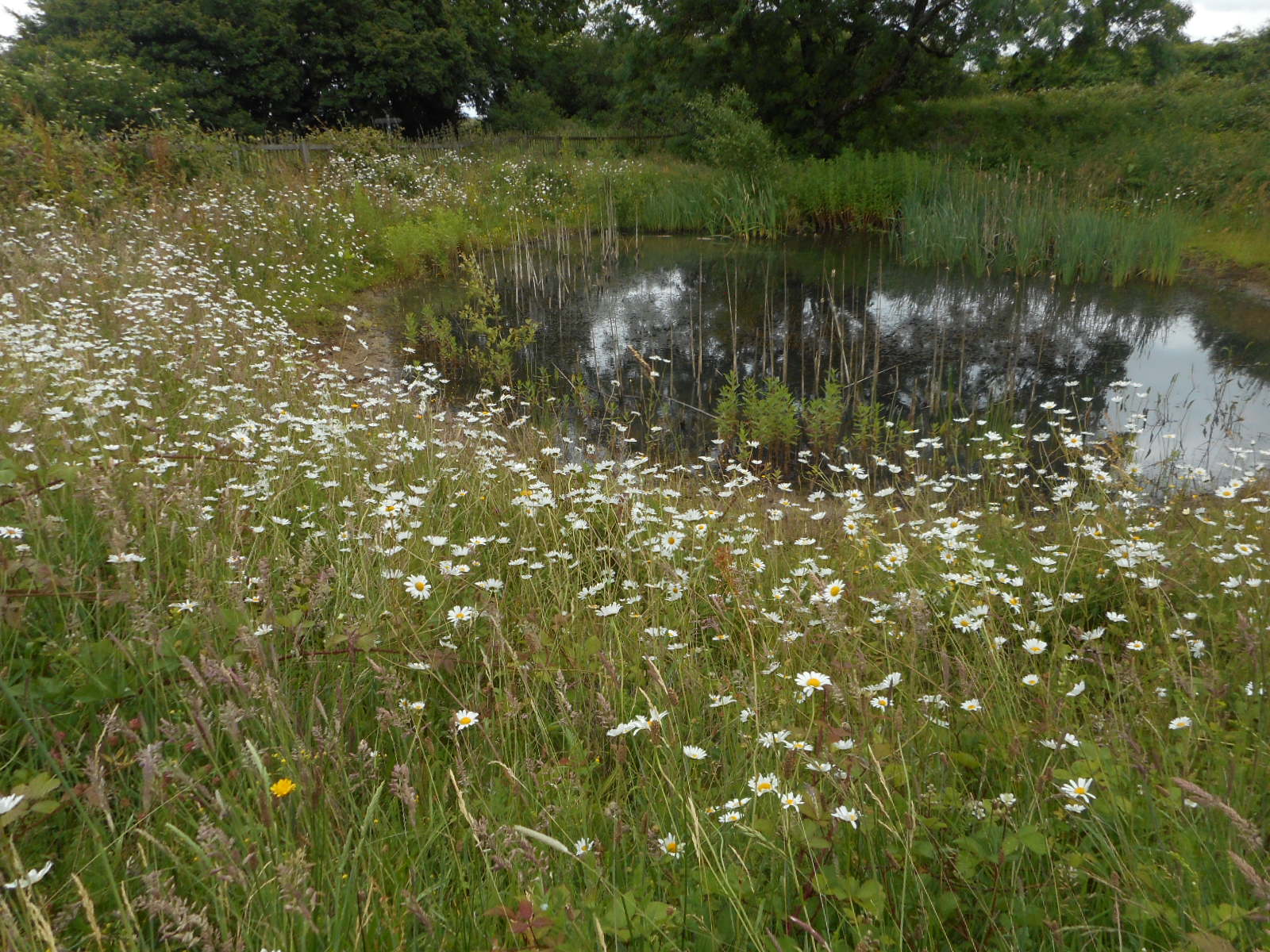
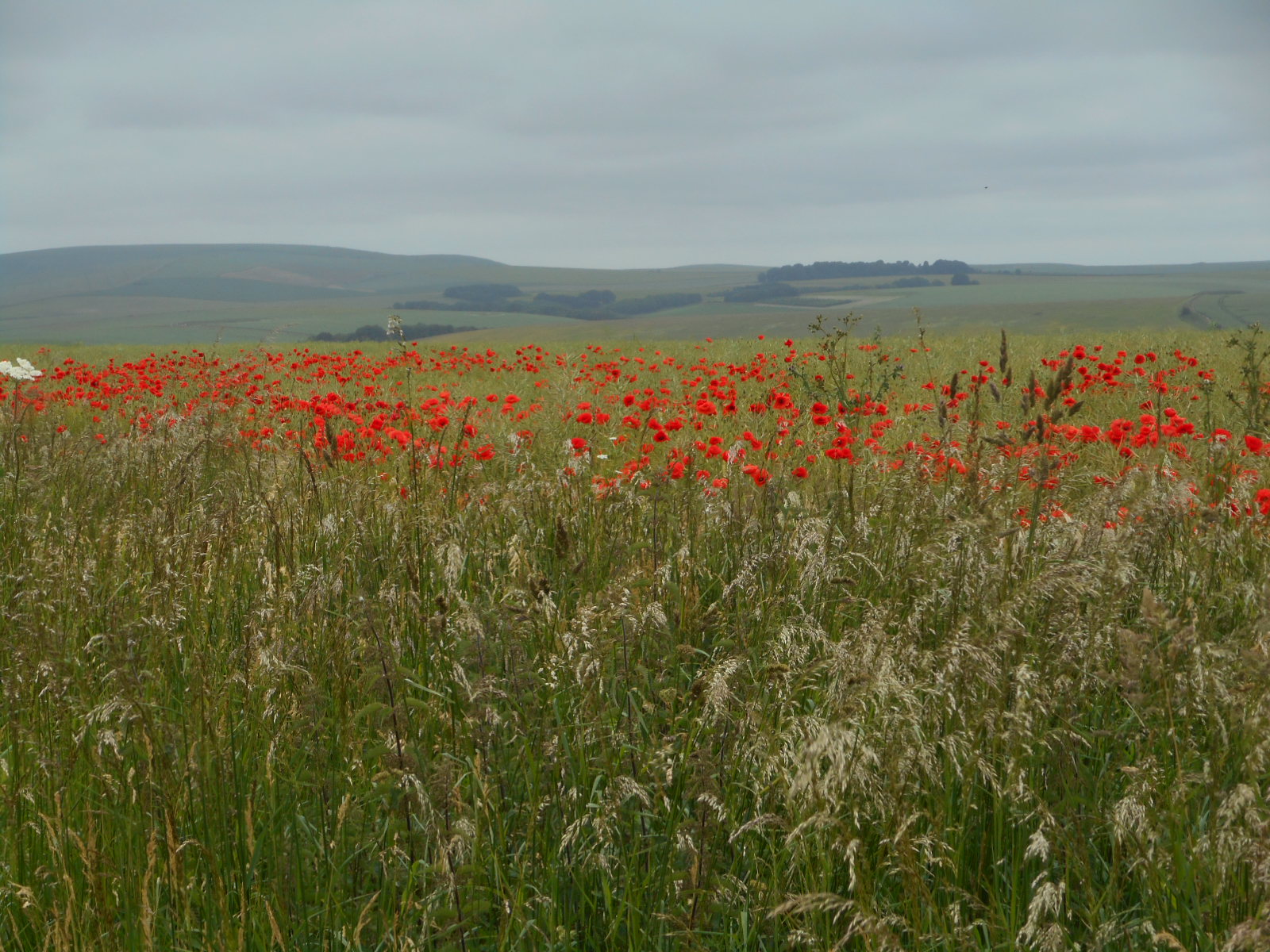
This place is wild flower heaven. We turn to look back at Silbury Hill which is rising majestically from a sea of poppies and daisies. It’s exquisite and once again far more startling than the close-up view we experienced half an hour ago. Of Silbury, Hutton writes, ‘that inexplicable hill vast and conical, as if it were a barbaric pyramid’. I think he means barbaric in the sense of primitive but you never know with Edward.
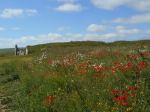
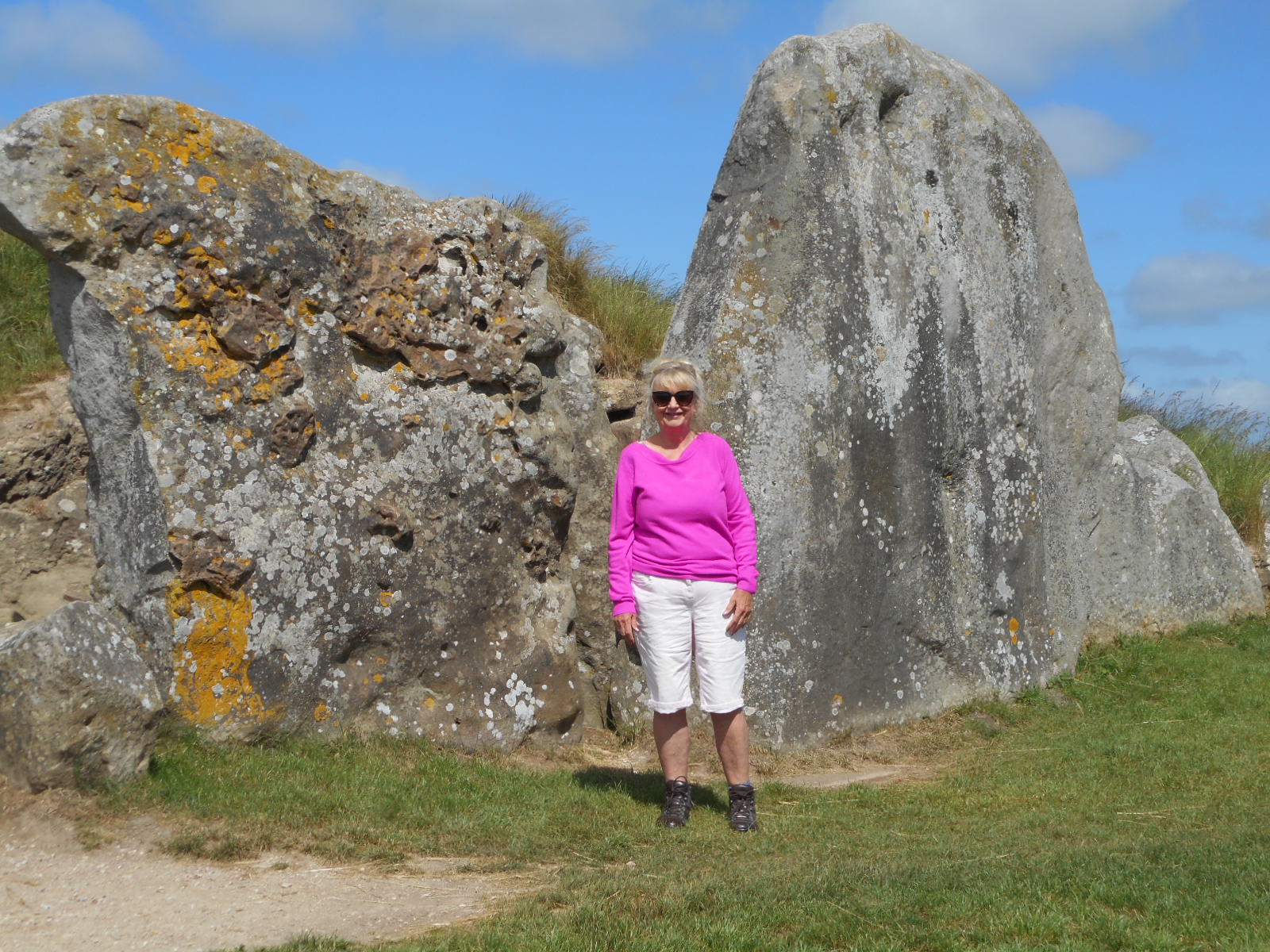
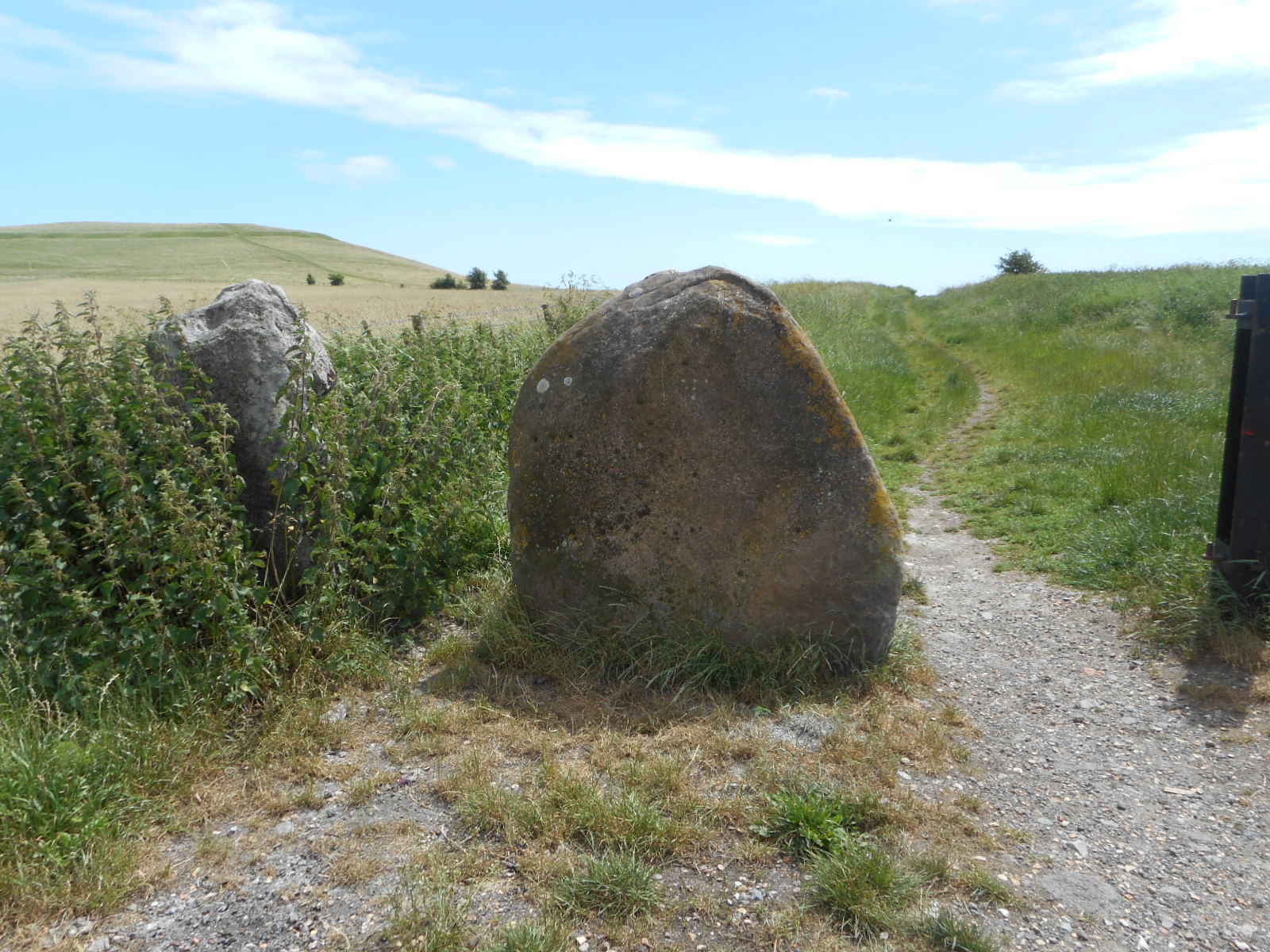
The West Kennet Long Barrow is a Neolithic tomb that was in constant use for at least a thousand years following its completion around 3650BCE. I have to check that and it’s right. Fairly old then. The twin sarsens that were placed to block the entrance were erected around 2000BCE when the tomb was closed. Hutton gives us its length – 330 feet – and writes the place off as ‘something of a ruin’. That Hutton, he’s such a chump at times.
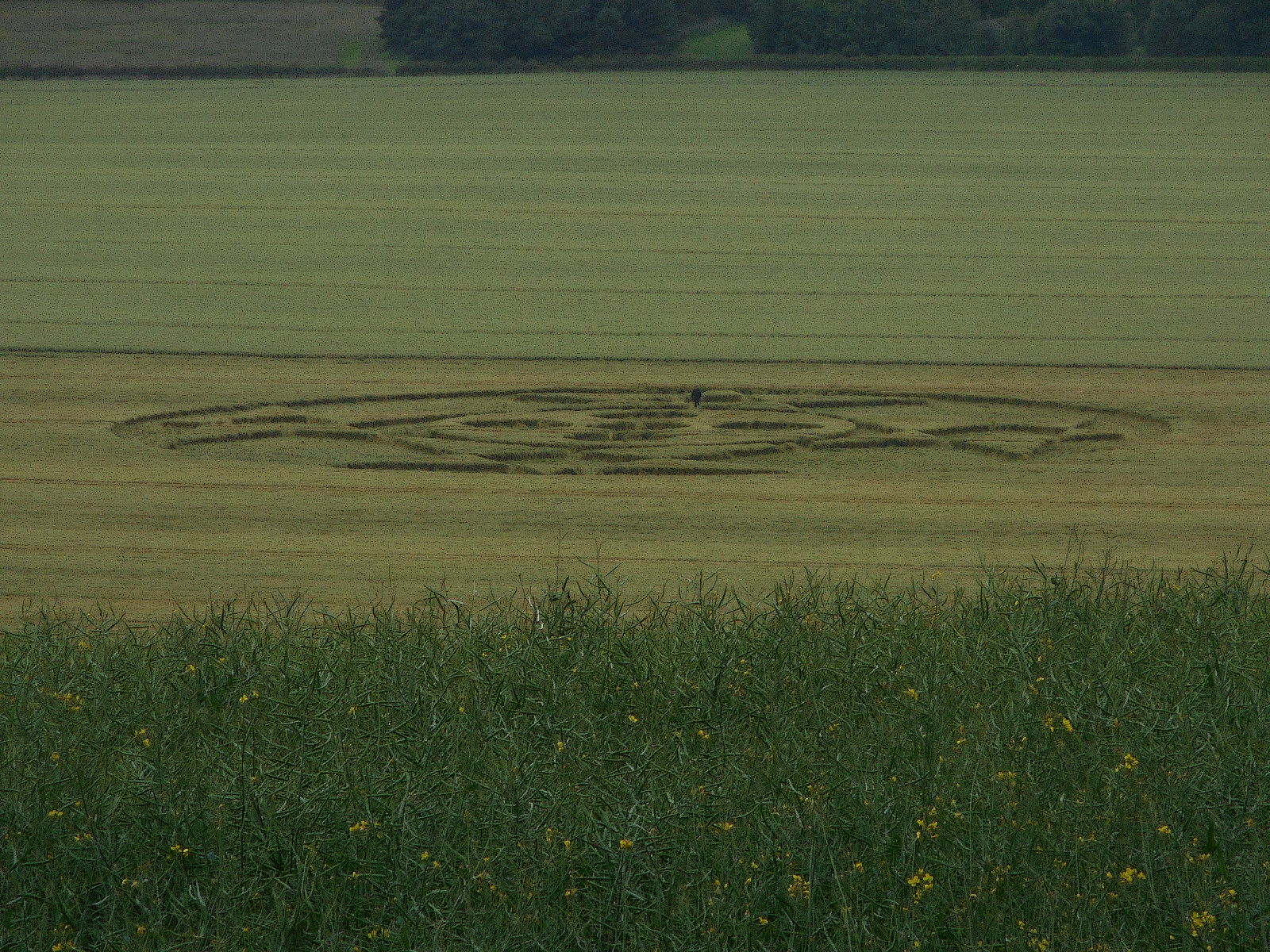
I once came up here with a bunch of new age types following a guided tour of Avebury. At that time, some aliens had constructed a rather impressive crop circle in the adjoining field which seemed entirely apposite. It was charming, although today’s floral display just inches ahead I feel in terms of dressing. Anyway, on that occasion, we all duly trooped inside the barrow which can be accomplished by sidestepping the frontal megaliths. It’s quite dark in there. Once inside, our leader sat on a rock quietly tapping away on his bodhran whilst his girlfriend flattened herself against a stone and advanced into some sort of hallucinogenic induced trance. ‘Ohmmmmm’, went everyone else. ‘Ermm’, I mumbled, heading back outside for a breath of fresh air and a chat with my shaman.
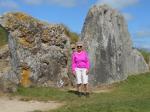
In fact, in as much as facts prevail in these parts, a current theory suggests that the acoustics inside the tomb played an important part in whatever rituals the ancients undertook at West Kennet. B and I go in because we can and because it would be rude not to.
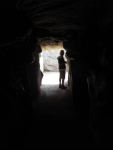
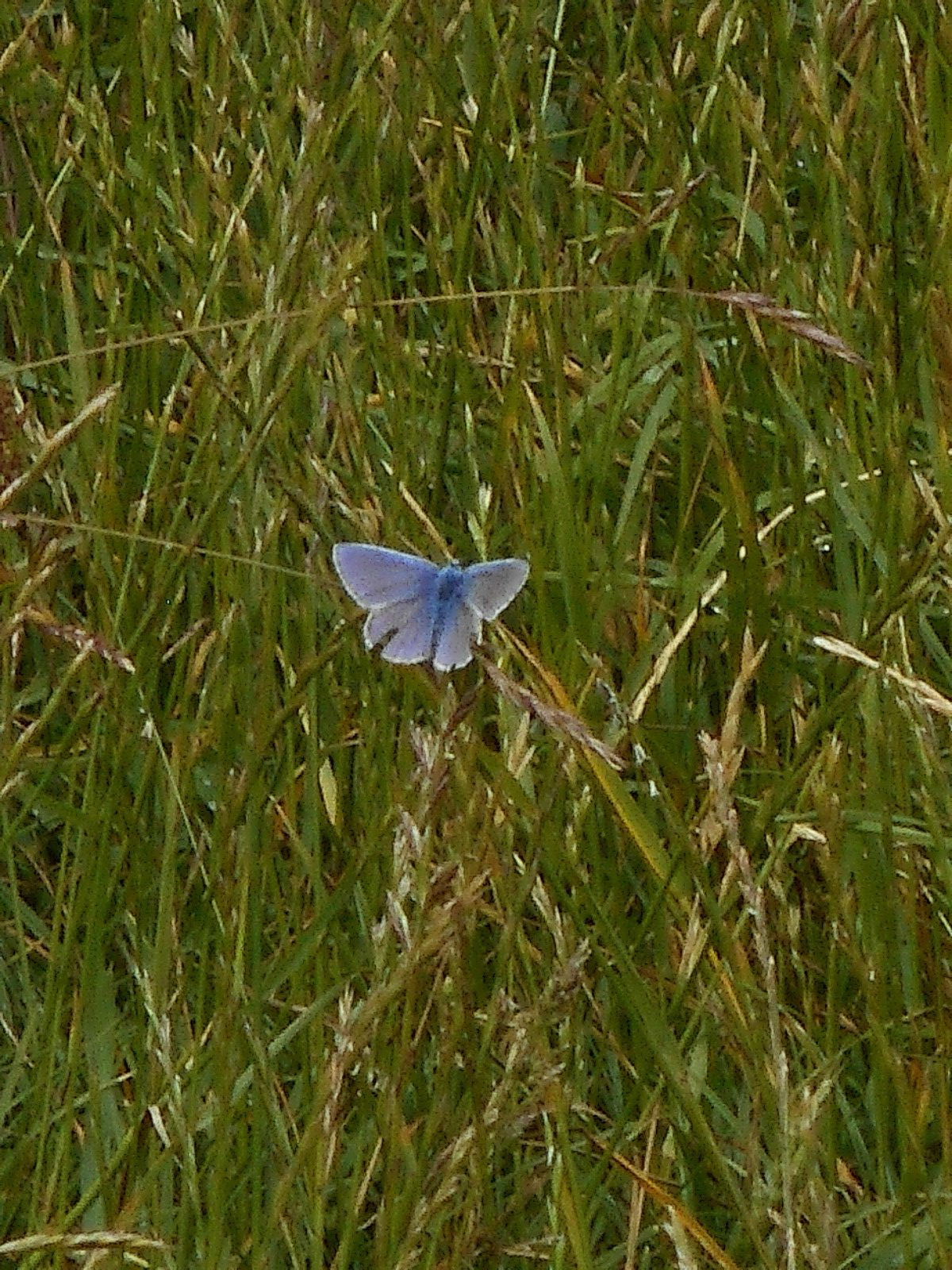
As B notes, it’s not oppressive inside; no bad vibes and not a ghost in sight but I don’t feel I’m missing out by not venturing the full 42 feet of the interior that’s accessible. However, on emerging from the otherworld, we do traverse the whole length along the top where we see bright red butterflies with black bodies, swallows playing happily and Pathfinder Powell watching us through binoculars from the safety of the A4. Because of the topography and architectural design, the pathfinder thinks we’re on the ridge of the hill; she doesn’t realise we’re actually standing on the West Kennet Long Barrow. Clever stuff this mystical landscape. As I keep saying, you’ve got to see the whole in order to join the dots.
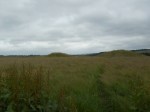
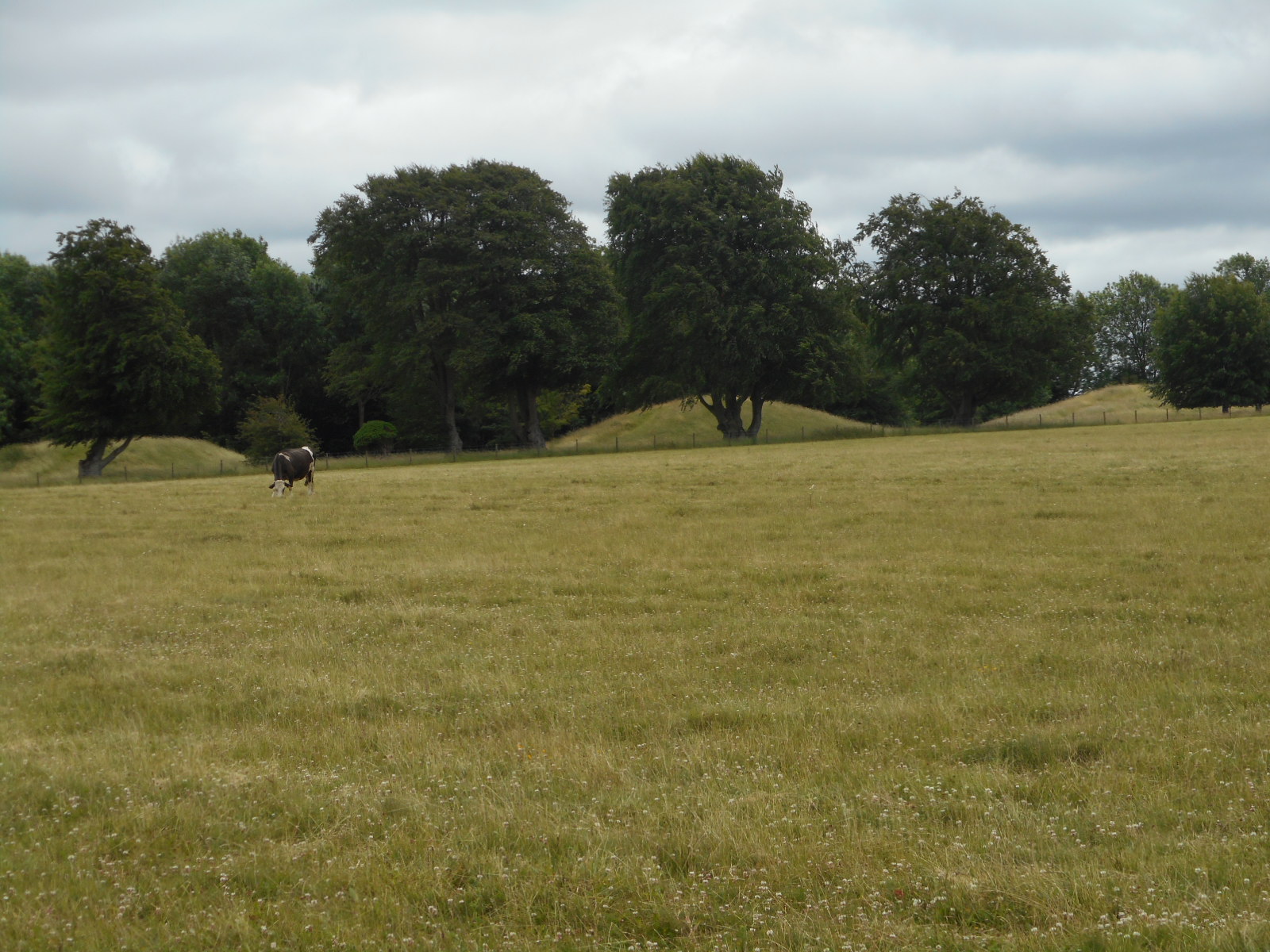
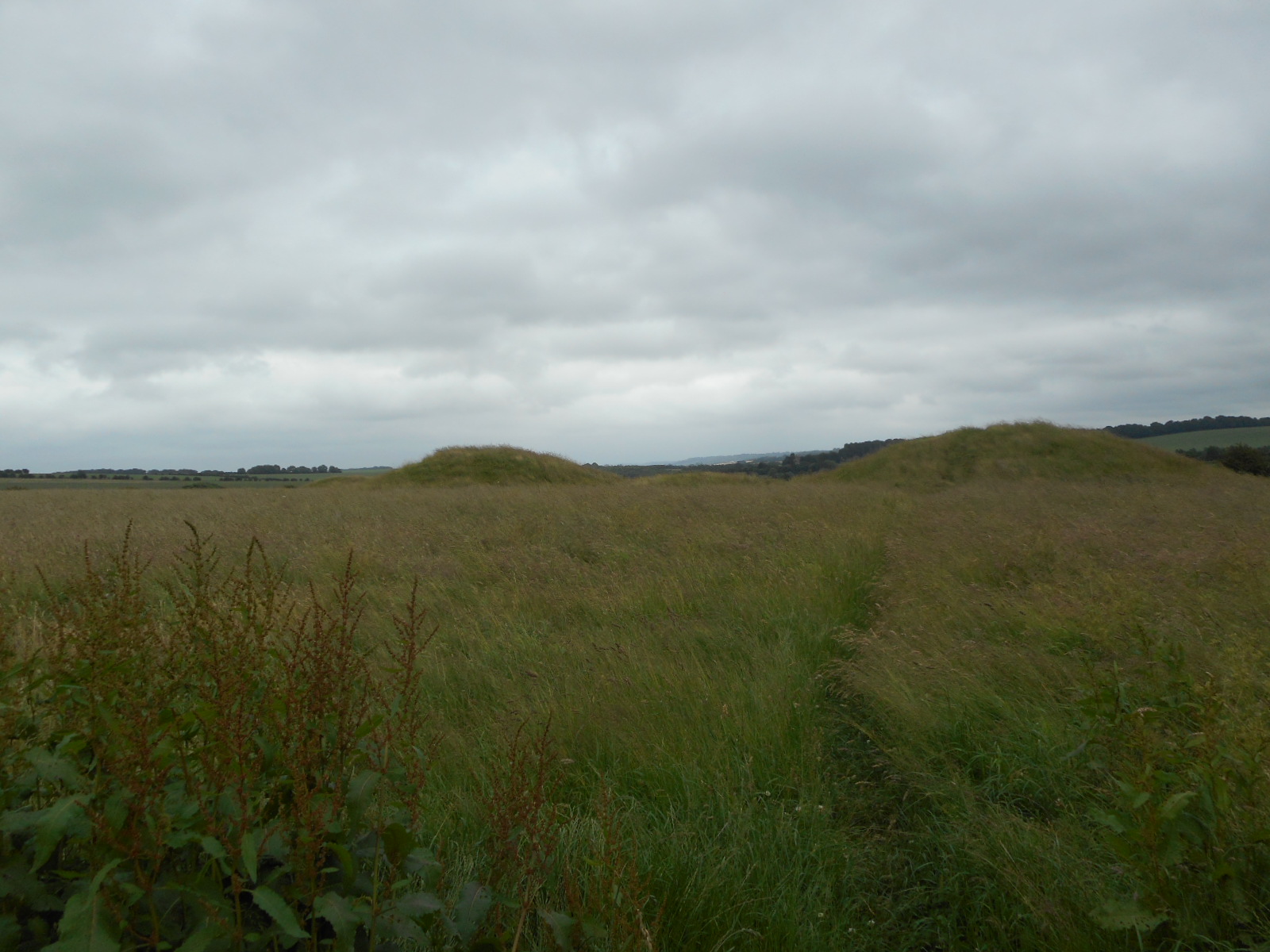
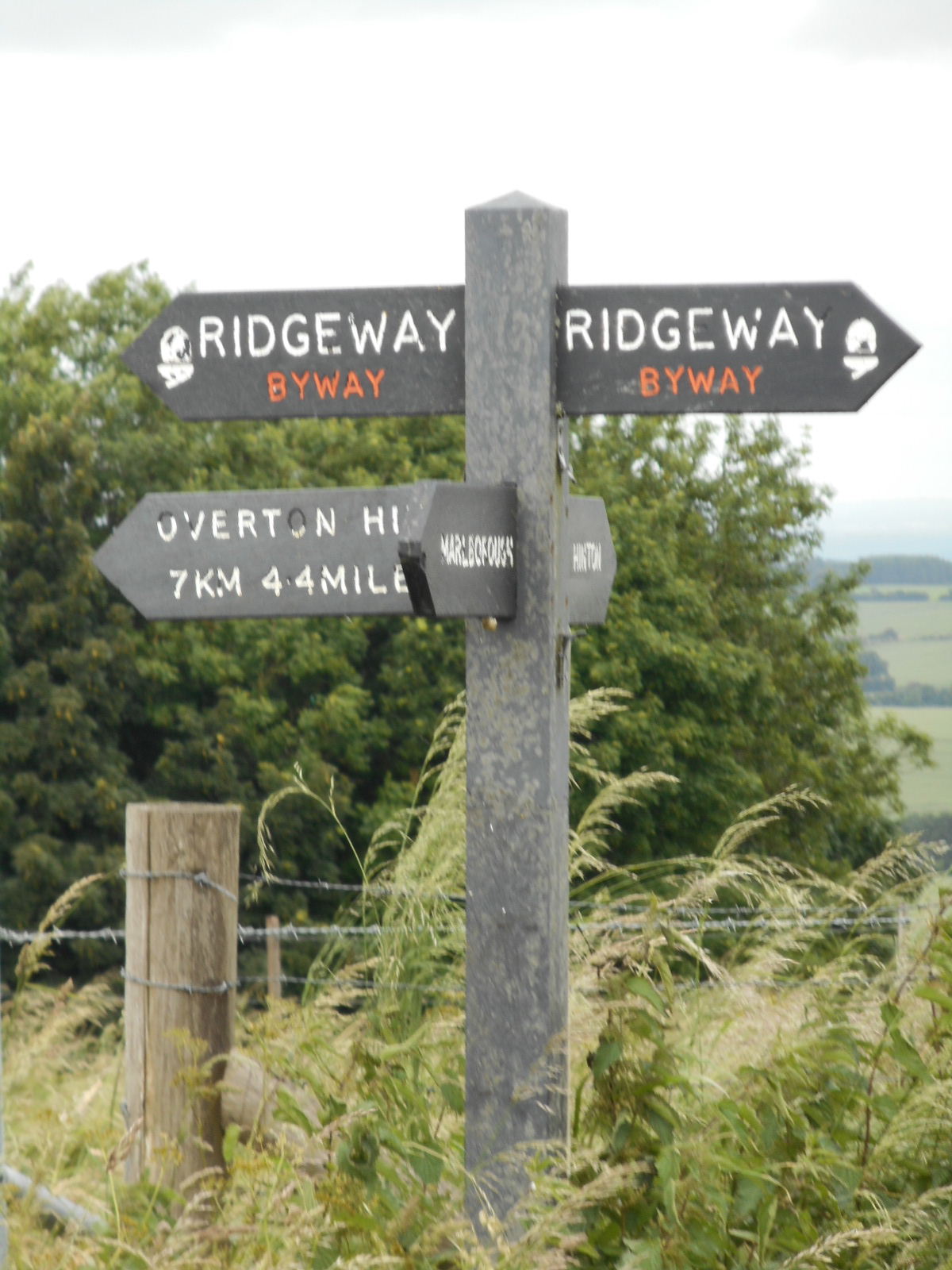
Back at Overton Hill, the car park seems unusually busy this morning. A Royal Mail van screams around the corner and stops in front of the three thousand years old tumuli. ‘Expecting something from Amazon?’ B asks struggling with her boots. There’s also a BT Openreach van, a British Gas van and a refuse lorry up here. I suspect this to be a Neolithic holding bay for tradespeople seeking a hiding place. Two ladies ask us to take their photograph to mark the beginning of their jaunt along the Ridgeway. They’re going in the opposite direction, all the way to Ivinghoe which is a mere 87 miles. ‘We’ve just completed The South Downs Way’, says one of them with a degree of jollity and we are suitably impressed. However, Pathfinder Powell, astute as ever, notes a distinct lack of rucksacks. They’re certainly not laden down like we three snails with our homes on our backs and we surmise that they must be paying someone to transport their baggage along the way. Not proper hikers then.
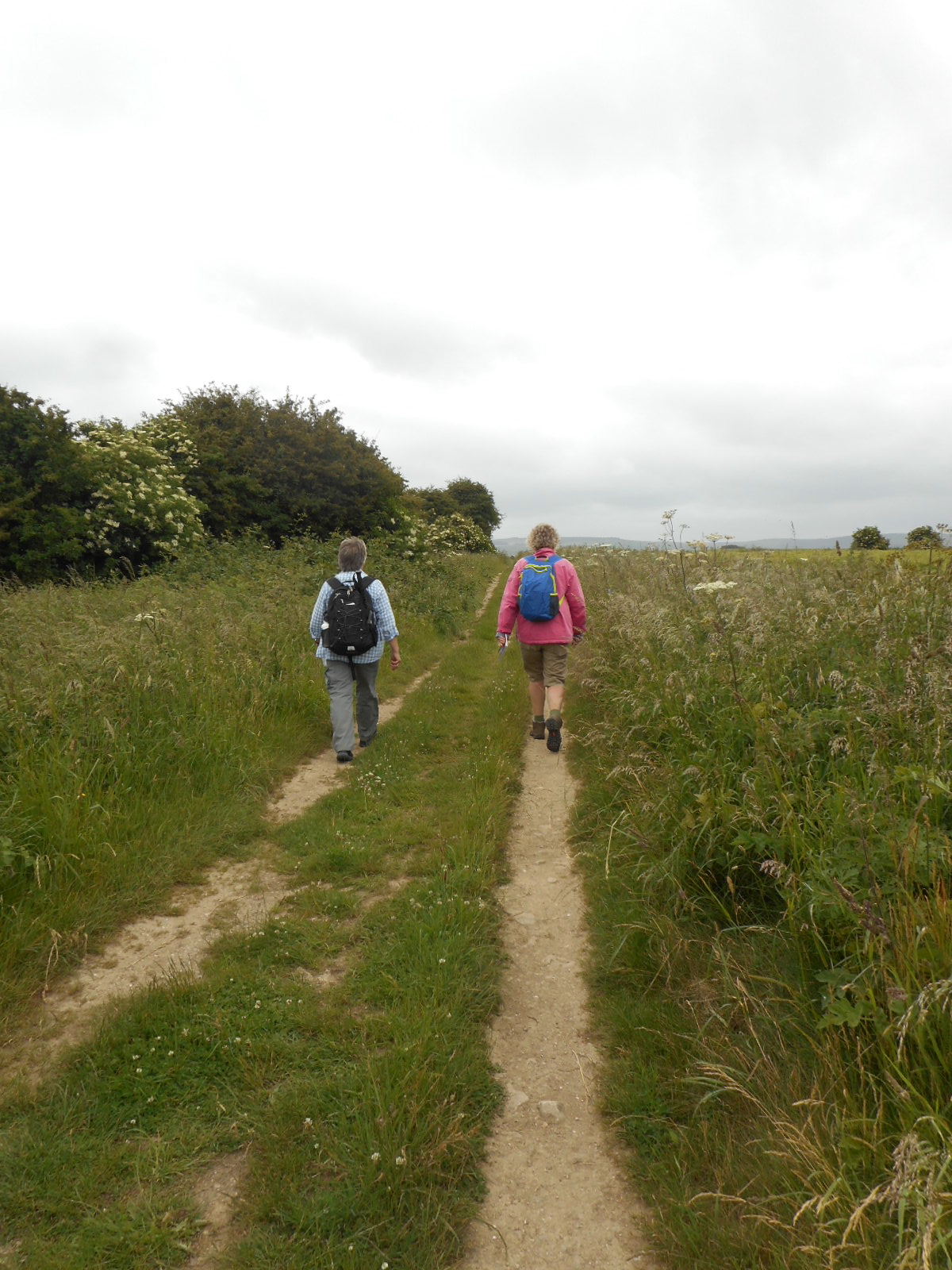
Rejoining the Great Stones Way, we are as big game hunters beating a path through a foliage-ridden route that may not have witnessed a traveller since the last of the ancients passed this way a few millennia ago. In fact, we won’t see a living soul until the end of this section. Even when we arrive in the village of East Kennet the place is as silent as the grave; well, with the exception of a few lorries taking an environmentally unfriendly short cut along a miniscule lane to the A4, but they are driven at top speed by unseen persons.
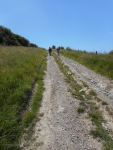
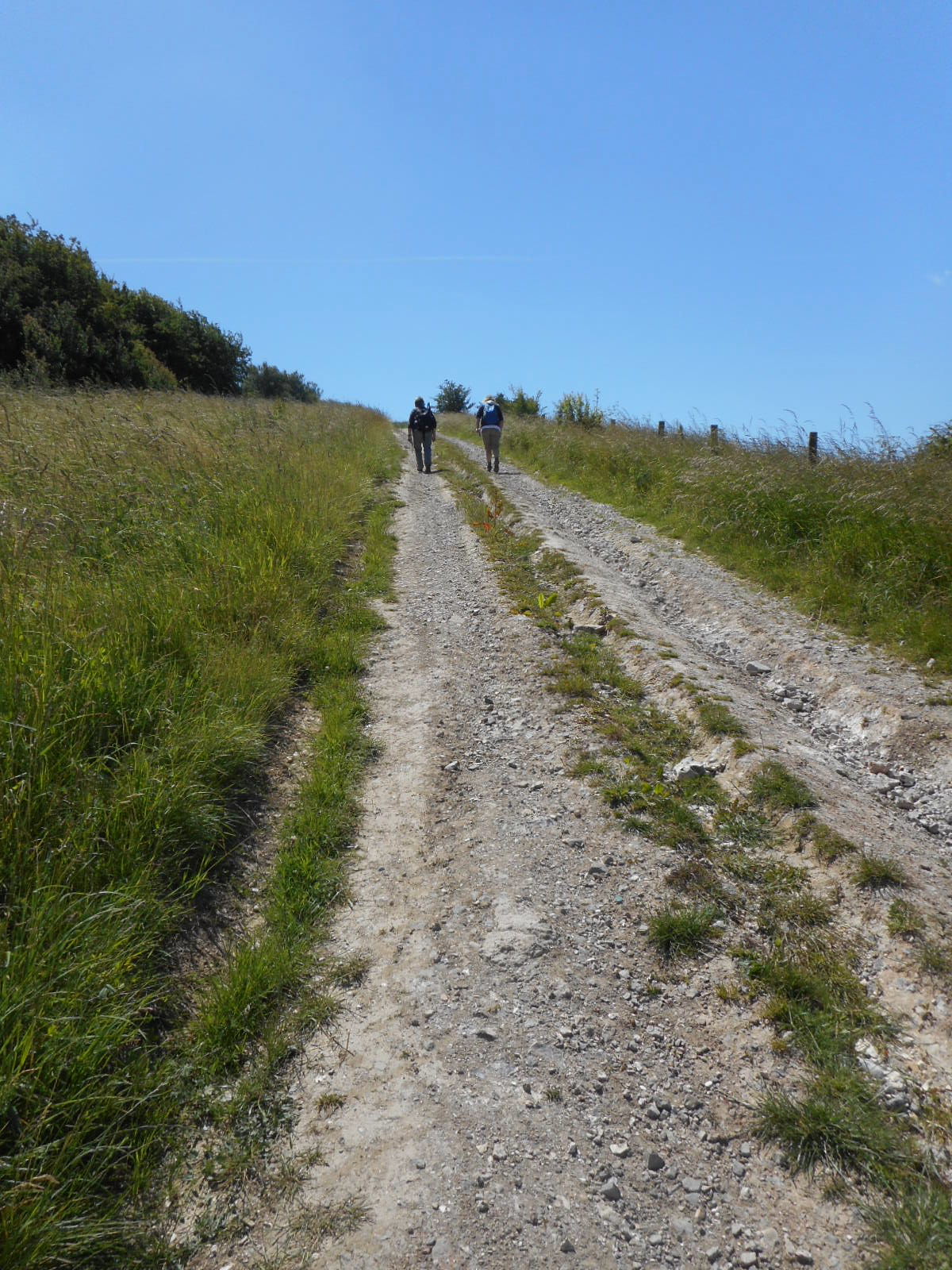
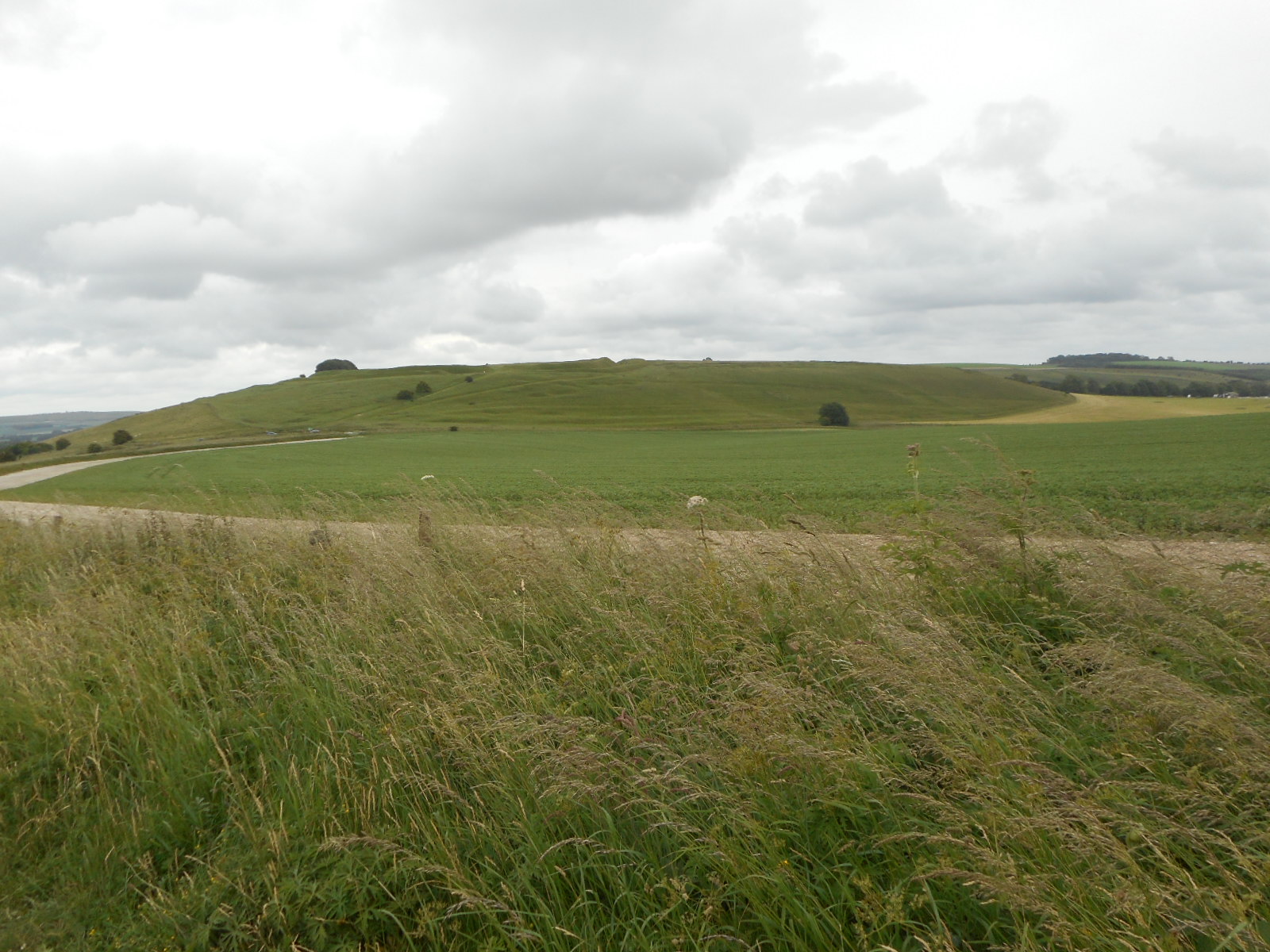
We skirt Manor Farm and begin our ascent of Lurkeley Hill. This is no rise or incline or any other of those false euphemisms: it’s a very steep hill with a hard-core chalk path which necessitates many stops along the way. I walked most of this route a couple of years ago in the opposite direction which was considerably easier. On that occasion I only saw one other traveller in two hours. I wonder if would-be hikers believe it to be too far from the main highlights of the Avebury World Heritage environment. In truth, nothing could be further from – well, the truth. The more we pause, the more opportunities there are to see the landscape in all its timeless glory. From up here, one can see the West Kennet Long Barrow which I’m almost sure isn’t possible from anywhere else.
And of course, Silbury Hill sits where it’s proudly remained for who knows how long. I recall that on that previous journey, I emerged from the woods at Cow Down on the other end of the track and caught my first glimpse of Silbury. I subsequently recorded my sense of awe and nothing less than spiritual well-being on stepping into what truly seemed the otherworld.
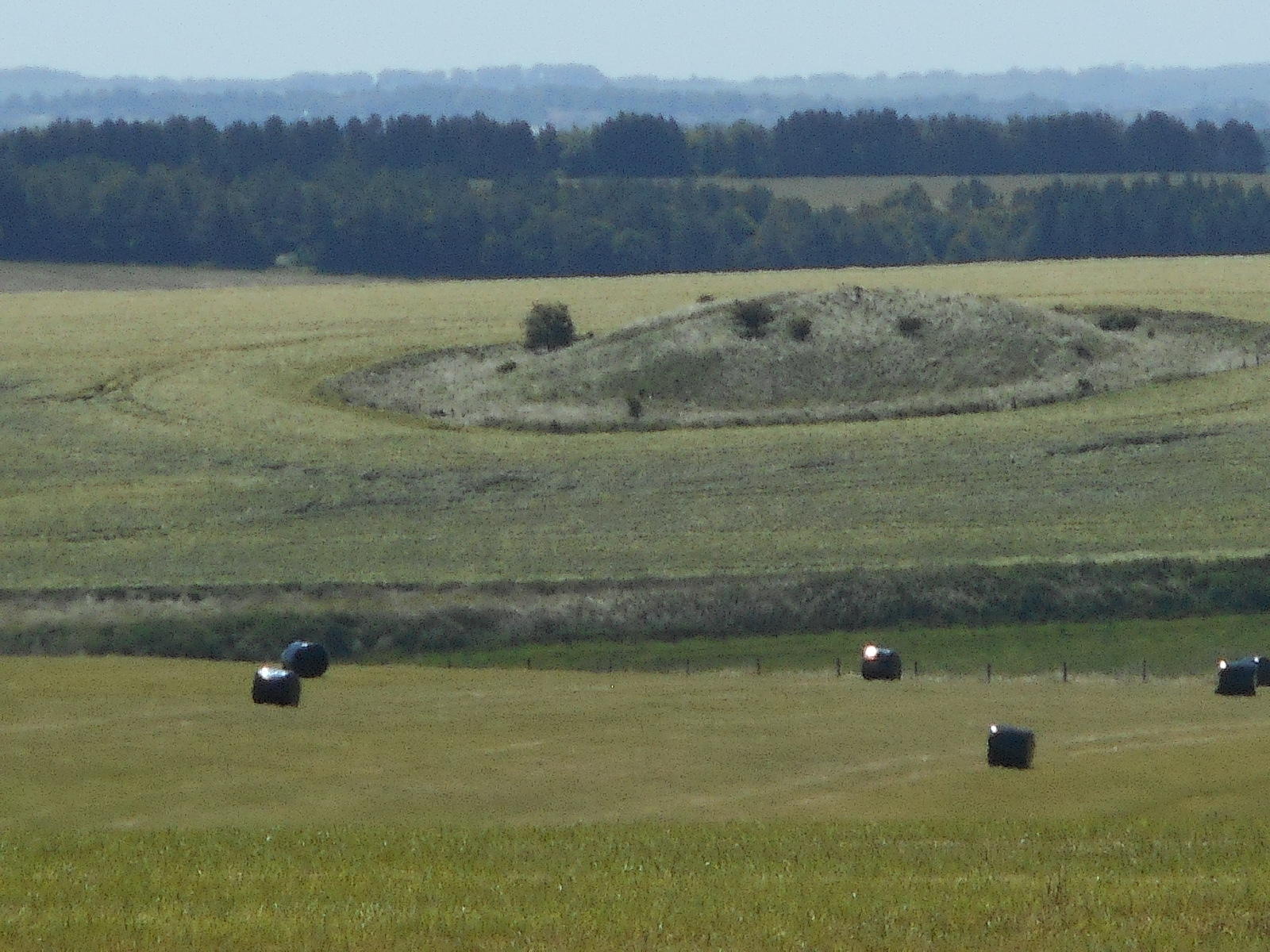
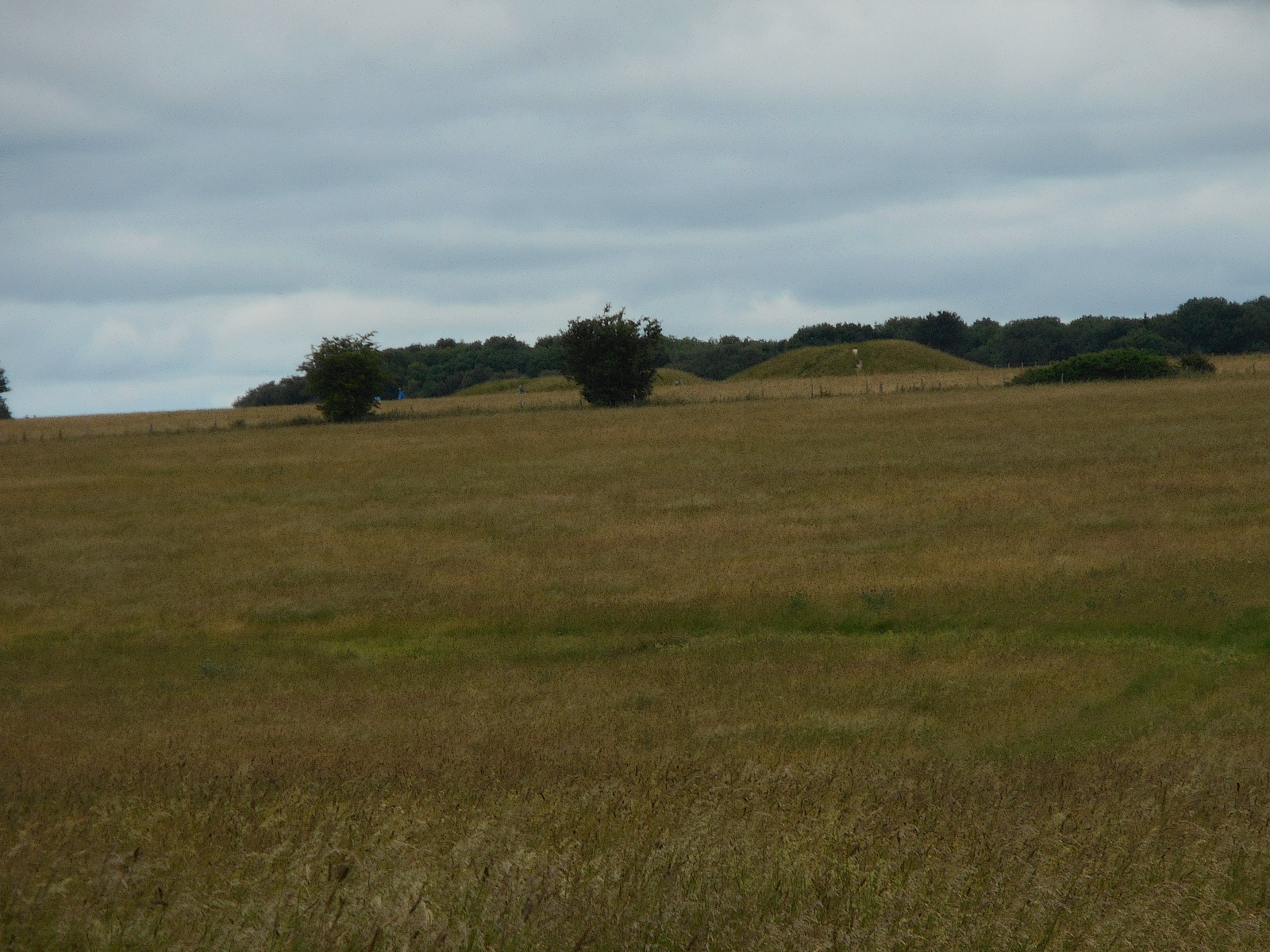
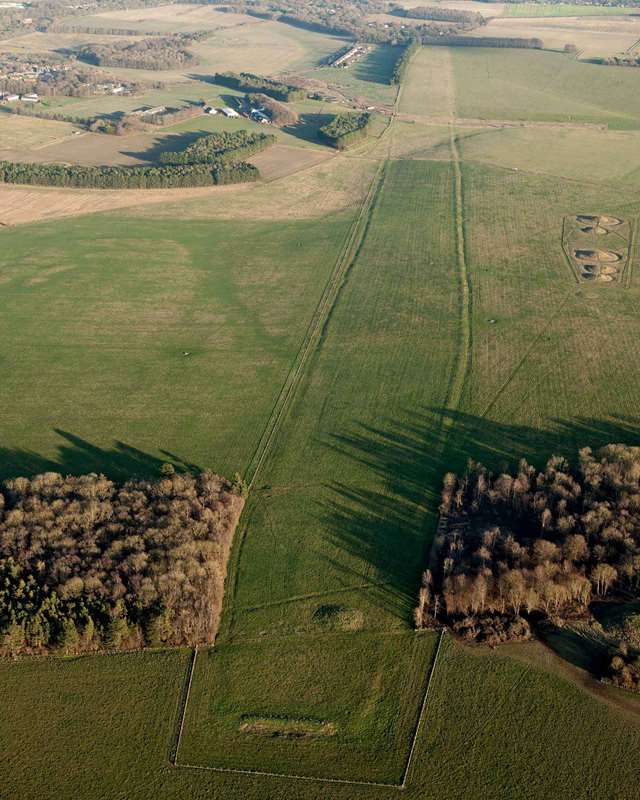
East Kennet also has a long barrow which, when constructed, was an even larger affair than its neighbour in West Kennet. For unknown reasons, its survival was not similarly successful and being now covered in centuries of turf and trees it’s difficult to see. I recently read a piece by someone who had tried to locate it by enquiring of his dowsing rods as to its whereabouts. Certainly Hutton has nothing to say on the matter but this is hardly surprising given his supercilious dismissal of the West Kennet Long Barrow. A much easier means of locating the East Kennet barrow might be to look at the Ordnance Survey Explorer map on which it’s clearly marked. It’s over there somewhere.
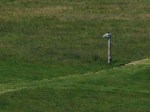
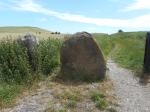
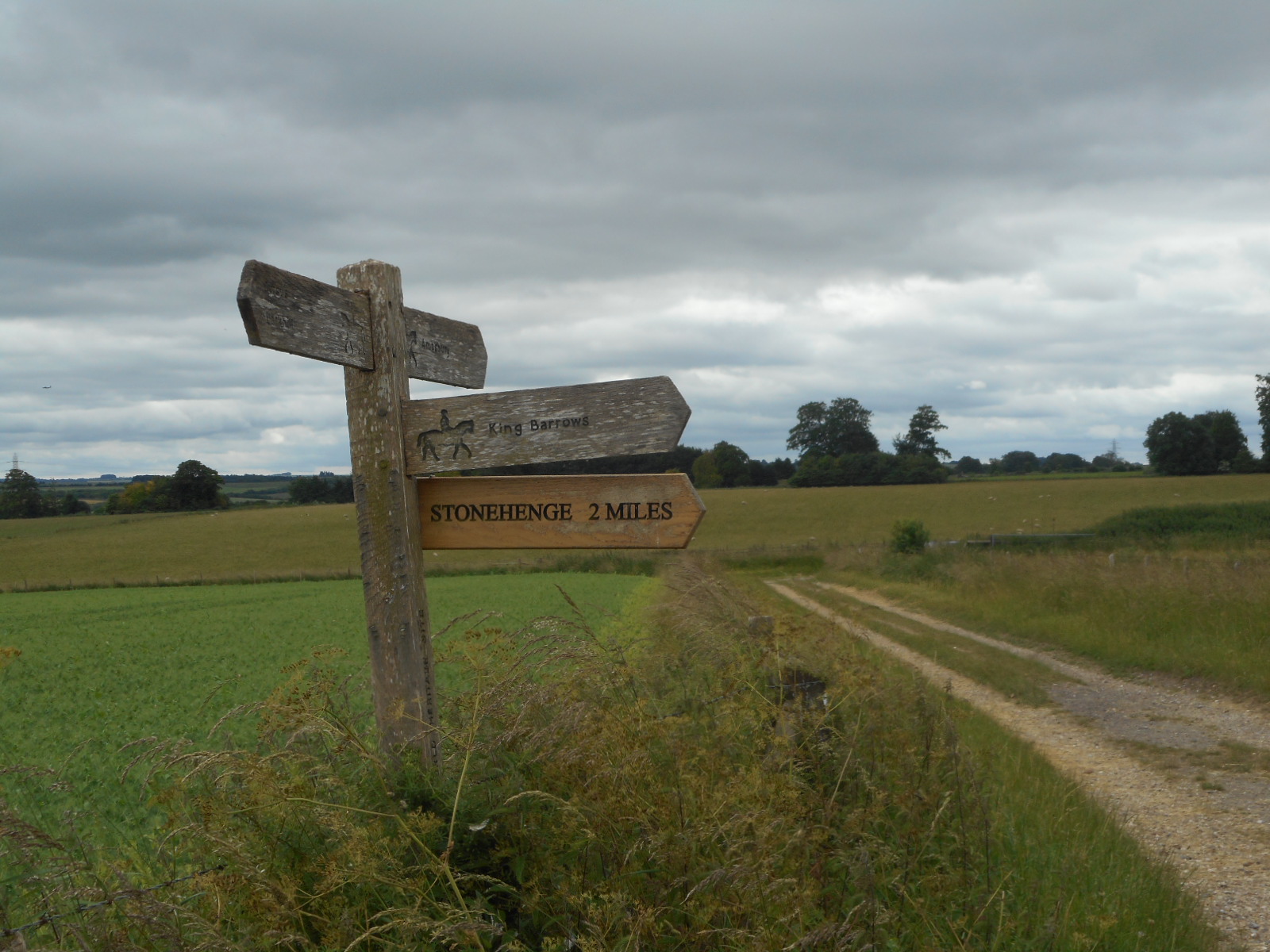
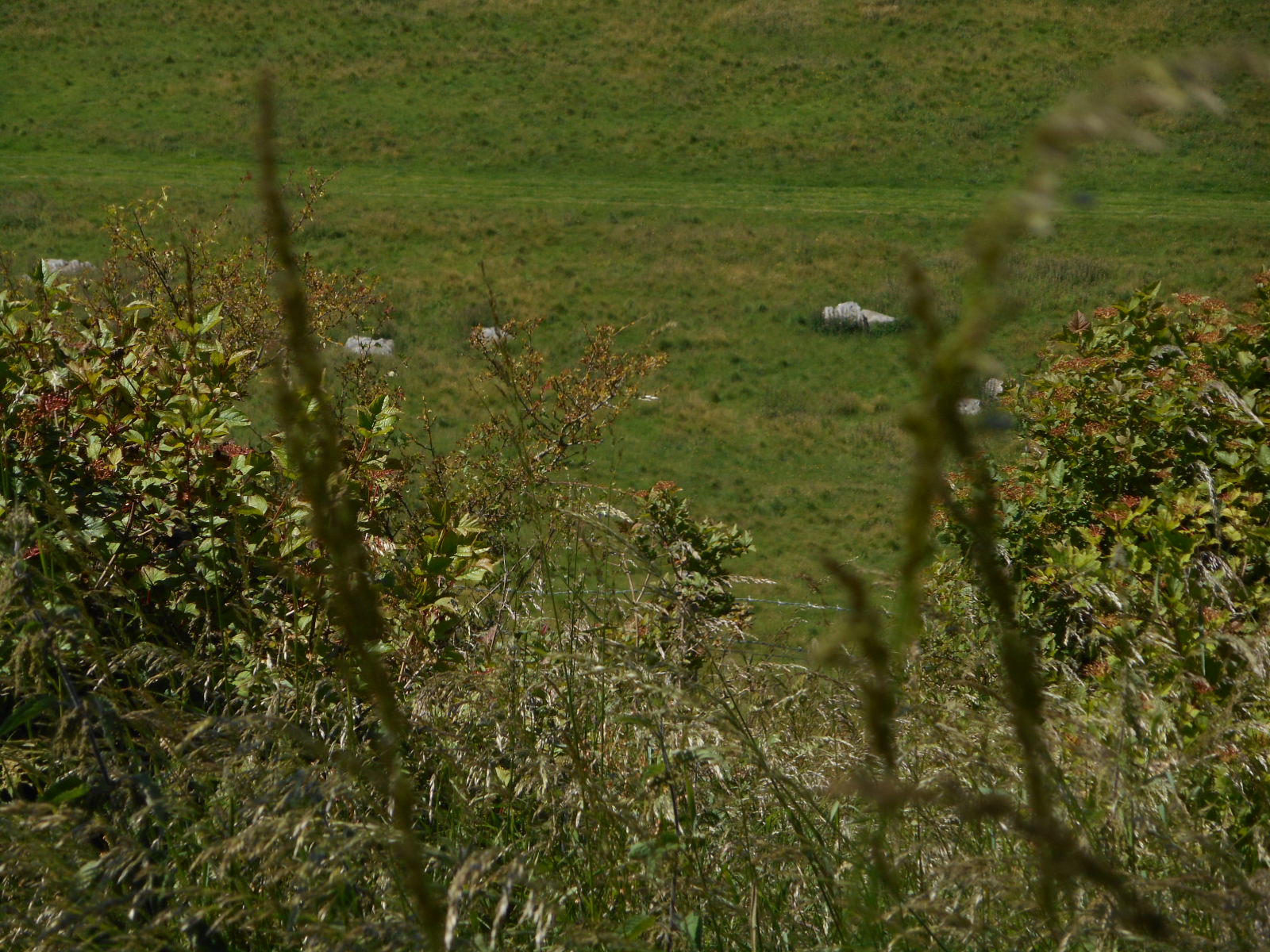
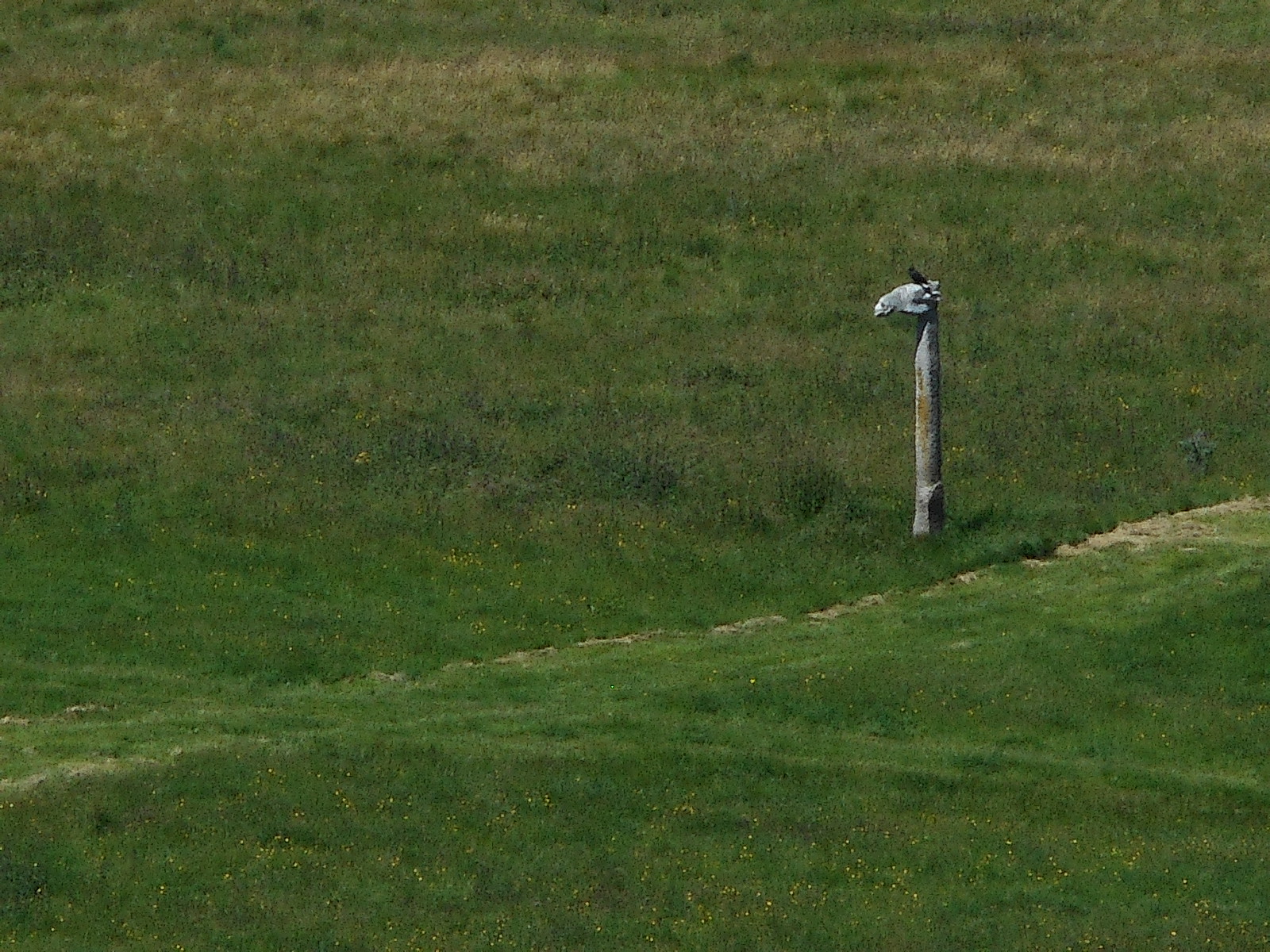
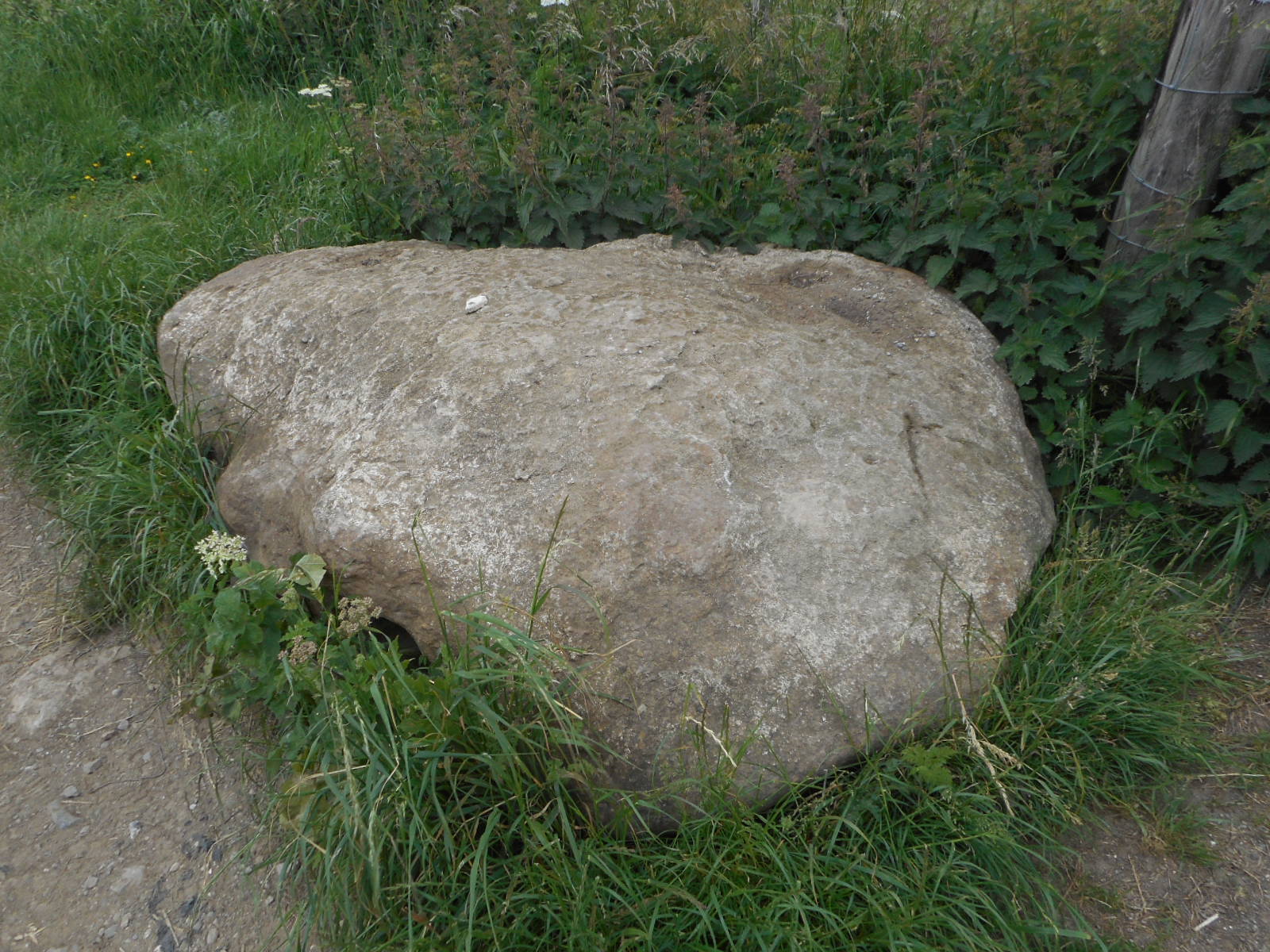
Meanwhile, we trudge on until, after a mile or so, Lurkeley Hill gives up on its attempt to beat us into submission and decides to behave more kindly by turning itself into a far more manageable state of affairs; but we still stop constantly to look at the scenery. For me, this part of the Ridgeway is my favourite among many worthy competitors. Its slopes and valleys, with their multitudes of paths and tumuli, are difficult to better. Whilst looking down on a random display of sarsen stones, we notice a strange post. Even through binoculars, it’s difficult to discern the shape atop it which looks somewhat like a badger’s head. There’s definitely no chance of encrypting whatever has been written there although, on reflection, it may have said ‘to East Kennet Long Barrow’.
At the place where the Wansdyke crosses the Ridgeway, surely a point of great significance, I bring up the thorny subject of lunch. B and Pathfinder Powell are rather rigid when it comes to meal-times; although, it has to be said, not so inflexible when it comes to the contents of their picnic boxes. Having completed our official stretch of the Great Stones Way, we choose a spot to eat at the foot of Knap Hill. Keeping strictly to my Slimming World regime, I have cold chicken curry and saag dahl. I have to content myself with the discovery that cold saag dahl is actually rather nice whilst those two prepare for the advance on their goodies.
They’re eating five times as much as me on this holiday with fairly pathetic attempts to disguise the fact. Yesterday, they stopped off in Devizes on the pretence of purchasing some healthy salmon for dinner, only to be forced into the subsequent confession of scoffing tea and coffee cake on the wharf. The day before it was a sneaky Victoria Sponge. And if that wasn’t bad enough, I had to confront them with a packet of pork pies I found slyly hidden in the fridge behind my fat-free yoghurt. B is currently launching into what she refers to as a cheese and ham sandwich. Let me tell you, this comprises half a piglet and a round of cheddar jammed between two bread vans.
And this isn’t the half of it: when they’re not talking about making a bloody bread pudding – a feat which the pathfinder has the nerve to say she can accomplish with MY raisins that I religiously count on to my morning’s Weetabix – there’s a veritable sack-full of Haribos and chunks of Kendal Mint Cake which they give to each other in tiny portions. Don’t they know that I know they had a slab each whilst I was taking a Paula? How did they think they were going to whistle with their teeth stuck together with sugar? Even Hutton looks askance.
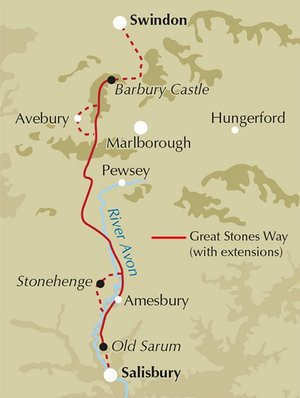
We have already decided not to continue onwards to what the guidebook calls the end of this particular stretch of the Great Stones Way. It comprises almost twelve miles without consideration of our earlier walk to and from the West Kennet Long Barrow. More importantly, a large part of it is on tarmac which we are keen to avoid. Pathfinder Powell looks at Knap Hill and suggests we could go up there for a stroll. It looks a bit steep to one whose stomach is still coming to terms with the saag dahl and my heart is set on seeing the Alton Barnes White Horse.
We wander back over the little road and come across twenty or thirty schoolboys who, having tramped into oblivion and back, have now been forced to erect a number of tents at the edge of the field in record time. We leave them to their own miseries and trot up the aptly named Walkers Hill which is part of the Pewsey Downs National Nature Reserve. I had the feeling the horse would be visible from here but in fact it’s further along the ridge towards Milk Hill. The pathfinder intends us to take a circular walk along the trail and back to the Wansdyke; and back to the Ridgeway; and back to Knap Hill. I don’t know where she gets her stamina but it transpires that her mind has been temporarily addled by an excess of Kendal Mint Cake because when we finally reach the horse, she gives in claiming an inability to walk any further. I can’t say I’m sorry.
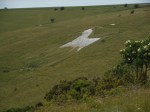
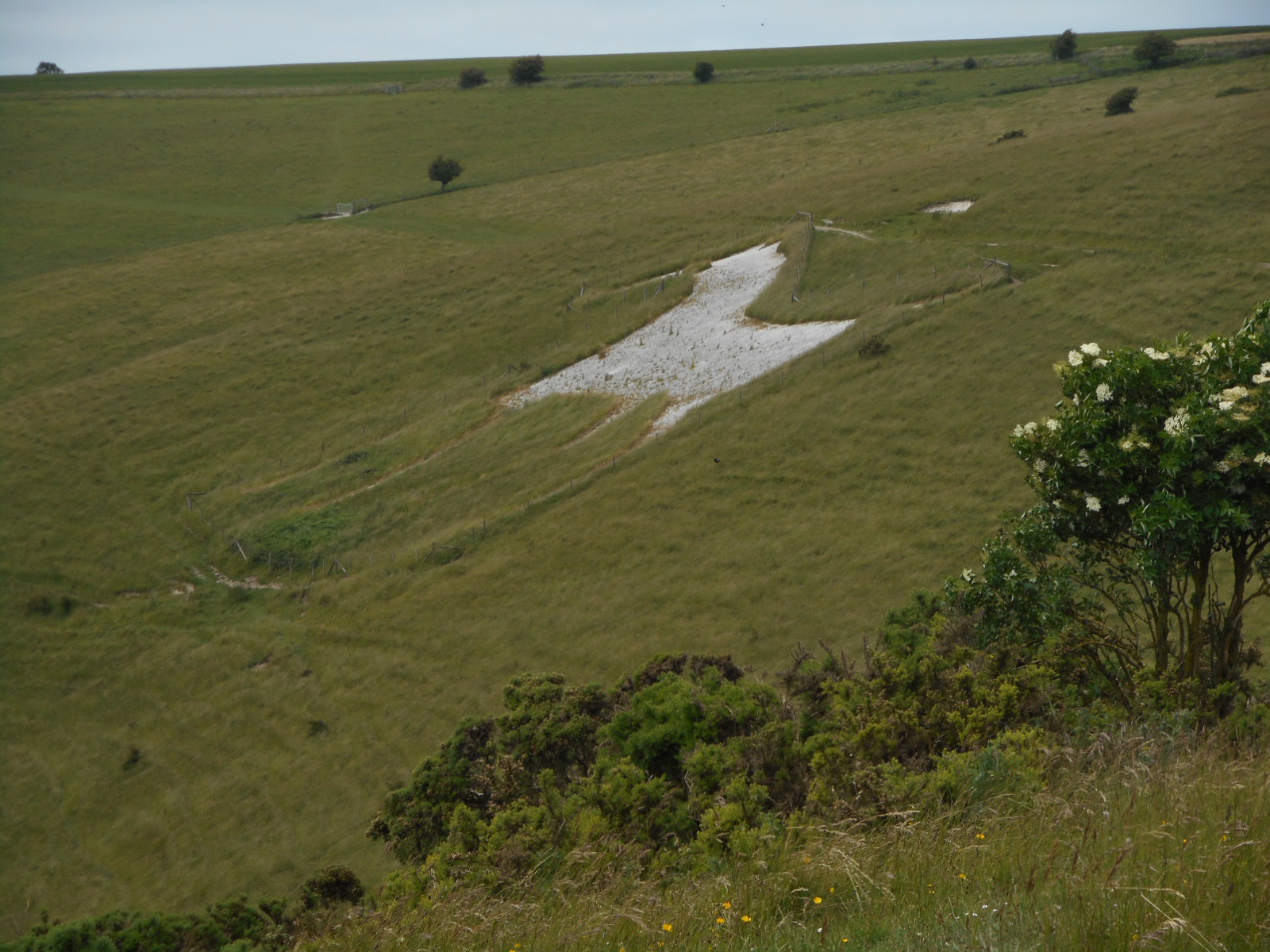
The Alton Barnes White Horse is 180 feet high and 160 feet long. Dating from 1812 – music please – it was designed by a journeyman inn sign artist affectionately known as Jack the Painter. The horse can be seen from a distance of twenty two miles; indeed, there are few days this week that we don’t see it on the way to somewhere else. On two different April Fools Days in the past, it has been transformed into a zebra. Now, on one hand, I would like to see that. On the other hand, I have to say it’s looking a bit grubby today and not at all like its beautifully scoured cousin over at Uffington.
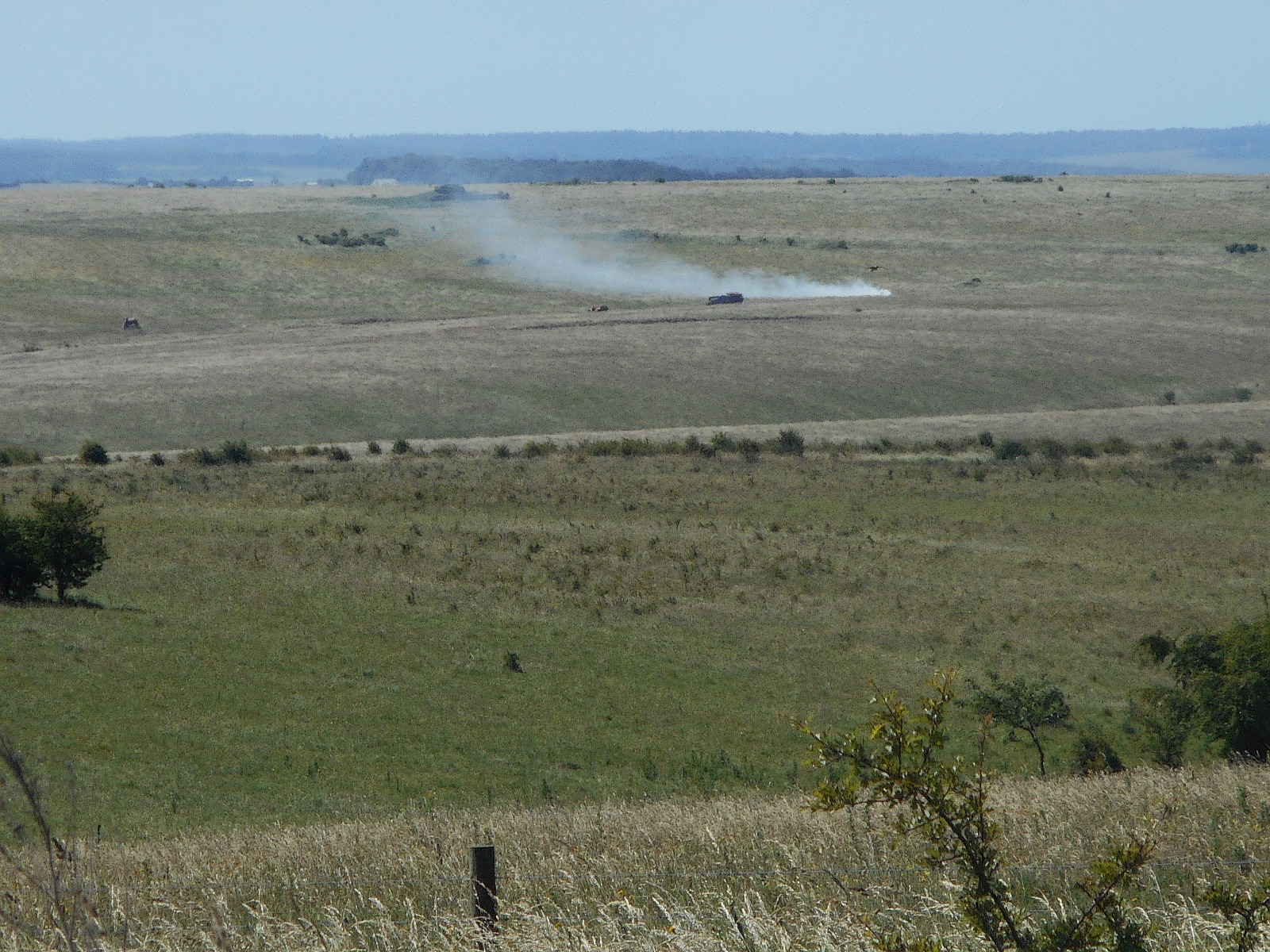
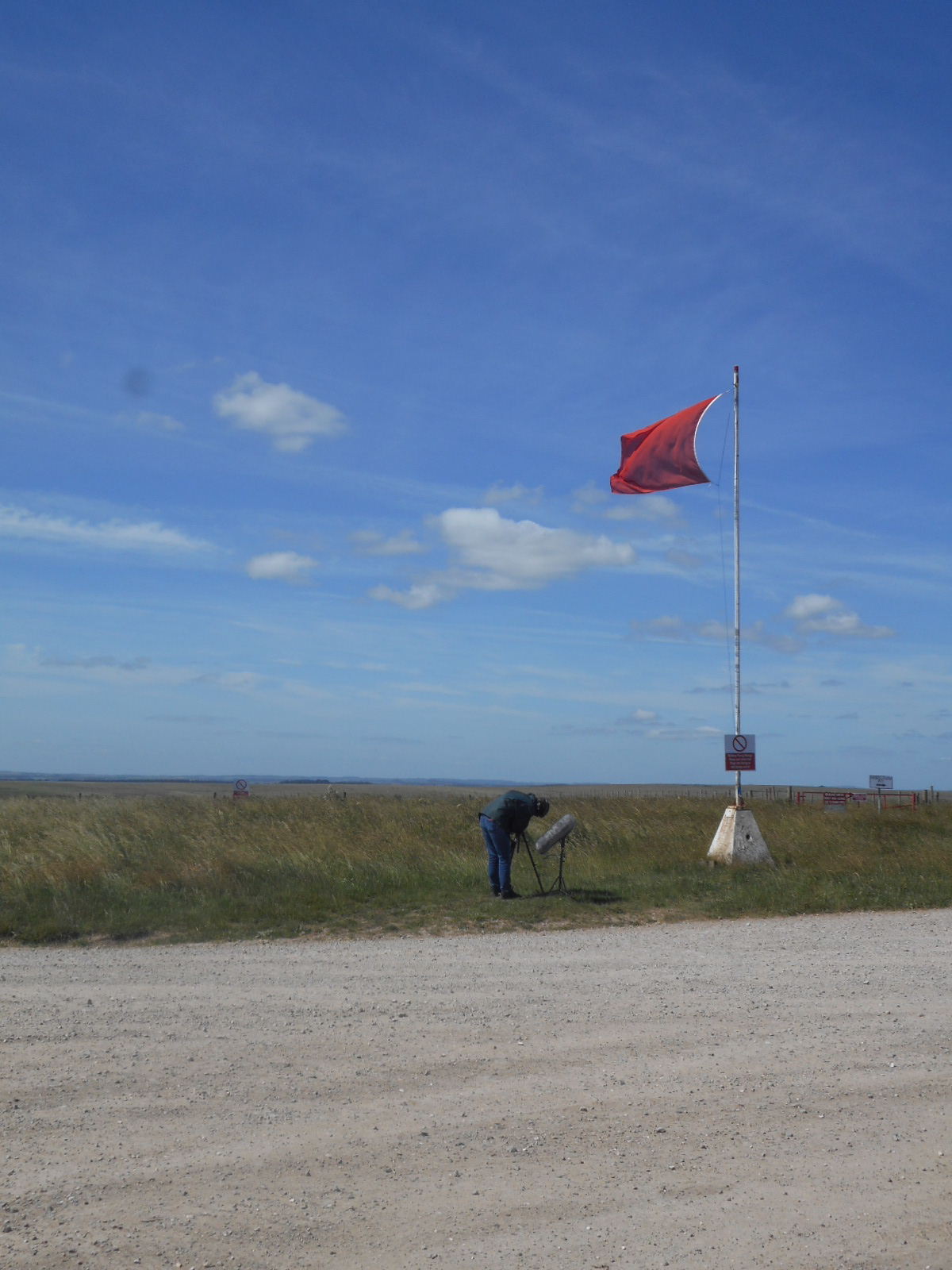
It’s sunny but a little windy up here as we sit next to the horse and embrace the perfectly stunning views across the huge landscape. On a distant ridge, we see miles of smoke and wonder whether stubble is still being burnt. On another day, we’ll discover that this is a clue to the war games being undertaken on Salisbury Plain. For now, however, we enjoy the flower covered serenity of this glorious spot in England’s finest.

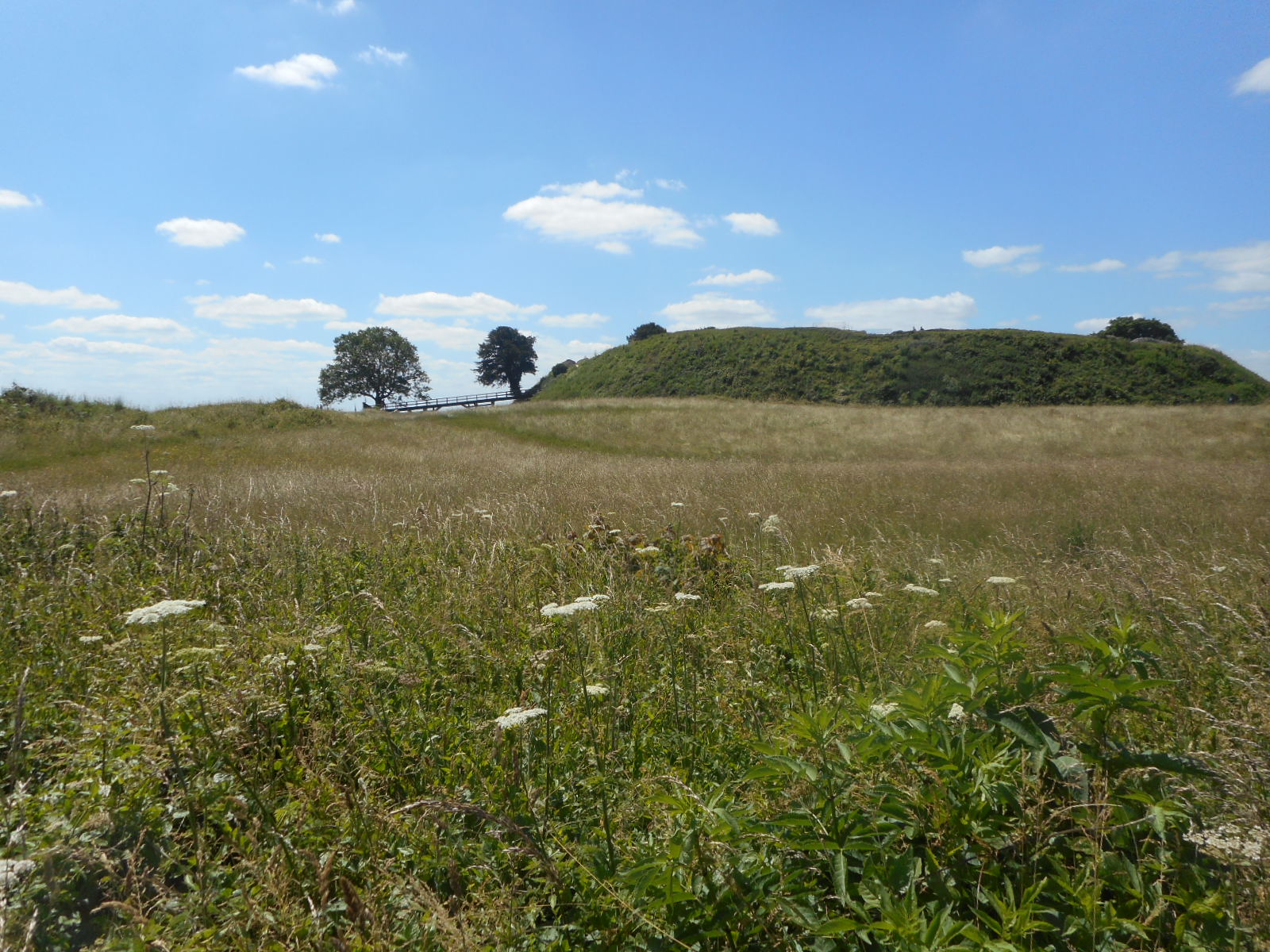 Considering its relatively close proximity to my home, I’ve never been to Old Sarum before. And having made that confession, here’s another: we don’t walk The Great Stones Way to Old Sarum. With a collective age of 179 years, thirty plus miles, several evenings of relaxing red wine behind us and collective exhaustion we drive to the joint. We are so familiar with these smoke-ridden hills and the ubiquitous Alton Barnes white horse that they seem part of our make-up as we head towards the end of this exhilarating trip. Actually, regarding those last two, one dominates the other this morning. Apparently, it’s possible to still see the white horse from Old Sarum but the war games are obviously reaching a climax today as the smoke seems thicker than ever before. In other directions, however, the views are perfect.
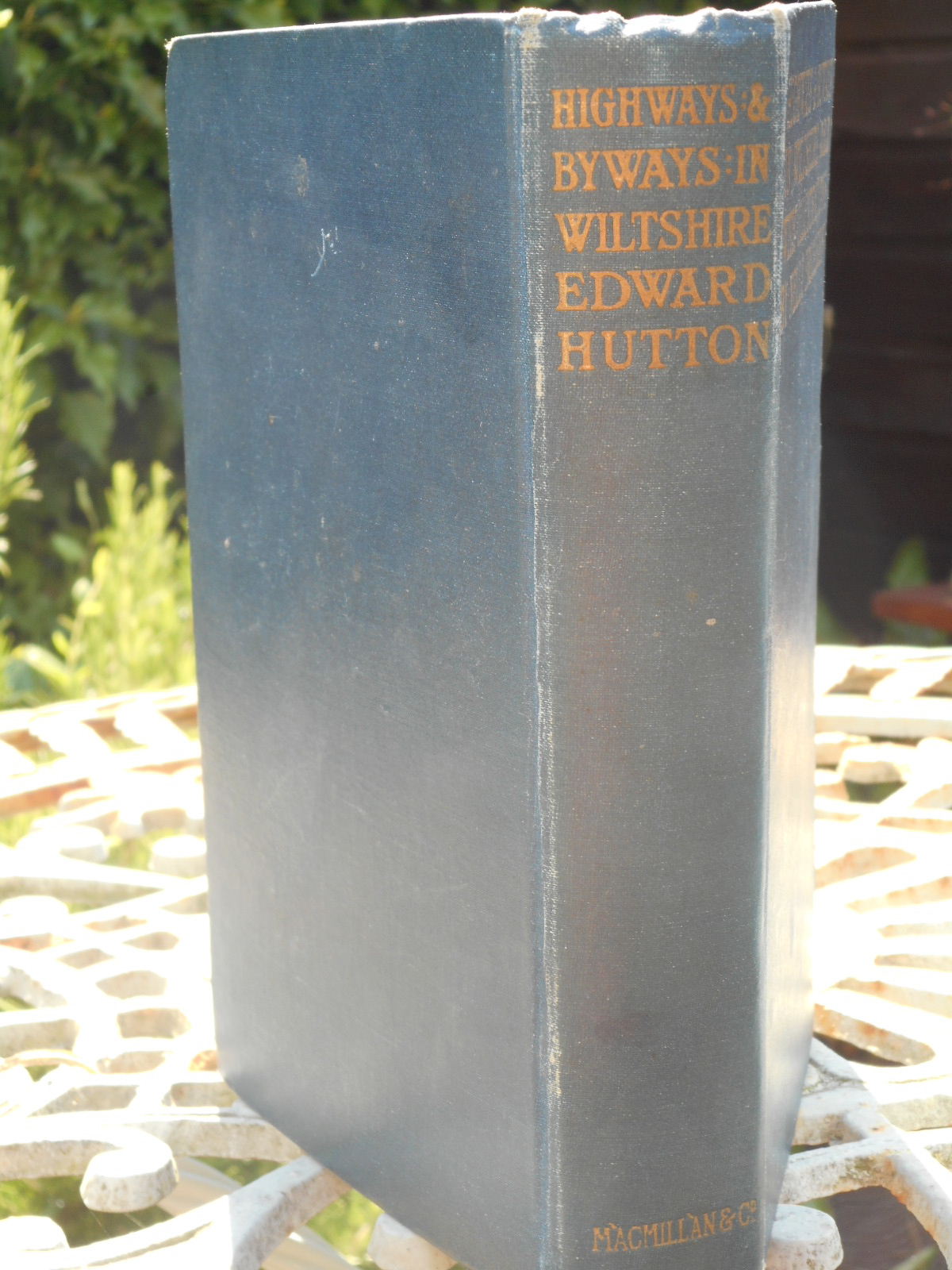
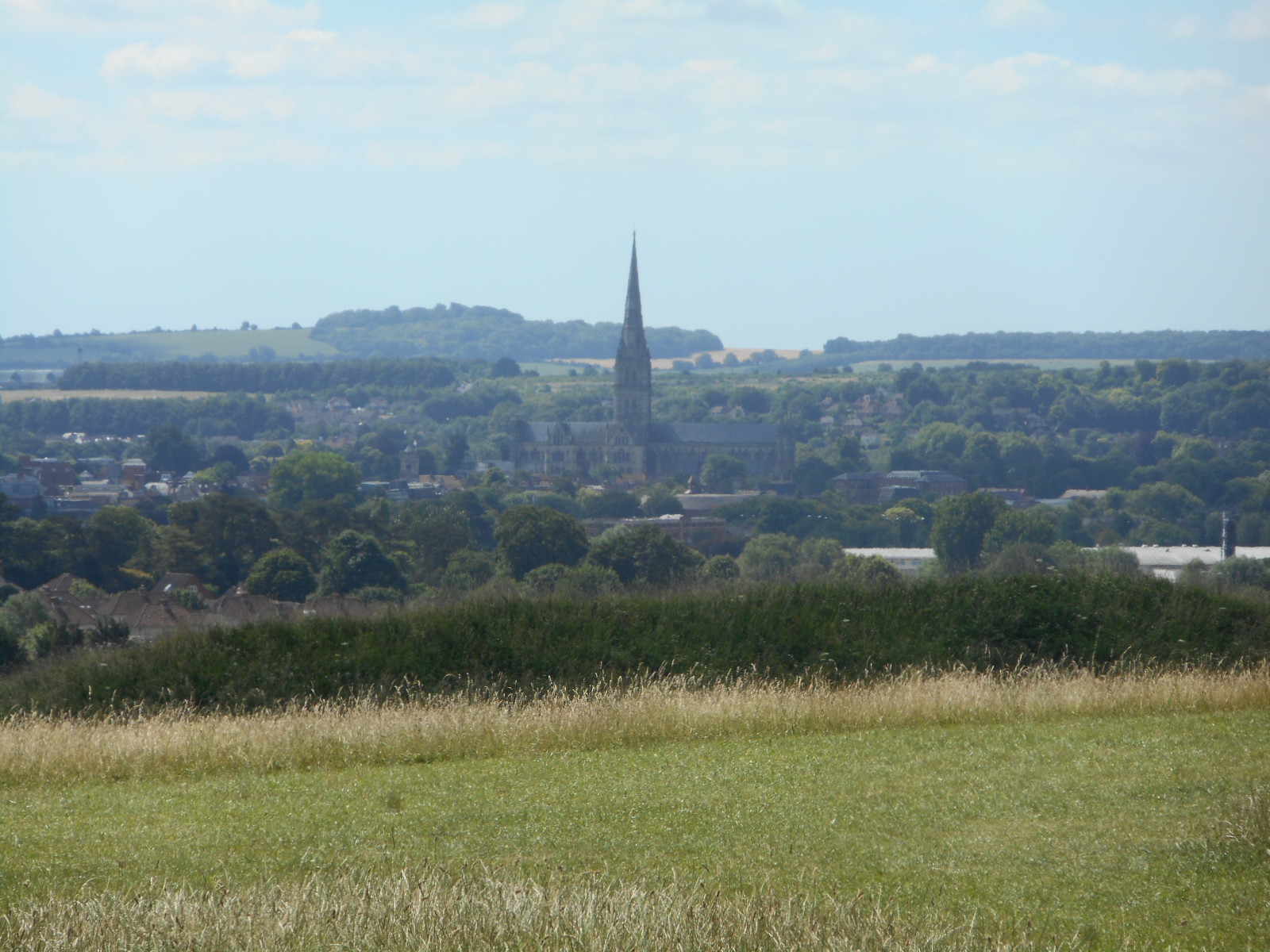 We look down onto the cathedral of nearby Salisbury with some detectable wistfulness on the parts of B and Pathfinder Powell. ‘You don’t want to go down there, do you?’ I ask cautiously. ‘Because I’m not’, I add as an afterthought. And, let’s face it, few venture into Salisbury these days. Sorry Salisbury because you’ve got a wonderful museum … ‘oh you and your conspiracy theories’, the pathfinder admonishes me. Hutton doesn’t have a clue what we’re talking about. He’s a big fan of Salisbury, going so far as to have a Nelly Erichsen illustration of the High Street Gate as the frontispiece in Highways and Byways in Wiltshire. ‘Just concentrate on where we are now’, I suggest.
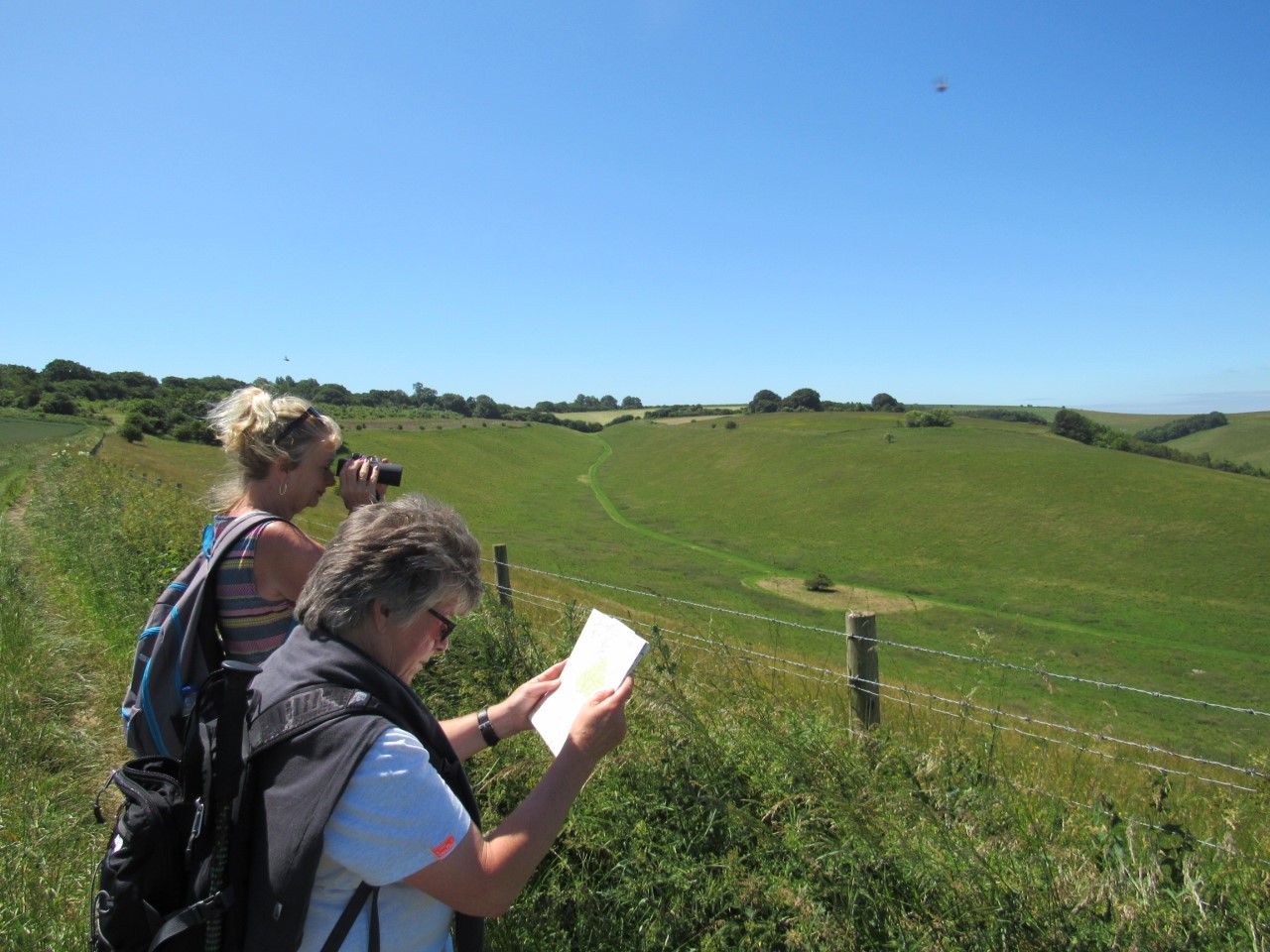 We abandon him and pay our £5.20 each to English Heritage to get in. To be fair, most of it – the best bits – are free but we are tourists as well as walkers and we want to have a look at the ruins and the more up to date information. Further, there’s a gift shop. There haven’t been many of those on this holiday and B and the pathfinder immediately stock up on jam, honey and sack-loads of ye olde Saxon fudge. I purchase a wooden ruler with all the kings and queens of England illustrated thereon for my daughter. She’s thirty seven. Further, this photo was taken elsewhere but I like it.
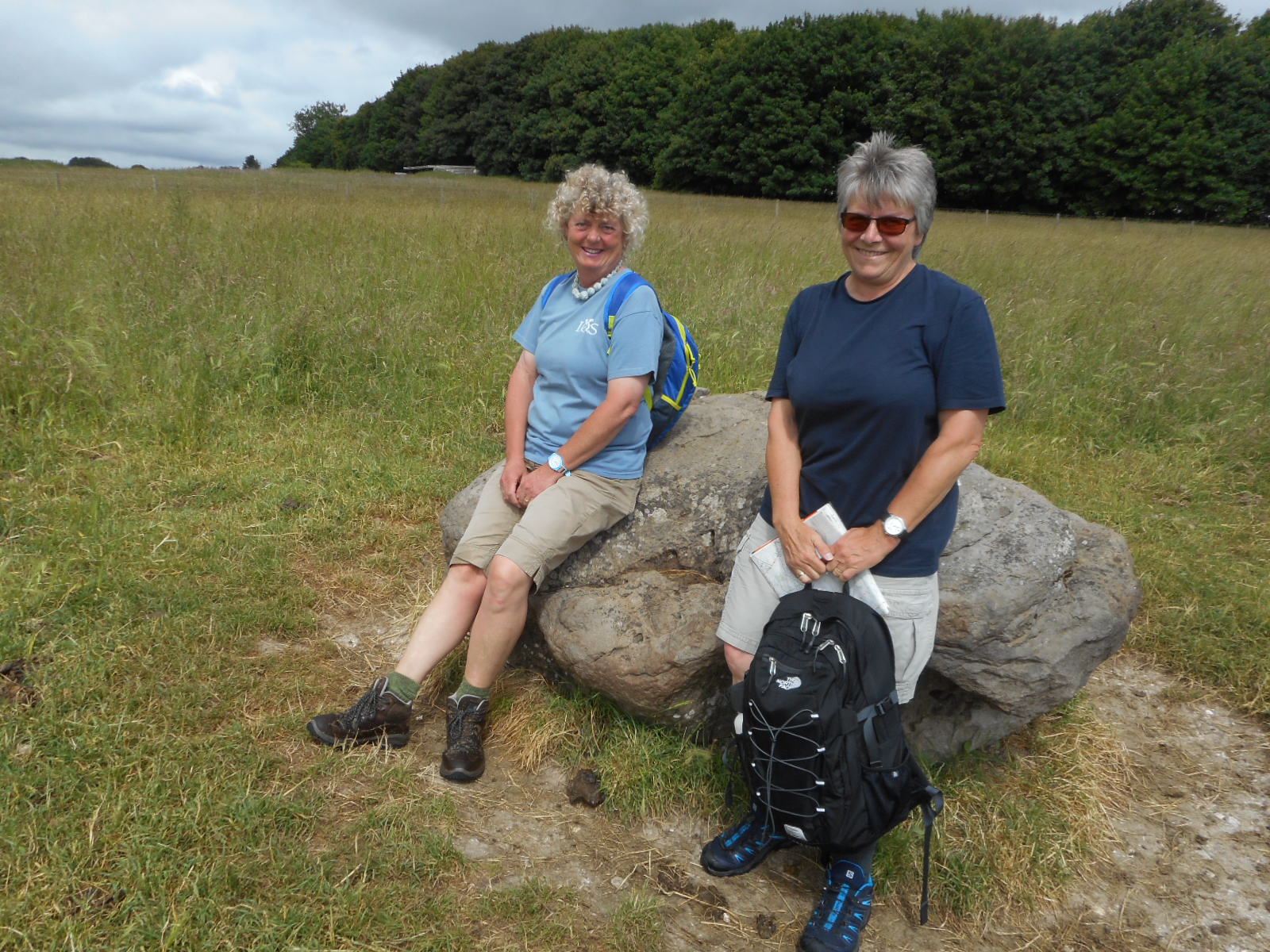
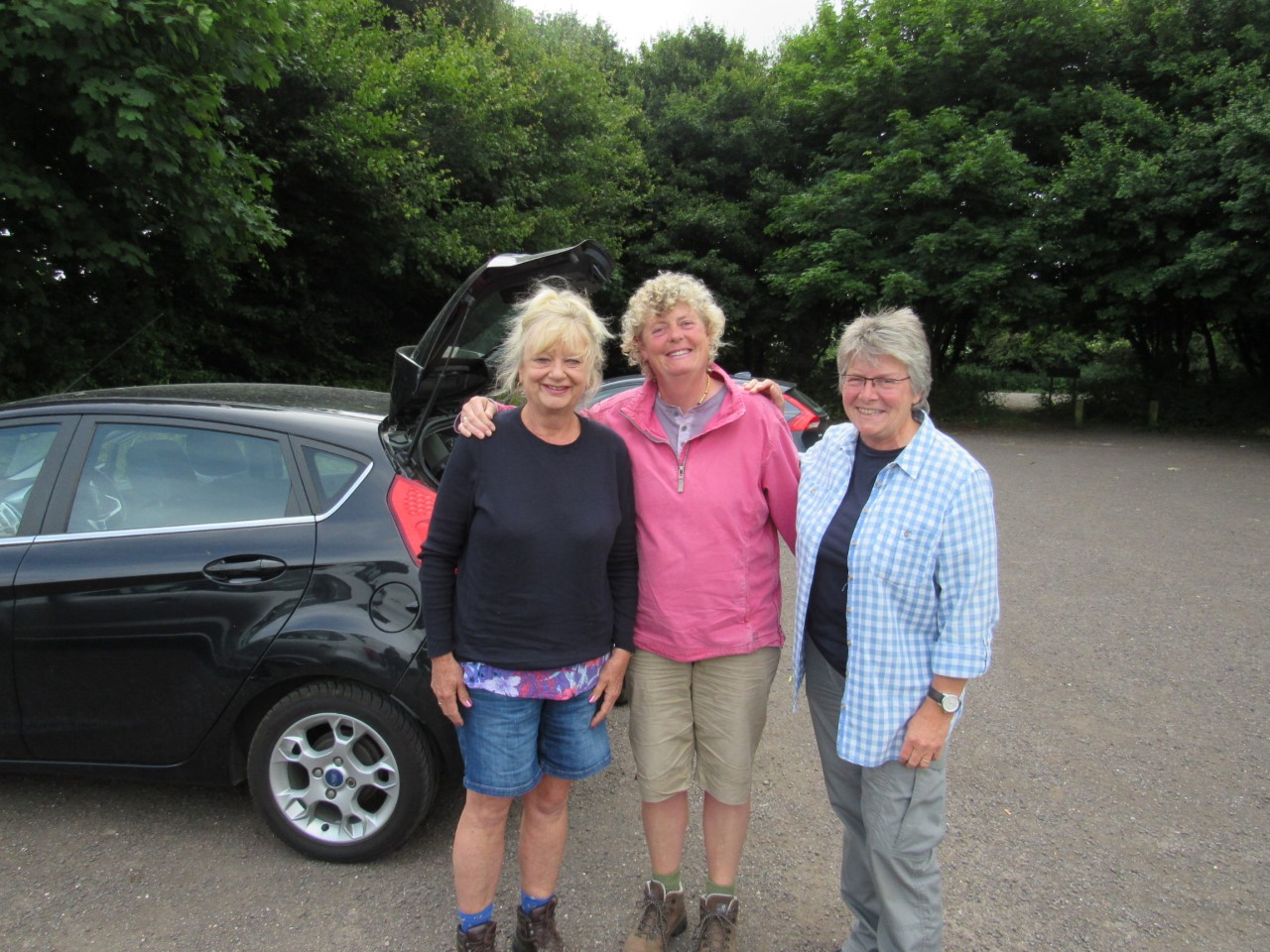
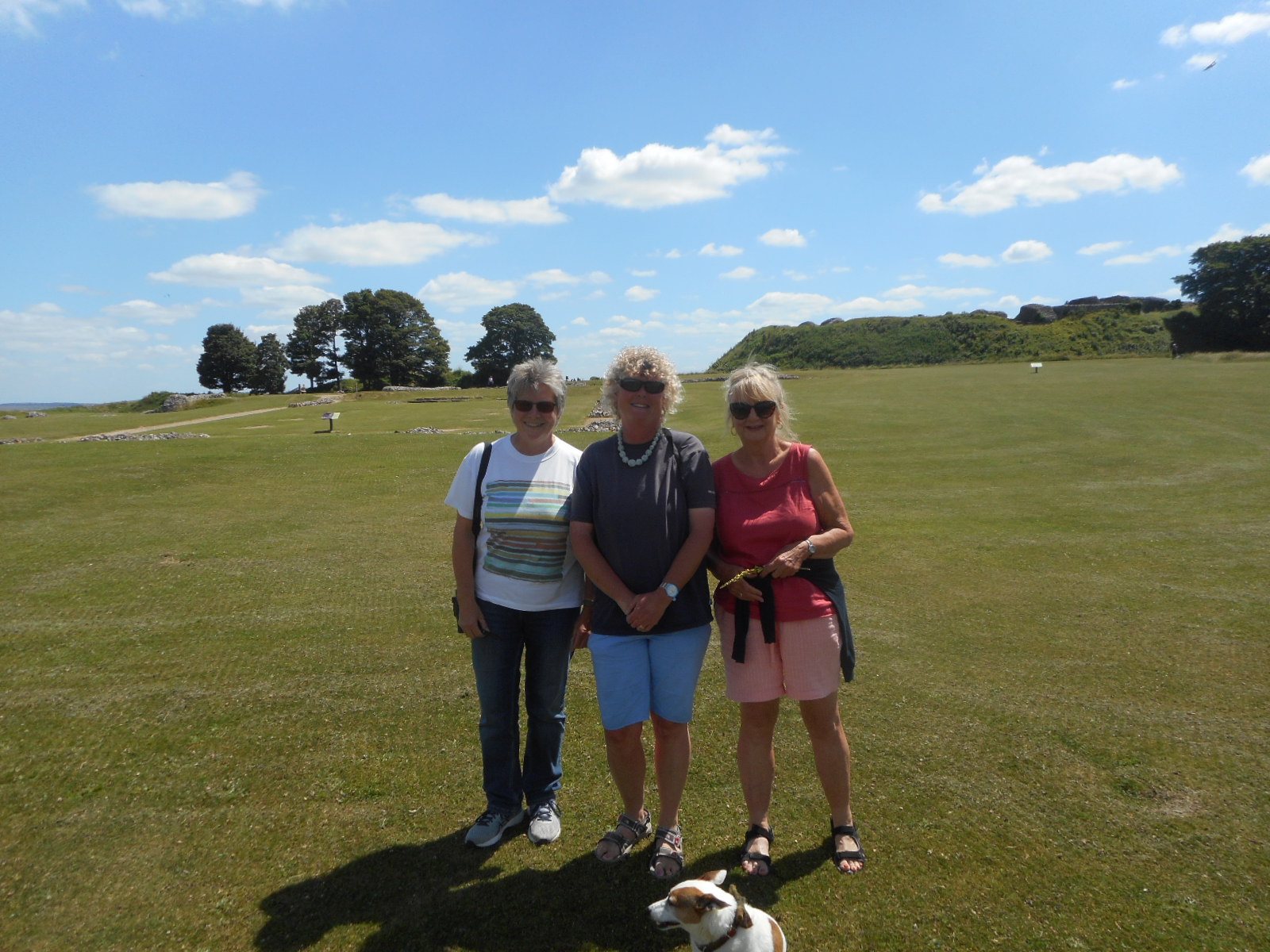 Some of the high-spots are rather too high for B and I but Pathfinder Powell bravely plots a course along the ramparts and later all around the lower external rings. She has no fear of heights and takes great pleasure in spitting on unsuspecting cows below. Mostly, we have the wide green expanse to ourselves; apart from a few dog walkers, one of whom we accost for the final photograph. It’s not until we sit down for the last picnic, that the place is invaded once more by the French: hordes of loud students with a worrying lack of supervision. It’s of no consequence. We lay back enjoying the sunshine once more. It’s been a truly lovely holiday.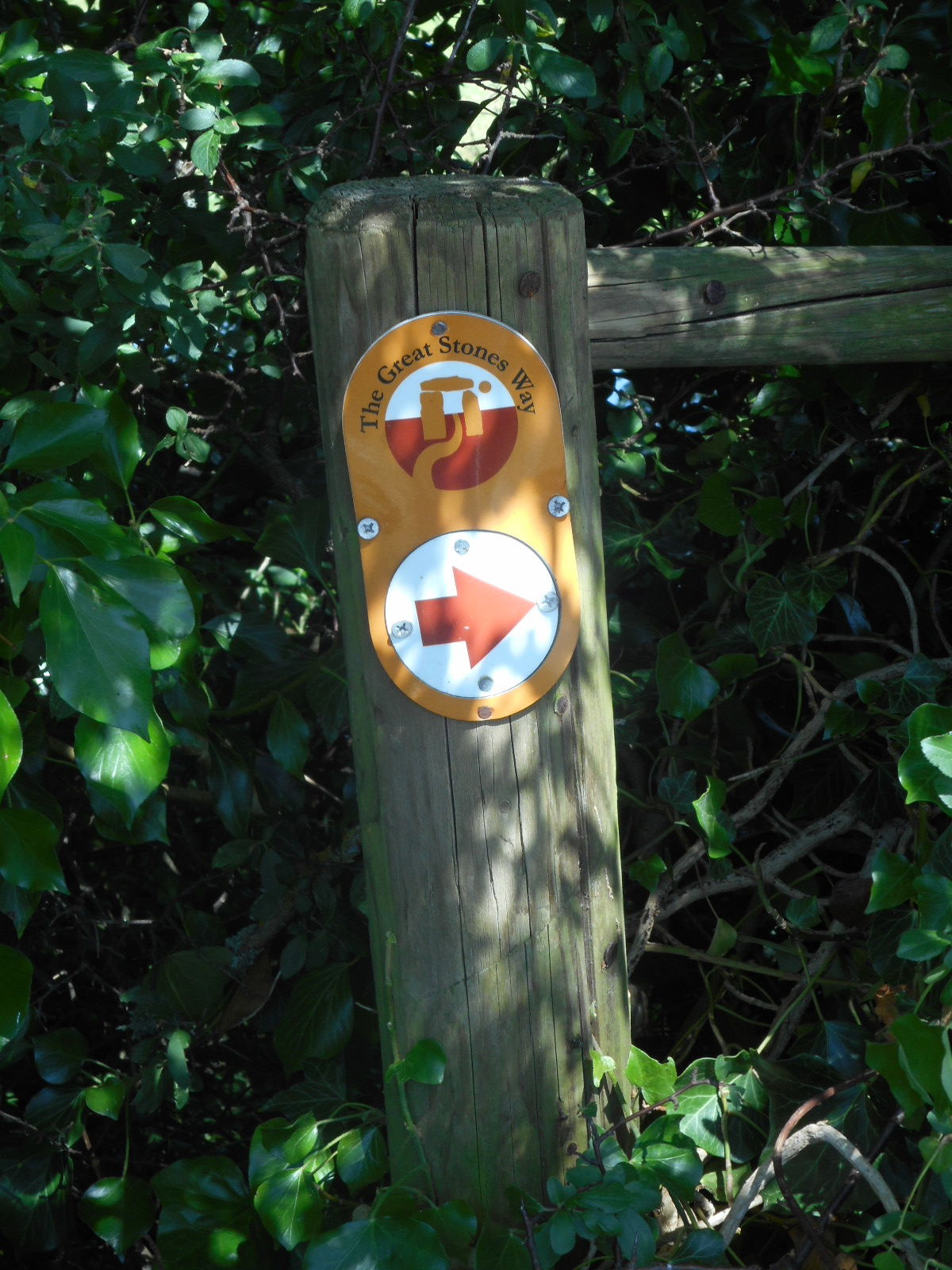








 Donald and the Weasels