
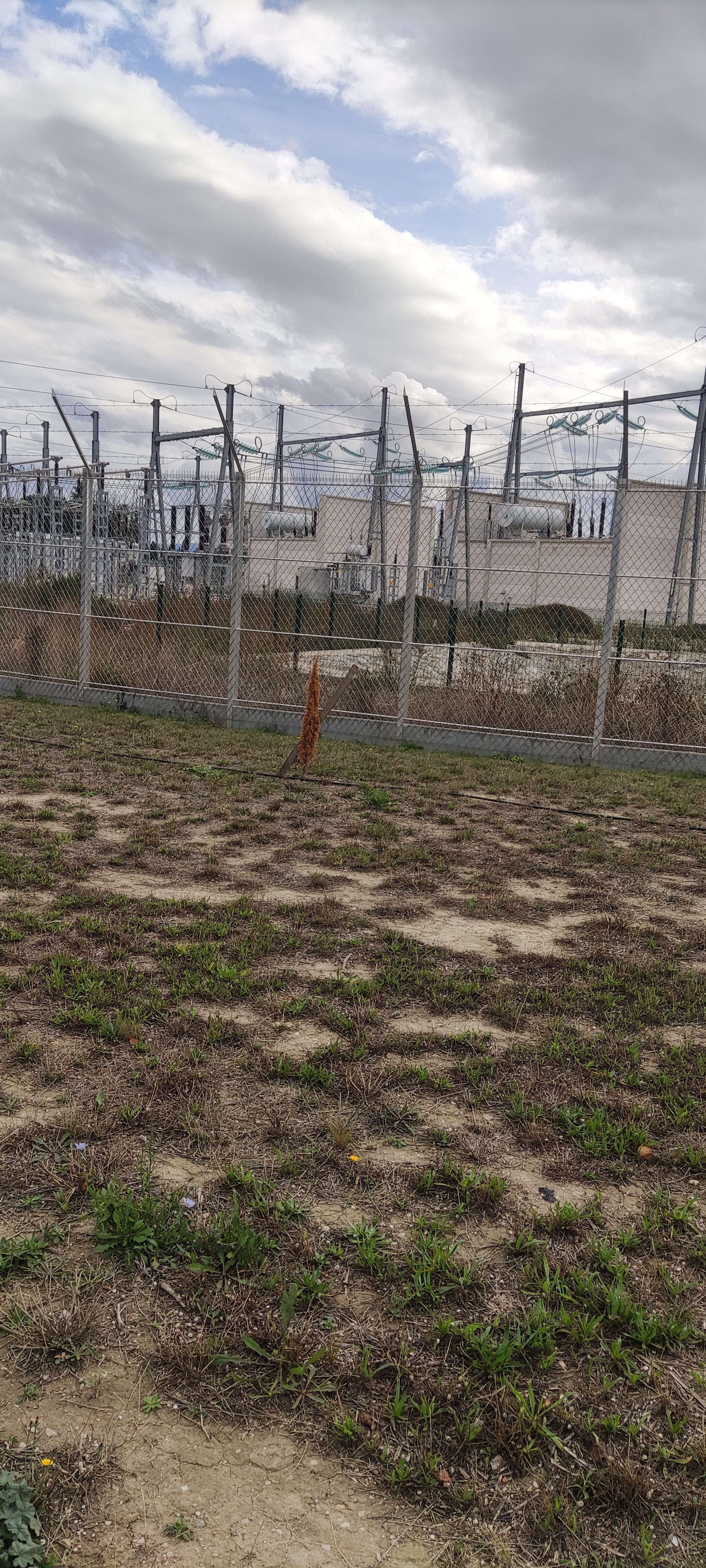
I’m almost at the end of another fabulous stay in Provence so, on this, my penultimate full day, I decided to finally visit a place which I’ve been driving past for the last five weeks, but had never yet seen. It’s an electricity sub-station. Looks nice doesn’t it? When on the road to Arles, on passing this place which is just outside the village of Graveson, you can see one of those small brown signs which denote a place of interest, usually historic. The one I’m thinking of says ‘archaeological site’, though obviously in French: ‘site archeologique’ – so not too tricky.
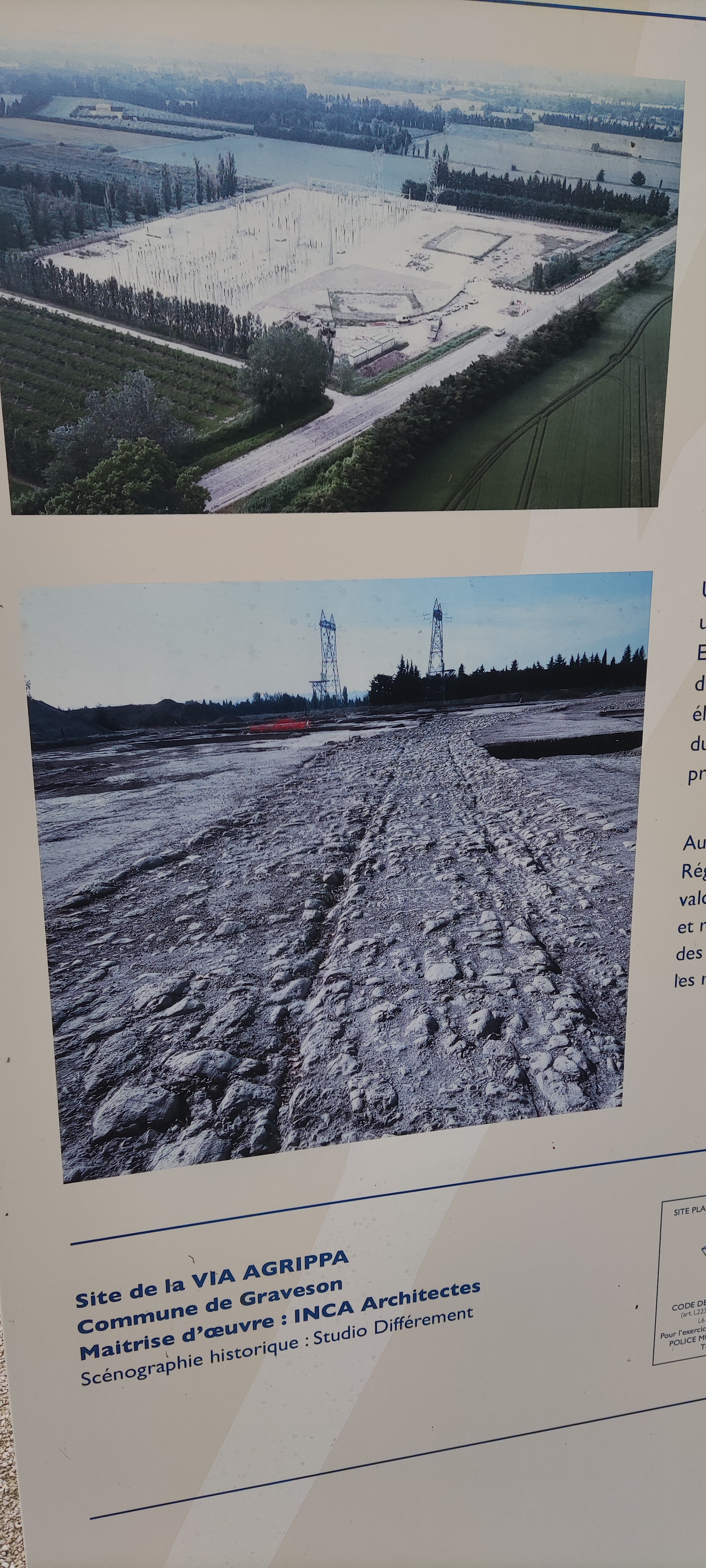
The top picture denotes the construction in 2015 BCE (Before Covid Era), and the bottom shows a road, the commencement of which was believed to have been in 16 BCE (Before Common Era); ‘common’ having replaced ‘Christian’ when political correctness was invented in the DOAE (Don’t Offend Anybody Era). Whatever, I just love the juxtaposition of the two. And here’s the story:
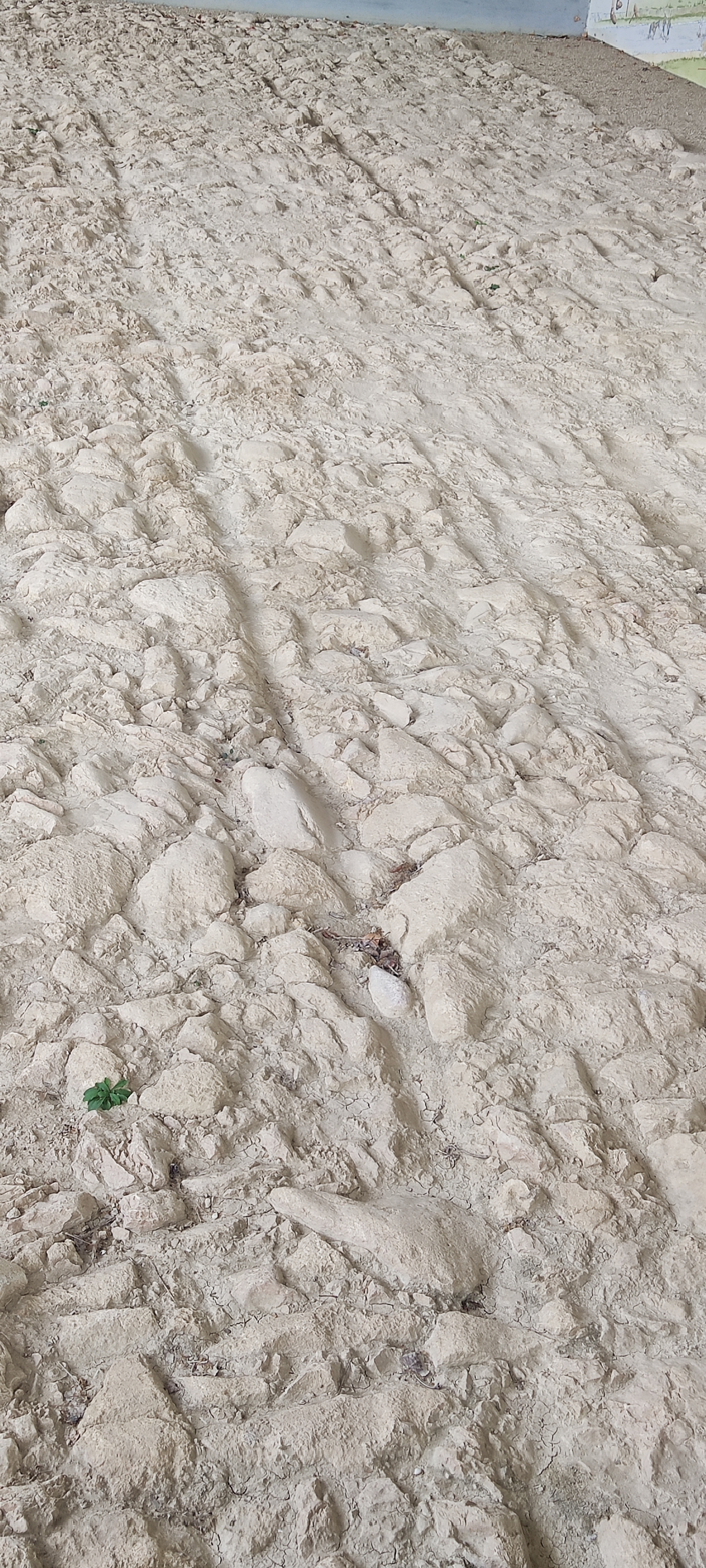
Back in the day, RTE (Network of Transport and Electricity) decided to build two new underground electricity lines but, at some point, they discovered that their chosen venue sat on a stretch of a rather ancient looking road. A team of twenty archaeologists was called in and they determined that this was an unknown part of La Via Agrippa – do you really need the translation?
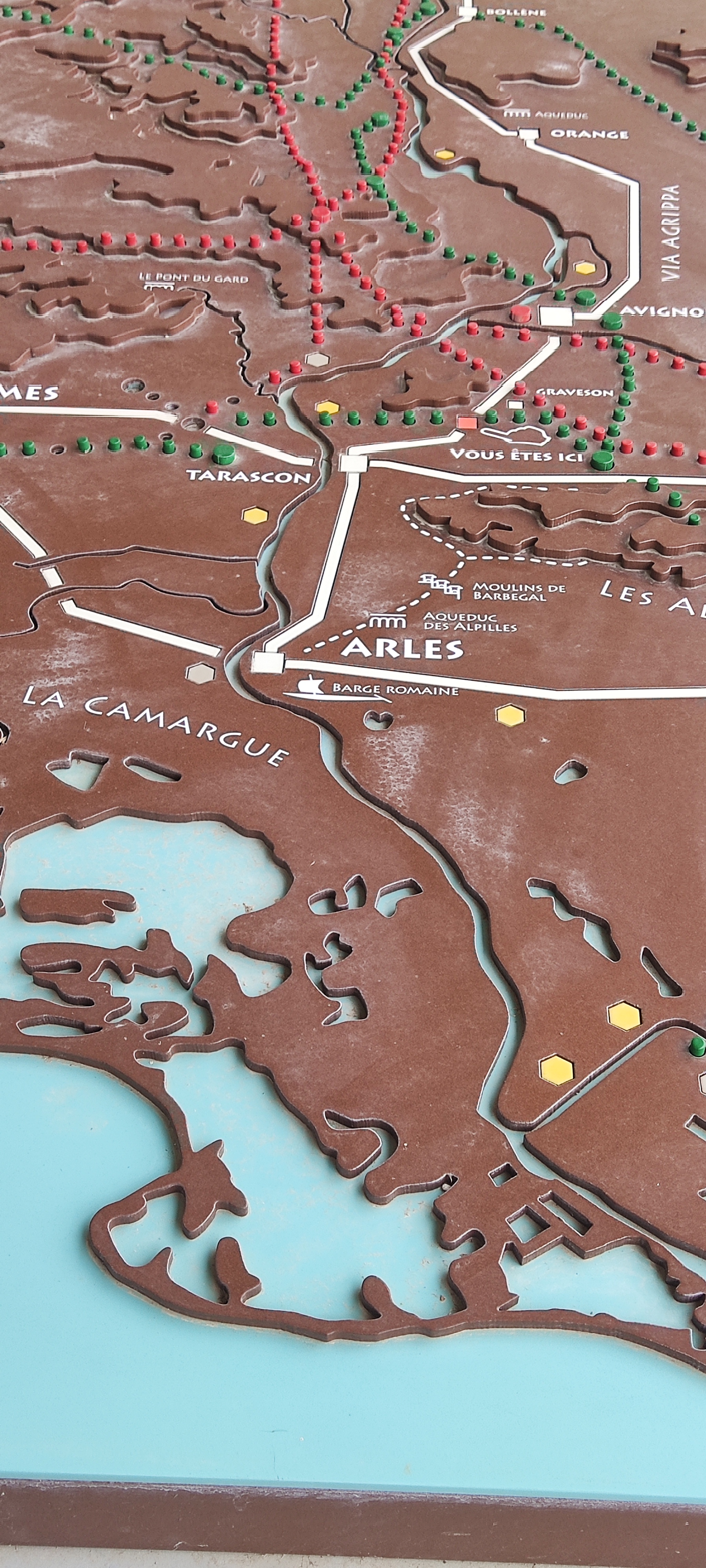
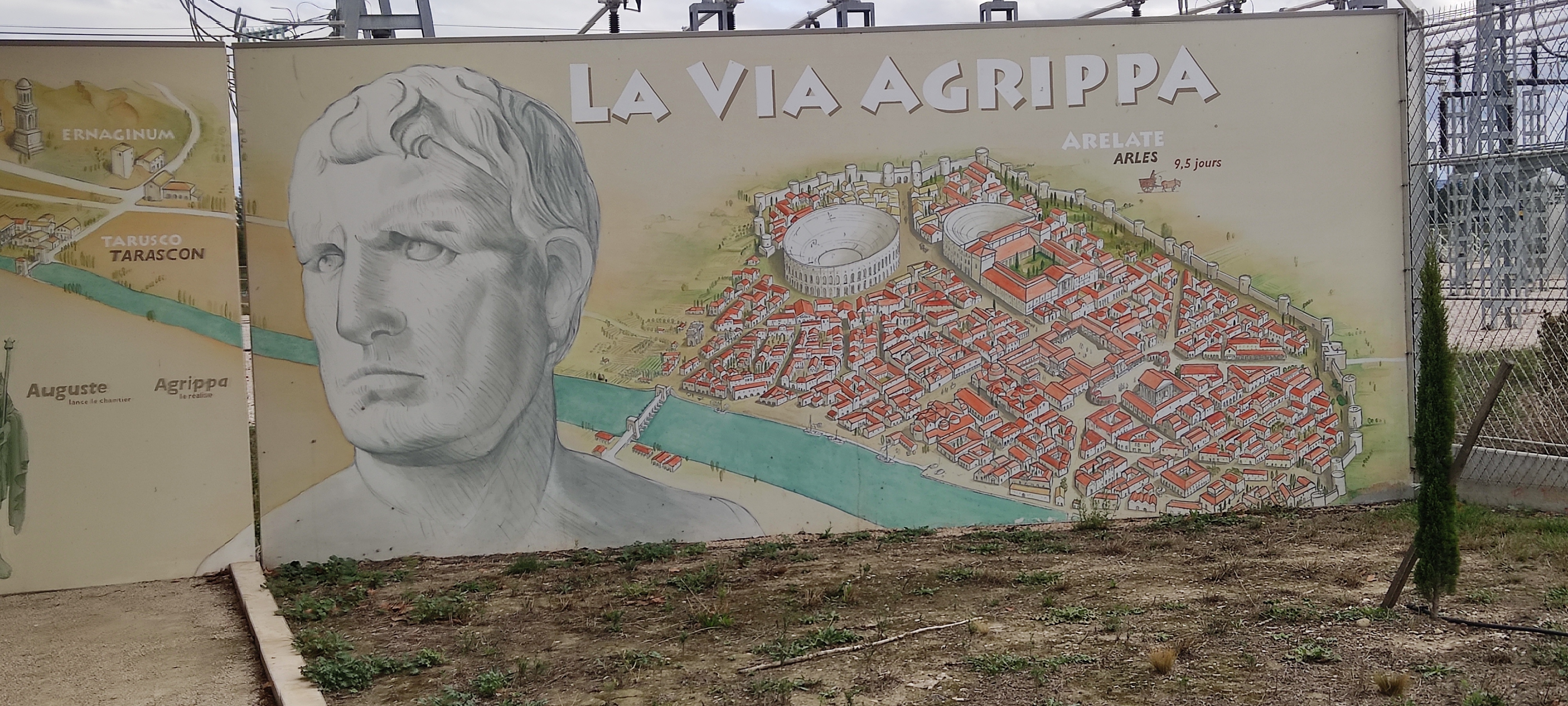
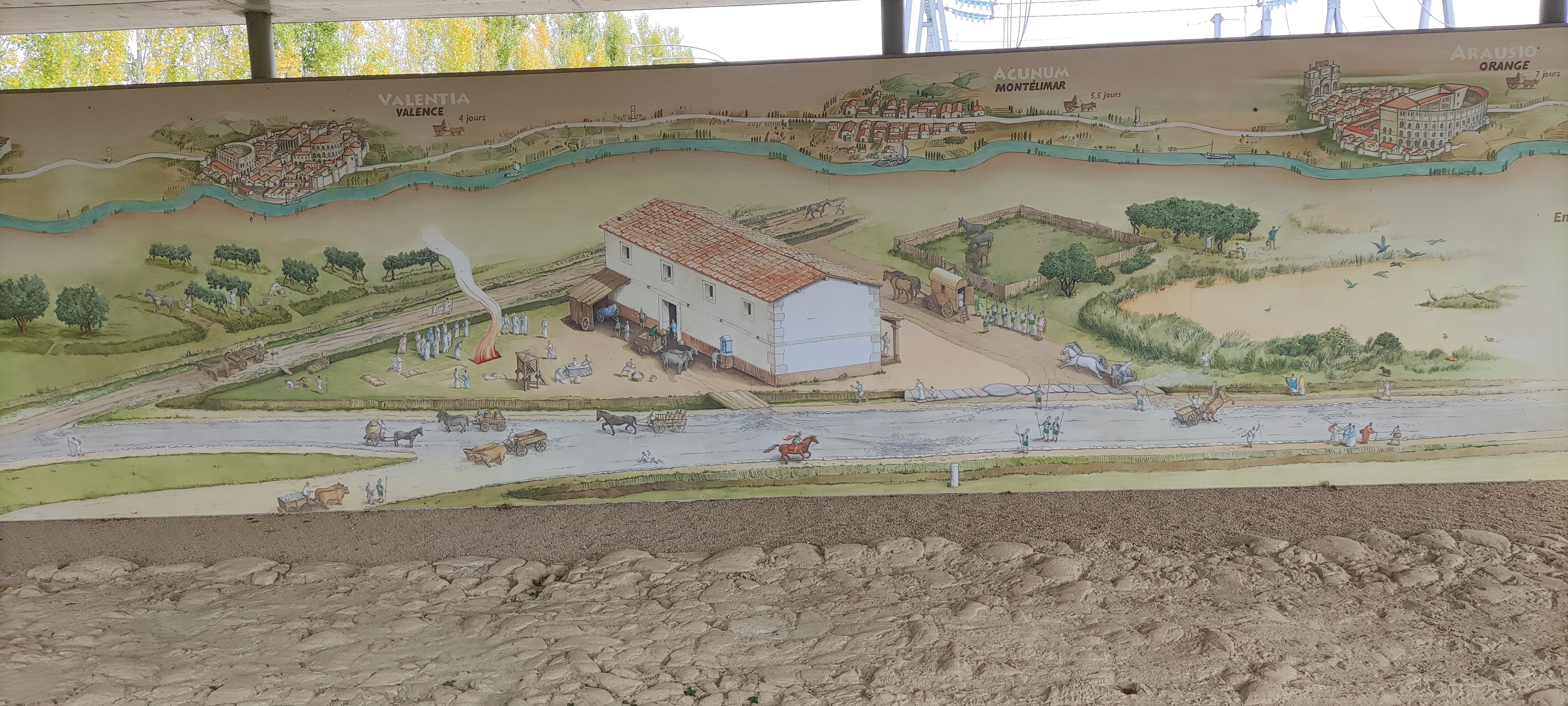
La Via Agrippa comprised around 13,000 miles of roads built by Marcus Vipsavius Agrippa, throughout what we call France today, to help subjugate those tricky Gauls. The strategic hub was Lugdunum (Lyons) from whence the routes emanated in four directions. Our particular road was the one which took the Romans down to Arles where they could take their boats from the mouth of the River Rhone into the wide open sea. Graveson would have been a relay station where horses could be exchanged and people could refresh themselves.
Sometimes, the French do history well; other times not so. I once stayed with a family whose next door neighbours were putting in a swimming pool. On discovering their garden was covering a Roman site, they instructed the builders to destroy all those old stones and crack on. How we laughed when they recounted the story under the shade of an old fig tree. Another time, I heard of a fellow over near Les Baux whose soon-to-be landscaped garden unearthed some large stones which, to the workers, were an irritation. Shall we continue, they asked? The owner decided to call in a specialist whence the stones were determined to be the missing part of a Roman aqueduct for which folk had been searching for years.
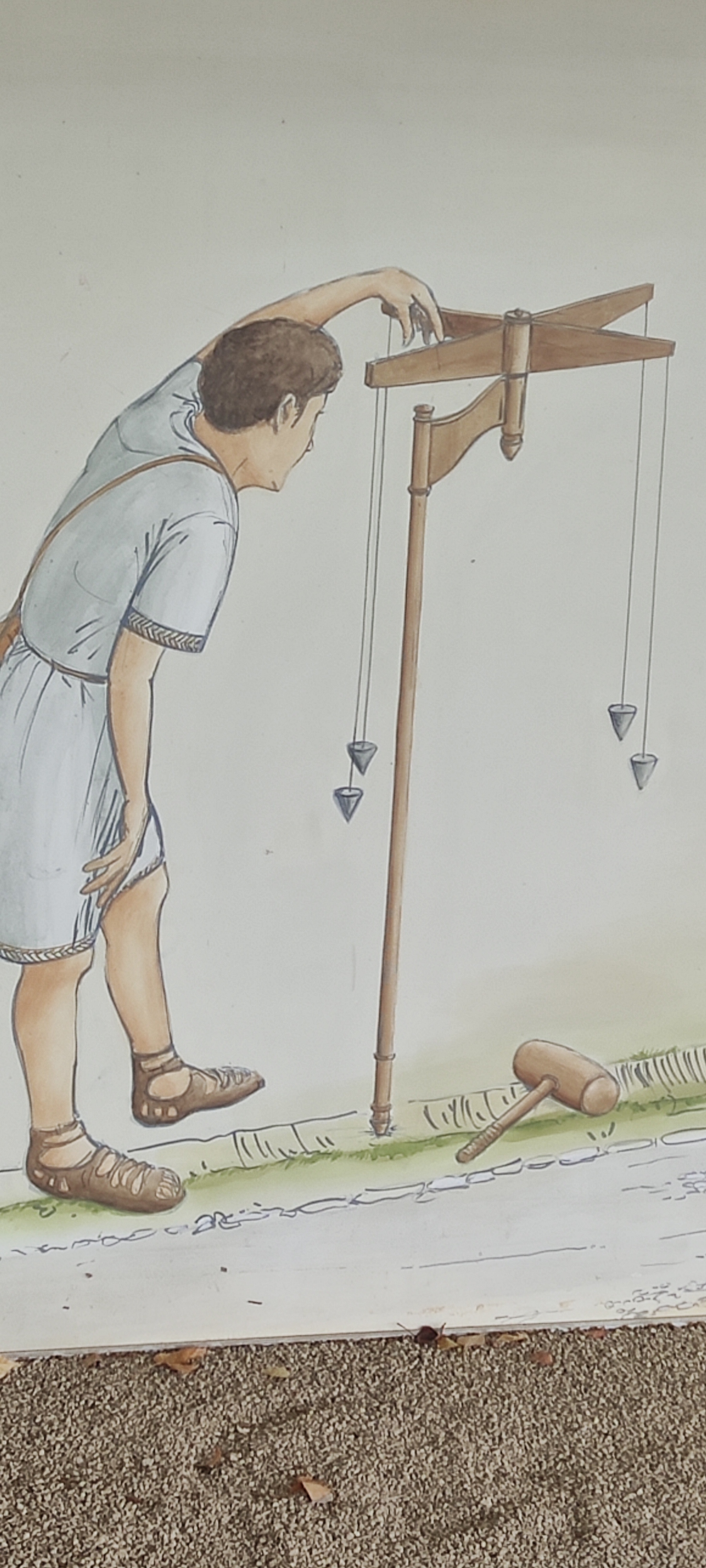
Not so RTE. They halted construction, then modified their plans by moving the sub-station along a bit in order that the small part of La Via Agrippa which had been uncovered could be preserved and made accessible to the public. And it is only a small portion but RTE have made a really interesting and child friendly ‘event’ from this. At the end of the day, you could say that it’s just a placard, but it’s been done very well and I learned a lot. Berets off to those guys.
 Donald and the Weasels
Great post. Love your historic meanderings! Can’t wait to meander with you again soon!